Xactly Competitors: Nobody Publishes a Price
Five sales compensation platforms, none publishing a rate. What their own pages say about the unit each bills on, the setup fee, and what sits outside the subscription.
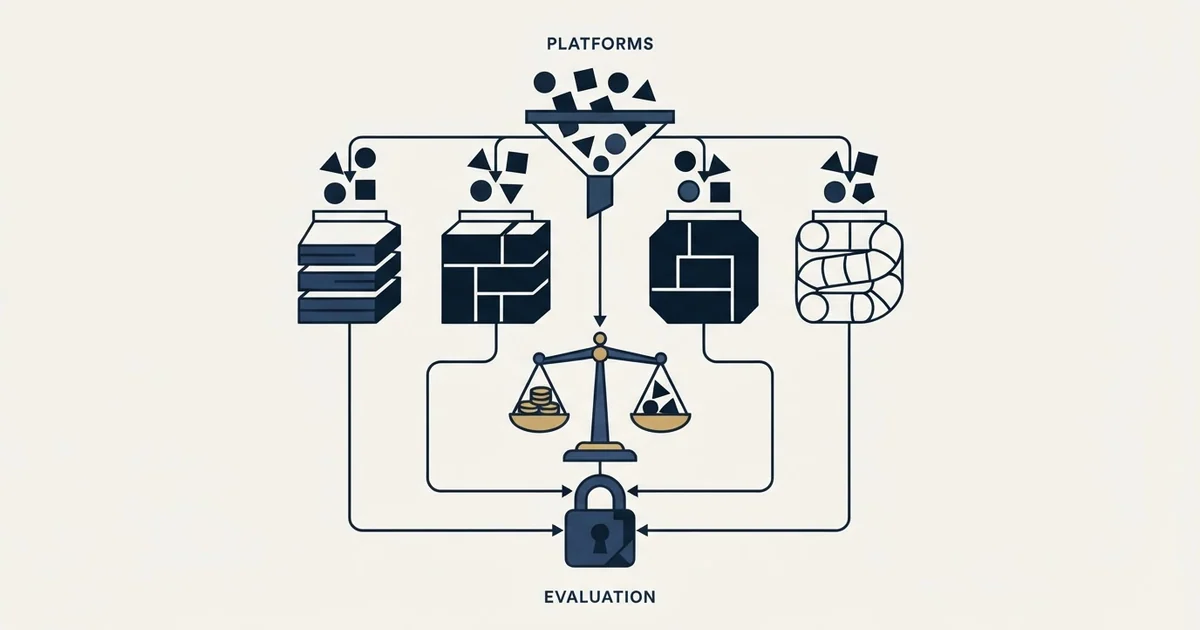
The Xactly alternatives that recur on every list are CaptivateIQ, Varicent, Performio and Everstage, with Spiff, Anaplan and Qobra behind them. None publishes a price, so compare them on the unit each bills on, the one-time implementation fee and whether ASC 606 accounting is an add-on.
Key takeaways
- None of the five compensation platforms checked, Xactly, CaptivateIQ, Performio, Everstage and Varicent, publishes a rate on its pricing surface.
- CaptivateIQ counts admins plus payees as seats; Performio bills on commissionable employees and admin seats and excludes data volume and API usage.
- Implementation is a one-time fee at three of the four, scoped from plans, data sources and reports rather than from headcount.
- ASC 606 accounting is an add-on subscription at CaptivateIQ and Everstage and sits in Incent Plus at Xactly, so it moves the bill for public companies.
Reviewed and updated September 18, 2026
Five sales compensation platforms, Xactly and the Xactly alternatives that recur on every list, were checked on their own pricing surfaces, and not one of them carried a rate. Performio's page does publish a budgeting guideline: it states that many mid-market and enterprise teams allocate less than 3% of total commission payouts to compensation software, which is the only published number across the five surfaces. Xactly, CaptivateIQ, Performio, Everstage and Varicent all route to a quote request, and a /pricing path on Varicent's site returns a 404. Everstage's page is titled "Transparent Commission Software" and its only call to action reads "GET A CUSTOM QUOTE".
That is worth stating first because it changes what a comparison of these vendors can honestly be. There is no price column. What each vendor does publish, in unusual detail, is its pricing MODEL: which unit it counts, what a one-time implementation costs on top, and which capabilities sit outside the base subscription. Those three things determine the bill more than the rate does, and they are checkable before any call.
Comparing the unit rather than the price is the same move another quote-only category needs, and five response-management platforms priced on different units are worked through one page at a time.
What are the best Xactly alternatives?
The Xactly alternatives that recur across vendor lists and review sites are CaptivateIQ, Varicent, Performio and Everstage, with Spiff, Anaplan and Qobra close behind. None of the four with the most detail publishes a price. The useful way to choose between them is the unit each one bills on, the one-time implementation fee, and whether ASC 606 accounting is an add-on, all stated on their own pages.
Spiff is a special case now: Salesforce's Sales Cloud pricing page lists Salesforce Spiff inside its Max tier, beside Sales Planning and Salesforce Maps, so for a Salesforce shop it arrives as part of a CRM tier rather than as a separate vendor.
Why the results for this query all argue for something
Among the pages ranking for Xactly's own competitors query is one published by Xactly. It is a blog post titled as a list of the top eight alternatives, and its own introduction states the purpose: it will break down what each competitor does well, where it falls short, and "why mid-market and enterprise organizations consistently choose Xactly's unified approach".
That is a fair thing for a vendor to publish and a poor thing for a buyer to read as a ranking. The same pattern runs down the rest of the page. Competing platforms publish their own alternatives lists with themselves at the top, and peer-review aggregates and market-share trackers fill the remaining slots. Nobody in those results is neutral, and the ones closest to neutral are counting installs rather than evaluating fit.
The alternatives named across those pages converge on a stable set: CaptivateIQ, Varicent, Performio, Everstage, Spiff, Anaplan, Qobra and a handful of newer entrants. What follows takes the four with the most detail on their own surfaces and reads nothing else.
That stable set is the category itself, and commission software sorts it by the job each product was designed around rather than by price, from the same vendors' own pages.
The unit each vendor counts
Every platform here bills on some function of how many people get paid commission. They differ on exactly which people.
CaptivateIQ publishes the clearest definition. Its pricing page describes a seat-based model and states that "Seats are based on the number of admin users plus the total number of payees who will be managing their compensation on our platform". So administrators and payees both consume seats. Its FAQ widens that further, saying the model "is based on the number of payees, the complexity of compensation plans, and the integrations required to support commission and planning workflows".
Performio separates the same idea into two lists. Subscription pricing is driven by the number of commissionable employees, the number of admin seats, whether Analytics Studio is included, dedicated database environments and additional sandbox environments. It also states a boundary the others do not: "Pricing is not tied to data volume or API usage, so it remains predictable as your data grows."
Everstage splits the bill into named lines rather than a unit. A platform licence covers the calculation engine, plan management, rep dashboards, approvals and dispute workflows; enterprise support is "Billed annually alongside your license and scoped to what your program actually needs"; and setup is a "One-time setup fee scoped to your data sources, plans, and payees".
Xactly's pricing page carries three Incent tiers rather than a unit. Incent Core is labelled "Optimized for organizations transitioning from spreadsheets to automated, scalable compensation", and carries the calculation engine, plan configuration and administration, performance dashboards, AI assistants and standard data integrations. Incent Plus adds commission expense accounting for ASC 606, prior period processing, business group security, a full sandbox and advanced data connectors. Incent Ultimate adds industry benchmarking, AI agents, objective management, advanced modelling and custom process extensions. Four further modules for planning, incentive design, territory management and forecasting are sold beside those tiers, each with its own quote button.
| Vendor | Bills on | On top |
|---|---|---|
| CaptivateIQ | Seats: admins plus payees | Setup fee; ASC 606 add-on |
| Performio | Employees on commission, plus admin seats | Implementation fee |
| Everstage | Platform licence, plus annual support | Setup fee; ASC 606 add-on |
| Xactly | Three Incent tiers, four modules | ASC 606 in Incent Plus |
The line item that separates them, which is not the subscription

Three of the four publish a one-time implementation fee as a distinct commercial item, and each is explicit about what drives it.
Disclosure of that kind is uneven across categories, and five gifting vendors and their metering units show which pages disclose a rate and which leave it absent.
Performio states that implementation is a one-time cost scoped by the number of plans and components, the data sources and integrations required, the number of reports and dashboards, advanced analytics requirements and custom workflow processes. Everstage describes a "One-time setup fee scoped to your data sources, plans, and payees" and states that implementation is handled by its own team rather than by consultants. CaptivateIQ names a one-time setup fee beside its per-seat subscription and separately offers managed services in three tiers, the basic level of which it says guarantees a response within twenty four hours.
This is the number that most often surprises a first-time buyer of compensation software, and it is driven by the shape of your plans rather than the size of your team. A company with forty sellers on one plan and a company with forty sellers on nine overlapping plans with accelerators, splits and clawbacks are buying the same subscription and a very different implementation.
Which means the cheapest thing you can do before contacting any of these vendors is to count your own plan components. A written inventory of every plan, every accelerator, every split rule and every data source that feeds a credit is the single input every implementation quote is priced from, and building it also tends to reveal how many of those rules exist because nobody retired the old one. Our note on the rules operators argue about covers the compensation half of that, including the one plan change per year discipline that keeps the inventory from growing.
What sits outside the base subscription
The consistent pattern across all four is that compliance accounting is an extra.
CaptivateIQ's FAQ answers it in one line: "ASC-606 reporting is available as an add-on subscription." Everstage lists ASC 606 compliance as an add-on, scoped and custom-built per requirements. Xactly places "ASC 606 Compliance (Commission Expense Accounting)" in Incent Plus rather than in Incent Core, so it is a tier upgrade rather than an add-on. Performio does not separate it on its pricing page.
For a private company running simple plans, that is a line to decline. A public company, or one heading that way, has to carry it, and that line is the single most common reason a compensation platform quote comes back higher than a budget built from a per-seat estimate.
The other recurring extras are CRM embedding and messaging. Everstage sells a Salesforce app as an add-on so reps can see commissions inside the CRM, and a connectivity package for pushing alerts through Slack, Microsoft Teams and Gmail. Xactly sells a CRM accelerator beside Incent. Those are the features most likely to be demonstrated and least likely to be in the base quote.
Where the vendors genuinely differ, on their own descriptions
Setting price aside, the published positioning does separate them, and two of the four are unusually direct about who they are not for.
Performio publishes both sides. It says it is designed for organisations managing complex sales and incentive commissions across teams, systems and geographies, names seventy or more commissionable employees as its shape, and then lists what it is not ideal for: "Simple, flat commission structures" and "Teams seeking simple Excel automation". That is a useful disqualifier to read before booking anything.
Xactly's own case for itself rests on data rather than features. Its alternatives post argues that its benchmarking draws on pay and performance data aggregated over more than two decades, and adds: "None of the Xactly alternatives can offer this." Read as a vendor claim that is unverifiable from outside. Read as a statement of what the vendor thinks it sells, it is informative, and benchmarking data is a genuinely different reason to buy from calculation accuracy.
CaptivateIQ sells three named products, covering incentives, planning and an advanced modelling layer, so the planning and territory side is a separate purchase rather than a module. Varicent covers incentives, sales planning and seller insights; a /pricing path on its site still returns a 404, and its homepage carries no rate.
CaptivateIQ bills on both, and the payee count anchors every vendor's quote.
Accelerators, splits, clawbacks, credit rules and the systems that feed them.
ASC 606 accounting is an add-on or a tier upgrade at three of the four.
Same payee count, same plan inventory, same integrations.
The comparison the rankings cannot do for you
Every list ranking for this query sorts these platforms on features, and the feature grids converge because the job converges. All four calculate commissions, hold plans, show reps their earnings and produce an audit trail.
The variables that decide the outcome are yours. How many payees. How complicated your plans are. Whether a compliance obligation applies to you. Whether the comp data has to reconcile with a wider company plan, which is the case that pulls a buyer toward a planning platform rather than an incentive one. Whether territory and quota design is part of the same purchase, which is a separate module at Xactly and a separate product at CaptivateIQ.
Sorting those out first also makes the shortlist shorter, because two of the four publish a size they are built for and one publishes what it is not built for. That is more decision-relevant information than any ranked list on this query contains, and all of it is on the vendors' own pages.
If the underlying problem is that the plans keep changing because the number keeps being missed, no platform on this list fixes it, and the attainment the plan was set against is the cheaper thing to examine first. If the number is being missed because there are too few qualified conversations, see what a first campaign produces, and settle how a commission is structured before automating whichever structure you land on.
The short version

None of the five surfaces checked carried a price, so a price comparison is not available. What is available is each vendor's own account of how it charges, and those differ in ways that matter more than a rate would.
CaptivateIQ counts admins plus payees as seats and weighs plan complexity and integrations. Performio bills on commissionable employees and admin seats, explicitly excludes data volume and API usage from the calculation, and names both the size it is built for and the situations it is not for. Everstage splits the bill into a platform licence, annual enterprise support and a one-time setup fee, with CRM embedding and ASC 606 as add-ons. Xactly sells three Incent tiers plus four separate modules, with ASC 606 accounting starting at the middle tier.
Count your payees, inventory your plan components, decide the compliance question, then ask four vendors to quote the same scope. That produces a comparison. A ranked list published by one of the four does not.
Pricing and features are taken from the vendors' own pages at xactlycorp.com, captivateiq.com, performio.co, everstage.com and varicent.com, none of which carried a rate. Verify current terms with the vendor before relying on them.
Sources: Xactly pricing, CaptivateIQ pricing, Performio pricing, Everstage pricing, Varicent, Xactly, Top 8 Xactly Alternatives and Competitors
Frequently asked questions.
Frequently asked questions- What are the best Xactly alternatives?
- The alternatives that recur across vendor lists are CaptivateIQ, Varicent, Performio and Everstage, with Spiff, Anaplan and Qobra close behind. None publishes a price. Choose on the unit each bills on, the one-time implementation fee, and whether ASC 606 accounting is an add-on, since those three decide the bill and are all stated on the vendors' own pages.
- How much does Xactly cost?
- Xactly publishes no price. Its pricing page lists three Incent tiers, Core, Plus and Ultimate, each with a Get a Quote button, plus four modules for territory and quota planning, incentive design, territory management and forecasting. ASC 606 commission expense accounting sits in Incent Plus rather than in Core, so a public company should expect the middle tier.
- Is there a cheaper alternative to Xactly for a small team?
- None of the alternatives publishes a price, so cheaper cannot be read off a page. Performio says it is built for 70+ commissionable employees and is not ideal for simple, flat commission structures. For a small team on one simple plan, the implementation fee, scoped from plan components, is the line most likely to decide the total.
- Is Spiff still a separate Xactly alternative?
- Spiff is now sold as Salesforce Spiff. Salesforce's Sales Cloud pricing page lists it inside the Max tier, beside Sales Planning and Salesforce Maps, so a Salesforce customer on that tier gets it as part of the CRM rather than buying it from a separate vendor. For everyone else it is a Salesforce purchase decision.
About the author.

Ben Carden is CRO at RevenueFlow, which builds and operates outbound revenue engines for B2B companies. Previously at Gartner Enterprise. Studied at London School of Economics.
Ben Carden · CRO
Connect on LinkedIn →Explore more.
Ready to scale your outreach?
We build GTM engines that book real meetings. See the receipts.
Related articles.
Lifecycle Stage, Lead Status, Deal Stage: Three Fields
Lifecycle stage records position, lead status records activity, and deal stage lives on the deal. Merging them breaks funnel reporting in ways nobody notices for a year.
GTM Misalignment: The Four Disagreements Underneath It
Misalignment is diagnosed as a relationship problem and treated with meetings. It is a definitions and measurement problem, and there are four of them.
Position-Based Attribution: The U, the W and the Timestamp
U-shaped and W-shaped attribution are one model with a switch, and the switch is whether your CRM can be trusted to stamp lead creation.
Sales Commission: A Plan That Survives a Bad Quarter
The headline rate is the last decision, not the first. How to derive a commission plan from contract value and margin, and the clauses that decide a bad quarter.
Sales Crediting: Who Gets Paid on a Four-Person Deal
Crediting decides who is recorded as earning a sale, and it is a separate decision from the rate. Settle the rule before the quarter, not after the close.
Is Sales Commission a Period Cost Under ASC 340-40?
The classroom answer is yes, and current filings show commissions capitalised as assets instead. Both are right, and the benefit period decides which applies.