Sales Crediting: Who Gets Paid on a Four-Person Deal
Crediting decides who is recorded as earning a sale, and it is a separate decision from the rate. Settle the rule before the quarter, not after the close.

Sales crediting is the rule that records who earned a sale, decided separately from how much anyone is paid. It splits into two questions: which parties are credited, and at which event. Settling both in writing before a period starts turns a post-close negotiation into a policy that somebody outside the deal can apply.
Key takeaways
- Crediting answers who, which is a different question from how much and from when a commission is earned or paid.
- A split rule is defensible when a person who was not in the deal can apply it and reach the same answer, which is what the counterfactual test provides.
- Duplicate crediting accumulates without anyone choosing it, so the share of revenue an incentive plan pays on is worth measuring rather than assuming.
- Credit timing is a deliberate choice between booking, invoice, payment and recognised revenue, and it need not match how finance recognises the same money.
Reviewed and updated September 1, 2026
A deal closes on the last Thursday of the quarter and four people believe they earned it. The account executive signed it. The sales development rep booked the first meeting eleven months ago and has not spoken to the account since. A solutions engineer spent two days building the proof of concept that unblocked the technical review. The enterprise account director holds the master agreement the order was written against. Nobody disputes any of those facts. What nobody wrote down is which of them turns into money.
That question has a name in compensation practice, and giving it the name is most of the fix. Sales crediting is the rule that decides who is recorded as having earned a sale, and it is decided separately from how much anybody is paid.
Crediting and payment answer two different questions
WorldatWork's Workspan Daily piece on double sales crediting, published 23 February 2023 by David Cichelli, opens on the distinction that organises everything else: sales crediting splits into two topics, who and when. The who identifies the party or parties who earned credit for a customer purchase. The when identifies the transaction event at which they earn it. Once both are settled, the piece notes, sellers get paid at the next scheduled payout cycle.
The same article states the reason this is worth being careful about, in a sentence worth keeping: sales crediting is the gateway to sales compensation payments. A commission rate applies to a credited amount. If the credit is wrong, a correct rate produces a wrong payment, and the argument that follows will be conducted in the vocabulary of rates because that is the part everybody can see.
Our own piece on building a commission plan that survives a bad quarter separates the moment commission is earned from the moment it is paid, and calls treating those as one event the most common defect in a plan. Crediting is the third axis in the same family and the one most often left implicit. Earned and paid are about timing. Credited is about identity, and a plan can be immaculate on timing while leaving identity to whoever shouts first.
The shapes credit comes in
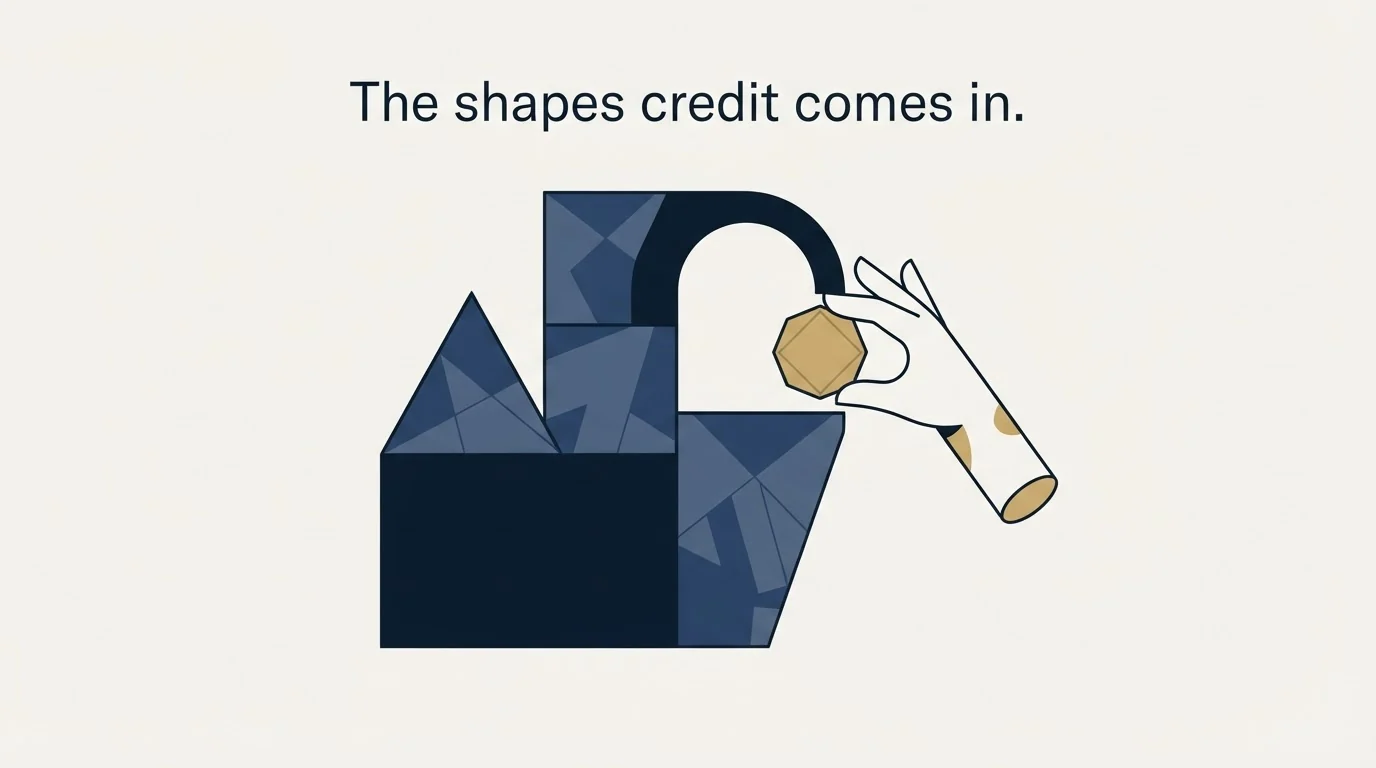
Cichelli's article gives the taxonomy precisely. Vertical sales crediting is credit awarded to the supervisor of the sellers, moving up the ladder as far as the vice president of sales, and the piece is explicit that this is not double crediting. Horizontal sales crediting is when two or more sellers are awarded credit for one sale, and that is.
The article names the situations where double crediting is warranted rather than sloppy: national account managers alongside local sales personnel, sales representatives alongside overlay specialists, and joint teams of on-premise and telephone sellers. Its worked case is a national account seller who wins approved vendor status from a corporate purchasing authority while a local seller wins the actual order from a local facility, where the transaction could not have proceeded without both.
The formula type then decides the mechanics. On a bonus formula, which measures success as a percentage of quota achievement, the common practice is what the piece calls double quota and double credit: both parties carry quota for the account and both receive credit for a local sale. On a commission formula, which pays a percentage of actual performance, the credit is usually split instead, and the article gives a twenty-five to seventy-five division between a national account manager and a local salesperson as its example, alongside the option of a deliberate premium that credits a hundred and fifty percent in total.
- Simplest to administer and to explain
- Works where territories are clean and cycles are short
- Nobody assists a deal they cannot be credited on
- Produces the quiet refusal rather than the loud dispute
- Total credit equals the revenue, so the cost stays proportional
- Every split is an argument unless the rule predates the deal
- Small percentages are ignored by the people receiving them
- Needs a tiebreak owner named in advance
- Buys genuine collaboration where two roles are both necessary
- Incentive cost rises above actual revenue by design
- Defensible only where the necessity is structural, not social
- Worth measuring, because it grows without anyone deciding it should
That last column carries a real cost and the WorldatWork piece quantifies how far it travels. Reporting Alexander Group survey findings, it says more than sixty-eight percent of companies provide some level of duplicate crediting while thirty-three percent do not, and that sixteen percent provide more than thirty percent duplicate crediting, in which case real revenue equals a hundred percent while the incentive plan pays on a hundred and thirty percent or more of it. On the question of how many people are credited on a typical transaction, the same survey findings put forty-two percent crediting only one seller and fifty-eight percent rewarding two or more, with five percent crediting five or more sellers for the same sale. Those figures describe the surveyed population reported on that page rather than any rule about what is right, and the useful thing about them is that they show the number nobody sets deliberately.
The test that makes a split defensible
A split rule survives a challenge when somebody who was not in the deal can apply it and reach the same answer. That is a higher bar than fairness and a lower bar than precision, and there is a test that clears it.
Our partner enablement page publishes it for the adjacent problem of deciding whether a partner sourced a deal or merely influenced it. Ask whether the opportunity would exist at all without that contribution. If the answer is no, the contribution originated the deal. If the answer is yes but the deal would have been slower, smaller or riskier, the contribution influenced it. The reason that test is worth borrowing across the boundary is that it asks about the deal rather than about the person, so it can be applied by a compensation analyst in March to a deal that closed in December.
- Step 1Name the origination event
What created the opportunity record and who caused it. A booked meeting, an inbound form, a named-account pursuit that predates both.
- Step 2Ask whether it would exist
Without this contributor, is there an opportunity at all. That answer separates origination from everything downstream.
- Step 3Name what each other contributor changed
Access, technical validation, a commercial relationship, procurement. A contribution nobody can name is not a contribution being argued about honestly.
- Step 4Apply the standing rule
The percentages come from a policy written before the quarter, not from a negotiation held after the close.
- Step 5Record the reasoning, not just the split
A decision log is what stops the same argument being held again on the next deal of the same shape.
The alternative to a standing rule is adjudication per deal, and adjudication per deal has a predictable outcome. The rule that emerges is that credit goes to whoever escalates, which teaches the team to escalate.
When the credit is awarded is its own decision
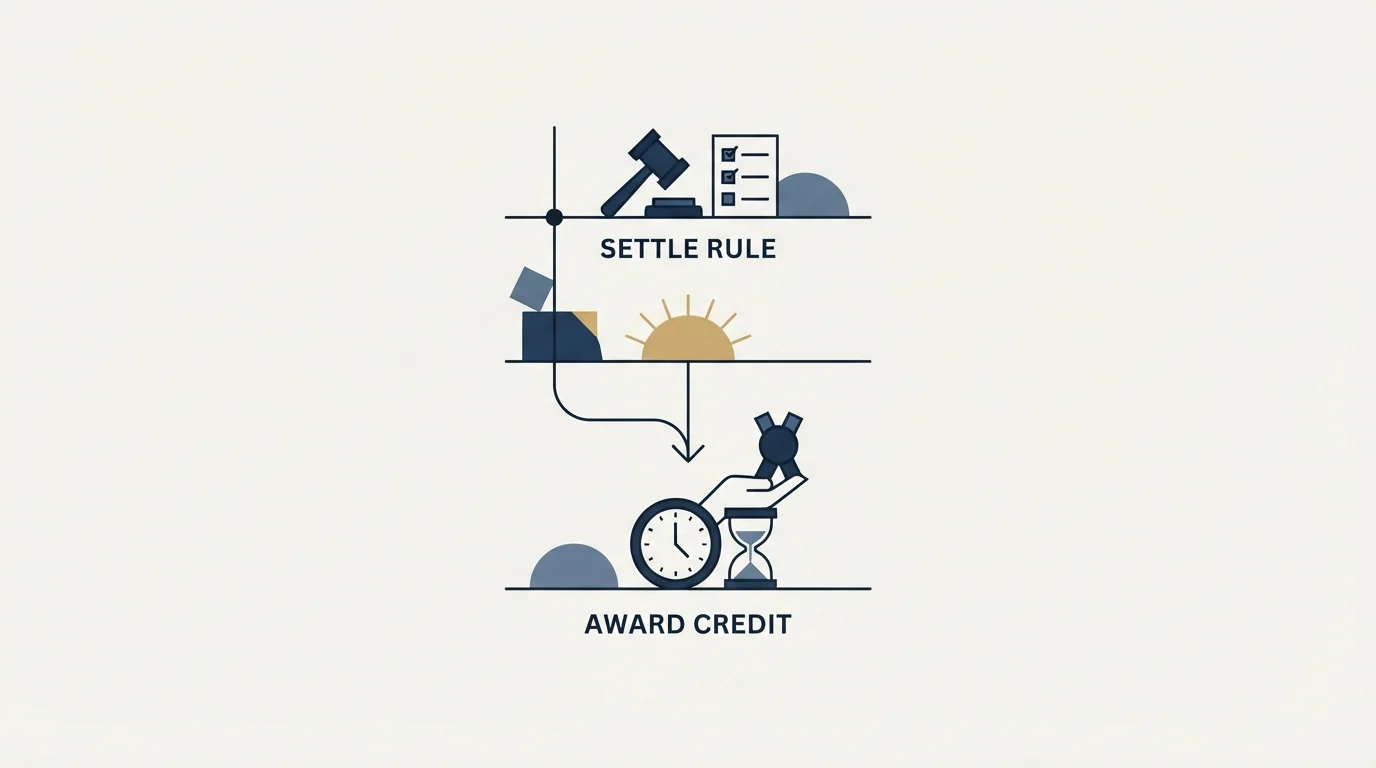
The second half of the WorldatWork framing is timing, and the article lists four events at which credit is commonly awarded: booking, which is a signed purchase order before the purchase has occurred; invoice and shipment, when the company formally recognises the purchase; payment, when the customer has met the terms and paid; and recognised revenue, which it describes as less common and as an accounting term whose definition varies substantially by contract, policy and accounting standard.
The point that page makes about the fourth one deserves repeating, because it is the one people assume the other way round. Sales credit and recognised revenue do not need to occur at the same time. Credit recognition for compensation purposes can be set wherever it serves the sales strategy, and it may or may not match how finance recognises the same money. On what companies actually do, the article reports Alexander Group findings that the time of invoice at thirty-four and a half percent is the most prevalent, with the time of booking at twenty-four and four tenths percent also popular, and it notes that split timing exists too, such as half at booking and half at invoice.
A related limitation sits inside the CRM itself: Salesforce stage configuration controls only which stage values sellers can pick, not what happens to records already past them.
The clauses that decide a contested credit
- Yes: The event at which credit is awarded, named precisely, and whether it is ever split across two events
- Yes: Whether an assisting role is credited in full or in part, and which roles those are
- Yes: The standing split percentages, with the arithmetic that produced them
- Yes: Who decides a contested credit, and whether the decision is explained to both parties
- Yes: How a renewal, an expansion and a downgrade are credited, and to whom
- Yes: What happens to credit when a contributor leaves before the close
- Depends: Whether total credit may exceed the revenue, and the ceiling if so
- No: Deciding the first contested credit on the merits, in the moment, in favour of the loudest party
Two of those are worth a sentence each. Renewals are where crediting rules quietly expire, because the rule was written for new business and a renewal has no obvious originator, so the default becomes whoever holds the account this year. And the departure case decides whether a rep with one foot out of the door works the deal or parks it, which is a behavioural answer disguised as an administrative one.
When a spreadsheet stops working

Commission tracking software is a real category with real vendors in it, and the question worth asking first is what would have to be true before buying one helps. A crediting rule is a policy, and a spreadsheet holding one policy applied to a few dozen deals a quarter is not a deficiency, it is the honest first version. The same reasoning applies here that our partner enablement page applies to partner tooling: the first version of the thing is a document, and it fails at a scale you will be able to feel.
Salesforce's sales performance management lineup explains how incentive compensation, planning and territory tools get bundled or sold separately across Sales Cloud editions.
The failures that constitute a real purchase trigger are specific. Credit is being computed by a person whose recollection is the only record of why a split was applied. Two systems disagree about the same deal and reconciling them takes longer than the payout cycle. A rep can no longer see what they are owed without asking, which is the point at which the plan stops functioning as an instruction. Free commission tracking software and spreadsheet templates both address the arithmetic, and the arithmetic was never the constraint. The constraint is that a rule nobody wrote down cannot be automated, and encoding an unwritten rule into a system is how it becomes permanent without ever having been agreed.
What that record has to hold, line by line, and how a period close is run so a payout can be reconstructed months later, is set out in commission tracking.
What the crediting rule does to behaviour
Our commission piece states the position this whole subject rests on: a compensation plan is the most reliable instruction a sales organisation ever issues, and it is obeyed literally. The crediting rule is the part of that instruction which decides what gets worked.
A rule that credits only the closer produces sellers who do not assist. A rule that credits an assist generously without a test produces assists that consist of joining one call. A rule nobody can predict produces the most expensive behaviour of all, which is people protecting deals from colleagues who might help. None of that is dishonesty, and it is the same reading our quota attainment entry applies to a broad team miss: the arithmetic was handed to people who then responded to it.
Two neighbouring plans decide whether the crediting rule is even the binding constraint. If the shape of the team is wrong, the capacity arithmetic is the prior question, because a crediting dispute between two roles is sometimes a symptom of a coverage design that put them both on the same account. And where the boundary itself is the problem, the carve that decides who never gets contacted is where the seams that generate contested deals are created.
The channel version of this argument is worth reading beside the internal one, because it is the same adjudication with a company on the other side of it and a written policy is already standard practice there. Deal registration is what a crediting rule looks like when the party being credited does not work for you, and the reason it gets written down in that setting is that nobody expects goodwill to survive a contested deal between two firms.
Where the real constraint is the number of qualified conversations rather than how the credit for them is divided, no crediting rule will move it. RevenueFlow is paid on attended meetings that meet criteria agreed in writing before launch, which prices the supply side against the same unit a quota is written in. See what a first campaign produces before rewriting a plan that may not be the thing holding the quarter back.
The short version
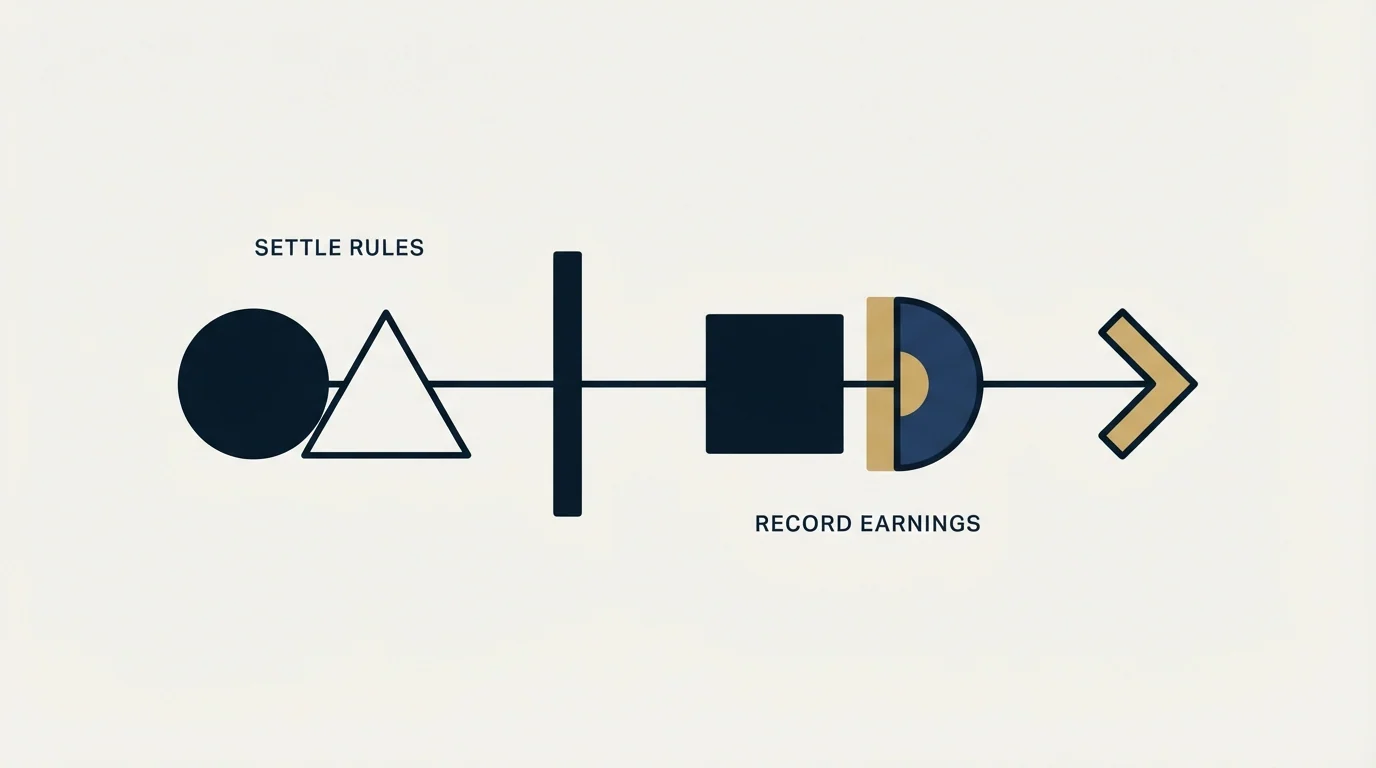
Crediting is who, and it is a different question from how much and from when. Decide it in writing before the quarter, name the roles that earn an assist, and use a test that somebody outside the deal can apply, because a rule that requires having been in the room is a negotiation wearing a policy's clothes.
Pick the timing event deliberately and know that it need not match how finance recognises the same revenue. Expect duplicate crediting to appear whether or not anybody chose it, and measure how much of it you are carrying. Then run the whole thing on a document until the document visibly fails, because a rule that has never been written cannot be encoded, and buying a system to hold an unwritten rule makes the ambiguity permanent.
Figures and definitions above are quoted from the WorldatWork Workspan Daily article linked in the text, fetched and verified 21 August 2026. The survey findings reported there are Alexander Group's. Verify current practice against the source before relying on it.
Frequently asked questions.
Frequently asked questions- What is sales crediting?
- The rule that records which seller or sellers earned a given sale, and at which point in the transaction they earned it. It runs upstream of the commission calculation: a rate is applied to a credited amount, so a correct rate applied to a wrong credit produces a wrong payment and an argument conducted in the vocabulary of rates.
- What is the difference between split credit and double credit?
- A split divides one sale's credit into percentages across contributors, so the total credited equals the revenue. Double or duplicate crediting awards several parties credit in full, so the incentive plan pays on more than the actual revenue. Splits suit commission formulas; double crediting suits cases where two roles were each genuinely necessary.
- When should sales credit be awarded?
- At an event chosen deliberately: booking, invoice and shipment, payment, or recognised revenue. Earlier events pay sellers sooner and carry more reversal risk; later ones align pay with cash and ask sellers to carry the customer's payment terms. Some plans split the credit across two events, such as half at booking and half at invoice.
- How do you settle a contested credit fairly?
- With a rule written before the deal rather than a judgement made after it. Name the origination event, ask whether the opportunity would exist without each contributor, name what each one changed, then apply standing percentages and log the reasoning. Adjudicating case by case teaches a team that credit goes to whoever escalates.
About the author.

Ben Carden is CRO at RevenueFlow, which builds and operates outbound revenue engines for B2B companies. Previously at Gartner Enterprise. Studied at London School of Economics.
Ben Carden · CRO
Connect on LinkedIn →Explore more.
Ready to scale your outreach?
We build GTM engines that book real meetings. See the receipts.
Related articles.
Sales Commission: A Plan That Survives a Bad Quarter
The headline rate is the last decision, not the first. How to derive a commission plan from contract value and margin, and the clauses that decide a bad quarter.
OTE in Sales: What Decides Whether the Number Arrives
On-target earnings is a forecast written in the grammar of a salary. Pay mix, quota and last year's attainment decide whether the number on the letter arrives.
Sales Rep Incentive Programs: What a Short-Term One Moves
An incentive moves behaviour inside the rep control that completes inside the window. Design rules, the failure modes, and the problems a contest cannot fix.
Sales Kickoff Meeting: The Decisions It Has to Leave With
A kickoff is the one moment a whole sales organisation can change at once. The four decisions it has to publish, and the week-six check that tests them.
Value-Based Selling: The Arithmetic Step After the Diagnosis
Diagnosis establishes that a problem hurts. Value-based selling is the step that turns it into a figure the buyer's own finance function will defend for you.
The Seven-Step Sales Process: What Each Step Assumes
Prospecting through follow-up, walked one box at a time. Each of the seven steps carries an assumption about the buyer, and most of them have quietly stopped holding.