Deal Registration: Who Owns a Contested Deal
Deal registration lets a partner claim an opportunity before pursuing it. The policy is tested once, in public, on the first deal your direct team also wants.
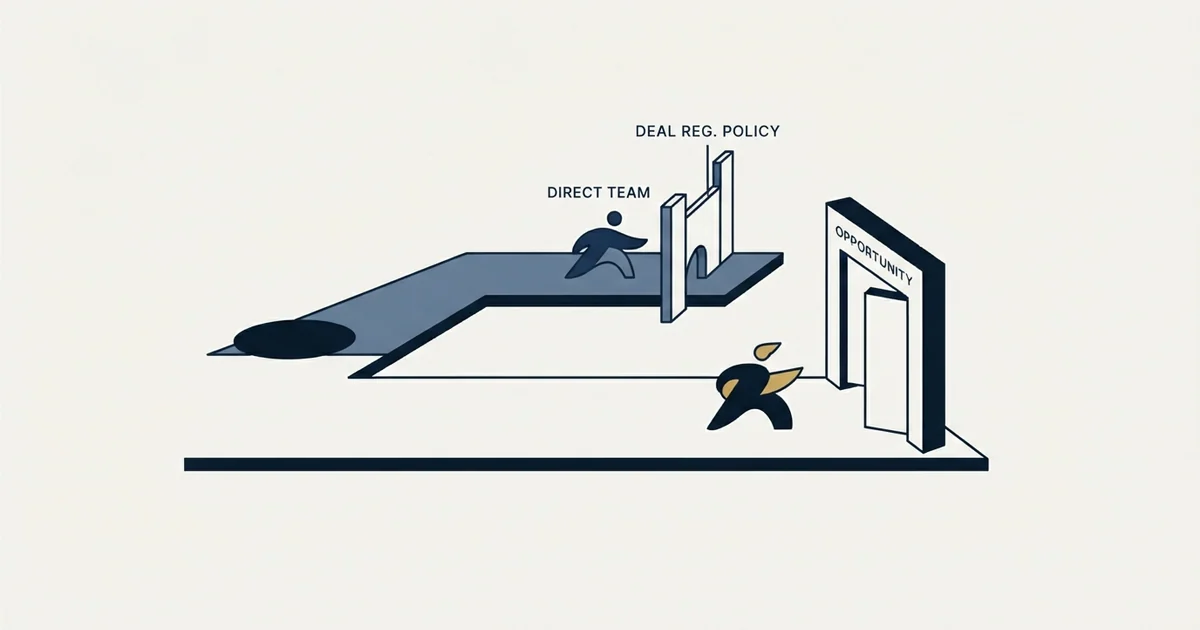
Deal registration is a formal step that lets a channel partner claim a specific opportunity before pursuing it further. Once approved, the partner holds exclusive rights or priority on that deal for a defined window, against other partners and against the vendor's own sellers. The window, the criteria and the override rule are the whole policy.
Key takeaways
- A registration policy that protects a partner from other partners but not from your own direct team is a courtesy, and the channel finds out which one you have on the first contested deal.
- TechTarget's definition puts approval timelines at 24 hours to several business days, with protection periods varying by sales cycle length or partner tier.
- Overriding an approved registration does not make an exception, it publishes a rule: the protection is conditional on the deal not mattering.
- Territory rules prevent the collision and consistent pricing removes the incentive; registration only adjudicates the residue neither of those can reach.
Reviewed and updated September 1, 2026
A reseller emails on a Thursday to say it has been working an account for six weeks and would like to register the opportunity. The account is already in your own pipeline, owned by a direct rep who has had two calls with a different person in the same building. Somebody now has to decide who keeps it, and whatever gets decided in the next hour becomes the thing every other partner hears about the programme.
That decision is what deal registration exists to make in advance. It is a small piece of process with an outsized effect, because it is the only part of a partner programme that gets tested under pressure, in public, with money attached.
What deal registration is
Deal registration is a formal step in a vendor's channel programme that lets a partner tell the vendor it is working a specific opportunity, before it invests further in pursuing it. TechTarget's Search IT Channel definition, published 10 October 2025, describes it as enabling a partner such as a value-added reseller, system integrator or managed services provider to register a sales opportunity with the vendor before actively pursuing it, after which the partner gains exclusive rights or priority access to that deal for a specified time, protecting them from competition with other partners or the vendor's own sales team.
The last clause is the one that carries the weight. A registration policy that protects a partner from other partners but not from your direct team is not a policy, it is a courtesy, and the channel works out which one you have on the first contested deal.
Red Hat publishes its own version on its partner programme site, which is a useful thing to read because it is a live commitment rather than a description of the practice in general. Its process is: log into the partner portal, select deal registration and enter the opportunity information, Red Hat reviews the details to determine whether the deal can be approved, an email goes to the partner and their selected distributor once approved, and the partner receives a quote reflecting the discount reward from that distributor. The benefits it names are that the programme protects partner investment in early customer engagement, that Red Hat will not proactively introduce competing partners into the deal, and that approval unlocks increased margin and pricing protection.
The lifecycle, and where it breaks
The stages are consistent across programmes even though the thresholds are not. TechTarget's account runs from opportunity identification through submission via the portal, evaluation and approval against registration criteria, the deal protection period, vendor support during the pursuit, and closure with the margin or incentive attached. It notes that approval timelines can range from 24 hours to several business days, that the criteria typically test whether the deal is net new, whether it is already in the pipeline and whether the partner is in good standing, and that protection periods vary based on the length of the sales cycle or the partner tier. The lead the partner brings is described on that page as often carrying a defined budget, authority, need and timeline, which is the partner's own qualification standard rather than a billing condition either side should treat as one.
- Step 1Partner identifies the opportunity
Usually earlier than a vendor would see it, which is the investment the policy is meant to protect.
- Step 2Submission
A form or portal entry naming the customer, the products and the expected timing. A hard form here suppresses registrations rather than improving them.
- Step 3Evaluation against criteria
Net new, not already in the pipeline, partner in good standing. Silence at this step reads as a rejection and costs the next registration too.
- Step 4Protection granted
A window in which other partners and the direct team stand down. Length varies by sales cycle and by tier.
- Step 5Pursuit with support
Pre-sales help, demos and co-selling. This is the part partners value and the part vendors under-resource.
- Step 6Close and compensation
Margin, discount or incentive lands according to the programme tier the partner sits in.
TechTarget's own list of common challenges is the honest counterweight to the benefits, and every item on it is a self-inflicted wound: clunky registration platforms that discourage use, slow approvals and delayed responses that cost partners momentum and confidence, disputes over lead ownership when two partners claim the same lead, and vendors occasionally overriding a registration to meet strategic goals or customer requests, which erodes partner trust.
The override is the one to sit with. A vendor that overrides a registration has not made an exception, it has published a rule. Every partner in that community now knows the protection is conditional on the deal not mattering very much, which is a strange thing to have promised.
Channel conflict is what the policy is for
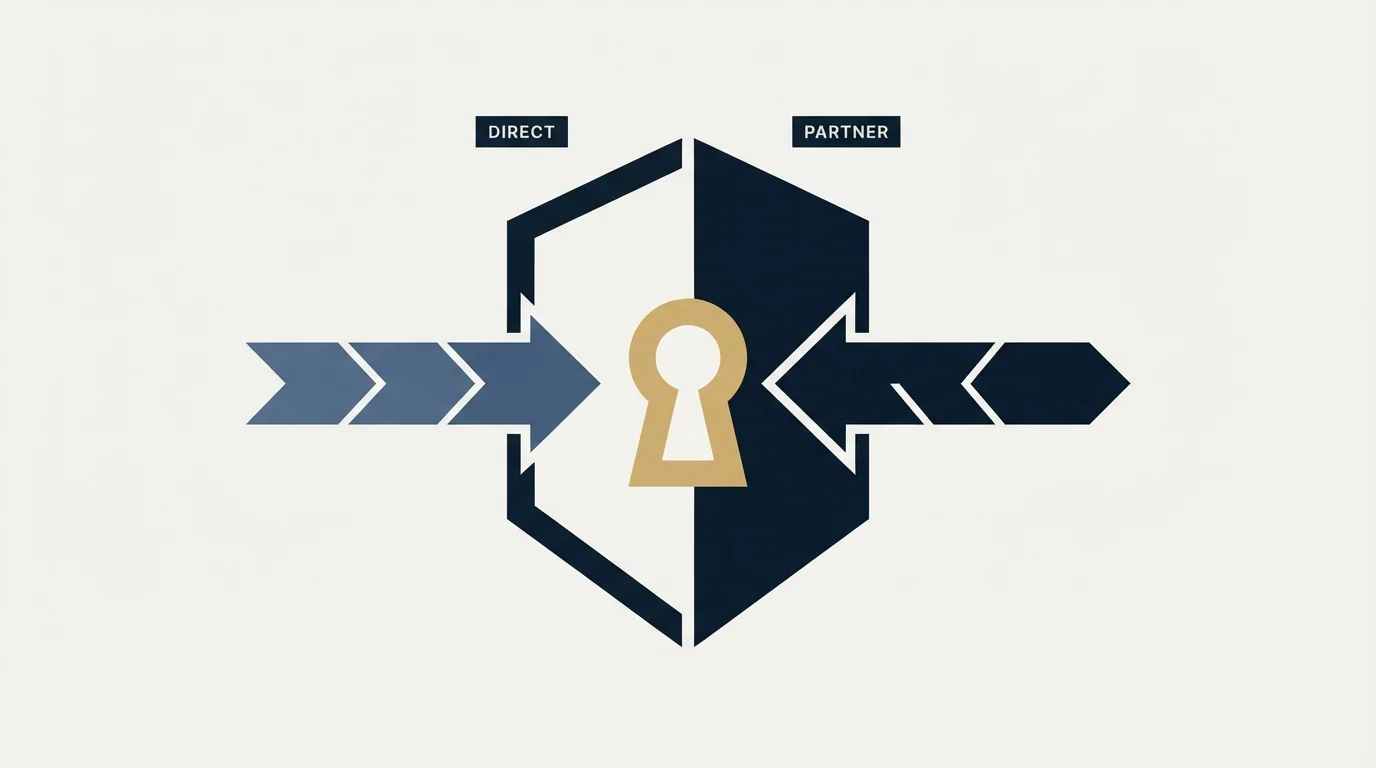
Channel conflict is competition between the parties selling the same product to the same customer. Marketing courses split it into vertical conflict between levels of the channel and horizontal conflict between parties at the same level, and that taxonomy is fine for an exam and close to useless in a Thursday afternoon argument. The operating version has two cases and they are settled differently.
Partner against partner is the easier one, because both sides accept in principle that somebody has to be first, and a timestamp settles it. Partner against your own direct team is the hard one, because your direct team reports to you, has a quota you set, and can escalate internally in a way the partner cannot. A conflict rule that does not bind your own sellers is where partner programmes acquire their reputation, and the reputation is durable.
Registration is the first instrument for both, and it is not the only one. Territory and segment definition prevent the collision rather than adjudicating it. Consistent pricing across direct and indirect removes the incentive to race, because a customer who can get a better number by going around the partner will do exactly that and the partner will find out. Where the partner owns the customer relationship outright, the boundary is wider than pricing and is the first clause our note on reseller and white-label programmes says to agree in writing. Registration handles the residue that structure cannot prevent.
- Decides in advance who may pursue which accounts
- Cheapest to operate once agreed
- Fails where accounts do not sort neatly by size or geography
- Says nothing about a deal that arrives from an unexpected direction
- Stops the customer arbitraging direct against indirect
- Protects the partner's margin without any adjudication
- Constrains the direct team's discounting freedom
- Needs enforcement or it is a stated intention rather than a rule
- Assigns ownership of a specific opportunity for a defined window
- Rewards the partner who found it first
- Requires an approval process partners will actually use
- Only as strong as the vendor's willingness to enforce it against its own team
What a partner tier actually buys inside the policy
Partner tiers, the gold and silver and platinum ladders, look like badges from outside and are mostly a pricing mechanism from inside. What a tier changes is the terms of the bargain around registration: which partners may register at all, how long the protection lasts, what discount or margin a registered deal carries, and what support arrives with an approval. TechTarget's page makes the connection explicit at both ends, noting that protection periods vary by partner tier and that closing compensation is often structured in tiered programmes.
Designing that ladder has one common failure. The entry tier's requirement has to be genuinely reachable by a partner who has sold nothing yet, because that partner is the only kind that a new programme has. A ladder whose first rung is set at a revenue threshold only an existing producer could clear is a programme that can reward its incumbents and cannot start anybody, and the symptom is a partner list that never changes.
The requirements side deserves the same scrutiny as the benefits side. Certification counts and revenue thresholds are easy to specify and easy to measure, which is why they end up in tier definitions, and neither of them predicts whether a partner can sell. The live position on our partner enablement page applies directly here: capability is a qualification line the partner's seller can remember, a demo they can run without you, and a human who answers fast, none of which appears in a tier table.
The clauses that decide the first contested deal
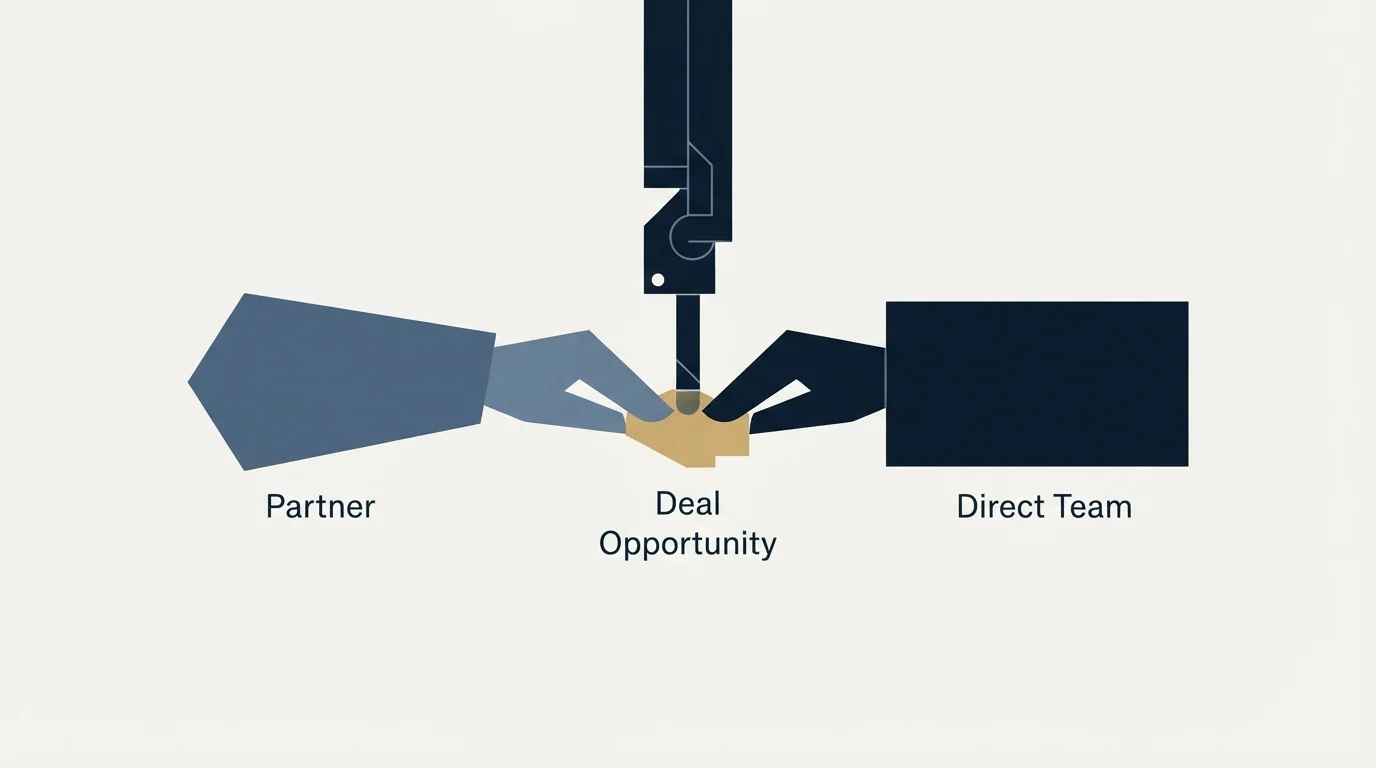
Most of the cost of a registration programme is incurred once, in the hour of the first dispute, and the way to make that hour cheap is to have written the answers down while nobody was losing money.
- Yes: What qualifies as net new, stated precisely enough for two people to agree
- Yes: The approval turnaround, as a number of working days, with a named owner
- Yes: The protection window, and whether it can be extended and on what evidence
- Yes: What happens when the deal is already in the direct pipeline on the day it is registered
- Yes: Whether the direct team can pursue a registered account for a different product
- Yes: Who adjudicates a two-partner dispute, and whether the decision is explained to both
- Depends: Whether the vendor may override a registration at all, and what compensates the partner if it does
- No: Deciding the first contested deal on the merits, in the moment, in your own favour
Two of those deserve a sentence each. The already-in-pipeline case is the most common rejection reason and the most contested, because a name sitting in a CRM with no activity against it is not a pursuit, and a partner who is told otherwise concludes the criterion is a way of saying no. Writing the test as recent, evidenced activity rather than as record existence removes most of the argument. And the different-product question decides whether an account is protected or a deal is: protecting the account is generous, protecting the specific opportunity is normal, and leaving it unstated means whichever reading is convenient will be used and noticed.
The honest first version
None of this requires software. As our partner enablement piece puts it, the honest first version of deal registration is a form and a rule about who wins a conflict, and it fails at a scale you will be able to feel. A shared form, a named reviewer, a written window and a log of decisions will carry a programme through its first dozen partners, and running it manually teaches you what your own criteria actually mean before you encode them somewhere expensive.
The purchase trigger is a real one and it arrives in a recognisable shape: registrations arriving faster than a person can review them, disputes that need a decision history nobody kept, or commission calculations that no longer reconcile. Buying before that point produces an administration surface with nothing to administer, and buying after it is a straightforward decision because the failure is visible in the inbox.
Where this sits against outbound

A registration policy is worth writing before the first partner signs, and it is worth remembering what it is not. It governs how credit is assigned for demand that already exists; it does not create demand. Deciding how much of the quarter should depend on the channel at all is the prior question, and sorting channels by how fast they answer is the comparison that makes it legible. A programme whose registrations are thin has a partner productivity problem or a market problem, and tightening the policy will not touch either.
The economics that sit underneath the discount also need to survive the partner's own cost of sale, which is the same arithmetic our piece on building a commission plan works through for direct sellers, applied to a company rather than a person. Recruiting the partners in the first place is an outbound problem, covered in our reseller-partnership approach, and RevenueFlow's own doctrine is one message per campaign with no bumps and no thread replies, which applies to partner recruitment as much as to customer outreach. If the channel is a year from producing anything and the quarter needs pipeline now, see what a first outbound campaign produces while the programme is being built.
The short version
Deal registration lets a partner claim an opportunity before pursuing it, and grants a protection window against other partners and against the vendor's own sellers. TechTarget's definition and Red Hat's published programme agree on the shape: submit, review against criteria, approve or reject, protect for a period, support the pursuit, pay a tiered margin on the close.
The failures are process failures. Slow approvals, opaque criteria, and above all an override that tells the channel the protection was never real. Write down what net new means, how fast an answer arrives, how long protection lasts, what happens when the deal is already in the direct pipeline and who decides a two-partner dispute. Set the entry tier at a rung a partner with no track record can actually reach. Then run it on a form until the volume makes that impossible.
Programme mechanics above are quoted from the vendor and channel pages linked in the text, fetched and verified 18 August 2026. Programme terms change. Verify current rules with the vendor before relying on them.
Frequently asked questions.
Frequently asked questions- What is deal registration?
- A formal step in a vendor's channel programme that lets a partner tell the vendor it is working a specific opportunity before investing further. TechTarget's Search IT Channel definition says an approved registration gives the partner exclusive rights or priority access for a specified time, protecting them from other partners and from the vendor's own sales team.
- How long is a deal protection window?
- It varies by programme, and TechTarget's page says protection periods vary based on the length of the sales cycle or the partner tier rather than sitting at one industry standard. The practical answer is to set it against your own median cycle, publish it, and decide in advance whether it can be extended and on what evidence.
- What is channel conflict and how does registration help?
- Competition between the parties selling the same product to the same customer. The two operating cases are partner against partner, which a timestamp mostly settles, and partner against your own direct team, which is harder because your sellers can escalate internally. Registration assigns ownership in advance so the decision is not made under pressure.
- Do you need software to run deal registration?
- Not to start. A shared form, a named reviewer, a written window and a log of decisions will carry a programme through its first dozen partners, and running it by hand teaches you what your criteria mean before you encode them. The purchase trigger is visible: reviews outpacing a person, or disputes needing a decision history nobody kept.
About the author.

Ben Carden is CRO at RevenueFlow, which builds and operates outbound revenue engines for B2B companies. Previously at Gartner Enterprise. Studied at London School of Economics.
Ben Carden · CRO
Connect on LinkedIn →Explore more.
Ready to scale your outreach?
We build GTM engines that book real meetings. See the receipts.
Related articles.
Market Development Funds: What the Money Buys
MDF is discretionary marketing money a vendor grants its channel. The allocation model decides how much of it is ever claimed, and how much is unspent.
Allbound: Merging Inbound and Outbound
Allbound runs inbound and outbound as one motion. Merging them creates two decisions: what a signal may trigger, and who is credited when both touched the deal.
Lead Verification: What Each Check Actually Proves
Lead verification covers two different jobs. One asks whether a mailbox will accept mail, the other asks whether the person behind the row is real and lawful to contact.
5 ABM Campaign Examples and How Each One Is Built
Five worked account-based campaign examples, each built on the same five fields: account set, tier, plays in order, owner and handoff, and the exit condition.
Unqualified Lead: Which Test It Actually Failed
One flag covers two opposite verdicts. A fit failure is stable and belongs in an exclusion; a readiness failure expires and belongs on a watch list with its trigger.
Two Agencies, One Target List: Who Owns Which Accounts
Two outbound suppliers on one market will contact the same companies unless the buyer splits it first. How to cut the list, run the exclusion feed and check the overlap.