Partner Enablement: The Motion and the Attribution Problem
Partner programmes have three parts: the people, what they are equipped with, and how their contribution gets counted. Most build the first and never decide the third.
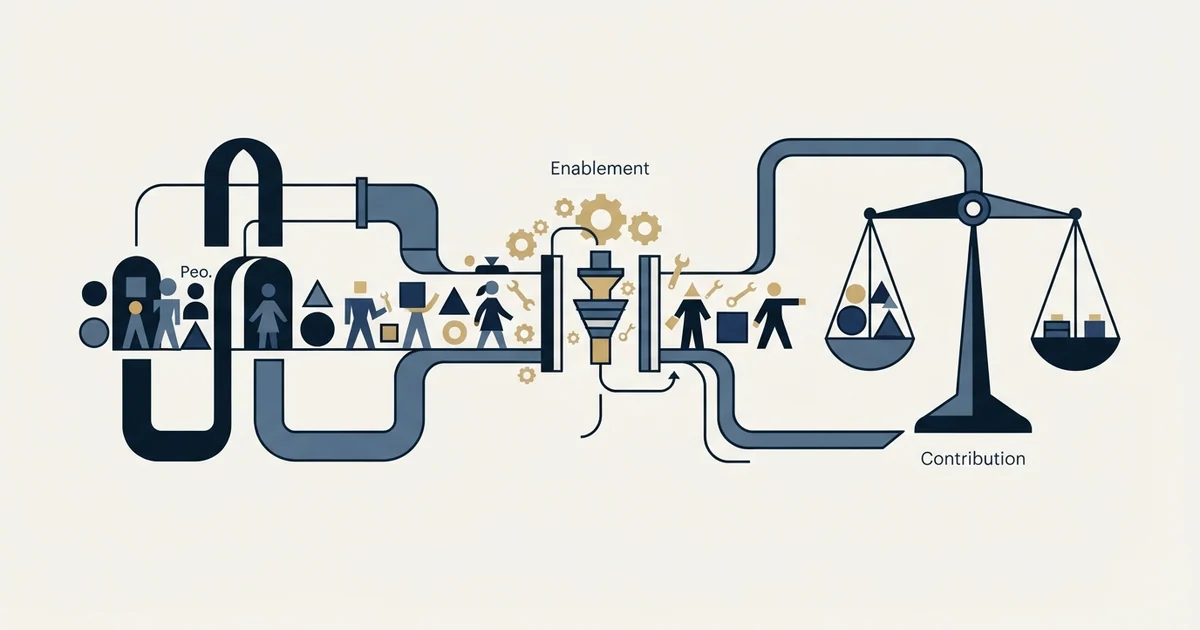
Partner enablement is the work of giving an independent company the capability to sell your product in front of its own customer. That is a qualification line short enough to remember, the ability to demonstrate without your team, and a named human who answers fast. The library of decks is the visible half and the least used.
Key takeaways
- A channel partner is an independent business with its own customers and priorities, and the archetype you sign decides what you owe them.
- Partner-sourced revenue means the partner created the opportunity; partner-influenced means they moved one that already existed. Reporting them as one number is what breaks trust with finance.
- The counterfactual test settles attribution: would this opportunity exist at all without the partner, and if it would, what specifically did they change.
- Account mapping produces more usable partner pipeline than a portal does, because a list of shared accounts is a call list and a list of partners is a directory.
Reviewed and updated October 1, 2026
A software company signs its first three reseller agreements, sends over the deck and the price list, adds a partners page to the website, and waits. Nine months later the partners have produced two introductions between them, nobody can say whether either would have arrived anyway, and the internal argument is about whether partners work rather than about which part of the programme was never built.
That argument is usually unanswerable, and it is unanswerable for a structural reason. A partner motion has three separable pieces: the people, what they are equipped with, and how their contribution gets counted. Most programmes build the first, skip the second, and never decide the third, which leaves nobody able to prove or disprove anything.
Everything below is what a channel partner program is actually made of: the archetypes you sign, what each one has to be equipped with, how a contested deal gets decided, and how the contribution gets counted afterwards. Partner relationship management software is the category name for the first of those three jobs, and the order to buy in above is the answer to which of them a programme actually needs first. Taken together these archetypes are what is now usually called a partner ecosystem, and the newer word is a reminder that a single deal often touches several of them at once rather than travelling down one line. That is also the honest test for partner onboarding: a first quarter that ends with a partner seller who can qualify, demonstrate and escalate has worked, and one that ends with completed portal training has not. A partner scorecard built before those two definitions exist measures nothing, because every revenue line on it inherits whichever reading the person filling it in happened to prefer that quarter.
An ISV partner, short for independent software vendor, is the technology or ecosystem archetype under the name the large platform programmes use for it, and the vocabulary is worth knowing because Red Hat, AWS, Epicor and Mendix all publish ISV programmes with their own tiers and requirements; the payments industry uses the same three letters for a software vendor that resells payment processing, which is a reselling relationship rather than an integration one and needs the reseller row of this table instead. Channel enablement is the same job under the older channel vocabulary, and the glossaries that define it list the collateral first, naming sales decks, product documentation and battlecards as what a partner is equipped with, which is precisely the library this section argues gets built first and used least. Partner portal software is another name for that first layer, since the portal is the surface a partner relationship management system presents to partners, and the buying question is the same one: a programme with no reporting problem does not need a portal, and buying one produces an administration surface with nothing to administer.
What a channel partner is, and why the type decides everything after
A channel partner is an independent company that markets, sells, delivers or supports your product to its own customers, in exchange for margin, commission or some other economic interest. It is not an employee and it is not an agency you pay to perform a task. It has its own customers, its own priorities and its own revenue model, and every design decision in a partner programme follows from that.
A SaaS partner program is that arrangement applied to software, with the same archetypes and the same three separable pieces, plus one condition specific to the category: a partner joining one is usually carrying several other vendors in the same folder and deciding which to raise in a live customer conversation.
People search this as channel partnerships, and the plural is a question about the archetypes rather than about one relationship: a distributor buying in volume, an OEM embedding your product in its own, and a referral partner making an introduction are three different agreements with three different economics, which is why the list below is a design tool rather than a filing system.
The archetypes differ enough that treating them as one category is the first mistake.
Before choosing an archetype there is a prior decision about whether to run a partner motion at all, which channel sales against direct sales works through segment by segment.
- Referral partners make an introduction and hand it over. You run the sale. Low friction to set up, low control over quality, and the economics are a finder's fee.
- Resellers and value-added resellers sell your product as part of their own offer, often with services wrapped around it. They own the customer relationship and frequently the invoice.
- Managed service providers embed your product in a service they operate on the customer's behalf, which makes their commitment deep and their switching cost real.
- Systems integrators and consultancies get paid to implement, and they influence the choice of what gets implemented long before a vendor is in the room.
- Technology or ecosystem partners integrate with you. There is no reselling at all; the value is that your two customer bases overlap and each can bring the other into accounts.
- Affiliates promote through a tracked link and earn per outcome, which is a marketing channel wearing partner vocabulary.
That first row is the archetype most people mean when they ask how a referral partnership works, and three questions follow from it. What the partner owes is an introduction and a clean handover, which is why enablement here is thin. What you owe is a description of who to look for that fits in a sentence they can remember. And what the fee looks like is a design decision rather than a standard: a payment to the partner and a discount to the referred client are both used, they are not equivalent, and the choice usually turns on whether the partner is a company that can invoice or an individual whose employer may forbid them accepting anything. A reciprocal arrangement between two vendors selling into the same buyers is the ecosystem row rather than this one, and it needs the conflict rule below written before the first contested deal rather than after it.
Impartner's glossary entry on the term gives the same spread in its examples, from a SaaS company working with value-added resellers and consultants, through a telecom company selling through local retailers, to co-branded reports with industry consultants and a network of thought leaders referring followers on a unique referral link so they earn a commission on each purchase. Its own observation is worth keeping: most partners play more than one role at once, so the taxonomy is a design tool rather than a filing system.
The reason to be precise about type is that each one fails differently and each one needs a different thing from you. A referral partner needs to know who to look for and how to hand over. A reseller needs margin, demo capability and a support path. An integrator needs documentation and a technical contact. Building one enablement programme for all of them produces a portal full of material that nobody's specific job requires.
- A one-line description of who to look for
- A clean handover route that does not require training
- Clarity on what happens to the relationship after handover
- Enablement is thin by design
- Margin that survives their own cost of sale
- Ability to demo without your team present
- A named technical and commercial escalation path
- Enablement is the heaviest here
- Working integration documentation
- A view of which accounts you have in common
- A co-selling motion both sales teams recognise
- Enablement is mostly data rather than content
Partner enablement is a capability problem, not a content problem
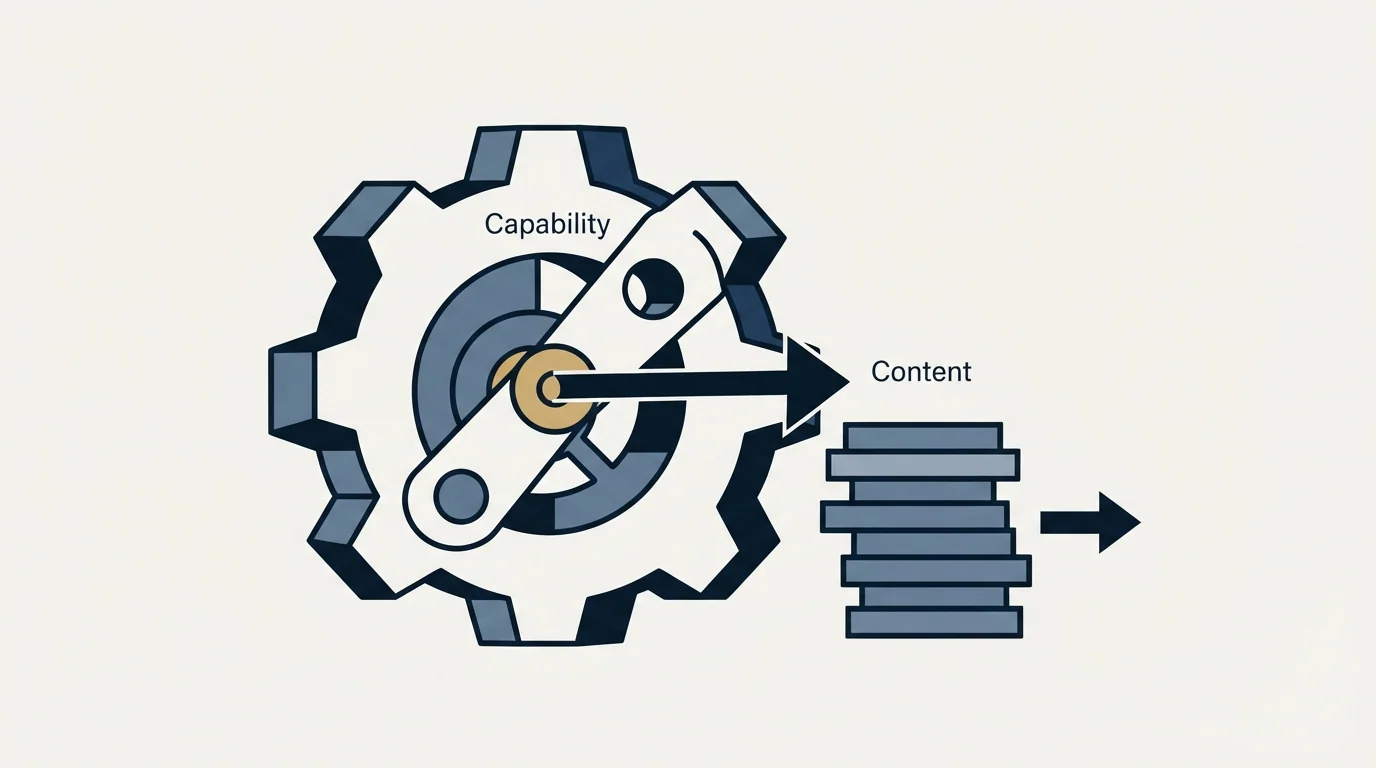
The default interpretation of enablement is a library: decks, one-pagers, battlecards, a certification path, a portal to hold it all. That is the visible half and it is the half vendors sell. It is also the half that gets built first and used least.
The question a partner's seller is actually facing is narrower. They have a customer conversation in progress, they have a limited amount of attention to spend on any one vendor in their portfolio, and they need to know whether raising your product in this conversation will make them look good. Everything that answers that question is enablement. Everything else is storage.
Three things answer it in practice. The first is a qualification line short enough to remember, because a partner seller will not consult a document mid-conversation. The second is the ability to demonstrate or describe the product without your team, which is the difference between a partner who can move a deal and a partner who can only schedule one. The third is a fast, named human, because the fastest way to stop a partner mentioning you is to make them wait on a question in front of their own customer.
This mirrors the four jobs hiding under the sales enablement label closely enough that the same warning applies: content consumes the budget and moves the least. The partner version is worse, because the content is competing for the attention of people who do not work for you and who have several other vendors in the same folder.
The attribution problem, which is where programmes actually die
A partner sourced client is one the counterfactual test puts on the sourced side, which is the same distinction under a different noun: the account exists because the partner brought it, not because the partner helped with it.
Partner attribution is the question of who gets credit for a deal several parties touched, and it is the reason partner programmes lose their budget. The distinction the practice turns on is between sourced and influenced revenue.
PartnerStack's own article on the subject draws the line cleanly: partner-sourced revenue is when a partner brings in the lead, through a referral form, a UTM link or a submitted opportunity, which it describes as a transparent handoff that is usually easy to track. Partner-influenced revenue is when a partner supports a lead that already existed, by answering objections, co-hosting a demo or otherwise moving a deal your team originated.
The useful test between them is a counterfactual. Would this opportunity exist at all if the partner were not involved? If the answer is no, it was sourced. If the answer is yes but the deal would have been slower, smaller or riskier, it was influenced. Written that way, the test can be applied by somebody who was not in the deal, which is the property that makes a number survive a finance review.
Two failure modes follow directly, and both are common enough to be predictable.
Counting influenced revenue as sourced. This is how a partner programme reports a number that finance does not believe, and once the number is disbelieved every subsequent number from that team is discounted. Influenced revenue is a real and worthwhile measure, and it is a different measure.
Not counting influence at all. The mirror error. A partner who consistently unblocks security reviews and shortens procurement produces no sourced pipeline and looks worthless in a report that only counts origination. That partner is usually the most valuable one in the programme.
- Step 1Establish the origin
Who created the opportunity record, and what event caused it. A referral form or a tracked link answers this without argument.
- Step 2Ask whether it would exist
Without the partner, does this opportunity happen at all. If no, it is sourced and the question is finished.
- Step 3Ask what the partner changed
If it would have existed anyway, name the specific contribution: access, technical validation, procurement, an executive relationship.
- Step 4Record both, separately
Sourced and influenced reported as two lines. Collapsing them into one number is what breaks trust with finance.
- Step 5Agree the rule before the quarter
Attribution decided after a deal closes is a negotiation. Decided in advance, it is a policy.
Account mapping, and where partner pipeline actually comes from

The mechanism that produces most technology-partner pipeline is unglamorous: two companies compare customer and prospect lists and find the overlaps. Account mapping is that comparison, done in a way that does not require either side to hand over its database.
Crossbeam, which built its business on this, describes the sequence on its own partners page as account mapping through to co-selling and attribution, with its technology partners integrating through its APIs to reach partner lists, account data and overlaps. Its solution-partner programme covers the services side, naming systems integrators, agency partners, VARs and consultancies as the organisations that help customers get more from the platform. The company's own pitch to new users is to connect a CRM and see which of your partners are already in the network.
The reason this works when a partner portal does not is that it answers the specific question a seller has. A list of your partners is a directory. A list of the eleven accounts where your partner is already the incumbent and you are in an open opportunity is a call list, and one of those two things gets used.
It also gives the enablement programme somewhere to point. Instead of asking a partner to think of prospects, you arrive with a shortlist of accounts you have in common and a reason to work each one. That converts enablement from a library into a set of specific conversations, which is the only form of it that survives contact with a partner's own quarter.
The tooling layer, and when you need none of it
Partner software divides into three jobs, and the categories are sold in overlapping bundles that make the boundaries hard to see from the outside.
Partner relationship management is the programme system of record: partner accounts, tiers, deal registration, commissions and the portal. This is the layer PartnerStack, Impartner and their alternatives occupy, and it is the one teams buy first and use least in the early stages. Attribution and tracking covers referral links, deal registration conflict rules and the sourced-versus-influenced reporting above; it is often bundled with the first layer and it is the part that has to work. Ecosystem or account mapping is the overlap comparison, which is a genuinely different product built on data sharing rather than on programme administration.
The order to buy in follows from which failure is currently costing you. A programme with five partners and no reporting problem does not need a portal, and buying one produces an administration surface with nothing to administer. A programme with forty partners and a disputed commission run has a real system-of-record problem. A programme with a handful of technology partners and no idea where the overlaps are needs the third layer and neither of the others.
Searching for an account mapping tool returns at least three unrelated product categories, so it is worth saying which one this is. The partner-ecosystem sense is the layer described here, and Crossbeam's own page defines it as taking a list of your pipeline and cross-referencing it with a partner's list of current or potential customers; Crossbeam and PartnerTap are the products that occupy it. The same phrase also names key-account relationship mapping, which account-planning vendors such as DemandFarm and Altify sell for charting stakeholders and divisions inside a single customer, and it names chart-of-accounts mapping in finance systems, which is unrelated to both. A buyer who asks for account mapping software without saying which of the three they mean will be shown all three.
The honest first version of all three is a shared document. Deal registration is a form and a rule about who wins a conflict. Attribution is a field on the opportunity with two possible values and a written definition. Account mapping is a spreadsheet exchange, which is exactly what the category automated. Each one fails at a scale you will be able to feel, and feeling it is a better purchase trigger than a category page.
- Yes: The partner type is named, and the enablement is built for that type
- Yes: A qualification line exists that a partner seller can remember without a document
- Yes: Sourced and influenced are defined in writing, before the first deal closes
- Yes: A named human answers partner questions inside a working day
- Yes: Conflict between a partner-registered deal and a direct deal has a written rule
- No: Recruiting more partners is the response to a programme that is not producing
- No: The portal is built before anyone has sold anything
The failure modes, in the order they usually arrive
Teams often say that channel partnerships require significant time investment, which is accurate and slightly misplaced: the cost is not the signing, it is the enablement and the attribution work that has to keep running afterwards, and the failure modes below are what that time is actually buying protection from.
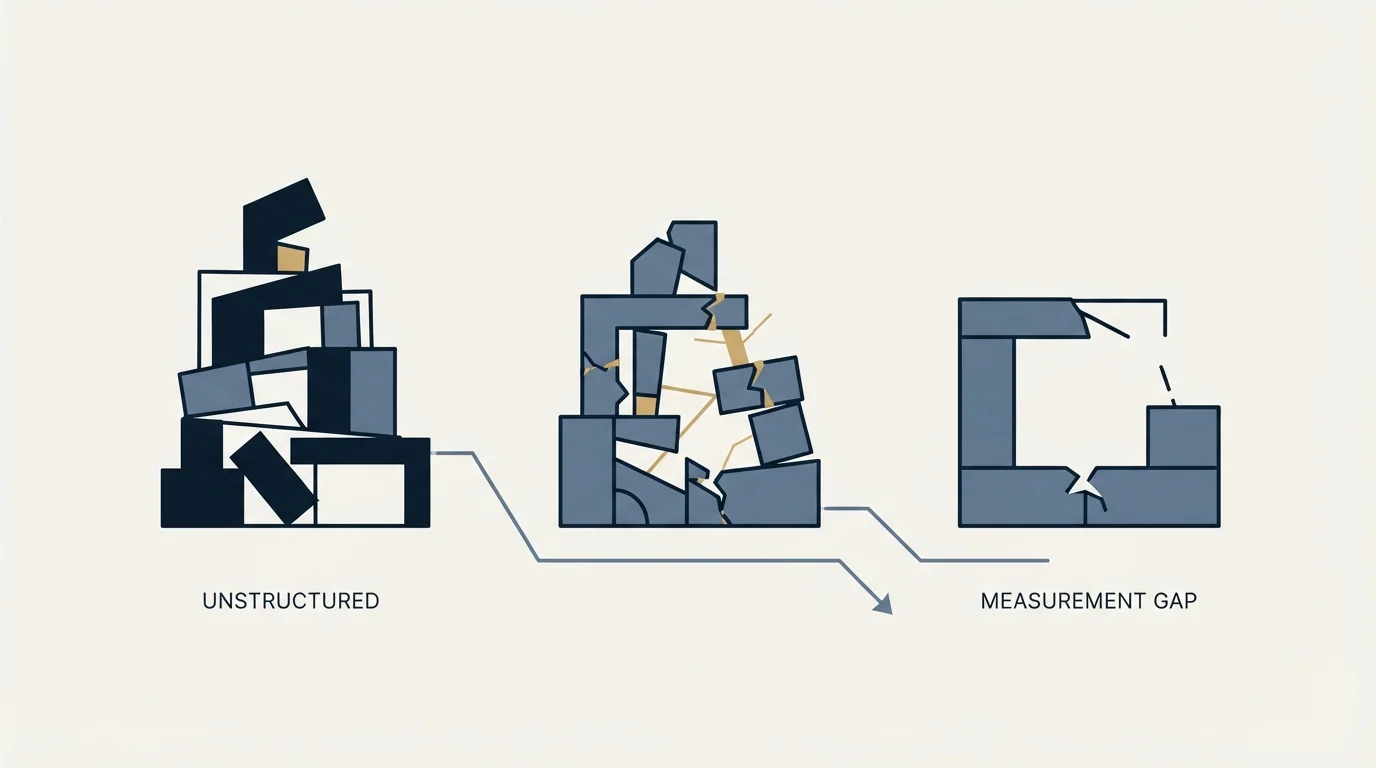
Recruiting instead of enabling. The most common one by a distance. Partner counts are easy to grow and easy to report, and a programme judged on partner count will grow the number that does not correlate with revenue. A small number of partners who can actually sell outperforms a directory.
Two symptoms of that failure are worth naming because they get diagnosed as different problems. A partner who has received introductions and sent none back is usually not being ungrateful, they are responding to demand they do not have, and reciprocity was assumed rather than agreed. A partner who has stopped sending leads and cannot send more is usually at capacity, which is a ceiling rather than a performance issue: their referral volume is a by-product of their own customer flow and is bounded by it. Neither is fixed by recruiting more partners, and both are visible in advance if the attribution above is defined before the quarter rather than after the invoice.
No conflict rule. The first time a partner registers a deal your own team is already working, the outcome sets the reputation of the entire programme in that partner community. Deciding it in the moment, in your own favour, is cheaper than the rule and much more expensive than the rule.
Margin that does not survive the partner's cost of sale. A reseller has to pay its own seller out of your margin. A number that looks generous against your gross margin can be uneconomic against their fully loaded cost, and the symptom is a signed agreement with no activity behind it.
Treating the partner's customers as your prospect list. The fastest way to end a channel relationship. This is the boundary that reseller and white-label programmes draw around customer ownership, and it is the one clause worth agreeing in writing before anything else.
Expecting the partner to generate demand. Most partners respond to demand rather than create it. A partner who is asked to prospect on your behalf, without a shared account list and a reason to call, will do the same thing your own reps would do with an unqualified list, which is very little.
Where this sits against outbound
Teams considering channel partnerships instead of outbound are choosing between two different clocks rather than two versions of the same thing, which is what the comparison here is for.
Partner-sourced pipeline and outbound pipeline are not substitutes and they do not have the same shape. Partner motions are slow to start, compound over years and depend on relationships you do not control. Outbound is slow in a different way, produces a result in weeks rather than quarters, and is entirely within your control. A team choosing between them on expected volume alone is comparing a compounding asset with a tap, which is why sorting channels by how fast they answer is the more useful comparison than sorting them by ceiling.
Recruiting the partners is itself an outbound problem, and it is the part of the motion most likely to stall first. The approach differs from a customer approach because the offer is different: you are proposing economics and access rather than a product. Our reseller-partnership approach and the broader partnership version cover that message, and the pay-per-lead affiliate structure covers the commercial shape at the thin end of the spectrum.
RevenueFlow runs cold email and LinkedIn, and our doctrine on both is one message per campaign with no bumps and no thread replies. A partner who ignored a generic proposition will not be moved by a reminder of it.
The short version

A channel partner is an independent business with its own customers and its own priorities, and the archetype you sign decides what you owe them. Enablement is the capability to sell your product in front of their own customer, which is a qualification line, a demo they can run and a human who answers fast, rather than a portal full of decks.
Attribution is where programmes die. Define sourced and influenced in writing, apply the counterfactual test, report both separately, and agree the rule before the quarter rather than after the deal. Account mapping produces more usable partner pipeline than a directory does, because a list of shared accounts is a call list and a list of partners is not.
Buy tooling against a failure you can feel. If the partner motion is a year from producing anything and the quarter needs pipeline now, see what a first outbound campaign produces while the channel is being built.
Vendor descriptions above are taken from the vendors' own pages, verified as of mid-2026 and linked in the text. Verify current programme terms with the vendor before relying on them.
Frequently asked questions.
Frequently asked questions- What is a channel partner?
- An independent company that markets, sells, delivers or supports your product to its own customers in exchange for margin, commission or another economic interest. The archetypes include referral partners, resellers and value-added resellers, managed service providers, systems integrators, technology or ecosystem partners and affiliates, and most real partners occupy more than one at once.
- What is the difference between partner-sourced and partner-influenced revenue?
- PartnerStack's own article draws the line at origination. Sourced means the partner brought the lead in through a referral form, a UTM link or a submitted opportunity. Influenced means the lead already existed and the partner supported it, by answering objections, co-hosting a demo or unblocking a review. Both are worth measuring and they are different measures.
- Do you need partner relationship management software to start?
- Not at the beginning. The honest first version of each layer is a document: deal registration is a form plus a written conflict rule, attribution is one field with two values and a definition, and account mapping is a spreadsheet exchange. Each fails at a scale you will feel, and feeling that failure is a better purchase trigger than a category page.
- Why do most channel partner programmes fail to produce pipeline?
- Usually because recruiting is measured and enablement is not. Partner counts grow easily and do not correlate with revenue. The other common causes are no written conflict rule for the first contested deal, margin that does not survive the partner's own cost of sale, and expecting partners to create demand when most of them only respond to it.
About the author.

Ben Carden is CRO at RevenueFlow, which builds and operates outbound revenue engines for B2B companies. Previously at Gartner Enterprise. Studied at London School of Economics.
Ben Carden · CRO
Connect on LinkedIn →Explore more.
Ready to scale your outreach?
We build GTM engines that book real meetings. See the receipts.
Related articles.
Deal Registration: Who Owns a Contested Deal
Deal registration lets a partner claim an opportunity before pursuing it. The policy is tested once, in public, on the first deal your direct team also wants.
Market Development Funds: What the Money Buys
MDF is discretionary marketing money a vendor grants its channel. The allocation model decides how much of it is ever claimed, and how much is unspent.
Allbound: Merging Inbound and Outbound
Allbound runs inbound and outbound as one motion. Merging them creates two decisions: what a signal may trigger, and who is credited when both touched the deal.
Lead Verification: What Each Check Actually Proves
Lead verification covers two different jobs. One asks whether a mailbox will accept mail, the other asks whether the person behind the row is real and lawful to contact.
5 ABM Campaign Examples and How Each One Is Built
Five worked account-based campaign examples, each built on the same five fields: account set, tier, plays in order, owner and handoff, and the exit condition.
Two Agencies, One Target List: Who Owns Which Accounts
Two outbound suppliers on one market will contact the same companies unless the buyer splits it first. How to cut the list, run the exclusion feed and check the overlap.