Sales Rep Incentive Programs: What a Short-Term One Moves
An incentive moves behaviour inside the rep control that completes inside the window. Design rules, the failure modes, and the problems a contest cannot fix.

A sales rep incentive program borrows attention for a window, sitting on top of the standing compensation plan rather than replacing it. It moves behaviour inside the rep control that completes inside that window, which is why top-of-funnel incentives produce a response and long-cycle revenue incentives mostly redistribute deals already closing.
Key takeaways
- The compensation plan sets the economics of the job and a short-term incentive borrows attention for weeks. Reaching for a contest when the plan is the problem produces a visible response for as long as it runs and leaves the structural issue in place.
- An incentive only moves behaviour inside the rep control that completes inside the window. A prize for revenue closed this month, in a business with a four-month cycle, buys deals that were closing anyway plus a little discounting to pull one forward.
- Point it at one behaviour, publish the counting rules and end date before it starts, pay quickly, cap the outlier and pick a unit that cannot be inflated. A rule invented mid-contest reads as the company changing terms once it saw who was winning.
- Whether a program worked is hard to establish honestly. Measure the counted unit and the two steps downstream of it, for the window and for an equal window afterwards, which exposes pull-forward and quality collapse without needing a control group.
Reviewed and updated September 1, 2026
A contest gets announced on a Monday. Highest number of booked meetings this month takes the prize, the leaderboard goes up on a screen, and by Friday the meeting count is up. Nobody checks in April how many of those meetings were held, and nobody notices that the following month's count sits below where it was before the contest started.
Short-term sales incentives are a real instrument with a narrow range. Most of the disappointment around them comes from asking them to do a job that belongs to the compensation plan, the targeting, or the manager.
Two instruments that get confused
The standing compensation plan sets the economics of the job. It is the answer to what this role earns for doing what it exists to do, it runs for a year or more, and it is where the serious money sits. Changing it is expensive, slow, and correctly treated as a contract negotiation.
A short-term incentive borrows attention for a window. It sits on top of the plan, pays less, runs for weeks rather than quarters, and points at one behaviour that the business wants more of right now. Sales teams call these programs, contests or SPIFs depending on the shape, and the vocabulary is not consistent between companies.
The confusion is expensive in one specific direction. When a compensation plan is not working, a contest is the cheap thing to reach for, and it will produce a visible response for about as long as it runs. The underlying problem is still there afterwards, and it has now been papered over once, which makes it harder to argue about the second time.
That is the practical difference between incentives and commission: commission is the standing contractual share of what a seller closes, while an incentive is a separate reward the company attaches to one behaviour for one window.
What a short-term incentive can actually move
The test is narrow and it holds up well: an incentive moves behaviour that is inside the person's control and that completes inside the window.
Booking a meeting is inside a rep's control and completes in days. Updating a CRM field is inside their control and completes in minutes. Closing an enterprise deal that entered the pipeline three months ago is substantially not inside their control this month, and it certainly does not complete on demand.
That is why incentives aimed at the top of the funnel produce a clean response and incentives aimed at the bottom produce a redistribution. Offering a prize for revenue closed in a month, in a business with a four-month cycle, is an offer to buy deals that were going to close anyway, plus a small amount of discounting to pull one or two forward. The money is spent, the number moves, and the pipeline is thinner afterwards by exactly what was pulled.
- Everybody can win, so nobody disengages
- Cost is predictable per unit of the behaviour
- Works only where the behaviour is countable and verifiable
- The countable version of the behaviour is what arrives
- Best shape for a short-cycle, top-of-funnel action
- Cost is fixed and known in advance
- Motivates only those who believe they can win it
- Everybody outside contention has no incentive left once the order settles
- Frequently measures territory quality rather than effort
- Needs handicapping to mean anything on unequal patches
- Reduces the zero-sum dynamic of a ranked contest
- Individual contribution becomes harder to see as the group grows
- Non-cash awards are chosen for memorability rather than cash value
- Payroll treatment of awards differs by type and country, so ask first
- Weak where the team has no shared mechanism to affect the outcome
The design rules that separate a program from a gesture
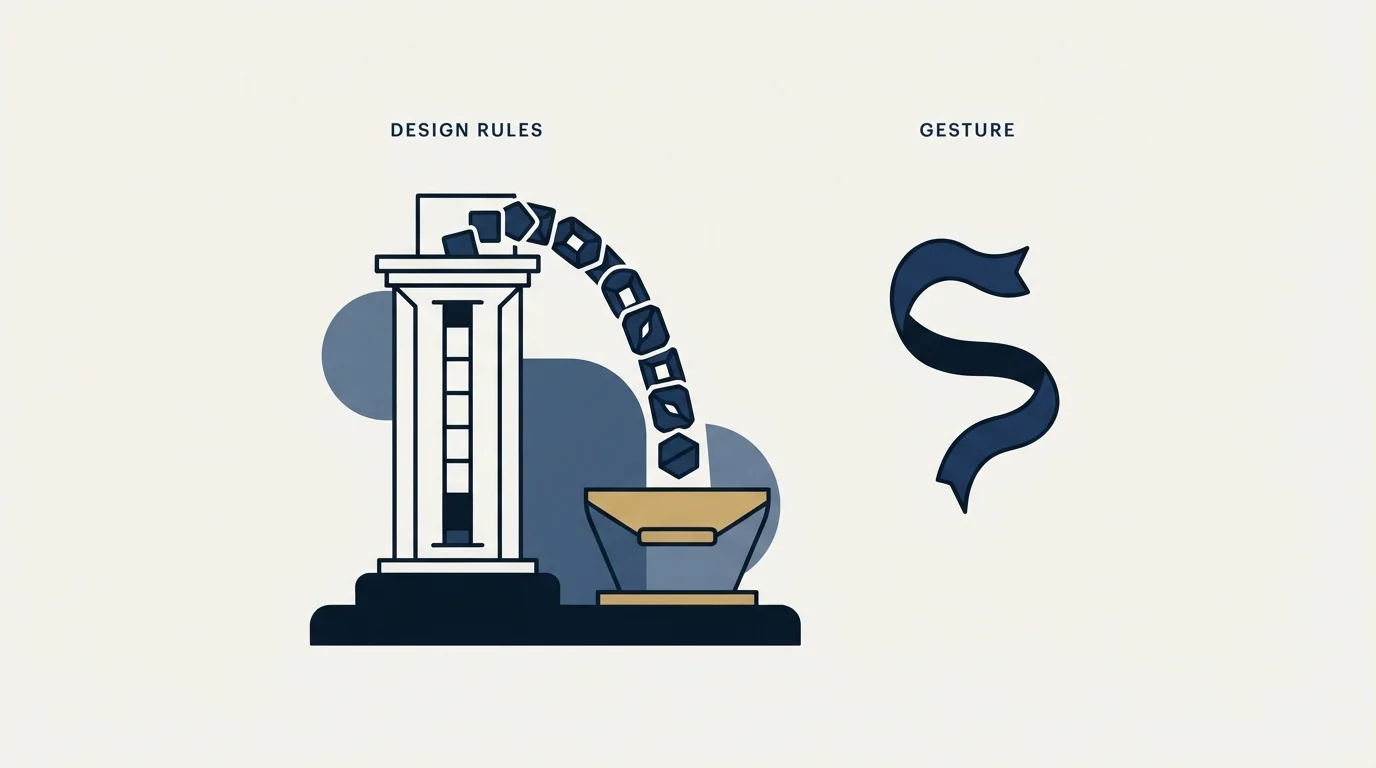
One behaviour. An incentive pointing at three things points at none of them. If the business genuinely needs three things, it needs a plan change rather than a contest.
A short window, announced with an end date. Long contests stop being salient in the second week and become a background condition, which is the worst of both worlds: the cost is incurred and the attention is not bought.
Rules published before it starts, in writing. What counts, what does not, when it is measured, how ties break, and who adjudicates. A rule invented mid-contest to handle an edge case is read as the company changing the terms once it saw who was winning, which costs more trust than the contest was ever going to buy.
Fast payment. The gap between the behaviour and the reward is doing most of the psychological work. A prize paid in the next quarter's payroll run has been converted into an ordinary bonus.
A named cap or windfall clause. One person finding a way to produce four hundred of the countable thing is a possibility to plan for, not a scandal to react to.
A verifiable count. If the metric can be inflated without anybody lying, it will be, and the resulting argument will be about the person rather than about the design.
- Yes: Name the single behaviour, and confirm it is inside the rep's control
- Yes: Confirm the behaviour completes inside the window
- Yes: Write the counting rule, including what is excluded
- Yes: Set the start and end dates, and the payment date
- Yes: Decide the cap, the tie-break and the adjudicator
- Yes: Check the payroll and tax treatment of the award type before promising it
- Depends: Write down what the program is expected to move, and what would count as it having worked
- Depends: Decide whether the previous period is a fair comparison, and if not, what is
The failure modes, all of them predictable
Pull-forward. The program moves work across the boundary rather than creating it. The tell is the period immediately after, and the only way to see it is to keep measuring for as long again as the program ran.
Cannibalisation of the compensation plan. A rep chasing the contest metric is not chasing something else, and the something else is usually the slower, more valuable work: account research, multi-threading, the second conversation with a stalled deal.
That slower work of mapping stakeholders, gains, and unnamed risk on a stalled deal is what the Blue Sheet planning method forces a rep to write down.
Territory capture. In a ranked contest on unequal patches, the same person wins repeatedly, and after the second time the contest has stopped being an incentive for anybody else. It is now a recognition program for one person, at the cost of a prize each time.
Quality collapse in the counted unit. Where a program counts meetings booked, meetings booked is what improves, and the held rate, the qualified rate and the opportunity rate can all fall while the headline number rises. This is the most common and most expensive version, because the counted unit sits at the top of a chain nobody re-measures. Running discovery so it disqualifies well is where the damage becomes visible, usually a fortnight after the program ends.
The counted unit's honesty matters well beyond contests, since what AI forecasting tools can actually read depends on that same recorded data being trustworthy.
Incentivising something the rep does not control. A prize for a metric driven by demand, by product, or by the marketing calendar is an announcement that the company does not understand its own funnel, and reps read it that way.
The measurement problem nobody solves cleanly
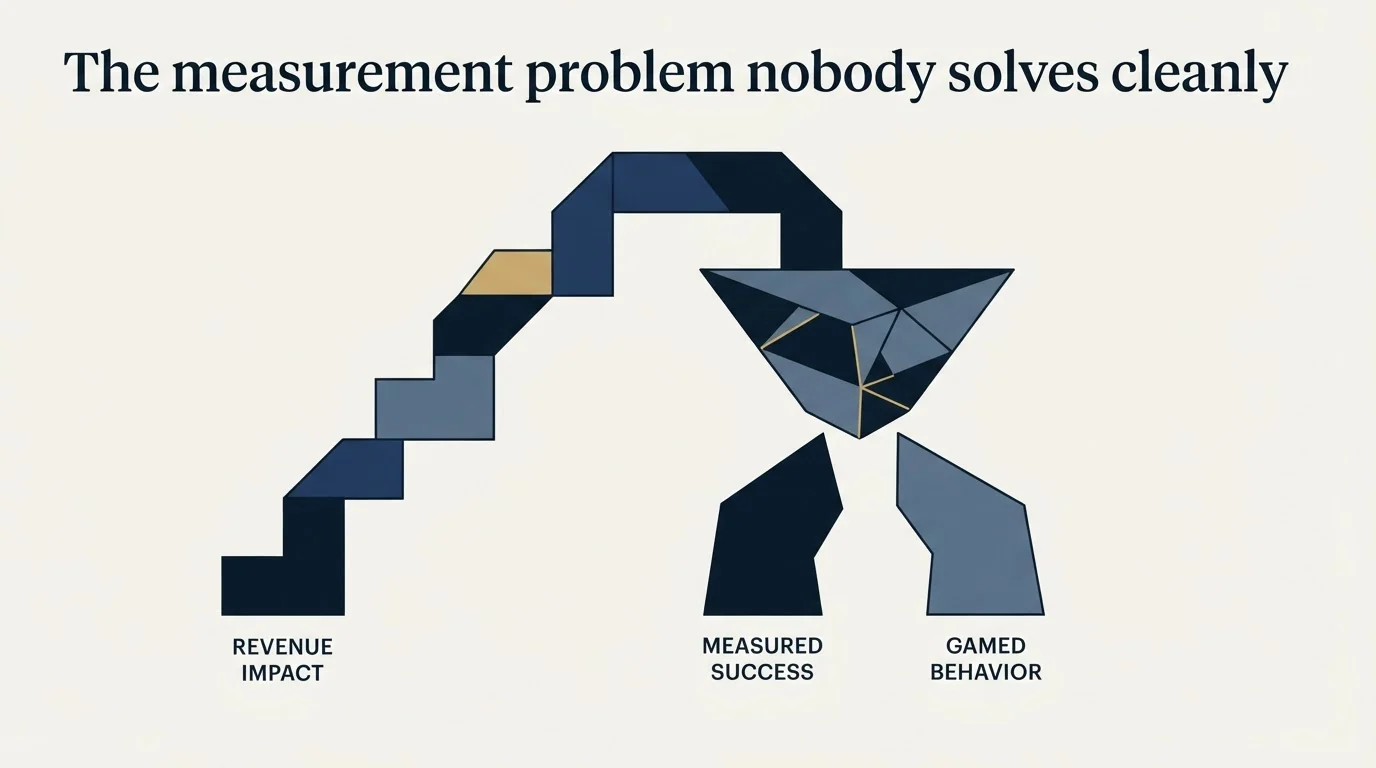
Whether an incentive worked is genuinely hard to establish, and it is worth being honest about that rather than producing a number.
The comparison usually made is the program period against the period before it. That comparison is contaminated by seasonality, by the pipeline that already existed, by any other change made in the same weeks, and by the fact that the announcement itself changes reporting behaviour. No uplift figures are published here, because the credible ones would need a design almost nobody runs.
A fairer read needs one of three things: a holdout group of comparable reps who were not eligible, the same program run at a different time of year, or a metric chain measured for the same length of time after the program as during it. The third is the cheapest and the one to insist on. Measure the counted unit and the two steps downstream of it, for the window and for an equal window afterwards, and the picture is usually clear without any statistics.
Quota attainment and win rate are the two figures worth watching across that longer window, because both will absorb the damage from a program that bought volume at the cost of fit, and neither will move during the program itself.
When the answer is not a program
Several problems present as motivation problems and are not.
A team missing quota broadly is usually carrying a plan set above what the territories and conversion rates support, and no contest changes that arithmetic. A team producing meetings that do not convert has a targeting or qualification problem, and paying for more of those meetings makes the quarter worse. A new team executing inconsistently needs training and ramp in the order that protects the list rather than a prize, since an incentive on a behaviour somebody has not yet learned to do well produces volume of the poorly done version.
Where the issue is management attention rather than rep motivation, the intervention belongs with the manager, and what the sales development manager role actually owns sets out which of these problems is theirs by design.
And where the constraint is the number of qualified conversations reaching the team at all, incentives are being spent on the wrong side of the equation. How the cost math works between an outsourced and an in-house seat is the comparison that usually settles it. We are paid on attended meetings that meet criteria agreed in writing before launch, which is the same discipline this page recommends for a contest metric: define what counts before the money is attached to it. See what a first campaign produces.
The short version

A short-term incentive borrows attention for a window. It moves behaviour inside a rep's control that completes inside that window, and it cannot move long-cycle outcomes, demand, or the quality of a target list.
Point it at one behaviour, publish the rules and the end date before it starts, pay quickly, cap the outlier, and pick a unit that cannot be inflated. Expect pull-forward, expect the counted unit to improve faster than the thing it is supposed to lead to, and expect a ranked contest on unequal territories to stop motivating anybody after the second run. Measure the two steps downstream for as long again as the program ran, and treat the standing compensation plan, not the contest, as the place where a structural problem gets fixed.
Frequently asked questions.
Frequently asked questions- What is the difference between a SPIF and a commission plan?
- The commission plan is the standing economics of the role, runs for a year or more and is where the serious money sits. A SPIF is a short-term incentive layered on top, pointing at one behaviour for a few weeks and paying much less. Using one to patch the other is the most common and most expensive confusion.
- Do sales contests actually work?
- They reliably move a countable short-cycle behaviour while they run. Whether that is worth the cost depends on what happens to the two steps downstream and to the period afterwards, which is what most programs never measure. Ranked contests on unequal territories stop motivating anybody once the same person has won twice.
- What should a sales incentive program measure?
- One behaviour the rep controls, that completes inside the window, and that can be verified rather than self-reported. Meetings booked is the common choice and it carries a specific risk: the held rate, the qualified rate and the opportunity rate can all fall while the headline count rises, so measure those alongside it.
- When should you not run a sales incentive program?
- When the team is missing a quota set above what territories and conversion rates support, when meetings are being produced that do not convert, or when a new team has not yet learned to do the behaviour well. Each of those presents as a motivation problem and none of them is one.
About the author.

Ben Carden is CRO at RevenueFlow, which builds and operates outbound revenue engines for B2B companies. Previously at Gartner Enterprise. Studied at London School of Economics.
Ben Carden · CRO
Connect on LinkedIn →Explore more.
Ready to scale your outreach?
We build GTM engines that book real meetings. See the receipts.
Related articles.
Sales Commission: A Plan That Survives a Bad Quarter
The headline rate is the last decision, not the first. How to derive a commission plan from contract value and margin, and the clauses that decide a bad quarter.
Sales Crediting: Who Gets Paid on a Four-Person Deal
Crediting decides who is recorded as earning a sale, and it is a separate decision from the rate. Settle the rule before the quarter, not after the close.
OTE in Sales: What Decides Whether the Number Arrives
On-target earnings is a forecast written in the grammar of a salary. Pay mix, quota and last year's attainment decide whether the number on the letter arrives.
Sales Kickoff Meeting: The Decisions It Has to Leave With
A kickoff is the one moment a whole sales organisation can change at once. The four decisions it has to publish, and the week-six check that tests them.
Sales Call Planning: The Plan a Booked Call Needs
A call cannot produce a commitment nobody named in advance. The four fields a call plan carries, and why the ask has to be decided before the meeting opens.
The Seven-Step Sales Process: What Each Step Assumes
Prospecting through follow-up, walked one box at a time. Each of the seven steps carries an assumption about the buyer, and most of them have quietly stopped holding.