Sales Call Planning: The Plan a Booked Call Needs
A call cannot produce a commitment nobody named in advance. The four fields a call plan carries, and why the ask has to be decided before the meeting opens.
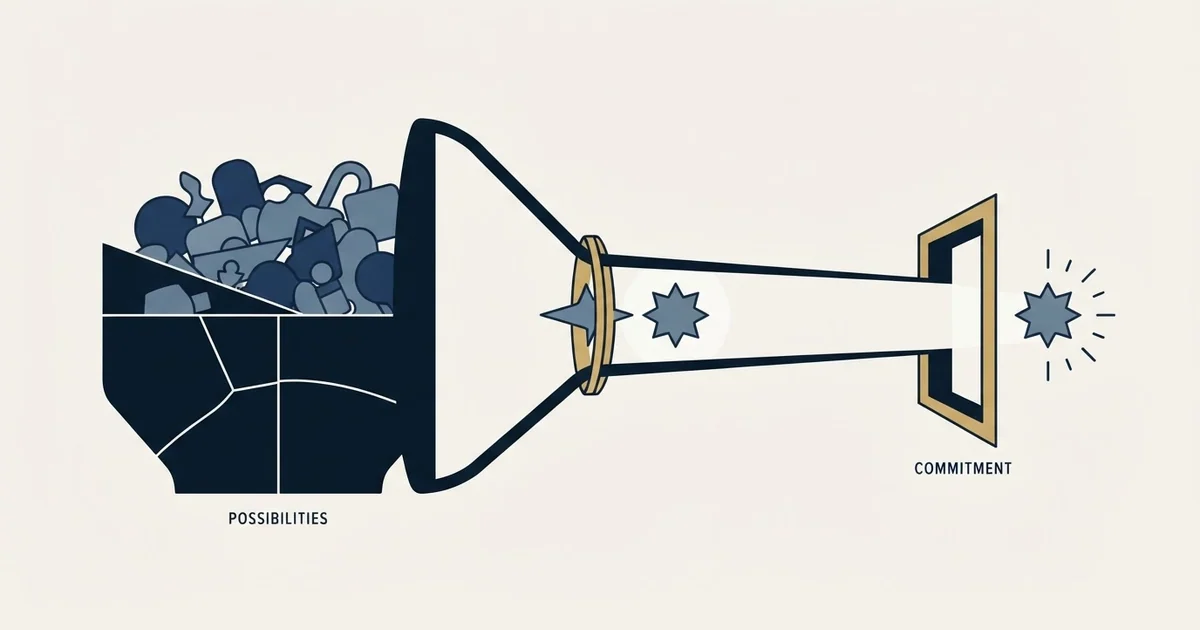
Sales call planning is deciding before a booked conversation what the call is for and what you will ask for at the end. A sales call plan is one page with four fields: an objective phrased as something the buyer does, a hypothesis, three questions plus a disqualifier, and a specific ask with a fallback.
Key takeaways
- A sales call plan fixes four decisions before the conversation: the objective, a hypothesis, three questions with a disqualifier, and the ask with a fallback.
- Write the objective as something the buyer does, such as a dated review with a named colleague, because an objective about learning cannot fail.
- Offer a light hypothesis early as something to correct, since buyers agree with confident diagnoses out of politeness and the correction is the valuable part.
- Research hits a ceiling at roughly ten minutes for a first conversation, and an outbound call needs a thinner premise than an inbound one.
Reviewed and updated September 18, 2026
Ten minutes before a booked call, a rep opens the prospect's website, reads the homepage, skims a funding announcement, and joins the meeting. The call goes fine. Everybody is pleasant, the rep describes the product competently, the prospect says it sounds interesting, and the meeting ends with an agreement to send some information over. Nothing about that call was badly executed. It simply had no plan, so it had no outcome it could fail to reach.
A sales call plan is the short document a seller writes before a booked conversation that fixes what the call is for, what has to be learned in it, and what specific thing is being asked for at the end. Scripts fix wording and research files gather facts, and this does neither. It carries four decisions made while there is no social pressure in the room, so that thirty minutes later the seller is executing a choice rather than improvising one.
What is sales call planning?
Sales call planning is deciding, before a booked sales conversation, what the call is for and what you will ask for at the end of it. The output is a sales call plan: a one-page note with four fields, the objective, a hypothesis about the buyer's problem, three questions and the ask. It takes about ten minutes, and its job is to make sure the commitment you want was chosen before the call and not improvised during it.
The plan decides the outcome the call can reach
The reason planning matters is narrower than the advice around it suggests. A conversation cannot produce a commitment nobody named in advance, because the moment to ask for it arrives at minute twenty-six, when the exchange has been warm and asking for something specific feels like a change of register.
Sellers who plan the ask before the call make it. Sellers who do not, do not, and the difference has nothing to do with confidence. Deciding what you want in a room with no prospect in it is a different cognitive task from deciding it in front of one, and only the first version survives the social gradient of a pleasant conversation.
Everything else in a call plan exists to make that final ask specific and defensible.
The four fields
A plan that runs longer than a page has become preparation for its own sake. Four fields carry the work.
The objective
Write it as something the buyer does. A calendar event with a named colleague in it. A shared document with their numbers in it. A technical review scheduled. Access to the person who owns the budget line.
The version that fails is an objective phrased as something the seller learns. Understanding their process is not an objective, because it is satisfied by any conversation at all and therefore cannot tell you whether the call worked.
One objective per call. A plan carrying three is a plan carrying none, because the moment the first one becomes awkward, the seller quietly switches to whichever of the other two the conversation has drifted toward.
The hypothesis
The hypothesis is one sentence: why you think this specific company has the problem you sell into, based on something observable from outside it. Recent hiring in a function. A new site. A product launch that implies a volume change. A regulatory date.
Two failure modes sit either side of it. Arriving with no hypothesis produces a survey, and the buyer does the work of explaining their own business to a stranger who could have looked. Arriving with a detailed one produces confirmation, because the seller asks leading questions, hears agreement and leaves with a theory rather than information. Buyers agree with confident diagnoses out of politeness, which makes that failure invisible in the moment.
The posture that works is a light hypothesis offered early as something to correct. Saying that you tend to see a particular pattern at companies at this stage, and that you would rather hear how it actually works here, invites contradiction. The contradiction is the valuable part.
The questions
Three, carried from memory, plus one that can end the conversation.
The test for each is mechanical: could the answer change what you end up recommending? A question whose answer goes into a field and changes nothing is administration, and buyers can tell within about two of them. The consultative ordering sets out why the diagnostic value of a question depends entirely on what the asker already knows about a healthy version of the buyer's operation.
Three is the number because a longer bank gets worked through rather than asked, and a worked-through list is audible as an interrogation. Preparing a second question for each plausible answer to the three is worth more than adding a fourth.
The disqualifying question is the one most plans leave out, and it is the one to write down first, while you have no emotional investment in the answer. Deciding in advance the two facts that would make this company not worth pursuing is what makes it possible to act on them thirty minutes later, when the conversation has been enjoyable and you would rather not.
The ask
Specific, with a date and a named person. Not a follow-up next week.
The useful discipline is to write two versions: the ask you want, and the smaller ask you will make if the conversation says the larger one is premature. A seller with only the large version either forces it or abandons the ask entirely, and both outcomes end the call with nothing committed.
CALL PLAN · example only, invented company · first call, booked from outbound
Objective: their operations lead joins a 30-minute review on the 14th. Fallback: they share last month's returns report 1
Hypothesis: a second warehouse opened in the spring, so returns are now handled in two places with one process 2
Questions: how a return moves today, what was tried before, what happens if nothing changes. Disqualifier: returns are outsourced 3
The ask: the review on the 14th, with the operations lead named on the invite 4
- 1Something the buyer does, with a smaller version beside it in case the large one is premature.
- 2One sentence, resting on something visible from outside the company, offered early for correction.
- 3Each answer could change the recommendation, and the disqualifier was written before there was anything to lose.
- 4A date and a named person. It matches the objective, which is how you know the plan is about one thing.
The research has a ceiling, and it arrives fast

Preparation reaches diminishing returns faster than most sellers expect, and the ceiling is roughly ten minutes for a first conversation.
What is worth having: what the company does in its own words, roughly how big it is, what this person's role likely involves, and one recent observable change. That is enough to earn better questions.
What is not worth having: a detailed reconstruction of their internal process, assembled from job postings and a conference talk. Beyond a certain depth, research stops producing questions and starts producing a position the seller then defends. Enriched company data at scale is the same set of facts gathered in advance rather than a deeper one, so it buys coverage across a list rather than depth on an account, and it hits the same ceiling.
The exception is a second or third conversation, where preparation is re-reading what the buyer already said, in their own words, rather than gathering anything new. A seller who cannot quote the buyer's own description of the problem back to them has lost most of what the previous call produced.
The plan itself
Short enough to write in ten minutes and to read in one. Copy it into a note.
CALL PLAN            Company: ........  Person: ........  Date: ........

OBJECTIVE   The one thing they do at the end: .......................
            Fallback ask if that is premature: .....................

HYPOTHESIS  What you believe is true here, and the observation behind it:
            ..........................................................

QUESTIONS   1 ........................................................
            2 ........................................................
            3 ........................................................
            Disqualifier: what would make this not worth pursuing:
            ..........................................................

AFTER       What they committed to, in their words: .................
            Owner and date: ...........  Written into the CRM: [ ]
The last block is the one that changes behaviour, because a plan that is never read back is a suggestion. Filling it in immediately after the call, before the next one starts, is the whole difference between a plan and a ritual.
Finished when
- The objective names something the buyer does, not something we learn
- A smaller fallback ask is written down beside the main one
- The hypothesis rests on something observable from outside the company
- Each question could change what we end up recommending
- The disqualifying condition was decided before the call
Not finished if
- The plan names every stakeholder we hope to reach in one call
- Preparation ran past the point where it produced a position to defend
Where the call came from changes the plan

A conversation that arrived from inbound and one that arrived from outbound start in different places, and running the same plan against both is a common and expensive mistake.
An inbound prospect has already named a problem to themselves, so the hypothesis field can be thinner and the questions can go deeper sooner. An outbound prospect took the call out of mild interest, and the first job is establishing whether the problem you assumed exists actually does. Opening an outbound conversation at inbound depth reads as presumptuous, because the premise has not been earned yet.
The same split applies to the objective. An inbound conversation can reasonably aim at a technical review. An outbound one usually cannot, and a plan that aims there anyway produces a seller pushing for a commitment the buyer has no reason to make.
| No plan: decisions made in the room | Planned: decisions made at the desk | |
|---|---|---|
| Opens with | A request to hear about their business | A hypothesis offered for correction |
| Questions | Chosen by whatever the last answer suggested | Three whose answers change the recommendation |
| The ask | Improvised at minute twenty-six, or skipped | Written, with its fallback, before the call |
| Ends with | Information to be sent over | A commitment carrying a date and a name |
| Recorded | Nothing the next person could use | The buyer's own words, not a summary |
What planning cannot fix
Two things sit outside the reach of any call plan, and mistaking either for a preparation problem wastes a quarter.
A plan cannot rescue a badly chosen account. A careful diagnosis of a company that was never going to buy is expensive in exactly the way the discipline is supposed to prevent, and the correction sits in the targeting rather than in the preparation. That is why a written entry standard belongs upstream of the calendar, agreed before anyone is contacted.
And a plan cannot manufacture a conversation. Everything above describes conduct inside a meeting that exists, which is the same boundary every methodology on the shelf shares. The methodologies differ in which argument they make about the conversation, and none of them explains how a seller with genuine diagnostic ability gets thirty minutes with somebody who has never heard of them.
Where the shortage is meetings rather than what happens inside them, planning is the wrong investment and the money belongs at the top of the funnel. The way to tell them apart is to take five recent losses and ask what would have had to be different. Where the answers are mostly that you never got in front of them, the constraint is supply.
The short version
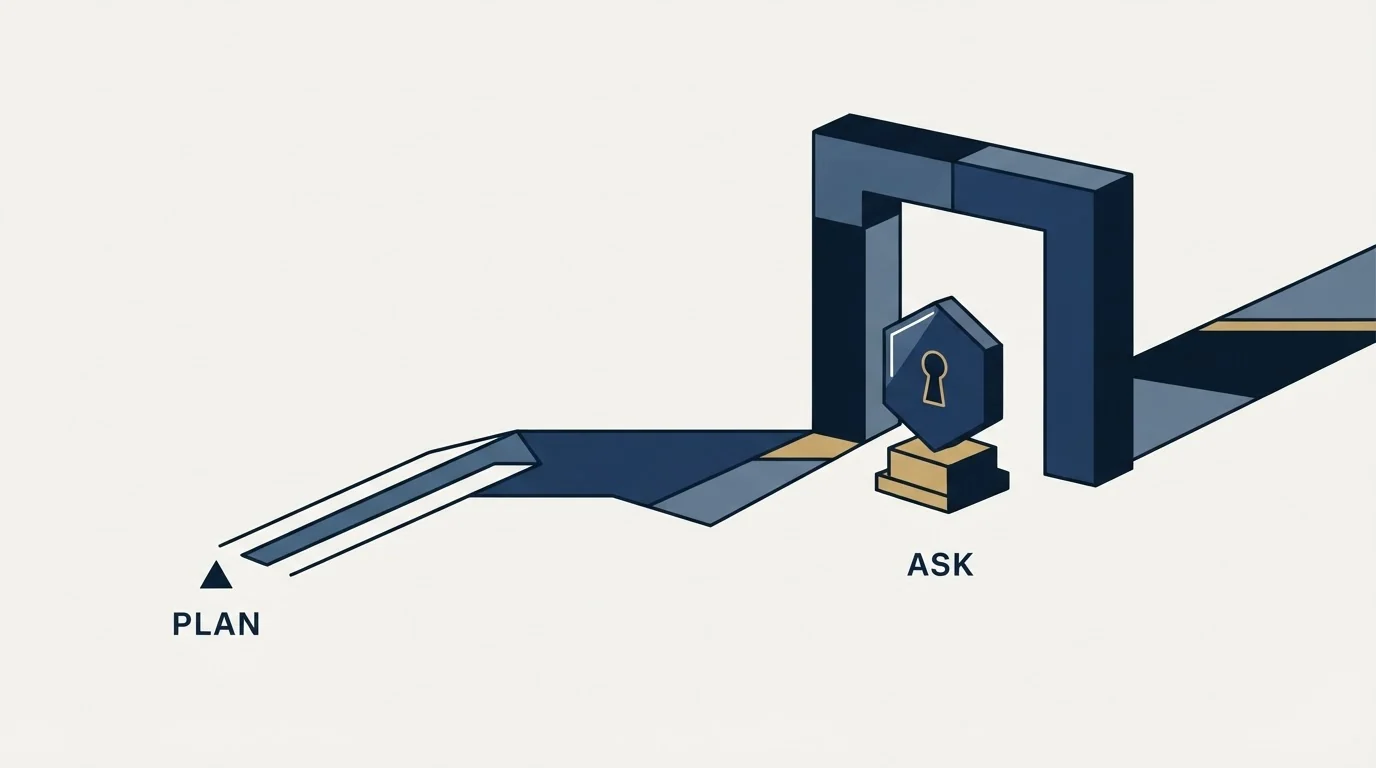
A sales call plan is four decisions written down before the conversation: one objective phrased as something the buyer does, one hypothesis grounded in something observable, three questions whose answers could change the recommendation, and a specific ask with a fallback beside it.
Write the disqualifying condition first, while it costs nothing. Stop researching at the point where preparation starts producing a position rather than a question. Match the depth of the plan to where the meeting came from, because an outbound conversation has not earned the premise an inbound one arrives with. And record what the buyer actually said, in their words, before the next call starts.
The plan is worth building for the meetings you have. If the honest problem is that there are too few of them, that is a supply question. See what a campaign against your own segment produces, with the qualification criteria agreed in writing before anything sends.
Structure inside the meeting itself, including what the last five minutes are for, is covered in running a discovery call that disqualifies well.
Frequently asked questions.
Frequently asked questions- What is sales call planning?
- Sales call planning is deciding, before a booked sales conversation, what the call is for, what has to be learned in it, and what specific thing will be asked for at the end. The result is a short written plan, made while there is no social pressure in the room, so the seller executes a choice instead of improvising one.
- What should a sales call plan include?
- Four fields on one page. An objective phrased as something the buyer does. A one-sentence hypothesis about why this company has the problem, based on something observable. Three questions whose answers could change the recommendation, plus a disqualifying question. And a specific ask with a date and a named person, with a smaller fallback beside it.
- How long should you spend preparing for a sales call?
- Roughly ten minutes for a first conversation. That covers what the company does in its own words, roughly how big it is, what this person's role likely involves, and one recent observable change. Beyond that, research stops producing questions and starts producing a position the seller then defends.
- How is planning an outbound call different from an inbound one?
- An inbound prospect has already named a problem to themselves, so the hypothesis can be thinner and the questions can go deeper sooner. An outbound prospect took the call out of mild interest, so the first job is establishing whether the assumed problem exists. Aiming an outbound call at a technical review usually pushes for a commitment the buyer has no reason to make.
About the author.

Ben Carden is CRO at RevenueFlow, which builds and operates outbound revenue engines for B2B companies. Previously at Gartner Enterprise. Studied at London School of Economics.
Ben Carden · CRO
Connect on LinkedIn →Explore more.
Ready to scale your outreach?
We build GTM engines that book real meetings. See the receipts.
Related articles.
Solution Selling: The Generic Term and the Licensed Method
One name covers a generic problem-led posture and a specific licensed methodology. The lineage, the three moves that matter, and the assumption that aged badly.
The Consultative Sales Process: What Diagnosis Costs
Diagnosis before prescription is easy to say and expensive to run. What the approach actually requires, and why proposal volume falls before close rate rises.
The Seven-Step Sales Process: What Each Step Assumes
Prospecting through follow-up, walked one box at a time. Each of the seven steps carries an assumption about the buyer, and most of them have quietly stopped holding.
The Five-Step Sales Process: What You Stop Checking
Cutting a process to five steps is a decision about which checks you drop. Which deals the short version fits, and the two loss patterns that say it does not.
CHAMP: Qualification That Starts With the Problem
CHAMP is BANT with the letters moved, and the order is the argument. What each of the four checks should produce, and which one predicts a deal ending in nothing.
The Customer-Centric Sales Process: The Edit That Matters
Renaming the pitch achieves nothing. Writing every step as buyer evidence changes the forecast within a quarter, and three other things nobody warns you about.