The Consultative Sales Process: What Diagnosis Costs
Diagnosis before prescription is easy to say and expensive to run. What the approach actually requires, and why proposal volume falls before close rate rises.

A consultative sales process establishes the buyer problem and its cost before proposing anything, so the price is measured against a figure the buyer supplied. Its precondition is domain knowledge rather than questioning technique, because a seller who cannot recognise an abnormal answer is running a survey.
Key takeaways
- The test of a diagnostic question is whether its answer could change what you recommend; anything else is administration, and buyers notice within about two questions.
- Domain knowledge is the precondition nobody funds, because diagnostic questions are only worth asking by someone who knows what a healthy operation looks like.
- Proposal volume falls before close rate rises, so teams measured on proposals sent usually abandon the approach at the exact point it starts working.
- The approach describes conduct inside a meeting that already exists, and says nothing about how a seller with real diagnostic ability obtains one.
Reviewed and updated September 1, 2026
A seller finishes a discovery call having asked nineteen questions and written four pages of notes, and still cannot say what would happen to that company if it did nothing for another year. The questions were all reasonable. Every one of them could have been answered from the buyer's website. That call is the failure mode this whole approach exists to prevent, and it is common enough that "consultative" has drifted into meaning a seller who asks a lot rather than a seller who understands anything.
A consultative sales process puts diagnosis before prescription. The seller's first job is to understand the buyer's situation well enough to say something useful about it, and the commercial conversation earns its place only after that. Everything else about the approach follows from taking that ordering seriously.
The ordering, and what it costs
The conventional process presents, then handles the resistance the presentation caused. A consultative one establishes the problem and its cost first, so that the eventual proposal is measured against a number the buyer supplied rather than against their general sense of what things ought to cost.
- Open with what the product does
- Demonstrate features against a generic use case
- Ask what they think
- Send a price
- Handle the price objection
- Establish what they do today, step by step, in their words
- Find where it costs them, and how much
- Agree which part is worth changing this year
- Show only the part of the offer that addresses it
- Price against the cost they named
The price objection is where the difference shows up first. A price argued against an unquantified problem is a negotiation about whether your product is expensive. A price argued against a figure the buyer produced is a comparison, and the comparison is theirs.
Most published consultative selling examples stop at the questioning, showing a seller asking about a process rather than pitching, which is the visible half, and the part that decides the deal is whether the answers produced a cost the buyer named and now has to weigh a price against.
What this costs is proposal volume. A seller who genuinely diagnoses will disqualify more, earlier, and the pipeline will look thinner by the end of the first quarter of doing it. Teams that are measured on proposals sent rather than on deals closed usually abandon the approach at precisely that point, which is worth knowing in advance because the dip is a feature of the method working.
The precondition almost nobody funds
Diagnosis requires knowing what a healthy version of the buyer's operation looks like. Without that, a seller cannot tell whether what they are hearing is normal, and every answer is just information rather than a finding.
This is the part that gets skipped, because it is expensive and invisible. A doctor's diagnostic questions are worth something because of everything the doctor knows before asking. A seller's questions are worth something on exactly the same basis, and a seller who has read nothing about the market is running a survey.
Three things put real diagnostic capability into a team, and none of them is a questioning technique.
Knowing the standard shape of the process you sell into. How the work is usually organised, who normally owns which part, where the handoffs are, and what typically breaks. A seller with that map can hear an anomaly. A seller without it hears a description.
Sales process mapping documents how deals actually move rather than the version sellers remember being taught, exposing the same gap between assumption and reality that undisciplined discovery produces.
Knowing the numbers that describe good and bad. Ranges rather than single figures, and where they come from. The value of the question "how long does that take you" depends entirely on whether the asker knows what long is.
Knowing what happens next in this market. Regulatory changes, cost pressures, and what the buyer's competitors did last year. This is the input the Challenger argument leans on hardest, and it is the one that decays fastest.
Narrowing the population is the cheapest way to build all three. A seller covering one clearly defined segment can hold the standard shape and the normal ranges in their head after a few dozen conversations. A seller covering everything cannot, however good their questions are, which is why building an ICP with the arithmetic attached does more for consultative selling than any amount of technique training.
Questions that diagnose, and questions that fill a form

The mechanical test for a diagnostic question is whether the answer could change what you recommend. A question whose answer goes into a field and changes nothing is administration, and buyers can tell the difference within about two questions.
- Yes: The answer could change what you end up proposing
- Yes: It could not be answered from their website or LinkedIn
- Yes: It asks about their process rather than about their opinion of your category
- Yes: A second question is prepared for each plausible answer
- No: It exists to fill a required CRM field
- No: It asks whether they have budget before establishing there is anything to buy
- Depends: It invites them to describe their pain in their own words with no specifics offered
The last item earns its maybe. Open questions are the standard advice and they work well with a buyer who has already thought about the problem. With a buyer who has not, an open question produces a vague answer, and the productive move is to describe a specific pattern you have seen in similar operations and ask whether it applies. That gives them something to agree with, disagree with or correct, and all three outcomes are information.
The related discipline is recording the answer in the buyer's own words rather than in a summary. A quote can be re-read months later by somebody who was not on the call, and a paraphrase cannot be checked at all. Disqualifying well on a discovery call covers where those answers are produced and how to end the conversation cleanly when the diagnosis says there is nothing here.
One question does more work than the rest of the list combined, and it is the one most often left out: what happens to them if nothing changes. A buyer who can answer it specifically has told you the cost of the problem and the timeline in one sentence, and both figures are theirs rather than yours. A buyer who cannot answer it has told you something equally useful, which is that the problem is real enough to discuss and not yet expensive enough to fund. That second answer ends more conversations than any objection does, and ending them early is the point.
The reason it belongs late in the diagnosis rather than early is that it needs the preceding answers to be answerable at all. Asked cold, it produces a shrug. Asked after somebody has walked you through what the work costs them in hours and handoffs, it produces arithmetic they perform themselves, which is the only version of the number that survives a procurement review.
Where it stops applying
Two boundaries are worth naming, because ignoring either one produces a sales team performing consultation.
Transactional purchases. Where a single person can decide, the product is understood, and the amount is small, a long diagnostic conversation is overhead the buyer resents. The tell is that the buyer already knows what they want and is asking about price and delivery. Selling to that person is a service problem.
The conversation you do not have yet. Diagnosis describes conduct inside a meeting that exists. Nothing in the approach explains how a seller with genuine diagnostic ability gets thirty minutes with somebody who has never heard of them, and for most teams that is the binding constraint rather than what happens once they are in the room.
That second boundary is shared with every methodology on the shelf. SPIN's question order argues the buyer should articulate the problem; Challenger argues the seller should arrive already holding a view of it. Both describe a conversation in progress.
How the process changes around it
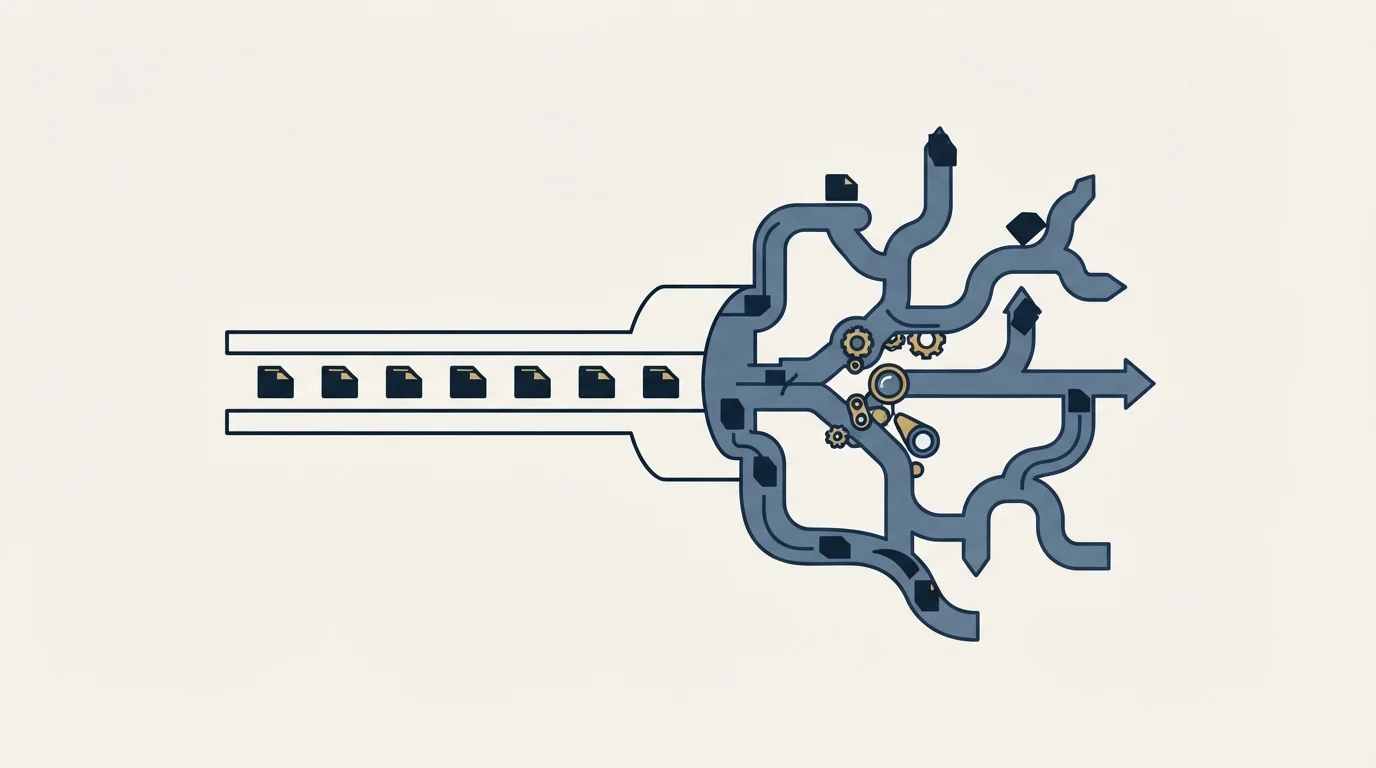
Adopting the approach changes three things outside the call itself, and skipping them is why most adoptions do not take.
The stage definitions have to carry the diagnosis. A step that reads "discovery call completed" is satisfied by a calendar event. A step that reads "they described their current process, what it costs them and who else is affected, in their own words" can be checked by a manager who was not there. The second one makes the pipeline auditable and makes the diagnosis load-bearing rather than optional.
Disqualification has to be safe. If a seller loses standing by removing a deal, they will keep bad deals alive and the diagnosis becomes theatre. Teams that get this right usually track disqualification reasons as a first-class output, because a fixed list of why deals were removed is the best targeting feedback available anywhere in the business.
Disqualification reasons only stay honest when the stages that produce them are mapped, which is what a sales process flowchart that names every exit does.
The entry standard has to be written before the meetings arrive. A consultative process applied to a badly chosen population produces careful diagnoses of companies that were never going to buy, which is expensive in exactly the way the method was supposed to prevent. Agreeing what a meeting has to be worth having, in writing, before anyone is contacted, is the same discipline pointed one step upstream, and what a qualified meeting has to mean is where that definition gets settled.
Review has to ask for evidence rather than for confidence. The question that makes the approach real is what the buyer said, quoted. Asking how the deal feels selects for optimism, and it selects hardest against the sellers who are diagnosing honestly.
Where we differ from standard practice
Much of the advice in this area reflects how outbound is commonly run, and since this page sits on our site the divergence is worth stating.
The standard recommendation for getting the diagnostic conversation in the first place is a contact cadence: a sequence of messages to each prospect over several weeks, later messages landing in the same thread, each one framed as a further attempt to secure the meeting. We run one message per campaign, with no bumps and no thread replies, and where an audience does not respond we build a separate campaign on a genuinely different premise. The reasoning is mechanical: a follow-up reaches the population that already saw the message and chose not to answer, which is the population most likely to complain, and the reputation cost lands on the sending domain across everything else it sends. The constraint that creates is real, and it happens to agree with this method: a single message has to carry a premise specific enough to be worth a stranger's attention, which is the same standard a diagnostic question is held to. The full argument, including what it costs us, is in why we stopped using follow-ups.
Meetings we are paid for are qualified against criteria agreed in writing before launch, and budget, timing and authority are deliberately outside that definition. They are useful things for a seller to learn during a diagnosis and poor things to make an invoice depend on.
The short version

A consultative sales process diagnoses before it prescribes, so that the eventual price is measured against a cost the buyer named. Its precondition is domain knowledge rather than questioning technique: without a picture of what a healthy operation looks like, a seller cannot recognise a finding when they hear one.
Test every discovery question against whether its answer could change the recommendation, record answers as quotes, write the diagnosis into the stage definitions so it can be audited, and make disqualification safe enough that sellers will actually do it. Expect proposal volume to fall before close rate rises.
Getting the diagnostic conversation on the calendar is the half we run, against criteria agreed in writing before anything sends. See what a first campaign produces.
Frequently asked questions.
Frequently asked questions- What makes a sales process consultative?
- The ordering. A consultative process establishes how the work is done today, where it breaks and what that costs before anything is proposed, so the eventual price is compared against a number the buyer produced. A conventional process presents first and then handles the resistance the presentation caused.
- How is it different from just asking lots of questions?
- Questions are only worth asking by someone who can recognise an abnormal answer. That takes a picture of how the work is normally organised, the ranges that count as good and bad, and what is changing in the market. Without it every answer is information rather than a finding, and the call becomes a survey the buyer politely completes.
- Does consultative selling slow the sales cycle?
- It usually shortens the cycle on deals that close and removes deals that were never going to. The visible effect in the first quarter is a thinner pipeline, because sellers disqualify earlier and send fewer proposals. Judging the change on proposal volume rather than on closed revenue is what causes most teams to abandon it.
- What single question does the most work?
- What happens to them if nothing changes. Asked after somebody has walked you through what the current work costs in hours and handoffs, it produces arithmetic the buyer performs themselves, which survives a procurement review. Asked cold it produces a shrug, which is why it belongs late in the conversation rather than early.
About the author.

Ben Carden is CRO at RevenueFlow, which builds and operates outbound revenue engines for B2B companies. Previously at Gartner Enterprise. Studied at London School of Economics.
Ben Carden · CRO
Connect on LinkedIn →Explore more.
Ready to scale your outreach?
We build GTM engines that book real meetings. See the receipts.
Related articles.
Sales Call Planning: The Plan a Booked Call Needs
A call cannot produce a commitment nobody named in advance. The four fields a call plan carries, and why the ask has to be decided before the meeting opens.
The Seven-Step Sales Process: What Each Step Assumes
Prospecting through follow-up, walked one box at a time. Each of the seven steps carries an assumption about the buyer, and most of them have quietly stopped holding.
The Five-Step Sales Process: What You Stop Checking
Cutting a process to five steps is a decision about which checks you drop. Which deals the short version fits, and the two loss patterns that say it does not.
CHAMP: Qualification That Starts With the Problem
CHAMP is BANT with the letters moved, and the order is the argument. What each of the four checks should produce, and which one predicts a deal ending in nothing.
Solution Selling: The Generic Term and the Licensed Method
One name covers a generic problem-led posture and a specific licensed methodology. The lineage, the three moves that matter, and the assumption that aged badly.
The Customer-Centric Sales Process: The Edit That Matters
Renaming the pitch achieves nothing. Writing every step as buyer evidence changes the forecast within a quarter, and three other things nobody warns you about.