Solution Selling: The Generic Term and the Licensed Method
One name covers a generic problem-led posture and a specific licensed methodology. The lineage, the three moves that matter, and the assumption that aged badly.
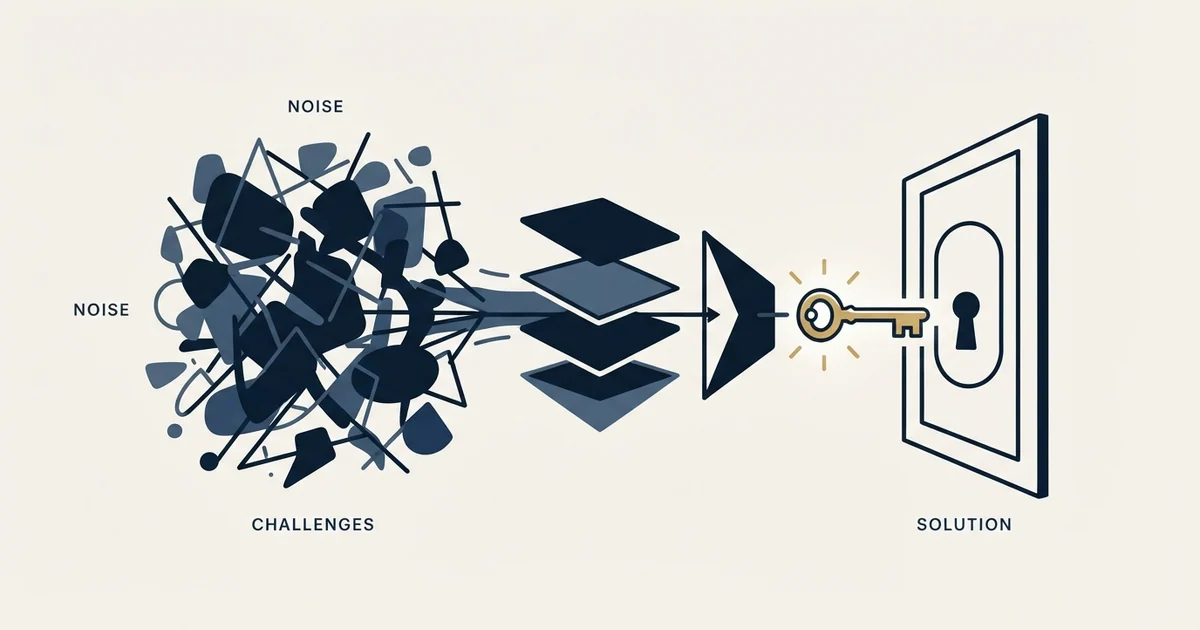
Solution selling names both a generic problem-led approach and a specific licensed methodology founded by Mike Bosworth in 1983. The generic sense is an ordering rule: establish the problem and its cost before proposing anything. The branded sense adds machinery for tracing pain upward and proving the outcome elsewhere.
Key takeaways
- Two people can both say they run solution selling and mean different things, so ask which documents a team actually uses before assuming which sense is meant.
- The three durable moves are pain before product, tracing the consequence upward until it reaches someone whose own measures move, and proof that shares the failure mechanism.
- The method assumed the seller knew more than the buyer, which was true when it was built and is now the exception rather than the rule.
- The word solution became the standard label for any product bundle, so the vocabulary now signals almost nothing to a buyer who has already read the category.
Reviewed and updated September 1, 2026
Two people can agree they run solution selling and be describing completely different things. One means a general posture: lead with the customer's problem rather than with the product. The other means a specific, licensed methodology with a lineage, a vocabulary and a set of documents. The word carries both, which is why so much of the writing about it is vague in a way the method itself never was.
Wikipedia's entry on the subject records the split directly, noting that while "solution selling" has become a generic term in many sales organisations, Solution Selling as a brand denotes distinct characteristics. Separating the two is the first useful thing anyone can do with the term.
The generic sense
The generic sense is an ordering rule. Establish the problem, its mechanics and its cost before proposing anything, and describe what you sell in terms of the outcome it produces rather than in terms of what it is.
That rule is now close to universal advice, which is a sign of how thoroughly the idea won. It is also the reason the term has thinned out: a description that fits nearly every modern sales approach does not distinguish anything.
- Opens with capability and specification
- Assumes the buyer knows which problem to apply it to
- Demonstrates breadth, because any feature might land
- Price is compared against competing products
- Loses to a cheaper item with the same feature list
- Opens with how the work is done today and where it breaks
- Establishes what the breakage costs, in the buyer's units
- Demonstrates only the part that addresses that cost
- Price is compared against the cost of the problem
- Loses when the problem turns out not to be expensive
The last line in each column is the honest part. A problem-led approach still loses deals; it just loses them for a different and more informative reason, and earlier.
The branded sense, and where it came from
The named methodology has a documented history. Wikipedia's entry records that Mike Bosworth founded a sales training organisation known as Solution Selling in 1983, drawing on his time at Xerox and its pilot of Huthwaite's SPIN work, began licensing affiliates in 1988, and sold the intellectual property in 1999 to Keith Eades, one of his original affiliates. The method kept evolving through that affiliate network, which is part of why several incompatible versions of it circulate.
That lineage matters for a practical reason. When somebody says their company runs Solution Selling, they may mean the original programme, one of the licensed derivatives, or the generic posture wearing the brand's name. Asking which documents they actually use settles it faster than any discussion of principles.
Its debt to SPIN is worth holding onto, because the two are frequently presented as rivals. SPIN is a question order for making a buyer articulate a problem and its implications. The branded methodology built commercial machinery around that idea: how to find the pain, how to help the buyer construct a picture of the solved state, and how to bring proof that other companies in the same position got there.
Teams building out that questioning sequence can see how implications get built correctly in implication questions with worked examples, which follows a stated problem along a single consequence.
What the method actually asks a seller to do

Underneath the vocabulary, three moves do most of the work.
Trace the pain to somebody who owns it. A problem described by a user is a nuisance. The same problem traced upward until it reaches a person whose own numbers are affected is a reason to spend money. The tracing is the work, and it is what distinguishes the method from ordinary needs analysis.
Get the buyer to describe the solved state. The seller's job is to help the buyer form a specific picture of how the work would run once the problem is gone, in the buyer's own operational terms, before any product is shown. A buyer who can describe that state will recognise it when they see it, and will notice when a competitor's version does not match.
Bring proof that fits the diagnosis. A story about a company in the same position, with the same mechanism of failure, that reached the solved state. The specificity is the whole value: a reference story that could be told about anyone proves nothing.
- Step 1Find the pain
Establish what breaks in the current process, concretely enough that someone could observe it
- Step 2Trace who owns it
Follow the consequence upward until it reaches a person whose own measures move
- Step 3Build the vision
Help them describe how the work would run once it is fixed, in their operational terms
- Step 4Prove it happened elsewhere
A comparable company, the same failure mechanism, the same solved state
- Step 5Price against the cost
The proposal is measured against the figure they produced, not against a competitor's list
The assumption that aged badly
The method was built for a market in which the seller knew more than the buyer. The buyer had a problem and no clear picture of what could be done about it, so a seller who could construct that picture was genuinely valuable, and the ordering above is a sensible response to that world.
Buyers now arrive having read the category, compared vendors, and formed a view before any seller is involved. Applied to a buyer in that position, the vision-building step reads as a seller slowly walking them somewhere they already are, and the pain-discovery questions read as a script. The observable symptom is a buyer answering questions politely while waiting to ask about integration and price.
This is the gap the Challenger argument was aimed at: with information asymmetry gone, the value a seller adds shifts from constructing the buyer's understanding to challenging it with something they had not considered. The two are often presented as opposites, and they are closer to consecutive answers to the same changing market.
The second thing that aged badly is the word solution itself. It became the standard label for any product bundle, so a page promising a solution now signals almost nothing to a buyer. The vocabulary outlived the discipline behind it, which is the usual fate of a methodology that succeeds.
What survived, and what to use
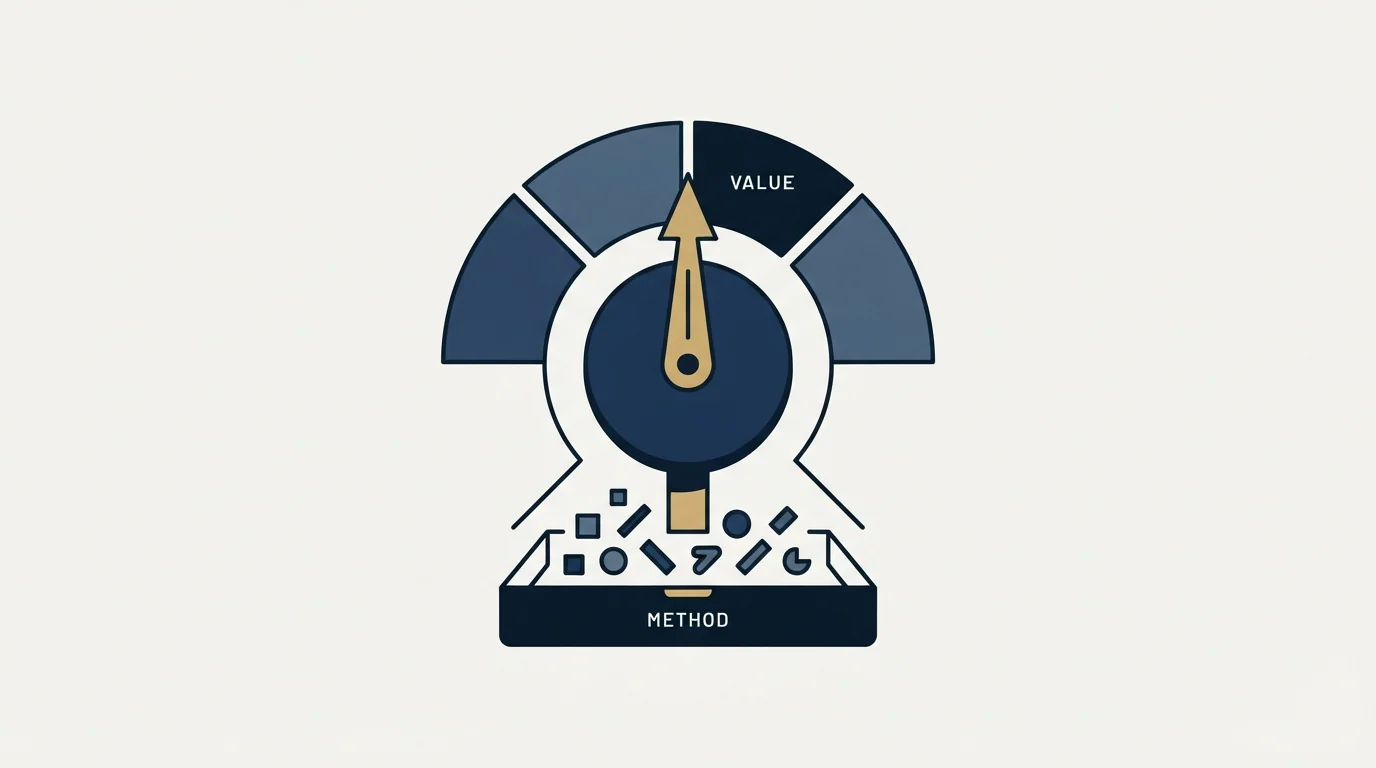
Three parts of the method still hold up, and they hold up independently of whether anyone calls them solution selling.
Pain before product, and cost before price. This is the durable core and it is why the generic sense of the term won.
Tracing consequence upward. Most stalled deals share a shape: the problem was real, and it was expensive to somebody with no budget. The tracing move addresses that directly, and the frameworks built later formalised it into a named check for the person who can release money. MEDDIC is the version most enterprise teams use now.
A related contrast comes from the CHAMP qualification framework, which leads with the buyer's challenges rather than budget, betting that a well-articulated problem will surface both money and the right authority.
Proof matched to diagnosis. The requirement that a reference story share the failure mechanism, not merely the industry, is a higher standard than most teams apply to their case studies.
What is worth dropping is the assumption of asymmetry, the ritual of building a vision for a buyer who has already built one, and any expectation that the vocabulary itself carries meaning to a buyer.
Running it without the ritual
Adopting the surviving parts takes three changes outside the call, and teams that skip them end up with the vocabulary and none of the effect.
Write the pain trace into the stage criteria. A step that reads "discovery completed" is satisfied by a calendar event. A step that reads "they described what the current process costs them, and named the person whose measures that cost affects" can be checked from the record by someone who was not on the call. Until the trace is a criterion, it is optional, and optional steps are the first thing a busy quarter removes.
Build the reference library by failure mechanism rather than by logo. Most case-study shelves are sorted by industry and company size, which are the two attributes a buyer can see for themselves. Sorting the same stories by what was broken makes them findable at the moment they are useful, and it exposes how few of them describe a mechanism at all.
Narrow the population before sharpening the questions. A seller covering one well-defined segment learns its standard failure shapes after a few dozen conversations and can recognise an anomaly by ear. A seller covering everything is running a survey however good the question list is, which is why building an ICP with the arithmetic attached does more for this method than any training module. Where the diagnosis actually happens, and how to end a call cleanly when it says there is nothing here, is worked through in disqualifying well on a discovery call.
Compared with its neighbours, the method sits between question-led and insight-led selling. SPIN has the buyer articulate the problem. The SPICED framing and what it assumes reorders the same material around impact. All of them describe conduct inside a conversation that already exists, and none of them explains how a seller obtains it.
Where we differ from standard practice

Much of the advice in this area reflects how outbound is commonly run, and since this page sits on our site the divergence is worth stating.
The usual recommendation for getting into the diagnostic conversation is a contact cadence: a sequence of messages to each prospect across several weeks, later messages landing in the same thread as the first. We run one message per campaign, with no bumps and no thread replies, and where an audience does not respond we build a separate campaign on a genuinely different premise rather than a reminder of the old one. The reasoning is mechanical: a follow-up reaches the population that already saw the message and chose not to answer, which is the population most likely to complain, and the reputation cost lands on the sending domain across everything else it sends. The constraint it creates matches this method's own standard, because a single message has to name a problem specific enough to be worth a stranger's attention. The full argument, including what it costs us, is in why we stopped using follow-ups.
Meetings we are paid for are qualified against criteria agreed in writing before launch. Budget, timing and authority sit outside that definition deliberately, because they are useful things for a seller to establish during a diagnosis and poor things to make an invoice depend on.
The short version
Solution selling names two things: a generic problem-led ordering that is now close to universal advice, and a licensed methodology founded by Mike Bosworth in 1983 whose intellectual property passed to Keith Eades in 1999. Ask which documents a team actually uses before assuming which one they mean.
That contrast is what people mean by solution selling vs product selling, and the losing condition in each column is the part the comparison usually leaves out.
The parts worth keeping are pain before product, tracing the consequence upward until it reaches someone whose own numbers move, and reference proof that shares the failure mechanism rather than merely the industry. The part that aged is the assumption that the seller knows more than the buyer, which was true when the method was built and is now the exception.
Getting the diagnostic conversation on the calendar in the first place is the half we run, on criteria agreed in writing before anything sends. See what a first campaign produces.
Historical details verified as of mid-2026 against Wikipedia's entry on solution selling. Verify current terms with the methodology's present owners before relying on them.
Frequently asked questions.
Frequently asked questions- What is the solution selling methodology?
- A problem-led rather than product-led approach to selling. The seller establishes what breaks in the current process, traces who bears the cost, helps the buyer describe how the work would run once it is fixed, and only then shows the part of the offering that produces that state. Price is argued against the cost the buyer named.
- Who created solution selling?
- Wikipedia records that Mike Bosworth founded a sales training organisation known as Solution Selling in 1983, drawing on his time at Xerox and its pilot of Huthwaite SPIN work, began licensing affiliates in 1988, and sold the intellectual property in 1999 to Keith Eades, one of those original affiliates. The method continued evolving through the affiliate network.
- Is solution selling still relevant?
- The ordering rule is, and it is now close to universal advice. The part that dated is the assumption of information asymmetry. Buyers who have already read the category and formed a view experience the vision-building step as being walked somewhere they already are, which is the gap the Challenger argument was aimed at.
- How does it differ from consultative selling?
- Consultative selling names the general discipline of diagnosing before prescribing and says most about what a seller has to know. Solution Selling is a specific licensed methodology with a lineage and a vocabulary that built commercial machinery around that discipline. The terms overlap heavily and the second one has documents attached.
About the author.

Ben Carden is CRO at RevenueFlow, which builds and operates outbound revenue engines for B2B companies. Previously at Gartner Enterprise. Studied at London School of Economics.
Ben Carden · CRO
Connect on LinkedIn →Explore more.
Ready to scale your outreach?
We build GTM engines that book real meetings. See the receipts.
Related articles.
Sales Call Planning: The Plan a Booked Call Needs
A call cannot produce a commitment nobody named in advance. The four fields a call plan carries, and why the ask has to be decided before the meeting opens.
CHAMP: Qualification That Starts With the Problem
CHAMP is BANT with the letters moved, and the order is the argument. What each of the four checks should produce, and which one predicts a deal ending in nothing.
The Customer-Centric Sales Process: The Edit That Matters
Renaming the pitch achieves nothing. Writing every step as buyer evidence changes the forecast within a quarter, and three other things nobody warns you about.
The NEPQ Sales Process: Seven Phases
Connection through presentation, in the order 7th Level publishes them, plus where a sequence built for one decision maker starts to strain in a committee purchase.
The Consultative Sales Process: What Diagnosis Costs
Diagnosis before prescription is easy to say and expensive to run. What the approach actually requires, and why proposal volume falls before close rate rises.
B2B Sales Methodologies: Four Arguments, Sixteen Names
Sixteen named frameworks collapse into four arguments about what sellers get wrong. Which family fits where your deals die, and why adoption fails more often than choice.