B2B Sales Methodologies: Four Arguments, Sixteen Names
Sixteen named frameworks collapse into four arguments about what sellers get wrong. Which family fits where your deals die, and why adoption fails more often than choice.

B2B sales methodologies fall into four families: qualification frameworks such as BANT, CHAMP and MEDDIC, conversation methods such as SPIN and consultative selling, posture frameworks such as Challenger, and account selection approaches such as target account selling. Pick the family that matches where your deals die.
Key takeaways
- A methodology describes what a seller does inside your stages, while a process defines the stages themselves, so adopting one never answers the question the other one answers.
- The named frameworks group into four arguments: what has to be true before this is a deal, how to run the conversation, what the seller brings, and which accounts deserve the week.
- Several entries on any list are licensed training programmes rather than published frameworks, so the comparison is uneven and the deciding factor is who does the coaching.
- Adoption fails through required fields, judgements nobody is allowed to act on, and running two frameworks at once, none of which is a problem of picking the wrong name.
Reviewed and updated September 1, 2026
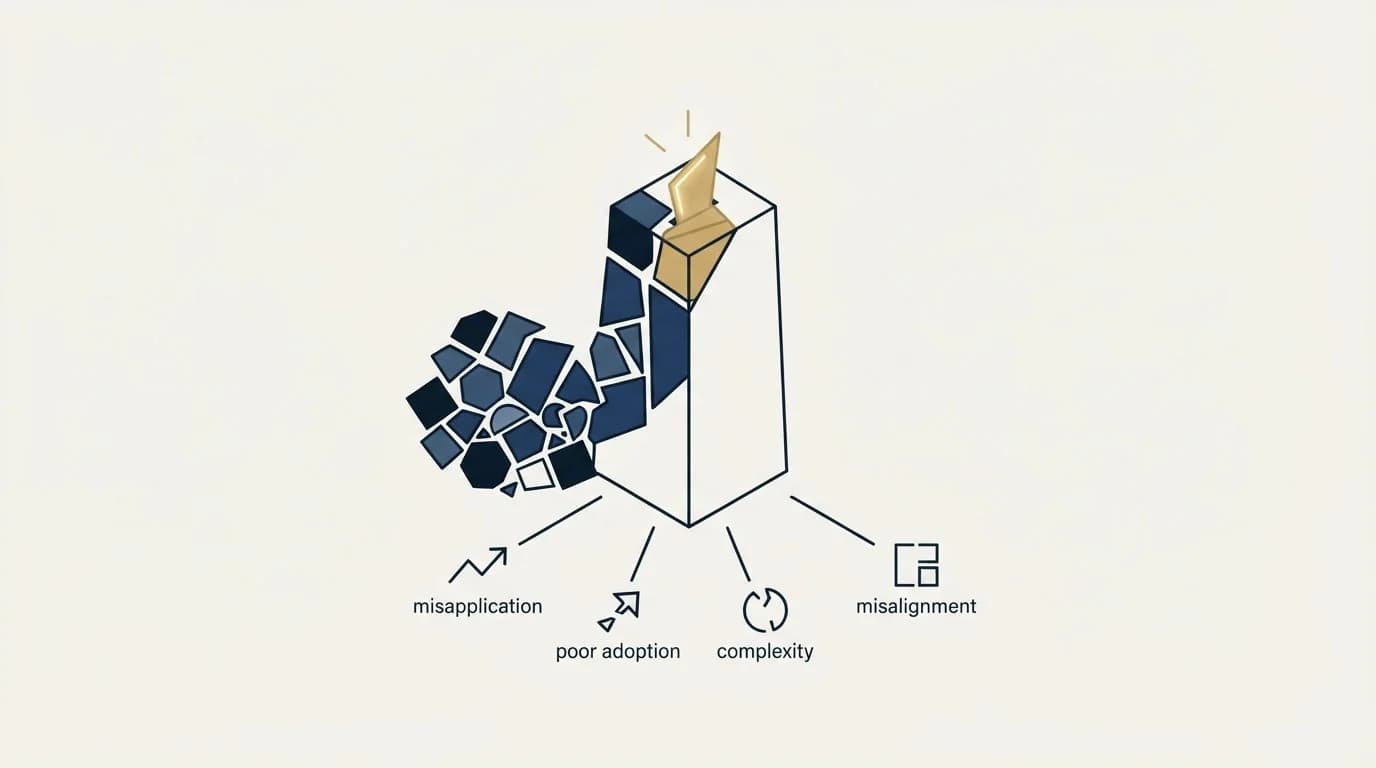
A company picks a sales methodology, buys the training, and six months later the only durable trace of it is three new required fields in the CRM. The vocabulary survives in QBR slides. The behaviour on calls is what it was. This happens often enough that it is worth treating the choice of methodology as a smaller decision than it is usually presented as, and the reason it fails as the bigger one.
There are a lot of candidates. Highspot's guide, which holds the top organic position for the term, is titled "16 proven sales methodologies for successful teams" and lists sixteen of them under a heading that reads "16 popular sales methodologies", running from Challenger and Conceptual Selling through MEDDIC, NEAT, the Sandler Selling System, SNAP, SPIN, Solution Selling, Target Account Selling and Value Selling. Underneath the branding, most of them are arguing about one of four things.
Lists of B2B sales strategies fold these four arguments together with a separate decision, which is the motion the company runs, and that one is settled by contract value, list size and time to first evidence rather than by which framework reads best.
A methodology is not a process
The two words get used interchangeably and they describe different objects. A process is the sequence of stages a deal passes through in your company, with entry and exit criteria, and it is specific to you. A methodology is a set of beliefs about what a seller should do inside those stages, and it is portable between companies. You can run MEDDIC inside a five-stage process or a seven-stage one, and the stages will not move.
That distinction matters for a practical reason. Adopting a methodology does not tell you what your stages are, and fixing a broken process does not require a methodology at all. Teams that buy the second when they needed the first end up with a well-taught vocabulary applied to a set of stages nobody agreed on, which is where the CRM-field outcome comes from.
The types of sales methodology, grouped by the argument each one is making
Every framework in circulation is a position on which thing a seller most often gets wrong. Grouping them that way makes the list navigable in a way the acronyms do not.
| Family | Names you will meet | The failure it targets | What it produces |
|---|---|---|---|
| Qualification frameworks | BANT, CHAMP, MEDDIC, MEDDPICC, NEAT | A pipeline full of deals that were never going to buy | Evidence attached to an opportunity |
| Conversation methods | SPIN, consultative selling, solution selling, conceptual selling | Presenting before the problem has been agreed | A different set of questions, asked in an order |
| Posture and insight | Challenger, and the indecision work that followed it | A buyer comfortable with the status quo, or unable to commit | A point of view, and a recommendation |
| Account selection | Target account selling, account-based approaches | Effort spread evenly across unequal accounts | A named account list and a plan for each |
The grouping is ours. The names are the ones their own publishers use.
Read as sales methodology examples, the table above is the useful form of the counted lists published elsewhere, because it says what each named framework is arguing rather than only what its letters stand for.
Qualification frameworks are the most widely adopted and the most widely abused. BANT asks about budget, authority, need and timing. CHAMP reorders the same four to lead with challenges instead of budget. MEDDIC raises the evidential bar considerably, asking for metrics, an economic buyer, decision criteria, a decision process, identified pain and a champion, and MEDDPICC adds the paper process and the competition. What separates them is not rigour but where they sit: the four-letter frameworks decide whether to keep talking, and the six and eight-letter ones decide whether to forecast.
One member of that family carries eight criteria rather than four, and the two extra letters are the interesting part: Competition and Originality in SCOTSMAN test whether a real deal is a winnable one rather than only whether it exists.
Conversation methods prescribe the shape of the discussion. SPIN is the best documented of them, ordering questions from situation to problem to implication to need-payoff, and its contribution is the implication question, which is the one that makes a buyer state the cost of the problem in their own words. Consultative and solution selling are the broader family, and they share an assumption that is worth checking before adopting either: that diagnosis before prescription is affordable in your deal sizes. It is not always.
Posture frameworks are about what the seller brings to a buyer who already has information. The Challenger approach argues for teaching the buyer something about their own situation, tailoring it to the person in the room, and taking control of the commercial conversation. The research that came after it, published as The JOLT Effect by Matt Dixon and Ted McKenna, addresses the deal that stalls after the buyer has accepted the problem, which is the case the status-quo playbook makes worse.
Account selection is a different axis entirely. Target account selling, TAS, is described by MTD's guide to it as a sales methodology that helps salespeople focus their time and energy on the accounts that are the best fit for their products or services, and Highspot's list carries it at number fifteen. It answers a question none of the others touch, which is where to spend the week, and it belongs upstream of everything else in an ideal customer profile with the arithmetic attached.
The licensed programmes are a category, not a rival
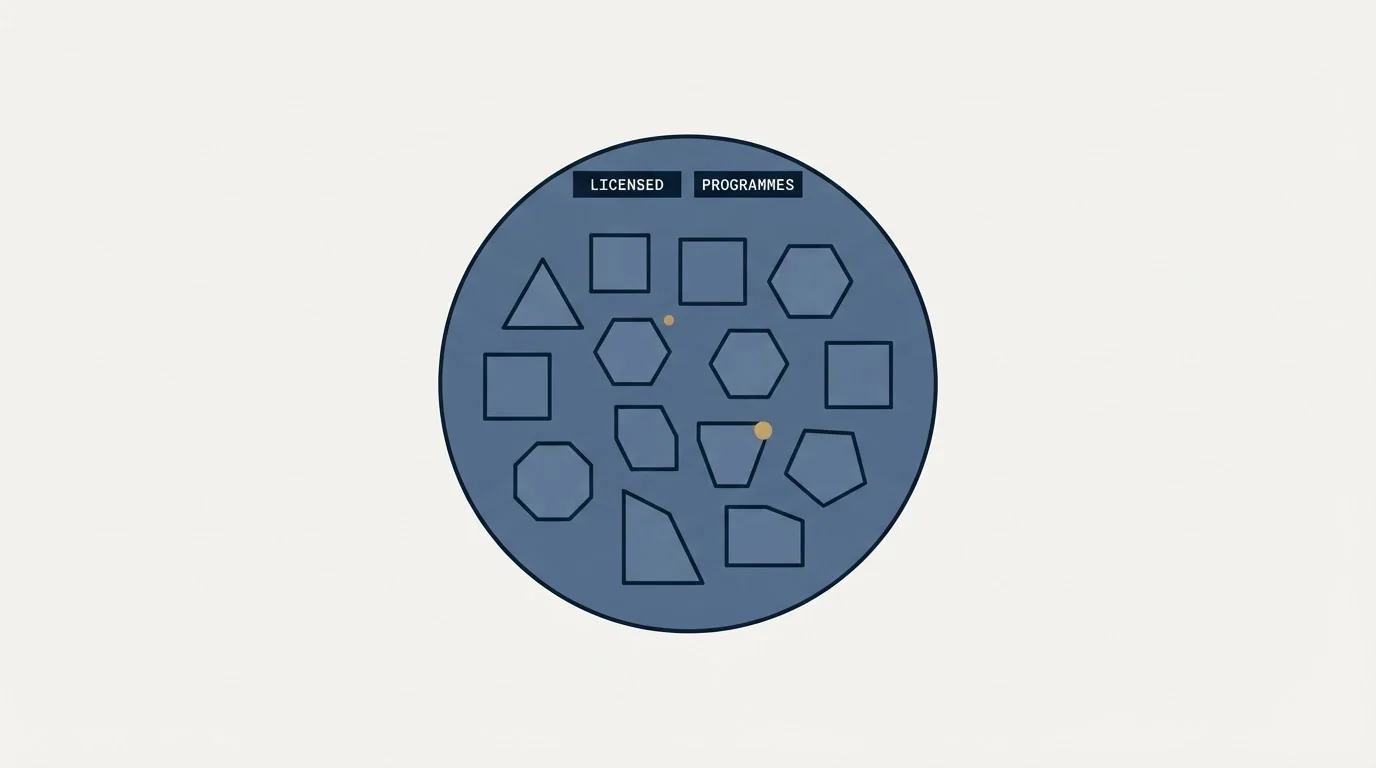
Several names on any list of methodologies are commercial training products rather than published frameworks, and knowing which is which changes how you evaluate them. IMPACT Selling is the Brooks Group's programme, and their own blog explains the acronym as the core stages of the sales process: Investigate, Meet, Probe, Apply, Convince, Tie-It-Up. The Sandler Selling System, Command of the Sale, Value Selling and Richardson's programmes work the same way, as licensed curricula with certification, reinforcement and a facilitator.
- MEDDIC, BANT, SPIN, CHAMP
- You get a checklist and a vocabulary
- You supply the coaching, the examples and the enforcement
- Fails quietly when nobody inspects it
- IMPACT Selling, Sandler, Command of the Sale, Value Selling
- You get curriculum, facilitation and reinforcement
- You still supply the manager who runs the reviews
- Fails when the training week is the whole investment
- Stage names, exit criteria, handoffs, durations
- You get a shared answer to where a deal is
- Nobody can sell it to you because it is specific to your deals
- Fails when criteria describe seller activity
That is not a criticism. A licensed programme buys you the thing a published framework cannot supply, which is the coaching apparatus that gets it used. It does mean the comparison is uneven: comparing MEDDIC with IMPACT Selling is comparing a public checklist with a training contract, and the deciding factor is usually whether you have anybody internally who will do the coaching if you do not buy it.
Choosing one, in the order that actually decides it
The published advice is to match the methodology to deal complexity, cycle length and team maturity. True as far as it goes, and it produces a shortlist rather than a choice. Three questions narrow it faster.
- Depends: Deals are lost late, after proposals, to no decision
- Depends: Deals die early because the wrong companies enter the pipeline
- Depends: Forecast accuracy is the complaint, not win rate
- Depends: Reps run good conversations and the notes are unusable afterwards
- No: Nobody can say what has to be true to move a deal one stage
- Yes: A framework is already in use and coached weekly
Start with where deals die. Losses concentrated at the top of the funnel are a targeting problem and a qualification problem, so the four-letter frameworks or an account-selection approach earn their place first. Losses concentrated after the proposal are either a forecasting problem, where the evidence-heavy frameworks belong, or an indecision problem, where more pressure is the wrong instrument.
Which of that family fits, and what each of them cannot see, is compared side by side in sales qualification frameworks.
Then ask what your managers do on a Monday. A methodology is only ever as good as the coaching habit attached to it, and a framework nobody inspects becomes a vocabulary within a quarter. If pipeline reviews consist of reading the opportunity list aloud, the framework is not the constraint.
Then ask what your process already asserts. If the stages a deal passes through do not have exit criteria a third party could check, a methodology will be layered onto stages that mean different things to different people, and the layering will not survive a personnel change. Fixing that first is cheaper and it makes the methodology decision reversible.
Why adoption fails, which is the part worth budgeting for

Three failure patterns account for most of it, and none of them is about picking the wrong framework.
The first is turning the framework into required fields. Mandatory fields get completed, completion stops correlating with truth, and the record becomes a description of the process rather than of the buyer. Keeping the buyer's own words, quoted rather than summarised, is the single habit that keeps any of these systems honest, because a quote can be re-read by somebody who was not on the call.
The second is adopting a methodology instead of a decision. Every framework produces a judgement about whether a deal is real, and the judgement has consequences only if somebody is allowed to act on it. Where no deal is ever removed from the pipeline as a result, the framework is doing paperwork.
The third is running two at once. Companies routinely layer a qualification framework onto a conversation method onto a licensed programme, each introduced by a different sales leader, and reps resolve the conflict by ignoring all three. One framework, coached, beats three announced.
Where we differ from standard practice
We do not sell sales training and we do not license a methodology, so the honest statement of our position is narrow. Our own qualification discipline sits earlier than any of these frameworks and is written down: for every campaign, the criteria that make a meeting qualified are agreed with the client in writing before anything sends, and budget, timing and authority are never billing conditions. A criterion that decides whether a meeting gets paid for will be argued about after the meeting, which is more expensive than the meeting.
On the outbound side, the doctrine is one message per campaign, with no bumps and no thread replies, and no second LinkedIn message tucked under an ignored one. Reaching the same audience again is a new campaign with a new angle rather than a reminder. That is a deliberate constraint and it puts more weight on targeting and on the offer, which is where an outbound programme does its work anyway. What happens after the meeting is booked, in the first real conversation, is where a methodology starts earning its keep, and clients run whichever one they already coach.
For a worked example of a framework applied end to end rather than described, our page on the Winning by Design model covers the version built around recurring revenue, and the sales cycle entry covers the stage vocabulary the frameworks all assume you already have. The full argument for the sending constraint, including what it costs us, is in why we stopped using follow-ups.
The short version
A campaign built on written criteria is the shortest route to seeing the qualification half of this in practice. Sixteen named methodologies collapse into four arguments: what has to be true before this is a deal, how to run the conversation, what the seller brings that the buyer does not have, and which accounts deserve the week. Pick the family that matches where your deals actually die, check that your stages have criteria somebody else could verify, and budget for coaching rather than for the licence. The framework is the cheap part. The inspection habit that makes anybody use it is the expensive part, and it is the part that decides whether the methodology outlives the training week.
Frequently asked questions.
Frequently asked questions- What are the main types of sales methodology?
- They group into four families. Qualification frameworks decide whether a deal is real, conversation methods shape how the seller runs the room, posture frameworks define what the seller brings that the buyer lacks, and account selection decides which companies are worth the effort at all. Most named methodologies sit in one of the four.
- What is the difference between a sales process and a sales methodology?
- A process is the sequence of stages a deal passes through in your company, with entry and exit criteria, and it is specific to you. A methodology is a portable set of beliefs about what a seller should do inside those stages. You can run the same methodology inside two different processes without moving a stage.
- Which sales methodology is best for B2B?
- The one that matches where your deals die. Losses early in the funnel point at qualification or account selection, losses after a proposal point at forecasting evidence or at buyer indecision, and unusable call notes point at a conversation method. Choosing by deal complexity alone produces a shortlist rather than a decision.
- Why do sales methodology rollouts fail?
- Usually because the framework becomes required CRM fields, which get completed whether or not they are true. The other two causes are adopting a framework without letting anybody act on its verdict, so no deal is ever removed from pipeline, and layering several frameworks introduced by different leaders until reps ignore all of them.
About the author.

Ben Carden is CRO at RevenueFlow, which builds and operates outbound revenue engines for B2B companies. Previously at Gartner Enterprise. Studied at London School of Economics.
Ben Carden · CRO
Connect on LinkedIn →Explore more.
Ready to scale your outreach?
We build GTM engines that book real meetings. See the receipts.
Related articles.
The Customer-Centric Sales Process: The Edit That Matters
Renaming the pitch achieves nothing. Writing every step as buyer evidence changes the forecast within a quarter, and three other things nobody warns you about.
The JOLT Effect: Selling to a Buyer Who Cannot Decide
The loss that shows no competitor and no rejection. What the JOLT research names, why the standard urgency playbook makes it worse, and the four moves that answer it.
The Seven-Step Sales Process: What Each Step Assumes
Prospecting through follow-up, walked one box at a time. Each of the seven steps carries an assumption about the buyer, and most of them have quietly stopped holding.
The Five-Step Sales Process: What You Stop Checking
Cutting a process to five steps is a decision about which checks you drop. Which deals the short version fits, and the two loss patterns that say it does not.
CHAMP: Qualification That Starts With the Problem
CHAMP is BANT with the letters moved, and the order is the argument. What each of the four checks should produce, and which one predicts a deal ending in nothing.
Solution Selling: The Generic Term and the Licensed Method
One name covers a generic problem-led posture and a specific licensed methodology. The lineage, the three moves that matter, and the assumption that aged badly.