SCOTSMAN: Eight Criteria and a Three Way Score
SCOTSMAN adds Competition and Originality to the usual six, which turns qualification into a test of whether a real deal is one you can actually win.
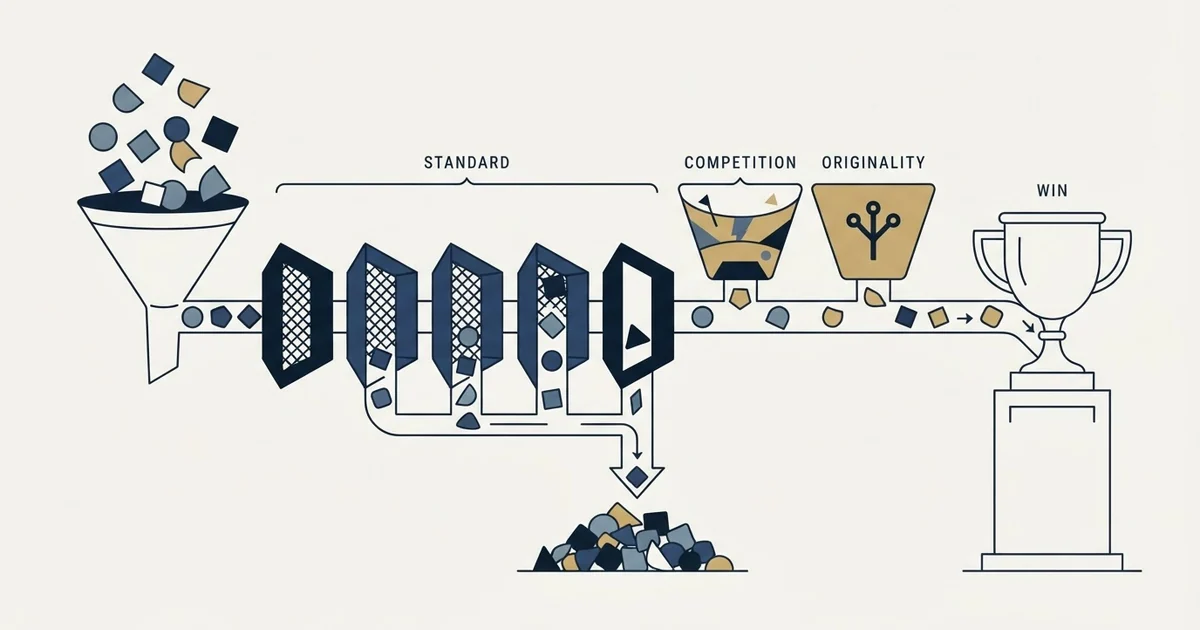
The SCOTSMAN sales methodology is an eight criterion qualification framework covering Solution, Competition, Originality, Timescales, Size, Money, Authority and Need. Competition and Originality test whether a real deal is winnable. Each criterion scores zero for settled, one for unknown or ten for a showstopper, and its owner names Dermot Bradley as creator.
Key takeaways
- Six of the eight SCOTSMAN criteria ask whether a deal is real, and Competition and Originality ask whether it is winnable.
- The three way score keeps unknown as its own state, so ignorance stays visible as a question with an owner instead of collapsing into risk.
- The commitment pairing supplies the evidence rule: score a criterion from what the buyer did, never from what the seller was told.
- Five of the eight criteria cannot be observed before a first conversation, so scoring them at list build time invents them.
Reviewed and updated September 21, 2026
A pipeline review runs through eleven deals and every one of them scores clean against the qualification framework. Budget confirmed, need established, decision maker identified, timeline stated. Two quarters later four of the eleven closed, five went to a competitor and two went nowhere. Nothing in the scoring was wrong. The framework was asking whether each deal was real, and the deals that died were real deals that somebody else won.
The SCOTSMAN sales methodology is the qualification framework built around that second question. It carries eight criteria rather than the four most teams use, and two of the extra letters exist specifically to test whether a real deal is a winnable one.
The framework is also described as SCOTSMAN qualification, the SCOTSMAN methodology or the SCOTSMAN framework, and every one of those names refers to the same eight checks set out below.
What is the SCOTSMAN sales methodology?
The SCOTSMAN sales methodology is an eight criterion qualification framework whose letters stand for Solution, Competition, Originality, Timescales, Size, Money, Authority and Need. Each criterion is scored zero when settled, one when the answer is still unknown, or ten when it is a showstopper, and the framework is paired with commitment selling, which measures progress by what the buyer does.
Its origin is stated by its owner. The About page of SCOTSMAN Methodology Ltd names Dermot Bradley as the "Original creator" and describes a career that started as a systems engineer at IBM and moved through sales and management to training at IBM and Xerox. It quotes the observation the framework grew from: "While companies meticulously planned solution implementations, they rarely applied the same rigour to winning the sale itself." The same page is plain about ownership: "We created the SCOTSMAN® qualification framework. We own the trademark. We publish the book." Everything below about the criteria and the scoring is quoted from the owner's methodology page.
The eight criteria, as the owner states them
The methodology is a trademarked commercial framework with its own owner, and the criteria below are quoted from that owner's own methodology page, which describes the framework as "Eight critical dimensions of sales success" and adds that "The methodology spells the acronym", as published by scotsmanmethodology.com and read on 2 September 2026. That page carries its own last modified date of 10 June 2026.
| Letter | Criterion | The question the owner's page asks |
|---|---|---|
| S | Solution | "Do we have a good solution to their problem?" |
| C | Competition | "Is there a bias? A preferred supplier?" |
| O | Originality | "Do we have anything unique that they need?" |
| T | Timescales | "Is their timescale achievable for us?" |
| S | Size | "Does it demand too much effort for its size?" |
| M | Money | "Is there a realistic budget?" |
| A | Authority | "Are we talking to decision-makers?" |
| N | Need | "Is there a need and a justification for the project?" |
Six of those eight are recognisable from every qualification framework in circulation. Solution, Timescales, Size, Money, Authority and Need are the familiar territory, and the way B2B sales methodologies group into four arguments puts all of them in the qualification family alongside BANT, CHAMP and MEDDIC.
Competition and Originality are the two that are not in that family's usual vocabulary, and they change what the exercise is for.
Why the two extra letters matter more than the count
A four letter framework asks whether the buyer will buy. It says nothing about whether they will buy from you. That gap is invisible in a pipeline review because a deal with confirmed budget, a stated timeline and an identified decision maker looks fully qualified right up to the moment it is awarded to somebody else.
Competition asks who else is in the room and whether the room is already leaning. Originality asks what you hold that the buyer actually needs and cannot get from the alternative. Together they convert qualification from a test of whether a deal exists into a test of whether it can be won, which is the only version of the test that changes where a seller spends the week.
The owner's page frames the payoff in exactly those terms, describing the discipline as the difference between selling hours spent on winning and selling hours spent on losing. The claim is not about closing more of what you work. It is about working less of what was never yours.
The three way score, and the state most frameworks lose
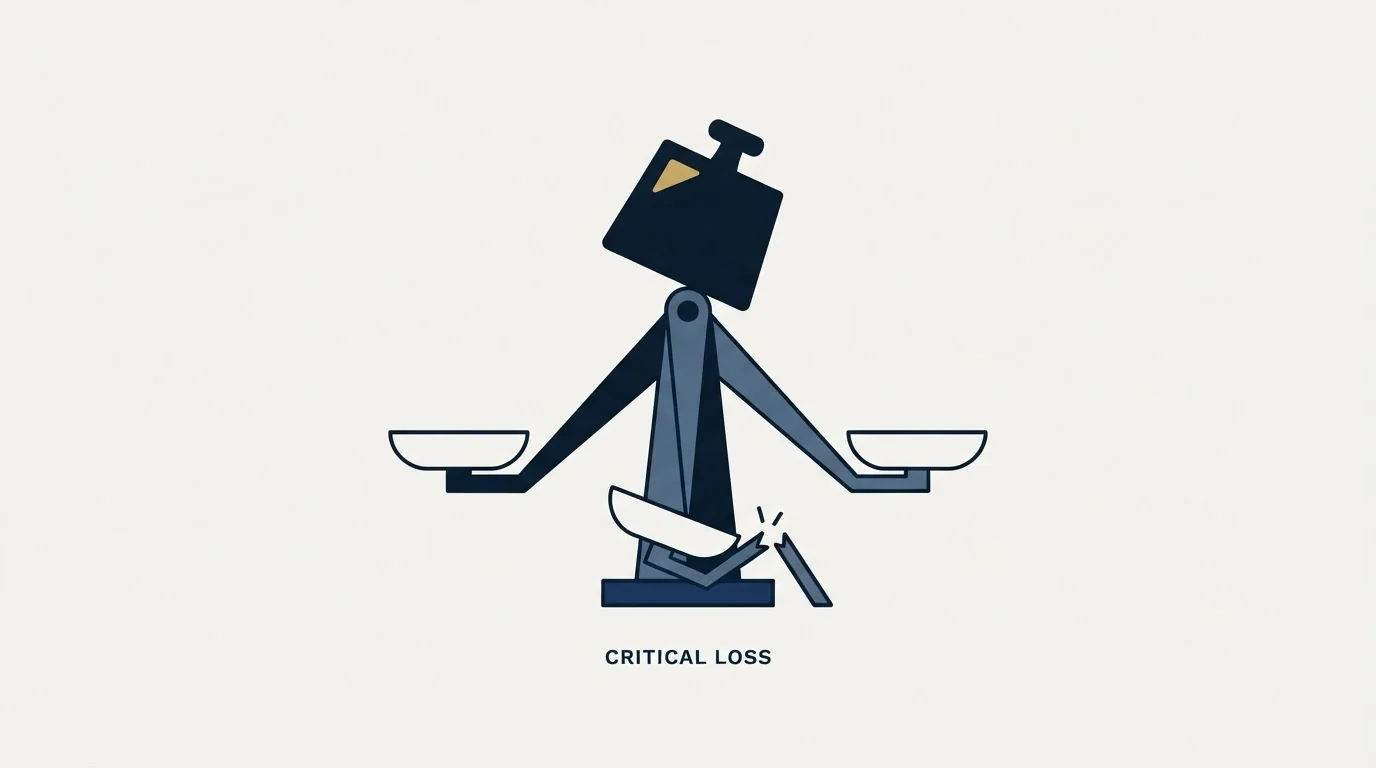
The part of this framework worth borrowing even if you never adopt the rest is its scoring. Criteria are not marked pass or fail. They carry one of three values, and the owner's page defines each of them.
The page labels the three values "No more work", "Data missing" and "Potential problem". A zero means "Everything is good. There is no more work to do on this criterion. Move on." A one means "There are gaps in our knowledge. Things we need to find out before we can score this properly." A ten means "A major showstopper. Unless we change the rules of the deal, we will lose", with the stated response being to change the terms of the deal or to qualify out. All three definitions are as published on scotsmanmethodology.com and read on 2 September 2026.
The interesting design decision is the middle value. Most qualification systems have two states, satisfied and unsatisfied, and ignorance collapses into the second one. That collapse is expensive because the two demand opposite work. An unsatisfied criterion is a problem to solve or a reason to walk. An unknown criterion is a question to ask, and it stays cheap for exactly as long as nobody has pretended to know the answer.
Making ignorance its own visible state does one more thing that matters in a review. It turns the meeting from an argument about whether a deal is good into a list of things nobody has established yet, each of which has a name and an owner. A review that produces a question list is doing work. A review that produces a confidence rating is producing a mood.
The scale is also deliberately not linear. There is no two through nine. A criterion is settled, unknown, or a showstopper, and the gap between one and ten is there to stop the middle of a range absorbing everything nobody wants to argue about.
Commitment, which is the half that is usually left behind
The framework travels with a second idea that rarely survives into third party summaries of it, and dropping it removes the mechanism that makes the scoring honest.
The owner's page pairs qualification with what it calls commitment selling, stating that the framework "Qualifies the opportunity" and "Shows if they are willing to change", while commitments "Qualify the customer's intent" and "Show if they are willing to change to you". It adds that "Success is measured by customer commitments", and that "Major contracts are an accumulation of small wins". All as published on scotsmanmethodology.com and read on 2 September 2026.
The operating consequence is a rule about evidence. A criterion is scored from something the buyer did rather than from something the seller was told. Agreeing to introduce a colleague, sending a document, taking a proposal to a committee and booking a follow up on their own initiative are all acts. Saying that budget exists is not an act. Any qualification framework that scores from the second kind of input will report a healthy pipeline for as long as the sellers are optimistic, which is a property of the sellers rather than of the deals.
| SCOTSMAN qualification | Commitments | |
|---|---|---|
| Does | "Qualifies the opportunity" | "Qualify the customer's intent" |
| Shows | "Shows if they are willing to change" | "Show if they are willing to change to you" |
| Evidence | Eight criteria, each scored 0, 1 or 10 | Acts: introducing a colleague, sending a document, taking a proposal to a committee |
Saying that budget exists is not an act, so it is not evidence for either column.
The live qualification family already works that way under different names, and CHAMP starting from the problem and what the five letters of SPICED ask both make evidence the test rather than the answer. The glossary entry on NEAT selling covers the version that replaces budget and authority outright.
Where it fits, and where it breaks for outbound

The framework is built for complex, competitive, high value deals with several people involved and a real alternative in the room. Eight criteria, re-scored as the deal moves, with evidence required for each, is a serious per deal cost. In a transactional motion that cost buys nothing, because there is no competitive evaluation to lose and no committee to convene.
The place it breaks for an outbound team is earlier and it is worth naming precisely, because the mistake is common and it looks like rigour.
At the top of an outbound programme, five of the eight criteria are unanswerable. Before a first conversation a seller can form a view on Solution and Need from public evidence about the company, and can sometimes form one on Size. Competition, Originality, Timescales, Money and Authority are all facts about a specific buyer's situation that nobody outside it can observe. Scoring them at list build time produces eight numbers, five of which are invention, and the invented ones then travel into the pipeline attached to a deal record where they read as evidence.
Our own position sharpens the same boundary from the other side, and it is a commercial commitment rather than an opinion. For every campaign the criteria that make a meeting qualified are agreed in writing before anything sends, and budget, timing and authority are never among them. Those three are facts about a buyer's situation that a prospecting motion cannot manufacture and frequently cannot discover before a call, so making them conditions on a meeting moves a qualification framework's job upstream of the place it can be answered. Money, Authority and Timescales belong to the seller who takes the call, scored from what the buyer does in it.
That leaves a clean division of labour. The outbound programme owns fit, which is checkable from public evidence and is settled in the segment definition, and the outbound sales playbook is where that definition gets written tightly enough to query. The qualification framework owns everything that requires a conversation, and it starts at the first one rather than before it.
Why adoption fails, which is the same everywhere
Three failure patterns recur with this framework, and none of them is a criticism of the framework itself.
The first is the required field. Once eight scores are mandatory on an opportunity record, they get completed, and completion stops correlating with truth within about a quarter. The counter is to keep the buyer's own words on the record, quoted rather than summarised, so somebody who was not on the call can re-read the evidence behind a score.
The second is scoring without a decision attached. The three way scale exists so a ten forces a choice between changing the terms and walking away. Where no deal is ever removed from the pipeline as a result of a score, the exercise is producing paperwork with a number on it.
The third is running it alongside something else. A team already coached on a four letter framework does not gain a second one by announcement, and reps resolve a conflict between two systems by ignoring both. One framework, inspected weekly by a manager who reads records rather than dashboards, beats two that were introduced.
The short version

SCOTSMAN is an eight criterion qualification framework whose criteria, on the owner's own page, ask about Solution, Competition, Originality, Timescales, Size, Money, Authority and Need. Competition and Originality are the two that separate it from the four letter frameworks, because they test whether a real deal is winnable rather than only whether it is real.
Its three way scoring is the portable part. Zero means settled, one means the answer is not yet known, and ten means a showstopper that has to be changed or walked away from. Keeping unknown as its own state is what turns a pipeline review into a list of questions with owners.
It pairs with commitment, which supplies the evidence rule: score a criterion from something the buyer did, never from something the seller was told. It suits complex competitive deals and it is too expensive for transactional ones.
For an outbound team the boundary is the first conversation. Five of the eight criteria cannot be observed before one happens, so scoring them at list build time invents them. Fit belongs to the segment definition and the rest belongs to the seller who takes the call, which is why we agree qualified meeting criteria in writing before a campaign launches and keep budget, timing and authority out of them. If the constraint is the number of qualified conversations rather than the framework used to grade them, see what a first campaign produces.
Criteria wording, scoring definitions and the commitment pairing come from scotsmanmethodology.com as read on 2 September 2026, with a dated snapshot retained. The same page states that "SCOTSMAN® is a registered trademark of SCOTSMAN Methodology Ltd", and its own last modified date is 10 June 2026. The origin and the creator's name come from the owner's About page. Verify current wording with the owner before relying on it.
Sources: SCOTSMAN Methodology, About SCOTSMAN Methodology Ltd
Frequently asked questions.
Frequently asked questions- What is the SCOTSMAN sales methodology?
- It is an eight criterion sales qualification framework owned by SCOTSMAN Methodology Ltd. The letters stand for Solution, Competition, Originality, Timescales, Size, Money, Authority and Need, and each criterion is scored zero, one or ten. The owner's About page names Dermot Bradley as its original creator, after a career at IBM and Xerox.
- How is SCOTSMAN different from BANT or MEDDIC?
- Two letters. Competition asks who else is being evaluated and whether the room already leans, and Originality asks what the buyer needs that only you hold. The other six cover ground the shorter frameworks already cover. That difference matters because a deal can be entirely real, fully budgeted and still awarded to somebody else.
- How does SCOTSMAN qualification scoring work?
- Each criterion takes one of three values rather than a pass or fail. Zero means the criterion is settled and no further work is needed. One means there are gaps in knowledge that have to be closed before it can be scored properly. Ten means a showstopper, where the terms of the deal have to change or the deal is qualified out.
- Should an outbound team score prospects on SCOTSMAN?
- Not before a conversation has happened. Competition, Originality, Timescales, Money and Authority are facts about a specific buyer's situation that nobody outside it can observe, so scoring them from a list produces invented numbers that later read as evidence. Fit belongs to the segment definition, and the framework starts at the first call.
About the author.

B2B cold email experts helping companies generate qualified leads through done-for-you outreach campaigns.
RevenueFlow Team
Explore more.
Ready to scale your outreach?
We build GTM engines that book real meetings. See the receipts.
Related articles.
3x3 Research: Three Facts in Three Minutes Before Outreach
3x3 research as Funnel Clarity publishes it: three unique facts in three minutes that the prospect would be surprised you know, the variants, and where it fits.
Cost of Inaction in Sales: Building the Do Nothing Case
How the cost of inaction case is built, from the publishers who teach it: the buyer's own numbers, found in discovery, kept apart from risk, and where it backfires.
SDR Outsourcing for Business Brokers: The Fee Timing
Whether a success-fee brokerage should rent sales development at all: the fee timing, the texts that limit what an outside person may say about value, and who signs.
SDR Outsourcing for Logistics Companies: The Brokerage Line
What an outside sales development team may do in a freight company's name, the calling and email rules it inherits, and which arrangement survives a bid-shaped market.
Appointment Setting for Business Brokers: The Seller Meeting
What a bought meeting with a business owner has to be for a brokerage: the three-part qualification, the confidentiality rules, the licence line and the owner's reasons.
Win Rate Benchmarks: Which Figures State a Population
A catalogue of the published average sales win rates, sorted by whether the page names the population behind its own number. Most do not.