Miller Heiman and the Blue Sheet: What the Form Forces
Strategic Selling is a form before it is a philosophy. What the Blue Sheet asks, why Win-Results transfers to teams who will never buy the training, and where it fails.
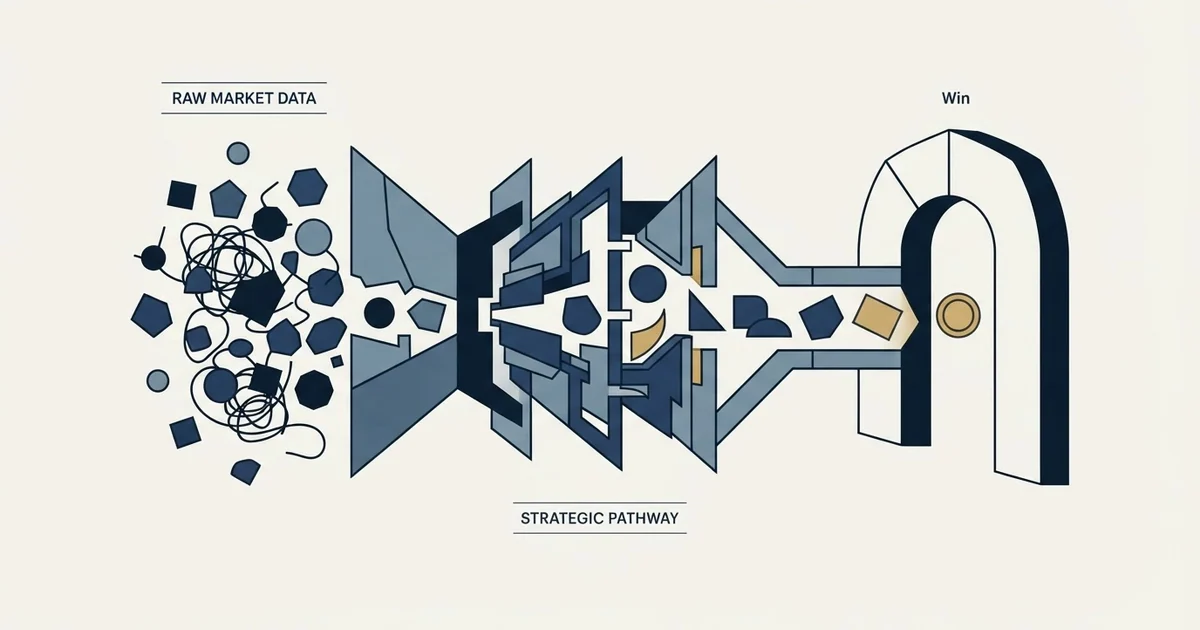
The Miller Heiman sales process centres on Strategic Selling and its Blue Sheet, a per-opportunity plan now published by Korn Ferry as the Strategic Opportunity Plan. It asks who is involved, what each person gains, where competitive preference sits, and which risks are currently unnamed.
Key takeaways
- Korn Ferry owns the methodology and states that Miller Heiman Group brings 40 years of methodology and skills training, with its Scout technology now sold as Korn Ferry Sell.
- Win-Results separates the measurable business outcome from what an individual personally gains, and the second column is where deal risk usually hides.
- Naming red flags is the mechanism, because an unnamed risk lets a deal stay in the forecast on the strength of one enthusiastic contact.
- Korn Ferry publishes outcome figures from its own 2024 Sales Maturity Survey, which describe the surveyed population rather than any particular team.
Reviewed and updated September 1, 2026
The Miller Heiman sales process is usually described as a methodology, and it is more accurately a form. Strategic Selling's central artefact is the Blue Sheet, a single opportunity plan a seller fills in for one complex deal, and almost everything the system is good at follows from the discipline of having to complete it in front of a manager who will ask about the blanks.
Korn Ferry now owns it. Its own page describes Miller Heiman Group's "40 years of proven methodology and skills training" and states that the group's CRM enablement technology, Scout, is "now Korn Ferry Sell". Anyone evaluating this today is buying a Korn Ferry programme with a Miller Heiman lineage, which matters for procurement and for what the current product actually contains.
What the Blue Sheet is
Korn Ferry's own write-up on the tool calls it "the Blue Sheet, or Strategic Opportunity Plan by Miller Heiman", and says it has been guiding sellers through complex opportunities for more than four decades. It was originally paper, then a spreadsheet, and is now built into Korn Ferry Sell.
The form asks a seller to make a set of judgements explicit for one deal.
- Yes: Who is involved in this decision, and in what capacity
- Yes: What each of those people gets personally if this goes ahead
- Yes: Where the account is genuinely competitive preference and where it is not
- Yes: What red flags exist right now, named rather than felt
- Yes: What the strengths are and which actions leverage them
- Yes: What the single best next action is, with an owner
Korn Ferry's glossary for the tool names the components in current use: an Opportunity Scorecard that "evaluates opportunity strength and identifies deal gaps", Competitive Preference as a "framework to assess and influence customer choice", and Win-Results, which "clarifies customer outcomes and aligns the seller's strategy to deliver them". The published timeline puts the Scorecard's arrival in 2018, replacing an ideal-customer-profile component, alongside the addition of Perspective.
Win-Results is the idea worth stealing
Of everything in the system, the concept that transfers best to teams who will never buy the training is Win-Results.
The distinction it draws is between what an organisation gets from a purchase and what an individual gets. A result is a measurable business outcome: cost down, cycle time shortened, risk reduced. A win is what that outcome does for the specific person you are talking to, which is personal, rarely stated aloud, and different for each participant in the same deal.
The reason the pairing matters is that business cases are written in results and decisions are made by people with wins. An operations director and a finance director can be looking at the same result and want completely different things from it, and a seller who has only prepared the result has one argument for a room with several audiences in it.
Deciding whether a step counts as progress becomes easier once it is defined by verifiable buyer action, as a customer-centric sales process argues in detail.
The practical version is unglamorous. For each named person in the deal, write the result they care about and the win attached to it, and mark clearly which of those you were told and which you assumed. The second column is where the deal risk lives, and a plan with no assumptions marked is a plan nobody has been honest about.
Red flags, and why naming them is the point
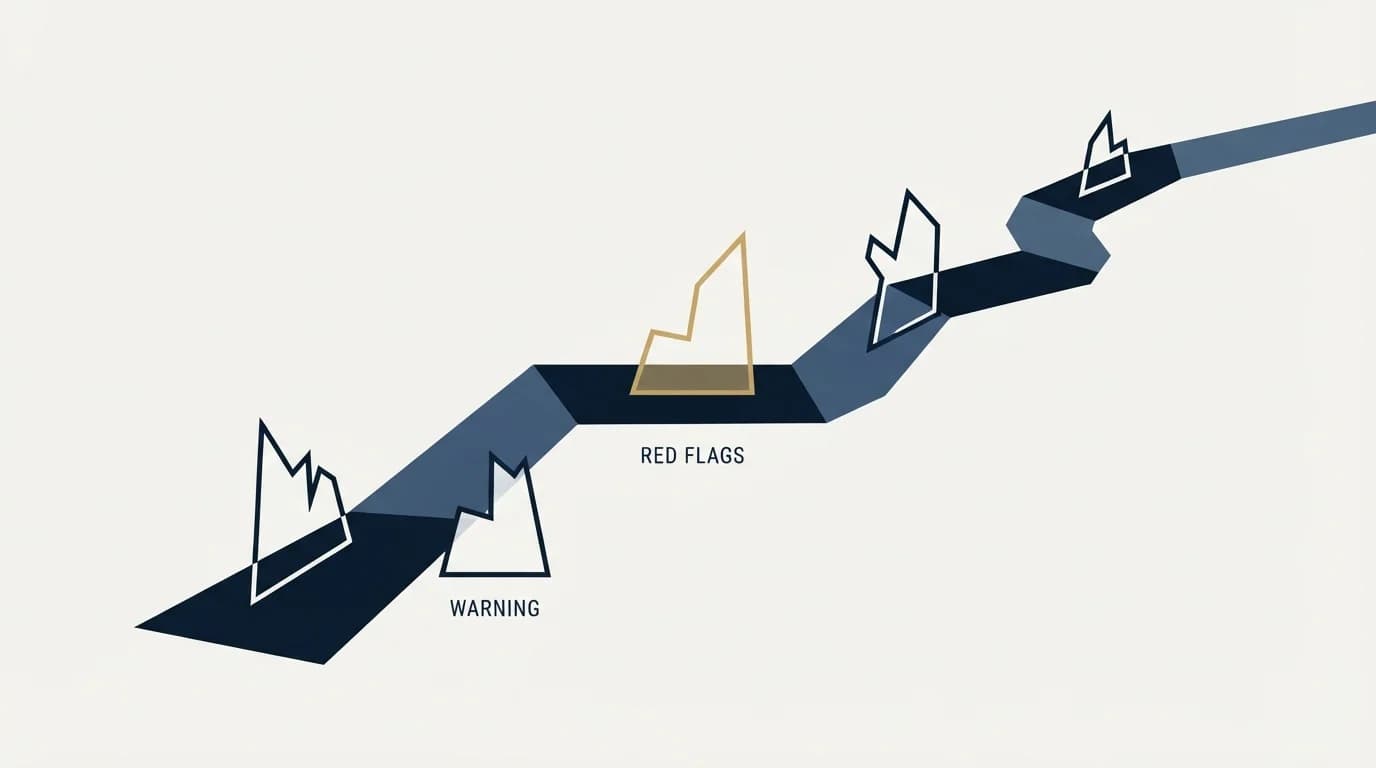
The system asks sellers to record red flags explicitly: missing information, an unmet participant, a change of personnel, a competitor with an established relationship, no access to whoever controls the money.
Korn Ferry's Strategic Selling with Perspective programme lists among its learning objectives that participants will "list appropriate actions that minimize or eliminate red flags" and "apply the win fast/lose fast criteria to sales opportunities". That second phrase is the honest summary of what the methodology is for. It is not designed to make every deal win. It is designed to make the outcome arrive sooner, so a seller's time moves to a deal that can be won.
The same programme page, read on 18 September 2026, lists the rest of what Miller Heiman Strategic Selling trains: aligning the selling process steps to the buying process steps, keeping the sales funnel healthy, identifying and developing coaches, and identifying the competitive alternatives at play.
Naming a red flag is harder than it sounds, because a named risk creates an obligation. An unnamed one lets a deal stay in the forecast on the strength of a good relationship with one enthusiastic person. This is the same failure the live-pipeline version of the problem produces, where a stage with no checkable exit criterion becomes a place deals go to avoid a decision, and pipeline stages that earn their place works through the mechanics of that.
Where it fits
- Several people must agree before anything is signed
- Deal values justify hours of planning per opportunity
- Cycles run long enough for personnel to change mid-deal
- Losses are usually explained after the fact and never predicted
- Managers coach deals rather than only reviewing numbers
- One person can decide and pay
- Cycle measured in days
- Deal value smaller than the cost of the planning time
- Nobody reads the completed form except the person who filled it in
- Filled in the night before the review, from memory
The right-hand column is where most implementations of this methodology actually die, and the mechanism is worth stating precisely. The form has value because completing it exposes what a seller does not know. Completed retrospectively, to satisfy a review, it becomes a record of what the seller already believed, which is the one thing the exercise was designed to interrogate.
The countermeasure is not a better form. It is that the deal review has to be conducted on the plan rather than on the number, with a manager whose job in the room is to ask about blanks and marked assumptions rather than to ask when it will close.
The published claims, and how to read them
Korn Ferry publishes outcome figures for the approach, drawn from its own 2024 Sales Maturity Survey: it reports plus 22 percent win rates for organisations selling with Perspective, plus 16 percent quota attainment and plus 10 percent revenue attainment for sellers who align solutions to customer outcomes, and that teams with dynamic coaching are three times more likely to sell with Perspective. The same page reports that win rates have dropped by 5 percent over the past three years and that 43 percent of leaders cite talent gaps as a barrier to growth.
Those are the vendor's own survey figures, published by the firm that sells the methodology, and they describe the surveyed population rather than yours. They are useful as an indication of what the vendor considers its own value proposition and weak as evidence of what will happen to your team. The direction of the selection problem is obvious enough: organisations that invest in structured methodology and dynamic coaching differ from those that do not in more ways than the methodology.
That does not make them worthless. It makes them a claim with a name and a date attached, which is more than most sales-training marketing offers.
Miller Heiman against the other named systems
Sellers comparing methodologies usually want to know which one to pick, and the honest answer is that they are aimed at different parts of the same problem.
Unlike Strategic Selling's focus on managing an existing opportunity, SPICED's discovery-stage questions test what the problem is worth before any deal plan starts.
Strategic Selling is opportunity planning. It assumes a deal already exists and asks how it will be won given who is involved. SPICED, as Winning by Design publishes it, sits earlier, in discovery, and asks what the customer's problem is worth and what forces a decision. MEDDIC and MEDDPICC are closest in intent, scoring an existing enterprise opportunity against a fixed set of checks, and a team that has adopted one of those will find the Blue Sheet largely familiar. BANT is a first-conversation checklist and does not attempt what any of these do.
The choice between the near neighbours is usually decided by what the organisation already has. A team with no shared opportunity vocabulary gains most from whichever system its managers will actually run reviews on. A team with two competing vocabularies has a coordination problem rather than a methodology problem, and buying a third will not solve it.
Where we differ from standard practice

Much of the advice in this space reflects how outbound is commonly run, and since this page sits on our site the difference is worth naming.
Nothing in Strategic Selling prescribes a contact cadence, but the surrounding practice usually does: a sequence of messages to each prospect, later ones landing under the first. We run one message per campaign, with no bumps and no thread replies. A non-responding audience becomes a new campaign built on a genuinely different premise rather than a reminder of the last one. The reason is mechanical rather than moral. A follow-up is delivered to the population that already saw the message and chose not to answer, which is the population most likely to complain, and the reputation cost lands on the sending domain across every campaign running on it. our write-up on why we stopped using follow-ups has the full argument. The cost we accept is reaching each contact less often.
There is a real point of agreement. The win fast, lose fast criterion is the same instinct that makes us keep budget, timing and authority out of the commercial definition of a qualified meeting: both are attempts to get to the true answer sooner rather than to keep something alive because it is uncomfortable to close it. Pay-per-appointment B2B sets out where we draw that line. The full argument, including what it costs us, is in why we stopped using follow-ups.
The short version
Miller Heiman's Strategic Selling is opportunity planning built around one form. The Blue Sheet, now the Strategic Opportunity Plan inside Korn Ferry Sell, forces a seller to write down who is involved, what each of them gets, where the competitive position is genuinely strong, and what is currently unknown. Win-Results is the piece worth adopting whether or not you buy anything. Red flags only help when naming them is safe, and the whole system collapses into paperwork if the form is completed after the belief rather than to test it.
It applies to complex multi-party deals and is overhead on transactional ones. It also assumes those deals exist, which is a different problem: if the constraint is the supply of qualified conversations, see what a first campaign produces.
Ownership, product naming, framework components and the published survey figures verified against Korn Ferry's own pages as of mid-2026, with dated snapshots retained. Verify current terms with the company before relying on them.
Frequently asked questions.
Frequently asked questions- What is the Miller Heiman Blue Sheet?
- Korn Ferry describes it as the Strategic Opportunity Plan by Miller Heiman, a form a seller completes for one complex deal. It has run for more than four decades, moving from paper to spreadsheet to a module inside Korn Ferry Sell, and its current components include an Opportunity Scorecard, Competitive Preference and Win-Results.
- What are Win-Results?
- A result is a measurable business outcome such as reduced cost or shortened cycle time. A win is what that outcome does for one specific person, which is personal and rarely said aloud. Business cases are written in results and decisions are made by people with wins, so a seller who has prepared only the result has one argument for a room with several audiences.
- When is Strategic Selling not worth the overhead?
- On transactional deals where one person can decide and pay, where the cycle runs in days, or where the deal value is smaller than the planning time it consumes. It also fails wherever the form is completed retrospectively to satisfy a review, since it then records what the seller already believed instead of testing it.
- How does it compare with MEDDIC?
- Both score an opportunity that already exists and both were built for committee purchases, so a team fluent in one finds the other familiar. MEDDIC and MEDDPICC are fixed check-lists applied to a deal; the Blue Sheet is a planning form built around people, their wins and current unknowns. The better choice is usually whichever one your managers will run deal reviews on.
About the author.

Ben Carden is CRO at RevenueFlow, which builds and operates outbound revenue engines for B2B companies. Previously at Gartner Enterprise. Studied at London School of Economics.
Ben Carden · CRO
Connect on LinkedIn →Explore more.
Ready to scale your outreach?
We build GTM engines that book real meetings. See the receipts.
Related articles.
Value-Based Selling: The Arithmetic Step After the Diagnosis
Diagnosis establishes that a problem hurts. Value-based selling is the step that turns it into a figure the buyer's own finance function will defend for you.
The Sandler Selling System: Seven Steps, One Worth Stealing
Sandler puts the presentation sixth of seven, after budget and the decision process. The seven published steps, and the up-front contract worth taking on its own.
SPICED: What the Five Letters Ask
Situation and Pain come before Impact, and that ordering is the whole argument. What each element asks, which two carry the weight, and what the framework assumes.
The JOLT Effect: Selling to a Buyer Who Cannot Decide
The loss that shows no competitor and no rejection. What the JOLT research names, why the standard urgency playbook makes it worse, and the four moves that answer it.
CHAMP: Qualification That Starts With the Problem
CHAMP is BANT with the letters moved, and the order is the argument. What each of the four checks should produce, and which one predicts a deal ending in nothing.
Solution Selling: The Generic Term and the Licensed Method
One name covers a generic problem-led posture and a specific licensed methodology. The lineage, the three moves that matter, and the assumption that aged badly.