Loopio Competitors: Compare the Billing Unit
Five response-management platforms, four different billing units. What Loopio and its named alternatives publish about seats, projects and add-ons, from their own pages.
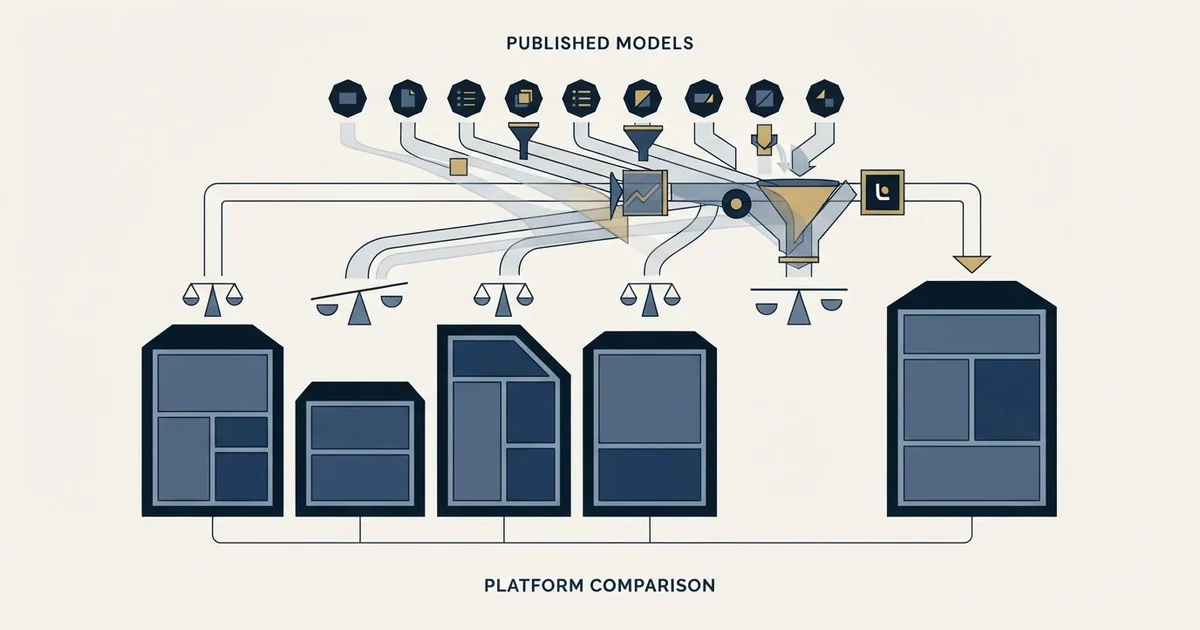
Loopio publishes three plans and no rates, with an entry tier that bundles ten seats. Its named alternatives price differently rather than merely cheaper: Responsive publishes a starting figure for its entry edition, AutoRFP.ai publishes full rates charged per project with unlimited users, and SiftHub quotes. The billing unit is the real comparison.
Key takeaways
- Loopio publishes three plans behind a conversation, and its own FAQ states that the Foundations tier includes ten seats.
- AutoRFP.ai is the only one of the five checked here that publishes a complete rate card, and it bills by projects per year rather than by seat.
- Responsive publishes a starting figure for its entry edition and quotes the two above it, with no currency code named on the page.
- Proposify ranks on this query and publishes the fullest ladder, but it is proposal software rather than response management and answers a different question.
Reviewed and updated September 2, 2026
Five response-management platforms were checked on their own pricing pages on 1 September 2026, and they do not price the same thing. Loopio sells seats and quotes them. Responsive carries a floor for its entry edition. AutoRFP.ai carries a full rate card charged by the number of RFPs you run, under the heading "All plans include unlimited users with all features". Proposify carries a per-user ladder with a monthly limit on how many documents you send.
That is the comparison worth making before any feature grid, because the unit a vendor bills on decides which team shape it gets cheap for. A four-person proposal team answering sixty questionnaires a year and a forty-person sales organisation answering twenty are the same size problem to one pricing model and completely different to another.
Start by discounting the lists, including this one
Search for alternatives to Loopio, as this article did on 1 September 2026, and the first page returns two peer-review aggregates, a market-share tracker, and five pages written by companies that would like to be the alternative. One of the results belongs to Loopio itself, and it lists alternatives to a rival rather than to itself, which is the clearest possible statement of what these pages are for.
That pattern is the category's normal state rather than a scandal, and who publishes the RFP software rankings works through why the sorting in those lists tends to put the author's own product in the flattering category. The practical consequence is that a ranked list from this SERP is evidence about the publisher, not about fit.
What is checkable is what each vendor states on its own surfaces. Everything below comes from those, with the fetch date attached, and where a vendor publishes nothing the absence is recorded rather than filled in.
What Loopio itself publishes
Three plans, each with the same call to action rather than a rate.
Foundations is described for smaller or sales-led proposal teams and includes unlimited projects, unlimited library entries, generative AI, ten customisable themes and standard support. Enhanced, marked as the most popular, adds a multi-language library, confidential projects, multi-step reviews and fifteen themes. Enterprise adds separate business units, unique sandboxes, a custom number of seats, twenty themes and premium support.
The seat model surfaces in the FAQ rather than in the plan table. Loopio's own answer to how much it costs describes flexible options "starting with our Foundations tier, which includes 10 seats and is suitable for smaller, sales-led RFP teams". So the entry plan is a ten-seat bundle, and the Enterprise line about a custom number of seats confirms that seats are the variable being negotiated further up.
Three items sit outside the plans as add-ons: project translations, onboarding packages and industry integrations. Access control is published separately as four permission levels, described as no access, participant, creator and full access, which matters for the seat count because a subject-matter expert who only ever answers two questions still consumes something.
- Loopio: three plans, all behind a conversation, entry tier bundles ten seats
- Loopio add-ons for translations, onboarding and integrations
- SiftHub: choose the RFP agent or the full platform, priced per team
- Neither publishes a rate
- Three editions, entry edition carries a published starting figure
- Growth and Enterprise editions are contact-sales
- Entry edition includes unlimited response projects
- Higher editions add intake, eSignature, hosting options and custom AI
- Two published monthly rates on annual terms, plus a bespoke enterprise tier
- Charged by projects per year rather than by seat
- States that all plans include unlimited users with all features
- States a minimum twelve month term after the first thirty days
The one vendor that publishes a rate card, and what it charges for

Of the five checked here, AutoRFP.ai is the only one whose pricing page carries a complete rate card, and its page states the model in one line: "All plans include unlimited users with all features". Its Scale plan is published at $899 per month paid yearly for twenty four projects per year, and its Accelerate plan at $1,299 per month paid yearly for fifty projects per year, with an enterprise tier described as scalable projects on bespoke terms. Both published plans list unlimited AI, unlimited content, unlimited users, all features, single sign-on for Google and Microsoft, more than eighteen integrations, ISO 27001:2022 and SOC 2, unlimited support and online training. The page's own structured data names the currency as USD and carries the same two figures as the visible copy.
The page defines its billing unit precisely, which is the part worth borrowing whoever you buy from: "A Project means any RFP, DDQ, Tender or Security Questionnaire you work on, no matter the number of requirements, clarifications or additional documents. One Project is usually equal to one CRM opportunity."
Two further published terms belong in any comparison. The page states that all plans include every feature so "there are no paid addons", which is a direct contrast with the add-on lines the seat-based vendors publish. And it states that "Contracts with AutoRFP.ai are a minimum 12 month term after the first 30 days", alongside a thirty day refund conditional on a named list of setup steps.
Whether that model is cheaper depends entirely on your own two numbers. A team with many occasional contributors and modest volume pays for seats it barely uses under the seat model and pays nothing extra for them under the project model. A small dedicated bid team answering high volume inverts that completely.
Where no vendor prints a rate at all, the unit is still comparable, which is what sales compensation platforms compared on the unit counted works through.
Responsive sits between the two. Its Emerging Edition is described on Responsive's own pricing page as being "For organizations getting started with structured RFP processes and are collaborating across multiple teams", and Responsive's page puts $10,000 under a Starting from label on that edition, alongside unlimited response projects, an AI and automation studio, "Unlimited content & collaboration", and integrations and access control. Its Growth Edition adds intake, request lookup and eSignature, advanced integrations and access controls, premium deployment and flexible hosting; its Enterprise Edition adds flexible custom AI, enterprise security controls, advanced reporting and premium connectors. Neither of the upper editions publishes a figure. The visible copy names no currency beside the one it does publish, and the page's structured data names USD on all three editions, which is worth checking rather than assuming because a pricing page served outside the United States can localise a symbol without saying so.
The adjacent category the lists keep mixing in
Proposify ranks on this query with the most complete ladder of anyone here, under a heading that reads "Pricing plans that fit how you sell." It is worth being clear that it answers a different question.
Proposify's page puts Basic at $29 per user per month billed monthly or $19 billed annually, Team at $49 per user per month billed quarterly or $41 billed annually, and Business at "Starts at $3,900/year". Underneath sits a second meter: every plan includes a monthly send allowance, published as ten sends on Basic with a $0.50 per send overage, thirty on Team at $0.30, and seventy five on Business at $0.75, with enterprise custom. That page names no currency code anywhere, in its visible copy or in its markup, so the dollar sign is the whole of what it discloses.
That is proposal software rather than response management. It is built for a document your team originates and controls, which is the worked proposal structure problem, not for a three hundred row questionnaire somebody else wrote in their own format. A shortlist that mixes the two produces a demo where one vendor looks unfairly simple, and the reason is that it is solving a smaller problem.
- Step 1Count last year's documents
Every RFP, RFI, due diligence questionnaire and security questionnaire, with who answered each. This is the project count a project-priced vendor bills on.
- Step 2Count the humans who touch one
Separate the people who own a submission from the experts who answer two questions each. This is the seat count a seat-priced vendor bills on.
- Step 3Decide which of those two numbers is growing
A rising document count and a rising contributor count point at different pricing models, and only one of them is your problem.
- Step 4Then ask for quotes on one stated scope
Same document count, same contributor count, same integrations. Vendors quoting different scopes produce numbers that cannot be compared.
The split inside this SERP that a shortlist has to resolve
Two of the alternatives ranked in that 1 September 2026 pull serve government contracting rather than commercial B2B, and the vocabulary is close enough that a buyer can get well into an evaluation before noticing. Government contracting response work carries capture management, compliance matrices and colour-team reviews that commercial response software does not attempt, and the platforms built for it carry pricing and implementation shaped by that.
Adjacent categories blur in other shortlists too, and the same care is needed among routing tools sorted by the problem they solve, where one search answers two unrelated jobs.
The same divergence runs through security questionnaires. That workload is frequently owned by a security or governance function answering from a controls inventory, and the products aimed at it sit in the trust and compliance category rather than in this one. Establishing who owns that internally before assembling the shortlist saves an entire evaluation cycle, and the decision to bid at all is a separate discipline that no platform on this list makes for you.
- Yes: Your document count for last year, split by RFP, RFI, DDQ and security questionnaire
- Yes: Your contributor count, split between owners and occasional experts
- Yes: Which internal function owns security questionnaires
- Yes: Whether add-ons are separate line items or included, since the vendors differ
- No: Whether the anchor vendor's library migrates, which no pricing page addresses
- No: How each vendor's AI decides an answer is approved, which no pricing page addresses
What none of them publishes, and it is the expensive part
Every vendor here sells retrieval and workflow over a library of previously approved answers, and none of their pricing pages says anything about how the library moves.
A team switching away from an incumbent is carrying years of curated content in that incumbent's structure. Whether it exports cleanly, whether the approval metadata survives, and whose time the re-curation consumes are the three questions that decide whether a migration lands in a quarter or a year. They are absent from all five pricing pages, and they belong in the first conversation rather than the last.
The second unpublished variable is governance. All five vendors describe AI drafting and answer suggestion. What separates them in year two is whether an unreviewed answer can reach a buyer, and that is an approval-chain question rather than a model question. A platform where anything can enter the library without review produces a fast first quarter and an unreliable second year, and no pricing page discloses which shape you are buying.
The short version

Loopio carries three plans and no rates, with an entry tier its own FAQ describes as one that "includes 10 seats and is suitable for smaller, sales-led RFP teams", plus add-ons for translations, onboarding and integrations. Responsive carries a starting figure for its entry edition and quotes the rest. AutoRFP.ai carries two full rates and charges by projects per year with unlimited users. SiftHub quotes. Proposify carries the most detailed ladder of all and answers a different question, because it is proposal software rather than response management.
Count your documents and count your contributors before contacting any of them, because those two numbers decide which pricing model is cheap for you, and they are the only inputs that every vendor's quote is built from. Then ask about library migration and answer governance, which none of these pages covers and both of which outlast the contract.
If the underlying problem is that too few opportunities arrive at all, and the response process is being optimised because it is the visible part, that is a supply question rather than a tooling one. See what a first campaign produces for your market, and what an RFP freezes before you can respond is worth understanding first either way.
Plan structures, figures and contract terms above are taken from each vendor's own pricing page at loopio.com, responsive.io, autorfp.ai, sifthub.io and proposify.com, fetched 1 September 2026, with dated snapshots retained. The Responsive and AutoRFP.ai pages name USD in their structured data; the Proposify page names no currency code on either surface. Arphie's pricing path returned an authentication error and is therefore not represented here. Verify current terms with each vendor before relying on them.
Sources: Loopio pricing, Responsive pricing, AutoRFP.ai pricing, SiftHub pricing, Proposify pricing
Frequently asked questions.
Frequently asked questions- What are the main alternatives to Loopio?
- The names that recur across the ranked lists are Responsive, Qvidian, AutoRFP.ai, SiftHub, Arphie, Proposify and Inventive, plus a set of platforms built for government contracting rather than commercial response work. Loopio's own site publishes comparison pages against Responsive, RocketDocs, AutogenAI, Conveyor, Thalamus and Inventive AI, linked from its pricing page as read on 2 September 2026, which is a fair statement of who it considers the competitive set.
- How much does Loopio cost?
- Loopio publishes no rate. Its three plans, Foundations, Enhanced and Enterprise, each route to a conversation rather than a price. The one quantity it does publish is that the Foundations tier includes ten seats and is aimed at smaller, sales-led response teams, and the Enterprise tier is described as carrying a custom number of seats. Translations, onboarding and industry integrations are add-ons.
- Why do RFP software vendors price so differently from each other?
- Because they disagree about what the scarce resource is. Seat-based vendors treat the number of contributors as the constraint, which suits a small dedicated bid team. Project-based vendors treat the number of documents as the constraint and include unlimited users, which suits an organisation with many occasional subject-matter experts. Count both numbers before deciding which model is cheap for you.
- What should I ask an RFP software vendor that the pricing pages do not cover?
- Two things. How a curated content library migrates off the incumbent, including whether approval metadata survives and whose time the re-curation consumes. And whether an unreviewed answer can reach a buyer, which is an approval-chain question rather than a model question and is what decides whether the library is still trustworthy in year two.
About the author.

B2B cold email experts helping companies generate qualified leads through done-for-you outreach campaigns.
RevenueFlow Team
Explore more.
Ready to scale your outreach?
We build GTM engines that book real meetings. See the receipts.
Related articles.
Is Clay Free? The Free Plan, the Trial and Where Each Stops
Clay's free plan, its 14-day trial and the no-charge-on-a-miss rule are three different things. What each holds and where it stops, from clay.com on 19 September 2026.
Video Prospecting Tools by Job: What Each One Is For
Ten video prospecting tools sorted by the job each vendor's own page describes: record and share, personalise at volume, avatars, hosting and interactive demos.
Seamless.AI Email Finder: How It Works, What a Credit Buys
How Seamless.AI's email finder resolves a contact in real time, what one Universal Credit buys, the Total AI score on every address, and what the Chrome extension reads.
Social Selling Tools by Job, and the Account-Risk Line
Fourteen social selling tools sorted into six jobs, split by whether each acts through your LinkedIn account or beside it, from the vendors' own pages.
RingLead vs LeanData: ZoomInfo Operations Compared
RingLead is now ZoomInfo Operations. How it compares with LeanData on matching, routing, deduplication and enrichment, read from each vendor's own pages.
Apollo Integrations: What Connects, and on Which Plan
Apollo's integrations marketplace sorted by job: what its own pages say each CRM sync moves, which plan ticks which integration, and what a sync costs.