Sample Sales Proposal: For the Person Not on the Call
The decisive reader of a sales proposal usually reaches it by forward, having attended no calls. That one fact reorders every section of the standard template.

A sales proposal is the written document a seller sends once a buyer's problem is understood, and it is usually decided by somebody who reaches it by forward and was on none of the calls. Order it around five questions: what is broken, what it costs them, what you would do, what that costs, and what happens next.
Key takeaways
- A sales proposal travels without the seller, so it has to be written for a decisive reader who attended no calls and gives it a few minutes.
- The standard ten-section template is a reasonable inventory and a poor running order, because it opens with the seller's company background.
- The cost figure has to belong to the buyer: a seller's number reads as vendor arithmetic, and the same number attributed by name and date gives a sceptic somebody to ask.
- Put named next steps with buyer-side owners inside the proposal, so the document carries its own momentum and nothing depends on a chase.
Reviewed and updated October 1, 2026
A seller spends three calls understanding a company, writes a sales proposal that reflects every one of them, and sends it to the person they have been talking to. That person forwards it to a finance director who has never heard of the seller, on a Thursday afternoon, with the note "thoughts?" attached. The finance director gives it four minutes. Whatever happens next is decided in those four minutes, by somebody who was not on any of the calls and will never be on one.
Most published proposal advice is written as though the recipient is the reader. The recipient is usually the forwarder. That single fact changes what belongs in the document, what order it goes in, and which sections are doing real work.
What is a sales proposal, and what goes in one?
A sales proposal is the written document a seller sends once a buyer's problem is understood. It sets out what is wrong, what it costs the buyer, what the seller would do about it, what that would cost and what happens next, so that people who were never on a call can decide. It is the one part of a sale that travels without the seller.
There is broad agreement on what a sales proposal contains. Pipedrive's guide to writing one states that "Most sales proposal formats include these standard building blocks", and lists them: a title page with company name, about us (company background), goals and challenges, proposed solution and approach, scope and deliverables, pricing, timelines with key dates, case studies and testimonials, terms and conditions, and next steps with space for signature and date. Almost every template on the market is a rearrangement of those ten.
The list is not wrong. What it hides is an ordering assumption: it opens with who you are and closes with what happens next, which is the shape of an introduction to a stranger. Applied to a document that reaches its decisive reader by forward, that ordering spends the first page on the seller at the exact moment the reader is deciding whether to keep reading.
Every one of the ten has a home in the order a forwarded reader needs. Goals and challenges carries the first two questions below: what is broken and what it costs. Proposed solution and scope carry the third. Pricing is the fourth, presented as options. Timelines and next steps are the fifth. Case studies support the third when they are chosen for a matching failure. About us shrinks to three sentences and moves behind the argument with the terms, and the title page stays one line.
| Standard block | The question it answers | What changes |
|---|---|---|
| Goals and challenges | 1. What is broken 2. What it costs them | Moves to the first screen, in the buyer's words, with the buyer's own figure |
| Proposed solution and approach Scope and deliverables | 3. What we would do | Only the part that touches that cost, written as what changes in somebody's day |
| Case studies and testimonials | Supports 3 | Chosen for a matching failure mechanism, never for the logo |
| Pricing | 4. What it costs to fix | Scoped options, each tied to a different amount of the problem |
| Timelines with key dates Next steps | 5. What happens next | Named owners on both sides, with dates. Roughly half the rows are the buyer's |
| About us Terms and conditions | supporting | Three sentences of background, placed behind the argument |
| Title page | none | One line |
Seller-ordered
The default template shape
- Opens with company background and credentials
- Problem stated in the seller's category language
- Solution described as a set of capabilities
- Price appears as a single figure near the end
- Case studies chosen for logo recognition
- Next steps are a signature block
Reader-ordered
Written to survive a forward
- Opens with the buyer's problem in the buyer's own words
- The cost of that problem, as the buyer stated it
- Only the part of the offer that addresses that cost
- Price presented as scoped options against the cost
- Case studies chosen for a matching failure mechanism
- Next steps carry named owners and dates
The two columns contain the same information. Only one of them answers, on the first screen, the question a forwarded reader actually opens with, which is why this document is on their desk at all.
The five things the decisive reader is looking for
A proposal that survives a forward answers five questions in order, and everything else in the document is supporting material for one of them.
A follow-up on a business proposal does one paragraph of that same job, reminding the forwarded reader which problem the document was written about and what happens next.
Step two is where most proposals fail, and the failure is not stylistic. If the number is one the seller calculated, the finance director reads it as a vendor's marketing arithmetic and discounts it entirely. If it is a number the buyer's own operations lead produced and can be attributed to them by name, the internal conversation changes shape: the seller is no longer the source of the claim. Getting that number into the document requires having got it on a call first, which is why the diagnostic conversation is upstream of the proposal rather than parallel to it, and why disqualifying well on a discovery call matters more to the eventual proposal than any writing technique.
A worked sample
Everything below is invented. The company, the people, the operational detail and every figure are illustrative arithmetic written to show the shape of a section, and none of it is a measurement of any real client, ours or anybody's. Read the structure and replace the content.
The buyer. Northwind Freight, an invented regional logistics operator. The invented contact is an operations director called Dana Ruiz. The invented decisive reader is a finance director who was not on any call.
Section one: the problem, in their words
The invented sample paragraph below, naming the invented Northwind and the invented Dana Ruiz, shows the shape:
Northwind's dispatch team currently rekeys carrier confirmations from email into the TMS by hand. Dana Ruiz estimated on 14 March that this takes two dispatchers roughly ninety minutes each per day, and that around one confirmation a week is entered with a wrong date, which costs a rebooking and an apology call.
Two things make that paragraph work. It contains a date and a name, so a reader who doubts it knows exactly who to ask. And it describes an operation rather than a category, so nobody has to accept a definition before they can evaluate the claim.
Section two: the cost, attributed
Again invented, and every figure in it is illustrative arithmetic rather than a measurement of anybody:
On Dana's own figures, the rekeying absorbs about fifteen dispatcher hours a week. At the loaded hourly cost Northwind uses internally, that is in the region of forty thousand dollars a year, before the rebooking cost of the weekly error.
What is not optional in a real version is the attribution: the invented sample sentence says on Dana's own figures, and it says which cost basis was used. A proposal that asserts a saving without saying whose arithmetic it is has handed the finance director an easy reason to stop reading.
Section three: the scope, at the level of a Tuesday
Still the invented Northwind example:
Carrier confirmations arriving at dispatch@ are parsed and written to the TMS automatically. Anything the parser is not confident about lands in a review queue that one dispatcher clears each morning. Nobody rekeys a confident record.
Scope written at the level of what changes in somebody's day is checkable by the person whose day it is. Scope written as capabilities is not, and it invites the reader to imagine the version that does not work.
Section four: options rather than a number
Three scoped options, each attached to a different amount of the problem rather than to a different tier of your product. The reader is choosing how much of the problem to solve this year, which is a question they can answer, rather than choosing a package, which is a question they cannot.
The discount conversation starts here whatever you do, and it starts better when the options are already scoped, because a request to reduce the price has an obvious answer that is not a discount. Our pricing discussion templates cover the language for that exchange once it arrives.
Section five: what happens next
Named steps, named owners on both sides, dates. Roughly half the rows should belong to the buyer, because the buyer's internal work is the part most likely to slip and the part the seller cannot see. That is the same instrument as a mutual action plan, and putting a short version of it inside the proposal means the document contains its own next step rather than depending on somebody chasing it.
Put together, the first page of the invented Northwind proposal reads like this, with its five working parts numbered. It is still an illustration, and nothing in it describes a real company.
Proposal for Northwind Freight, an invented company. Opens on the problem, with no About us above it.
Northwind's dispatch team rekeys carrier confirmations from email into the TMS by hand. Dana Ruiz estimated on 14 March that this takes two dispatchers roughly ninety minutes each per day. 1
On Dana's own figures, about fifteen dispatcher hours a week. At the loaded hourly cost Northwind uses internally, in the region of forty thousand dollars a year. 2
Confirmations arriving at dispatch@ are written to the TMS automatically. Anything the parser is not confident about lands in a review queue that one dispatcher clears each morning. 3
Three scoped options, each attached to a different amount of the problem. 4
Next steps: named owners on both sides, dates, and roughly half the rows Northwind's. 5
- 1A date and a name, so a reader who doubts it knows exactly who to ask. An operation, where a category would need defining first.
- 2Whose arithmetic it is, and which cost basis was used. The seller is no longer the source of the claim.
- 3Scope at the level of what changes in somebody's day, checkable by the person whose day it is.
- 4How much of the problem to solve this year is a question the reader can answer, and a request to cut the price now has an answer that is not a discount.
- 5The document contains its own next step, so nothing depends on somebody chasing it.
What to leave out
Three sections earn less than their page count, and cutting them makes the rest read faster.
Company background beyond three sentences. The decisive reader is deciding whether the problem is real and the fix is credible. A history of your funding rounds is answering a question nobody asked.
Case studies chosen for the logo. A recognisable name proves you have sold to a recognisable name. A story about a company with the same failure mechanism, whatever its size, proves you have seen this before. Sort your reference shelf by what was broken rather than by industry and you will find how few of the stories describe a mechanism at all.
Anything that requires a call to interpret. If a section only makes sense with the seller narrating it, the forwarded reader hits it and stops. Write every section to be read alone by somebody hostile and tired.
Materials that must work without the seller in the room matter more in a partner-led motion, where channel and direct routes differ over who owns the first buyer conversation.
The covering email is a separate document, and it is shorter than you think
The email that carries the proposal is read by the recipient, who is usually not the decisive reader, and its only job is to make forwarding easy. That means naming the problem in one line, saying what is attached, and saying what the next step is. Anything the forwarder would have to paraphrase belongs in the proposal itself, because a paraphrase is where the argument gets lost. Our proposal email templates cover the shapes that exchange takes.
The useful discipline is to assume the covering email will not be forwarded at all. Many are not. The proposal arrives on its own, stripped of context, and has to work.
Where we differ from standard practice
Standard proposal advice attaches a chasing cadence: send, wait a few days, follow up, wait a week, follow up again. We do not run outbound that way. Our cold campaigns send one message per campaign, with no bumps and no thread replies. The full argument, including what the constraint costs us, is in why we stopped using follow-ups.
That constraint is about cold outbound rather than about live deals, and the transferable part is the design instinct behind it. A document that needs chasing was under-specified when it was sent. Putting the next step, with a date and a named owner on the buyer's side, inside the proposal is the version of that instinct that belongs at this stage.
The other piece of our own practice worth stating here is upstream: for every campaign we run, the criteria that make a meeting qualified are agreed with the client in writing before anything sends, and budget, timing and authority are never billing conditions. Settling the definition before anyone reads the number is the same discipline a proposal applies to scope.
The short version
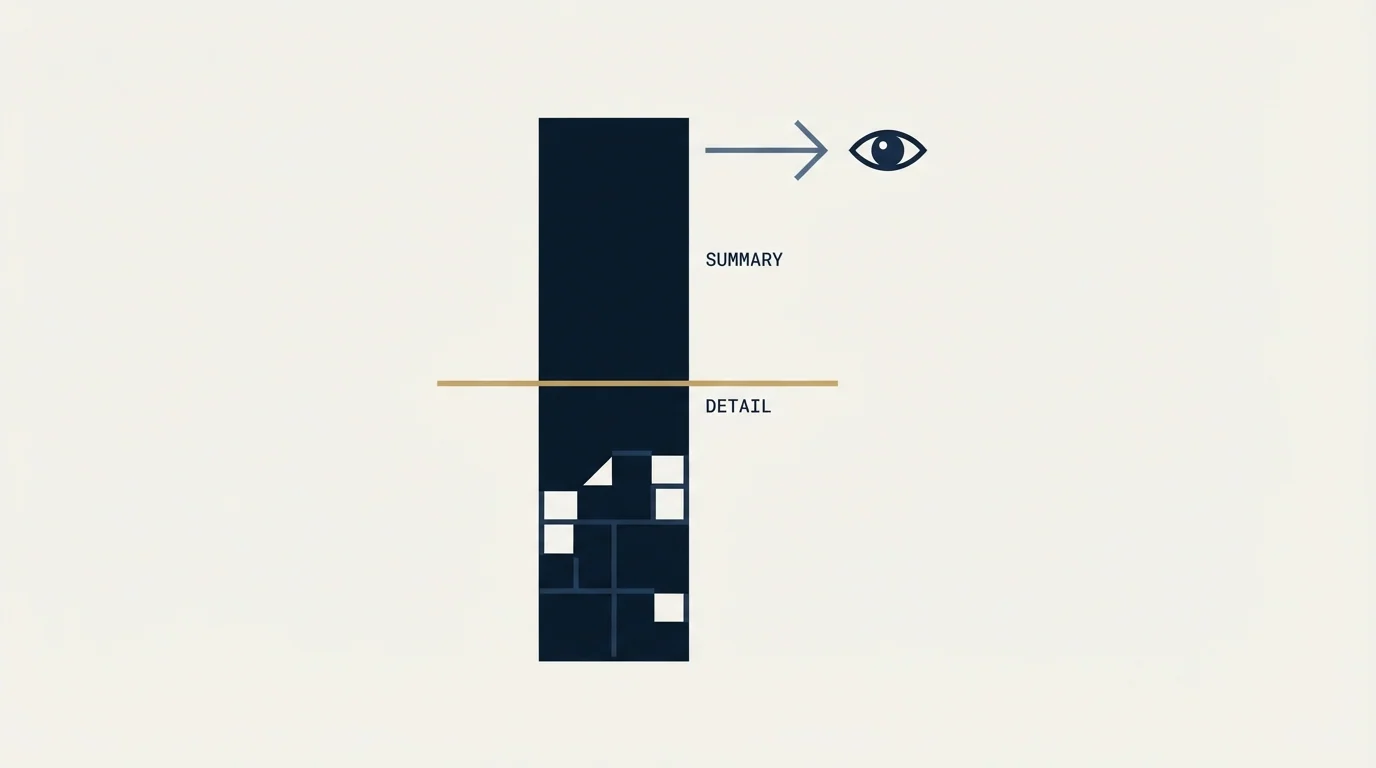
A sales proposal is read by somebody who was not on the call, in four minutes, after a forward. The standard ten-section template is a reasonable inventory and a poor running order for that reader, because it opens with the seller.
Reorder it around five questions: what is broken, what it costs them, what we would do, what that costs, and what happens next. Attribute the cost figure to the buyer's own person by name and date. Write scope at the level of what changes in somebody's working day. Offer options that differ by how much of the problem they solve. Put named next steps with buyer-side owners inside the document, so the proposal carries its own momentum instead of needing a chase.
If the constraint is that there are not enough live deals for proposal quality to be what is limiting you, that is a supply problem rather than a writing one. See what a first campaign produces for your market.
Section-list detail verified against Pipedrive's sales proposal guide as fetched on 22 August 2026. Publishers revise these pages; confirm the current text before relying on it.
Frequently asked questions.
Frequently asked questions- What is a sales proposal?
- A sales proposal is the written document a seller sends once a buyer's problem is understood. It sets out what is wrong, what it costs the buyer, what the seller would do, what that would cost and what happens next, so that people who were never on a call can decide. It is the one part of a sale that travels without the seller.
- What should a sales proposal include?
- Pipedrive's guide publishes the standard blocks as a title page, about us, goals and challenges, proposed solution, scope and deliverables, pricing, timelines, case studies, terms, and next steps. Treat that as an inventory, not a running order: lead with the buyer's problem and its cost, and move your company background behind the argument, cut to three sentences.
- Should a sales proposal show one price or several options?
- Options, scoped so each one solves a different amount of the problem, and never a different product tier. That gives the reader a question they can answer, and it means a request to reduce the price has an obvious response that is not a discount. The discount conversation starts here whatever you do, and it starts better from scoped options.
- Why do sales proposals go quiet after they are sent?
- Usually because the document depended on somebody chasing it. A proposal that names its own next step, with a date and an owner on the buyer's side, does not need a chase to keep moving. The other common cause is that the proposal reached a decisive reader who could not follow it without the seller present.
About the author.

B2B cold email experts helping companies generate qualified leads through done-for-you outreach campaigns.
RevenueFlow Team
Explore more.
Ready to scale your outreach?
We build GTM engines that book real meetings. See the receipts.
Related articles.
Win Rate Benchmarks: Which Figures State a Population
A catalogue of the published average sales win rates, sorted by whether the page names the population behind its own number. Most do not.
Sales Enablement Charters: What the Published Ones Ask For
Six publishers set out what a sales enablement charter should contain. Five describe a document nobody can check, and one writes a definition with inspection in it.
Sales Kickoff Agendas: Five Published, Session by Session
Five publishers print a sales kickoff agenda. They agree on four blocks and disagree on session length, rehearsal and where the agenda comes from.
Sales Cycle Length Benchmarks: What Each Figure Counts
The published B2B sales cycle benchmarks, sorted by what each page says it counted. The same number means two different things in two of them.
Sales Comp Plan Design: What the Publishers Prescribe
Four publishers set out how to design a sales compensation plan. Here are their procedures, their components, and which of their ratios carry a population.
Cold Calling for Higher Education Vendors: Who Picks Up
Who a published campus number really reaches, what university purchasing pages permit a sales call to do, the quiet period around a bid, and when a campus can talk.