Is Sales Commission a Period Cost Under ASC 340-40?
The classroom answer is yes, and current filings show commissions capitalised as assets instead. Both are right, and the benefit period decides which applies.
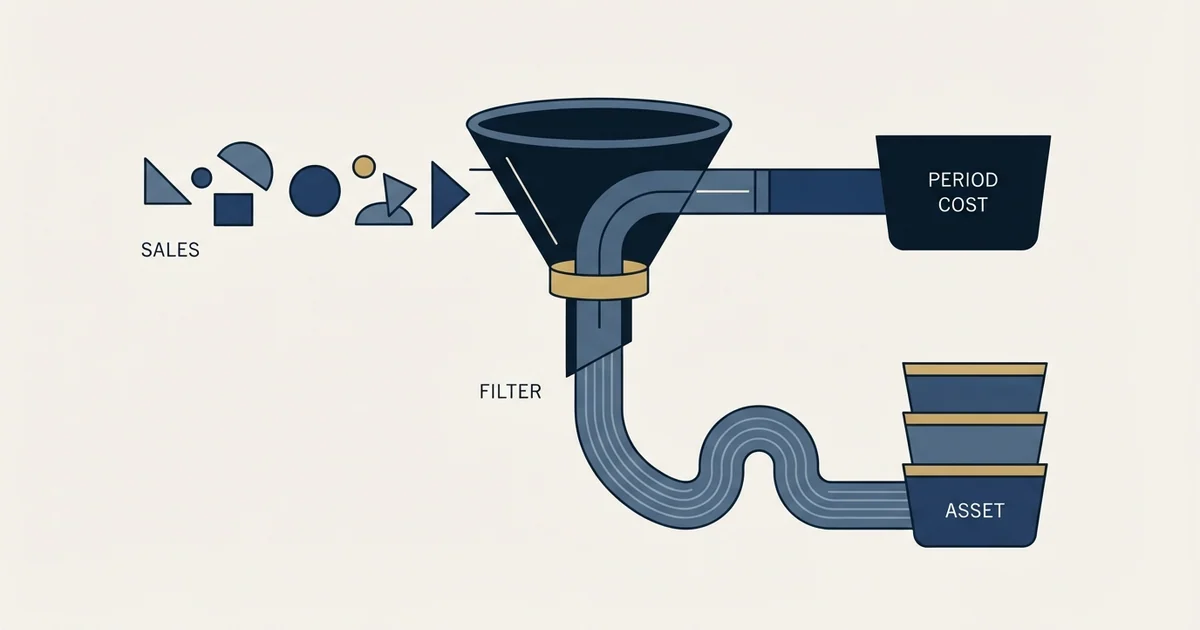
Sales commission is a period cost rather than a product cost, because selling costs never attach to inventory. Under ASC 340-40 a commission that is an incremental cost of obtaining a contract is capitalised and amortised over the benefit period, unless that period is one year or less, where a practical expedient permits expensing it as incurred.
Key takeaways
- In cost accounting terms the answer is settled: commission is a selling cost, so it is a period cost and never attaches to inventory as a product cost does.
- ASC 340-40 asks a second question the first one cannot answer, capitalising incremental costs of obtaining a contract as an asset when the company expects to recover them.
- A practical expedient permits expensing as incurred where the amortisation period is one year or less, which is why two companies can treat identical payments differently and both be right.
- The renewal commission structure is an input to the accounting conclusion, so a compensation plan redesign can move the treatment and finance should hear about it before the plan ships.
Reviewed and updated September 1, 2026
Paychex answers this question in its own annual report, and the answer is not the one most cost accounting textbooks give. Its 10-K for the fiscal year ended 31 May 2026 states that the company "determined that certain sales commissions and bonuses, including related fringe benefits, meet the capitalization criteria under Accounting Standards Codification ("ASC") Subtopic 340-40, "Other Assets and Deferred Costs: Contracts with Customers"" (Paychex Form 10-K).
Capitalised. Recorded as an asset and amortised, not expensed in the period it was earned. That sits directly on top of the standard classroom answer, which is that sales commission is a period cost. Both statements are correct, they answer different questions, and the gap between them is where every argument about sales compensation and reported profitability actually lives.
The direct against indirect question is a third axis and it has its own answer: a commission traceable to a single sale is a direct cost, specifically a direct selling cost, which still does not make it a product cost, because directness describes traceability and inventoriability describes what the cost attaches to.
The classroom answer, and why it is still right
Cost accounting splits costs in two. Product costs attach to inventory: direct materials, direct labour, manufacturing overhead. They sit on the balance sheet as inventory until the goods are sold, and only then do they hit the income statement as cost of goods sold. Period costs do not attach to anything. They are expensed in the period they are incurred, regardless of when a sale happens.
Selling and administrative costs are period costs, and sales commission is a selling cost. Under that classification the answer is unambiguous: sales commission is a period cost, not a product cost, because paying a rep does not make the product. This is what the question is usually asking, it is what a management accounting exam expects, and nothing below contradicts it.
What it does not tell you is when the expense lands. The product cost versus period cost distinction answers whether a cost can be inventoried. It does not answer whether a cost that is not inventoriable might still be deferred for a different reason. That second question is the one the revenue standard reopened.
What ASC 340-40 changed
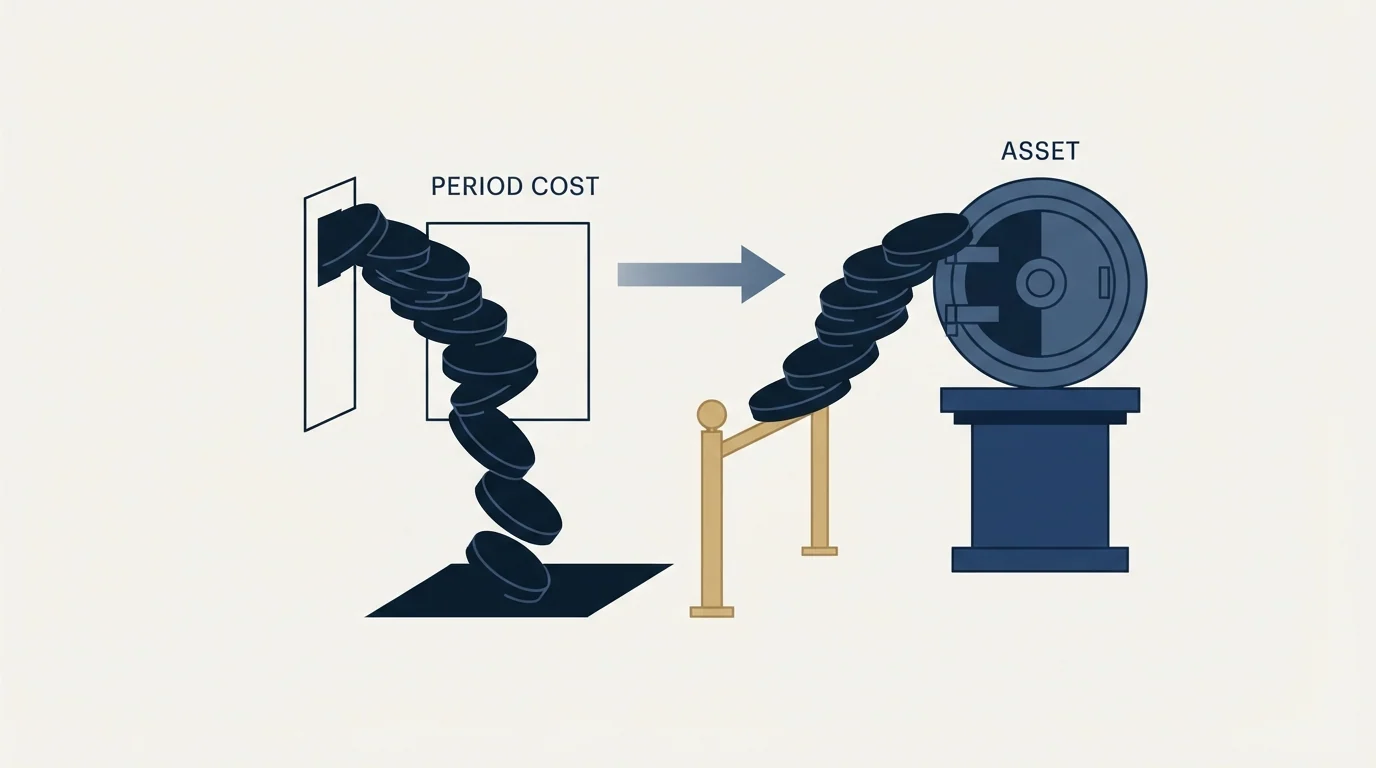
The revenue recognition standard brought a companion topic covering the costs of getting and delivering a contract. The rule it introduced for the costs of obtaining one is narrow and specific: incremental costs of obtaining a contract with a customer are recognised as an asset when the entity expects to recover them.
Incremental is doing the work in that sentence, and Paychex spells the test out in the same passage of its filing: incremental costs of obtaining a contract "include only those costs that are directly related to the acquisition of new contracts and that would not have been incurred if the contract had not been obtained." A commission paid only because a deal closed is incremental. A sales salary paid whether or not the deal closed is not. Legal review, proposal production and bid costs are usually not incremental either, because they were incurred in pursuit rather than as a consequence of winning.
So a typical variable sales commission is exactly the cost the standard is about, which is why it became the textbook example of the rule almost immediately.
- Step 1Is it a product cost?
No. Selling costs do not attach to inventory, so commission is a period cost in the cost accounting sense.
- Step 2Is it incremental to obtaining a contract?
Only if it would not have been incurred had the contract not been won. Variable commission usually is. Salary usually is not.
- Step 3Is it recoverable, and over what period?
If the entity expects to recover it and the benefit period exceeds one year, it is capitalised as an asset and amortised.
- Step 4Does an expedient apply?
Where the amortisation period would be one year or less, the standard permits expensing as incurred, which returns you to the simple answer.
The one year practical expedient, and why most companies reach for it
The standard carries a relief that removes the whole question for a large share of contracts. Aware Inc states it directly in its own filing: "We apply a practical expedient to expense costs as incurred for costs to obtain a contract when the amortization period is one year or less" (Aware Form 10-K).
That single sentence explains why two companies can treat the same kind of payment differently and both be right. Where contracts are short, or where commission on renewals is commensurate with commission on the original sale, the amortisation period collapses to a year or less and the expedient applies. Aware names exactly that case: sales commissions on maintenance contracts with a period of one year or less, "as sales commissions paid on contract renewals are commensurate with those paid on the initial contract."
Paychex sits on the other side of the same test. It states that it recognises the asset "if it is expected that the economic benefit and amortization period will be longer than one year," and adds that it does not incur incremental costs to obtain a contract renewal. When renewal commission is absent or much smaller than new business commission, the initial commission is effectively buying the whole future relationship, and the benefit period stretches past the initial contract term.
The renewal commission structure is therefore not a compensation detail. It is an input to an accounting conclusion, and a comp plan change can move the treatment.
Teams shaping how renewal commissions are earned may also want to examine the problem-first qualification framework, which reorders qualification to start with buyer challenges before budget.
- Asset recognised when benefit and amortisation period exceed one year
- Certain commissions and bonuses plus related fringe benefits meet the criteria
- No incremental cost incurred to obtain a renewal
- Expense lands across the benefit period rather than at close
- Practical expedient applied where amortisation period is one year or less
- Named case: commissions on one year maintenance contracts
- Renewal commissions commensurate with initial commissions
- Expense lands in the period the commission is earned
Why a sales leader should care about an accounting classification
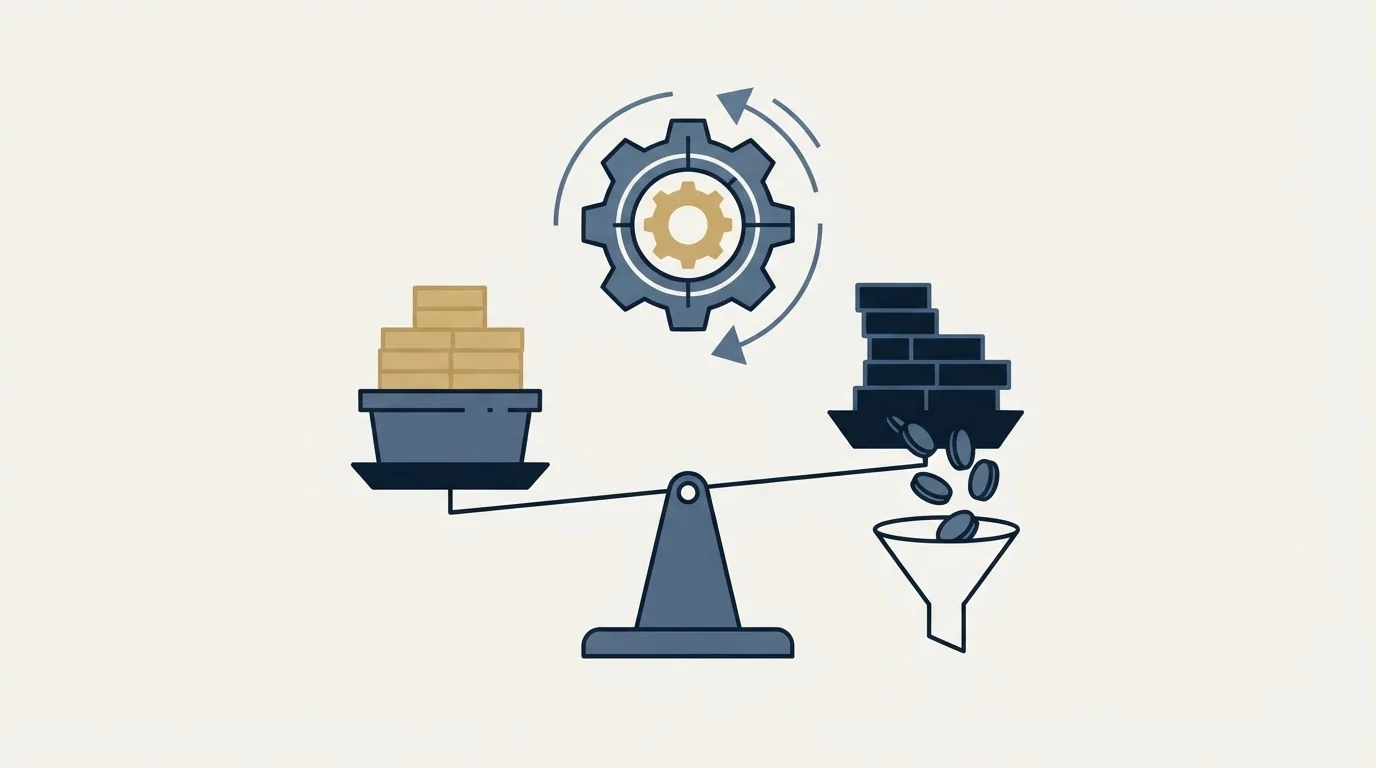
Three consequences reach the sales organisation, and none of them is an accounting department problem alone.
It changes the shape of the reported cost, not the cash. Cash leaves when the rep is paid either way. What moves is which period carries the expense. A company capitalising commission reports lower selling expense in a high bookings quarter than a company expensing it, on identical underlying activity. Anyone comparing selling costs across two companies without checking the policy is comparing accounting choices.
It distorts payback and acquisition cost math if you mix bases. A customer acquisition cost built from the income statement of a company that capitalises commission is not measuring what a cash based CAC measures, and the difference is largest in exactly the quarters where growth is fastest. If you are constructing acquisition cost or payback figures, decide whether you are working on a cash basis or a reported basis and stay there. The numerator choices that make this number defensible are set out in cost per customer acquisition, and the same discipline about naming your cost tier applies here.
Since mismatched cost bases like this often mirror broader reporting disputes, it helps to see how go-to-market metric disagreements arise from stage definitions, population rates, and attribution splits.
A comp plan redesign can change the accounting. Introducing a meaningful renewal commission where none existed can shorten the benefit period. Moving from a single close payment to a payment spread across the contract term changes the pattern. Neither is a reason to design a worse plan, but both are reasons to tell finance before the plan ships rather than after.
There is a fourth consequence worth naming for anyone building the cost of a sales seat from scratch. Whichever accounting treatment applies, the full economic cost of a rep in a period includes the variable compensation at the attainment you actually see, not the on target figure and not zero. The line by line method for building that number from your own payroll is in SDR salary and the fully loaded cost, and the comparison it feeds is in outsourced SDR versus in-house.
The questions that settle it for your own company
The answer for any specific plan is a matter of facts and of judgement your accountants make, not a matter of looking up a rule. Four questions get most of the way there.
Would this payment have been made if the contract had not been won? If yes, it is not incremental and the question closes. Salaries, retainers and most bid costs fall here.
Do you expect to recover the cost? The standard conditions capitalisation on recoverability, so a commission on a contract you expect to lose money on does not get to sit on the balance sheet.
What is the period of benefit? Not the contract term automatically. Where renewals are expected and renewal commission is small or absent, the benefit period generally extends beyond the initial term, which is the reasoning visible in the Paychex disclosure.
Would the amortisation period be one year or less? If so, the expedient is available and the simple treatment returns.
- Yes: Which payments in the plan are contingent on a contract being obtained, listed by component
- Yes: Whether renewal commission exists and how it compares with new business commission
- Yes: The expected benefit period, with the reasoning for it recorded
- Yes: Whether the one year practical expedient is being elected, and for which contract types
- Yes: A note to finance whenever the comp plan changes, before it ships
- No: Assuming the treatment is the same as a peer company without reading their policy note
The short version
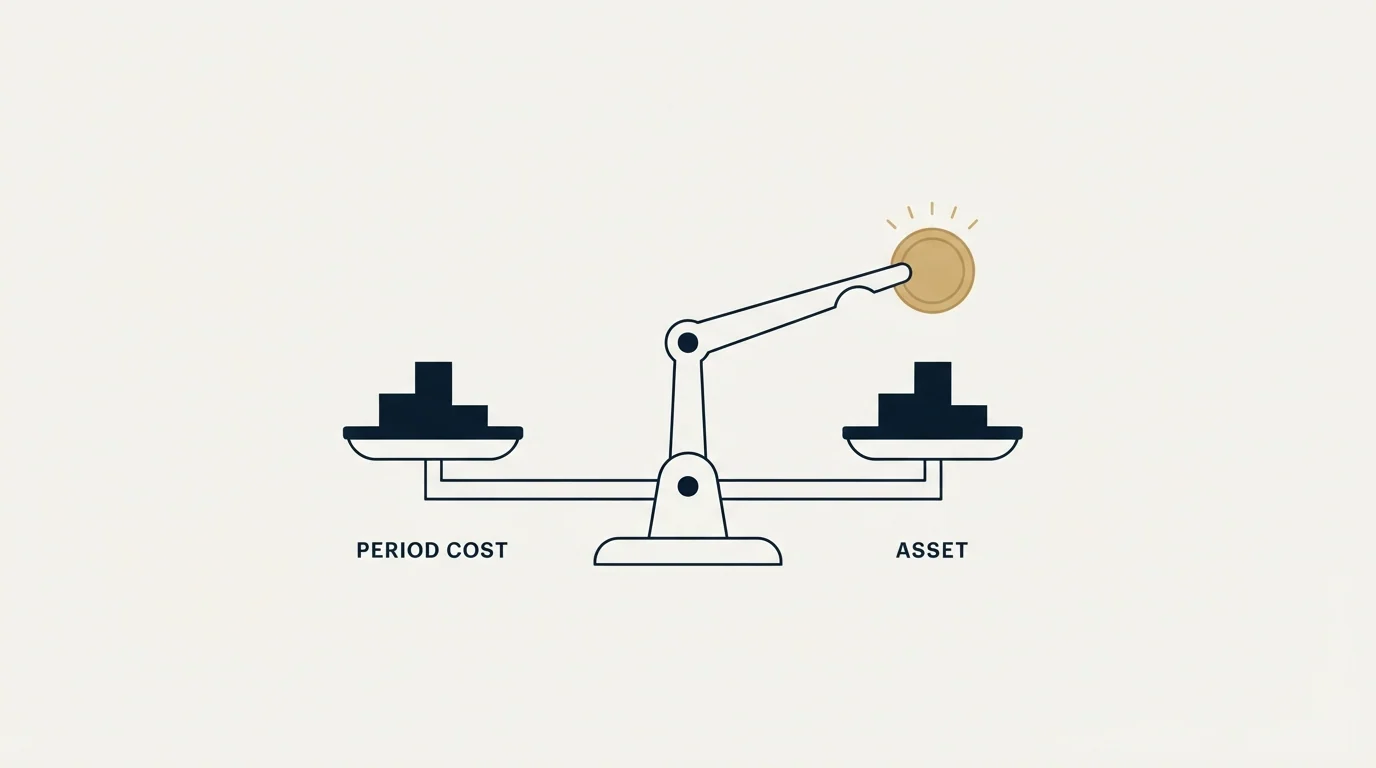
Sales commission is a period cost in the cost accounting sense: it is a selling expense and it never attaches to inventory. That answer is correct and incomplete. Under the revenue standard's companion guidance, a commission that is an incremental cost of obtaining a contract is capitalised as an asset and amortised over the period of benefit when the company expects to recover it, unless the amortisation period is one year or less, in which case a practical expedient permits expensing as incurred.
Both treatments appear in current filings. Paychex capitalises certain commissions under ASC 340-40. Aware applies the expedient and expenses them, naming one year maintenance contracts with commensurate renewal commissions as the case. The variable that separates them is the expected benefit period, and the renewal structure of the commission plan is one of its inputs.
None of this is accounting advice, and the classification for your plan is a judgement your own accountants make on your own facts. What a sales leader owes the process is a plan document precise enough to be assessed, and a heads up before it changes. The plan itself has to survive more than the audit: what it does to behaviour is worked through in quota attainment, and how the wider cost of the function is built is in sales hiring.
We are paid on attended meetings that meet criteria agreed in writing before launch, so our own commercial unit sits outside a commission plan entirely. You can see what a campaign would look like for your market.
Filing language verified against the SEC EDGAR documents cited, mid-2026. This page describes published accounting policy and is not accounting or legal advice.
Sources: Paychex Inc Form 10-K, fiscal year ended 31 May 2026, Aware Inc Form 10-K, fiscal year ended 31 December 2025
Frequently asked questions.
Frequently asked questions- Is sales commission a period cost or a product cost?
- A period cost. Product costs are the ones that attach to inventory, meaning direct materials, direct labour and manufacturing overhead. Commission is a selling cost, so it never becomes part of inventory value. That classification is about whether a cost can be inventoried, not about which period the expense lands in.
- Why do some companies capitalise sales commissions?
- Because ASC 340-40 requires an asset to be recognised for incremental costs of obtaining a customer contract when the company expects to recover them. Paychex discloses that certain commissions and bonuses meet those criteria and are capitalised where the economic benefit and amortisation period run longer than one year.
- What is the one year practical expedient for commissions?
- It permits expensing costs to obtain a contract as incurred when the amortisation period would be one year or less. Aware discloses applying it to commissions on maintenance contracts of a year or less, on the reasoning that renewal commissions there are commensurate with the commissions paid on the original sale.
- Which commission payments count as incremental?
- Only those that would not have been incurred if the contract had not been won. A variable commission contingent on closing qualifies. Base salary does not, because it is paid whether or not a deal lands, and pursuit costs such as bid preparation and legal review are usually not incremental for the same reason.
About the author.

Ben Carden is CRO at RevenueFlow, which builds and operates outbound revenue engines for B2B companies. Previously at Gartner Enterprise. Studied at London School of Economics.
Ben Carden · CRO
Connect on LinkedIn →Explore more.
Ready to scale your outreach?
We build GTM engines that book real meetings. See the receipts.
Related articles.
Incentive Plan for a Sales Team: Design It Backwards
A plan is a written specification of the behaviour you will pay for. The design order that produces a defensible one, and the four ways good arithmetic still fails.
Sales Manager Compensation Plans: Paying for a Team
A manager is paid on other people work, so the aggregate team number hides the job. Which components to weight beside the override, and the player coach trap.
California Sales Commission Law: What Section 2751 Requires
Section 2751 asks for a written method rather than a rate, a signed copy to the employee and a receipt back. What that means for a real commission plan.
Sales Call Planning: The Plan a Booked Call Needs
A call cannot produce a commitment nobody named in advance. The four fields a call plan carries, and why the ask has to be decided before the meeting opens.
The Seven-Step Sales Process: What Each Step Assumes
Prospecting through follow-up, walked one box at a time. Each of the seven steps carries an assumption about the buyer, and most of them have quietly stopped holding.
The Five-Step Sales Process: What You Stop Checking
Cutting a process to five steps is a decision about which checks you drop. Which deals the short version fits, and the two loss patterns that say it does not.