California Sales Commission Law: What Section 2751 Requires
Section 2751 asks for a written method rather than a rate, a signed copy to the employee and a receipt back. What that means for a real commission plan.
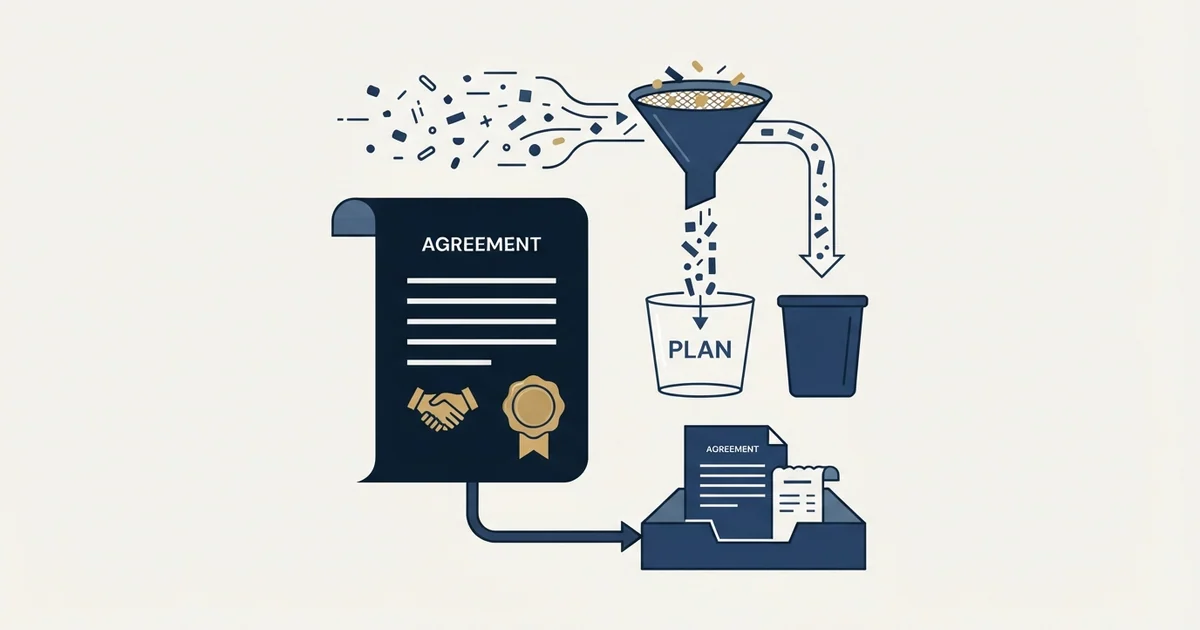
California Labor Code section 2751 requires any commission arrangement for services rendered in the state to be in writing, setting out how commissions are computed and paid. The employer must give the employee a signed copy and obtain a signed receipt. Expired plan terms are presumed to continue until superseded or employment ends.
Key takeaways
- The statute asks for the method of computation and payment, not just a rate, which forces a plan to answer the questions that generate disputes before they arise.
- Commission means payment for services in selling the employer's property or services and proportionate to the amount or value sold, borrowing the definition in section 204.1.
- Where a plan expires and both sides keep working, the old terms are presumed to remain in force until superseded, so a later plan paying less does not take effect by the calendar.
- Temporary incentives that can only increase contracted pay sit outside the requirement, but a mechanism able to reduce contracted pay is not one and belongs in the written agreement.
Reviewed and updated September 1, 2026
California Labor Code section 2751 is four sentences long and it decides whether your commission plan is enforceable. The statute reads that whenever an employer contracts with an employee for services rendered in the state and "the contemplated method of payment of the employee involves commissions, the contract shall be in writing and shall set forth the method by which the commissions shall be computed and paid" (California Labor Code section 2751).
Two obligations follow in the same section. The employer "shall give a signed copy of the contract to every employee who is a party thereto and shall obtain a signed receipt for the contract from each employee." And where a contract expires while both parties carry on working under it, the terms "are presumed to remain in full force and effect until the contract is superseded or employment is terminated by either party."
That is the whole of the drafting requirement, and it is a low bar that a surprising number of plans fail. This page describes what the statute says and what a plan document has to contain to satisfy it. It is not legal advice, and a plan that carries real money should be reviewed by an employment lawyer licensed in California before it ships.
What counts as a commission under the section
The definition is borrowed rather than written locally. Section 2751 states that "commissions" has the meaning set out in section 204.1, which defines commission wages as "compensation paid to any person for services rendered in the sale of such employer's property or services and based proportionately upon the amount or value thereof."
Two elements have to be present together. The person must be involved in selling, and the payment must be proportionate to the amount or value sold. A payment that is proportionate to sales but goes to someone who does no selling is not commission under this definition, and neither is a payment to a seller that has no proportional relationship to what was sold.
Section 2751 then carves out three things that are not commission for its purposes:
- short term productivity bonuses of the kind paid to retail clerks;
- temporary, variable incentive payments that increase, but do not decrease, payment under the written contract;
- bonus and profit sharing plans, unless the employer has offered to pay a fixed percentage of sales or profits as compensation for work performed.
The second carve out is the one that catches sales organisations. A spiff that only ever adds to what the written plan already promises sits outside the requirement. A mechanism that can reduce what the written plan pays is not a temporary upward incentive at all, and it belongs inside the written contract.
The third carve out has a condition attached that is easy to read past. A bonus or profit sharing plan is excluded only while it is discretionary. The moment the employer offers a fixed percentage of sales or profits as compensation for work to be performed, the exclusion stops applying.
- Yes: The agreement exists in writing, before the work it pays for
- Yes: It sets out the method by which commissions are computed
- Yes: It sets out the method by which commissions are paid
- Yes: The employee has been given a signed copy
- Yes: A signed receipt for that copy has been obtained and retained
- Yes: Someone owns what happens when the plan term expires and work continues
- No: Relying on an offer letter that mentions commission without stating the method
- No: Treating a plan that can reduce contracted pay as a temporary upward incentive
The expiry presumption is the clause people forget

Most commission plans are annual. Most sales organisations redesign them late. The gap between the old plan expiring and the new one being signed is ordinary, and section 2751 fills it with a default: the expired terms are presumed to continue until they are superseded or employment ends.
Read the direction of that default carefully. If a company lets a generous plan expire and keeps the team working, the generous terms are presumed to persist. A new plan that pays less does not take effect because the calendar turned over. It takes effect when it supersedes the old one, which in practice means a new written agreement that the employee has been given a signed copy of.
The operational consequence is a date in someone's calendar. Whoever owns compensation should know every plan expiry date and should have the replacement signed before it, rather than in the quarter after. This is unglamorous and it is the single cheapest piece of commission hygiene available.
What "the method by which commissions shall be computed" has to survive
The statute asks for a method rather than a rate, and a method is the harder thing to write. A plan that states a percentage and nothing else fails the practical test, because the percentage does not answer what happens in the cases that actually generate disputes.
When the commission is earned. At signature, at invoice, at cash collection, or at some other event. This is the single most consequential sentence in a commission plan and it is frequently absent.
What happens to a deal that is cancelled, refunded or never pays. If the plan intends a chargeback, the chargeback has to be in the written method. A clawback that exists only in a manager's understanding is not part of the computation method the statute asks for.
What happens on termination. Whether commission on deals closed before the last day but paid after it is still due, and on what conditions. Anyone drafting this should get advice, because a term that forfeits earned wages is a different legal question from a term that defines when the wage was earned at all.
Split, house and windfall rules. Who gets paid when two people touch one account, what happens on inbound deals nobody worked, and whether management retains any discretion to adjust. If discretion exists, the written method should say who holds it and against what.
Quota and target changes mid period. Whether targets can move during a plan period, and what happens to in flight deals if they do.
None of these is a California specific idea. They are the questions any commission plan has to answer, and the statute's virtue is that it forces a company operating in California to answer them in writing rather than in a conversation nobody can reproduce later.
- A written contract
- The computation method stated
- The payment method stated
- A signed copy given to the employee
- A signed receipt retained
- A default rule for expiry
- The earning event named precisely
- Chargeback and cancellation treatment
- Termination treatment, reviewed by counsel
- Split, house account and windfall rules
- Whether targets can move mid period
- A quota the plan can actually be measured against
Why this is a sales leadership problem rather than a legal one
The instinct is to treat section 2751 as paperwork that legal or HR handles once. Two things make that a mistake.
The first is that the statute's requirements and good plan design point in the same direction. A plan whose computation method survives being written down in full is usually a plan the reps can predict, and predictability is most of what makes a comp plan change behaviour. A plan that resists being written down is usually resisting because a manager wants room to adjust it, and that room is precisely what makes reps distrust the number. The design questions behind that, including what happens when the same plan meets very different territories, are worked through in quota attainment.
Beyond compensation mechanics, closing a stalled deal often depends on reading buyer indecision, a challenge explored in selling to a buyer who cannot decide.
The second is that the drafting happens at the same moment as the design. Compensation plans get redesigned in the weeks before a fiscal year, under time pressure, by people thinking about motivation rather than about enforceability. That is exactly when the earning event goes unstated and the chargeback rule lives in a slide. Building the written method as part of the design, rather than as a compliance pass afterwards, costs nothing extra and removes the most common failure.
There is a third reason that has nothing to do with California. Remote hiring means a company headquartered elsewhere can acquire a California obligation by hiring one rep, since the section applies to contracts for services to be rendered within the state. Whether a specific arrangement triggers it is a question for counsel, and the safe operating posture is to hold every commission plan to the written standard regardless of where the rep sits.
The wider question of what a sales seat costs once variable compensation is modelled honestly is in SDR salary and the fully loaded cost, and the sequencing question of when to hire into a motion at all is in sales hiring. If the plan is being written for a first commercial hire, the comparison with buying meetings directly is in outsourced SDR versus in-house.
The short version

Section 2751 requires that a commission arrangement for services rendered in California be in writing, that it set out how commissions are computed and how they are paid, that the employee be given a signed copy, and that the employer obtain and keep a signed receipt. Where a plan expires and work continues, its terms are presumed to continue until superseded or until employment ends.
Commission for this purpose means payment for services in selling the employer's property or services, proportionate to the amount or value sold. Short term productivity bonuses, temporary incentives that can only increase contracted pay, and discretionary bonus or profit sharing plans sit outside the requirement, with the last of those losing its exclusion once a fixed percentage of sales or profits is offered as compensation.
Write the method rather than the rate. Name the earning event, the cancellation treatment, the termination treatment, the split rules and whether targets can move. Get the termination language reviewed by an employment lawyer licensed in California, because that is the clause where the statute's requirements meet a separate body of wage law.
A repeatable sales process explains how a written method should transfer cleanly to a new seller, much as commission terms must transfer in writing.
RevenueFlow is not a law firm and this page is not legal advice. What it reflects is a standing operating preference: the terms that decide whether somebody gets paid belong in writing, agreed before the work starts. We hold our own commercial arrangement to the same rule, with the qualification criteria for a meeting agreed in writing before launch, and you can see what a campaign would look like for your market.
Statute text verified against the official California legislative surface, mid-2026. Statutes are amended; confirm the current text before relying on it.
Sources: California Labor Code section 2751, California Labor Code section 204.1
Frequently asked questions.
Frequently asked questions- Does California require a written sales commission agreement?
- Yes. Section 2751 states that where the contemplated method of payment involves commissions for services rendered in California, the contract must be in writing and must set out the method by which commissions are computed and paid. The employer must also give the employee a signed copy and keep a signed receipt for it.
- What counts as a commission under section 2751?
- The section borrows the definition in section 204.1: compensation paid for services rendered in selling the employer's property or services, based proportionately on the amount or value sold. Both elements must be present, so a proportional payment to someone who does no selling is not commission for this purpose.
- What happens when a commission plan expires?
- The statute supplies a default. Where a contract expires and the parties continue working under its terms, those terms are presumed to remain in full force until the contract is superseded or employment ends. A replacement plan takes effect when it supersedes the old one, not when the plan year turns over.
- Are sales bonuses covered by the same rule?
- Not usually. Short term productivity bonuses, temporary incentives that increase but never decrease contracted pay, and bonus or profit sharing plans are carved out. The last exclusion falls away once the employer offers a fixed percentage of sales or profits as compensation for work to be performed.
About the author.

Ben Carden is CRO at RevenueFlow, which builds and operates outbound revenue engines for B2B companies. Previously at Gartner Enterprise. Studied at London School of Economics.
Ben Carden · CRO
Connect on LinkedIn →Explore more.
Ready to scale your outreach?
We build GTM engines that book real meetings. See the receipts.
Related articles.
Is Sales Commission a Period Cost Under ASC 340-40?
The classroom answer is yes, and current filings show commissions capitalised as assets instead. Both are right, and the benefit period decides which applies.
Incentive Plan for a Sales Team: Design It Backwards
A plan is a written specification of the behaviour you will pay for. The design order that produces a defensible one, and the four ways good arithmetic still fails.
Sales Call Planning: The Plan a Booked Call Needs
A call cannot produce a commitment nobody named in advance. The four fields a call plan carries, and why the ask has to be decided before the meeting opens.
The Seven-Step Sales Process: What Each Step Assumes
Prospecting through follow-up, walked one box at a time. Each of the seven steps carries an assumption about the buyer, and most of them have quietly stopped holding.
The Five-Step Sales Process: What You Stop Checking
Cutting a process to five steps is a decision about which checks you drop. Which deals the short version fits, and the two loss patterns that say it does not.
Solution Selling: The Generic Term and the Licensed Method
One name covers a generic problem-led posture and a specific licensed methodology. The lineage, the three moves that matter, and the assumption that aged badly.