Sales Performance Improvement Plan Samples: What to Include
Three worked sales PIP samples, and the diagnosis that comes first. Most published plans set a target on an outcome the rep does not control alone.
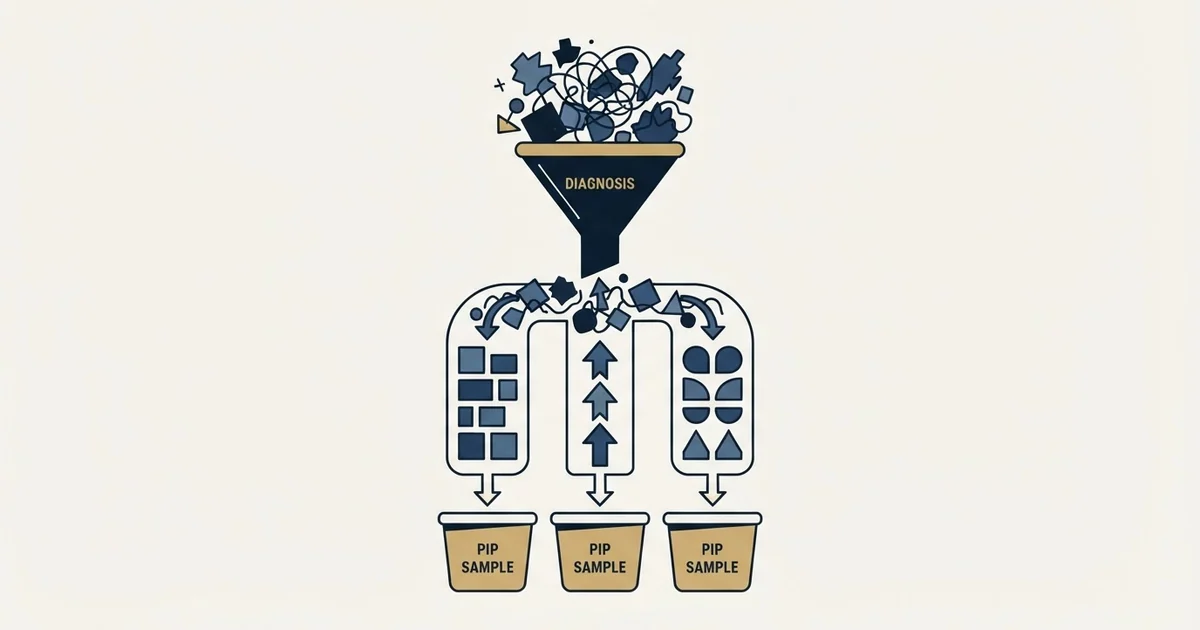
A sales performance improvement plan works when its targets name behaviour the rep decides, not outcomes several people decide. Diagnose which layer is failing first: the list, the message, or the live conversation. Only the third is individual, and the first two mean a plan about one person is the wrong document.
Key takeaways
- Almost every published sample sets its target on meetings, pipeline or quota, and a seller controls none of those alone. A plan built that way holds one person accountable for the sum of three layers, which is unfair when the cause is targeting and unhelpful even when it is not, because it names a symptom rather than a practice.
- Run the layer diagnosis before writing anything. If the list cannot buy or the message is not landing, the rest of the team will show the same pattern, and issuing a plan anyway converts a structural problem into an individual one on the permanent record.
- Behaviour goes inside the window and outcomes are read outside it. Thirty days is shorter than most B2B sales cycles, so a plan that sets an outcome bar inside the window is measuring something that cannot have appeared yet.
- Keep the plan out of the coaching sessions. Coaching asks a rep to expose the work they are least sure about, and a performance conversation attaches consequences to what gets exposed, so run together they produce a rep who brings their best call every week and no learning at all.
Reviewed and updated September 1, 2026
A manager opens a template, types the rep's name, and writes the objective: book twelve qualified meetings in the next thirty days. The rep has been working a segment where nobody has booked twelve meetings in a month all year. Thirty days later the plan has failed, and it was going to fail on the day it was written, because the number on it was never something the rep decided.
That is the most common defect in a sales performance improvement plan, and it survives every template on the internet because templates supply the structure and not the judgement. The structure is easy. Deciding what may honestly go on the plan is the whole job.
What the document is actually for
A sales PIP is being asked to do two things at once, and they pull in different directions.
The first is improvement. Somebody's work is below where it needs to be, and the plan is an attempt to change that inside a defined window, with support attached.
The second is documentation. If the work does not change, the plan is the record showing that expectations were stated, help was offered and time was given. That second job is why the language gets formal and why the document ends up in a system of record.
The tension is real and worth naming rather than resolving. A plan written purely as improvement tends to be vague, because specifics feel harsh. A plan written purely as documentation tends to be a list of outcomes with dates, because outcomes are what a record wants. The usable version is specific about behaviour and honest about what the behaviour can be expected to produce.
Managers weighing how documentation and recognition pull against each other will find how president's club criteria decide winners a useful look at status rewards that hold performance through a year rather than a quarter.
The defect that makes most sample plans unfixable
Almost every published sample sets targets on outcomes: meetings booked, opportunities created, quota attainment, revenue closed. Those are the numbers a manager is under pressure about, so they are the numbers that get typed.
The problem is that a seller does not control any of them alone. Our guide to sales rep coaching sets out the diagnostic that decides this, and it is the most useful thing to run before writing a single line of a plan. When someone is underperforming, one of three layers is failing, and only the third is individual.
The list is the first layer. If the rep is talking to people who cannot buy, no amount of skill coaching helps, and coaching them harder is a way of blaming a rep for a targeting decision they did not make. The message is the second, which is a copy and offer problem, usually shared across the whole team. What the rep does in a live conversation is the third, and that layer is genuinely theirs.
A performance plan built on outcomes cannot tell those apart. It holds one person accountable for the sum of all three, which is unfair when the cause is the first two and unhelpful even when it is the third, because it names the symptom rather than anything to practise. The sales rep scorecard draws the same line for ordinary review purposes, and the line matters more here, since this document has consequences attached.
- Segment cannot buy or has no budget cycle open
- Contact data is stale or the titles are wrong
- Territory has been worked twice already this year
- Fix belongs to whoever owns targeting
- Offer does not land for this segment
- Opening assumes context the reader lacks
- Everyone on the team is seeing the same drop
- Fix belongs in a copy review for the whole team
- Talks past a buying question on recorded calls
- Does not work the assigned accounts
- Skips the qualification questions that were agreed
- Writes the opening line without the account-specific reason
Three worked samples
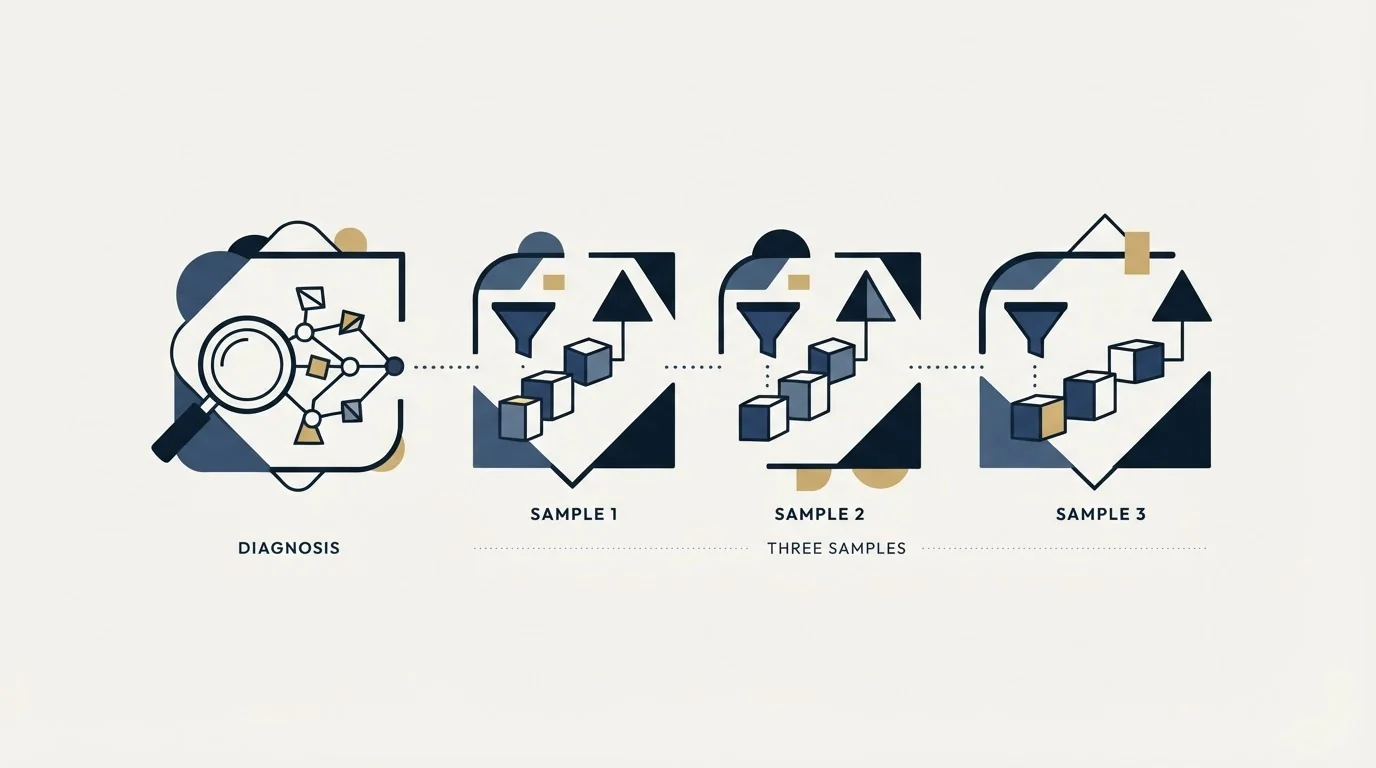
Every name, company and figure in the three samples below is invented for illustration. None of them describes a real person, a real team or a real campaign, and none of the numbers is a benchmark to copy.
The shape is the same in each: the presenting problem, the layer it actually sits in, what goes on the plan, what deliberately does not, and how anyone will know at the end.
Sample one: the rep whose conversations do not convert
Presenting problem. An invented rep, called here Rep A, is reaching people and holding conversations at a normal rate, and the conversations are not becoming meetings.
Layer. Live conversation. The other two layers are producing normal results for the rest of the team on the same list and the same copy, which is what makes this individual rather than structural.
On the plan. Four recorded conversations reviewed each week with the manager, chosen by the rep. One named focus for the period: asking for the meeting plainly rather than offering to send information. Every review closes with a single written sentence describing the change, and the next review opens by checking the previous sentence before anything new is raised.
Not on the plan. A meeting target. The number of meetings a fixed number of conversations produces depends on the segment as much as on the asking, so it is tracked and read, and it is not the bar being cleared.
How anyone knows. At the end of the window, four current recordings are pulled and checked for the named behaviour. Either the rep now asks for the meeting plainly by default or they do not, and both people can hear which.
Sample two: the rep whose activity has collapsed
Presenting problem. An invented rep, Rep B, is working roughly a third of the accounts assigned to them, and the accounts they do work are the ones they have worked before.
Layer. Rep, but not a skill problem. This is a coverage problem, and coverage is the one input genuinely inside a seller's control.
On the plan. Accounts genuinely worked per week against the assigned list, with a written definition of what worked means agreed before the plan starts. A weekly review of which accounts were selected and the reason each one was chosen, since avoiding unfamiliar accounts is the behaviour underneath the number.
Not on the plan. Raw touch or dial counts. Anything fully inside a rep's control degrades as a measure the moment it becomes the target, and touch counts are the purest example: they rise the week they go on a wall and tell nobody anything afterwards. The distinction between accounts worked and touches sent is worked through in SDR metrics.
How anyone knows. Share of the assigned list ever contacted, read at the start and at the end, with the definition unchanged in between.
Sample three: the rep who is not the problem
Presenting problem. An invented rep, Rep C, is below target on every outcome measure, and so are four of the six people around them.
Layer. List, message, or both. A plan should not be written at all.
What happens instead. The diagnosis moves up a level. Whether the accounts on the list can buy, whether the offer lands for this segment, and whether the target was ever supported by the volume of conversations reaching the team are the questions on the table, and none of them is answerable by a document about one person. Where a target gets set without that arithmetic underneath it is covered in quota attainment.
Why this sample is here. It is the most common real case and the one no template includes, because a template assumes the decision to write a plan has already been made correctly. A manager who cannot say which layer is failing is not ready to write a plan, and issuing one anyway converts a structural problem into an individual one on the record.
Managers scrambling for something to say in a tough review often reach for a motivational line, and seven famous sales quotes shows how often those quotes are misattributed and worth sourcing properly.
- Yes: Every target names a behaviour the rep decides, not an outcome several people decide
- Yes: The layer diagnosis was done first and is written down
- Yes: The rest of the team is not showing the same pattern
- Yes: The support offered is specific and scheduled, not offered in principle
- Yes: The check at the end is something both people can look at together
- No: A revenue, quota or meeting number is the bar being cleared
- No: The window is shorter than the sales cycle it is measuring
The window, and why sales cycles break it
Thirty days is the reflex. It is the wrong length whenever the outcome being watched takes longer than thirty days to appear, which in most B2B motions it does.
The way out is not a longer plan. It is to watch behaviour inside the window and read outcomes outside it. Behaviour is observable weekly, which is what makes it the right thing to put a date on. An opportunity created in week two of the plan tells you nothing about whether it will close, and waiting for it to close means the plan runs past the point where anybody is still learning from it.
Where a new starter is involved, the ramp interval has to come off before anything is read at all. A plan issued to somebody still inside their ramp is measuring the hiring plan.
- Before week oneDiagnose the layer
Written down, with the evidence that the rest of the team is not showing the same pattern
- Week oneAgree the behaviour and the definition
One named focus and, where a count is involved, a written definition of what it counts
- Weeks one to fourWeekly review against artifacts
Recordings or written work the rep chose, closing each time with one written sentence
- End of windowCheck the behaviour, not the revenue
Fresh artifacts read against the named focus, by both people together
- After the windowRead the outcomes on their own clock
Pipeline and meetings on the sales cycle's timescale rather than the plan's
Keeping the plan out of the coaching
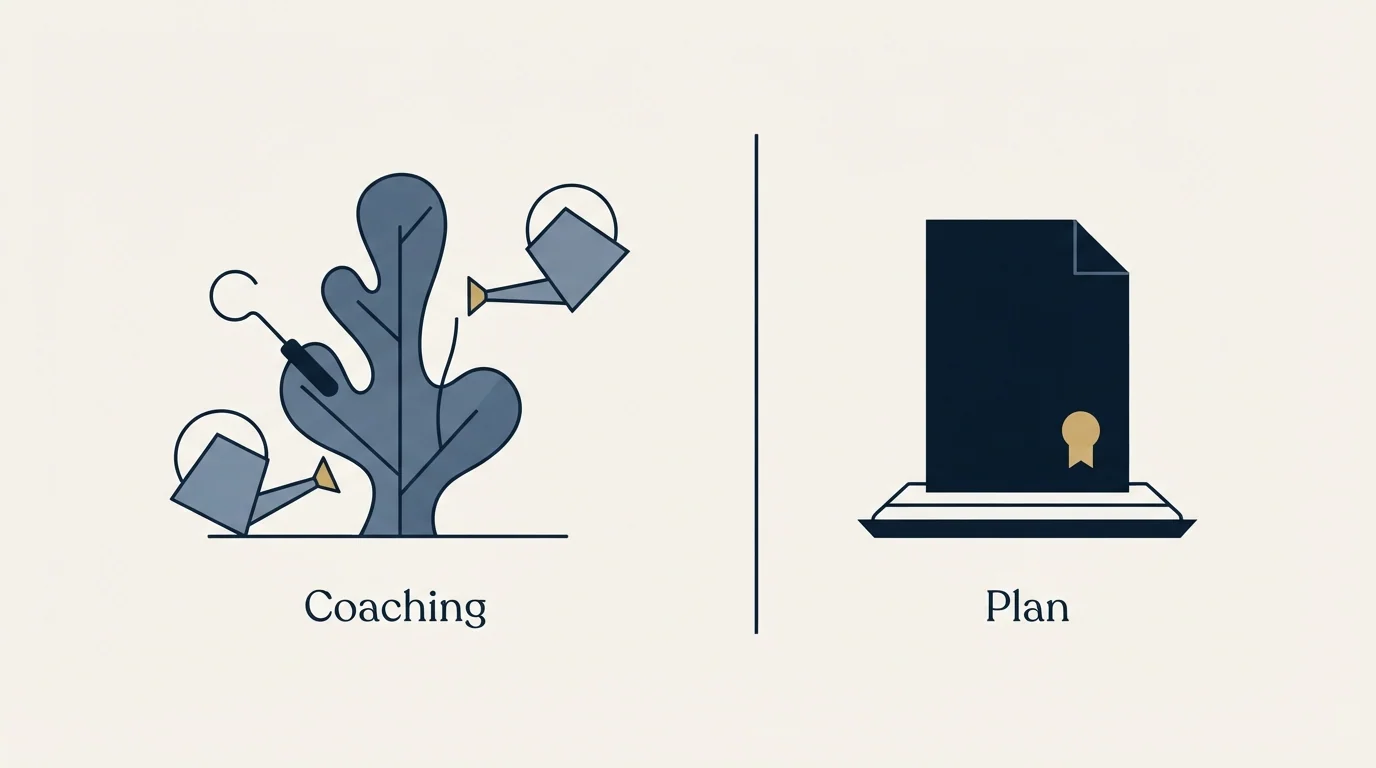
The two conversations undermine each other when they happen in the same meeting. Coaching asks a rep to expose the work they are least sure about, and a performance conversation attaches consequences to what gets exposed. A rep who suspects the second is happening brings their best call every time, and the coaching session becomes a weekly presentation.
That is an argument for separating the meetings, not for softening the plan. The performance discussion gets its own slot, its own expectations and its own record. The coaching sessions continue and what is said in them is not the evidence base for the review. A manager who runs both in one half hour usually ends up doing neither, and the tell is that nobody ever brings a bad call.
The broader division of what only a manager can do, including this document, sits in sales manager responsibilities.
Where we sit
RevenueFlow runs cold email and LinkedIn outbound for clients and does not sell sales training, coaching or HR tooling, so nothing here is a recommendation about anybody's employment process. Two parts of our documented practice are relevant to why the layer diagnosis is available at all.
Qualification criteria are agreed in writing with the client before a campaign launches, which means a disputed meeting is a question about a document rather than a question about a rep's judgement. And each campaign carries one message with no bumps and no thread replies, so the input side of any performance question is a list decision rather than a touch count. Both make it easier to see which layer is failing, which is the thing a plan needs and rarely has.
The short version
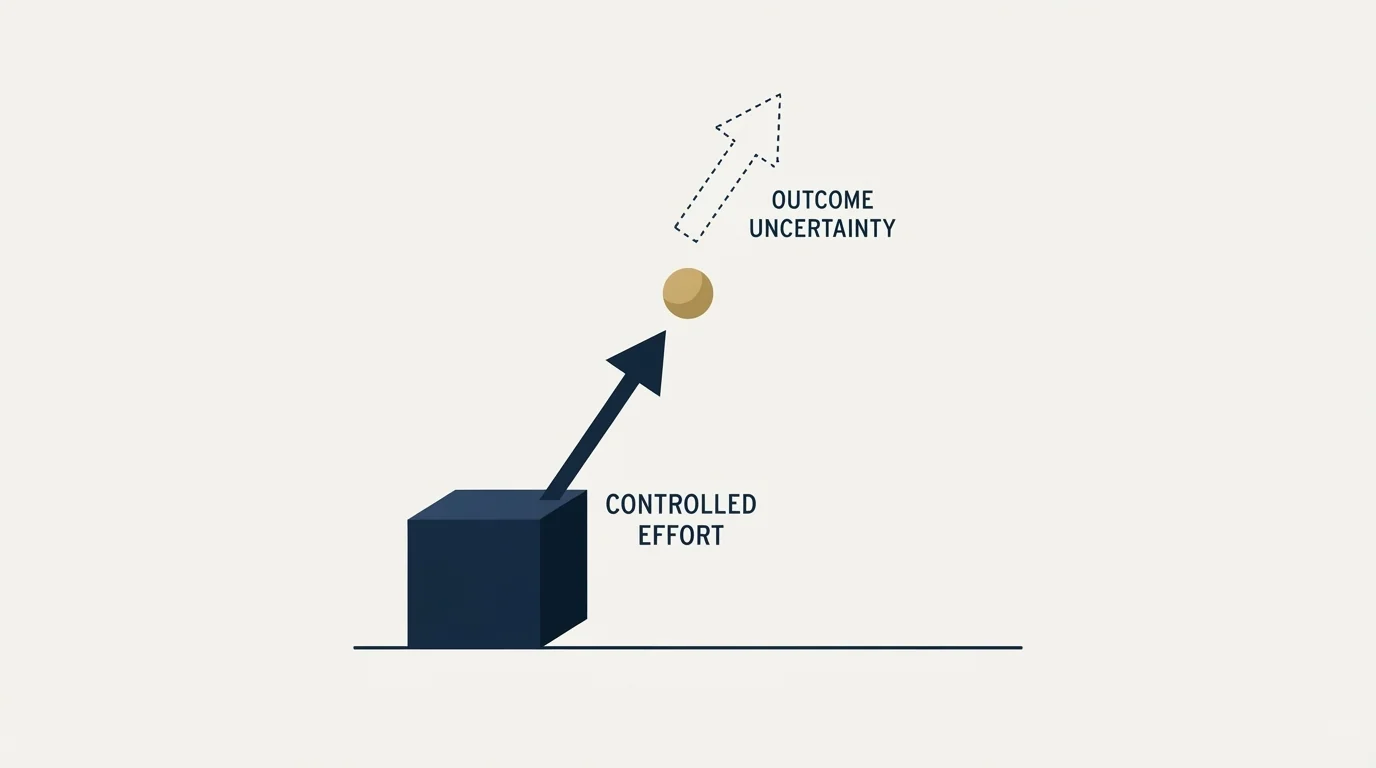
A sales performance improvement plan is doing two jobs, improvement and documentation, and the usable version is specific about behaviour and honest about what behaviour produces. The defect in nearly every published sample is a target set on an outcome the rep does not control alone, which makes the plan unclearable and hides the cause.
Run the layer diagnosis first. If the list or the message is failing, a plan about one person is the wrong document, and that is the most common case. If the live conversation is genuinely the problem, put the behaviour on the plan, define any count in writing before it starts, schedule the support rather than offering it, and check the behaviour with fresh recordings at the end. Read the outcomes afterwards, on the sales cycle's clock rather than the plan's.
Where the honest diagnosis is that the list was never going to support the target, that is the half we run: see what a first campaign produces.
Frequently asked questions.
Frequently asked questions- What should go on a sales performance improvement plan?
- Behaviour the rep decides, with any count defined in writing before the plan starts. Accounts genuinely worked, a named conversational focus reviewed against recordings, and the qualification questions that were agreed. Keep meeting, pipeline and revenue numbers off the bar being cleared, and track them separately so they inform the review without deciding it.
- Can you put a quota or meeting target on a sales PIP?
- Track it, do not set the bar on it. Those outcomes are produced by the list, the message and the rep together, so a target on one of them is unclearable by the person being asked to clear it and it hides which layer actually failed. It also makes the document weak as a record, since it evidences a result rather than a standard.
- How long should a sales performance improvement plan run?
- Long enough to see the behaviour, which is usually four to six weeks of weekly reviews, and the outcomes get read afterwards on the sales cycle's own clock. A thirty-day window measuring a ninety-day cycle is watching for something that cannot have appeared yet. Where a rep is still ramping, the ramp interval comes off before anything is read.
- What if the whole team is missing target, not just one rep?
- Then a plan about one person is the wrong document and issuing one puts a structural failure on an individual's record. The questions move up a level: whether the accounts can buy, whether the offer lands for this segment, and whether the target was ever supported by the volume of conversations reaching the team. This is the most common real case.
About the author.

B2B cold email experts helping companies generate qualified leads through done-for-you outreach campaigns.
RevenueFlow Team
Explore more.
Ready to scale your outreach?
We build GTM engines that book real meetings. See the receipts.
Related articles.
Sales Productivity: Four Different Ratios Wear the Same Name
Sales productivity names four ratios that share no denominator, and improving one can move another the wrong way. The version you mean decides what happens next.
Sales Tonality: The 38 Percent Figure and Its Author
Almost every guide to sales tonality opens with the same statistic. Its author published a scope note saying it does not apply, and the genre never carried it.
Sales Rep Scorecard: What the Rep Cannot Control
Most rep scorecards carry lines the rep cannot move. The controllability test, the six lines that earn a place, and the two ways the document stops meaning anything.
SDR Metrics: Which Numbers the Rep Controls
A sales development scorecard mixes three kinds of number and only one is about the person being reviewed. Sorting them by who controls what turns it into a diagnosis.
Multi-Threading in Sales: Who the Second Contact Should Be
Six contacts on an opportunity and one real relationship is still single-threaded. Which second person to add, when to ask, and how to tell whether it worked.
Sales Motivation Quotes: Seven Lines, and Who Said Them
Ford's most quoted line first appeared months after he died, with no source. Seven sales-floor staples, checked against the earliest printed record.