Sales Rep Coaching: The Cadence That Survives a Busy Quarter
Coaching that changes behaviour needs an artifact on the table and one named focus. The weekly loop, and the three layers a flat number can be hiding.
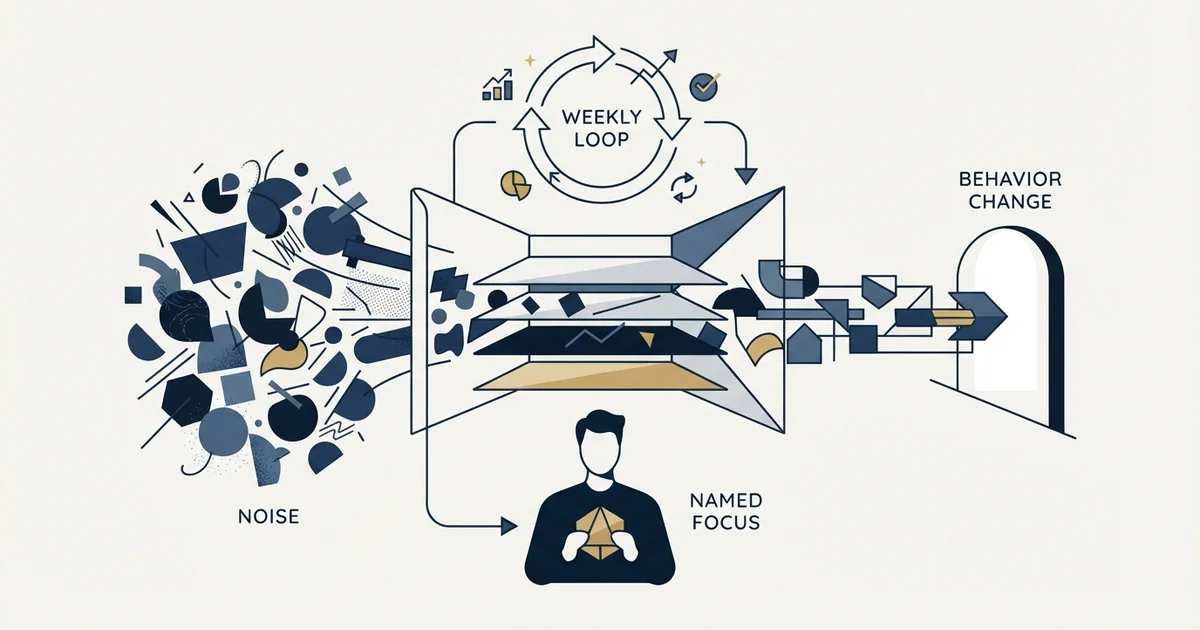
Sales rep coaching is the recurring review of specific work a rep has already done, which makes it different from training. It needs three things to change behaviour: a real artifact from this week, one named focus rather than a list, and a weekly cadence close enough to the work that the rep still remembers the choice they made.
Key takeaways
- Training moves a rep from no knowledge to working knowledge once; coaching is the recurring review of work they have already done, and the two need separate sessions.
- Every session needs an artifact from the current week, because without one the conversation defaults to generalities the rep cannot act on.
- A flat number hides three layers: the list, the message and the live conversation. Only the third is coachable, and coaching the other two harder blames a rep for someone else's decision.
- Weekly at low intensity beats quarterly at high intensity, and the single written change is the only part of a session that survives to the next one.
Reviewed and updated August 22, 2026
A manager blocks thirty minutes on Friday, opens a rep's dashboard, sees that activity is down and conversion is flat, and spends the half hour saying versions of "let's get the numbers up". The rep leaves with nothing they can do differently on Monday. That session was reporting wearing a coaching label, and it is the most common shape coaching takes on a busy team.
Coaching is a different activity from training, and the confusion costs teams more than either does on its own. Training is the thing you do once, in a sequence, to get someone from no knowledge to working knowledge. Coaching is the recurring review of specific work a rep has already done. A team that has confused the two runs onboarding content at reps who finished onboarding a year ago, and calls it development.
The unit of coaching is an artifact, not a person
The fastest way to make a coaching session useful is to require an artifact in the room. A recorded call. A message a rep wrote. The list they built before they wrote it. A deal note. Something specific, from this week, that both people can look at.
The forms that hold a session to that rule, from the one-to-one agenda to a call review scorecard, are printed in full in sales coaching templates.
Without an artifact the conversation drifts to generalities, because generalities are the only thing available. With one, the conversation is forced to be about a decision the rep actually made: this opening line, this account, this qualification call. That is the level at which behaviour changes.
The field-sales ancestor of this is the ride along, where a manager spends a day in the car observing appointments, and the artifact rule is what survives the move to a remote team: a recorded call or a written message the rep chose is the same evidence without the travel, and on an outbound seat it reaches work no ride along could ever have watched, because most of the decisions happen before anyone replies.
It also fixes the credibility problem. A rep who is told they need to "build more rapport" hears an opinion. A rep who is shown the ninety seconds where the prospect asked a buying question and the rep kept presenting hears a fact about their own call.
- Yes: One recorded call, chosen by the rep
- Yes: One message the rep wrote and sent
- Yes: The list or segment that message went to
- Yes: One deal the rep believes is stuck, with the last real signal
- No: A dashboard of the rep's activity totals
- No: A general impression of how the rep is doing
Coach one thing at a time, and name it before the call
A review that produces seven improvements produces none. The rep cannot hold seven things in working memory during a live conversation, and the ones they do hold compete with each other.
Published sales coaching tips fail here more than anywhere else, because a numbered list of ten is a request to change ten things at once.
The discipline that works is to name the single focus before the session, so the rep knows what is being watched. This week we are only looking at how you open. Next week we are only looking at what you do after the first objection. The narrowness feels artificially small to the manager and is the reason it works for the rep.
That focus should also be visible in what gets reviewed. If the focus is openings, review the first ninety seconds of four calls rather than one whole call. Four samples of one behaviour show a pattern. One sample of everything shows an anecdote.
Separate the three things a rep can be bad at

When a rep is underperforming, the useful diagnostic question is which of three layers is failing, because each has a different fix and only one of them is coachable in the ordinary sense.
The first is the list. If the rep is talking to people who cannot buy, no amount of skill coaching helps, and coaching them harder is a way of blaming a rep for a targeting decision they did not make. The second is the message. That is a copy and offer problem, usually shared across the team, and it belongs in a review of what everyone is sending rather than in a one to one. The third is what the rep does in a live conversation. That layer is genuinely individual and genuinely coachable.
Reps who are not probing deeper in discovery are the standard case for this diagnostic, and the layer is rarely the third one. A rep who does not ask the second question usually either does not know what the answer would change, which is a knowledge problem, or is working a list where the problem was assumed rather than observed, which is a targeting problem. Both look like a skills gap in a call review and neither is fixed by a list of better questions. Establish which layer it is before booking the training.
Most teams coach the third layer exclusively, because it is the one that looks like coaching. A quarter of flat performance that traces to the first two layers gets absorbed as a personal development problem, and the rep concludes that effort is the variable.
- Wrong segment or wrong seniority
- Stale or unverified contact data
- Fix belongs to whoever owns targeting
- Offer does not land for this segment
- Opening line assumes context the reader lacks
- Fix belongs in a copy review for everyone
- Talks past a buying question
- Cannot hold a discovery thread
- Fix is repeated review of real calls
Frequency beats intensity
Coaching that happens weekly at low intensity outperforms coaching that happens quarterly at high intensity, for a reason that has nothing to do with motivation. The feedback has to arrive close enough to the behaviour that the rep can still remember making the choice. A call reviewed nine weeks later is a story about someone else.
Weekly also lowers the stakes enough that reps stop selecting their best calls. When a review is rare it becomes an evaluation, and reps bring their best work to evaluations. When it is routine they bring the call that confused them, which is the one worth reviewing.
A pattern that survives a busy quarter: a short recurring session per rep, a single named focus, one artifact, and a written note of the one thing to change. The written note matters because it is the only part that survives to the next session, and without it the same feedback gets given three times. This recurring session is what most teams call the sales one on one, and the name is worth holding separate from its contents, because the same slot is routinely asked to carry pipeline inspection as well: a meeting that reviews deals and reviews the rep's own work in one half hour usually does the first and reports the second, which is why the deal-by-deal version belongs on its own agenda in the sales meeting agenda template.
- BeforeName the focus
One behaviour, sent to the rep in advance so they know what is being watched
- Rep preparesRep picks the artifact
A call or message they chose, ideally one that confused them
- SessionReview the samples
Four instances of the one behaviour rather than one instance of everything
- CloseWrite the single change
One sentence the rep can act on Monday, in writing
- Next weekCheck the previous note first
Open with last week's sentence before starting anything new
The coaching conversation that is really a performance conversation
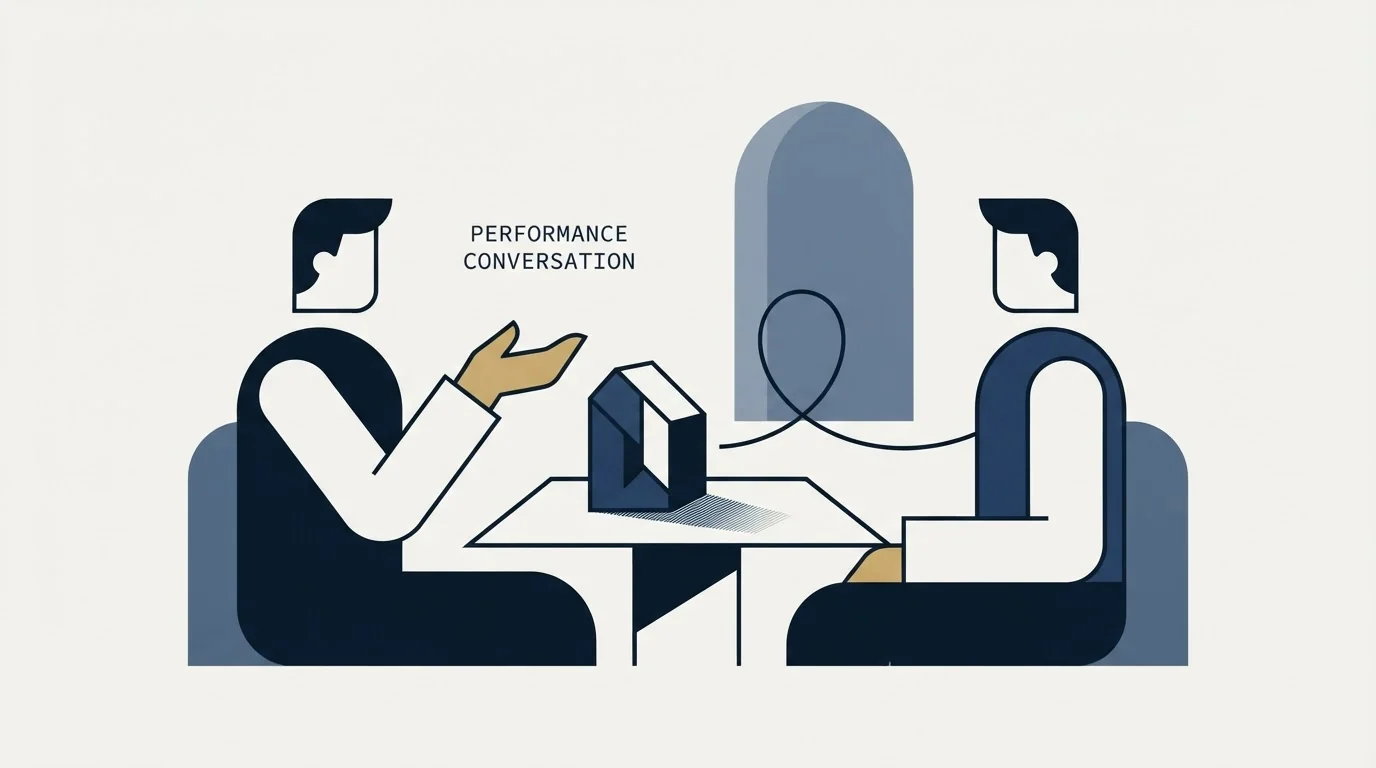
The two get run in the same meeting and they undermine each other. Coaching asks a rep to expose the work they are least sure about. A performance conversation attaches consequences to what gets exposed. A rep who suspects the second is happening will bring their best call every time, and the coaching session quietly becomes a weekly presentation.
Keeping them separate is mostly a matter of naming which one is happening. Performance discussions belong in their own meeting, with their own expectations and their own record. Coaching sessions are for the work, and what is said in them should not be the evidence base for a review. Teams that blur this get compliant reps and no learning, and the tell is that nobody ever brings a bad call.
There is a related failure at the other end, where a manager coaches so gently that no change is ever requested. The written single change is the guard against it: a session that produces no sentence produced no coaching, regardless of how it felt.
Coaching an outbound seat is not coaching a closing seat
The behaviours are different enough that generic sales coaching material misses most of the work. A closer is coached on discovery depth, on multi-threading, on handling a procurement stage. An outbound rep spends the majority of their week on decisions that happen before anyone replies: who goes on the list, what the first line assumes, which signal justifies the touch.
That means a large share of outbound coaching is a review of written work rather than spoken work, and it should be scheduled that way. Reviewing four opening lines against the accounts they went to is a coaching session. So is reviewing the segment a rep built and asking what evidence put each account in it. Neither involves a call recording, and both change next week's numbers more than a call review would.
Where we differ from standard practice
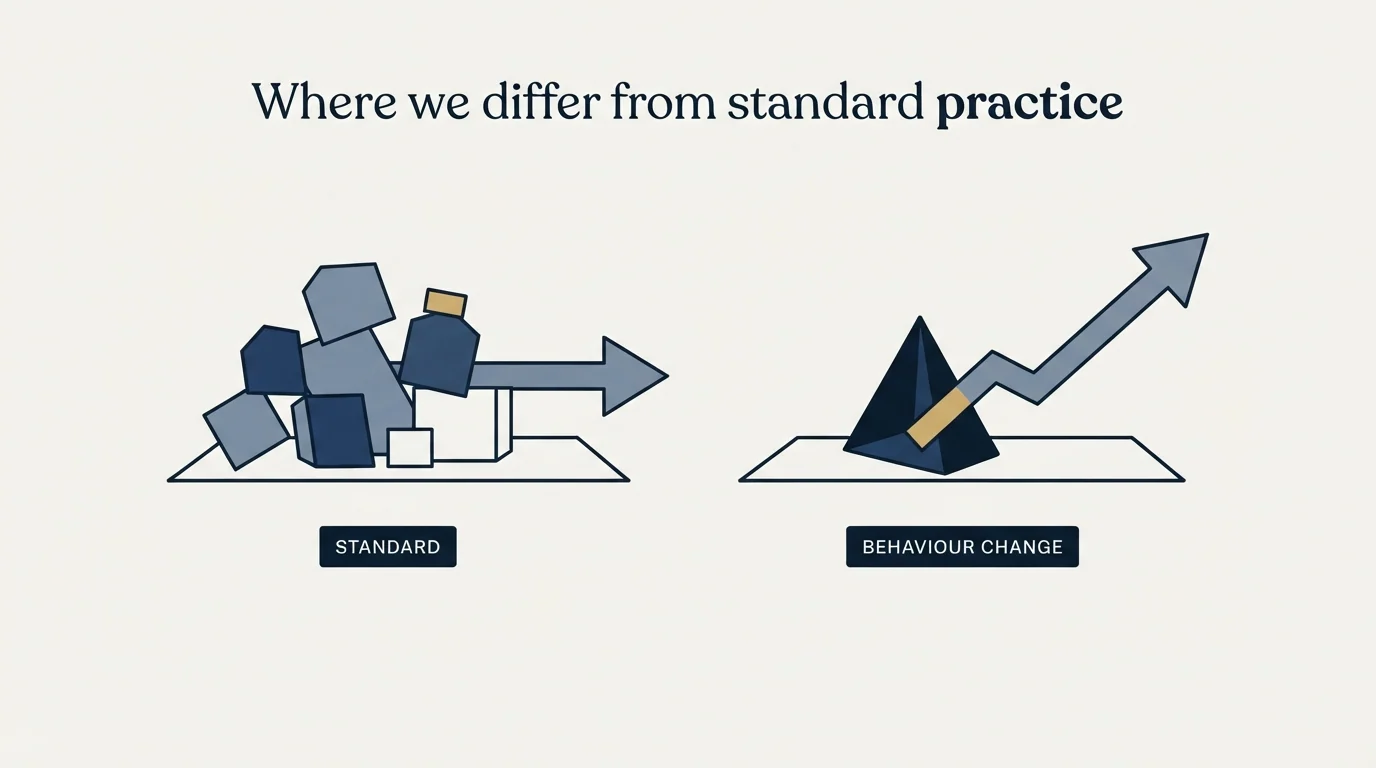
We run outbound programmes for clients rather than sales training businesses, so the coaching we do is narrow and documented rather than broad. Two parts of it are worth naming because they change what gets coached.
Qualification criteria are agreed in writing with the client before a campaign launches. That single document removes the most common coaching argument on an outbound team, which is whether a meeting was good. When the criteria are written down, a disputed meeting is a question about a document rather than a question about the rep's judgment, and the coaching conversation becomes concrete.
We also run one message per campaign, with no bumps and no thread replies. A re-touch is a new campaign with a fresh angle rather than a follow-up on the old one. That policy takes an entire category of coaching off the table, because there is no chasing behaviour to coach. What replaces it is coaching on the first message and on the list, which is where the outcome was decided anyway. The reasoning behind the policy itself is in why we stopped using follow-ups.
What good looks like from outside
The observable test is not sentiment and not session count. It is whether a specific behaviour changed and stayed changed. Pick the named focus from three weeks ago, pull four current calls, and check whether the thing you coached is now what the rep does by default. If it is not, the problem is usually that the focus was too broad or the session had no artifact in it.
The second test is whether reps bring their own problems. A team that only reviews calls the manager selected is being audited. A team where reps arrive with the call that went sideways has coaching, and the difference shows up in how fast new reps stop repeating avoidable mistakes.
For the earlier part of the journey, before there is anything to coach, the ordering of what a new rep learns is its own problem and is covered in our guide to SDR training and ramp. The equivalent for a BDR seat sits in BDR training. What a rep should be doing on a live discovery conversation is covered in discovery calls, and the wider motion those calls sit inside is in the outbound sales playbook.
If you would rather not build the coaching function at all, running the outbound motion through an outsourced SDR team moves it to someone whose whole job is that loop. Either way, the thing that decides whether coaching works is the artifact on the table, not the hour on the calendar.
Want the message and list layers handled while your team focuses on live conversations? Start with a free campaign.
Frequently asked questions.
Frequently asked questions- What is the difference between sales coaching and sales training?
- Training is front-loaded and sequenced: it takes someone from no knowledge to working knowledge, usually once. Coaching is recurring and backward-looking, reviewing specific work the rep already did this week. Teams that conflate them end up running onboarding content at experienced reps and calling it development, which is why neither activity produces much.
- How often should you coach a sales rep?
- Weekly, at low intensity, beats a long quarterly session. Feedback has to arrive close enough to the behaviour that the rep can still remember making the choice, and frequent sessions lower the stakes enough that reps stop bringing only their best calls. A short recurring slot per rep with one named focus is the shape that survives a busy quarter.
- What should you actually review in a coaching session?
- One artifact from the current week: a call the rep chose, a message they wrote, the list that message went to, or a deal they think is stuck. An activity dashboard is not an artifact, because it reports outcomes without exposing the decisions that produced them. Four samples of one behaviour beat one sample of everything.
- Why is coaching an outbound rep different?
- Most of an outbound rep's week is decided before anyone replies: who goes on the list, what the first line assumes, which signal justifies the touch. A large share of the coaching is therefore a review of written work rather than call recordings, and it should be scheduled that way rather than borrowed from closing-seat coaching material.
About the author.

B2B cold email experts helping companies generate qualified leads through done-for-you outreach campaigns.
RevenueFlow Team
Explore more.
Ready to scale your outreach?
We build GTM engines that book real meetings. See the receipts.
Related articles.
The Agoge Sequence: What Sam Nelson Actually Built
A documented 15-touch, 27-day cadence built by Sam Nelson at Outreach. What the primary sources say, which part transfers, and where our own practice differs.
Inbound vs Outbound Sales: How the Two Motions Differ
Inbound and outbound sales compared as motions: what the rep knows at first touch, what each costs, the team each needs, and the metrics that belong to each.
Readymode Pricing: The Seat Is Dear for What Is Inside It
Readymode publishes $199 and $249 per licence per month, near the top of the dialer range. What the seat includes that others bill separately, and when that pays.
PhoneBurner Pricing: What the Seat Price Covers
PhoneBurner publishes all three seat prices in both billing states. The metered resource is contact imports, not minutes, and the spam layer is an add-on at every tier.
Multi-Threading in Sales: Who the Second Contact Should Be
Six contacts on an opportunity and one real relationship is still single-threaded. Which second person to add, when to ask, and how to tell whether it worked.
Koncert Dialers: Line Counts Published, Price Is Not
Koncert publishes the parallel line ceiling on every tier, which most of this category will not. It publishes no price. What its pages state, and what the quote decides.