Multi-Threading in Sales: Who the Second Contact Should Be
Six contacts on an opportunity and one real relationship is still single-threaded. Which second person to add, when to ask, and how to tell whether it worked.
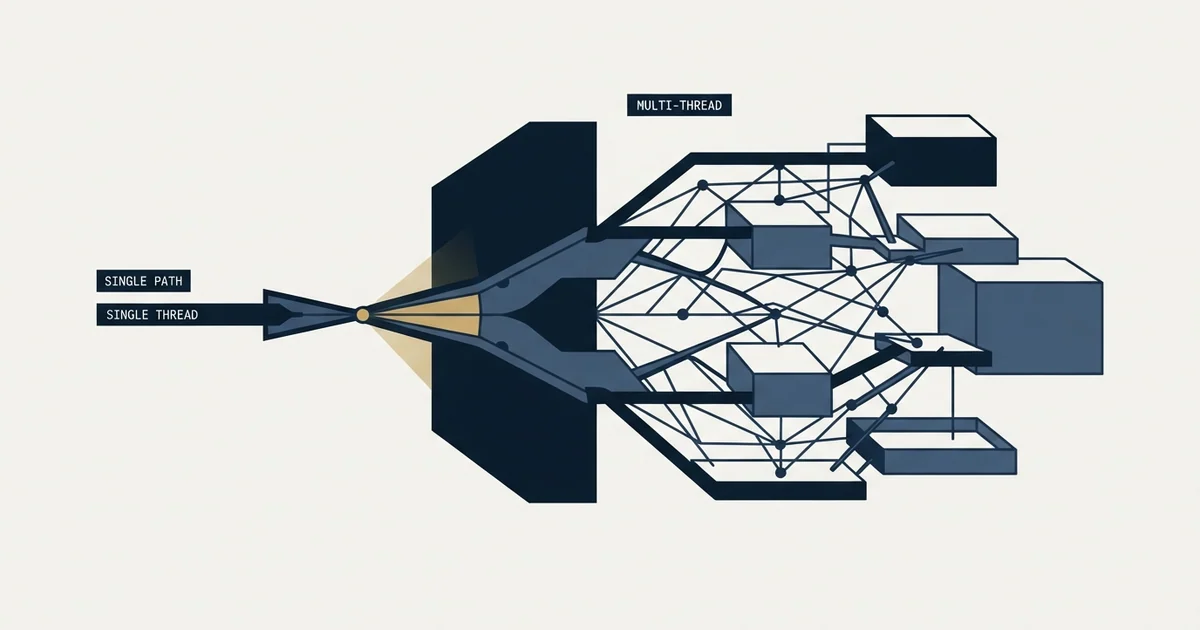
Multi-threading means holding independent working relationships with more than one person at a buying company, where each survives the loss of the others. A deal whose extra contacts were all reached through the champion is single-threaded with a longer contact list, and no CRM field distinguishes the two.
Key takeaways
- The measure is independent conversations, not contacts attached. If every other person was copied in, forwarded to, or met in one group call, all those relationships end together when the champion changes role.
- Dock's guide states the risk directly: with a single-threaded approach, if the point of contact or buyer champion leaves or is no longer involved in the decision, you may be forced to start from zero or lose the deal.
- The best second contact has a different reason to care rather than more authority. The person whose work changes is easier to justify, more honest about whether the problem is real, and less likely to be managing a message than an executive.
- Ask early, when the request is ordinary. Asking after a stall reads as distrust of your champion and arrives when they are least able to spend internal credit on you.
Reviewed and updated October 1, 2026
A deal has been in late stage for two months with one contact, who is enthusiastic, responsive, and the only person from that company anybody has ever spoken to. On a Tuesday they email to say they are leaving for another role and will introduce their replacement. The introduction never arrives. The opportunity sits in the forecast at its original close date for another six weeks before somebody closes it, and nothing about the buyer's need changed at any point.
A stalled deal like this often gets pinned on the rep's activity levels, though what a performance improvement plan should measure explains why the failure may sit elsewhere entirely.
Multi-threading is the practice that exists to prevent that, and it is described in almost every B2B sales guide as a good idea and in almost none of them as a set of decisions. Dock's guide states the risk plainly: "With a one-to-one approach (or single-threaded sales), if that point of contact or buyer champion leaves or is no longer involved in the decision-making process, you may be forced to start from zero or lose the deal altogether."
The version worth having answers four questions the general advice does not. Who is the second contact. When do you add them. What do you say to somebody who did not agree to talk to you. And how do you tell a genuinely multi-threaded deal from one with several names attached to it.
What it actually is, and the thing it gets confused with
Multi-threading is holding an independent working relationship with more than one person at a buying company, where each relationship survives the loss of the others. The load-bearing word is independent. A deal in which one champion forwards your emails to four colleagues is single-threaded with a distribution list attached: if the champion leaves, all five relationships end at once, because four of them were only ever relationships with the champion.
It is written both ways, and multithreading in sales and multi-threading in sales are the same practice under two spellings.
That distinction is what makes contact-count a poor measure. A CRM opportunity carrying six contacts tells you nothing about whether any of them would take your call. What tells you is whether more than one person has had a conversation with your side that the others were not in.
- One person your side has ever spoken to
- Others were copied, forwarded to, or in one group call
- Every relationship routes through the champion
- The champion controls what you know about the deal
- Ends completely when the champion changes role
- Two or more people have had a conversation you were in without the others
- Each knows why the project matters to their own function
- Information about the deal arrives from more than one direction
- Disagreement inside the buying group is visible to you
- Survives one person leaving, and usually surfaces it early
Who the second contact should be
The instinct is to go up, and going up is usually the wrong first move. The person above your champion has less context, less time, and no reason to take a meeting arranged around a project they have not yet been asked to fund. A cold approach to them can also cost you the champion, who now has to explain why an outside vendor is talking to their boss about something not yet internally agreed.
Three roles are more useful, in roughly this order.
The person whose work changes if you win. Not the buyer, the user. They can tell you whether the described problem is the real one, and they are the least likely to be managing a message. If the project is a fiction assembled to justify a budget, this is the person who will say so.
The person who has to make it work. Security, IT, procurement, legal, the operations lead who inherits the process. These people appear late by default and kill deals late by consequence. Meeting one early converts a surprise into a workstream. It is also the least awkward second contact to request, because your champion needs them involved anyway.
The economic buyer, once the project exists. After the problem is agreed and the shape of the answer is understood, not before. Asking for this contact early reads as bypassing; asking once the champion has something to defend reads as helping them defend it.
The pattern behind all three is that a good second contact has a different reason to care rather than more authority to approve. Two people with the same interest are one thread with redundancy. Two people with different interests are what actually gives you a picture of the buying group, which is the same set of roles an account plan in target account selling is built to name before the first conversation.
| Second contact | What they give you |
|---|---|
| The person whose work changes | Whether the described problem is the real one. Early, in discovery. |
| The person who has to make it work | A late surprise turned into a workstream. Early, instead of late. |
| The economic buyer | A decision, with the champion defending it. Once the project exists. |
When to add them
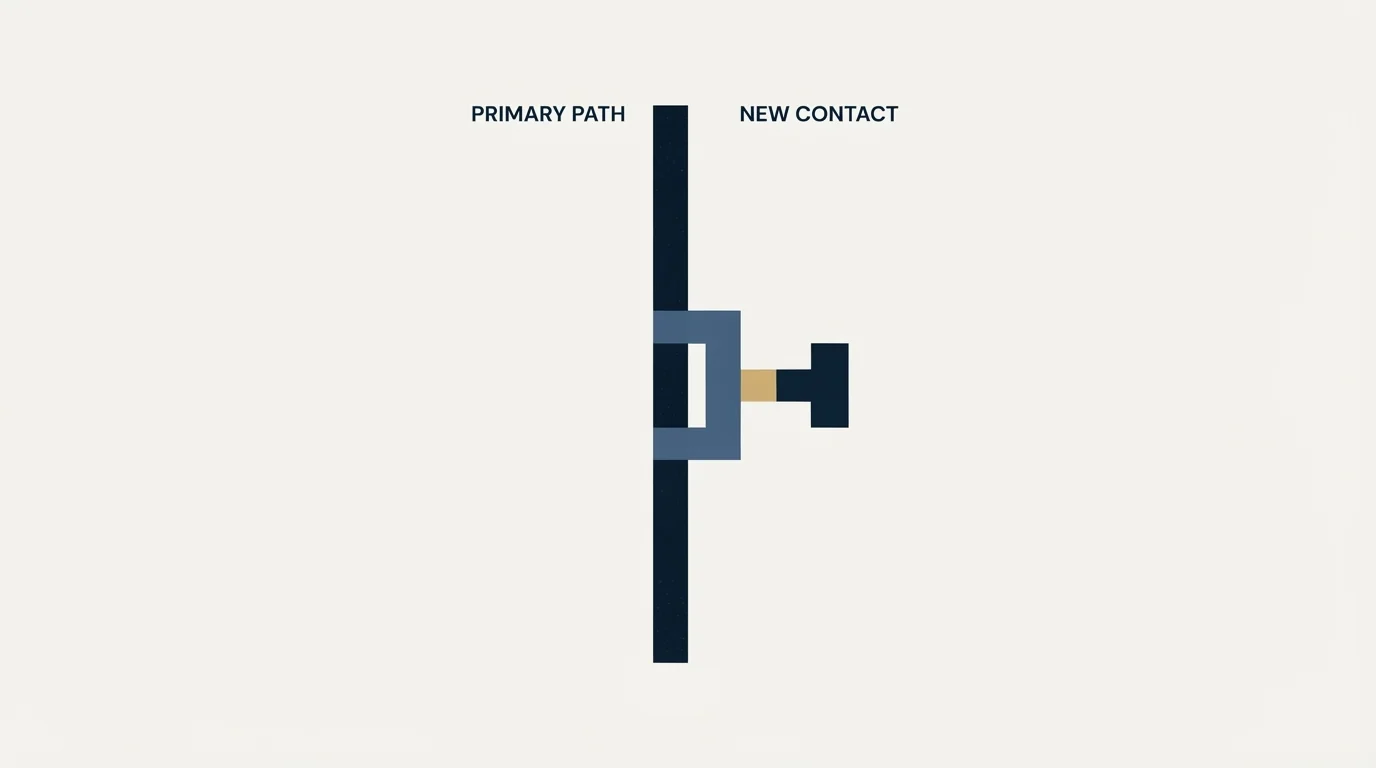
Early, and specifically before you need to, because the request costs almost nothing at the start and carries a signal at the end.
Asking for a second contact in the first or second conversation is ordinary. It reads as thoroughness: you want to understand how the work happens, so you would like to speak to the person who does it. Asking for one after a deal has stalled reads as distrust of your champion, and it arrives at the exact moment your champion is least able to spend internal credit on you.
Dock's guide places the origin earlier still, saying multi-threading "begins with the research your reps do and questions asked during the discovery to gain clarity on other key stakeholders to build that network". That is the practical instruction: the first conversation is where you learn who else exists, and the question that produces it is about their process rather than about their org chart. Who else has to be comfortable with this. Whose work changes. Who has been burned by something like this before.
A note on what we do not do. The published advice on this topic frequently prescribes contact cadences, including a rule of contacting two stakeholders twice across two channels before moving on. Those are described here as industry practice rather than recommended, because our own doctrine is one message per campaign, with no bumps and no thread replies. Inside a live deal that a buyer is participating in, the constraint is different from cold outreach and the conversation is mutual, but the underlying preference holds: a second person is worth contacting because they have a distinct reason to care, not because a cadence says it is day four.
- Step 1Ask who else, in discovery
Whose work changes, who has to be comfortable, who has been burned before. This is a process question, not an org-chart question.
- Step 2Request the user, not the boss
The person whose day changes is the easiest second contact to justify and the most honest about whether the problem is real.
- Step 3Bring the blocker forward
Security, procurement or operations, met early, converts a late surprise into a scheduled workstream your champion also wanted.
- Step 4Reach the economic buyer with the champion
Once the project exists and has a defender. Arriving here first is what makes the earlier steps hard.
What to say to the second person
The mistake is treating them as a new prospect and starting the pitch again. They are not a new prospect. They are a person who has heard your company's name in a meeting they may not have attended, and whose colleague is already invested.
Three things belong in that first contact and nothing else does. Name the internal context honestly, including who you have been speaking to. State the one thing you want from this person specifically, framed around their function rather than yours. And make it easy to decline without damaging anything, because a second contact who feels ambushed will tell the champion, and the cost lands on the relationship you already had.
The messages themselves, one per second or third person from the user whose work changes to the economic buyer, are in multi-threading email templates.
What that rules out is the version where you approach a second person as though the first conversation never happened, which is transparent to anybody inside the company and reads as an attempt to route around a colleague. Dock's guide frames the goal as building "a network of champions throughout an organization", and a network assembled by surprise is not one.
How to tell whether it is working
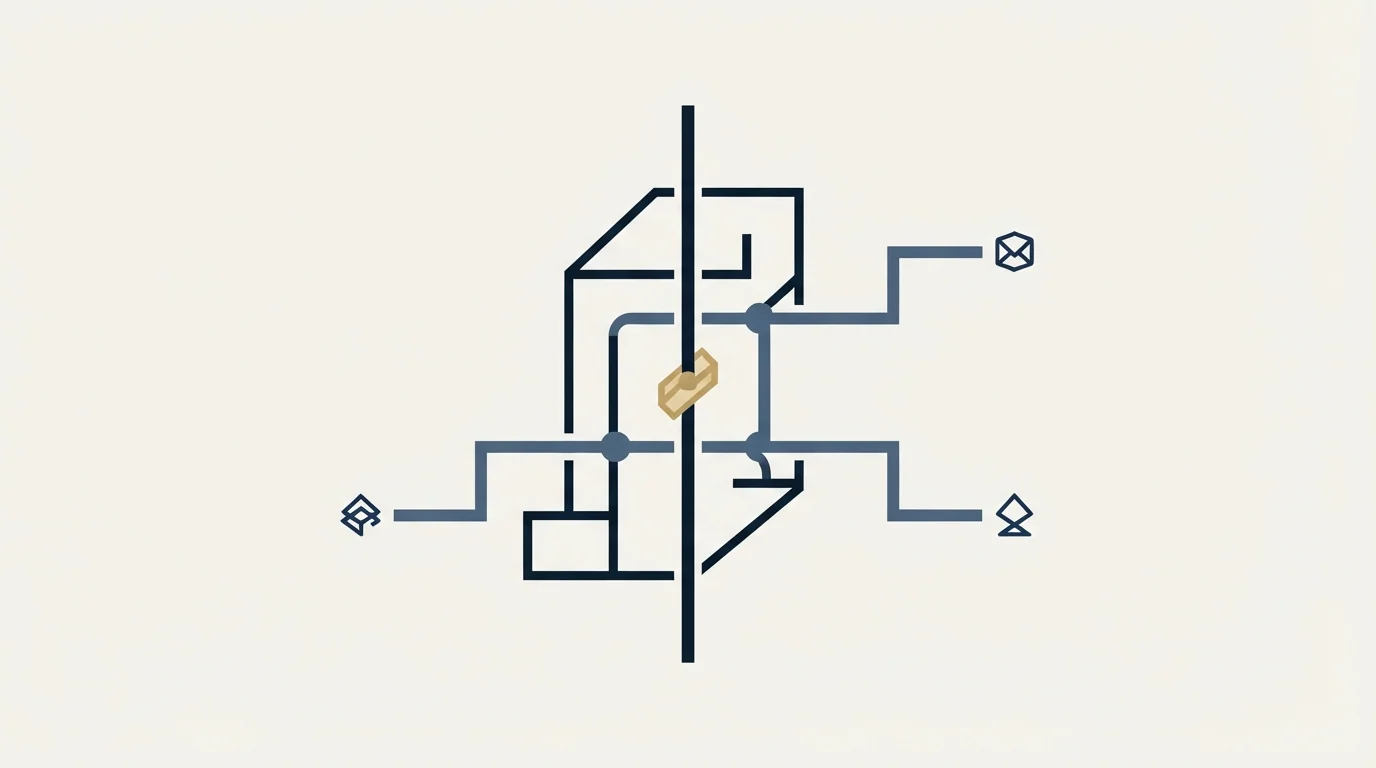
Counting contacts on the opportunity measures the thing that is easy to record rather than the thing that matters. Three readings are more honest, and all three are answerable from a deal review without new tooling.
Independent conversation count. How many people at this company have been in a conversation without the champion present. Zero is single-threaded regardless of the contact list.
Direction of information. Has anything you know about this deal arrived from somebody other than the champion. If every fact has one source, you have one relationship and a well-briefed one.
Disagreement visibility. Do you know where inside the buying group people disagree. A deal in which everybody appears to agree is usually a deal you are seeing through one person, because real buying groups contain a sceptic and the sceptic is normally the most informative person in the account.
- Yes: At least two people have been in a conversation without the champion present
- Yes: You could name what each contact personally gains or loses
- Yes: At least one fact about this deal arrived from someone other than the champion
- Yes: You know where the buying group disagrees
- Depends: The person who has to operate it has been met
- No: Six contacts are attached to the opportunity
- No: Everyone has been reached, but always on the same thread the champion started
Where it does and does not pay
Multi-threading is not free. Every additional relationship costs research, meeting time and follow-up, and on a small transactional deal that cost exceeds what it protects.
The fork is contract value and buying-group size rather than preference, and it is the same fork that decides the motion in the SaaS go-to-market decision. Below the point where a purchase needs somebody's approval other than the buyer's, a second contact is a courtesy. Above the point where a committee is involved, single-threading is the largest uncontrolled risk in the deal, which is why pipeline acceleration treats adding a second contact early as a lever and adding one after a stall as an expensive repair.
For outbound specifically there is a sequencing consequence worth stating. Multi-threading belongs to the deal, not to the first touch. Contacting three people at one company in a cold campaign is not multi-threading, it is three cold emails to one account, and on shared sending infrastructure it is also a deliverability decision rather than a sales one. The thread count starts at one by design and grows once a conversation exists.
Sales productivity's competing ratios explain why adding meetings for a thoroughly threaded deal can quietly depress the metric leadership actually watches.
The short version
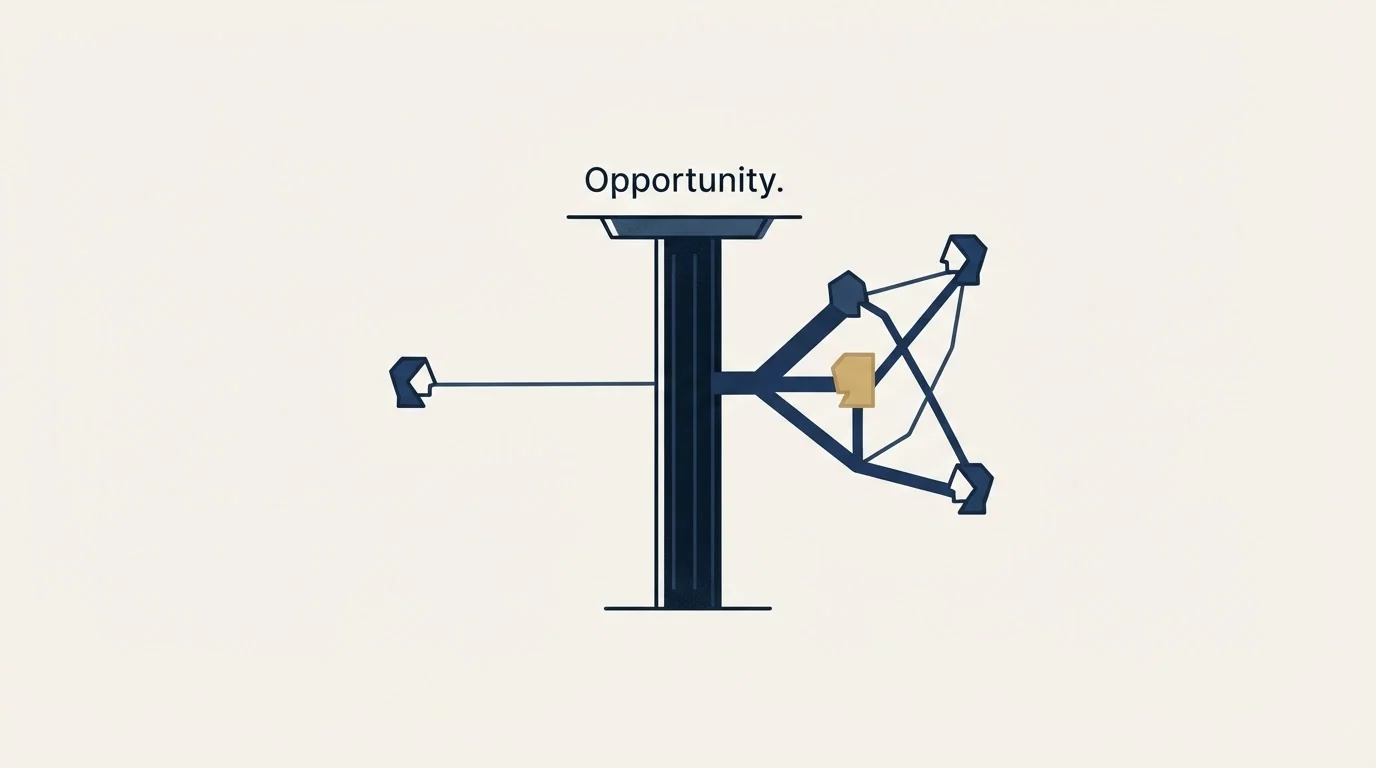
Multi-threading means independent working relationships with more than one person at a buying company, where each one survives the loss of the others. A deal with six contacts attached and one real relationship is single-threaded with a longer contact list, and no CRM field tells you which you have.
Add the second contact early, when the request is ordinary rather than a signal of distrust. Choose the person whose work changes rather than the person with more authority, bring the eventual blocker forward from late to scheduled, and reach the economic buyer alongside the champion rather than around them. When you make contact, name the internal context honestly and ask for one thing framed around that person's function.
Measure it by independent conversations, by whether information ever arrives from a second direction, and by whether you can say where the buying group disagrees. If everybody at the account appears to agree, you are probably looking at one person's account of the deal.
If the constraint is getting the first conversation at accounts worth threading in the first place, that is the part we run, on lists built against criteria agreed in writing before anything sends. You can see what a campaign into those accounts would look like.
Multi-threading definitions and risk framing verified against Dock's multithreading sales guide as fetched on 28 August 2026. Publishers revise these pages; confirm the current text before relying on them.
Frequently asked questions.
Frequently asked questions- What is multi-threading in sales?
- Holding an independent working relationship with more than one person at a buying company, so that each relationship survives the loss of the others. The independence is the point: a champion forwarding your emails to four colleagues is one relationship with a distribution list attached, and it ends completely when the champion moves on.
- Who should the second contact in a deal be?
- Usually the person whose work changes if you win, rather than the person above your champion. They can tell you whether the stated problem is the real one, they are the least likely to be managing a message, and asking to speak to them reads as thoroughness rather than as going over somebody's head.
- When should you multi-thread a deal?
- During discovery, before you need to. Dock's guide places the origin in the research reps do and the questions asked during discovery to gain clarity on other key stakeholders. Asking then costs nothing; asking once a deal has stalled signals distrust of the champion at the worst possible moment.
- How do you know if a deal is genuinely multi-threaded?
- Three readings, all answerable in a deal review. How many people have been in a conversation without the champion present, whether any fact about the deal has ever arrived from a second direction, and whether you can say where the buying group disagrees. Apparent unanimity usually means you are seeing the account through one person.
About the author.

B2B cold email experts helping companies generate qualified leads through done-for-you outreach campaigns.
RevenueFlow Team
Explore more.
Ready to scale your outreach?
We build GTM engines that book real meetings. See the receipts.
Related articles.
Sales Productivity: Four Different Ratios Wear the Same Name
Sales productivity names four ratios that share no denominator, and improving one can move another the wrong way. The version you mean decides what happens next.
Sales Tonality: The 38 Percent Figure and Its Author
Almost every guide to sales tonality opens with the same statistic. Its author published a scope note saying it does not apply, and the genre never carried it.
Sales Motivation Quotes: Seven Lines, and Who Said Them
Ford's most quoted line first appeared months after he died, with no source. Seven sales-floor staples, checked against the earliest printed record.
Sales Rep Coaching: The Cadence That Survives a Busy Quarter
Coaching that changes behaviour needs an artifact on the table and one named focus. The weekly loop, and the three layers a flat number can be hiding.
Sales Performance Improvement Plan Samples: What to Include
Three worked sales PIP samples, and the diagnosis that comes first. Most published plans set a target on an outcome the rep does not control alone.
Prospect Meaning in Sales: A Name Is Not a Prospect
A prospect is a name that passed a fit check, not a name that replied. What lead, prospect and opportunity each assert, and what the boundary decides.