Apollo.io vs SignalHire: Cross-Category Comparison
SignalHire sells emails and phones as separate $69 plans and puts unlimited users on all of them. Apollo pools credits per seat. Team size decides this one.
SignalHire publishes $69 a month for 1,000 email credits or $69 for 435 phone credits, with unlimited users on all plans. Apollo.io charges per seat, $49 to $119 a month billed annually, granting 30,000 to 72,000 credits a seat a year. Team size and field type decide which shape is cheaper.
Key takeaways
- SignalHire publishes $69 a month for 1,000 email credits and $69 a month for 435 phone credits, sold as separate plans.
- SignalHire lists unlimited users on all plans, so the subscription is bought against credits rather than against headcount.
- Apollo.io charges per seat, so a five person team on Basic is $245 a month billed annually, carrying 150,000 credits a year between them.
- A phone credit costs roughly 2.3 times an email credit on SignalHire's own two plans, since the same $69 buys 1,000 emails or 435 phones.
Reviewed and updated August 28, 2026
Apollo.io vs SignalHire: Cross-Category Comparison
SignalHire prices email credits and phone credits as two separate plans at the same money. On SignalHire $69 a month buys 1,000 credits on the Emails plan, and $69 a month buys 435 credits on the Phones plan. Same price, less than half the volume, and the choice is made at purchase rather than at use.
Apollo.io pools everything into one credit allowance per seat, 30,000 a year on its $49 tier billed annually. So this comparison is really about whether splitting the budget by field type helps or hurts.
Why Compare These Two Tools?
Data enrichment tools provide the contact data that sales engagement platforms use for outreach sequences. The question for buyers is often whether an all-in-one platform that includes data can replace a dedicated enrichment tool.
Apollo.io is a sales engagement platform focused on multi-channel sales outreach. Apollo.io is an all-in-one sales intelligence and engagement platform combining a 240M+ contact database with automated sequences, email outreach, dialer, and AI-powered workflows for prospecting at scale.
SignalHire is a data enrichment tool focused on B2B lead data and contact enrichment. SignalHire is a real-time verified contact finder with browser extension for LinkedIn, Facebook, and Twitter, plus team collaboration features.
SignalHire is a real time verification finder with a browser extension that works across LinkedIn, Facebook and Twitter, and it publishes unlimited users on all plans, which is unusual on this shelf. That last detail changes the maths for a team: the subscription is bought against credits rather than against headcount, so five people can share one plan. The free tier carries 5 or 10 credits depending on the sign up path, which is an evaluation allowance.
Where Each Tool Fits in Your Workflow
- Step 1Lead sourcing and data
SignalHire covers B2B lead data and contact enrichment, on a free entry plan.
- Step 2Outreach orchestration
Apollo.io covers multi-channel sales outreach, on a free entry plan.
| Aspect | Apollo.io | SignalHire |
|---|---|---|
| Category | Sales Engagement Platform | Data Enrichment Tool |
| Workflow Stage | Outreach orchestration | Lead sourcing and data |
| Primary Focus | Multi-channel sales outreach | B2B lead data and contact enrichment |
| Starting Price | Free | Free |
| Features Listed | 10 | 9 |
| Integrations | 12 | 7 |
What Each Side Actually Does in a Cold Outbound Run
Apollo.io covers more of this run than one category label suggests. The same seat that sends the sequence also searches the database, reveals a contact and enriches a CRM record, and Apollo's pricing page meters all of it from one credit pool per seat. So the useful question on this page is not which product sends the email. It is whether Apollo's own data holds up on the accounts that matter, and where SignalHire earns a second line on the invoice.
The run itself still has a fixed shape. Build the list, resolve and verify a mailbox for every person on it, then send. RevenueFlow runs one message per campaign, so there are no bump steps and no thread replies scheduled behind the first send. A prospect who does not answer gets re-approached later in a new campaign with a different angle, never with a second message stacked under the one they ignored, and on LinkedIn that second message does not get sent at all.
Reading the reply and booking the meeting sit outside both products. A meeting counts when it matches criteria agreed in writing before launch, which is a commercial decision rather than a feature, and it is the number worth measuring either purchase against.
Pricing Comparison
Apollo.io Pricing
| Plan | Price | Credits | Seats |
|---|---|---|---|
| Free | Free | 900 credits per seat/year, granted monthly | 1 or more |
| Basic | $49/mo | 30,000 credits per seat/year, granted upfront | 1 or more |
| Professional | $79/mo | 48,000 credits per seat/year, granted upfront | 1 or more |
| Organization | $119/mo | 72,000 credits per seat/year, granted upfront | 3 minimum |
Every paid price above is the per seat per month rate billed annually, and the Organization tier carries a three seat minimum.
Source: Apollo.io Pricing
SignalHire Pricing
| Plan | Price | Contacts | Emails |
|---|---|---|---|
| Free | Free | 5 or 10* credits | - |
| Emails (1000 credits, billed monthly) | $69/mo | 1000 credits | 1000 credits |
| Phones (435 credits, billed monthly) | $69/mo | 435 credits | - |
Source: SignalHire Pricing
Reading the Two Price Shapes Together
Both publish. Apollo is $49, $79 and $119 per seat per month billed annually with 30,000, 48,000 and 72,000 credits per seat per year. SignalHire is $69 a month for 1,000 email credits or $69 a month for 435 phone credits, billed monthly, with unlimited users on all plans.
The seat rule is the part that changes an answer. Apollo's price scales with people, so a five person team on Basic is five times $49. SignalHire's does not, so the same five people share one $69 plan and run out of credits rather than seats. That makes SignalHire cheap for a large team doing a little lookup work, and expensive for a small team doing a lot.
What One Year of This Stack Actually Costs
The numbers below are invented for the example. The prices are the ones each vendor publishes.
Take a five person team. Five Apollo Basic seats billed annually are $245 a month and $2,940 for the year, carrying 150,000 credits across the five seats.
One SignalHire Emails plan covers all five people, because users are unlimited, at $69 a month and $828 for the year, carrying 1,000 credits a month or 12,000 a year.
Per credit those numbers are not close: Apollo's stack is 150,000 credits for $2,940, SignalHire's is 12,000 for $828. But Apollo's line is not optional if the team also sends, so the real question is whether $828 buys anything the 150,000 credits do not.
There is one shape where it clearly does. If phone numbers are the gap, the SignalHire Phones plan is 435 credits a month for $69, shared across the whole team, and the comparison to run is cost per connecting dial rather than cost per credit. If phone numbers are not the gap, this second line is hard to justify at any volume.
Feature Highlights
Apollo.io Key Capabilities (Sales Engagement Platform)
- B2B contact and company database (240M+ contacts)
- Multi-channel sequences (email, phone, LinkedIn)
- AI-powered email writing and optimization
- Built-in dialer with call recording
- Automated workflows and engagement rules
- A/B testing for email sequences
- Buying intent signals and job change alerts
- Advanced lead scoring and filtering
- Email deliverability tools and mailbox rotation
- Conversation intelligence (Professional+)
SignalHire Key Capabilities (Data Enrichment Tool)
- Real-time verified contact data
- Browser extension for LinkedIn, Facebook, Twitter
- Unlimited users on all plans
- Team management and collaboration
- CSV export
- ATS and CRM integration
- Bulk search capabilities
- Technology tracking
- Company search
Where the Two Actually Overlap
Both find work emails and phone numbers, both run a browser extension over LinkedIn and both export to CSV and into the same CRMs, so the data layer overlaps. Apollo's plan cards then carry the sending half entirely: unlimited sequences from Basic, deliverability tooling with email warmup, domain and mailbox purchasing, and a dialer.
The two genuine differences on the SignalHire side are structural rather than capability based. Unlimited users on every plan makes it a team subscription rather than a seat one, and splitting emails and phones into separate plans forces a budgeting decision most vendors leave until use. Both are worth reading as pricing design, because both change what the subscription costs across a year.
Integration Ecosystem
Apollo.io Integrations
Apollo.io connects with: Salesforce, HubSpot, Pipedrive, Gmail, Microsoft Outlook, LinkedIn, Zapier, Slack, Sendgrid, Outreach, Salesloft, Webhooks API.
SignalHire Integrations
SignalHire connects with: Salesforce, HubSpot, Greenhouse, Lever, Zapier, Gmail, Outlook.
Shared Integrations
Both tools integrate with: Salesforce, HubSpot, Gmail, Zapier. This shared ecosystem means they can work together in your tech stack.
When to Choose Which
- Your biggest gap is in outreach orchestration
- You already have a solid data enrichment tool and need specialized multi-channel sales outreach capabilities
- You want an affordable entry point ($0/mo)
- Your team's primary bottleneck is multi-channel sales outreach
- Your biggest gap is in lead sourcing and data
- You already have a sales engagement platform and need better B2B lead data and contact enrichment
- You want an affordable entry point ($0/mo)
- Your team's primary bottleneck is B2B lead data and contact enrichment
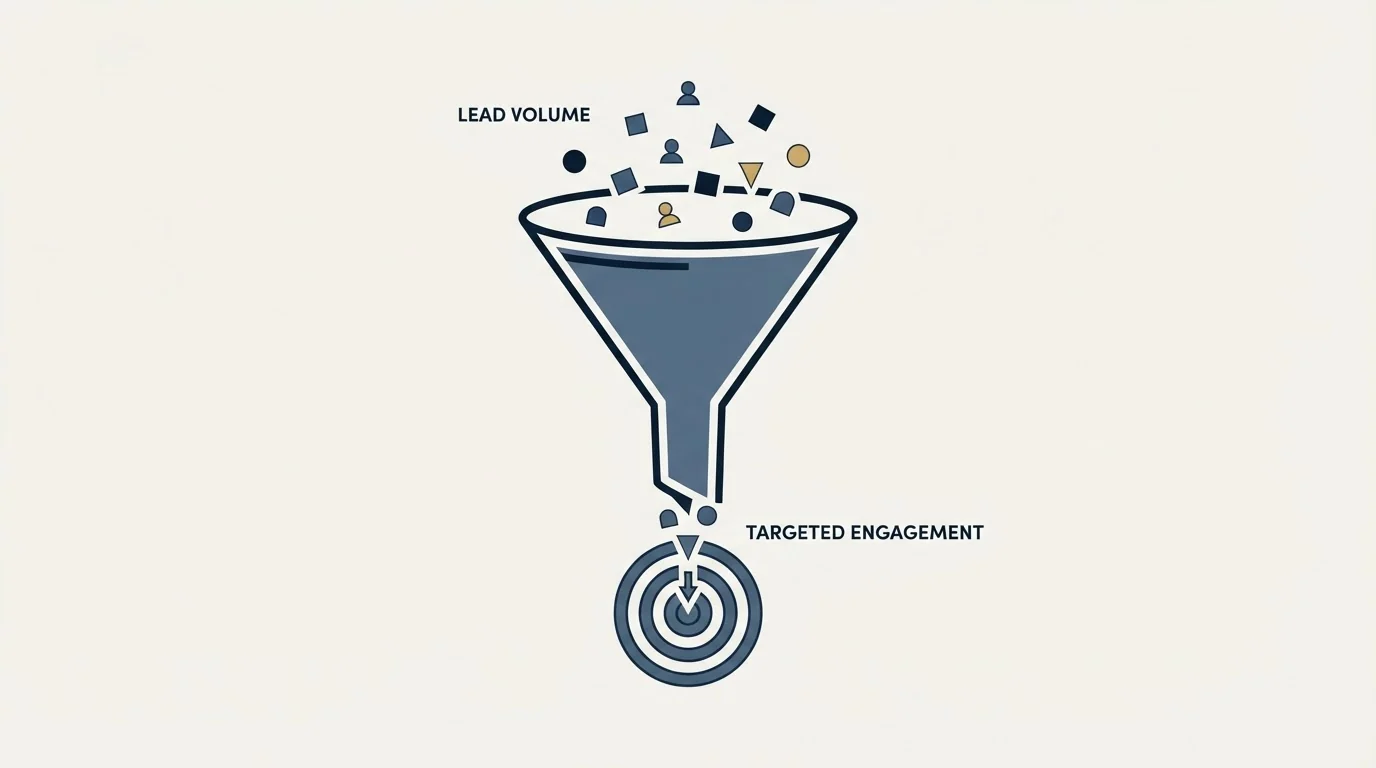
Read that split as a question about which gap is open rather than about which product is better. SignalHire answers a sourcing question and Apollo.io answers a sending one, and a team that names the wrong gap buys a capable tool that changes nothing.
Do You Need Both, and in Which Order?
Both only for phone numbers, or for a large team with light lookup needs.
Apollo first, without much argument, because it covers the run and its credit allowance is large. SignalHire's Emails plan adds 12,000 credits a year to an allowance that already stands at tens of thousands, so buying it for email volume is buying capacity that already exists.
The two cases where the second line makes sense are specific. A team of five or ten people who each need occasional lookups gets an unusually good deal from SignalHire unlimited users at $69 a month, where per seat pricing would multiply. And a phone led motion can treat the Phones plan as a cheap, shared dial budget at 435 credits a month, tested against how many of those numbers connect.
Outside those two shapes, a single Apollo line is the simpler stack.
Using Both Together
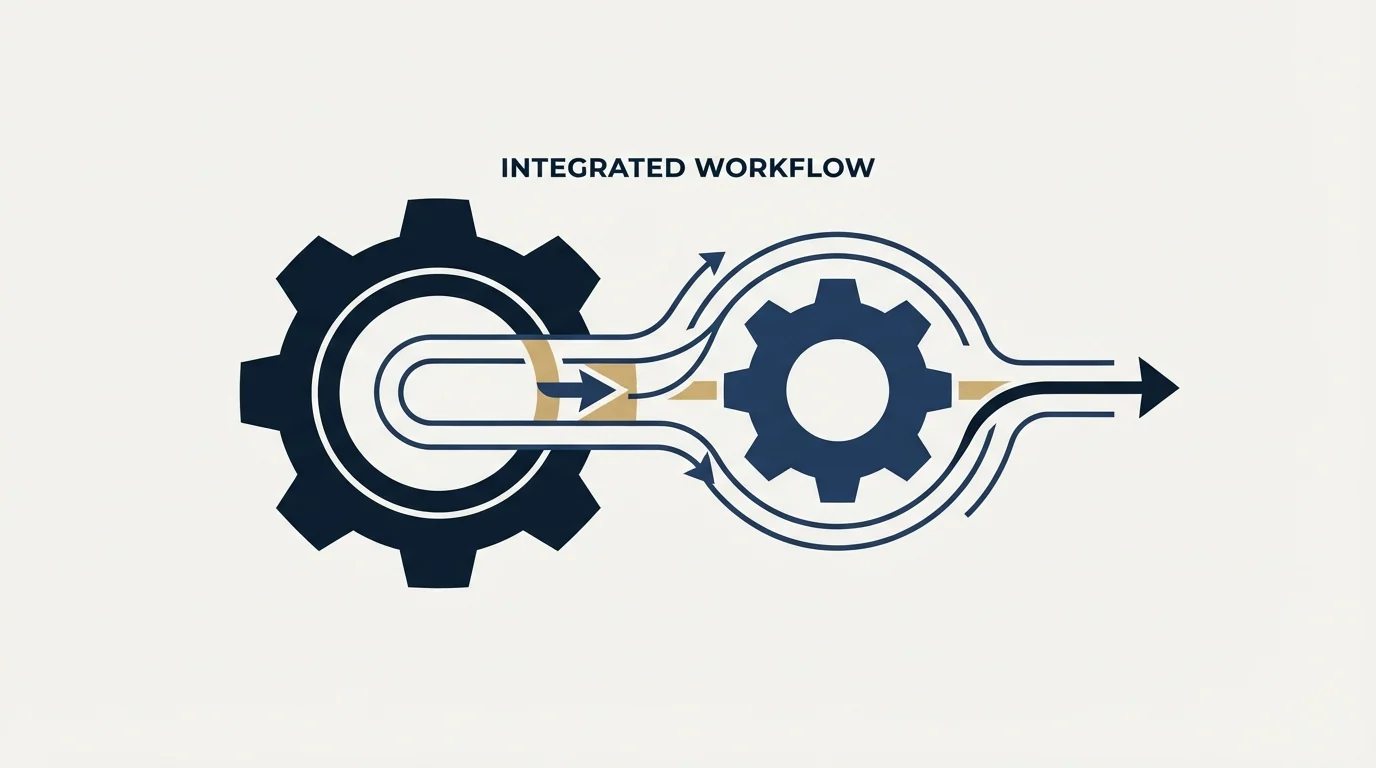
Many sales teams use both a sales engagement platform and a data enrichment tool as part of their complete workflow. Apollo.io handles outreach orchestration while SignalHire covers lead sourcing and data.
Since both tools integrate with Salesforce, HubSpot, Gmail, connecting them in your workflow is straightforward.
Rolling It Out Without Breaking the Run
Decide which of the two SignalHire plans is being bought before anything else, because emails and phones are separate purchases here and the free tier's 5 or 10 credits go quickly.
Whichever order the two arrive in, keep the sending inventory out of it. Sender domains, mailbox warmup and daily caps are their own project, and a stack change made in the same week as a sending change leaves nothing to attribute a bounce rate to. Change one layer, let a full wave run, then change the next.
Two more habits save real money. Run the trial on accounts already worked rather than on a fresh list, because the only coverage question that matters is coverage on the segment being sold to, and a vendor's own sample is chosen to look good. And export what the incumbent already found before any subscription lapses: contact records bought once are cheap to keep and expensive to buy twice.
Decision Framework
- Name the gap before naming a tool. Write down which stage is actually costing meetings: a list that runs out, addresses that bounce, or messages that never go out on time. A stack decision made without that sentence is a preference.
- Check what the existing stack already covers. Overlapping spend is the normal failure here, and it is usually invisible because the two products are filed under different budget lines.
- Price the whole year, not the entry tier. Seat minimums, annual billing and per-credit top-ups move the real number more than the headline price does.
- Trial on the accounts being sold to. Coverage is a property of a segment, not of a database, so a sample drawn from the target list is the only test worth running.
- Measure at the pipeline, not per tool. Both products feed one funnel, so the honest measure is meetings booked against criteria fixed in advance, read before and after the change.
The Short Version
Small team sending waves: Apollo alone. Large team with occasional lookups: SignalHire, because users are unlimited and the plan is shared. Phone led motion on a budget: the SignalHire Phones plan at 435 credits a month, measured per connecting dial.
Related Reading
- Best Apollo.io Alternatives in 2026
- Best SignalHire Alternatives in 2026
- Apollo.io vs Outreach: Sales Engagement Platform Comparison
- Apollo.io vs Salesloft: Sales Engagement Platform Comparison
- Apollo.io vs SignalHire: Data Enrichment Tool Comparison
If you would rather have this run for you, RevenueFlow books qualified meetings on a pay-per-meeting basis and publishes client results.
Pricing and features are taken from the vendors' own pages. Verify current terms with the vendor before relying on them.
Frequently asked questions.
Frequently asked questions- How much does SignalHire cost?
- SignalHire publishes a free tier of 5 or 10 credits, an Emails plan at $69 a month for 1,000 credits, and a Phones plan at $69 a month for 435 credits, both billed monthly. Users are unlimited on all plans, so the price does not scale with team size.
- Why do emails and phones cost different amounts?
- They are sold as separate plans at the same price with different allowances: $69 buys 1,000 email credits or 435 phone credits. That makes a phone lookup roughly 2.3 times the cost of an email lookup on SignalHire's own numbers, and it forces the budget decision at purchase rather than at use.
- Is SignalHire cheaper than Apollo.io?
- For a large team doing occasional lookups, often yes, because SignalHire's users are unlimited while Apollo charges per seat. For a small team running waves, no: Apollo's $49 seat grants 30,000 credits a year and includes sequencing and deliverability tooling that SignalHire does not sell.
- Can SignalHire be the only tool in an outbound stack?
- Not if the team sends. SignalHire finds and verifies contact details but carries no sequencing, no sender management and no deliverability tooling, so a sending platform still has to be bought. It works as a shared lookup line beside one, particularly for phone numbers.
About the author.

Tim Carden is CMO / CTO at RevenueFlow, which builds and operates outbound revenue engines for B2B companies. Studied at McGill University.
Tim Carden · CMO / CTO
Connect on LinkedIn →Explore more.
Ready to scale your outreach?
We build GTM engines that book real meetings. See the receipts.
Related articles.
Apollo.io vs ContactOut: Cross-Category Comparison
Apollo.io meters seats and credits; ContactOut caps exports and leaves emails unlimited. The miss rate on your own list decides whether the second line is worth $99.
Apollo.io vs Cognism: Cross-Category Comparison
Apollo.io publishes a self serve ladder from $49 a seat. Cognism publishes no price at all. What that asymmetry means for a phone led or European motion.
Lead411 vs Salesloft: Cross-Category Comparison
Compare Lead411 (data enrichment tool) and Salesloft (sales engagement platform) side by side. Understand how these tools fit different stages of your sales workflow.
Groove by Clari vs Seamless.AI: Cross-Category Comparison
Seamless.AI covers sourcing while Groove by Clari covers sending and follow-through. Which gap to close first, what a year costs, and whether a team needs both.
LeadIQ vs Salesloft: Cross-Category Comparison
Compare LeadIQ (data enrichment tool) and Salesloft (sales engagement platform) side by side. Understand how these tools fit different stages of your sales workflow.
Clearbit vs Gong: Cross-Category Comparison
Clearbit covers sourcing and verified contacts while Gong covers sending and follow-through. Which gap to close first, what a year costs, and whether a team needs both.