Apollo.io vs ZoomInfo: Cross-Category Comparison
ZoomInfo's pricing page could not be re-checked, so its figures are carried forward and never repeated. Apollo publishes a ladder anyone can read.
Apollo.io publishes $49, $79 and $119 per seat per month billed annually with 30,000 to 72,000 credits a seat a year. ZoomInfo is bought through procurement on negotiated annual terms, and its pricing page could not be reached to re-check the figures carried on this page.
Key takeaways
- ZoomInfo's pricing page could not be reached to re-check its figures, so the tiers shown here are carried forward from an earlier record rather than verified.
- Apollo.io publishes $49, $79 and $119 per seat per month billed annually, with a three seat minimum on the top tier and 30,000 to 72,000 credits per seat per year.
- ZoomInfo is bought through procurement on negotiated annual terms, so a published list price is a starting point rather than a quote.
- Coverage between two databases is a property of a segment, so the only sound comparison is running the same target accounts through both during an evaluation.
Reviewed and updated August 28, 2026
Apollo.io vs ZoomInfo: Cross-Category Comparison
ZoomInfo is the only vendor in this comparison whose current pricing could not be read at all. Every route to its pricing page answered with a block, so the figures below are carried forward from an earlier record rather than re-checked, and they are not repeated anywhere else on this page.
That is worth being explicit about, because a stale enterprise price repeated with confidence is how a budget conversation goes wrong. Apollo.io, by contrast, publishes $49, $79 and $119 per seat per month billed annually on a page anyone can read.
Why Compare These Two Tools?
Data enrichment tools provide the contact data that sales engagement platforms use for outreach sequences. The question for buyers is often whether an all-in-one platform that includes data can replace a dedicated enrichment tool.
Apollo.io is a sales engagement platform focused on multi-channel sales outreach. Apollo.io is an all-in-one sales intelligence and engagement platform combining a 240M+ contact database with automated sequences, email outreach, dialer, and AI-powered workflows for prospecting at scale.
ZoomInfo is a data enrichment tool focused on B2B lead data and contact enrichment. ZoomInfo is an enterprise B2B database with 260M+ professional profiles, intent data, and comprehensive company intelligence.
ZoomInfo is bought through procurement rather than with a card. It is sold as a data layer for a whole revenue function, with intent signals, technographic data and workflow integration attached, on negotiated annual terms. That shape means a published list price is a starting point at best, and the tiers recorded below should be read as an indication of scale rather than as a quote. The practical consequence for a small team is that the evaluation involves a sales cycle before it involves a product.
Where Each Tool Fits in Your Workflow
- Step 1Lead sourcing and data
ZoomInfo covers B2B lead data and contact enrichment.
- Step 2Outreach orchestration
Apollo.io covers multi-channel sales outreach, on a free entry plan.
| Aspect | Apollo.io | ZoomInfo |
|---|---|---|
| Category | Sales Engagement Platform | Data Enrichment Tool |
| Workflow Stage | Outreach orchestration | Lead sourcing and data |
| Primary Focus | Multi-channel sales outreach | B2B lead data and contact enrichment |
| Starting Price | Free | Free |
| Features Listed | 10 | 9 |
| Integrations | 12 | 6 |
What Each Side Actually Does in a Cold Outbound Run
Apollo.io covers more of this run than one category label suggests. The same seat that sends the sequence also searches the database, reveals a contact and enriches a CRM record, and Apollo's pricing page meters all of it from one credit pool per seat. So the useful question on this page is not which product sends the email. It is whether Apollo's own data holds up on the accounts that matter, and where ZoomInfo earns a second line on the invoice.
The run itself still has a fixed shape. Build the list, resolve and verify a mailbox for every person on it, then send. RevenueFlow runs one message per campaign, so there are no bump steps and no thread replies scheduled behind the first send. A prospect who does not answer gets re-approached later in a new campaign with a different angle, never with a second message stacked under the one they ignored, and on LinkedIn that second message does not get sent at all.
Reading the reply and booking the meeting sit outside both products. A meeting counts when it matches criteria agreed in writing before launch, which is a commercial decision rather than a feature, and it is the number worth measuring either purchase against.
Pricing Comparison
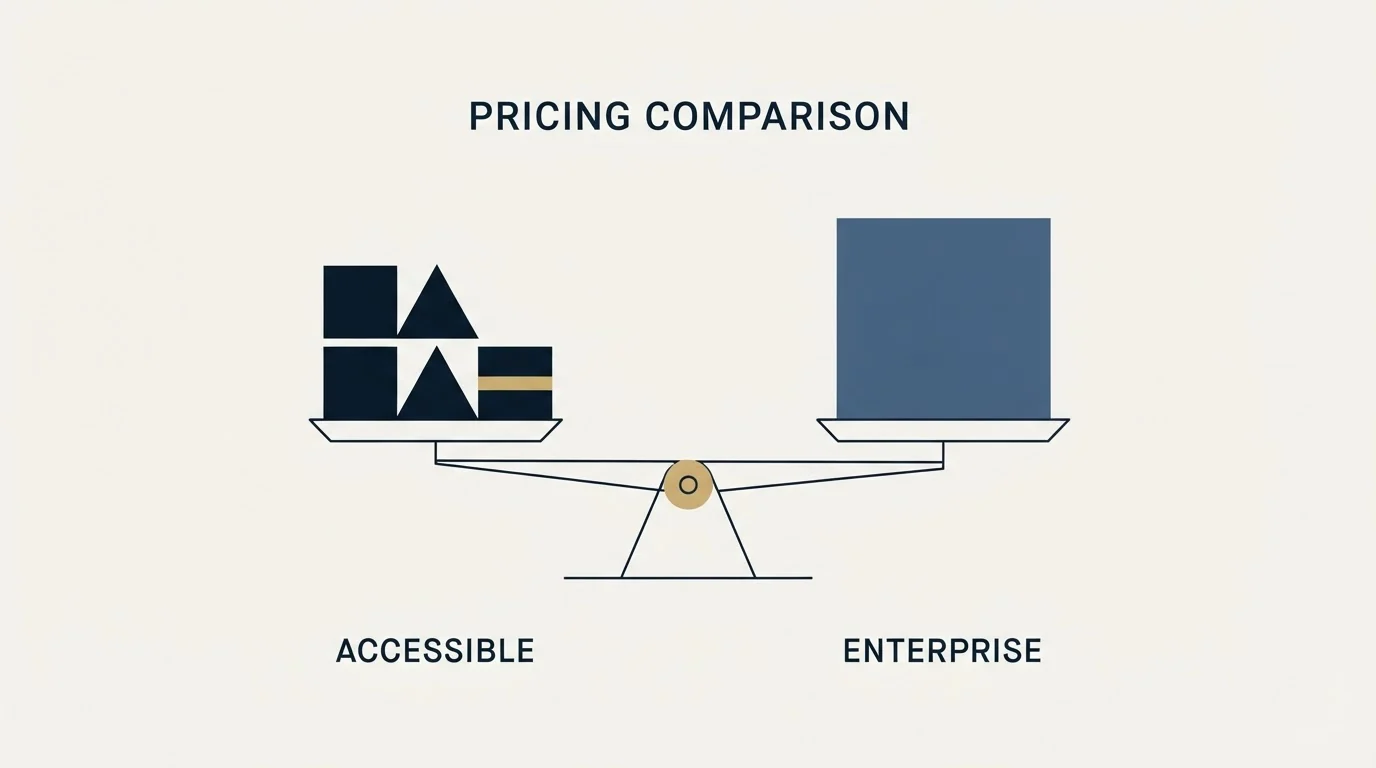
Apollo.io Pricing
| Plan | Price | Credits | Seats |
|---|---|---|---|
| Free | Free | 900 credits per seat/year, granted monthly | 1 or more |
| Basic | $49/mo | 30,000 credits per seat/year, granted upfront | 1 or more |
| Professional | $79/mo | 48,000 credits per seat/year, granted upfront | 1 or more |
| Organization | $119/mo | 72,000 credits per seat/year, granted upfront | 3 minimum |
Every paid price above is the per seat per month rate billed annually, and the Organization tier carries a three seat minimum.
Source: Apollo.io Pricing
ZoomInfo Pricing
| Plan | Price | Contacts | Emails |
|---|---|---|---|
| Lite (Free) | Free | 10-25 credits/month | N/A |
| Professional | $1250/mo | 5,000 credits/year | N/A |
| Advanced | $2083/mo | 10,000 credits/year | N/A |
| Elite | $3333/mo | 10,000 credits/year | N/A |
Source: ZoomInfo Pricing
Reading the Two Price Shapes Together
One of these tables can be checked and one cannot. Apollo publishes $49, $79 and $119 per seat per month billed annually, granting 30,000, 48,000 and 72,000 credits per seat per year upfront, with a three seat minimum on the top tier and its own page marking annual billing "Save 24%".
The ZoomInfo table below is carried forward from an earlier record. Its pricing page could not be reached to re-check it, so the figures are shown for continuity and should not be treated as current. Any real ZoomInfo number comes from a quote, and the quote is the only figure worth planning against.
What One Year of This Stack Actually Costs
The numbers below are invented for the example, and only one side of it can be priced from a published page.
Two Apollo Basic seats billed annually are $49 per seat per month, so $98 a month and $1,176 for the year, carrying 60,000 credits across the two seats. Three seats on Organization, which carries a three seat minimum, are $119 each, so $357 a month and $4,284 for the year with 216,000 credits between them.
The ZoomInfo line cannot be added, because no current figure for it could be read. What can be prepared is the question. Ask for the quote in the units the work consumes: contacts a year, seats, whether intent topics are included or priced separately, and what the renewal looks like rather than the first year. Then set it against the published Apollo figures above, which is the only fixed point in the comparison.
A quote with no published alternative beside it is very hard to judge, and this is the pair where that matters most.
Feature Highlights
Apollo.io Key Capabilities (Sales Engagement Platform)
- B2B contact and company database (240M+ contacts)
- Multi-channel sequences (email, phone, LinkedIn)
- AI-powered email writing and optimization
- Built-in dialer with call recording
- Automated workflows and engagement rules
- A/B testing for email sequences
- Buying intent signals and job change alerts
- Advanced lead scoring and filtering
- Email deliverability tools and mailbox rotation
- Conversation intelligence (Professional+)
ZoomInfo Key Capabilities (Data Enrichment Tool)
- 260M+ published professional profiles
- 100M+ company profiles
- 150M+ direct emails
- 135M+ verified phone numbers
- 65M+ direct dials
- Intent signals (11K+ topics)
- Technographic data
- ZoomInfo Copilot AI
- GTM Studio
Where the Two Actually Overlap
Both are large B2B databases with intent signals and CRM integration, so the overlap in what they hold is substantial. Apollo then carries a sending stack ZoomInfo does not sell in the same package: unlimited sequences from its Basic tier, a deliverability suite with email warmup, domain and mailbox purchasing, and a dialer.
Comparing coverage between the two is exactly the kind of claim that should not be made from memory, and it cannot be made from a page that will not load. The only sound method is the same one that works for every pair on this shelf: run the same few hundred target accounts through both during an evaluation and count what comes back usable. Coverage is a property of a segment, and a general ranking answers a question nobody is actually asking.
Integration Ecosystem
Apollo.io Integrations
Apollo.io connects with: Salesforce, HubSpot, Pipedrive, Gmail, Microsoft Outlook, LinkedIn, Zapier, Slack, Sendgrid, Outreach, Salesloft, Webhooks API.
ZoomInfo Integrations
ZoomInfo connects with: Salesforce, HubSpot, Microsoft Dynamics 365, Marketo, Outreach, SalesLoft.
Shared Integrations
Both tools integrate with: Salesforce, HubSpot, Outreach, Salesloft. This shared ecosystem means they can work together in your tech stack.
When to Choose Which

- Your biggest gap is in outreach orchestration
- You already have a solid data enrichment tool and need specialized multi-channel sales outreach capabilities
- You want an affordable entry point ($0/mo)
- Your team's primary bottleneck is multi-channel sales outreach
- Your biggest gap is in lead sourcing and data
- You already have a sales engagement platform and need better B2B lead data and contact enrichment
- You want an affordable entry point ($0/mo)
- Your team's primary bottleneck is B2B lead data and contact enrichment
Read that split as a question about which gap is open rather than about which product is better. ZoomInfo answers a sourcing question and Apollo.io answers a sending one, and a team that names the wrong gap buys a capable tool that changes nothing.
Do You Need Both, and in Which Order?
Rarely both, and the decision is usually about company stage rather than about features.
Apollo suits a team that needs to start this month, wants to test with a card, and would rather spend on sending inventory than on a data contract. Its published ladder makes the whole year knowable in advance, which matters when outbound is still proving itself.
ZoomInfo suits an organisation buying a data layer for several functions at once, where procurement, security review and an annual commitment are already normal. In that setting the comparison is not really against Apollo, it is against the cost of several smaller subscriptions plus the integration work to join them.
Running both is usually a transitional state rather than a design, and it is worth naming as such with an end date, because two contracts covering the same accounts is the most expensive shape an outbound stack can take.
Using Both Together

Many sales teams use both a sales engagement platform and a data enrichment tool as part of their complete workflow. Apollo.io handles outreach orchestration while ZoomInfo covers lead sourcing and data.
Since both tools integrate with Salesforce, HubSpot, Outreach, connecting them in your workflow is straightforward.
Rolling It Out Without Breaking the Run
Whichever way this goes, run the coverage test during the evaluation window rather than after signature, and run it on the accounts the team actually sells to.
Whichever order the two arrive in, keep the sending inventory out of it. Sender domains, mailbox warmup and daily caps are their own project, and a stack change made in the same week as a sending change leaves nothing to attribute a bounce rate to. Change one layer, let a full wave run, then change the next.
Two more habits save real money. Run the trial on accounts already worked rather than on a fresh list, because the only coverage question that matters is coverage on the segment being sold to, and a vendor's own sample is chosen to look good. And export what the incumbent already found before any subscription lapses: contact records bought once are cheap to keep and expensive to buy twice.
Decision Framework
- Name the gap before naming a tool. Write down which stage is actually costing meetings: a list that runs out, addresses that bounce, or messages that never go out on time. A stack decision made without that sentence is a preference.
- Check what the existing stack already covers. Overlapping spend is the normal failure here, and it is usually invisible because the two products are filed under different budget lines.
- Price the whole year, not the entry tier. Seat minimums, annual billing and per-credit top-ups move the real number more than the headline price does.
- Trial on the accounts being sold to. Coverage is a property of a segment, not of a database, so a sample drawn from the target list is the only test worth running.
- Measure at the pipeline, not per tool. Both products feed one funnel, so the honest measure is meetings booked against criteria fixed in advance, read before and after the change.
The Short Version
Needs to start now, on a card, with a knowable annual cost: Apollo. Buying a data layer for several teams with procurement already in the loop: take the ZoomInfo quote, and get it in contacts and seats rather than in tiers. Comparing the two on coverage: test on the real target list, because no published claim settles it.
Related Reading
- Best Apollo.io Alternatives in 2026
- Best ZoomInfo Alternatives in 2026
- Apollo.io vs Outreach: Sales Engagement Platform Comparison
- Apollo.io vs Salesloft: Sales Engagement Platform Comparison
- Apollo.io vs ZoomInfo: Which B2B Data Platform Should You Choose?
If you would rather have this run for you, RevenueFlow books qualified meetings on a pay-per-meeting basis and publishes client results.
Pricing and features are taken from the vendors' own pages. Verify current terms with the vendor before relying on them.
Frequently asked questions.
Frequently asked questions- How much does ZoomInfo cost?
- There is no current figure that could be verified for this page, because its pricing page could not be reached. ZoomInfo is bought through procurement on negotiated annual terms, so any number found on a third party page should be treated as an indication of scale rather than a quote. Ask for the quote in contacts and seats.
- Is Apollo.io a realistic ZoomInfo alternative?
- For a team that needs list building and sending together at a knowable price, often yes. Apollo publishes its ladder, includes sequencing and deliverability tooling on the same seat, and can be tested with a card. Whether its coverage suffices is a segment question that has to be tested on the real target list.
- Why does this page not compare coverage numbers?
- Because a coverage claim needs evidence, and no current ZoomInfo surface could be read to support one. Published database sizes are marketing figures in any case, and they say nothing about coverage on a particular segment. Running the same few hundred accounts through both during an evaluation is the only method that answers it.
- Would a team run both?
- Occasionally, and usually as a transition rather than a design. Two contracts covering the same accounts is the most expensive shape an outbound stack can take, so if both are running it is worth putting an end date against one of them and deciding which before a renewal forces the choice.
About the author.

Tim Carden is CMO / CTO at RevenueFlow, which builds and operates outbound revenue engines for B2B companies. Studied at McGill University.
Tim Carden · CMO / CTO
Connect on LinkedIn →Explore more.
Ready to scale your outreach?
We build GTM engines that book real meetings. See the receipts.
Related articles.
AroundDeal vs Leadspicker: Data Enrichment Tool vs Sales Engagement Platform Comparison
Compare AroundDeal (data enrichment tool) and Leadspicker (sales engagement platform) side by side. See pricing, features, and integrations to decide which one, or both, your stack needs.
Gong vs NeverBounce: Sales Engagement Platform vs Data Enrichment Tool Comparison
Gong vs NeverBounce: what Gong's own pages say about enrichment, what NeverBounce's API returns about an address, and how each vendor prices.
ContactOut vs Luru: Data Enrichment Tool vs Sales Engagement Platform Comparison
Compare ContactOut (data enrichment tool) and Luru (sales engagement platform) side by side. See pricing, features, and integrations to decide which one, or both, your stack needs.
Enrich Layer vs La Growth Machine: Data Enrichment Tool vs Sales Engagement Platform Comparison
Compare Enrich Layer (data enrichment tool) and La Growth Machine (sales engagement platform) side by side. See pricing, features, and integrations to decide which one, or both, your stack needs.
Leadspicker vs NeverBounce: Sales Engagement Platform vs Data Enrichment Tool Comparison
Compare Leadspicker (sales engagement platform) and NeverBounce (data enrichment tool) side by side. See pricing, features, and integrations to decide which one, or both, your stack needs.
11x vs Adapt.io: Sales Engagement Platform vs Data Enrichment Tool Comparison
Compare 11x (sales engagement platform) and Adapt.io (data enrichment tool). See pricing, features, and integrations to decide which one, or both, your stack needs.