Apollo.io vs Bouncer: Data Enrichment Tool Comparison
Compare Apollo.io and Bouncer side by side. See pricing, features, and integrations to choose the right data enrichment tool for your needs.
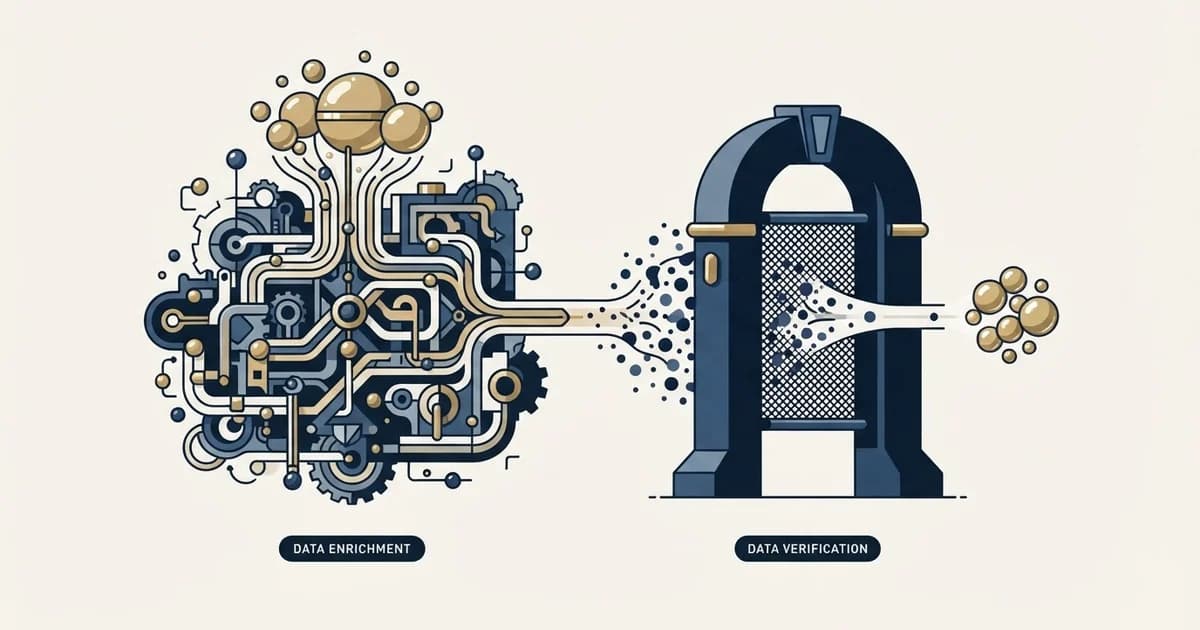
Bouncer has no per-seat price to compare with Apollo's. Apollo charges $49, $79 or $119 per seat a month billed annually, with credits per seat. Bouncer sells email verification credits by volume, $8 for the minimum 1,000, and they never expire. Apollo finds contacts; Bouncer checks addresses before you send.
Key takeaways
- Apollo's pricing page lists Basic $49, Professional $79 and Organization $119 per seat a month billed annually, or $65 and $99 monthly, with Organization annual only.
- Bouncer sells verification credits from $8 for 1,000 to $2,000 for 1,000,000, which works out at $0.008 down to $0.002 per email, and the credits never expire.
- An Apollo credit reveals data (an email is 1 credit, a phone number 8) while a Bouncer credit verifies one address, so credit counts are not comparable.
- Bouncer does not charge for duplicate addresses or unknown results, and its Deliverability Kit adds inbox placement and authentication tests from $25 a month.
Reviewed and updated September 21, 2026
Apollo.io prices by the seat: $49 per seat a month on Basic, billed annually, with 30,000 credits per seat per year. Bouncer, the email verification service at usebouncer.com, has no seats at all. It sells verification credits by volume, $8 for the minimum pack of 1,000, and the credits never expire. So the cost per seat compared to Apollo is a question Bouncer's pricing never has to answer, and the reason is the more useful comparison: the two tools do different jobs. Apollo finds contacts and runs outreach. Bouncer checks whether an address will bounce before anyone sends to it.
This page reads both pricing pages as they display today, sets out what one credit buys on each side, and works the numbers for a five-seat team. For the full Apollo picture, see our Apollo.io pricing breakdown.
Cost per seat compared to Apollo: Bouncer has no seats
Bouncer has no seats, so there is no per-seat price to set against Apollo's. Apollo charges $49, $79 or $119 per seat a month billed annually, and every seat brings its own credits. Bouncer sells email verification credits by volume, $8 for the minimum 1,000, and they never expire, so a ten-person team pays Bouncer by the list.
That difference drives everything below. A seat price scales with headcount, whether or not each person uses their credits. A credit price scales with the volume of addresses you check, whoever does the checking.
Apollo pricing: seats, credits and what one credit buys
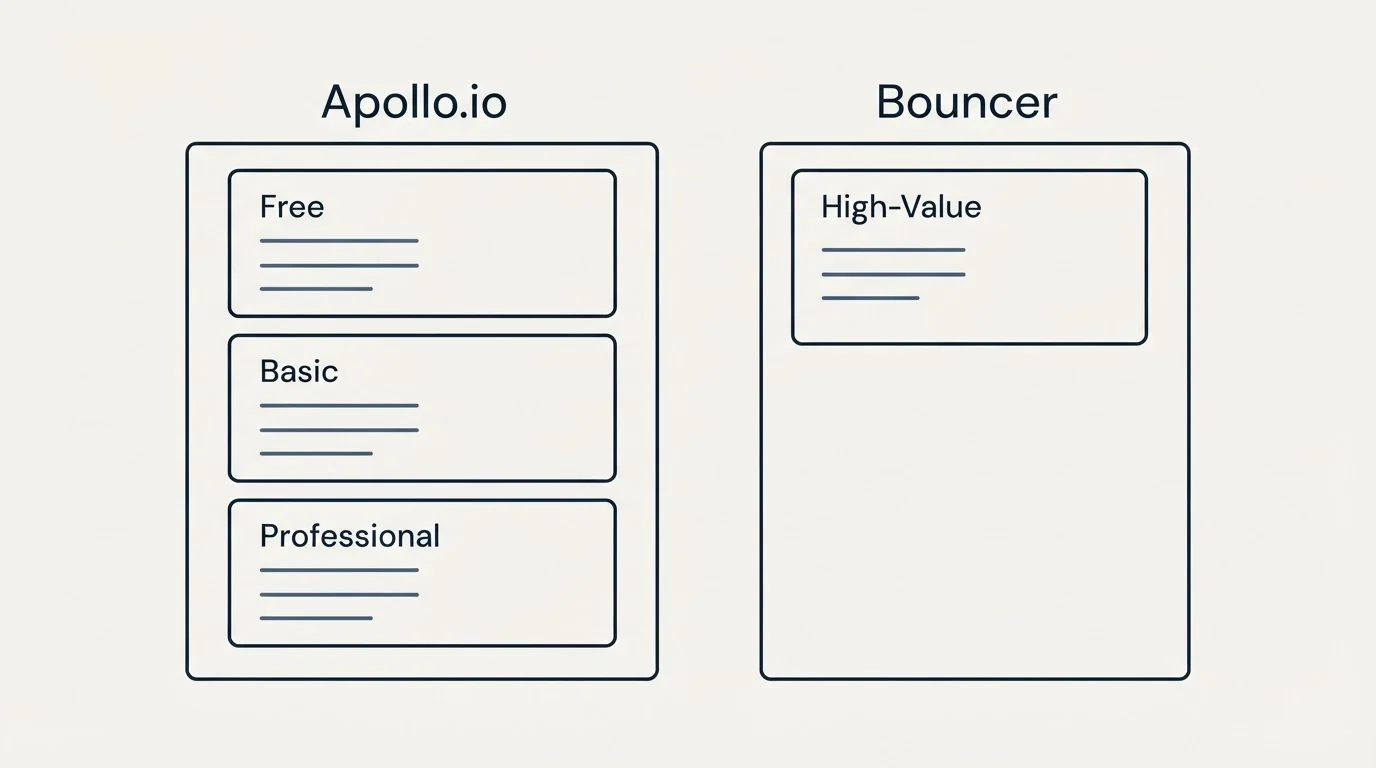
Apollo's pricing page opens on annual billing: Basic at $49, Professional at $79 and Organization at $119 per seat a month, with Organization requiring a minimum of 3 seats. Switched to monthly, Basic reads $65 and Professional $99, while Organization shows $149 but is marked Annual Only, so it cannot be bought month to month. A Free plan at $0 carries 900 credits per seat per year, granted monthly.
Credits are the unit that matters. On annual billing they arrive up front, 30,000, 48,000 or 72,000 per seat per year. On monthly billing they are granted each month, 2,500 on Basic and 4,000 on Professional. The page prices actions in credits: an email costs 1 credit, a phone number 8 credits, AI research 1 credit per run and the US dialer 2 credits per minute. On enrichment the page disagrees with itself: the credit card says 1 to 8 credits, while the FAQ says data enrichment uses up to 9 credits per record. The same menu describes Apollo's database as 240M contacts and 30M companies.
Three terms from the same page shape the seat bill. Basic and Professional each carry a 14-day trial, while Organization goes through sales. Upgrades of plan or seat count take effect immediately, and cancellations take effect at the end of the current term, so an annual contract is a year of seats whatever happens to headcount. And the credit figures above belong to what the page calls its new credit system: all new customers are on it, while some existing teams may still be on the legacy system, which is worth confirming before comparing a renewal quote with this page.
| Plan | Per seat a month | Credits per seat |
|---|---|---|
| Free | $0 | 900 a year, granted monthly |
| Basic | $49 annual, $65 monthly | 30,000 a year, or 2,500 a month |
| Professional | $79 annual, $99 monthly | 48,000 a year, or 4,000 a month |
| Organization | $119 annual only, 3 seats minimum | 72,000 a year |
Bouncer pricing: verification credits by volume
Bouncer's pricing page sells email verification as a one-off purchase with a minimum of 1,000 credits. The list reads 1,000 credits for $8, 5,000 for $35, 10,000 for $60, 50,000 for $250, 100,000 for $400, 250,000 for $750, 500,000 for $1,250 and 1,000,000 for $2,000, with anything larger through sales. The same list shows under its Monthly Subscription option. Divide price by credits and one verification falls from $0.008 at the smallest pack to $0.002 at a million.
Three terms on the page change the real cost. Email verification credits never expire. Bouncer says it never charges for duplicated addresses within a list, nor for unknown results. And a new account gets 100 free credits to start, with auto-refill available. The page also says various currencies are accepted, so check the currency at checkout.
Verification is one of several products. The Deliverability Kit is a monthly plan: Starter at $25 a month with 250 test emails and 10 IPs or domains monitored, Standard at $125 with 1,000 test emails and 25, and Pro at $250 with 2,500 and 50, each running inbox placement, blocklist, SPF, DKIM, DMARC and SpamAssassin tests. Bouncer Shield checks addresses at the moment of entry on a form, and the product menu adds an API, AutoClean for CRMs, a toxicity check and data enrichment from publicly available company information.
Sizing a verification purchase is simpler than sizing seats, because only one number matters: how many addresses you will check. Count the ones that did not come from a source you already trust, over a quarter rather than a month, then compare the pack prices. Because the credits never expire, the only cost of buying ahead is cash tied up, and the step from the 10,000 pack to the 50,000 pack cuts the price per check from $0.006 to $0.005. The pack structure also rewards cleaning one big list at once over many small uploads. A team verifying at signup through Bouncer Shield is a different purchase again: that is a monthly subscription priced by the number of checks, sized to form traffic rather than to list size.
What one credit buys on each side
The word credit means two different things here, which is why credit counts cannot be compared directly. An Apollo credit buys access to data: 1 credit reveals an email, 8 reveal a phone number. A Bouncer credit buys a check: 1 credit verifies 1 address, and duplicates and unknown results are not charged.
So the tools sit in sequence rather than in competition. Apollo's credits describe its emails as verified, and a team that sends only Apollo-sourced addresses may find that check enough. Bouncer earns its place on lists that come from somewhere else: an old CRM export, an event list, a form, or a file bought or built outside Apollo. For the wider field, compare email verification tools, and for the housekeeping behind it, see email list cleaning.
Step three reflects house practice. RevenueFlow sends one message per campaign, so Apollo's sequences are the vendor's feature, described here as the product sells them and not a cadence we use. A verified list matters more under that rule, because a single message has no second send to recover a bounce. The difference between a bounce that ends an address and one that can be retried is covered in hard bounce vs soft bounce.
What a five-seat team pays (illustrative)
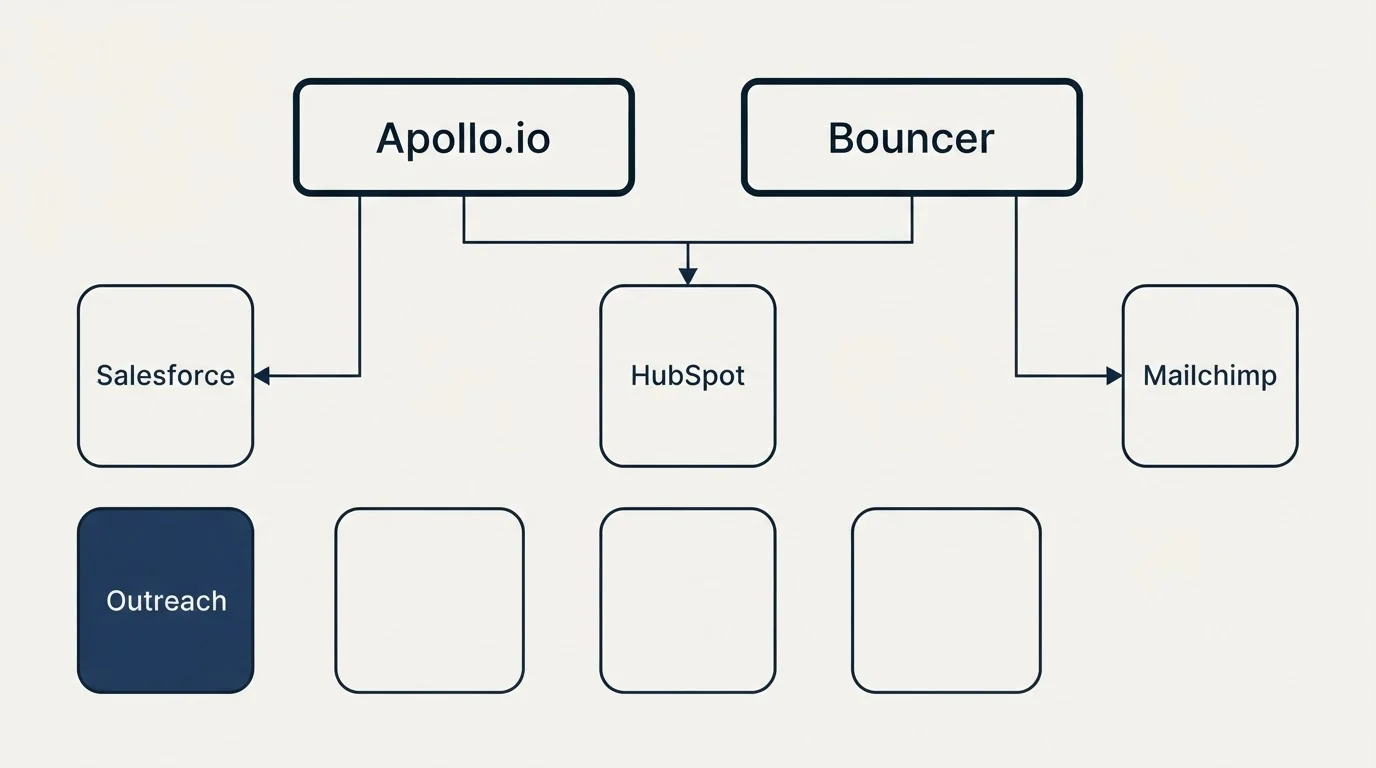
These sums use list prices only, so read them as illustrative arithmetic. Five Apollo Basic seats cost 5 x $49 = $245 a month billed annually and bring 150,000 credits for the year, or 5 x $65 = $325 on monthly billing with 2,500 credits per seat each month. If that team verifies 5,000 addresses a month through Bouncer, the 5,000 pack costs $35, so a year of it is $420. Buying 50,000 credits once for $250 covers ten such months, and because the credits never expire, the larger pack is cheaper however slowly it is used.
The arithmetic shows why the seat question does not transfer. Adding a sixth rep adds a sixth Apollo seat. It adds nothing to Bouncer unless the sixth rep adds addresses to check. Neither page names a currency beside its dollar sign, and Bouncer accepts several, so the two sides are shown separately and never summed.
Which one do you need?
- Choose Apollo if you need to find contacts and reach them. It is a database, a sequencer and a dialer billed per seat, and its credits reveal emails and phone numbers.
- Choose Bouncer if you already have the addresses and need to know which ones will bounce. It is billed by the check, its credits never expire, and it adds deliverability testing and form verification.
- Use both if Apollo is your source but not your only one. Verify everything that did not come out of Apollo before it reaches a campaign.
The order of purchase follows from the jobs. A team with no contacts buys the database first, because a verifier has nothing to check. A team with a CRM full of old addresses and no appetite for new ones may need only the verifier. And a team that already pays for Apollo seats should look at its unused credits before adding anything: credits spent on emails nobody sends to are the most common waste in this stack.
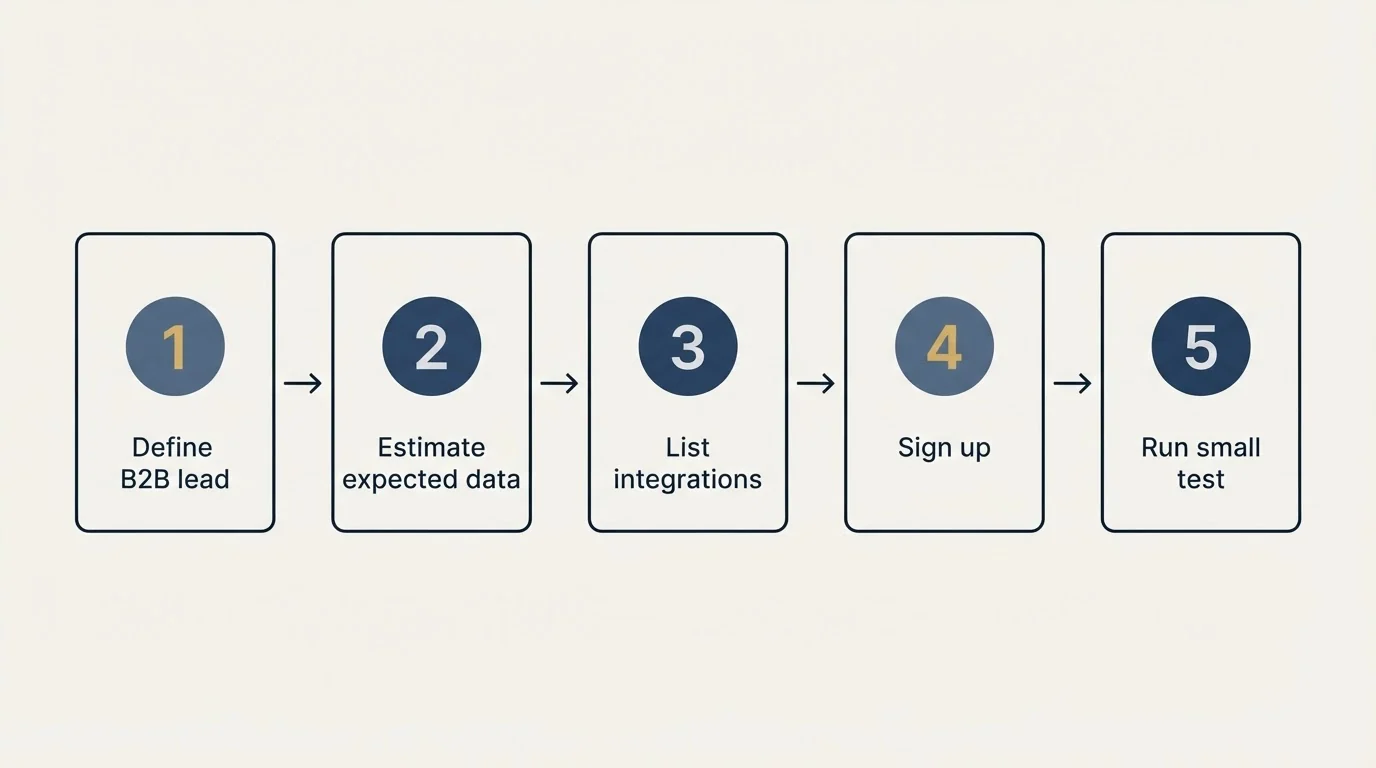
Still shortlisting? Compare the best Apollo alternatives and the best Bouncer alternatives. If you would rather have verified outbound run for you, see what a free campaign looks like.
Pricing and features are taken from the vendors' own pages. Verify current terms with the vendor before relying on them.
Frequently asked questions.
Frequently asked questions- What is Bouncer's cost per seat compared to Apollo?
- Bouncer has no seats. Its pricing page sells email verification credits by volume: $8 for 1,000, $35 for 5,000 and $2,000 for 1,000,000, with credits that never expire. Apollo charges per seat, $49, $79 or $119 a month billed annually. A team adding a rep adds an Apollo seat, but adds Bouncer cost only if it adds addresses to check.
- Is Bouncer an alternative to Apollo?
- Not really, because they do different jobs. Apollo is a contact database with outreach tools, where 1 credit reveals an email and 8 reveal a phone number. Bouncer checks whether an address is valid before you send to it, 1 credit per address. Many teams use Apollo to find contacts and Bouncer to verify lists from other sources.
- How much does Bouncer cost?
- Bouncer's pricing page lists email verification at $8 for the minimum 1,000 credits, $60 for 10,000, $400 for 100,000 and $2,000 for 1,000,000, with larger volumes through sales. Credits never expire and duplicates or unknown results are not charged. Its Deliverability Kit is a separate monthly plan starting at $25 a month for 250 test emails.
- Do I need to verify emails from Apollo?
- Apollo's pricing page describes the emails its credits unlock as verified, so a team sending only Apollo-sourced addresses may find that enough. A separate verifier such as Bouncer earns its place on addresses from elsewhere: old CRM exports, event lists, form sign-ups and bought files. Checking those before a send protects the sending domain.
About the author.

Tim Carden is CMO / CTO at RevenueFlow, which builds and operates outbound revenue engines for B2B companies. Studied at McGill University.
Tim Carden · CMO / CTO
Connect on LinkedIn →Explore more.
Ready to scale your outreach?
We build GTM engines that book real meetings. See the receipts.
Related articles.
Apollo.io vs Proofy: Data Enrichment Tool Comparison
Compare Apollo.io and Proofy side by side. See pricing, features, and integrations to choose the right data enrichment tool for your needs.
Apollo.io vs Bookyourdata: Data Enrichment Tool Comparison
Compare Apollo.io and Bookyourdata side by side. See pricing, features, and integrations to choose the right data enrichment tool for your needs.
Apollo.io vs Ocean.io: Data Enrichment Tool Comparison
Compare Apollo.io and Ocean.io side by side. See pricing, features, and integrations to choose the right data enrichment tool for your needs.
Bouncer vs Emailable: Data Enrichment Tool Comparison
Compare Bouncer and Emailable side by side. See pricing, features, and integrations to choose the right data enrichment tool for your needs.
Bouncer vs ZeroBounce: Data Enrichment Tool Comparison
Compare Bouncer and ZeroBounce side by side. See pricing, features, and integrations to choose the right data enrichment tool for your needs.
AroundDeal vs Leadspicker: Data Enrichment Tool vs Sales Engagement Platform Comparison
Compare AroundDeal (data enrichment tool) and Leadspicker (sales engagement platform) side by side. See pricing, features, and integrations to decide which one, or both, your stack needs.