Email List Cleaning: Cost Per Thousand vs Cost of a Bad Send
Verification runs from about $0.45 to $8.00 per thousand addresses at published rates. The money that matters is what a bad send costs afterwards.
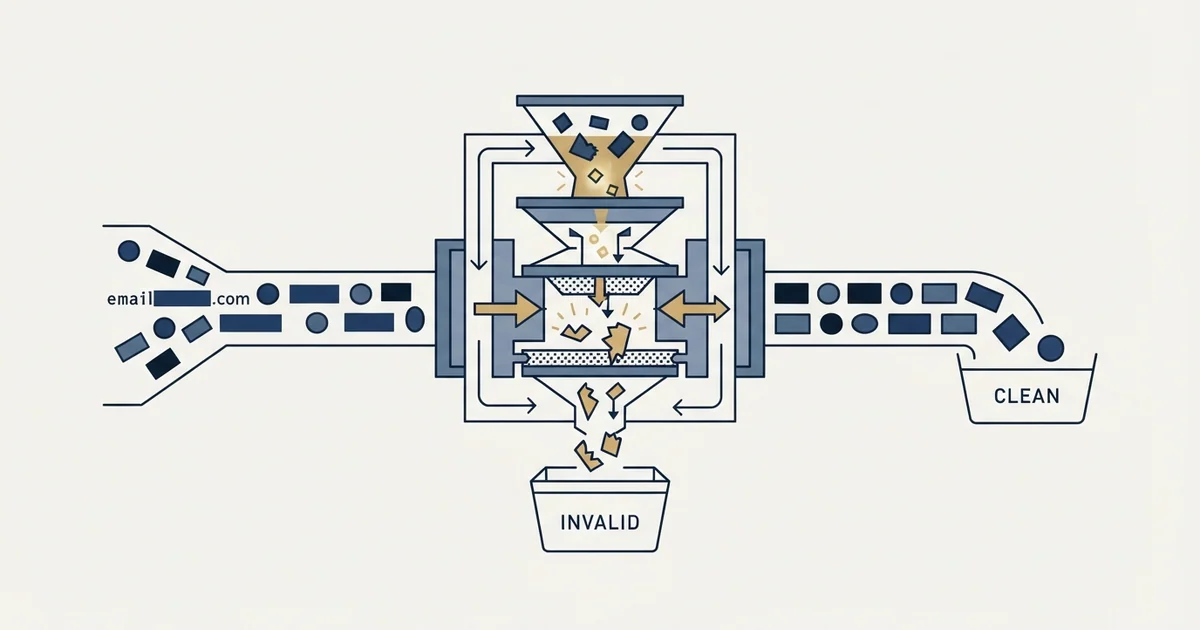
Email list cleaning costs roughly $0.45 to $8.00 per thousand addresses at published vendor rates, which is rounding error against any real sending programme. The decision that matters is whether the list is worth contacting at all, because verification confirms a mailbox accepts mail today and never confirms the person still holds the role you sourced them for.
Key takeaways
- Published verification rates span roughly $0.45 to $8.00 per thousand addresses, so the same 50,000-row file prices at about $89 or about $400 depending on which rate you land on.
- The cheapest published rates are volume rates attached to million-credit commitments, so a mid-sized list does not qualify for the number quoted at the bottom of a pricing table.
- A bad send damages a sending domain shared by every campaign running on it, so the cost does not stay with the campaign that caused it and arrives as an unexplained decline elsewhere.
- Verification confirms a mailbox accepts mail today, so a list that is old, scraped, or built to no stated targeting rule is worth replacing rather than cleaning.
Reviewed and updated August 14, 2026
Email List Cleaning: Cost Per Thousand vs Cost of a Bad Send
A 50,000-row list sits in a spreadsheet waiting for a decision. One verification vendor's published rate prices that file at $89. Another prices the same 50,000 addresses at $400. Teams can spend most of a week choosing between them, and the difference they are arguing over is smaller than what one degraded sending domain costs in the weeks afterwards.
That gap is the whole shape of email list cleaning as a spending decision. The category is full of guides explaining how to scrub a list, and almost none of them price the decision a buyer actually has in front of them, which is whether cleaning this particular file is worth the money and what skipping it costs.
The answer splits into two halves that behave completely differently. One half is arithmetic you can finish in a minute. The other half is a probability over an asset shared by every campaign you run, and anybody quoting you a dollar figure for it is guessing.
The practice itself is defined and worked through on list hygiene, which makes the point this page starts from: an address is never verified, it was verified on a date, and the result decays from there. What follows is the money.
Before any of that arithmetic runs the file has to be deduplicated on a normalised key rather than on the raw address, and whether capitalization matters in an email address covers why a case-sensitive match quietly sends the same person two copies.
Guides that promise email scrubbing are describing this same job under an older name, and what follows prices the decision rather than walking the steps again.
What cleaning actually costs per thousand
Each rate below was read off the vendor's own pricing page. For choosing between the tools rather than sizing the spend, email verification tools compared is the page to read, because it covers accuracy claims, catch-all handling and what genuinely separates the products. Here the numbers are doing one job only, which is sizing the line item.
| Vendor | Published figure | Works out at |
|---|---|---|
| MillionVerifier | $89 for 50,000 credits, credits do not expire | about $0.00178 each, so $1.78 per 1,000 |
| Bouncer, entry pack | $8 for 1,000 credits | $0.008 each, so $8.00 per 1,000 |
| Bouncer, volume pack | $2,000 for 1,000,000 credits | $0.002 each, so $2.00 per 1,000 |
| DeBounce | From $0.00045 per check at top volumes, packages from 5,000 credits, 100 free on signup | $0.45 per 1,000 at that tier |
| ZeroBounce | ZeroBounce ONE from $99 a month, 10,000 credit minimum | A subscription floor rather than a per-credit rate |
Run that across a real file and the arithmetic is unremarkable in absolute terms and remarkable in relative terms. Fifty thousand addresses cost $89 at the MillionVerifier pack rate and $400 at an entry per-credit rate of $0.008. Same file, same job, four and a half times the price. That $400 and the four-and-a-half-times figure are illustrative arithmetic derived from the published rates above rather than measurements taken from a live file.
MillionVerifier publishes $89 for 50,000 credits, which is about $0.00178 each
Derived from the $0.008 per credit published on Bouncer's 1,000-credit pack
One file, two published rates. Illustrative arithmetic, not a measurement
Two things follow, and the second one is the trap.
At either end, verification is rounding error against a sending programme. A team paying for mailboxes, domains, sending software and somebody's time to run the thing is not going to notice $89, and will barely notice $400. The decision is almost never about the price of verification, which is why treating it as a purchase decision wastes the week.
The cheapest headline rates are volume rates, and they are not available on your file. DeBounce's $0.00045 is published as a top-volume figure. Bouncer's $0.002 comes attached to a million credits, which is $2,000 of commitment. A 50,000-row list qualifies for neither. Comparison posts quote the floor of a pricing table as though it were the price, and the floor is a different product from the one a mid-sized sender is buying. Check which tier your actual volume lands in before you compare anything.
What a bad send costs, and why nobody can price it for you
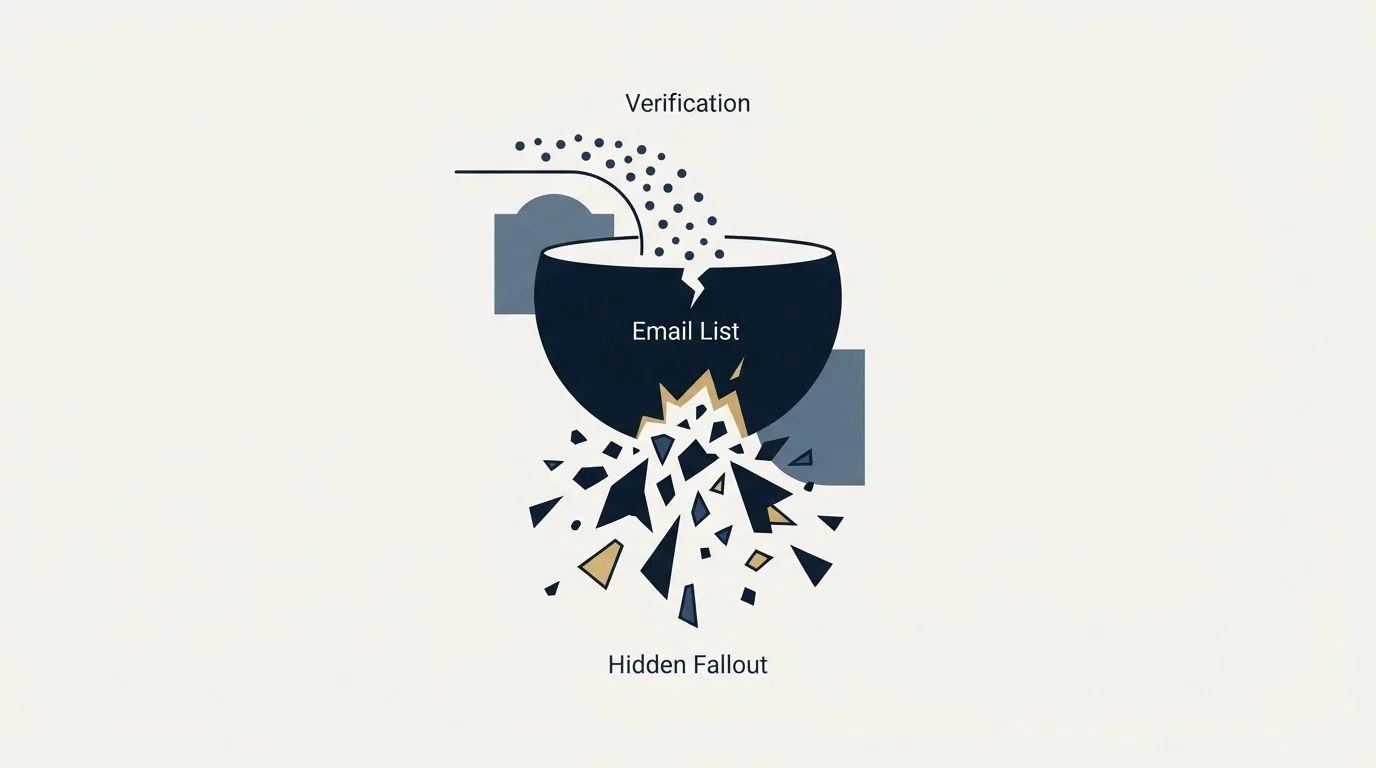
This half resists a table. The cost of sending to a dirty list is a probability distribution over an asset you share, and the three components behave differently from each other.
The sending domain's reputation is the expensive one. A wave of hard bounces or complaints is read by receiving providers as a property of the sending domain, and that domain is carrying every campaign you run on it. The bill does not stay with the campaign that generated it. A campaign that has nothing to do with the bad file experiences the damage as an unexplained decline in placement, which is also the hardest version to diagnose, because the campaign showing the symptom is not the campaign holding the cause. Sender reputation is the thing being spent here.
The diagnosis costs time before it costs anything else. Placement problems present as an absence, and an absence is expensive to investigate. Somebody works through authentication, blocklists, content and volume before arriving at the list, and by then the sends that caused it are weeks old. Working the fourteen-point deliverability audit in order shortens that, and running a blacklist check first is worth doing the moment delivery errors spike, because a listing is one of the few findings that explains everything at once.
The sends you cannot make while recovering are the part people forget. Reputation recovers over weeks rather than days, and the recovery is achieved by sending less, to better addresses, for a while. Whatever pipeline those weeks were supposed to produce, they do not produce it.
We are not going to invent a dollar figure for any of that, because the honest answer depends on how many campaigns share the domain, how much of the programme runs through it, and how bad the file was. What can be said flatly is the shape: the cost of cleaning is fixed, small and knowable before you spend it, and the cost of not cleaning is variable, shared and only knowable afterwards. Bounce rate benchmarks are where to calibrate how far outside normal a given reading sits.
- Priced per address at a published rate
- Scales linearly with the size of the file
- Paid once, before anything is sent
- Lands entirely on the campaign that incurred it
- A probability rather than a price
- Falls on a sending domain shared by other campaigns
- Diagnosis time arrives before any fix does
- Recovery is measured in weeks of reduced sending
The cases where cleaning is the wrong answer
Here is the part the how-to guides leave out. A verification pass confirms that a mailbox accepts mail today. It confirms nothing about whether the person still holds the role you sourced them for, still works at that company, or was ever a plausible buyer, which is a boundary list hygiene states directly. Cleaning a list of the wrong people produces a clean list of the wrong people, at a cost of a few cents per thousand and a false sense that the file has been dealt with.
Three tests decide whether a file is worth cleaning or worth replacing.
Age. Contact data decays continuously as people move roles and companies. A file that has been sitting for a year has drifted in two directions at once, and verification only catches one of them. The addresses that no longer exist will be removed. The addresses that still exist but now belong to somebody who changed jobs will pass verification cleanly and waste the send.
How it was sourced. If the file was scraped or bought, verification removes the invalid rows and leaves the underlying problem exactly where it was. Scraped files are where pristine traps come from, and you cannot detect a trap and cannot undo a hit that has already landed, as spam trap sets out. Cleaning a scraped file after it has already been sent to prevents the next hit and repairs nothing.
Whether you can state the targeting rule. If nobody can say in a sentence what makes a row belong on the list, cleaning is polishing. Re-sourcing against a stated rule produces a smaller file that is worth contacting, and a smaller file is cheaper to verify as a bonus.
The arithmetic makes this easier than it feels. Re-sourcing 50,000 contacts costs far more than $89, so replacing a file is genuinely the expensive option. It is still the right buy whenever the surviving rows would not have been worth contacting, because the verification saving is small enough to be irrelevant to the comparison. The reason to skip cleaning is never the price of cleaning.
What verification does not buy you

Four boundaries worth knowing before you read a verification report as an all-clear.
Guides collecting email verification best practices tend to stop at the vendor comparison, and the four boundaries below are the part that decides whether a clean report means anything.
Accept-all domains return an inconclusive result rather than a verdict, and the mechanism behind that is on catch-all domain. We hold catch-all addresses out of sends rather than guessing at them, which costs coverage in enterprise B2B and protects the domain.
Role-based addresses and disposable domains are classifications rather than failures. Both are valid addresses and both need a written rule applied consistently, decided once per programme instead of per campaign.
A hard bounce is only worth anything if it becomes a permanent suppression list entry without anybody remembering to export a report. Bounce processing that depends on a person is bounce processing that lapses.
Suppression is also the one part of hygiene that is a legal obligation rather than an optimisation, with opt-out clocks attached and no B2B exception. The rules, and where liability lands when an agency does the sending, are set out in our guide to CAN-SPAM compliance for B2B cold email. The part that matters here is that the obligation sits with the sender and no verification pass discharges it. A cleaning run can hand you an address that is deliverable, current and legally off limits, and only the suppression list knows the difference.
How to decide, in order
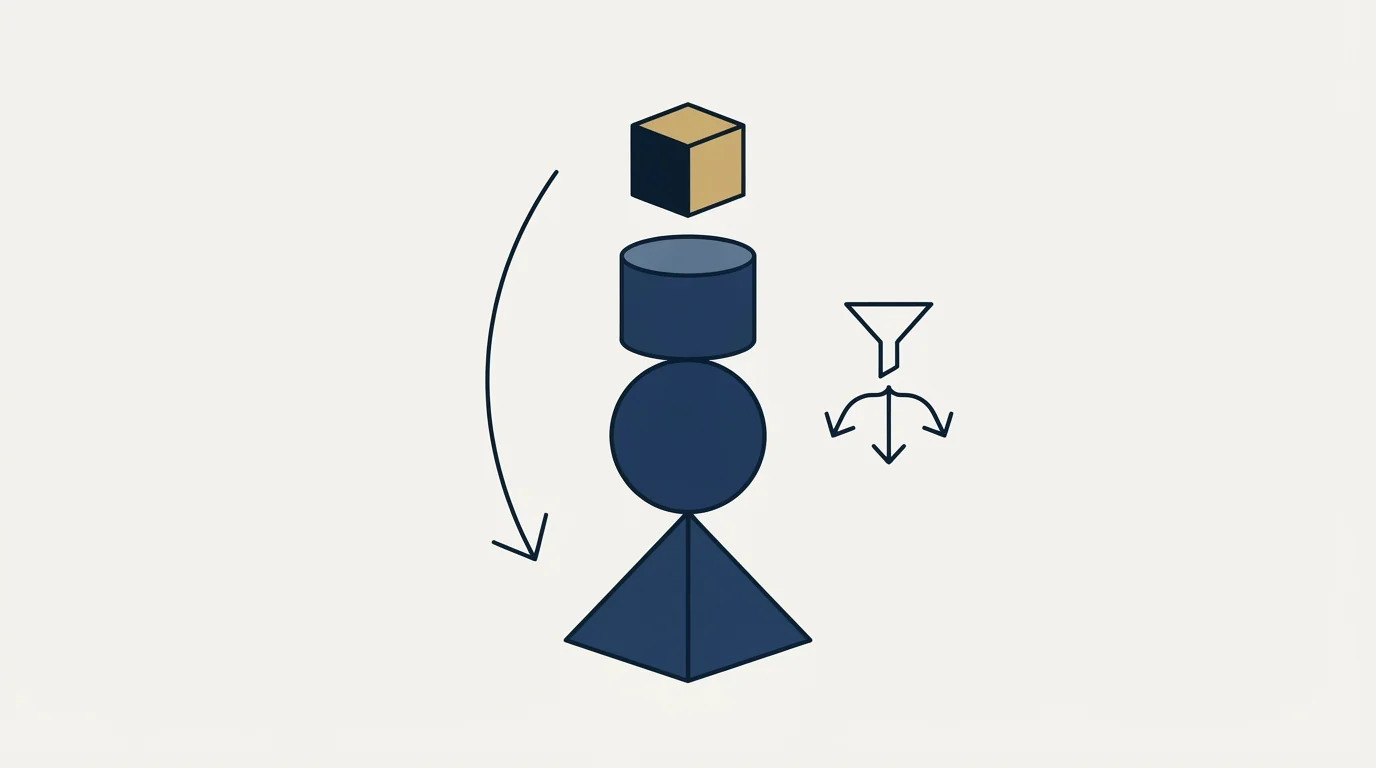
- Yes: You can state in one sentence what makes a row belong on this list
- Yes: The file was sourced against that rule rather than scraped or bought
- Yes: It was built recently enough that role data has not drifted
- Yes: Verification runs immediately before the send rather than at collection
- Yes: Accept-all and role addresses have a written rule you already applied
- No: Choosing a vendor on a headline rate that only applies at volumes you do not send
- No: Cleaning a file to avoid deciding whether the people on it were worth contacting
Verification is close to free relative to everything else in a sending programme, so run it on anything you are going to send, immediately before you send it, and stop treating the vendor choice as a strategic decision. Then spend the attention you saved on the question that actually decides the outcome, which is whether the list is a list of the right people. The fundamentals that sit around it are in the cold email deliverability guide.
A vertical where the account fields are public and only the contact is bought is worked through in B2B lead lists for utilities, which puts verification last for that reason.
If the honest answer is that the file is old, scraped, or built to no rule anybody can state, the money is better spent building a new one. Prepay one qualified meeting and we will build and run the list for you. If we do not book it within 30 days, you get a full refund.
Pricing and features verified as of mid-2026. Verify current terms with the vendor before relying on them.
Frequently asked questions.
Frequently asked questions- How much does it cost to clean an email list?
- At published vendor rates it runs from roughly $0.45 to $8.00 per thousand addresses, depending on the volume tier you qualify for. A 50,000-row file therefore prices at about $89 at a published pack rate and about $400 at an entry per-credit rate. Those figures are illustrative arithmetic from published rates rather than quotes, so confirm current pricing with the vendor before budgeting.
- Is list cleaning worth it if my list is small?
- Almost always, because the price scales with the file and a small file is cheap to verify. The cost that verification protects against does not scale down the same way: a few hundred dead addresses can damage a sending domain that every one of your campaigns runs on. Run the pass immediately before the send rather than at collection, since results decay from the day they were taken.
- When should I replace a list instead of cleaning it?
- When it fails any of three tests: nobody can state in one sentence what makes a row belong on it, it was scraped or bought rather than sourced against a rule, or it is old enough that people have changed jobs. Verification removes dead addresses and cannot tell you the person still holds the role, so cleaning a badly built list produces a clean badly built list.
- Will cleaning my list fix a deliverability problem I already have?
- It prevents the next round of damage and repairs none of the damage already done. Reputation recovers over weeks of sending less, to better addresses, and a spam trap hit that has already landed cannot be undone. Run a blacklist check and work a deliverability audit in order first, because a listing or an authentication fault explains more at once than a dirty list does.
About the author.

Tim Carden is CMO / CTO at RevenueFlow, which builds and operates outbound revenue engines for B2B companies. Studied at McGill University.
Tim Carden · CMO / CTO
Connect on LinkedIn →Explore more.
Ready to scale your outreach?
We build GTM engines that book real meetings. See the receipts.
Related articles.
Email Address Capitalization: What It Changes for Senders
Capitalization in an email address does not decide delivery. It decides whether two rows are one person, and that is where a suppression list quietly fails.
Choosing a NeverBounce Alternative: Name Your Reason
Three reasons teams leave NeverBounce, each pointing at a different replacement, plus how to run a two-vendor split test on your own list that actually settles it.
Email Deliverability Services: What They Cannot Fix
Deliverability services fix authentication, reputation and infrastructure. They cannot fix a bad list or an offer nobody wants, which is the usual real problem.
Email Warmup Pricing in 2026: What 20 Tools Charge, and What 10 Mailboxes Cost
Email warmup tools start at a median of $29 a month, but warming ten mailboxes costs from $7.50 to $1,190 depending on how the vendor prices a mailbox.
MailReach Pricing: The Headline Rate Is the Second Band
MailReach prices warmup on a slider with four mailbox bands and two billing states. Every band at both states, and why the printed rate is not the entry rate.
Warmup Inbox Pricing: Per Inbox, Annual Loads First
Warmup Inbox prices per inbox and its page opens on the annual switch. Both states for all three plans, the reply ceiling meter, the trial and how a fleet bill is built.