Email Deliverability Services: What They Cannot Fix
Deliverability services fix authentication, reputation and infrastructure. They cannot fix a bad list or an offer nobody wants, which is the usual real problem.

Email deliverability services fix delivery mechanics: authentication records, sender reputation, list hygiene, sending infrastructure and inbox placement. They cannot fix a poorly targeted list, an offer nobody wants, or volume a domain has not earned, which is where most suspected deliverability problems actually originate.
Key takeaways
- Deliverability work covers authentication, reputation, list hygiene, content and infrastructure, and every one of those is a mechanics problem rather than a demand problem.
- A service cannot fix a list that should never have been contacted, and complaints from bad targeting damage reputation faster than any technical fix repairs it.
- Sending volume a domain has not earned is a self-inflicted problem no vendor can undo without reducing the volume.
- Before buying, check whether reply rates fell alongside placement or independently of it, because only one of those is a deliverability problem.
Reviewed and updated September 5, 2026
A campaign that was booking meetings in March stops booking them in June. Open rates have halved, replies have dried up, and somebody in the room says the word deliverability. That diagnosis is right often enough to be worth taking seriously and wrong often enough that buying a service before testing it is how budget gets spent on the wrong problem.
So here is what an email deliverability service actually contains, what one can reasonably be held to, and the four things no amount of deliverability work repairs.
The six workstreams behind the word
Vendors package these differently and price them differently, so the useful move before comparing quotes is knowing which of them you are buying.
- SPF, DKIM and DMARC published on every sending domain
- SPF kept inside its DNS lookup budget
- A DMARC reporting address that somebody actually reads
- Each sending domain carrying its own records, separately from the primary domain
- Which mailboxes sit on which domains at which provider
- Warm-up before any campaign traffic
- Daily volume per mailbox and how it ramps
- Outbound separated from the domain your contracts come from
- Verification before sending, and re-verification of aged data
- Bounce and complaint handling
- Sending patterns, link choices and tracking domains
- Placement testing and continuous monitoring
Two of those lines are more contested than they look. Sending patterns cover how many messages a mailbox sends a day, how the volume is spread across domains, what the message links to, and whether a campaign sends once or keeps following up. We send one message per campaign and no bumps, on the straightforward logic that each additional message to somebody who ignored the first one is another opportunity to be marked as spam. A vendor whose deliverability plan depends on a five-step sequence is proposing to spend your sending reputation on repetition.
The first two columns are work. The third column is how anyone knows whether the work did anything, and it is the part buyers most often leave out of the scope. A service that cannot show you where your mail landed before and after is asking you to accept improvement on trust.
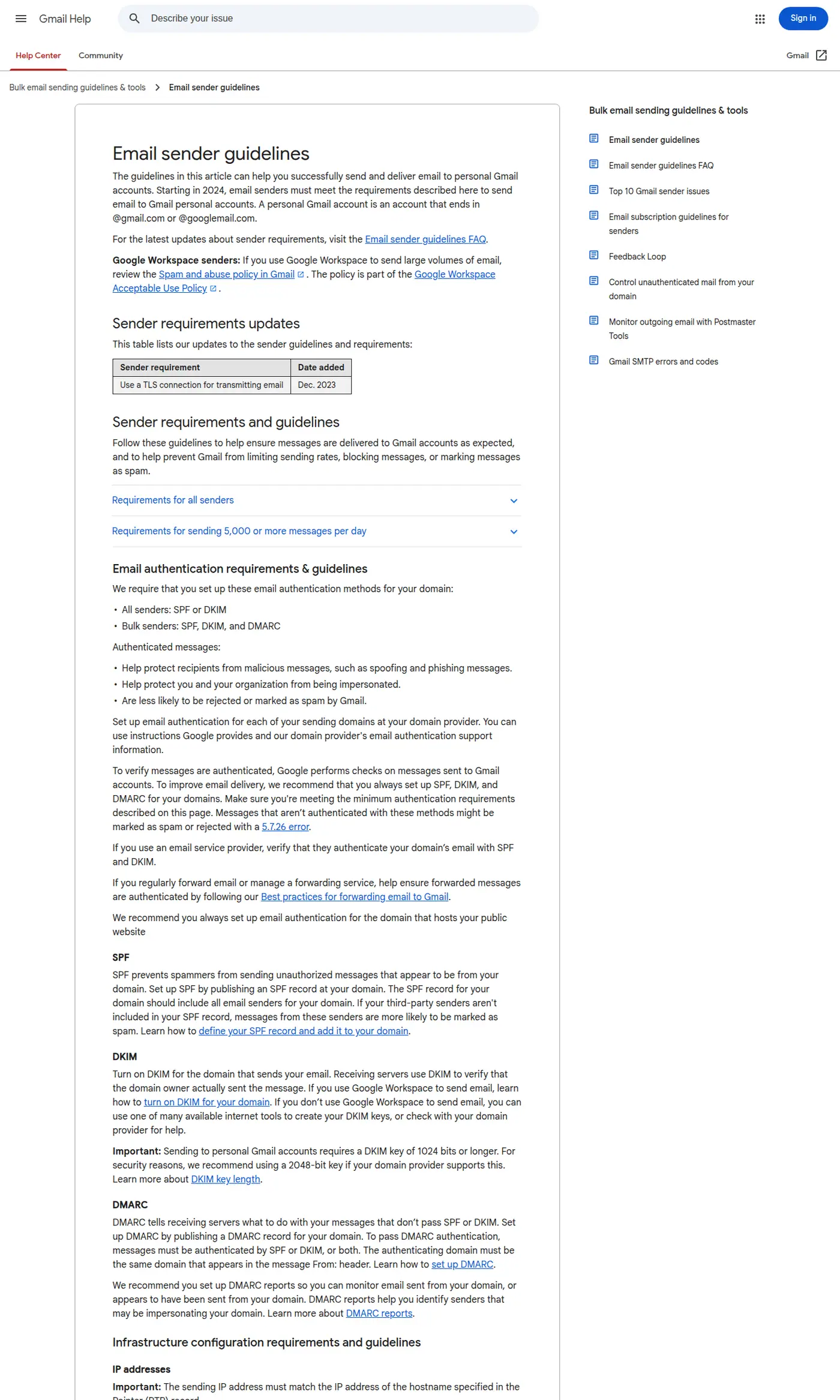
Google requires SPF, DKIM and DMARC of bulk senders. The 0.30% spam-rate threshold sits inside the collapsed section for senders of 5,000 or more messages a day. Captured 11 August 2026.
The order a competent engagement runs in
The sequence matters more than the tooling, because each step changes the evidence available to the next one.
- Step 1Measure where mail lands now
Placement testing, bounce and complaint data, and whatever the receiving providers report back. Without a baseline, every later change is unfalsifiable.
- Step 2Fix authentication
SPF, DKIM and DMARC on every sending domain. This is binary, it is cheap, and it is checkable by a third party in minutes.
- Step 3Clean the list
Verify, remove the undeliverable, and decide a policy for catch-all domains rather than sending into them by default.
- Step 4Match volume to what the domains have earned
Reduce per-mailbox sending until the delivery data is stable, then ramp deliberately.
- Step 5Retest against the baseline
Same seed list, same providers, same measurement. Only now is a conversation about copy worth having.
Authentication comes early because it is the one part of this with an objective answer. A record either resolves or it does not. Reputation work sits after it because reputation is built by sending, and sending on unauthenticated domains builds the wrong kind.
The step people skip is the last one. A service that changes six things at once and reports that things improved has told you nothing about which of the six mattered, which means you will be buying the whole bundle again next time.
The four things a service cannot fix
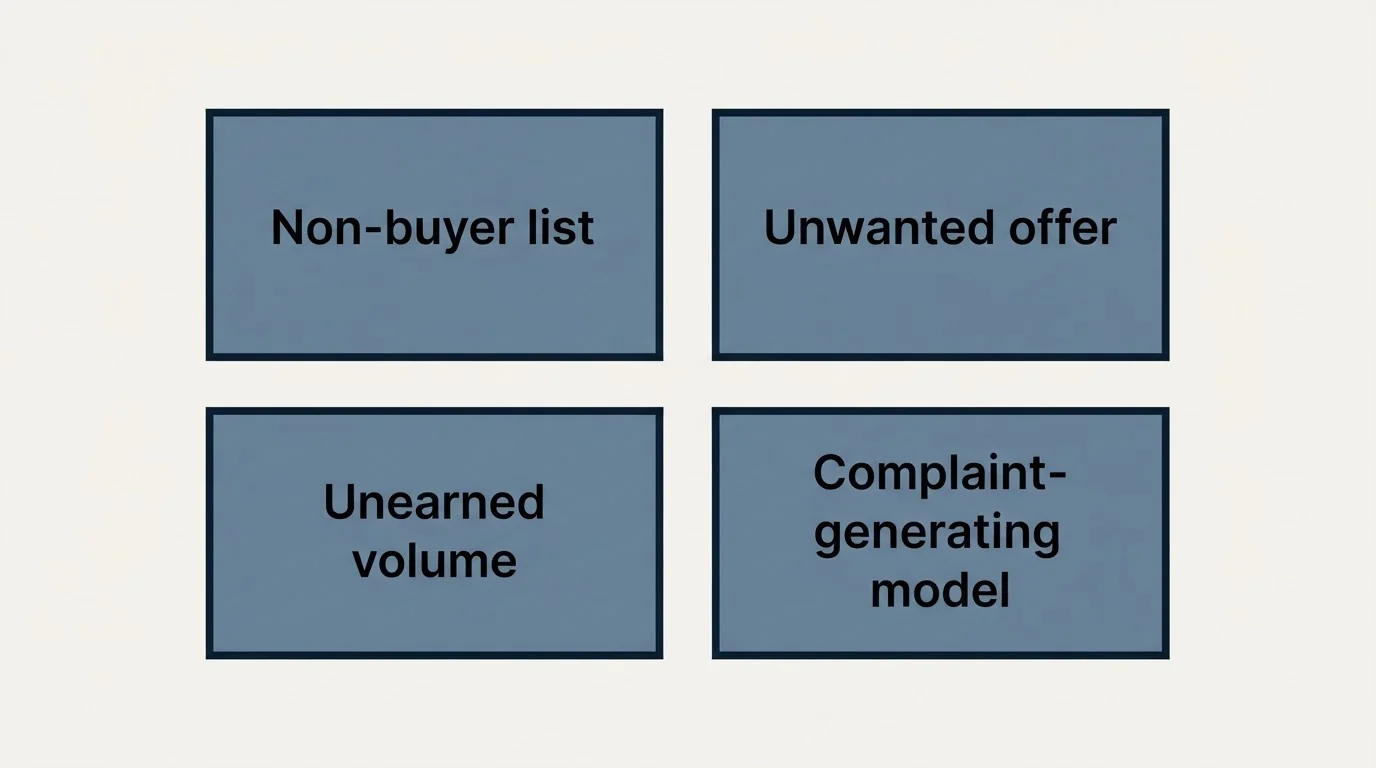
This is the part that decides whether the purchase pays for itself.
A list of people who are not buyers. Deliverability work moves mail into an inbox. It has no opinion about whose inbox. If the accounts are wrong, better placement produces more silence from a better-targeted place.
An offer nobody wants. Same mechanism. A message that lands in the primary inbox and gets ignored looks identical, in the reply column of a dashboard, to a message that went to spam.
Volume a domain has not earned. New domains and new mailboxes carry very little sending history, and reputation accrues at the pace receivers allow rather than the pace your pipeline target requires. MailReach, whose product is warm-up, states plainly on its pricing page that "the initial warmup phase should last 14 days minimum" and that "no campaigns should be sent during this phase", and advises keeping warming running for as long as you send campaigns and between them. A vendor selling you a way around that constraint is selling the constraint back to you later.
Teams evaluating MailReach's warm-up timeline should see where MailReach's warming documentation disagrees with itself on domain and IP scope.
A business model that generates complaints. Google's bulk sender requirements set a hard operational number here: spam rates reported in Postmaster Tools must stay below 0.30%, and senders pushing 5,000 or more messages a day to Gmail need SPF, DKIM and DMARC in place. If the offer, the audience or the frequency reliably produces complaints above that line, the complaint rate is the product of the programme rather than a defect in its plumbing.
- Yes: Bounce rate has risen, or specific providers reject outright
- Yes: A placement test shows mail landing in spam at one or more providers
- Yes: The spam complaint rate reported by receivers has moved
- Yes: Authentication is incomplete or failing on the sending domains
- No: Mail is being accepted and delivered, and the reply rate is the thing that fell
- No: Replies are arriving, and they are polite declines
- No: The drop began when the target list changed or the offer changed
- Depends: Volume was increased shortly before the drop
The uncomfortable pattern is how often the checklist comes back with nothing in the top half. Delivery mechanics and demand produce the same visible symptom, which is silence, and silence is the only signal most teams are looking at. Bounce data, complaint data and placement tests distinguish them in an afternoon, and they are worth generating before the first vendor call rather than after it.
One caution about the measurement window. Delivery data is noisy at low volume and receivers behave differently from each other, so a single bad placement test on a Tuesday is a data point rather than a trend. Compare like windows at like volume, and keep the providers separated in the reporting, because a drop concentrated at one provider is a different investigation from a drop that shows up everywhere at once.
What a service is genuinely worth buying for
Three situations justify the spend without much argument.
Continuous work rather than a project. Blacklist status, DNS changes, provider policy shifts and reputation drift do not stop happening after a fix. This is the strongest case for outsourcing, because the internal version means somebody owns a rota nobody wants.
A DMARC rollout across a real organisation. Enumerating every service that sends as your domain, authenticating each one, and moving to enforcement without breaking payroll notifications is unglamorous, specialised, and expensive to learn on your own domain. Our guide to publishing SPF, DKIM and DMARC for cold email covers the mechanics if you would rather own it.
Recovery. Getting off blacklists, rebuilding after a domain has been burned, or replacing infrastructure that was set up badly. The work is procedural and someone who has done it fifty times is faster than someone doing it once.
Where the case is weakest is the audit-only engagement bought during a reply-rate slump. An audit tells you the mechanics are fine, which is useful information delivered expensively, and it does not touch the reason nobody replied.
Three shapes the same service is sold in
The workstreams above get packaged three ways, and the packaging determines what you are actually agreeing to.
The audit. A fixed-scope review that produces a report: what is misconfigured, what is at risk, what to change and in which order. It is the cheapest of the three and it ends with a document rather than a fix. Worth buying when you have people who can execute and nobody who can diagnose, and wasted when the finding turns out to be that your authentication was fine all along.
The retainer. Ongoing monitoring and remediation across the setup you already run. This is where the continuous-work argument lands, and it is the shape most agencies default to. What varies wildly between vendors is how much of the list and content side sits inside the fee, so read that boundary before the price.
Managed infrastructure. The vendor provisions and operates the sending domains and mailboxes, and deliverability becomes a property of a system they run rather than a service applied to one you run. The commercial question here is ownership at exit, which is covered below.
Those categories blur in practice, and a proposal will often contain all three under a single monthly number. Ask which portion of the fee buys which, because the audit portion is a one-time cost sitting inside a recurring one.
Reading a scope of work
Two clauses tell you most of what you need to know.
The first is what the vendor measures and reports. Ask for the specific metric, the source, and the frequency. Placement rate by provider against a named seed list, spam rate from Google Postmaster Tools, bounce and complaint rates from your own sending platform: those are checkable by you. Deliverability score, health score and inbox rate with no stated method are vendor-defined numbers that move when the vendor wants them to.
The second is who owns the domains and the DNS. If the service provisions sending domains, ending the engagement can mean losing the warmed infrastructure your results were built on. The fix costs nothing if it is arranged at the start, which is that you register the domains and grant access for the duration.
Worth knowing what sits outside the human service too. Warm-up subscriptions, seed-list placement testing and blacklist monitoring are software categories with their own pricing, and some services resell them inside a retainer. We break the tooling down in email deliverability platforms compared. If you are evaluating an individual rather than an agency, the questions that separate a real practitioner from a subscription reseller are in hiring an email deliverability consultant. List quality is the other half of the equation, and email verification tools covers the part you can fix yourself before paying anyone.
The structural fix most services will recommend anyway
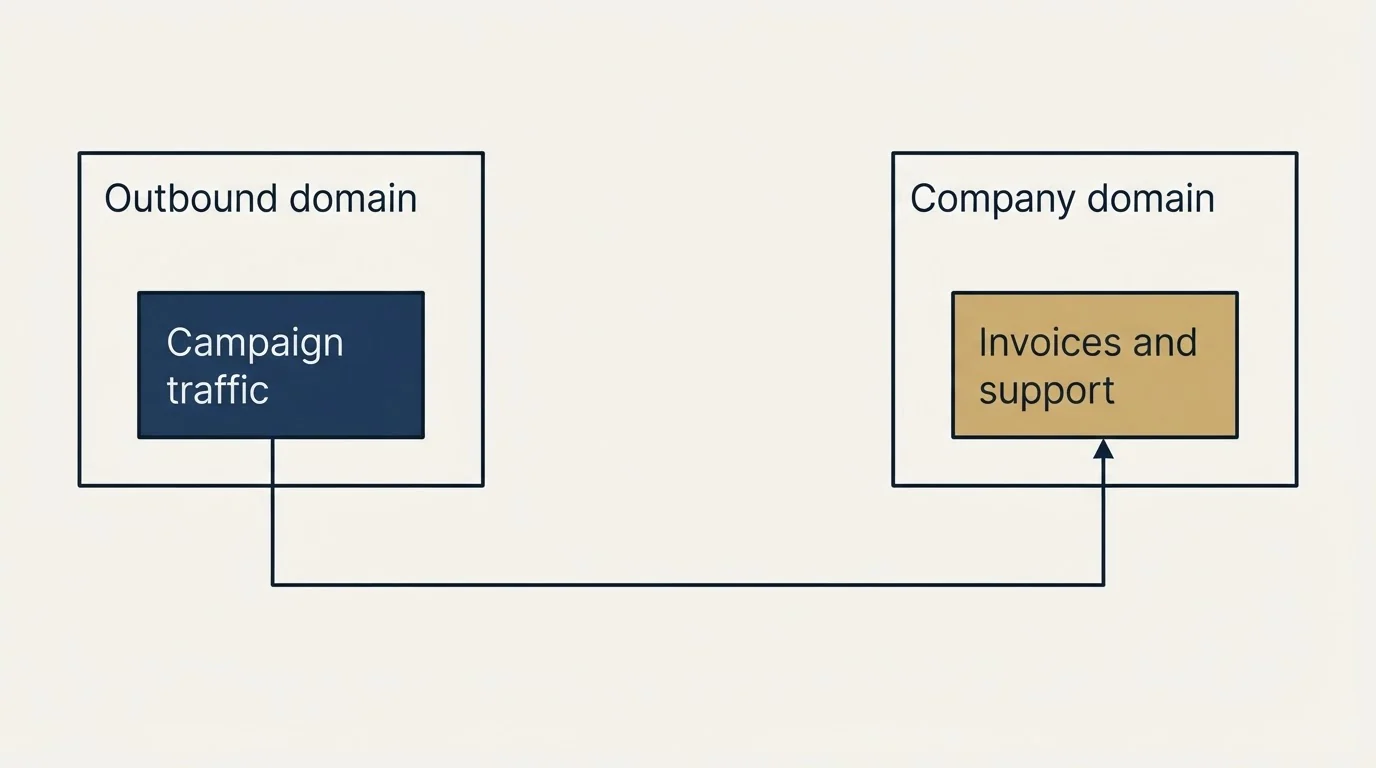
Outbound belongs on domains separate from the one your invoices, contracts and support mail come from. That single decision contains the blast radius of everything above. A reputation problem on a sending domain stays on the sending domain, a burned domain can be replaced, and the domain your customers actually recognise never carries campaign traffic.
It also changes what a deliverability problem costs. On a shared setup, a bad month is a company-wide incident. On separated infrastructure, it is a line item you retire.
The short version
An email deliverability service covers authentication, reputation and infrastructure, list hygiene, sending patterns, and the measurement that proves any of it worked. It fixes whether a message arrives. It has no mechanism for fixing whether anyone wanted the message, so a bad list, a weak offer, volume the domain has not earned, and a complaint-generating business model all survive the engagement intact. Establish a baseline first: bounce data, complaint rate against Google's 0.30% threshold, and a placement test. If mail is being accepted and read and nobody replies, the mechanics are already working and the problem is upstream of them.
Buyers often use delivery and deliverability interchangeably, and the email deliverability definition separates the receiving server's success code from where the message actually landed.
RevenueFlow runs sending infrastructure on separated domains as part of its outbound engagements, so the deliverability layer is owned rather than bought as a line item. You can see what a campaign would look like for your market.
Vendor statements and Google sender requirements verified as of mid-2026. Verify current terms with the vendor and with Google before relying on them.
Frequently asked questions.
Frequently asked questions- What do email deliverability services actually do?
- They audit and fix authentication records, monitor sender reputation and blacklist status, clean lists, separate sending infrastructure, test inbox placement against seed lists, and remediate problems as they appear. The work is continuous rather than a one-off project, because reputation changes with every send you make.
- Can a deliverability service fix low reply rates?
- Only if the cause is that messages are not reaching inboxes. If mail is landing and nobody responds, the problem is targeting, offer or copy, and no amount of authentication work changes it. Check whether placement and reply rate moved together before assuming deliverability is the cause.
- How do I know if I have a deliverability problem?
- Look for bounce rates climbing, spam complaint rates rising in Postmaster Tools, open tracking dropping suddenly across all segments at once, or mail landing in spam on a seed list test. A gradual decline in replies without any of those signals usually points somewhere other than deliverability.
- Is deliverability a one-time fix or ongoing work?
- Ongoing. Authentication can be set up once and left alone, but sender reputation responds to every campaign, blacklists change, providers adjust their filtering, and new sending domains need warming. Treat setup as a project and reputation as a permanent maintenance obligation.
About the author.

Tim Carden is CMO / CTO at RevenueFlow, which builds and operates outbound revenue engines for B2B companies. Studied at McGill University.
Tim Carden · CMO / CTO
Connect on LinkedIn →Explore more.
Ready to scale your outreach?
We build GTM engines that book real meetings. See the receipts.
Related articles.
Email Warmup Pricing in 2026: What 20 Tools Charge, and What 10 Mailboxes Cost
Email warmup tools start at a median of $29 a month, but warming ten mailboxes costs from $7.50 to $1,190 depending on how the vendor prices a mailbox.
MailReach Pricing: The Headline Rate Is the Second Band
MailReach prices warmup on a slider with four mailbox bands and two billing states. Every band at both states, and why the printed rate is not the entry rate.
Mailwarm Pricing: The Page Opens on Its Yearly Tab
Mailwarm's pricing tabs open on yearly and the plans meter daily volume rather than mailboxes. Both tabs, the overage rate, the no-trial rule and the per-mailbox cost.
Warmup Inbox Pricing: Per Inbox, Annual Loads First
Warmup Inbox prices per inbox and its page opens on the annual switch. Both states for all three plans, the reply ceiling meter, the trial and how a fleet bill is built.
SMTP Ports: What 25, 465, 587 and 2525 Are Registered For
Three of the four ports in circulation are registered to mail and one is not. What the IANA registry and the RFCs say, and why none of it moves placement.
Reading MXToolbox Like a Deliverability Engineer
What each MXToolbox check actually inspects, what a failure implies, and which findings are urgent versus cosmetic for a cold email sender specifically.