Best Lemwarm Alternatives in 2026
Lemwarm charges per email address, so the bill grows with your inbox count. Compare TrulyInbox, Warmbox, Mailreach and InboxAlly on price, mechanism and fit.
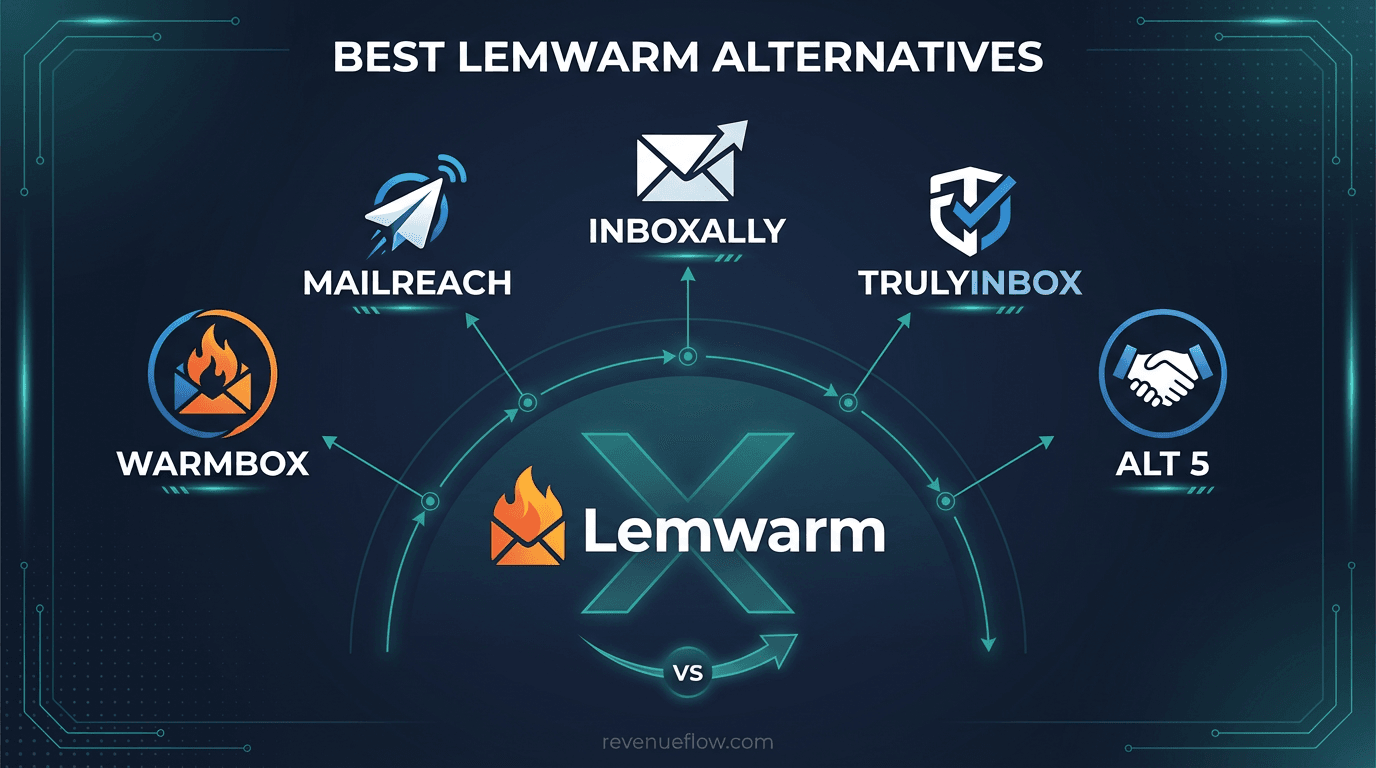
The best Lemwarm alternatives depend on what drives your bill. TrulyInbox charges for warmup emails sent, from $22 a month billed annually, so inbox count is free. Warmbox suits one to six inboxes from $15, Mailreach bundles spam tests at €25 a mailbox, and InboxAlly starts at $149.
Key takeaways
- Lemwarm's pricing page served pounds here: Essential £29 per email address a month, £24 billed yearly, and every lemlist plan includes lemwarm.
- TrulyInbox charges for warmup emails sent rather than accounts connected: Starter is $22 a month billed annually for 200 warmup emails a day.
- Mailreach meters per mailbox at €25 a month, or €20 annually, with at least 20 spam test credits included in the warmup plan.
- At twelve inboxes, per-address and per-mailbox pricing compound: £348 a month on Lemwarm Essential against $99 on TrulyInbox Growth.
Reviewed and updated September 22, 2026
A team running cold outbound from twelve sending addresses opens the Lemwarm invoice and finds twelve line items where it expected one. That is the moment most people start looking for Lemwarm alternatives, and the search usually gets framed as finding something cheaper. The more useful question is which pricing unit matches the way your programme grows, because the vendors' own pricing pages meter by email address, by mailbox, by inbox bracket, by seed volume and by warmup emails sent, from a free tier up to $149 a month, and the tools behind them are not doing the same job.
What are the best Lemwarm alternatives?
TrulyInbox if your inbox count keeps growing, since it charges for warmup emails sent rather than accounts, from $22 a month billed annually. Warmbox for one to six inboxes, from $15 a month billed yearly. Mailreach for warmup and spam testing in one plan, at €25 a mailbox a month. InboxAlly, from $149 a month, for seeded engagement. Lemwarm itself comes free with every lemlist plan.
What a Warmup Network Is Actually Doing
Lemwarm builds sender reputation through a peer network: a pool of real domains whose mailboxes send to, open, reply to and rescue each other's messages from spam, so mailbox providers see a young domain behaving like an established one. Its pricing page puts that network at 20k+ healthy domains. Every tool on this list does a version of that, and the differences come down to two decisions each vendor made.
The first is where the engagement comes from. A peer network draws it from other customers' mailboxes, which is cheap to scale and makes warmup traffic look like ordinary business mail. Seeded engagement, which is InboxAlly's approach, draws it from mailboxes the vendor controls, which costs more and gives the vendor exact control over what each provider sees.
The second is what gets counted. Some tools count inboxes, some count mailboxes, and one counts warmup emails. That decision, rather than the headline price, determines the bill once a programme is running at scale.
None of them fixes a bad list, a broken sending setup, or an offer nobody wants. Warmup keeps a healthy sender healthy. If replies stopped after a list change rather than after a domain change, the tool in this article is not the thing to swap. The cold email hierarchy puts warmup where it belongs, underneath list and offer rather than in front of them.
Why Consider Alternatives to Lemwarm
Lemwarm is the warmup product built into lemlist, and its pricing page says every lemlist plan includes it, so it is a reasonable default for a team already sending from lemlist. Three things send people looking anyway.
The price is per email address. Lemwarm's pricing page, which served pounds here, lists Essential at £29 per email address a month on monthly billing, £26 quarterly and £24 yearly, and Smart at £49, £43 and £40. A programme sending from three inboxes and one sending from thirty pay very differently for the same feature set, and the second number tends to arrive without warning.
The bundle only pays off if you use the bundle. Tight integration with lemlist is real value when lemlist is the sequencer. It is worth nothing if you send from somewhere else, and at that point you are paying for a warmup tool on a warmup tool's merits.
Warmup alone is half the deliverability job. Lemwarm's plans list deliverability reports and a technical setup check. A sender who wants standalone spam testing, blacklist monitoring and DNS checks inside the same subscription will find some alternatives here bundle more of it.
Top Lemwarm Alternatives

Four standalone tools come up most often against Lemwarm: TrulyInbox, Warmbox, Mailreach and InboxAlly. Each is priced below from its own pricing page, in the currency that page served, and the figure that matters is the unit each one counts.
Reading the Roster: What Each Option Trades
The figure above gives each pricing unit. What follows is what each one costs you in something other than money.
TrulyInbox prices on warmup email volume rather than on connected inboxes, and its pricing page leads with exactly that: connect as many accounts as you want, pay for the warmup emails actually sent. The free tier covers one account at 10 warmup emails a day, which is a look rather than a working plan, and the paid Starter tier is $22 a month billed annually or $29 billed monthly for 200 warmup emails a day, with Growth at $84 or $99 for 1,000 a day. The page prices in dollars by default and offers a currency switcher. What you give up is some of the tooling around the warmup: the Starter plan lists a deliverability score and account health monitoring, but no spam testing or blacklist monitoring, so those stay a separate purchase.
Warmbox is the cheapest paid entry here, and its pricing page is explicit about what the money buys: the Solo tier is $19 a month on monthly billing or $15 on yearly, for one inbox warmup at 50 emails a day, with Start-up at $79 or $69 for three inboxes and Growth at $159 or $139 for six. The page opened on yearly billing and its monthly tab could not be switched in this read, so the monthly figures are the ones its document prints under that tab. It covers the questions a sender asks in the first month, with growth, flat or random warm-up, a fully custom warm-up, spam score monitoring and a live email checker for DNS and blacklists. The depth stops there. On a domain that has already been filtered hard, it is a maintenance tool rather than a recovery tool.
Mailreach meters per mailbox, at €25 a mailbox a month on monthly billing or €20 billed annually on the euros its pricing page served here, and includes at least 20 spam test credits with the warmup. The unit matters more than the sticker. An agency running 40 sending inboxes pays forty times over, where a volume-priced tool would not care how the same sending was split up. In exchange, the spam tester and domain and inbox health checks for blacklists, SPF, DKIM and DMARC sit inside the same product, which is one fewer subscription and one fewer dashboard to reconcile every month.
InboxAlly starts at $149/mo on its pricing page, and that tier buys one sender profile sending to 100 of its seed mailboxes a day. The mechanism is different from the rest of this list: seeded engagement from mailboxes the vendor controls, scored with its IA Score and a LOW, MED or HIGH domain reputation rating, rather than a peer network of senders trading messages with each other. Every plan also lists inbox placement testing and live blacklist monitoring, Plus is $645 a month for 5 sender profiles, and the page offers a 10-day free trial with no card. Teams reach for it when a domain is already in trouble and ordinary warmup has stopped moving anything. On a healthy domain the price is hard to justify as routine maintenance.
An illustrative bill at the two ends of the opening scenario shows what the units do. On monthly billing, three inboxes cost £87 on Lemwarm Essential, €75 on Mailreach, $79 on Warmbox Start-up, $29 on TrulyInbox Starter and $645 on InboxAlly Plus, assuming one inbox per InboxAlly sender profile. At twelve inboxes Lemwarm reaches £348 and Mailreach €300, the Warmbox pricing page prices no plan above six inboxes and sends larger teams to its chat, TrulyInbox Growth is $99 for the up to 15 inboxes its page suggests, and InboxAlly moves to a quoted Enterprise plan. The currencies differ, so the useful comparison is how each bill grows.
| Tool and unit | 3 inboxes | 12 inboxes |
|---|---|---|
| Lemwarm £29 per address | £87 | £348 |
| Mailreach €25 per mailbox | €75 | €300 |
| Warmbox 1, 3 or 6 inbox plans | $79 | No published plan |
| TrulyInbox Warmup emails a day | $29 | $99 |
| InboxAlly Sender profiles | $645 | Enterprise, quoted |
When Moving Off Lemwarm Is Worth It

Switching warmup providers is cheap in effort and slow in effect, which is the wrong way round for an impatient decision. Three situations make it worth doing anyway.
Inbox count is driving the bill. Per-address pricing and a growing inbox pool compound. Above roughly ten sending addresses, a volume-priced tool changes the shape of the cost rather than shaving a few dollars off it.
You left lemlist, or never used it. The integration is most of what Lemwarm sells over a standalone competitor. Sending from a different platform removes the argument entirely.
You need spam testing and monitoring in one place. Warmup in one tool, spam tests in a second and blacklist monitoring in a third is three dashboards nobody checks. Consolidating is a real operational win even when the total barely moves.
When Staying on Lemwarm Wins
Staying is the right answer more often than a comparison article usually admits.
If you send from lemlist and run a handful of inboxes, the bundle is doing its job, and a migration buys a new dashboard and a fresh ramp period for no measurable gain. If placement is currently fine, there is nothing here to fix, because a warmup provider is not a lever you pull for improvement. And if replies dropped recently, spend the afternoon diagnosing rather than procuring. Domain age, authentication records, list quality and send volume explain far more reply-rate collapses than warmup vendor choice ever will.
Running the Switch Without a Reputation Dip
Warmup is a continuous signal, so the risk in a migration is the gap rather than the destination.
Overlap the two tools for a week rather than cancelling on the day you sign up. Both will send warmup traffic from the same mailboxes, which is fine and briefly doubles daily warmup volume. Then ramp the new tool up from a low daily volume rather than starting at its ceiling, because a step change in sending pattern is itself a signal providers notice.
Take a baseline before you touch anything: an inbox placement test and a reputation check on each sending domain, recorded rather than remembered. Without the before number, the after number tells you nothing. Confirm SPF, DKIM and DMARC still pass after any DNS change the new tool asks for, because a broken authentication record does far more damage than any warmup provider can repair.
Then wait. Reputation moves over weeks, and judging a new warmup tool after four days is judging noise.
An inbox placement test and a reputation check per sending domain, recorded
Both tools warm the same mailboxes before you cancel
A step change in sending pattern is itself a signal
After any DNS change the new tool asks for
Judging after four days is judging noise
How This Comparison Was Put Together
Prices and tier details here come from each vendor's own pricing page, read on the day of writing and kept as a dated snapshot. Where a page carries a monthly and an annual billing toggle, both figures are given rather than the flattering one. Feature lists are the vendors' own descriptions of their products.
No deliverability testing was run for this article, and nothing here is ranked by measured inbox placement. Warmup outcomes depend on the domain, the list, the offer and the sending volume behind them, so a league table presented as a measurement would be invented. Read this as a map of what each vendor sells, what mechanism sits behind it, and what its meter will do to your bill at your inbox count.
The Short Version

If inbox count is what hurts, TrulyInbox's volume pricing is the structural fix, because the bill stops tracking the number of mailboxes you add. If you want one subscription covering warmup plus spam testing, Mailreach's per-mailbox plan includes spam test credits with every warmup. If you run one or two inboxes and want the cheapest competent option, Warmbox's Solo tier is it. If a domain is genuinely damaged and normal warmup has stopped working, InboxAlly's seeded engagement is the different mechanism worth paying for.
And if you are on lemlist with a small inbox pool and healthy placement, staying put is not a failure of diligence. Warmup is the last thing to optimise: get the infrastructure and the list right and the warmup vendor stops mattering very much.
Related Reading
- Lemwarm vs Warmbox: Email Warmup Tool Comparison
- Lemwarm vs Mailreach: Email Warmup Tool Comparison
- InboxAlly vs Lemwarm: Email Warmup Tool Comparison
- Lemwarm vs TrulyInbox: Email Warmup Tool Comparison
If you would rather have this run for you, RevenueFlow books qualified meetings on a pay-per-meeting basis and publishes client results.
Pricing and features are taken from the vendors' own pages. Verify current terms with the vendor before relying on them.
Frequently asked questions.
Frequently asked questions- What are the best Lemwarm alternatives?
- TrulyInbox suits a growing inbox count because it charges for warmup emails sent, from $22 a month billed annually. Warmbox suits one to six inboxes, from $15 a month billed yearly. Mailreach bundles spam testing at €25 a mailbox a month. InboxAlly, from $149 a month, uses seeded engagement from mailboxes it controls. Lemwarm itself is free with every lemlist plan.
- How much does Lemwarm cost?
- Lemwarm's pricing page served pounds to this read. Essential is £29 per email address a month on monthly billing, £26 quarterly and £24 yearly, and Smart is £49, £43 and £40. A custom plan covers teams of more than 10 users, and every lemlist plan includes lemwarm, so a lemlist customer does not pay for it separately.
- Which Lemwarm alternative is cheapest for many inboxes?
- On the vendors' own pages, TrulyInbox, because it charges for warmup emails sent and lets you connect unlimited accounts. Its Growth plan, $99 a month or $84 billed annually for 1,000 warmup emails a day, is described as best suited for 15 inboxes. Per-address and per-mailbox tools multiply their price by every inbox you add.
- Can a warmup tool fix low reply rates?
- Rarely. Warmup keeps a healthy sender healthy; it does not fix a bad list, a broken sending setup or an offer nobody wants. If replies dropped after a list change rather than a domain change, the warmup tool is not the thing to swap. Check domain age, authentication records, list quality and send volume first.
About the author.

Tim Carden is CMO / CTO at RevenueFlow, which builds and operates outbound revenue engines for B2B companies. Studied at McGill University.
Tim Carden · CMO / CTO
Connect on LinkedIn →Explore more.
Ready to scale your outreach?
We build GTM engines that book real meetings. See the receipts.
Related articles.
Growbots vs MailHeat: Cold Email Platform vs Email Warmup Tool Comparison
Compare Growbots (cold email platform) and MailHeat (email warmup tool) side by side. See pricing, features, and integrations to decide which one, or both, your stack needs.
Best PhantomBuster Alternatives in 2026
Looking for alternatives to PhantomBuster? Compare the top data enrichment tools by pricing, features, and integrations.
Best Kixie Alternatives in 2026
Looking for alternatives to Kixie? Compare the top sales engagement platforms by pricing, features, and integrations.
Chili Piper vs LeanData: Form-First Against CRM-First
Chili Piper publishes a seat floor and bundles scheduling and chat; LeanData prices by Salesforce object and sells scheduling separately. Both read 18 September 2026.
Zoom Revenue Accelerator vs Gong: An Add-On vs a Platform
Zoom's support centre documents Revenue Accelerator as a licence on a Zoom account in two classes; Gong sells a platform per user plus a platform fee. Neither has a rate.
Cognism vs Upcell: A Data Provider Against a Data Layer
Cognism sells compliance-first contact data by quote and credit; Upcell sells a layer that runs your providers, Cognism included, through one record. Read 18 Sep 2026.