Cognism vs Salesloft: Cross-Category Comparison
Cognism covers sourcing while Salesloft covers sending and follow-through. Which gap to close first, what a year costs, and whether a team needs both.
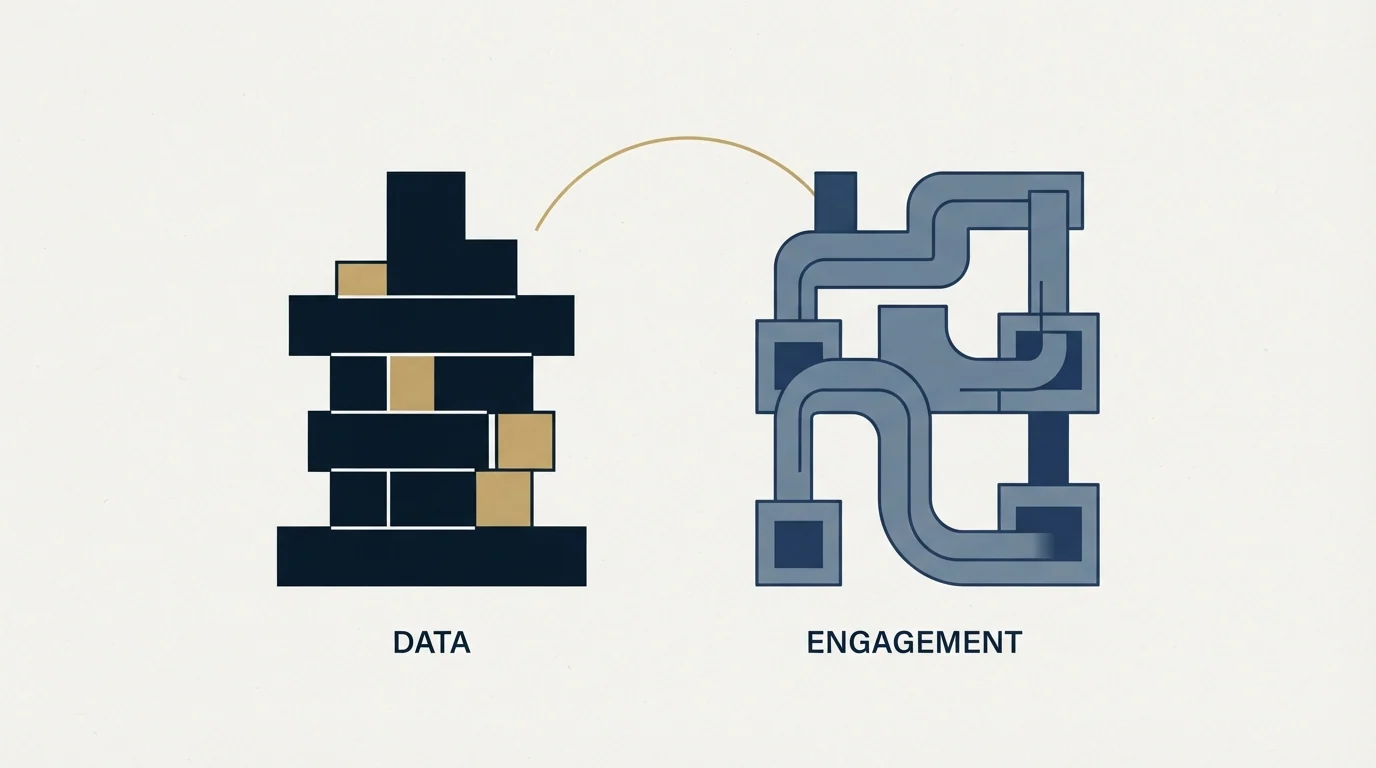
Close the data gap first when the list runs out. Cognism covers sourcing and verified contacts, Salesloft covers sending and follow-through, and neither names a rate on its own page, so both are quotes. A team already booking meetings and losing them to disorganised follow-through is the one case for buying the sending side first.
Key takeaways
- Cognism withholds rates and publishes its metering: one credit reveals, enriches or exports one contact, and five seats come included in each Sales Prospecting package.
- Salesloft publishes two packages, Advanced and Elite, with no figures and only a capability grid to read before the call.
- Neither half of this stack can be budgeted from a public page, so arrive at both calls with the same volume assumption and compare the quotes on it.
- Data first, sending second, because a sending platform bought onto a thin list delivers the same thin list faster and hides the cause in its own reporting.
Reviewed and updated August 29, 2026
Cognism vs Salesloft: Cross-Category Comparison
Cognism's pricing page publishes packages and no figures, and publishes something more useful instead: one credit reveals, enriches or exports one contact, viewing an already revealed contact costs nothing, and the same credits work across prospecting, enrichment and the API. Salesloft sits on the other side of that line and names no price on its plans page either, only two packages and the grid that separates them. Reading those two shapes together is what this comparison is for.
Why Compare These Two Tools?
Data enrichment tools provide the contact data that sales engagement platforms use for outreach sequences. The question for buyers is often whether an all-in-one platform that includes data can replace a dedicated enrichment tool.
Cognism is a data enrichment tool focused on B2B lead data and contact enrichment. Cognism is a premium B2B sales intelligence platform with GDPR-compliant data, phone-verified Diamond Data contacts, and intent signals.
Salesloft is a sales engagement platform focused on multi-channel sales outreach. Salesloft is an AI-powered revenue workflow platform offering cadence automation, conversation intelligence, deal management, and forecasting to help sales teams drive predictable revenue.
That framing is right and it stops short of the decision. What follows prices both shelves from their own published figures, works one year through in numbers, and answers whether a team needs both at once or one of them first.
Where Each Tool Fits in Your Workflow
- Step 1Lead sourcing and data
Cognism covers B2B lead data and contact enrichment.
- Step 2Outreach orchestration
Salesloft covers multi-channel sales outreach.
| Aspect | Cognism | Salesloft |
|---|---|---|
| Category | Data Enrichment Tool | Sales Engagement Platform |
| Workflow Stage | Lead sourcing and data | Outreach orchestration |
| Primary Focus | B2B lead data and contact enrichment | Multi-channel sales outreach |
| Starting Price | Contact Sales | Contact Sales |
| Features Listed | 10 | 10 |
| Integrations | 8 | 12 |
What Each Side Actually Does in a Cold Outbound Run
A cold outbound run has a fixed shape, and these two categories sit in different parts of it. Targeting comes first, and that is a decision about who is worth writing to rather than a piece of software. Then the list gets built and a mailbox gets resolved for every person on it. That half belongs to Cognism: search filters, an extension over a profile, a spreadsheet pushed back through enrichment, and a verification pass that discards anything the provider could not confirm.
Sending is Salesloft's half. Sender accounts, sending windows, the daily cap on each mailbox, reply detection and the record of who answered all live there. RevenueFlow runs one message per campaign, so nothing on that side is a bump step or a thread reply waiting to fire. A prospect who stays quiet gets re-approached later through a new campaign with a different angle, never with a second message stacked under the one they ignored, and on LinkedIn that second message does not get sent at all.
The last stage belongs to neither product. Somebody reads the reply and somebody books the meeting, and the meeting counts only against qualification criteria written down before launch. A tool can route a reply into a queue. It cannot decide what a qualified meeting is.
Pricing Comparison
Cognism Pricing
| Package | Price | What it carries |
|---|---|---|
| Sales Prospecting Standard | Contact Sales | Core prospecting workflows, 5 seats included |
| Sales Prospecting Pro | Contact Sales | Adds premium mobile data, on-demand verification and intent |
| CRM Enrichment | Contact Sales | Sold standalone or alongside a prospecting package |
| Data-as-a-Service | Contact Sales | Priced on data volume and delivery method |
Cognism publishes a credit rule rather than rates: one credit reveals, enriches or exports one contact.
Source: Cognism Pricing
Salesloft Pricing
| Package | Price | Positioned for |
|---|---|---|
| Advanced | Request a Demo | Closing more deals with a connected, modern workflow |
| Elite | Request a Demo | Growth with flexibility and customization to match the business |
Salesloft publishes a capability grid across those two packages and no figures for either.
Source: Salesloft Pricing
Reading the Two Price Shapes Together
Cognism publishes packages and no figures on that page. It lists Sales Prospecting in Standard and Pro packages, each with five seats included, alongside CRM Enrichment and Data-as-a-Service, and every one ends at a form. What it does publish is the metering rule, which is more useful than a headline: one credit reveals, enriches or exports one contact, viewing an already revealed contact costs nothing, and the same credits work across prospecting, enrichment and the API. Pro is where the premium mobile filter, on-demand verification and intent data sit.
Salesloft publishes two packages and no figures on that page. Its plans page shows Advanced and Elite, each ending at a Request a Demo button, and the only public detail is which capability rows each package carries: pipeline generation, seller coaching, full customer lifecycle workflows, conversation intelligence, opportunity management, sandbox environments, multi-team management and no-code custom object signals. Reading that grid is the closest a buyer gets to a price signal before the call.
So both halves are quotes, which means nothing about this stack can be budgeted from public pages. The way to make two quotes comparable is to arrive with the same volume assumption for both and ask each vendor what happens when that volume doubles.
What One Year of This Stack Actually Costs
Neither side of this pair publishes a price, so the arithmetic that matters happens before the calls. Cognism's page gives the units even though it withholds the rate: one credit per contact revealed, no repeat charge for a contact already revealed, and one credit pool shared across prospecting, enrichment and the API.
Take an invented case. A team working 2,000 new contacts a month needs 24,000 credits a year plus whatever the CRM enrichment backfill consumes, and five seats come included in each Sales Prospecting package. Credits a year, seats in use and enrichment volume are what a Cognism quote is built from, so a buyer who arrives with them gets a number instead of a range. Ask for the per credit rate the quote implies, because it is the only figure that makes two vendors on this shelf comparable.
The Salesloft side of that year cannot be added, which is the finding rather than a gap in the research. Salesloft's plans page carries two packages and a Request a Demo button on each, so any figure in a plan for it is a placeholder until a quote lands.
Feature Highlights
Cognism Key Capabilities (Data Enrichment Tool)
- Diamond Data phone-verified contacts
- GDPR and CCPA compliant data
- Intent data powered by Bombora
- Technographic data
- Job change and funding alerts
- Browser extension for LinkedIn
- CSV enrichment
- On-demand mobile verification
- Target market analysis lists
- Unlimited admin access
Salesloft Key Capabilities (Sales Engagement Platform)
- Cadence automation
- Conversation intelligence with AI call summaries
- Deal pipeline tracking and management
- AI-driven revenue forecasting
- CRM sync with bi-directional updates
- Analytics and team performance reporting
- Coaching and rep scorecards
- Mobile app for on-the-go selling
- Calendaring and meeting scheduling
- Workflow automation and rules engine
Where the Two Actually Overlap
Cognism does not list a sender. Its capabilities are data, signals and enrichment, and it integrates with the sending layer rather than replacing it. Salesloft lists no database of its own. Its capability grid is cadences, conversation intelligence, deals, forecasting and analytics, all of which act on records that arrive from somewhere else.
Both lists are the vendors' own wording, so the honest reading is that Cognism lists these capabilities and Salesloft lists those. A feature named on a plan card is a claim about scope rather than a measure of quality, and the overlap that matters in practice sits at Salesforce, HubSpot and Microsoft Dynamics 365, where both products write to the same record.
Integration Ecosystem
Cognism Integrations
Cognism connects with: Salesforce, HubSpot, Outreach, SalesLoft, Pipedrive, Microsoft Dynamics 365, Bullhorn, Zapier.
Salesloft Integrations
Salesloft connects with: Salesforce, HubSpot, Microsoft Dynamics 365, Gmail, Microsoft Outlook, LinkedIn Sales Navigator, Drift, Vidyard, Zoom, Slack, Highspot, Seismic.
Shared Integrations
Both tools integrate with: Salesforce, HubSpot, Microsoft Dynamics 365. This shared ecosystem means they can work together in your tech stack.
When to Choose Which
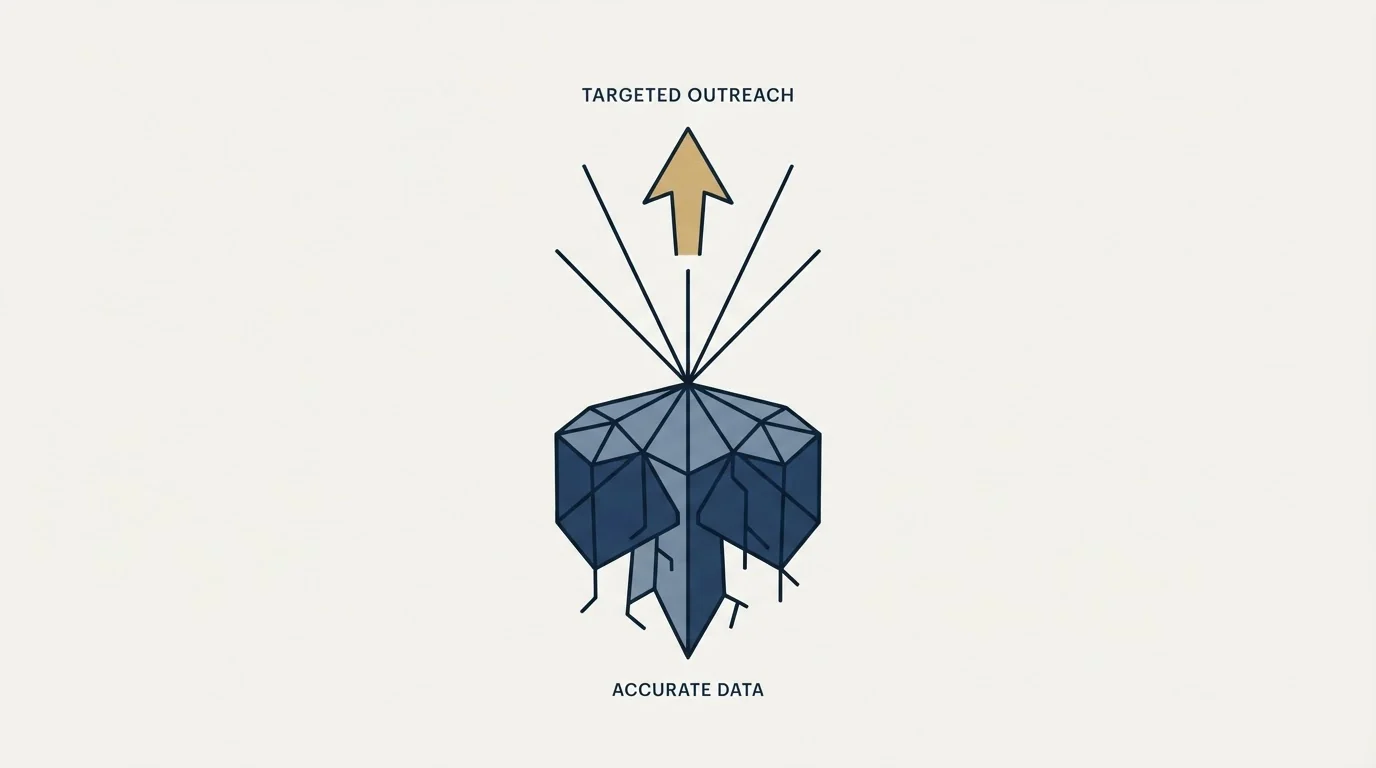
- Your biggest gap is in lead sourcing and data
- You already have a solid sales engagement platform and need specialized B2B lead data and contact enrichment capabilities
- You need enterprise-grade B2B lead data and contact enrichment features
- Your team's primary bottleneck is B2B lead data and contact enrichment
- Your biggest gap is in outreach orchestration
- You already have a data enrichment tool and need better multi-channel sales outreach
- You need enterprise-grade multi-channel sales outreach features
- Your team's primary bottleneck is multi-channel sales outreach
Read that split as a question about which gap is open rather than about which product is better. Cognism answers a sourcing question and Salesloft answers a sending one, and a team that names the wrong gap buys a capable tool that changes nothing.
Do You Need Both, and in Which Order?
These two genuinely do different jobs, so the question is order rather than either. Cognism decides who receives the message and Salesloft decides how the team works once messages are going out, and a team with neither has a list problem before it has a workflow problem.
The order that works is data first, sending second, for reasons of measurement rather than preference. A sending platform bought onto a thin list delivers that list faster and its reporting will blame the quiet quarter on copy. A list deep enough to keep a wave fed shows its problems within one campaign, and those problems are the brief for the sending purchase.
One case honestly reverses it. A team already booking meetings and losing them to disorganised follow-through has a workflow gap rather than a data gap. Salesloft is a reasonable answer there, because its capability grid leads with pipeline generation and seller coaching rather than with list building.
Whichever way round, the two connect through Salesforce, HubSpot and Microsoft Dynamics 365, and that is the surface to test during a trial rather than after one. A handoff needing a CSV in the middle is a handoff somebody stops doing in week three.
Using Both Together

Many sales teams use both a data enrichment tool and a sales engagement platform as part of their complete workflow. Cognism handles lead sourcing and data while Salesloft covers outreach orchestration.
Since both tools integrate with Salesforce, HubSpot, Microsoft Dynamics 365, connecting them in your workflow is straightforward.
Rolling It Out Without Breaking the Run
Start with Cognism only after the target list is defined, because a Cognism trial is a coverage test and a coverage test needs a segment. Ask for a sample on named accounts already being worked, count verified mobiles and emails against the accounts that matter, and treat the vendor's own sample as marketing. Salesloft lands second in almost every case, because the Advanced against Elite decision turns on which capability rows a team will genuinely use, and that is observable only after a quarter of real sending.
Whichever order the two arrive in, keep the sending inventory out of it. Sender domains, mailbox warmup and daily caps are their own project, and a stack change made in the same week as a sending change leaves nothing to attribute a bounce rate to. Change one layer, let a full wave run, then change the next.
Two habits save real money. Trial on accounts already worked rather than on a fresh list, because the only coverage question that matters is coverage on the segment being sold to. And export what the incumbent already found before a subscription lapses: records bought once are cheap to keep and expensive to buy twice.
Decision Framework
- Name the gap before naming a tool. Write down which stage is costing meetings: a list that runs out, addresses that bounce, or messages that never go out on time. A decision made without that sentence is a preference.
- Check what the existing stack already covers. Overlapping spend is the normal failure here, and it is invisible because the two products sit under different budget lines.
- Price the whole year, not the entry tier. Seat minimums, annual billing and per-credit top-ups move the real number more than the headline does.
- Trial on the accounts being sold to. Coverage is a property of a segment rather than of a database, so a sample drawn from the target list is the only test worth running.
- Measure at the pipeline, not per tool. Both products feed one funnel, so the honest measure is meetings booked against criteria fixed in advance.
The Short Version
- Cognism publishes packages and no rate, so budget it as a quote built from credits a year and seats in use.
- Salesloft names no price on its own pricing page, so the Salesloft line in any budget is a quote until a call happens.
- Neither product replaces the other, so the choice is which gap gets closed first rather than which vendor wins.
- Buy the data side first when the list runs out, and the sending side first when meetings are being lost after the reply.
- Measure the change in meetings booked against criteria fixed before launch, because that is the only number both products are trying to move.
Related Reading
- Best Cognism Alternatives in 2026
- Best Salesloft Alternatives in 2026
- Apollo.io vs Cognism: Data Enrichment Tool Comparison
- Cognism vs ZoomInfo: Data Enrichment Tool Comparison
- Outreach vs Salesloft: Sales Engagement Platform Comparison
- Best Outreach Alternatives
If you would rather have this run for you, RevenueFlow books qualified meetings on a pay-per-meeting basis and publishes client results.
Pricing and features are taken from the vendors' own pages. Verify current terms with the vendor before relying on them.
Frequently asked questions.
Frequently asked questions- Do I need both Cognism and Salesloft, or will one do?
- Most teams start with one. Cognism answers a sourcing question and Salesloft answers a sending and follow-through question, so the honest test is which one is currently costing meetings. A list that runs out mid-wave is a data problem. Meetings booked and then lost to disorganised follow-up is a workflow problem, and only that second case justifies buying the sending side first.
- How much does Cognism cost?
- Cognism publishes Sales Prospecting packages with no figures, so the answer arrives on a call rather than from the page. What the page does give you is the units the quote is built from: credits consumed per contact revealed, seats in use, and enrichment volume. Arriving with those three numbers is what turns a range into a comparable figure.
- Why does Salesloft not publish a price?
- Salesloft publishes two packages, Advanced and Elite, with no figures and only a capability grid to read before the call. Enterprise sales engagement is sold on seats, usage and contract length together, so a public rate would be wrong for most buyers. The practical consequence for a budget is that this line is a quote, and the way to make two quotes comparable is to give each vendor the same seat count and the same volume assumption.
- What happens to the prospects who never reply?
- RevenueFlow runs one message per campaign and sends no bumps or thread replies, whichever of these products is doing the sending. A prospect who stays quiet is re-approached later in a new campaign with a different angle, and on LinkedIn that second message is not sent at all, because it lands under the one they already ignored.
About the author.

Tim Carden is CMO / CTO at RevenueFlow, which builds and operates outbound revenue engines for B2B companies. Studied at McGill University.
Tim Carden · CMO / CTO
Connect on LinkedIn →Explore more.
Ready to scale your outreach?
We build GTM engines that book real meetings. See the receipts.
Related articles.
Lead411 vs Salesloft: Cross-Category Comparison
Compare Lead411 (data enrichment tool) and Salesloft (sales engagement platform) side by side. Understand how these tools fit different stages of your sales workflow.
LeadIQ vs Salesloft: Cross-Category Comparison
Compare LeadIQ (data enrichment tool) and Salesloft (sales engagement platform) side by side. Understand how these tools fit different stages of your sales workflow.
Apollo.io vs Cognism: Cross-Category Comparison
Apollo.io publishes a self serve ladder from $49 a seat. Cognism publishes no price at all. What that asymmetry means for a phone led or European motion.
Groove by Clari vs Seamless.AI: Cross-Category Comparison
Seamless.AI covers sourcing while Groove by Clari covers sending and follow-through. Which gap to close first, what a year costs, and whether a team needs both.
Clearbit vs Gong: Cross-Category Comparison
Clearbit covers sourcing and verified contacts while Gong covers sending and follow-through. Which gap to close first, what a year costs, and whether a team needs both.
Apollo.io vs ContactOut: Cross-Category Comparison
Apollo.io meters seats and credits; ContactOut caps exports and leaves emails unlimited. The miss rate on your own list decides whether the second line is worth $99.