Cognism vs ZoomInfo: Data Enrichment Tool Comparison
An in-depth comparison of Cognism and ZoomInfo for real sales teams. Covers pricing, features, integrations, and which tool fits different team sizes and budgets.
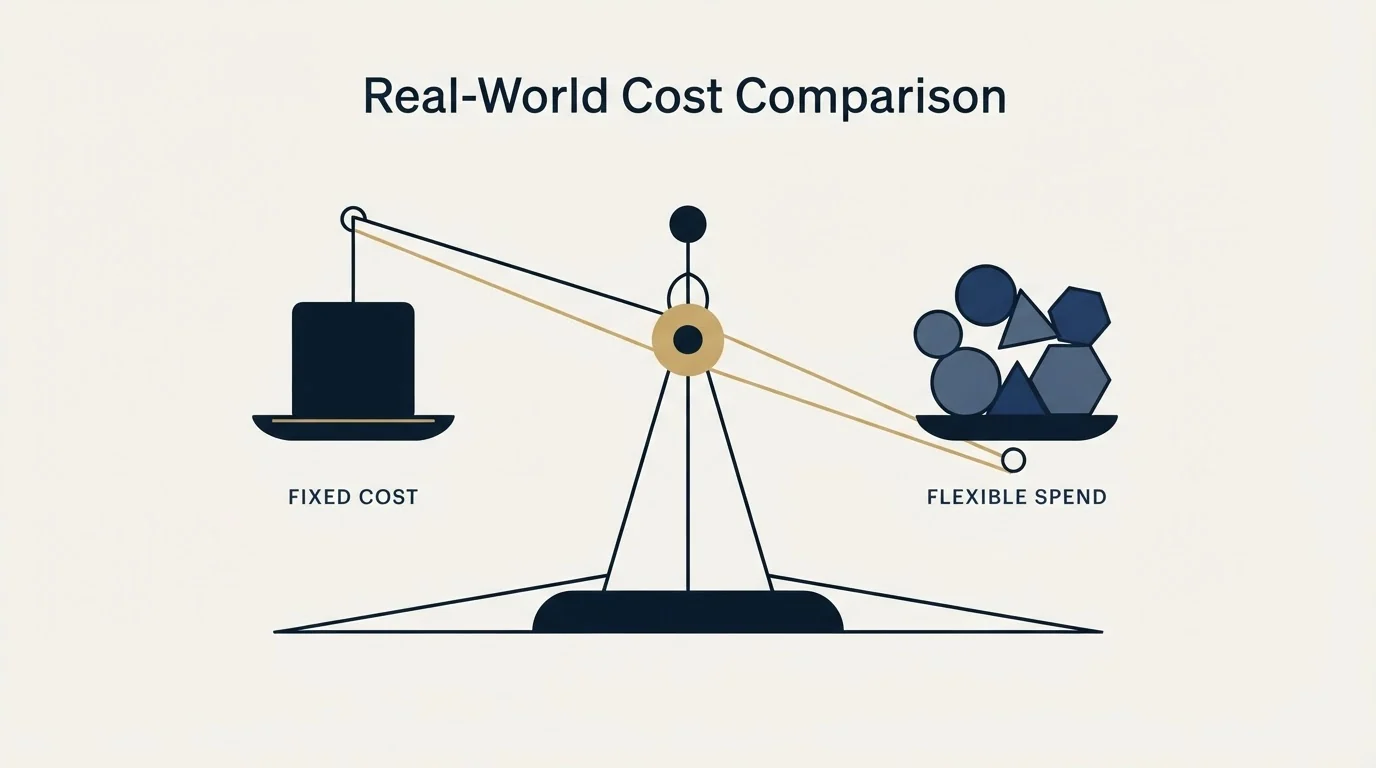
Neither vendor publishes a price this comparison could read. Cognism quotes by design and sells Standard and Pro packages with 5 seats included. ZoomInfo pricing page answered HTTP 403 to every request made here, so its table is carried forward and marked as not re-verified.
Key takeaways
- The ZoomInfo pricing page answered HTTP 403 on three URL forms, to a plain request and to a headless browser alike.
- Cognism states that pricing is tailored to the product, the team setup and how you plan to use the platform, with Standard and Pro packages.
- Cognism credit rule is public: one credit reveals one contact, viewing it again is free, and a re-reveal happens only on a job change.
- Cognism intent comes from Bombora, with administrators able to select up to 12 intent topics from a library of over 11,000 options.
Reviewed and updated September 2, 2026
Cognism vs ZoomInfo: Data Enrichment Tool Comparison
Neither of these two publishes a price this comparison could read. Cognism sells by quote on purpose and says so in its own FAQ. ZoomInfo's pricing page answered HTTP 403 to every request made here, on three URL forms, to a plain request and to a headless browser alike.
So this is a comparison of two enterprise data contracts, and the useful output is the list of questions that make two quotes comparable rather than a table of numbers neither vendor stands behind.
The Short Answer
Cognism sells Sales Prospecting as Standard or Pro with 5 seats included, prices CRM Enrichment and Data-as-a-Service separately, and states that one credit reveals one contact permanently. ZoomInfo sells a quoted annual contract with credits allocated for the year.
Cognism is the usual answer for European coverage and a compliance-led buying process. ZoomInfo is the usual answer for breadth across a whole organisation, and for teams whose data has to serve marketing and operations as well as sales.
What Each Tool Actually Is
Cognism is a compliance-first B2B data platform sold by quote, with phone-verified Diamond Data, Bombora intent and 5 seats included in each package.
ZoomInfo is an enterprise B2B data platform sold on a quoted annual contract, with a very large profile database, intent signals and its own Copilot layer.
Cognism's differentiator is stated on its own page rather than inferred: pricing tailored to product, team setup and intended use; Standard and Pro packages; and a credit rule under which a revealed contact stays usable, with a second credit spent only when that person changes jobs. Its intent comes from Bombora, with administrators able to select up to 12 intent topics from a library of over 11,000 options.
ZoomInfo's differentiator is scale, and its own feature list is where that claim lives: hundreds of millions of published professional profiles, direct dials at volume, intent across a large topic library, technographics, and a Copilot layer over the top. This comparison cannot verify the pricing behind any of it, and says so rather than reprinting a third-party number.
Pricing Comparison
Standard, 5 seats included
Page answered HTTP 403 here
Cognism Pricing
| Package | Price | Seats | What it adds |
|---|---|---|---|
| Standard | Quoted | 5 seats included | Core prospecting, list building, CSV enrichment |
| Pro | Quoted | 5 seats included | Higher-quality mobile data, on-demand verification, intent |
| CRM Enrichment | Quoted | Add-on or standalone | Ongoing CRM record maintenance |
| Data-as-a-Service | Quoted | Add-on or standalone | API and bulk delivery |
The Cognism pricing page fetched for this comparison publishes no prices, and its own FAQ says why: "Cognism pricing is tailored based on the product you need, your team setup and how you plan to use the platform." The same page states that "Sales Prospecting is offered in Standard and Pro packages", each with 5 seats included, and closes on an invitation to "Get a personalised quote for your team".
What the page does publish is the credit rule, and it is unusual enough to matter. "1 credit = 1 revealed contact", there is "No charge for viewing previously revealed contacts", and a credit is only spent again if that contact changes jobs. So a Cognism credit is closer to a permanent record than to a monthly lookup, which makes a straight credits-per-dollar comparison against a metered tool misleading in Cognism's favour and hard to hold against it.
Source: Cognism Pricing
ZoomInfo Pricing
| Plan | Price | Credits | Status |
|---|---|---|---|
| Lite (Free) | Free | 10-25 credits/month | Carried forward, not re-verified |
| Professional | $1250/mo | 5,000 credits/year | Carried forward, not re-verified |
| Advanced | $2083/mo | 10,000 credits/year | Carried forward, not re-verified |
| Elite | $3333/mo | 10,000 credits/year | Carried forward, not re-verified |
The table above is carried forward from the live comparison and was not re-verified for this refresh. ZoomInfo's pricing page answered HTTP 403 to every request made here, on three URL forms, to a plain request and to a headless browser alike, so there is no snapshot behind any of those figures.
That is a statement about the fetch and not about ZoomInfo. What can be said without a number is structural and is not in dispute: ZoomInfo sells a quoted annual contract with credits allocated for the year, so the questions to take into the call are the credit allowance, the seat count, the term length and what happens to unused credits at renewal. Get all four in writing before comparing the total to anything.
Source: ZoomInfo Pricing
The questions that make two quotes comparable
No cost comparison is offered here, and inventing one would be worse than the gap. What follows is the arithmetic you can do once both quotes are in hand, which is the only honest version of this section.
The same quote problem has a priced counterpart in the neighbouring comparison, where Lusha sets a published ladder against ZoomInfo and the asymmetry becomes the comparison itself.
Ask both vendors the same five things in writing: the credit allowance for the term, how many seats are included and what an extra one costs, the contract length, what happens to unused credits at renewal, and how a re-reveal is counted when a contact changes job. Cognism answers the last one publicly already, which is a useful anchor for the same question put to any competitor.
Then normalise. Divide the annual total by the credit allowance to get a cost per revealed contact, and do it twice for Cognism: once treating credits as consumable and once accounting for the permanence rule on the share of your list that does not turn over. On a stable account base those two numbers differ substantially, and the second is the one that matches how the product actually behaves.
Finally, price the add-ons into the same total. Cognism sells CRM Enrichment and Data-as-a-Service as separate products or add-ons, so a prospecting quote is not the whole bill if your operations team also needs enrichment.
Who Should Pick Which
Pick Cognism if you sell into Europe, if GDPR compliance is a gate rather than a preference, or if mobile connect rate is a metric your team is measured on. Five included seats and on-demand mobile verification are the concrete things the package carries.
Pick ZoomInfo if data has to be shared infrastructure across sales, marketing and operations, and if the purchase has to survive a security review at that scale. Breadth is the argument, and at organisation scale the annual contract is a feature rather than an obstacle.
One practical note on evaluating either. A blocked pricing page is a statement about the fetch and not about the vendor, so do not read ZoomInfo's HTTP 403 as evasion. Do read it as a reason to get every figure in writing rather than from any comparison article, this one included.
- Yes: You sell primarily into Europe
- No: Data must serve marketing and operations as well as sales
- Yes: GDPR compliance is a procurement gate
- No: Breadth of coverage outranks verification depth
- Yes: Your account list is stable year to year
- No: The purchase must pass a large-scale security review
Feature Breakdown
- Diamond Data phone-verified contacts
- GDPR and CCPA compliant data
- Intent data powered by Bombora
- Technographic data
- Job change and funding alerts
- Browser extension for LinkedIn
- 260M+ published professional profiles
- 100M+ company profiles
- 150M+ direct emails
- 135M+ verified phone numbers
- 65M+ direct dials
- Intent signals (11K+ topics)
Cognism Key Features
- Diamond Data phone-verified contacts
- GDPR and CCPA compliant data
- Intent data powered by Bombora
- Technographic data
- Job change and funding alerts
- Browser extension for LinkedIn
- CSV enrichment
- On-demand mobile verification
- Target market analysis lists
- Unlimited admin access
ZoomInfo Key Features
- 260M+ published professional profiles
- 100M+ company profiles
- 150M+ direct emails
- 135M+ verified phone numbers
- 65M+ direct dials
- Intent signals (11K+ topics)
- Technographic data
- ZoomInfo Copilot AI
- GTM Studio
Both lists are data inventories rather than workflow ones, which makes them more comparable than most pairs in this family. The split is depth against breadth: Cognism's entries are about a contact being correct and lawfully sourced, ZoomInfo's are about how many contacts and signals exist. Read them against whichever of those two your current data fails at.
Integration Ecosystem
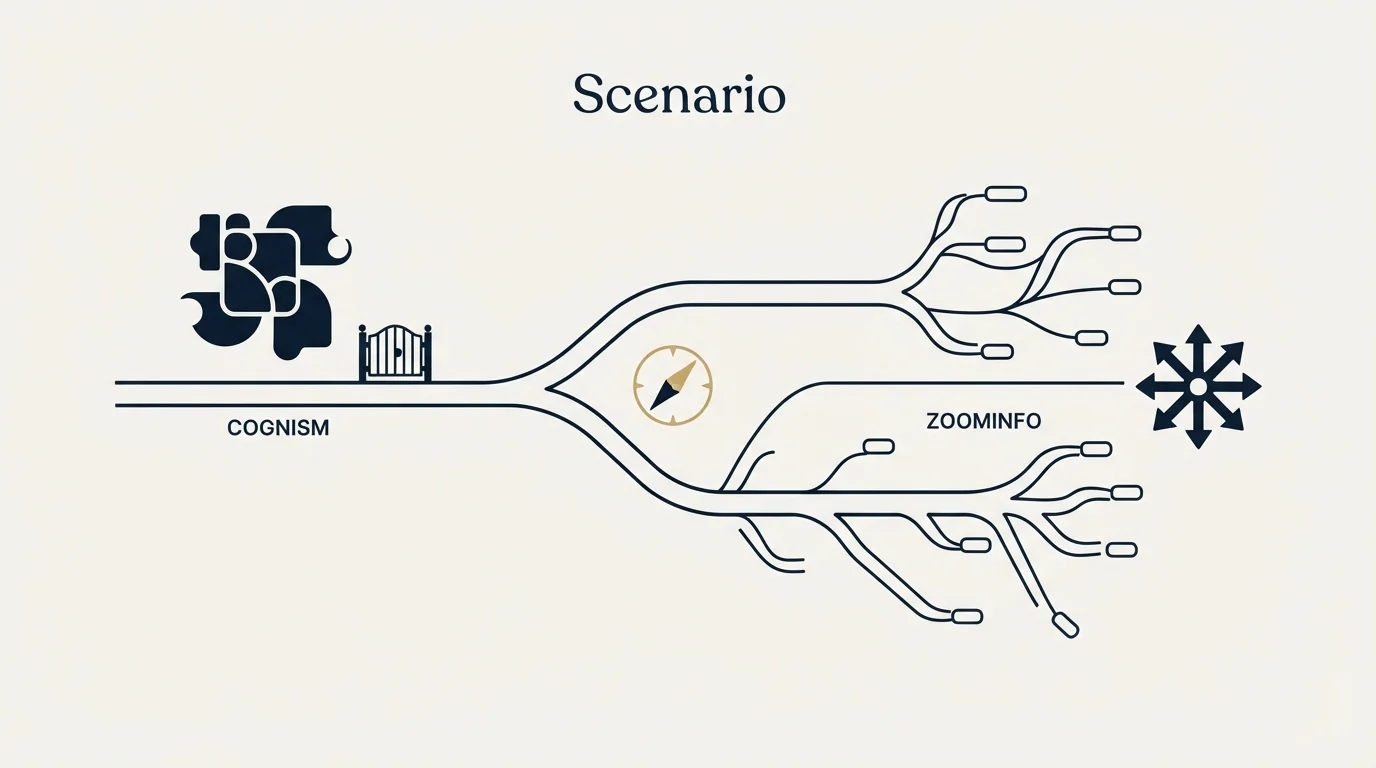
Cognism connects with: Salesforce, HubSpot, Outreach, SalesLoft, Pipedrive, Microsoft Dynamics 365, Bullhorn, Zapier.
ZoomInfo connects with: Salesforce, HubSpot, Microsoft Dynamics 365, Marketo, Outreach, SalesLoft.
The two lists overlap almost exactly: Salesforce, HubSpot, Microsoft Dynamics 365, Outreach and SalesLoft on both. Cognism adds Pipedrive, Bullhorn and Zapier; ZoomInfo adds Marketo. Integrations will not decide this comparison, which is worth knowing before spending time on them.
Where Each One Sits In A Cold Outbound Stack
Cognism is the compliance-first enterprise data layer, bought on an annual contract and fed into a sending tool you already own. ZoomInfo is the enterprise data spine that other tools read from, bought on a long term.
Both sit at the top of the stack as the source of record, and both expect a sequencer and a CRM underneath. Neither is a workflow tool and neither pretends to be.
We send one message per campaign, never bump a thread, never send LinkedIn no-reply retargets, and qualify meetings against criteria agreed in writing before launch. On that motion the value of a data contract is concentrated almost entirely in whether the first address and the first number are right, which is why a verified-fill-rate test on your own segment beats any comparison of database sizes.
Switching Between Them
ZoomInfo to Cognism is usually driven by European coverage or a compliance review. Identify every downstream system reading ZoomInfo data before the contract ends, because enterprise data contracts routinely have more consumers than anybody remembers, and run a fill-rate test on your main geography first.
Cognism to ZoomInfo is usually driven by scope: more departments, more use cases, one contract. Export your revealed-contact history before the term ends, since the permanence rule that made those reveals free does not travel to the new vendor.
Getting Started

- Write down the five quote questions above and send them to both vendors unchanged.
- Run a fill-rate and connect-rate test on the same 200 accounts in your real geography.
- Normalise both quotes to a cost per revealed contact for the term.
- Price Cognism's CRM Enrichment and Data-as-a-Service separately if operations needs them.
- Confirm every figure on the vendor's own page or in the contract rather than from a comparison article.
Final Thoughts
Cognism is the stronger answer for European coverage, compliance and verified mobile numbers. ZoomInfo is the stronger answer for breadth across an organisation that needs one data contract to serve several departments.
Neither price is public, so the decision is won or lost in how well you specify the quote. The five questions above are the whole of it.
Related Reading
- Best Cognism Alternatives in 2026
- Best ZoomInfo Alternatives in 2026
- LeadIQ vs ZoomInfo: Data Enrichment Tool Comparison
- Apollo.io vs Cognism: Data Enrichment Tool Comparison
- ZoomInfo Data Enrichment: How the Sync Works and Where the Credits Go
- Best Data Enrichment Tools for Enterprise (2026)
If you would rather have this run for you, RevenueFlow books qualified meetings on a pay-per-meeting basis and publishes client results.
Pricing and features are taken from the vendors' own pages. Verify current terms with the vendor before relying on them.
Frequently asked questions.
Frequently asked questions- Why is there no price table here?
- Because neither vendor supplied one this comparison could verify. Cognism publishes none by design and says so in its own FAQ. ZoomInfo page answered HTTP 403 to every request made here. Reprinting a third-party number would be worse than saying so, so the article states what it can support.
- What should go to both vendors in writing?
- Five things in writing: the credit allowance for the term, how many seats are included and what an extra one costs, the contract length, what happens to unused credits at renewal, and how a re-reveal is counted when somebody changes job. Cognism answers the last publicly, which anchors the same question elsewhere.
- How do two quotes get compared fairly?
- Normalise both to a cost per revealed contact for the term. For Cognism do it twice, once treating credits as consumable and once accounting for the permanence rule across the share of your list that does not turn over. On a stable account base those two numbers differ substantially.
- Which suits a European team?
- Cognism is the usual answer, and it is what the product is built around: phone-verified Diamond Data, on-demand mobile verification, and GDPR and CCPA compliant sourcing. Run a fill-rate and connect-rate test on 200 accounts in your real geography before committing to either contract.
About the author.

Tim Carden is CMO / CTO at RevenueFlow, which builds and operates outbound revenue engines for B2B companies. Studied at McGill University.
Tim Carden · CMO / CTO
Connect on LinkedIn →Explore more.
Ready to scale your outreach?
We build GTM engines that book real meetings. See the receipts.
Related articles.
Apollo.io vs Proofy: Data Enrichment Tool Comparison
Compare Apollo.io and Proofy side by side. See pricing, features, and integrations to choose the right data enrichment tool for your needs.
AroundDeal vs Leadspicker: Data Enrichment Tool vs Sales Engagement Platform Comparison
Compare AroundDeal (data enrichment tool) and Leadspicker (sales engagement platform) side by side. See pricing, features, and integrations to decide which one, or both, your stack needs.
AroundDeal vs Salesflare: Data Enrichment Tool vs CRM Platform Comparison
Compare AroundDeal (data enrichment tool) and Salesflare (CRM platform) side by side. See pricing, features, and integrations to decide which one, or both, your stack needs.
Gong vs NeverBounce: Sales Engagement Platform vs Data Enrichment Tool Comparison
Gong vs NeverBounce: what Gong's own pages say about enrichment, what NeverBounce's API returns about an address, and how each vendor prices.
ContactOut vs Luru: Data Enrichment Tool vs Sales Engagement Platform Comparison
Compare ContactOut (data enrichment tool) and Luru (sales engagement platform) side by side. See pricing, features, and integrations to decide which one, or both, your stack needs.
Evaboot vs Microsoft Dynamics 365 Sales: Data Enrichment Tool vs CRM Platform Comparison
Compare Evaboot (data enrichment tool) and Microsoft Dynamics 365 Sales (CRM platform) side by side. See pricing, features, and integrations to decide which one, or both, your stack needs.