Cold Email Templates for Logistics: 12+ Examples That Work
Seventeen copy-pasteable cold email templates for selling into logistics, grouped by first touch, trigger event and referral.

Cold emails that work in logistics stay under 90 words, name one unit cost (per load, per mile, per pallet, per pick), reference the prospect's actual lane, facility or TMS, and ask for something small. Send at 6 to 8 a.m. local time and time outreach around the annual freight bid cycle.
Key takeaways
- Keep logistics cold emails under 90 words in plain text with no attachments, because ops leaders read them on a phone before the first dock appointment.
- Anchor every email to a unit cost the buyer is measured on: cost per load, cost per mile, cost per pallet, or cost per pick.
- Time procurement outreach to the annual freight bid cycle, since most truckload and LTL bids are built in the back half of the year for a January 1 award.
- Driver turnover at large truckload fleets has run near or above 90% for years according to the American Trucking Associations, which reframes any staffing, training, or retention pitch.
- Name the incumbent TMS or WMS and position around it, because switching costs kill pitches that imply a rip-and-replace.
- New facility openings and new VP of Supply Chain or Director of Transportation hires are the two highest-yield trigger events in this vertical.
Reviewed and updated August 29, 2026
Cold Email Templates for Logistics: 12+ Examples That Work
A transportation manager at a mid-market shipper opens her laptop at 5:40 a.m., before the first dock appointment. She has 60 unread emails, three of them from carriers she actually uses, one from a retailer's vendor compliance team about a late delivery, and roughly a dozen cold pitches promising to "optimize her supply chain." She archives all twelve in about nine seconds.
That nine seconds is the entire game. Logistics buyers, whether they sit at a shipper, a 3PL, a freight brokerage, a carrier, or a warehouse operator, run on exceptions, phone calls, and load boards. The cold emails that work in this vertical read like a note from another operator: short, numeric, lane-specific or facility-specific, and asking for something small.
The templates below are grouped by scenario. Copy them, swap the variables, and keep the structure. The structure is doing most of the work.
How Logistics Buys, and Why Generic Copy Dies
Four dynamics shape every good logistics cold email.
Everything reduces to a unit cost. Cost per load, per mile, per pallet, per pick. If your email cannot connect to one of those units, the reader has no place to file it. "Improve visibility" means nothing. "Cut 40 minutes of average driver detention across your 14 DCs" means something, because detention carries a dollar figure.
Contract freight moves on a calendar. Most annual truckload and LTL bids run in the back half of the year for a January 1 award, with mini-bids when the market moves. Your outreach either lands before bid prep starts or gets parked until next cycle. Say that out loud and you sound like an insider.
Incumbent systems are sticky. A carrier running McLeod, a broker on a homegrown TMS, a warehouse on Manhattan or Blue Yonder, a forwarder on CargoWise. Emails that ignore the incumbent get ignored. Emails that lead with "sits on top of {{tms_name}}" get read.
Churn is a permanent operating condition. Driver turnover at large truckload fleets has hovered near or above 90% for years, according to the American Trucking Associations, which reframes almost any staffing, training, or retention pitch. Source: American Trucking Associations.
The copy rules that follow: under 90 words, one specific number, no attachments in the first touch, plain text only, and send between 6:00 and 8:00 a.m. local time when dispatch and ops leadership are already at their desks.
Where we differ from standard practice
Much of the advice on this page reflects how outbound is commonly run. We run it differently, and since this page sits on our site it is worth saying where the difference is and what it costs us.
- A sequence of messages to each prospect over several weeks
- Later messages often land in the same email thread
- Every contact is reached more than once, so a distracted reader gets another chance
- The later messages go only to people who did not answer the first
- Reputation cost accrues on the sending domain across everything else it sends
- One message, then that campaign is finished for that contact
- No thread replies and no bumps
- A non-responding audience becomes a new campaign with a genuinely different premise, not a reminder
- More of the work moves into targeting and into the one message
- We reach each contact less often, and that is the cost we accept
The reasoning is mechanical rather than moral. A follow-up arrives underneath a message the recipient has already seen and chosen not to answer, so it is delivered to the population most likely to mark it as spam, and the reputation cost of that lands on the sending domain across every campaign running on it. We set that cost against the replies a sequence recovers and decided the trade was not worth it. The full argument, with the numbers from our own campaigns, is in why we stopped using follow-ups.
First-Touch Templates
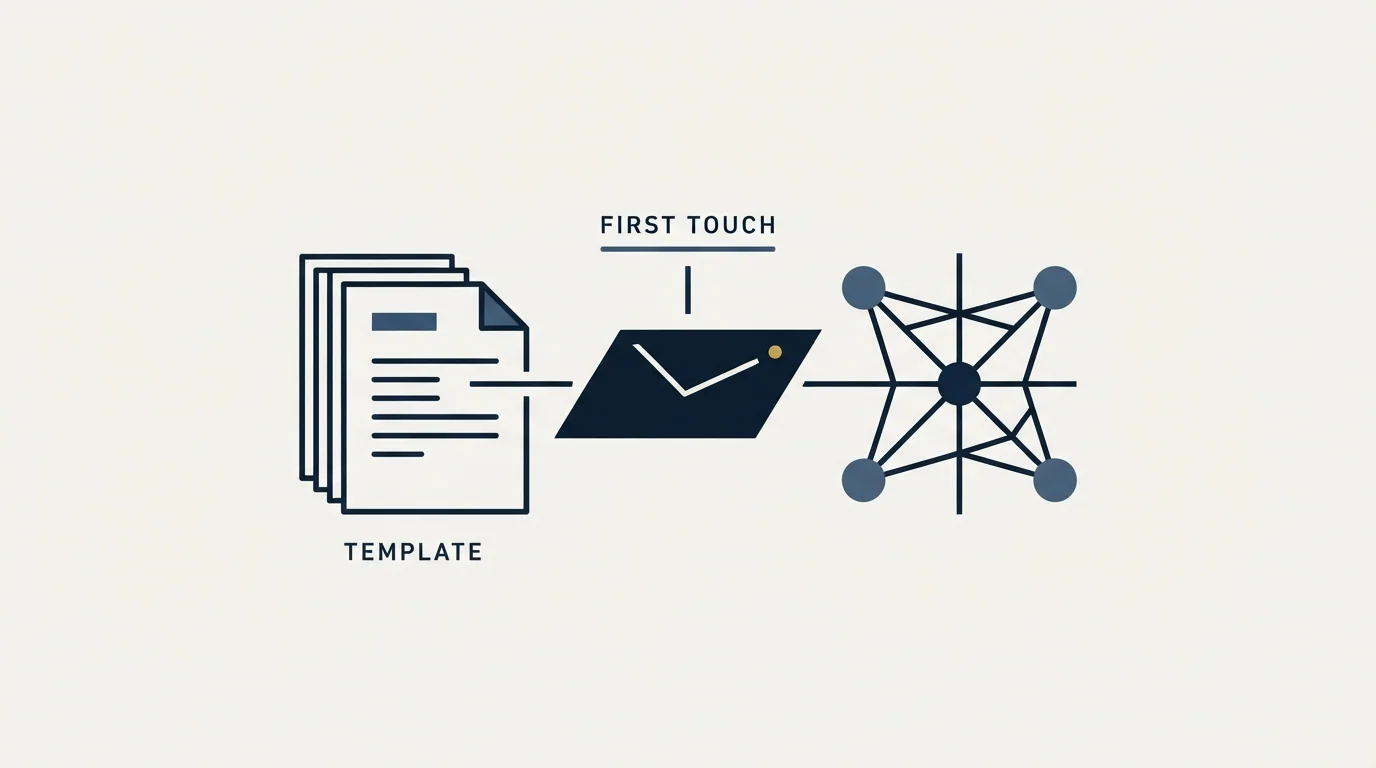
Template 1: The Cost-Per-Load Opener
Best for: Transportation managers and directors at shippers
Subject lines: {{lane_origin}} to {{lane_dest}} costs / question on your {{mode}} spend
Hi {{first_name}},

Saw {{company}} runs a fair amount of {{mode}} out of {{facility_city}}.

Most shippers your size are paying {{dollar_amount}} more per load
on {{lane_origin}}-{{lane_dest}} than the contract rate suggests,
usually because of accessorials nobody reconciles.

We pull that apart for {{peer_company_1}} and {{peer_company_2}}.
Worth 10 minutes to see if the same gap exists in your lanes?

{{sender_name}}
Why this works for logistics: It anchors on a unit cost, names a real lane, and points at accessorials, which every transportation manager suspects they are overpaying and almost none of them have time to audit. The ask is 10 minutes, not a demo.
Template 2: The Capacity Offer (Carrier or 3PL to Shipper)
Best for: Selling freight capacity into a shipper
Subject lines: capacity {{lane_origin}}-{{lane_dest}} / {{equipment_type}} out of {{facility_city}}
{{first_name}},

We run {{truck_count}} {{equipment_type}} trucks through
{{facility_city}} weekly and currently deadhead back on
{{lane_origin}}-{{lane_dest}}.

If that matches anything on your outbound, I can quote it today
and you keep your incumbent on everything else.

Want the rate?

{{sender_name}}
{{mc_number}} | {{phone}}
Why this works for logistics: It offers a specific piece of capacity on a specific lane instead of a relationship. Including the MC number and a phone line signals you are a real carrier, and "keep your incumbent on everything else" removes the switching risk that kills most carrier pitches.
Template 3: The Facility Metric Opener
Best for: Directors of warehouse or distribution operations
Subject lines: dock-to-stock at {{facility_city}} / {{company}} dwell times
Hi {{first_name}},

Quick one. Warehouses running {{wms_name}} at your volume usually
sit around {{benchmark_hours}} hours dock-to-stock, and the gap
between the best and worst shift is wider than most people expect.

We close that gap without touching the WMS.

If dock-to-stock is on your list for {{quarter}}, happy to walk
through how. If it isn't, ignore me.

{{sender_name}}
Why this works for logistics: It names the incumbent WMS, uses a metric warehouse leaders are measured on, and explicitly promises not to disturb the system of record. The "if it isn't, ignore me" close reads as operator-to-operator rather than salesperson-to-target.
Template 4: The Peer Proof Opener
Best for: Selling software or services to brokers and carriers
Subject lines: what {{peer_company_1}} did with their {{team_name}} team
Alt: {{peer_company_1}}, {{peer_company_2}}, {{peer_company_3}}
{{first_name}},

{{peer_company_1}} had the same problem you probably have:
{{problem_in_six_words}}.

Their {{role_title}} team now handles {{metric_after}} instead of
{{metric_before}}, same headcount.

Two other brokerages your size are running it. Want the one-pager
or a 12-minute call?

{{sender_name}}
Why this works for logistics: Brokerage and carrier operators benchmark obsessively against companies their own size. Naming three peers does more than any feature list. Offering a choice between a one-pager and a short call gives the low-commitment option that busy ops people usually take.
Template 5: The Compliance Angle
Best for: VPs of supply chain at shippers selling to big-box retail
Subject lines: {{retailer_name}} chargebacks / OTIF at {{company}}
Hi {{first_name}},

If {{company}} ships to {{retailer_name}}, on-time-in-full
chargebacks are probably a line item somebody has to explain
every month.

We help suppliers find where the misses actually originate,
which is usually appointment scheduling rather than transit.

Is that a problem worth 15 minutes, or is it already handled?

{{sender_name}}
Why this works for logistics: Retail vendor compliance penalties are a real, recurring, board-visible cost for consumer goods shippers. Pointing at appointment scheduling as the root cause shows domain knowledge. Asking whether it is already handled invites an honest one-word reply.
Re-Approach Templates
These are not follow-ups. Each one is a separate single-message campaign sent weeks later to people who did not answer an earlier one, carrying its own subject line and its own premise, never a reply in the same thread. A message that lands underneath one the reader already skipped reaches the people most likely to mark it as spam, and the reputation cost of that lands on the sending domain across every campaign running on it. A fresh email gets a fresh open.
Template 6: The New Number
Best for: A later campaign to shippers who did not answer an earlier one
Subject lines: {{peer_company_1}} cut {{metric}} by {{percent}} / one number on {{lane_origin}}-{{lane_dest}}
{{first_name}},

One number worth having: {{peer_company_1}} cut {{metric}} by
{{percent}} in the first {{timeframe}}, and their volume is
about {{comparison}} yours.

Worth 10 minutes?

{{sender_name}}
Why this works for logistics: A later campaign has to earn its own open. A quantified peer result, plus a volume comparison so the reader can size it against their own operation, gives a reason to reply that "just checking in" never will.
Template 7: The Seasonal Re-Approach
Best for: A later campaign timed to the season, to people who did not answer
Subject lines: after {{season_event}} / {{month}} at {{company}}
{{first_name}},

Guessing {{season_event}} has your attention right now, so
this is short.

Is {{month}}, once things settle, the better time to look at
{{topic}}, or is this not a fit at all?

{{sender_name}}
Why this works for logistics: Produce season, peak, Chinese New Year, and bid season genuinely consume these teams. Acknowledging it earns goodwill, and the two-option close ("better month or not a fit") produces replies from people who ignore open-ended questions.
Template 8: The Multithread
Best for: A later campaign to finance when the ops contact did not answer
Subject line: {{company}} freight spend
{{first_name}},

I've been talking to {{original_contact_name}} about
{{topic}}, and it may sit closer to finance than ops.

Short version: {{one_sentence_value}}, worth roughly
{{dollar_estimate}} a year at your volume.

If that's interesting, I'll send the detail. If not, I'll stop.

{{sender_name}}
Why this works for logistics: Transportation spend decisions frequently escalate to a CFO or controller once the number gets large enough. Going up the org with a dollar figure, while openly referencing the original contact, is credible instead of sneaky.
Template 9: The One-Line Re-Approach
Best for: A later campaign to people who did not answer, one line long
Subject line: {{topic}} at {{company}}
{{first_name}}, is {{topic}} worth a conversation at {{company}}, or not a fit?
Why this works for logistics: One line, readable on a phone at a truck stop or on a dock. Logistics people appreciate brevity more than almost any other buyer group, and a binary question is easier to answer than a request for time.
Trigger Event Templates
Template 10: The New Facility
Subject lines: {{facility_city}} DC / congrats on {{facility_city}}
Hi {{first_name}},

Saw the {{facility_city}} {{facility_type}} announcement.

The first {{timeframe}} after a new {{facility_type}} opens is
usually when {{problem}} shows up, because {{reason}}.

We helped {{peer_company_1}} through exactly that window.
Useful to compare notes before you go live?

{{sender_name}}
Why this works for logistics: Facility openings are public, dated, and create a narrow window of real budget and real pain. Framing the outreach as "compare notes before go-live" fits how logistics leaders actually gather information, which is peer to peer.
Template 11: The New Hire
Subject lines: new role at {{company}} / first 90 days
{{first_name}},

Congrats on the {{job_title}} role.

Most people stepping into {{function}} at a {{company_size}}
shipper spend the first quarter figuring out where the
{{cost_category}} leakage is. We map that in about two weeks.

Happy to share what we found at {{peer_company_1}}, no pitch.
Want it?

{{sender_name}}
Why this works for logistics: A new VP of Supply Chain or Director of Transportation is explicitly hired to change something and has a mandate plus political cover to bring in outside help. This is the single highest-yield trigger in the vertical.
Template 12: The Bid Cycle
Subject lines: before your {{year}} bid / {{mode}} RFP timing
Hi {{first_name}},

If {{company}} runs its {{mode}} bid on the usual calendar,
you're building the lane list in the next {{timeframe}}.

Two things worth fixing before the bid goes out:
{{issue_1}} and {{issue_2}}. Both are cheaper to fix now
than to reprice mid-year.

Want 15 minutes before you lock the lane list?

{{sender_name}}
Why this works for logistics: It ties the ask to a deadline the buyer already has on their calendar, which manufactures urgency without inventing it. "Cheaper to fix now than to reprice mid-year" is the exact economic argument a procurement lead will repeat internally.
Template 13: The Fleet or Volume Change
Subject lines: {{truck_count}} more trucks / saw the {{announcement_type}}
{{first_name}},

Saw you added {{growth_detail}}.

Growing a fleet past {{threshold}} usually breaks
{{process_name}}, and most carriers don't notice until
{{consequence}}.

{{peer_company_1}} hit that wall at almost exactly your size.
Want to hear what they did?

{{sender_name}}
Why this works for logistics: Growth thresholds are real in asset-based operations. Naming a size at which a process breaks demonstrates you have watched carriers scale, and it gives the reader a reason to worry about something they had not yet measured.
Referral Templates
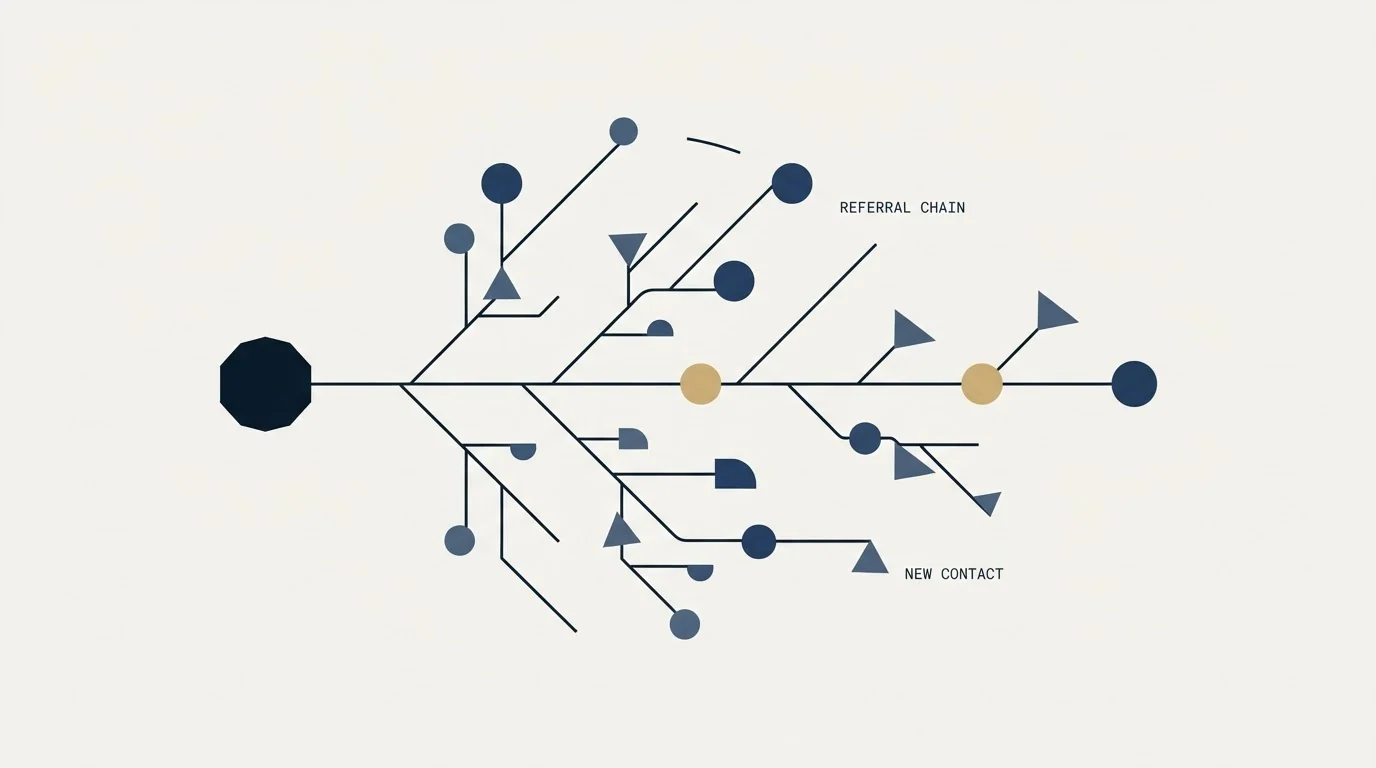
Template 14: The Warm Referral
Subject lines: {{referrer_name}} suggested I reach out / intro from {{referrer_name}}
Hi {{first_name}},

{{referrer_name}} at {{referrer_company}} mentioned you're
dealing with {{problem}} and said it was worth connecting.

We work with {{referrer_company}} on {{scope}}. The relevant
part for you is probably {{specific_element}}.

Grab 15 minutes this week or next?

{{sender_name}}
Why this works for logistics: This is a relationship-dense industry where the same people rotate between shippers, brokers, and carriers for decades. A named referrer is worth more than any subject-line trick. Name the referrer in the first four words, before the reader decides.
Template 15: The Redirect Request
Subject lines: wrong person? / who owns {{function}} at {{company}}
{{first_name}},

I may have the wrong person. Who owns {{function}} at
{{company}} these days?

Context: we cut {{metric}} for {{peer_company_1}} and
{{peer_company_2}}, both about your size.

Happy to go direct if you point me.

{{sender_name}}
Why this works for logistics: Titles in logistics are inconsistent, and the person who actually controls a decision is often two levels below the title you targeted. Asking for a redirect is a low-friction request that operators tend to honor.
Window and Timing Templates
Template 16: The Named Window
Subject line: {{topic}} before {{season_event}}
{{first_name}},

If {{topic}} isn't a priority this cycle, that is a fine answer
and this is the last you will hear about it from me this year.

If it comes back around, {{peer_company_1}} and
{{peer_company_2}} are both references I can put you in
touch with.

Good luck with {{season_event}}.

{{sender_name}}
Why this works for logistics: Removing the obligation reliably pulls replies. Ending with a seasonal well-wish keeps the door open for the next cycle, which matters when your real sales window may be nine months out.
Template 17: The Parked Deal
Subject line: parking this until {{month}}
{{first_name}},

Not chasing this. Your {{cycle_event}} lands in {{month}}, and
that is when {{topic}} is actually worth looking at.

If anything changes before then, reply and I'll pick it up.

{{sender_name}}
Why this works for logistics: Because contract freight, peak staffing, and system migrations all run on annual cycles, an explicit park with a named month is honest and gives you a clean reason to reappear later without starting cold.
Customizing These Without Breaking Them
Replace variables with facts you can verify, not guesses. A wrong lane, a wrong equipment type, or a wrong WMS name ends the conversation faster than sending nothing. Pull specifics from FMCSA carrier records, load board activity, facility announcements, and job postings (a posting for three new dispatchers tells you volume is rising).
Keep campaigns patient. One message per campaign, and the next campaign to the people who did not answer lands four to six weeks on with a genuinely different premise, which this vertical hands you three times a year in bid season, peak, and a new facility. Pausing during peak, produce season, or a customer's bid week costs you nothing.
Match your sending infrastructure to the audience too. Many logistics companies run aggressive spam filtering because they are targeted constantly by freight fraud, so authenticated domains, warmed inboxes, plain text, and zero images decide whether you land in the inbox at all.
Common Mistakes
Leading with "supply chain visibility" or "digital transformation" tells an operator you have never worked a dock. A 300-word email with a deck attached gets deleted. Asking for a 30-minute discovery call in a first touch overshoots what the relationship supports. Pitching a full TMS or WMS replacement in email one ignores switching costs. And sending Monday morning, when every weekend exception is on fire, wastes your best copy.
If you would rather have this built and run for you, from lane-level targeting and list building through inbox infrastructure and reply handling, RevenueFlow does exactly that for companies selling into freight, warehousing, and supply chain. Book a strategy call and we will map the campaigns to your buyers' actual calendar.
Related Reading
- Logistics Cold Email Benchmarks: 2026 Performance Data
- Cold Email Templates for Customer Success Managers: 10+ Examples by Scenario
If you would rather have this run for you, RevenueFlow books qualified meetings on a pay-per-meeting basis and publishes client results.
Frequently asked questions.
Frequently asked questions- What is the best time to send cold emails to logistics companies?
- Between 6:00 and 8:00 a.m. in the recipient's local time zone, Tuesday through Thursday. Dispatchers, transportation managers, and warehouse leaders are typically at their desks before the first dock appointments. Avoid Monday mornings, when weekend exceptions dominate, and avoid a shipper's peak season, produce season, or bid week entirely.
- How long should a cold email to a logistics buyer be?
- Under 90 words, and shorter is better. Logistics buyers are operators who scan email between phone calls and load board checks. Use plain text, one specific number, one clear ask, and no attachments or images.
- What should I personalize in a cold email to a shipper or carrier?
- Use facts you can verify: a specific lane, equipment type, facility city, incumbent TMS or WMS, MC number, or a public facility announcement. A wrong lane or wrong system name ends the conversation immediately. Pull details from FMCSA carrier records, load board activity, facility news, and job postings.
- What should you do with a logistics buyer who doesn't reply?
- Park them until their next bid cycle or seasonal window rather than adding touches. Freight buying is calendar-driven: most truckload and LTL bids are built in the back half of the year for a January 1 award, and a message that missed that window does not land better on the fifth attempt. When the window reopens you have a genuine new reason to write, which is a new campaign rather than a continuation of the old one.
- Why do cold emails about supply chain visibility perform poorly?
- Because the phrase does not map to any number a logistics buyer is measured on. Operators track cost per load, dwell time, dock-to-stock hours, detention, on-time-in-full rates, and empty miles. Translating your offer into one of those metrics gives the reader somewhere to file the message instead of archiving it.
About the author.

Ben Carden is CRO at RevenueFlow, which builds and operates outbound revenue engines for B2B companies. Previously at Gartner Enterprise. Studied at London School of Economics.
Ben Carden · CRO
Connect on LinkedIn →Explore more.
Ready to scale your outreach?
We build GTM engines that book real meetings. See the receipts.
Related articles.
10 B2B Cold Email Templates for One-Message Sends
Ten B2B cold email templates written for a single send, with the four slot structure underneath them and the test that separates a good example from a bad one.
Cold Email Templates for Customer Success Managers
Eleven cold email templates for customer success managers, covering champion change, expansion, renewal rescue, and win-back, with subject lines and timing.
14 Renewal Email Templates That Retain Customers
Master subscription and contract renewals with 14 proven email templates. Reduce churn, lock in renewals early, and maintain customer relationships.
13 Case Study Request Email Templates That Get Results
Get proven email templates for requesting case studies, video testimonials, and written reviews from your happiest customers. Includes templates for every stage from initial ask to final approval.
13 Demo Follow-Up Email Templates to Close More Deals
Proven demo follow-up email templates for every scenario, from same-day recaps to re-engaging stalled prospects and handling competitive evaluations.
Email Subject Line Capitalization: What the Guides Say
What the style authorities actually rule on subject line case, what the published tests measured, and the default for a one to one sales email.