10 B2B Cold Email Templates for One-Message Sends
Ten B2B cold email templates written for a single send, with the four slot structure underneath them and the test that separates a good example from a bad one.
A short cold email template can be one sentence: a checkable fact about the company, the one thing we do about it, and a question answerable in a line, then a signature and an opt out. Longer B2B templates fill four slots, premise, proof, ask and signature, and each is written to be sent once.
Key takeaways
- A one-sentence cold email works when the premise is strong enough to carry the proof in a clause and the ask closes the sentence.
- A cold email is good when a reasonable person at the target company could read the premise and disagree with it out loud.
- The data point that persuades is one the reader can check, such as a figure the company publishes, never an industry statistic.
- Templates written for a sequence hold something back for the next message, which is why they read weaker as a single send.
Reviewed and updated September 19, 2026
Two widely shared B2B cold email template lists build the follow-up in: Leadfeeder's advises following up two to three times across channels, and Cognism's opens its follow-up template with "Sent two or three emails in your sales cadence but haven't received a response?" That single instruction is why most of the templates on those pages are written the way they are: each one holds something back for the next message, so no individual email has to be good enough on its own.
The ten templates below, and the short one-sentence cold email template that opens them, are written under the opposite constraint. One message per campaign, no bumps, no thread replies. Nothing is held back, because there is no later slot to hold it for. That changes the shape of the copy more than any word choice does, and it is the reason these read shorter and land harder than a first touch designed to be followed.
Every company, name, number and result in the worked examples is invented for this article. The transferable part is the structure.
Post-signature messages follow the same discipline, and five onboarding messages built to be rewritten are given as a shape to adapt rather than as copy to send.
A short cold email template: one sentence
The shortest cold email template that still works is one sentence carrying three working parts: a checkable fact about the company, the one thing we do about it, and a question they can answer in a line. Below the sentence sit only the signature and the opt out. It suits a premise strong enough to carry the proof in a clause.
Subject: [the checkable fact]

[The checkable fact about them] usually means [the consequence], and we
[fix that specific thing] for [type of company]: is it already handled,
or still open?

[Your name], [Company]
[One line opt out]
Invented worked example: "Your second warehouse in Leeds usually means stock counts drift between sites, and we rebuild that visibility for multi-site distributors: is it already handled, or still open?" The first clause is the premise, and somebody at that company could say it is wrong. The second clause is the proof, stated as what we do and for whom. The question is the ask, and it closes the email. When the proof needs a mechanism or a named comparable to be believed, one sentence is too few, and the four-slot templates below give it room.
Subject: your second warehouse
"Your second warehouse in Leeds usually means stock counts drift between sites," 1
"and we rebuild that visibility for multi-site distributors:" 2
"is it already handled, or still open?" 3
- 1The premise: a checkable fact about the company, and somebody there could say it is wrong.
- 2The proof, stated as what we do and for whom.
- 3The ask, answerable in a line, and it closes the email. Nothing is held back for a second message.
What separates good cold email examples from bad ones
Before the templates, the test. People collect good cold email examples and copy the wrong part: the phrasing, rather than the thing the phrasing is carrying.
A cold email is good when its premise is falsifiable. That is the whole test. "You posted for a revenue operations manager last week" is a premise somebody could contradict; "companies like yours are always looking to grow revenue" is one nobody could. If a reasonable person at the target company could read the first two sentences and think "that is not true of us", the message is aimed at them. If nobody could disagree with it, nobody can agree with it either, and the email is a description of your product wearing a greeting, or of the segment, which is how the reader receives it.
A cold email template for SEO services passes or fails on exactly that: the ranking that slipped, the page that converts badly and the gap against a competitor are facts the reader can check and could disagree with, and an agency that opens on how much it loves their brand has written the second column instead.
Specific enough to be wrong
"You posted for a revenue operations manager last week."
- Names something checkable about this company
- A person there could disagree with it out loud
- Still a sentence with the product deleted
True of the whole list
"Companies like yours are always looking to grow revenue."
- Cannot be contradicted, so it cannot be confirmed
- Collapses without the product name in it
- A description of the segment wearing a greeting
The second part of the test is the ask. It has to be answerable in one sentence by somebody who has never heard of you, using information they already have. A thirty minute call is not answerable in that sense, because answering it requires a decision the reader has no basis to make yet.
The full method behind both halves, in the order the work actually happens, is in how to write a cold email when it is the only one you send.
B2B cold email copy with data points
The data point that works in B2B cold email copy is one the reader can check: a figure the company publishes, the date it posted a role, the number of locations it runs. A statistic from somebody else's industry report persuades nobody, because it is true of the whole list and the reader cannot tell whether it applies to them.
Templates 5 and 6 below are built on exactly that. One quotes a number from the company's own page and states what that number usually makes the constraint; the other names the day a weekly export runs. In both, the number is the premise, and being right about it buys credibility for everything after it.
The structure every template below fills in
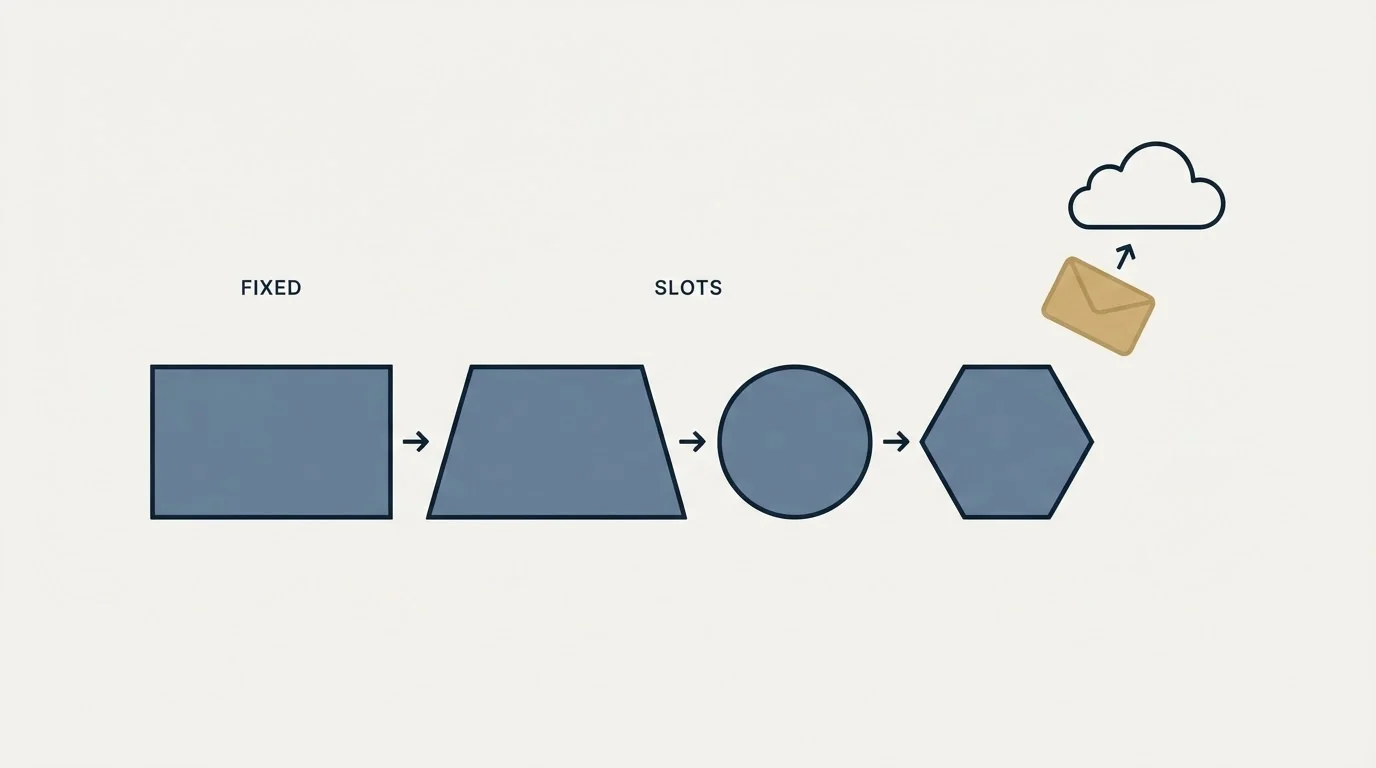
Four slots, in this order, and nothing else.
The premise. One sentence connecting a checkable fact about them to something you can do about it.
The proof. One reason to believe you, stated as a mechanism or a named comparable rather than as an adjective.
The ask. One question, answerable in a line.
The signature. A real person, a real company, and a working opt out.
Length follows from that rather than being chosen. A message carrying one premise, one proof and one ask lands short by construction. If yours runs long, it is usually carrying two arguments.
Ten templates by the situation they open on
1. The public hiring signal
Use when the company has posted a role that only exists once a specific problem has grown.
Subject: your [role] posting

You posted for a [role] last week. That role gets hired once [the specific problem] has outgrown
the person who was doing it on the side.

We do [the specific part of that job] without the headcount, for
[type of company]. [Named comparable] runs it that way.

Worth a look, or is the hire already agreed?
The posting is public, dated and checkable, which is what makes the premise safe to assert. Invented worked opening: "You posted for a revenue operations manager last week."
2. The recent operational change
Use when something observable changed: a new location, a new market, a platform migration.
Subject: [the change]

You opened [the second location] in [month]. That usually means
the person who used to know where everything was no longer does.

We rebuild that visibility in about [timeframe] using the data
you already have.

Is that a problem yet, or still coming?
The second sentence is the entire message. It states a consequence of the change rather than describing the change back to them.
3. The incumbent concession
Use when they already run a competing product.
Subject: the part [incumbent] leaves you

You already own something that does this, so the only question
worth asking is whether your team still does [the manual step]
afterwards.

That step is what we remove. Nothing else changes.

Do they still do it by hand?
Conceding the incumbency in the first line is the only credible opening against a satisfied user, and it moves the conversation to a gap rather than to a comparison.
4. The regulatory or deadline premise
Use when a dated external requirement applies to their whole segment.
Subject: [requirement] in [month]

[Requirement] takes effect for [segment] in [month]. Most teams
find out what it means for [specific system] about six weeks
too late.

We do [the specific preparation], and the whole thing takes
[timeframe].

Have you scoped it yet?
The deadline is public, so the premise is true of every account by construction. That makes this the one template that works at volume, and it expires on the date it names.
5. The number they publish
Use when the company itself publishes a figure you can build on.
Subject: [the published figure]

Your [page] says [figure]. At that level, [the consequence] is
usually the constraint rather than [the thing people assume].

We work on exactly that, for [type of company].

Is that the constraint, or are we reading it wrong?
Ending on an invitation to correct you is the cheapest way to get a reply from somebody who thinks you are wrong.
6. The internal workaround
Use when you know the job is being done, badly, by a person and a spreadsheet.
Subject: the [weekly export]

Teams your size are usually exporting this to a spreadsheet
every [day], and one person knows how the sheet works.

We take that off a single laptop.

Is that still how it runs?
Specificity through frequency. Naming the day is checkable, and being right about it buys credibility for everything after it.
7. The new leader
Use when somebody has just taken the seat you sell to.
Subject: first [90] days

You started at [company] in [month]. New leaders in [function]
usually re-forecast before they re-staff, and the re-forecast
needs [the thing we do] first.

We do that part in about [timeframe].

Is that on your list, or already handled?
The premise is about their calendar rather than their pain, which is a distinction worth stealing generally.
8. The no-trigger honest opener
Use when the research turned up nothing and you are writing anyway.
Subject: no trigger for this one

Nothing prompted this email. Companies at your stage usually
hit [the problem] about [timeframe] out, and the cheap version
of fixing it happens before then.

That is what we do.

Too early, or about right?
Honesty about the absence of a trigger is more credible than a manufactured one, and this is the template to reach for instead of inventing a fact.
9. The specific referral
Use when a named person suggested the introduction.
Subject: [name] suggested you

[Name] at [company] suggested you as the person who owns
[the thing]. They had the same [problem] and we fixed
[the specific part].

Happy to send the two line version of how it worked.

Want it?
Only send this when the referral is real and the named person knows. A fabricated referral is the fastest way to lose an account permanently.
10. The offer instead of the meeting
Use when the ask itself is the differentiator.
Subject: [the artefact]

We built [the specific artefact] for [type of company], showing
[the specific thing it shows].

Yours is [specific to them]. No call attached.

Want us to send it?
The ask is a yes or no about a file rather than a request for a calendar slot, which is why it answers at a different rate. The artefact has to be real and it has to be produced before you offer it.
Building that artefact before offering it is the hard part, and a bookings forecast laid out column by column is one worked example of the shape.
| Template | The premise rests on | The closing ask |
|---|---|---|
| 1. Hiring signal | A dated public job posting | Worth a look, or is the hire agreed? |
| 2. Operational change | A new location, market or migration | A problem yet, or still coming? |
| 3. Incumbent | The competing product they own | Do they still do it by hand? |
| 4. Deadline | A public requirement and its date | Have you scoped it yet? |
| 5. Published number | A figure on their own page | The constraint, or are we wrong? |
| 6. Workaround | The export and the day it runs | Is that still how it runs? |
| 7. New leader | The start date of the seat | On your list, or handled? |
| 8. No trigger | Nothing, said honestly | Too early, or about right? |
| 9. Referral | A named person who knows | Want it? |
| 10. Offer | An artefact already built | Want us to send it? |
What none of these will fix

A list that has no checkable fact per row. If you cannot find one verifiable thing per company at the volume you want to send, that is a list problem and the honest fix is a smaller list.
A missing offer. Several of these templates are the same email with a different opening, and the reason they perform differently is the artefact in the ask rather than the wording of the premise.
A merge field that renders wrong. The failures are individually rare enough that a percentage based quality check never catches them, so read a sample of the rendered messages rather than the template.
For what each part of the message is doing in the order the reader meets it, the anatomy of a cold email breaks the four slots down further. When two templates perform differently and the wording looks identical, the cause is usually one level up, which is the argument in the offer beats the copy and its ranked version in what actually decides a cold email's outcome.
The short version

A B2B cold email is four slots: a falsifiable premise about this company, one reason to believe you, one answerable ask, and a signature with a working opt out. Everything else in a template is decoration.
Judge an example by its premise rather than its phrasing. If nobody at the target company could disagree with the first two sentences, nobody there can agree with them either.
The closing line of each is its ask, which is where the B2B closing examples in this article live. Ten situations cover most of what a B2B list contains: a hiring signal, an operational change, an incumbent, a dated requirement, a published number, an internal workaround, a new leader, no trigger at all, a real referral, and an offer that replaces the meeting request.
None of them holds anything back for a second message, because we do not send one. The reasoning, and the cost of running it that way, is in why we stopped using follow-up emails.
Every example here is invented as an illustration, and the specific fact in slot one has to come from the accounts you are writing to. If the constraint is that too few of the right people are hearing any version of this, see what a first campaign produces against your market.
Frequently asked questions.
Frequently asked questions- What is a short cold email template of one sentence?
- One sentence that carries a checkable fact about the company, the one thing we do about it, and a question answerable in a line, followed only by a signature and an opt out. For example, an invented one: your second warehouse usually means stock counts drift between sites, and we rebuild that visibility for multi-site distributors: is it handled, or still open?
- How long should a B2B cold email be?
- Length follows from structure rather than being chosen. One premise, one reason to believe you and one ask lands short by construction, and the shortest version fits in a single sentence. If a draft runs long, it is almost always carrying two arguments, and cutting the weaker one does more than any amount of tightening the sentences.
- Should B2B cold email copy include data points?
- Yes, when the data point is the reader's own: a figure their company publishes, the date they posted a role, the number of locations they run. That kind of number is checkable, so it can be the premise. A statistic from somebody else's report is true of the whole list, and the reader cannot tell whether it applies to them.
- Should I follow up on a cold email?
- Our practice is no. One message per campaign, no bumps and no thread replies, because a second message lands underneath the one they already declined to answer. The cost is losing the person who was interested but busy that week.
About the author.

Ben Carden is CRO at RevenueFlow, which builds and operates outbound revenue engines for B2B companies. Previously at Gartner Enterprise. Studied at London School of Economics.
Ben Carden · CRO
Connect on LinkedIn →Explore more.
Ready to scale your outreach?
We build GTM engines that book real meetings. See the receipts.
Related articles.
Cold Email Templates for Customer Success Managers
Eleven cold email templates for customer success managers, covering champion change, expansion, renewal rescue, and win-back, with subject lines and timing.
14 Renewal Email Templates That Retain Customers
Master subscription and contract renewals with 14 proven email templates. Reduce churn, lock in renewals early, and maintain customer relationships.
Follow-Up Call Scripts: Nine Calls Into a Live Conversation
Nine follow-up call scripts, each tied to the event that earns the call, from a demo to a renewal, plus the four moves they share and how each call should end.
13 Case Study Request Email Templates That Get Results
Get proven email templates for requesting case studies, video testimonials, and written reviews from your happiest customers. Includes templates for every stage from initial ask to final approval.
13 Demo Follow-Up Email Templates to Close More Deals
Proven demo follow-up email templates for every scenario, from same-day recaps to re-engaging stalled prospects and handling competitive evaluations.
Email Subject Line Capitalization: What the Guides Say
What the style authorities actually rule on subject line case, what the published tests measured, and the default for a one to one sales email.