GMass vs Reply.io: Cold Email Platform Comparison
Compare GMass and Reply.io side by side. See pricing, features, and integrations to choose the right cold email platform for your needs.
GMass has one price and Google's ceiling. Reply.io prices email volume on a slider from $59 a month, or $49 on annual, with no cap on users or mailboxes, and sells LinkedIn, calls and SMS as separate per-account add-ons at $69 and $29.
Key takeaways
- Reply.io's Email Volume plan caps neither users nor mailboxes; the slider prices the sending volume itself.
- The $59 headline is a floor: the monthly slider runs $59, $69, $79, $99, $179, $299, $499 and $999.
- GMass's ceiling is Google's per-account sending limit, which no GMass plan lifts.
- Reply.io's AI SDR product is a separate ladder starting at $800 a month monthly and $500 on annual.
Reviewed and updated August 28, 2026
GMass vs Reply.io: Cold Email Platform Comparison
GMass has one price and one ceiling. Reply.io has a slider that runs from $59 a month to $999 and prices three of its four channels outside the plan entirely. Working out what each one actually costs you is most of this comparison.
The Quick Answer
GMass is a Chrome extension that turns a Gmail account into a mail merge and sequencing tool, from $29.95 a month, capped by Google's own per-account sending limits.
Reply.io is a multichannel sales engagement platform. Email Volume is a slider starting at $59 a month on monthly billing and $49 on annual, with no user or mailbox limit; Multichannel is $99 per user a month, $89 on annual; LinkedIn automation and calls and SMS are separate at $69 and $29 a month per account.
One mailbox at modest volume goes to GMass. Real volume across many mailboxes goes to Reply.io.
Understanding the Core Difference
GMass is a Chrome extension that turns a Gmail account into a mail merge and sequencing tool, so campaigns send from the mailbox you already read.
Reply.io is a multichannel sales engagement platform that prices email volume on a slider and sells LinkedIn, calls and SMS as separate per-account add-ons.
GMass's ceiling is not its own. Contacts, campaigns and sends are unlimited on every tier and Google's per-account limit sits underneath all of it, unmoved by the plan you buy. Inbox rotation across connected Google accounts appears on Professional at $59.95.
Reply.io's Email Volume plan removes the two limits that usually bite: it carries no cap on users and no cap on mailboxes, and prices the sending volume itself on a slider. That is a genuinely different shape from a per-seat platform and it is the reason Reply.io shows up on high-volume shortlists.
The cost of that shape is that the other three channels are add-ons rather than inclusions, so a Reply.io quote is a plan plus a list of per-account lines.
Pricing Comparison

Standard
Email Volume, billed monthly
GMass pricing
| Plan | Price | Contacts | Sends |
|---|---|---|---|
| Standard | $29.95/mo | Unlimited | Unlimited, inside Gmail's own limits |
| Premium | $39.95/mo | Unlimited | Adds sequences, API access and A/B testing |
| Professional | $59.95/mo | Unlimited | Adds inbox rotation and priority support |
| Team Premium, five seats | $175/mo | Unlimited | Team billing |
Annual billing drops Standard to $20 a month, invoiced at $249 a year. One warning for anyone checking these numbers: the pricing page localises currency by visitor region, so a European reader sees pounds or euros rather than the dollar figures above.
Source: GMass Pricing
Reply.io pricing
| Plan | Monthly | Billed annually | Unit |
|---|---|---|---|
| Email Volume | From $59/mo | From $49/mo | Per account, no user or mailbox limit |
| Multichannel | $99 per user/mo | $89 per user/mo | Per user |
| AI SDR Starter | From $800/mo | From $500/mo | 1,000 active contacts |
| AI SDR Growth | From $2,500/mo | From $1,500/mo | 5,000 active contacts |
| Agency | Contact Sales | Contact Sales | Custom |
Email Volume is a slider rather than a tier, running from $59 to $999 a month on monthly billing. Two channels are priced outside the plan: LinkedIn automation at $69 a month per account and calls and SMS at $29 a month per account.
Source: Reply.io Pricing
What the two cost at a realistic volume
Take an invented but ordinary case: 12,000 emails a month across fifteen sending addresses, one operator. The arithmetic is illustrative and uses list prices only.
On Reply.io that fits Email Volume, whose slider prices volume rather than seats or mailboxes, so fifteen addresses and one user cost nothing extra and the bill is set by the volume step alone, starting at $59 a month on monthly billing.
On GMass the same job means fifteen Google accounts, because the sending ceiling belongs to the mailbox. Inbox rotation on Professional at $59.95 coordinates them, and the fifteen Workspace seats are a separate bill entirely.
At the other end, 900 emails a month from one mailbox is $29.95 on GMass and $59 on Reply.io, and the extra buys capacity nobody is using.
Reading the price ladders against each other
Reply.io's headline is a floor, not a price. The Email Volume slider runs $59, $69, $79, $99, $179, $299, $499 and $999 on monthly billing, and $49 through $899 on annual, so the figure to model is the step your volume actually lands on.
Add the channels you will use: LinkedIn automation at $69 a month per account and calls and SMS at $29. Its AI SDR product is a separate ladder starting at $800 a month on monthly billing and $500 on annual, which is a different category of purchase.
GMass's ladder is short by comparison: $29.95, $39.95, $59.95, and $175 a month for five team seats, with annual billing dropping Standard to $20 a month invoiced at $249 a year. And its page localises currency by visitor region, so check what you are being shown.
Features Breakdown
- Works inside Gmail
- Unlimited emails, contacts, and campaigns
- Mail merge personalization
- Free email verification
- Automated follow-up sequences
- A/B testing
- and 4 more listed below
- Unlimited email warmup
- 1 billion B2B contacts database
- Anti-spam & deliverability suite
- LinkedIn automation (add-on)
- SMS and calls (add-on)
- AI personalization
- and 3 more listed below
GMass key features
- Works inside Gmail
- Unlimited emails, contacts, and campaigns
- Mail merge personalization
- Free email verification
- Automated follow-up sequences
- A/B testing
- Spam Solver deliverability tool
- Custom tracking links
- Inbox rotation
- API and Zapier access
Reply.io key features
- Unlimited email warmup
- 1 billion B2B contacts database
- Anti-spam & deliverability suite
- LinkedIn automation (add-on)
- SMS and calls (add-on)
- AI personalization
- AI SDR capabilities
- Multi-workspace for agencies
- 14-day free trial
GMass's list describes work done to a Gmail account: mail merge from Sheets, sequences, custom tracking domains, free verification, inbox rotation.
Reply.io's describes a multichannel platform: email, LinkedIn, SMS and phone in one sequence, an AI SDR agent, CRM integration, and a fair-usage policy behind the unlimited-mailbox claim that is worth reading before planning around it.
Neither list contains the other's core. GMass has no second channel; Reply.io has no Gmail-native composer.
Integration Ecosystem
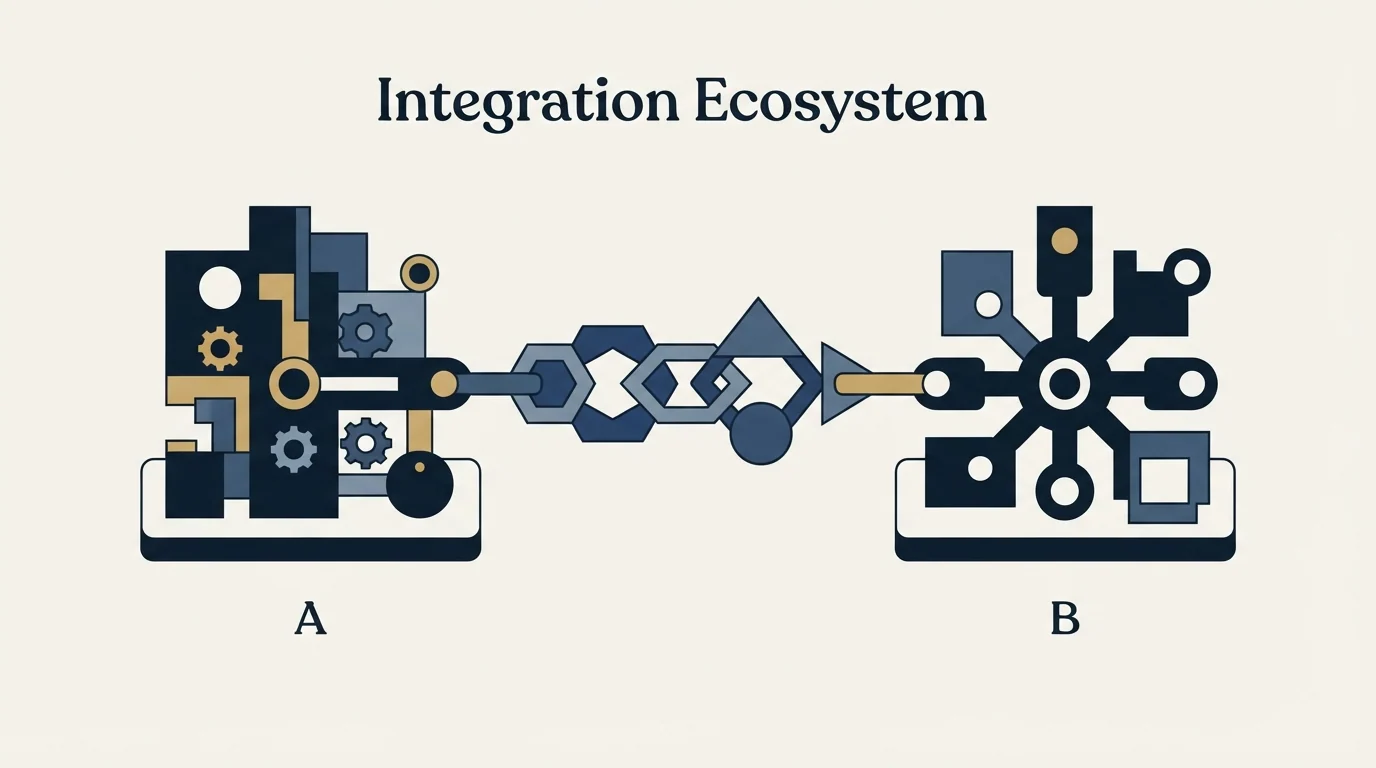
GMass connects with: Gmail, Google Sheets, Zapier, Google Workspace.
Reply.io connects with: HubSpot, Salesforce, Pipedrive, Copper CRM, Zendesk Sell, Close, Zapier, Make, n8n.
Both tools integrate with: Zapier.
Reply.io integrates outward into CRMs and exposes an API, which is what a platform intended to sit inside a sales stack has to do.
GMass's important integration is Google itself: Sheets as the list, Gmail as the sender, Drive for attachments, plus Zapier for the long tail. That removes a sync step when the list already lives in a spreadsheet and does nothing when the CRM is the system of record.
Who Should Pick Which
Pick Reply.io if you need many sending addresses. Email Volume caps neither users nor mailboxes, which is the structural feature GMass cannot match at any price because its ceiling belongs to Google.
Pick GMass if the sending is one person from one mailbox. At $29.95 with near zero setup and replies landing in a thread you can see, it is the cheaper and simpler answer for founder-led outreach.
Pick Reply.io if more than one channel is in the plan. LinkedIn, SMS and calling in one sequence is a real product, and the per-account add-on pricing is honest about what it costs.
Price the slider before committing to Reply.io. The $59 headline is the floor. Model your real monthly volume against the steps, because the difference between the bottom and the top of that ladder is more than sixteenfold.
Where each one sits in a cold outbound stack
Both fill the sender slot, downstream of sourcing and verification.
Our own doctrine keeps that slot deliberately thin: one message per campaign, no bumps and no thread replies, and volume spread across many low-volume mailboxes so no single address carries too much. LinkedIn runs as its own motion rather than as a step inside an email sequence, because a second LinkedIn message lands under the one that was ignored and reads as a bump whatever the campaign structure says.
That doctrine puts the weight on mailbox economics, and it is exactly where these two diverge most: Reply.io's Email Volume plan does not meter mailboxes at all, and GMass's ceiling is one Google account at a time. It also discounts most of Reply.io's multichannel value for our own use, so a team adopting it on our doctrine is buying the volume plan rather than the platform.
Switching between them
GMass to Reply.io is the common direction and is usually triggered by the mailbox ceiling rather than by a feature.
Export contacts from Sheets, rebuild templates in the new editor rather than pasting them, and move suppression lists before anything sends. The real work is infrastructure: provision the new sending domains, authenticate them with SPF and DKIM, and warm them before cancelling anything. Budget two to three weeks at low volume.
Going the other way is rare and means accepting Google's ceiling deliberately, plus losing the other three channels.
Feature Comparison Summary
| GMass | Reply.io | |
|---|---|---|
| Where it runs | Inside Gmail, as a Chrome extension | Standalone platform |
| Entry price | $29.95/mo | Email Volume from $59/mo, $49 on annual |
| Priced on | The Google account | Email volume, on a slider |
| Mailbox limit | Google's own account limits | None on Email Volume |
| User limit | The account holder | None on Email Volume |
| Other channels | Not offered | LinkedIn $69/mo/account, calls and SMS $29 |
| AI agent | Not offered | AI SDR from $800/mo, $500 on annual |
| Best fit | One person, one mailbox | Volume across many mailboxes |
Getting Started Checklist

- Work out monthly send volume first. It is the only number that prices Reply.io.
- Count sending addresses. Past about three, GMass's ceiling is the binding constraint.
- List the channels you will genuinely run, and add Reply.io's per-account prices for each.
- Check your Google Workspace sending limits before relying on GMass's unlimited framing.
- Send one real segment through each and read the replies.
- Confirm which currency GMass's page is showing you before quoting its price.
Final Thoughts
GMass improves one mailbox for a small fixed fee. Reply.io removes the mailbox and user limits entirely and charges for volume instead. The crossover is the point where your programme needs more sending addresses than one Google account can carry, and that point arrives earlier than most people expect.
The list still decides whether either works.
Related Reading
- Best GMass alternatives
- Best Reply.io alternatives
- GMass vs Instantly
- GMass vs Smartlead
- Instantly vs Reply.io
- Best Outreach alternatives
If you would rather have the sending run for you, RevenueFlow books qualified meetings on a pay-per-meeting basis and publishes client results.
Pricing and features are taken from the vendors' own pages. Verify current terms with the vendor before relying on them.
Frequently asked questions.
Frequently asked questions- How much does Reply.io actually cost?
- More than its headline, usually. Email Volume starts at $59 a month on monthly billing and $49 on annual, and the slider runs up to $999 monthly, so the figure to model is the step your real volume lands on. Add $69 a month per LinkedIn account and $29 for calls and SMS if you use them.
- Does Reply.io limit mailboxes?
- Its Email Volume plan does not cap users or mailboxes, which is the structural feature that puts it on high-volume shortlists. There is a fair-usage policy behind the unlimited claim, so read it before planning around it, and the sending volume itself is what the slider prices.
- Can GMass match that?
- No, because GMass's ceiling is not its own. It sends through the Gmail account it is installed on, so Google's per-account limits apply underneath whatever the plan says. Inbox rotation on Professional at $59.95 spreads volume across several connected Google accounts, and each of those is a separate Workspace seat.
- When is GMass still the better choice?
- When the sending is one person from one mailbox at modest volume. At $29.95 a month with near-zero setup, campaigns composing in Gmail and replies landing in a visible thread, it is the shortest path from a spreadsheet to a send. Reply.io's capacity would sit unused at that scale.
About the author.

Tim Carden is CMO / CTO at RevenueFlow, which builds and operates outbound revenue engines for B2B companies. Studied at McGill University.
Tim Carden · CMO / CTO
Connect on LinkedIn →Explore more.
Ready to scale your outreach?
We build GTM engines that book real meetings. See the receipts.
Related articles.
GetSales.io vs Yet Another Mail Merge: Sales Engagement Platform vs Cold Email Platform Comparison
Compare GetSales.io (sales engagement platform) and Yet Another Mail Merge (cold email platform) side by side. See pricing, features, and integrations to decide which one, or both, your stack needs.
Enginy vs Success.ai: Sales Engagement Platform vs Cold Email Platform Comparison
Compare Enginy (sales engagement platform) and Success.ai (cold email platform) side by side. See pricing, features, and integrations to decide which one, or both, your stack needs.
Artisan vs Yet Another Mail Merge: Sales Engagement Platform vs Cold Email Platform Comparison
Compare Artisan (sales engagement platform) and Yet Another Mail Merge (cold email platform) side by side. See pricing, features, and integrations to decide which one, or both, your stack needs.
Growbots vs MailHeat: Cold Email Platform vs Email Warmup Tool Comparison
Compare Growbots (cold email platform) and MailHeat (email warmup tool) side by side. See pricing, features, and integrations to decide which one, or both, your stack needs.
Hexospark vs JustCall: Cold Email Platform vs Sales Engagement Platform Comparison
Compare Hexospark (cold email platform) and JustCall (sales engagement platform). See pricing, features, and integrations to decide which one, or both, your stack needs.
EmailBison vs Emelia: Cold Email Platform Comparison
Compare EmailBison and Emelia side by side. See pricing, features, and integrations to choose the right cold email platform for your needs.