Groove by Clari vs Pipedrive: Cross-Category Comparison
Compare Groove by Clari (sales engagement platform) and Pipedrive (crm platform) side by side. Understand how these tools fit different stages of your sales workflow.
Buy Pipedrive first. It holds the record Groove by Clari writes into, and Pipedrive publishes four plan names and, to this connection, no price while Clari publishes no price for Groove, only a quote. Neither product publishes warmup, rotation or deliverability on any page fetched here, so cold sending stays a third purchase either way.
Key takeaways
- Groove by Clari publishes no price on any page fetched for this comparison, so the engagement half of the budget is a quote rather than a number.
- Pipedrive sells Campaigns as an add-on on all four plans.
- Neither Groove by Clari nor Pipedrive publishes a warmup, mailbox rotation or deliverability feature, so a cold wave needs sending infrastructure underneath both.
- Pipedrive prices are not readable from this connection, so the CRM column of any stack arithmetic stays empty rather than being estimated.
Reviewed and updated September 21, 2026
Clari sells Groove without putting a number beside it. What the pricing page does publish is the shape of the bill rather than its size: the platform comes with "no extra platform fees for integrations or continuous support", and the button under it says Get a quote. Pipedrive publishes four plan names in its own knowledge base, Lite, Growth, Premium and Ultimate, and its pricing page does not answer this connection at all.
One side of this comparison tells you what it costs and the other will not, which is worth knowing before the evaluation starts. The question that decides it is which gap in the run is costing more right now, and whether the second tool can wait a quarter. What follows is where Groove by Clari and Pipedrive each sit in a cold outbound run, what each one meters, and the order to buy them in.
Why Compare These Two Tools?
A CRM is the record of what happened and what is meant to happen next, and sales engagement platforms are the machinery that does the happening. Budget is finite and both look like the obvious next purchase, and several CRMs now ship engagement features of their own, so the overlap is a real question.
The category boundary is blurrier than it used to be, which is why picking between them is harder than picking between two outreach tools or two CRMs.
Groove by Clari is the sales engagement product inside the Clari platform, quoted rather than priced. Clari lists it alongside Capture, Inspect, Align, Copilot, Forecast and Guide, and describes Groove itself as "Sales engagement and prospecting". The product page's own line about the CRM seam is that "Groove seamlessly integrates with Salesforce and other revenue-critical tools".
Pipedrive is a pipeline-first CRM that keeps the deal board simple on purpose. Its extras are sold as named add-ons rather than folded into tiers: LeadBooster, Projects, Smart Docs, Campaigns and Web Visitors.
What Each Side Does In A Cold Outbound Run
A cold wave has four jobs in it. Somebody builds and verifies the list. Something sends the message. Somebody works whatever comes back. Something holds the record so the next person can pick it up. Groove by Clari owns the third job and Pipedrive owns the fourth.
- Step 1Build the list
Sourcing and verification happen before either product is involved.
- Step 2Send the wave
Sending infrastructure, which is neither of these two products.
- Step 3Groove by Clari: work the replies
Sequencing, dialling, call capture and coaching sit here.
- Step 4Pipedrive: keep the record
Pipeline, deal stages, forecasting and reporting sit here.
The second job is the one worth pausing on. Searching every Groove by Clari and Pipedrive surface in this comparison's evidence set for warmup, mailbox rotation, deliverability and sending limits returns nothing on the visible copy of any of them. That is a statement about what this comparison covers rather than a criticism: a team running cold volume needs sending infrastructure underneath both tools, and choosing between them does not get you one.
| Aspect | Groove by Clari | Pipedrive |
|---|---|---|
| Category | Sales Engagement Platform | CRM Platform |
| Job in the run | Working the response | Holding the record |
| What it meters | a Clari quote | per seat per month, plus add-ons |
| Price published | No figure on any surface fetched | Not reachable from this connection |
| Warmup or rotation | Not published | Not published |
How The Two Products Meter You
Clari quotes the platform rather than the product, and the other six products in the line sit on the same quote. Its one published commitment about the shape of the bill is that integrations and continuous support carry no extra platform fee, which makes the negotiation a question of scope.
Pipedrive meters per seat and sells the rest as named add-ons. Its knowledge base lists LeadBooster, Projects, Smart Docs, Campaigns and Web Visitors, and says only Premium and Ultimate include some of them at no additional cost. Campaigns, the email tool, is an add-on on all four plans, and top-ups for API tokens, leads and deals are available from Growth up.
The consequence is the same on both sides. A wave that sends one message per prospect consumes neither product in proportion to the wave, because both are priced against the people working the responses. Doubling send volume without adding people barely moves either bill; adding one salesperson moves both.
Pricing Comparison
Groove by Clari Pricing
| Plan | Price |
|---|---|
| Groove | Quoted; no figure published |
Groove's product and pricing pages on clari.com now redirect to Salesloft. Clari and Salesloft completed their merger on December 3, 2025, and Salesloft's merger page says the two "are now operating as one company, with Salesloft as our go-forward company and platform brand." Salesloft's site still offers a Groove login, and the merged company's customer FAQ says it has no current plans for required migrations from one product to the other. The Groove details above describe the product as Clari listed it, so confirm current packaging and price with Salesloft.
Sources: Clari and Salesloft complete merger, Salesloft and Clari are now one company, merger customer FAQ
Clari publishes no figure for Groove on any page fetched here. The pricing page sells the platform as a package and commits only that there are no extra platform fees for integrations or continuous support. Groove sits in a line with Capture, Inspect, Align, Copilot, Forecast and Guide, so the quote covers whichever of those the deal includes.
Pipedrive Pricing
| Plan | Price |
|---|---|
| Lite | Not published on the pages reachable here |
| Growth | Not published on the pages reachable here |
| Premium | Not published on the pages reachable here |
| Ultimate | Not published on the pages reachable here |
Source: Pipedrive Pricing
Pipedrive's own pricing page does not answer this connection, so no per-plan figure could be read for this comparison. The plan names above come from Pipedrive's knowledge base, which lists "Lite , Growth , Premium and Ultimate". Older write-ups of Pipedrive, this page included until now, carried a five-rung ladder under different names; those names are not what the vendor lists today, so the figures attached to them have been dropped rather than carried forward against plans that no longer exist.
Pricing Context
Neither side puts a number on this page. Clari quotes the platform and Pipedrive publishes plan names, so this is the one pairing in the set where the whole budget starts as two conversations.
What A Two-Tool Stack Costs
Here is illustrative arithmetic, invented as a worked example rather than taken from any client. Three people work the pipeline, and one wave of about 2,000 prospects goes out a month, one message each per house doctrine.
Both columns of this arithmetic are empty, and that is the finding rather than a gap in the research. Neither Pipedrive nor Groove by Clari publishes a per-plan figure on any page reachable from here, so every total would be invented. What can be planned for is the shape: three seats on one of Pipedrive's four plans, plus Campaigns as a paid add-on if the email tool is wanted, and one Groove by Clari quote whose unit is a single Clari quote covering whichever products in the line you take. Go into that conversation already knowing the headcount.
Feature Highlights
Groove by Clari Key Capabilities (Sales Engagement Platform)
- Integrates with Salesforce and other revenue-critical tools
- Multi-channel engagement flows
- Auto-logging of all activities to Salesforce
- Email tracking with open and click analytics
- Dialer with call logging and recording
- Meeting scheduler with calendar integration
- Analytics dashboards for sequence performance
- Template and snippet management
- Revenue intelligence (Clari)
- Account-based engagement workflows
Pipedrive Key Capabilities (CRM Platform)
- Visual deal pipeline management
- Activity-based selling methodology
- Email sync with templates and tracking
- Workflow automation builder
- AI-powered sales assistant
- Revenue forecasting and reporting
- Customizable web forms and chatbot
- Mobile app with caller ID and call logging
Where The Two Overlap
The version of this page that a generator first produced said these two tools have minimal feature overlap. Read side by side, the two lists say otherwise. Groove by Clari lists activity capture and prospecting. Pipedrive lists auto-sequences and an add-on email tool. That overlap is why the buying order matters.
One caution applies to every feature comparison including this one: a list showing that one vendor names a capability and the other does not supports that claim and no more. Vendors describe the same function in different words.
- No price on the pricing page
- A single quote across the Clari line
- No extra platform fees for integrations or continuous support
- Sales engagement and prospecting inside the platform
- No price on the pages reachable here
- Four plans: Lite, Growth, Premium, Ultimate
- LeadBooster, Projects and Smart Docs included on the top two
- Campaigns as an add-on on all four plans
Integration Ecosystem
Groove by Clari Integrations
Groove by Clari connects with: Salesforce, Gmail, Microsoft Outlook, Microsoft 365, Google Calendar, LinkedIn Sales Navigator, Clari, Zoom, Slack.
Pipedrive Integrations
Pipedrive connects with: Google Workspace, Microsoft Outlook, Slack, Zoom, Zapier, Mailchimp, Trello, Asana.
Shared Integrations
Both tools integrate with: Microsoft Outlook, Zoom, Slack. This shared ecosystem means they can work together in your tech stack.
Do You Need Both, And In Which Order
For most teams the CRM comes first, because the record has to exist before there is anything to work. What has changed is that the second purchase is no longer automatic.
Pipedrive describes "auto-sequences that trigger based on email interactions" on its own site and sells its Campaigns email tool as an add-on on all four plans. Because Campaigns is an add-on rather than a tier feature, the comparison with Groove by Clari is a comparison against a paid extra rather than against something already in the plan, which makes the total easier to underestimate.
What the CRM feature does not replace is Groove's own claim about the seam: automatic capture of every sales activity, which the page frames as "complete and accurate data for more strategic and confident decision-making". Widely repeated descriptions of Groove as a Salesforce-native product do not appear on the Clari pages fetched for this comparison, so treat that as a question for the demo rather than as something the vendor currently publishes.
A defensible order: get the CRM in and clean, run a wave or two through whatever sending setup exists today, then look at where the time goes. Time lost chasing replies and logging activity earns the engagement platform its quote. Time lost not knowing which deals are real is better spent on the CRM tier that answers that.
When to Choose Groove by Clari
- The bottleneck is response handling rather than record keeping
- Reps are losing time to logging and manual follow-up rather than to selling
- The team is on Salesforce and the sync between systems keeps breaking
- Pipedrive answers the email job with a paid add-on rather than a real sequencer
- There is budget for a quote-only vendor and patience for the procurement cycle
When to Choose Pipedrive
- The pipeline is the thing nobody trusts, and that is costing more than outreach is
- A plain deal board is the point, and the extras can be bought one at a time
- Simplicity is worth more than depth for a team of this size
- Pipedrive lists its plans publicly even where this connection cannot read the figures, so the shape of the buy is knowable
- A Campaigns add-on on Pipedrive is enough email for the job as it stands
Using Both Together
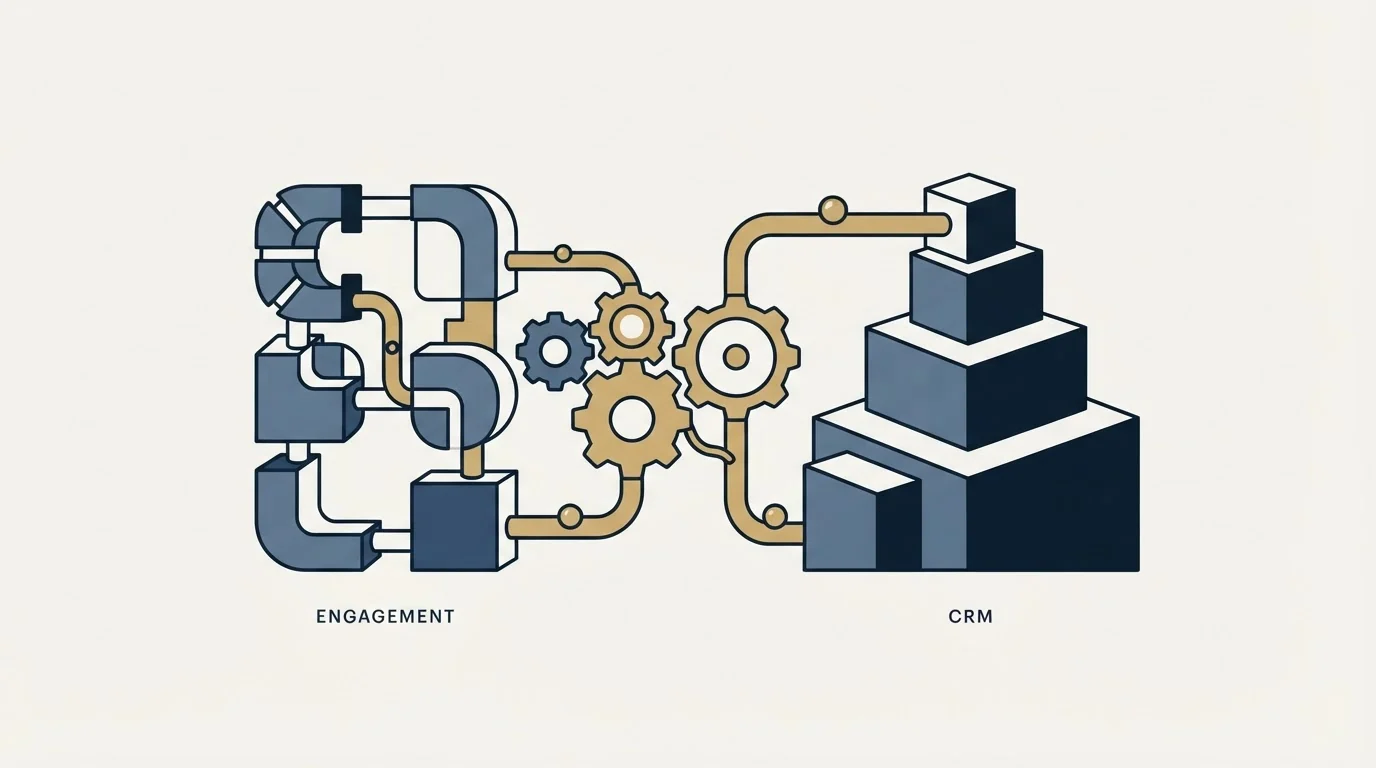
Teams that buy both land on the same division of labour. Pipedrive holds the account, the contact and the deal; Groove by Clari holds the activity and whatever it produced. The seam between them is the sync, and the sync is where the arguments happen.
Groove's page names Salesforce when it describes the integration, saying it "seamlessly integrates with Salesforce and other revenue-critical tools". Pipedrive does not appear in that integration list, so confirm the connector exists and what it carries before either product is bought on the assumption that it does. Pin down which fields move, in which direction, and how often.
Rolling Out Without Breaking Deliverability
Two things go wrong when a second tool arrives, and neither is a product fault. The first is double contact: once Groove by Clari is syncing to Pipedrive and a sequence is running on top, the same person gets enrolled twice by two people who each thought they owned the list. Settle which system is authoritative for contacts before the first sequence starts.
- Yes: Agree which system owns the contact record, and write it down
- Yes: Send one message per campaign, with no bump step behind it
- Yes: Keep sending infrastructure separate from both products
- No: Point two sequencers at the same list
- Yes: Agree the meeting criteria in writing before launch
- Depends: Check the Pipedrive contact or credit ceiling against the list size
The second is a quiet reputation problem. Adding an engagement platform adds no sending capacity, because neither product here publishes a warmup, rotation or deliverability feature. Volume that rises because sequencing got easier still lands on the same mailboxes, so size the sending layer against the wave rather than against the tool.
One doctrine note, because it changes the arithmetic. RevenueFlow sends one message per campaign, with no thread replies and no bump step behind it. Most engagement platforms are built around multi-step cadences, so a large part of what they automate goes unused on a run like that.
Decision Framework
- Name the bottleneck in one sentence. Response handling and record keeping are different problems, and usually only one is expensive this quarter.
- Read what the CRM already does. Campaigns is an add-on on every plan, so the email capability is a purchase rather than an inclusion.
- Accept that neither half is priced yet. Neither vendor publishes a figure this connection can read, so both numbers arrive by conversation.
- Ask the quote-only vendor for the meter first. Per seat, per platform, per credit, per package: the unit makes the number predictable before it arrives.
- Check the sending layer separately, then buy in order. Record first, then whichever gap survived steps 1 and 2.
The Decision In One Line
Buy Pipedrive first and live with it for a quarter before opening a Groove by Clari conversation.
Neither answer covers the sending. That stays a separate line in the budget on every version of this decision.
Related Reading
- Best Groove by Clari Alternatives in 2026
- Best Pipedrive Alternatives in 2026
- Groove by Clari vs Outreach: Sales Engagement Platform Comparison
- Groove by Clari vs Salesloft: Sales Engagement Platform Comparison
- Pipedrive vs Salesforce: CRM Platform Comparison
If you would rather have this run for you, RevenueFlow books qualified meetings on a pay-per-meeting basis and publishes client results.
Pricing and features are taken from the vendors' own pages. Verify current terms with the vendor before relying on them.
Frequently asked questions.
Frequently asked questions- Do I need both Groove by Clari and Pipedrive?
- Most teams need the CRM and can delay the engagement platform. Pipedrive sells Campaigns as an add-on on all four plans, so check what the CRM already covers before opening a second vendor conversation. Buy the engagement platform when time is going on chasing replies and logging activity rather than on not knowing which deals are real.
- Which one should I buy first?
- The CRM, in almost every case. The record has to exist before there is anything to work on top of it. Neither vendor publishes a figure this connection can read, so both halves of this budget start as conversations. Run a wave or two through the sending setup the team already has, see where the time actually goes, then decide whether the Groove by Clari quote is worth requesting at all.
- How much does Groove by Clari cost?
- Clari publishes no figure for Groove on any page fetched for this comparison. The pricing page sells the platform as one package with "no extra platform fees for integrations or continuous support", and the button under it says Get a quote, so the number arrives after a conversation.
- How much does Pipedrive cost?
- Pipedrive names four plans in its own knowledge base, Lite, Growth, Premium and Ultimate, and its pricing page does not answer this connection, so no per-plan figure could be read for this comparison. The knowledge base does publish the add-on structure: LeadBooster, Projects and Smart Docs are included on Premium and Ultimate, and Campaigns is an add-on on all four plans.
About the author.

Tim Carden is CMO / CTO at RevenueFlow, which builds and operates outbound revenue engines for B2B companies. Studied at McGill University.
Tim Carden · CMO / CTO
Connect on LinkedIn →Explore more.
Ready to scale your outreach?
We build GTM engines that book real meetings. See the receipts.
Related articles.
Kommo vs Luru: CRM Platform vs Sales Engagement Platform Comparison
Compare Kommo (CRM platform) and Luru (sales engagement platform) side by side. See pricing, features, and integrations to decide which one, or both, your stack needs.
Dripify vs Membrain: Sales Engagement Platform vs CRM Platform Comparison
Compare Dripify (sales engagement platform) and Membrain (CRM platform). See pricing, features, and integrations to decide which one, or both, your stack needs.
Groove by Clari vs mailfloss: Sales Engagement Platform vs Data Enrichment Tool Comparison
Compare Groove by Clari (sales engagement platform) and mailfloss (data enrichment tool) side by side. See pricing, features, and integrations to decide which one, or both, your stack needs.
Mailshake vs Pipedrive: A Sender and a CRM, Side by Side
Mailshake sells per-user sending with a two-way Pipedrive sync from its middle tier; Pipedrive is a per-seat CRM with sequences from Growth. Both read 18 September 2026.
AroundDeal vs Leadspicker: Data Enrichment Tool vs Sales Engagement Platform Comparison
Compare AroundDeal (data enrichment tool) and Leadspicker (sales engagement platform) side by side. See pricing, features, and integrations to decide which one, or both, your stack needs.
AroundDeal vs Salesflare: Data Enrichment Tool vs CRM Platform Comparison
Compare AroundDeal (data enrichment tool) and Salesflare (CRM platform) side by side. See pricing, features, and integrations to decide which one, or both, your stack needs.