How to Book Sales Meetings with Cybersecurity
A step-by-step playbook for booking meetings with CISOs and security directors: title mapping, trigger-based lists, sequence design, templates, objections.
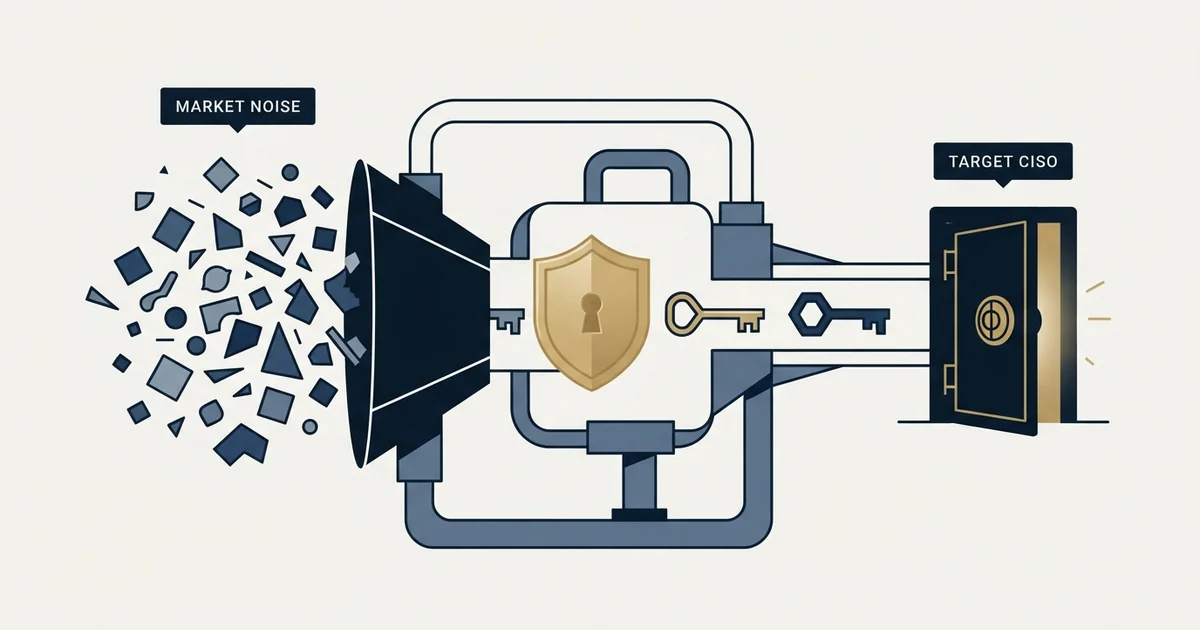
Book meetings with cybersecurity buyers by targeting the director layer that runs evaluations rather than only the CISO, building lists around trigger events such as a new security leader, a compliance deadline, or security hiring, and asking for a 15-minute technical conversation or a written teardown instead of a platform demo.
Key takeaways
- The CISO approves spend, but the director or manager one layer down runs the evaluation and writes the internal justification, which makes that layer the better first touch above a few hundred employees.
- Security is several separate buying centers (GRC, IAM, AppSec, SecOps), so segment the list by domain and run one campaign per domain instead of one campaign for 'security'.
- Build lists around trigger events: a new security leader 30 to 90 days into the role, compliance deadlines such as SOC 2 or ISO 27001 cycles, security job postings, funding, and enterprise-customer pressure.
- US public companies must disclose material cybersecurity incidents on Form 8-K under rules the SEC adopted in 2023, which makes remediation-phase timing partially observable from public filings.
- Turn off open tracking and avoid redirect links: enterprise gateways detonate links in sandboxes, and security practitioners inspect pixels and redirect domains in cold email.
- Replace the 30-minute discovery call with a 15-minute engineer-to-engineer conversation, a written teardown, or a self-serve sandbox, and run 300 to 500 qualified contacts per segment through single-message campaigns spread across a quarter.
Reviewed and updated September 1, 2026
How to Book Sales Meetings with Cybersecurity: A Step-by-Step Playbook
A security vendor exports 800 contacts with the title "CISO," writes one email about reducing alert fatigue, and sends it to all of them. Three weeks later they have two meetings. One is with a CISO whose company signed a three-year competitor contract last quarter. The other is with a consultant who put the title on LinkedIn and has no budget at all.
The list was the problem, and then the offer was the problem. Cybersecurity buyers sit behind the best email security stacks on the market and are pitched constantly by a category with thousands of funded competitors. Booking meetings here is a mechanical process: pick titles that map to real purchasing authority, build the list around events that create budget, run patient single-message campaigns across channels, and ask for something a security leader can say yes to without exposing themselves.
Step 1: Target the Titles That Actually Own the Problem
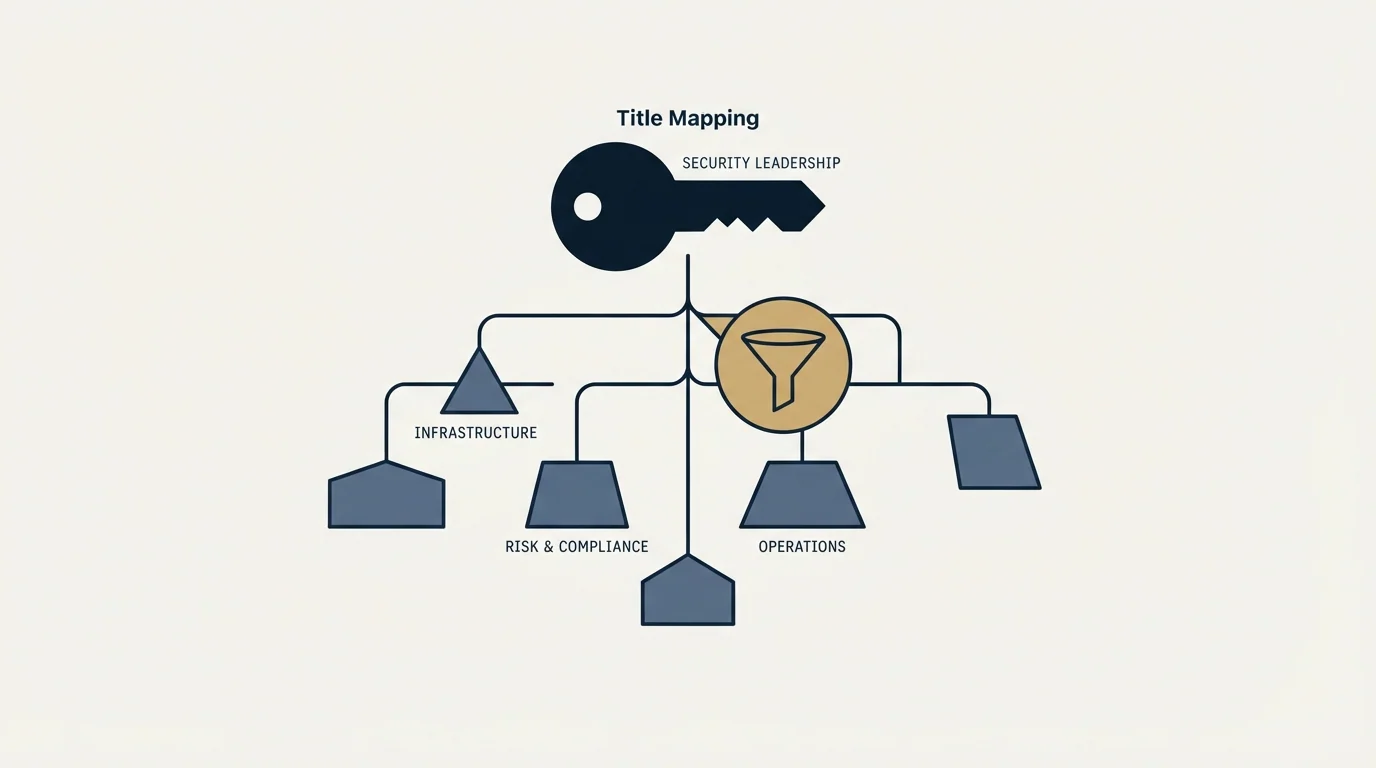
The CISO is the obvious target and usually the wrong first touch. Above a few hundred employees, the CISO sets strategy and approves spend while a director or manager one layer down runs evaluations, sits in the demos, and writes the internal justification. That second layer converts better because those people are measured on solving the exact problem you sell into. Map titles to company size before you build anything.
| Company size | Economic buyer | Evaluator and champion | Practitioner who validates |
|---|---|---|---|
| Under 200 employees | CTO, VP Engineering, Head of IT | Same person | Senior DevOps or IT lead |
| 200 to 1,500 | CISO, VP Security, Head of IT | Director of Security, Security Manager | Security Engineer, SecOps Analyst |
| 1,500 to 10,000 | CISO reporting to CIO or CTO | Director of Security Engineering, Director of GRC, Director of IAM | Detection engineer, AppSec engineer, compliance analyst |
| 10,000+ | CISO plus BISO or divisional security leader | Senior Director or VP of the specific domain | Domain architects and platform owners |
The second thing to map is domain, because security contains several separate buying centers. GRC leaders buy for audits and questionnaires. IAM leaders buy for access and privilege. AppSec leaders buy for the SDLC and developer adoption. SecOps leaders buy for detection coverage and analyst time. A pitch about false-positive reduction is meaningless to a GRC director and urgent to a SOC manager. Write one campaign per domain.
Below roughly 200 employees there is often no security title at all. Spend belongs to engineering leadership or IT and is driven by customer demands rather than internal risk appetite, so those buyers need their own message (template 4 below).
Step 2: Build the List Around Trigger Events, Not Firmographics
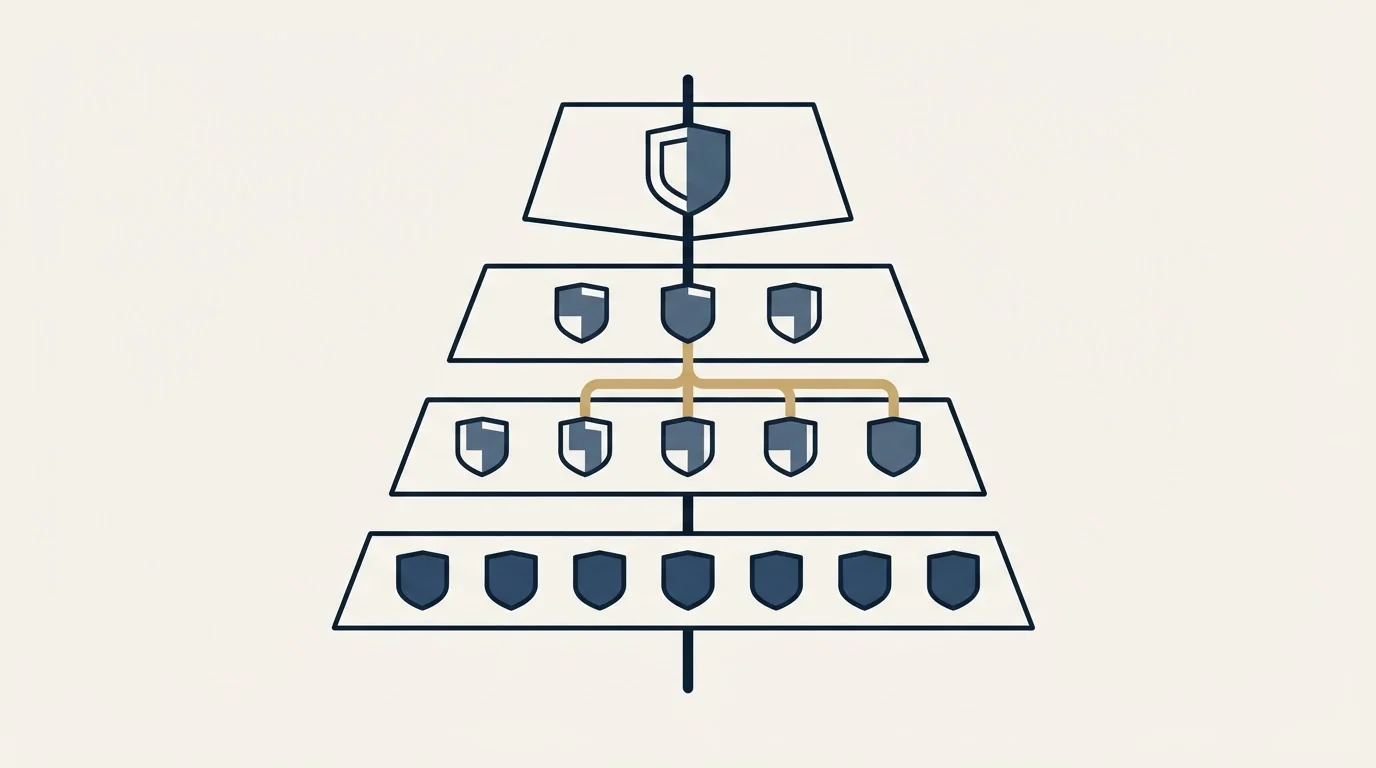
Cold email to security leaders works when the timing is defensible. A flat list of every CISO in a revenue band produces the two-meeting result described above. A list built on events that create urgency produces meetings because the recipient is already thinking about the problem. The triggers worth building around:
A new security leader in seat. New CISOs and security directors run an assessment in their first quarter and typically reshape the stack in their first year. Someone who started 30 to 90 days ago is more open to a first conversation than the same person will be 18 months later. Track title changes and new-hire announcements.
Public disclosure of a security incident. US public companies must disclose material cybersecurity incidents on Form 8-K under rules the SEC adopted in 2023, which makes incident timing partially observable from filings. Source: SEC press release 2023-139. Handle this trigger carefully. Pitching a team mid-incident is the fastest way to be blacklisted internally. The usable window is months later, during remediation and board reporting.
Compliance deadlines and framework adoption. SOC 2 cycles, ISO 27001 surveillance audits, PCI DSS assessments, CMMC requirements for defense suppliers, and migrations to frameworks such as NIST CSF 2.0 all produce hard dates. Source: NIST Cybersecurity Framework. Deadlines create budget in a way that generic risk arguments never do.
Security hiring signals. A company posting for three detection engineers is scaling a SOC. One posting for its first GRC analyst is about to be crushed by security questionnaires. Job posts are the cheapest reliable intent signal in this vertical, and they are public.
Funding, acquisition, and enterprise-customer pressure. A Series B company that just signed its first Fortune 500 logo is about to inherit a security review it cannot pass. Post-acquisition companies are consolidating two stacks and rationalizing licenses.
Existing tooling. Technographic signals tell you whether your integration story is real. If you extend an EDR they already run, say so in the first line.
Practical rule: 300 to 500 well-qualified contacts per domain segment beats 5,000 unfiltered ones.
Step 3: One Message Per Campaign, for a Buyer Who Reads Email Defensively
Security buyers evaluate your email the way they evaluate everything else, by looking for signals of manipulation. That shapes campaign design more than any open-rate optimization, and it is the clearest argument in any vertical for one message per campaign. A workable structure across a quarter:
| Campaign | Window | Channel | Purpose |
|---|---|---|---|
| 1 | Now | Email, one message | Trigger-specific opener with one clear ask |
| Alongside 1 | Same week | LinkedIn connect, no pitch | Face and name recognition |
| 2 | Four weeks on | Email, one message | New angle, its own subject line |
| 3 | On the next trigger | Email, one message | Peer proof or a concrete artifact offer |
| Alongside 3 | Same week | LinkedIn message or one short call | Direct, one sentence, its own reason |
| 4 | Next quarter | Email, one message | Objection-preempting angle |
| 5 | Before the renewal or audit | Email, one message | The routing and timing ask |
Someone who does not answer is written to again weeks later in a new campaign, with its own subject line and its own premise, never as a reply beneath the message they already passed over. We stopped sending that bump because it arrives in front of exactly the readers most likely to report it, and this is the audience least likely to misread what it is, so the reputation cost lands on the sending domain and follows every other campaign it carries. A fresh email gets a fresh open. The reasoning, with the numbers from our own campaigns, is in why we stopped using follow-ups.
Rules that matter specifically for this audience:
- Yes: Turn off open tracking and avoid link redirects
- Yes: Send from a domain that survives inspection
- Yes: Keep attachments and calendar links out of touch one
- Yes: Do not use fear
Turn off open tracking and avoid link redirects. Enterprise security gateways detonate links in sandboxes, which turns your open and click data into noise and makes any branching on that data unreliable. A security practitioner who inspects a tracking pixel or a redirect domain in a cold email will also judge you for it. Use plain text and plain links.
Send from a domain that survives inspection. SPF, DKIM, and DMARC alignment is non-negotiable here, because your recipient may personally run the mail security stack.
Keep attachments and calendar links out of the first message. Both trip filters and read as presumptuous.
Do not use fear. Breach statistics, countdown language, and "your attack surface is exposed" openers are the house style of low-quality vendors, and experienced buyers pattern-match them instantly.
Step 4: Choose an Offer a Security Leader Can Accept Without Risk
The default B2B ask, a 30-minute discovery call, costs a security leader time and signals internally that they are evaluating something. Offers that convert better in this vertical reduce one or both costs:
- A 15-minute technical conversation with an engineer, explicitly not a sales demo
- A written teardown specific to their environment, delivered whether or not they take a call
- A peer benchmark showing how comparable teams in their sector solved the same problem
- A sandbox or trial they can run without procurement involvement
- An introduction to a reference customer, offered before you ask for anything
Offers that stall: full platform demos, "quick sync to explore synergies," gated whitepapers, and anything requiring their legal team before a first conversation.
Make the ask small and specific. "Worth 15 minutes with our detection engineer to compare notes on Okta log coverage?" beats "do you have time this week for a demo" because it names the topic, names who is on the call, and caps the commitment.
Step 5: Templates You Can Send Today
Template 1: New Security Leader in Seat
Subject: your first 90 days at {{company}}

Hi {{first_name}},

Congrats on the {{new_title}} role. Most people in your seat spend
the first quarter working out what the inherited stack actually
covers versus what it was supposed to cover.

Two gaps come up constantly at {{company_size}} scale:
{{gap_one}} and {{gap_two}}. We built {{product_category}} for the
second one, and {{reference_company}} ran the same assessment last
year if you want their read rather than mine.

Worth 15 minutes with our {{engineer_title}} in the next few weeks?
Happy to answer questions and leave the pitch out of it.

{{sender_name}}
Why this works: the trigger is verifiable, the email describes the recipient's actual current workload before mentioning the product, and the ask offers a technical peer rather than a salesperson. Offering a reference customer before requesting anything reads as confidence.
Template 2: Compliance Deadline
Subject: {{framework}} evidence collection at {{company}}

{{first_name}},

Saw {{company}} is hiring a {{compliance_role}}, which usually means
{{framework}} evidence collection has outgrown spreadsheets.

The controls themselves are rarely what eats the time. Pulling
access reviews and change records from {{system_one}} and
{{system_two}} every quarter and proving they happened on
schedule is what does.

We automate that collection for teams in {{industry}}. I can send
the control mapping we use for {{framework}} so you can check it
against your scope. No call required.

{{sender_name}}
Why this works: it opens with a public signal rather than a claim about their risk, shows domain knowledge by naming the painful sub-task, and asks for permission to send a document rather than for a meeting. Recipients who take the artifact self-identify, and the meeting request comes on the reply.
Template 3: Practitioner-Level Technical Angle
Subject: {{tool}} coverage question

Hi {{first_name}},

Technical question rather than a pitch: when you run {{tool}} for
{{use_case}}, how are you handling {{specific_gap}}?

Every team we talk to at {{company_size}} scale solves it one of
three ways, and all three have tradeoffs. We wrote up the
comparison after {{reference_company}} walked us through theirs.

If it is useful I will send it over. If you have solved it a
fourth way I would like to hear it.

{{sender_name}}
Why this works: it targets the evaluator layer, leads with a question a practitioner has an opinion about, and gives them a reason to reply that is not "I want to buy." Replies are frequently technical corrections, which are still conversations and often route you to the right person.
Template 4: Engineering Leader at a Company Without a Security Team
Subject: security questionnaires after the {{customer_type}} deal

{{first_name}},

Congrats on the {{funding_or_customer_event}}. The predictable
next step is enterprise prospects sending 200-question security
reviews that land on your engineering team.

We help companies at {{company_size}} answer those without pulling
engineers off the roadmap. {{reference_company}} went from
{{before_state}} to {{after_state}} on the same problem.

If questionnaires are already showing up, 15 minutes is worth it.
If not yet, say so and I will follow up next quarter.

{{sender_name}}
Why this works: it speaks to someone who does not think of themselves as a security buyer, frames the problem in engineering-time terms, and offers an easy "not yet" reply that keeps the thread open.
Step 6: Handle the Four Objections You Will Actually Get
- No: "We already use {{competitor}}."
- No: "No budget until next fiscal year."
- No: "Send me information."
- No: "We handle this in-house."
"We already use {{competitor}}." Do not attack the incumbent. Ask a scoping question that reveals whether it covers the specific case you win on, and offer the comparison in writing. Security leaders rarely rip out tools mid-contract, so ask when the renewal falls and set a task for 90 days before it.
"No budget until next fiscal year." Usually true. Get the fiscal year start date, ask what would need to be in the plan for it to be funded, and send material that helps them build the internal case. A meeting eight months out on the calendar beats a dead thread.
"Send me information." Send something specific within the hour, then ask one question that requires a reply. Generic decks end conversations.
"We handle this in-house." Ask what the in-house approach costs in engineer hours per quarter. Many in-house security solutions are one person's side project, and that person is usually happy to say so.
Step 7: Set Realistic Expectations Per 100 Prospects
Published cold email benchmarks vary enormously by list quality, offer, and sender reputation, and cybersecurity is a harder-than-average vertical because of inbox competition and filtering. Borrowing someone else's numbers will mislead you. Build the model from four inputs instead: delivered rate, reply rate, positive reply share, and positive-to-meeting conversion. Multiply them against 100 contacts, then run at least 1,000 sends before you trust any of the four.
Which lever moves the result matters more than the starting numbers. In order of impact for security outreach: list quality and trigger relevance first, offer second, copy third, sending infrastructure fourth (assuming authentication is already correct). Diagnose from the replies you get. "Wrong person" means your list is off. "Not interested" means your offer is off. Silence at scale means you should check deliverability before rewriting a single sentence.
Measure meeting-held rate alongside meetings booked. Security leaders no-show at a meaningful rate because incidents and audits outrank vendor calls. Confirm the day before, keep the first meeting short, and make rescheduling frictionless.
Your Pre-Send Checklist

- Titles mapped to company size and security domain, one campaign per domain
- Every contact tied to a documented trigger event
- Emails verified and hard-bounce risk under control
- SPF, DKIM, and DMARC aligned on the sending domain
- Open tracking off, no redirect links, no attachments in the first message
- Offer is a short technical conversation or a written artifact
- Campaigns spread across a quarter, one message each, email and LinkedIn
- Unsubscribe mechanism and physical address present, per the FTC's CAN-SPAM requirements. Source: FTC CAN-SPAM compliance guide
- Objection responses written before launch
- Tracking in place for meetings held, not only meetings booked
Teams that consistently book security meetings share three habits. They email fewer, better-chosen people. They send when the problem is already on the buyer's whiteboard. And they ask for something small enough that saying yes carries no risk.
If you would rather have this built and run for you, RevenueFlow does done-for-you cold email for B2B teams selling to technical buyers, including trigger-based list building, infrastructure, copy, and campaign management. Book a strategy call and we will map the title and trigger strategy for your category before you spend a dollar on sending.
Related Reading
- Cybersecurity Cold Email Benchmarks: 2026 Performance Data
- Cold Email for Cybersecurity: Selling Security Solutions to CISOs and IT Leaders
- Cold Email for Partnerships: Building Strategic Business Relationships
If you would rather have this run for you, RevenueFlow books qualified meetings on a pay-per-meeting basis and publishes client results.
Frequently asked questions.
Frequently asked questions- Should I email the CISO or someone below them?
- At companies above a few hundred employees, start with the director or manager who owns your specific domain, such as Director of Security Engineering, Director of GRC, or Director of IAM. They run evaluations and build the internal case. Below roughly 200 employees, there is often no security title at all and the buyer is the CTO, VP Engineering, or Head of IT.
- Why do my cold emails to security teams never get replies?
- Usually the list, not the copy. Security leaders reply when the timing is defensible, which means the email lands during a real trigger like a new role, an audit cycle, or an enterprise security review they cannot pass. Also check that SPF, DKIM, and DMARC are aligned, and remove tracking pixels and redirect links, which this audience notices and penalizes.
- What should I ask for in a cold email to a CISO?
- Ask for something small and specific that carries no internal risk. A 15-minute conversation with one of your engineers, a written teardown of their environment delivered regardless of whether they take a call, a peer benchmark, or a sandbox they can test without involving procurement. Full platform demos and gated whitepapers stall in this vertical.
- How long should cold outreach to security buyers run?
- About a quarter, across roughly seven separate campaigns split between email and LinkedIn, each carrying exactly one message. The second campaign lands about four weeks after the first, and the routing ask comes before a renewal or an audit. Every campaign adds a new angle under its own subject line rather than a bump on an unanswered one. Track meetings held as well as meetings booked, since incidents and audits cause no-shows.
- How many meetings should I expect per 100 cybersecurity prospects?
- Build the estimate from your own delivered rate, reply rate, positive reply share, and positive-to-meeting conversion rather than borrowing published benchmarks, which vary enormously by list quality, offer, and sender reputation. Run at least 1,000 sends before trusting any of the four inputs, and diagnose from reply content: wrong-person replies mean the list is off, not-interested replies mean the offer is off.
About the author.

Ben Carden is CRO at RevenueFlow, which builds and operates outbound revenue engines for B2B companies. Previously at Gartner Enterprise. Studied at London School of Economics.
Ben Carden · CRO
Connect on LinkedIn →Explore more.
Ready to scale your outreach?
We build GTM engines that book real meetings. See the receipts.
Related articles.
Cold Email for Influencer Outreach: Partner with Creators
Learn how to use cold email to build authentic influencer partnerships that drive real results for your brand, with proven templates and strategies.
Cold Email for Product Feedback: Complete Strategy Guide
Learn how to use cold email to gather valuable product feedback from users and prospects. Includes proven templates, feedback frameworks, and response optimization techniques.
Cold Email for PR: How to Pitch Journalists and Get Coverage
Learn how to craft cold emails that get journalists to open, read, and respond to your pitches. Includes real templates, timing strategies, and a complete PR outreach checklist.
Cold Email for Reviews: Complete Strategy Guide
Learn how to use cold email to generate authentic product reviews on G2, Capterra, and other platforms. Includes proven templates, compliance guidelines, and review generation frameworks.
Cold Email for Link Building: How to Get Quality Backlinks
Learn how to use cold email outreach to build high-quality backlinks that improve your SEO rankings, with proven templates and strategies that get responses.
Cold Email for Focus Groups: Complete Strategy Guide
Learn how to use cold email to recruit qualified participants for focus groups. Includes proven templates, screening strategies, and group composition frameworks.