How to Book Sales Meetings with Hospitality
A tactical playbook for booking meetings with hotel and restaurant decision makers: who to target, how to time outreach, templates, and realistic meeting yield.
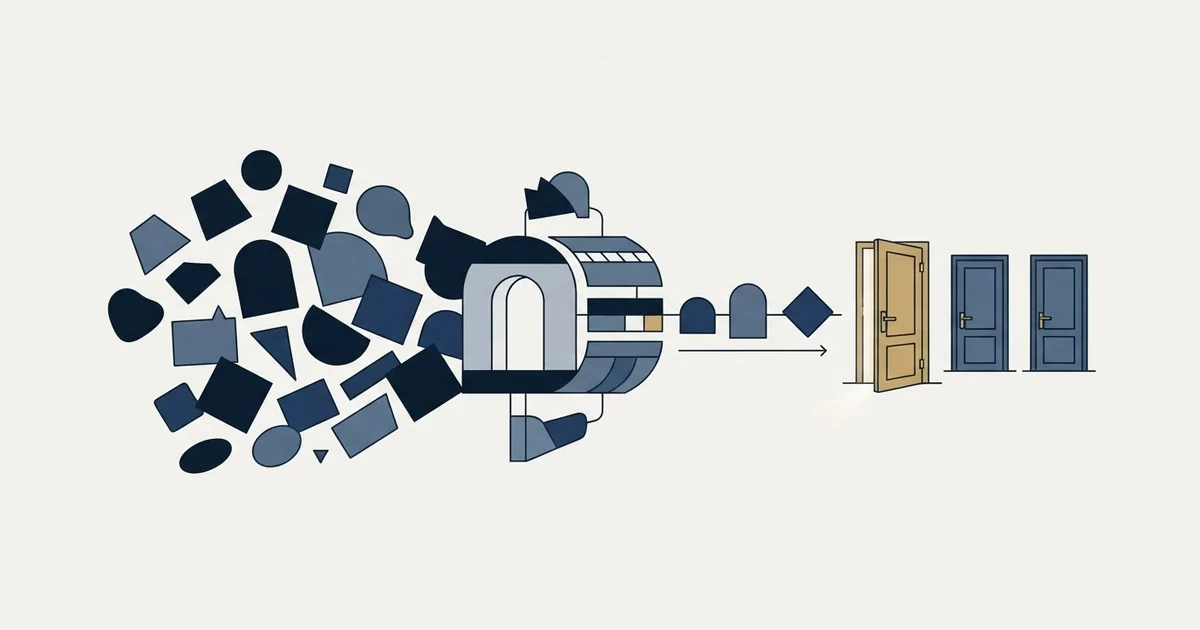
Booking meetings with hospitality starts by targeting the layer that holds the budget: property GMs for spend under about $10,000 a year, corporate VPs of Operations and procurement above that. Build lists property-first with room count and segment, time outreach to the September-to-November budget cycle, and ask for ten minutes rather than a demo.
Key takeaways
- A single hotel can involve four separate companies (brand, owner, management company, property team); target the one holding the budget for your price point.
- Property-level titles can usually buy anything under roughly $10,000 a year; above that the decision moves to corporate operations or procurement.
- Woodpecker found sequences with three to five follow-up steps hit 8.3% reply rates versus 4.1% with no follow-ups, and one added follow-up lifted total replies 65.8%. Those are market figures rather than our practice: we send one message per campaign.
- Belkins' 2026 study of 7.5 million emails showed companies with 0 to 10 employees reply at 0.72% versus 0.22% for enterprises over 10,000 employees, so keep hospitality segments small and independent-heavy.
- The September to November budget-build window is the highest-leverage outreach period of the year for anything needing a line item.
- Published planning models put hospitality at roughly 0.4 to 0.8 held meetings per 100 prospects contacted, or one meeting per 125 to 250 people reached.
Reviewed and updated September 1, 2026
How to Book Sales Meetings with Hospitality: A Step-by-Step Playbook
A hotel general manager reads email in three places: standing behind the front desk before the morning stand-up, in the back office between a property walkthrough and a group site visit, and on a phone in the parking lot at 9 p.m. after a banquet room turns over. None of that resembles the software buyer who lives in Slack and takes calls from a home office. Outreach built for the second person will not book meetings with the first.
The market is worth the adjustment. U.S. hotels were projected to employ more than 2.17 million people and pay a record $128.47 billion in compensation in 2025, with property-level costs in operations, maintenance, sales and marketing, and IT each rising nearly 5% the prior year. Source: AHLA 2025 State of the Industry. Cost pressure against flat revenue growth is the most reliable door-opener in hospitality outreach right now, because every operator is being asked to hold service levels with less.
Step 1: Decide Which Layer of the Org You Are Selling To
A single hotel can involve four companies: a brand (the flag on the building), an owner (often a REIT or investment group), a third-party management company, and the property team itself. Emailing a GM about something corporate buys centrally wastes both of your time. Map your product to the layer holding the budget before you build a list.
| Layer | Typical titles | Owns decisions about |
|---|---|---|
| Property | General Manager, Director of Operations, Director of Rooms, Director of Sales and Marketing, Executive Housekeeper, Chief Engineer | Local vendors, small-ticket tools, staffing agencies, supplies, anything under a discretionary spend threshold |
| Management company | VP of Operations, Regional Director of Operations, Corporate Director of Procurement, VP of Revenue Management, Director of IT | Portfolio-wide software, PMS and RMS decisions, purchasing programs, labor platforms |
| Ownership / asset management | Asset Manager, VP of Asset Management, CFO | Capital projects, renovations, energy, anything with a return-on-investment case |
| Brand / franchisor | VP of Brand Standards, Director of Supply Chain | Approved vendor lists, brand-standard technology, group purchasing terms |
Restaurant groups compress this into fewer layers. A 40-unit regional group runs decisions through a VP or Director of Operations, a Culinary Director, and a CFO, with unit GMs holding almost no purchasing authority.
The practical rule: if your average contract value is under roughly $10,000 a year, property titles can usually buy it. Above that you are selling to corporate, and the GM becomes an internal champion rather than a buyer.
Step 2: Build a List That Reflects Property Reality
Standard B2B databases handle hospitality badly. They map employees to the management company or brand rather than the individual property, so a search for "General Manager" at a large operator returns hundreds of people with no indication of which building they run or what segment it serves. Build the list property-first.
Start from property directories: brand site locators, state and city lodging association member lists, CVB partner directories, and restaurant association rolls. Then enrich each record with room count, segment (select service, full service, resort, extended stay), independent versus flagged, management company, and whether it has meeting space or F&B outlets.
Room count is the most useful segmentation variable in hotel outreach. A 90-room select-service property and a 600-room convention hotel have nothing in common operationally, and copy written for one reads as clueless to the other. Restaurant equivalents are unit count and service model.
Verify titles against LinkedIn or the property site before you send. Turnover at the GM and DOSM level is high, and those addresses often forward to whoever replaced them, so a stale list puts your first impression in front of someone who can tell you skipped the check.
Keep campaign segments small. Belkins' 2026 study of 7.5 million client emails found smaller recipient companies (0 to 10 employees, 0.72% reply rate) replied at more than triple the rate of enterprises with 10,000-plus employees (0.22%). Source: Belkins B2B Cold Email Response Rates. Independent hotels and regional restaurant groups behave like those smaller companies. Large management companies and REITs behave like enterprises.
Step 3: Time the Outreach to the Hospitality Calendar
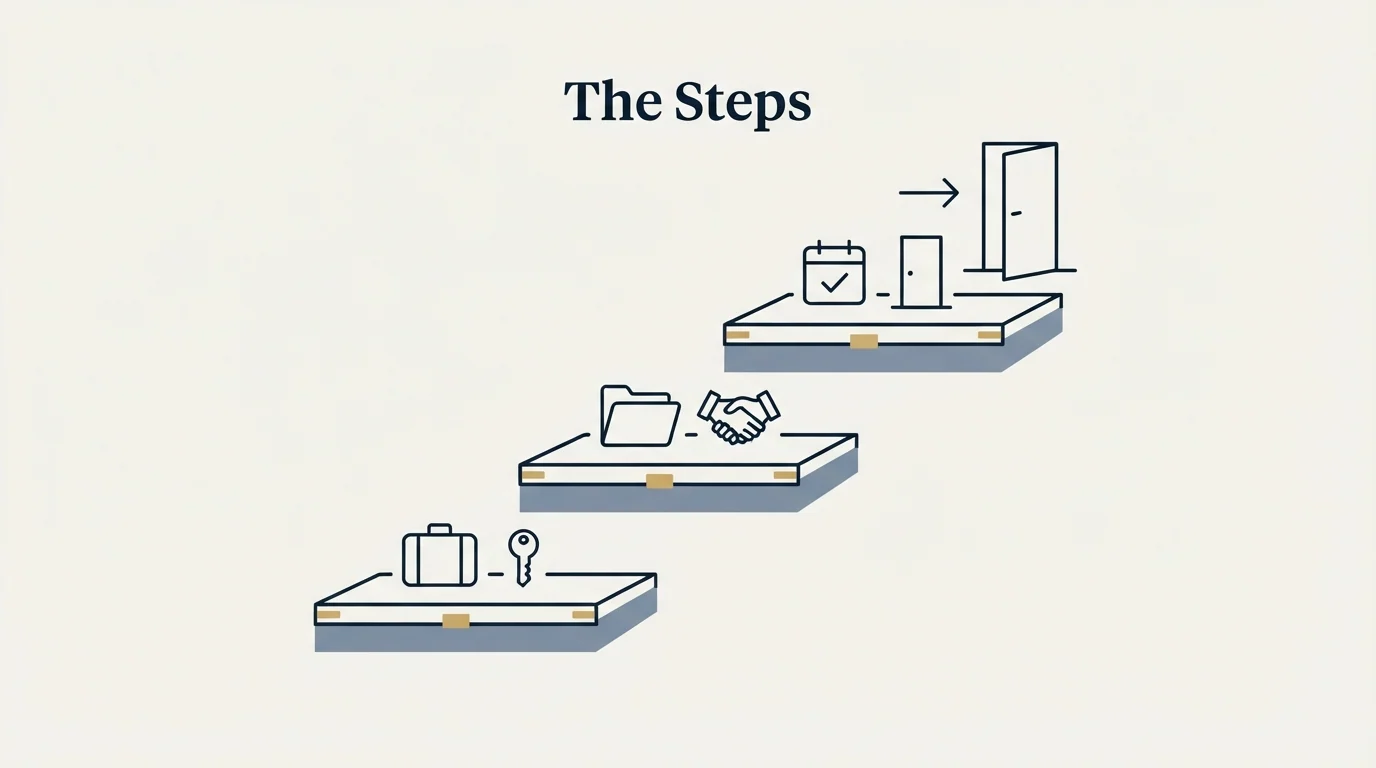
Two calendars govern hospitality responsiveness, and ignoring either one will suppress your reply rate regardless of copy quality.
The first is the demand calendar. Resorts are unreachable in their high season. Urban business hotels are busiest Tuesday through Thursday and quieter Sunday and Monday. Convention hotels are consumed by whatever citywide is in the building. Restaurants are gone Friday and Saturday and through holiday catering season. Property-level people answer email in the shoulder hours, so Monday and Tuesday mornings before 8 a.m. local time, plus late morning around 10 to 11 a.m., outperform the mid-week afternoon slot that works for corporate B2B.
The second is the budget calendar. Most hotel management companies build the following year's operating budget from roughly September through November, with owner approval in November or December and capital plans locked shortly after. That window is the highest-leverage moment of the year for anything needing a line item. From January through March, operators execute against a budget already set, and new spend has to displace something. Anchoring outreach to that cycle ("wanted to reach you before your 2027 budget locks") converts better than a generic value pitch, because it gives the recipient a reason to act on a specific date rather than someday.
Corporate titles follow ordinary business rhythms and go dark during major industry conference weeks.
Step 4: One Message Per Campaign, for a Distracted Reader
What works in hospitality runs longer in duration and shorter per message than a standard SaaS cadence. Woodpecker's platform analysis found sequences with three to five follow-up steps achieved 8.3% reply rates against 4.1% for sequences with no follow-ups, and that a single added follow-up increased total replies by 65.8%. Source: Woodpecker Cold Email Statistics. That is the market's argument for follow-up steps, and it matters most when your recipient is away from a desk all day.
We get the extra bites a different way. Every campaign carries exactly one message, and a GM who does not answer is written to again weeks later in a new campaign with its own subject line and its own premise. We stopped adding a step under the first email because a bump lands beneath something a manager already skipped between shifts, in front of exactly the readers most likely to report it, and the reputation cost is charged to the sending domain across every other property you write to. A fresh email gets a fresh open. The reasoning, with the numbers from our own campaigns, is in why we stopped using follow-ups.
A workable structure for property-level targets:
| Campaign | Window | Channel | Purpose |
|---|---|---|---|
| 1 | Now | Email, one message | Property-specific observation plus one-line relevance, soft ask |
| Alongside 1 | Same week | LinkedIn connect, no pitch | Face recognition, nothing sold in the note |
| Alongside 1 | Week two | Phone to the property main line | Ask for the GM by name during a shoulder hour |
| 2 | Four to six weeks on | Email, one message | New angle: a peer property, a number, or a seasonal trigger |
| 3 | Next shoulder season | Email, one message | Single-question message, easiest possible yes |
| 4 | Ahead of budget season | Email, one message | Value drop with no ask (benchmark, checklist, comp-set note) |
| 5 | Next planning window | Email, one message | The routing ask, naming who should own it instead |
For corporate targets, drop the property phone call, leave longer between campaigns, and run a second stakeholder at the same company on a parallel track. Corporate buyers in hospitality rarely decide alone, and coordinated (not identical) outreach to two people raises the odds one forwards it internally.
Keep every message under 90 words. A GM reading on a phone between shifts will not scroll.
Step 5: Make the Ask Something a Busy Operator Can Say Yes To
The biggest reason hospitality outreach fails to convert replies into meetings is the ask. "Do you have 30 minutes for a demo next week?" trades half an hour of an oversubscribed day for a sales pitch. Asks that convert here are short, specific about what the person gets, and anchored to a peer property or a real number.
Asks that work:
- A ten-minute call framed around one operational number ("what three comparable select-service properties pay per occupied room for this")
- A benchmark or comp-set snapshot for their specific market, delivered whether or not they take the call
- A single-property pilot rather than a portfolio commitment, which lets a GM say yes without involving corporate
- A pre-budget-season conversation with a deadline tied to their own calendar
Asks that fail: "quick sync," "partnership opportunity," "15 minutes to show you our platform," and anything requiring the recipient to assemble stakeholders first.
Step 6: Templates You Can Send Today
Template 1: Property GM, peer-proof opener
Subject: {{property_name}} housekeeping cost per occupied room

Hi {{first_name}},

Two {{segment}} properties near {{city}} run about {{room_count}} keys like yours and were both spending more per occupied room on housekeeping labor than their budget assumed. Both closed most of that gap without cutting hours.

I don't know whether that's true at {{property_name}}. Ten minutes would tell us.

Worth a look, or is this already handled?

{{sender_name}}
{{sender_title}} | {{phone}}
Why this works: It leads with a metric the GM is personally measured on, uses room count and segment to prove the list was built with care, admits it may not apply, and asks a question answerable in four words from a phone.
Template 2: Corporate VP of Operations, portfolio angle
Subject: {{company_name}}'s {{portfolio_count}} properties, one process

{{first_name}},

Rolling a single process across {{portfolio_count}} properties usually breaks at the same place: the properties that need it most have the least bandwidth to adopt it.

We handle the adoption side so regional teams aren't chasing compliance property by property. {{reference_operator}} runs it across {{reference_count}} hotels.

Open to a short call before {{budget_month}} budgets lock, or should I send this to whoever owns {{category}} at corporate?

{{sender_name}}
Why this works: It names a failure mode corporate operators recognize, offers a peer operator as proof, and closes with a routing question. Routing questions are the highest-yield close in hospitality, because "talk to Dana instead" is still a reply, and a reply with a name beats silence.
Template 3: Restaurant group Director of Operations
Subject: {{concept_name}} weekend turn times

{{first_name}},

Multi-unit groups around {{unit_count}} locations tend to lose the most margin in the same two windows: Friday and Saturday peak turns, and the third-party delivery mix.

I pulled a quick read on how {{concept_name}} compares to similar {{service_model}} groups. Want me to send it over?

If it's not useful, tell me and I'll stop.

{{sender_name}}
Why this works: It names two universally felt margin leaks, offers information rather than a demo, and includes an opt-out that reads as respect. Multi-unit operators respond well to hearing how they compare to their peer set.
Step 7: Handle the Four Objections You Will Actually Hear
- No: "We use a brand-approved vendor for that."
- No: "That's a corporate decision."
- No: "No budget this year."
- No: "Send me some information."
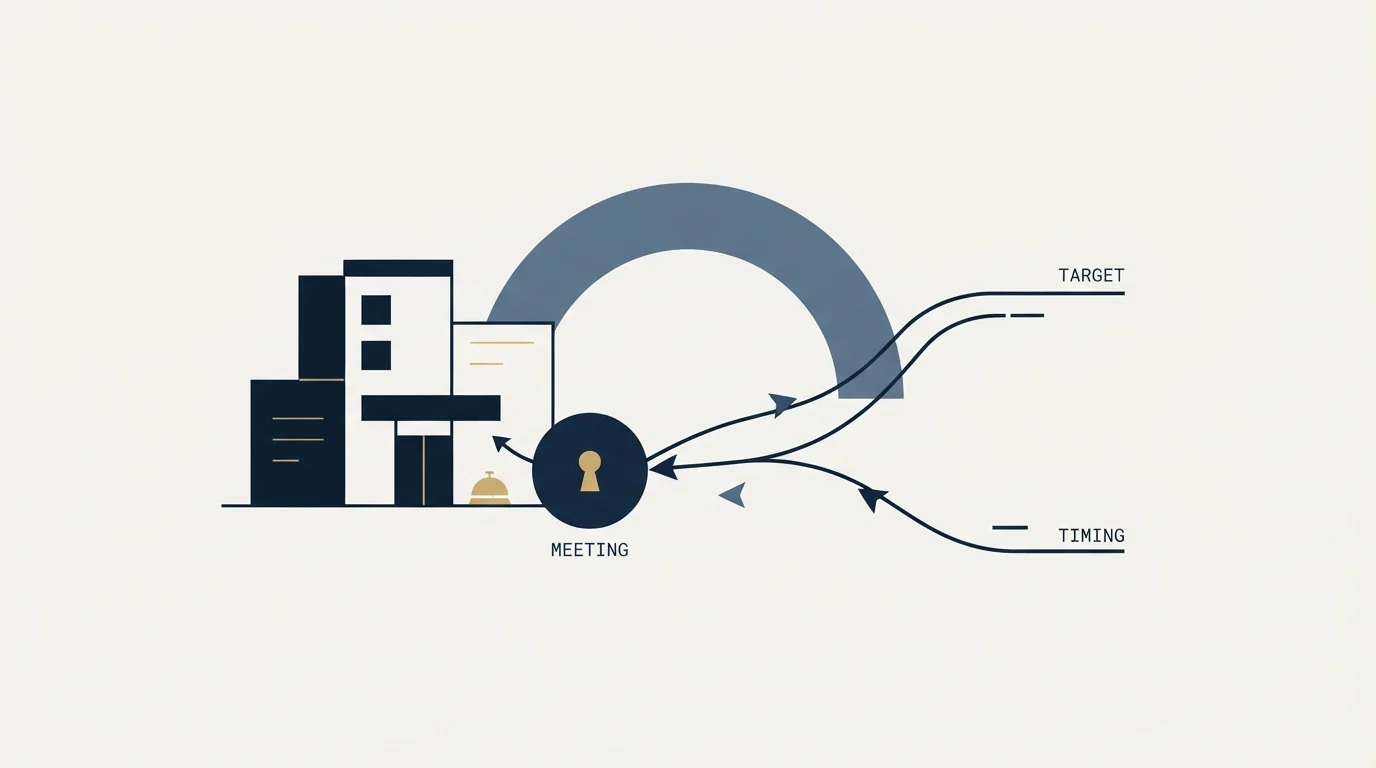
"We use a brand-approved vendor for that." Do not argue with the list. Many brand standards cover a narrow category and leave room at the edges. Reply: "Makes sense. Two quick questions: is {{category}} a hard brand standard or a preferred-vendor recommendation? And who at {{management_company}} handles additions to that list?"
"That's a corporate decision." Treat this as routing rather than rejection, and always ask for the name. Reply: "Understood. Who owns it at corporate, and would you forward this? Happy to write two sentences you can paste."
"No budget this year." Convert it to a calendar commitment. Reply: "Fair. When does the {{next_year}} budget process start? I'd rather come back with a cost model at the right moment than keep emailing you now."
"Send me some information." Half the time this is a polite exit. Separate the two with a conditional. Reply: "Will do. So I send the right thing, is the bigger issue {{problem_a}} or {{problem_b}} at {{property_name}}?" A specific answer means real interest. Silence means the value-drop campaign is the next thing they hear from you.
What a Realistic Outcome Looks Like Per 100 Prospects
Published benchmarks vary enormously depending on what is measured. Woodpecker reports a 3.43% platform-wide average reply rate. Source: Woodpecker Cold Email Statistics. Belkins reports 0.45% across 7.5 million agency-sent emails in 2025, including very large enterprise campaigns. Source: Belkins B2B Cold Email Response Rates. Neither is hospitality-specific, and neither is a forecast for your campaign. What you can model is the funnel shape:
92%
3% to 6% of delivered
~35% of replies
~60%
~75%
Bar widths are equal here because these stage values are not a single comparable measure.
| Stage | Illustrative rate | Out of 1,000 prospects |
|---|---|---|
| Contacts with a valid, verified address | 92% | 920 |
| Total replies across the campaigns | 3% to 6% of delivered | 28 to 55 |
| Replies that are positive rather than referrals or declines | ~35% of replies | 10 to 19 |
| Positive replies that convert to a scheduled call | ~60% | 6 to 11 |
| Scheduled calls that actually happen | ~75% | 4 to 8 |
That implies roughly 0.4 to 0.8 held meetings per 100 hospitality prospects contacted, or one meeting for every 125 to 250 people reached with a well-built set of campaigns. These are planning assumptions rather than measured results, and your real numbers will move on list quality, offer, and timing far more than on copy.
Two hospitality-specific adjustments: show rates run lower than in software because operational emergencies outrank calendar invites, so confirm the morning of and offer to reschedule rather than writing off a no-show. And referral replies are worth more here than in most verticals, because a GM forwarding your email to a regional director carries credibility you cannot buy from outside.
Your Pre-Send Checklist
- Confirmed which layer (property, management company, ownership, brand) holds the budget at your price point
- List built property-first with room or unit count, segment, and operator on every record
- Titles verified against LinkedIn or the property site within the last 30 days
- Send windows set to local shoulder hours, not one global schedule
- At least four separate campaigns across the year, one message each
- Every message under 90 words with a single ask
- The ask is a ten-minute call, a document, or a single-property pilot, never a demo
- Objection replies pre-written for the four responses above
- Deliverability infrastructure warmed and separated from your primary domain
Getting all of that in place is a build rather than a campaign, which is why most hospitality outbound programs stall in month two.
If you would rather have this done for you, book a strategy call with RevenueFlow and we will map the target layer, the list, and the campaigns for your hospitality segment before you send a single email.
Related Reading
- Hospitality Cold Email Benchmarks: 2026 Performance Data
- Cold Email for Partnerships: Building Strategic Business Relationships
- Cold Email for Product Feedback: Complete Strategy Guide
If you would rather have this run for you, RevenueFlow books qualified meetings on a pay-per-meeting basis and publishes client results.
Frequently asked questions.
Frequently asked questions- Who should I actually email at a hotel?
- It depends on price point. Under roughly $10,000 a year, the General Manager, Director of Operations, or Director of Rooms at the individual property can usually buy. Above that, target the management company: VP of Operations, Regional Director of Operations, Corporate Director of Procurement, or Director of IT. Capital projects belong to the asset manager or CFO on the ownership side.
- What is the best time to send cold emails to hotel managers?
- Property-level staff read email in shoulder hours, so early Monday and Tuesday mornings before 8 a.m. local time and late morning around 10 to 11 a.m. beat the standard mid-week afternoon slot. Avoid a property's peak season entirely, and avoid restaurants Friday and Saturday. Corporate titles follow ordinary business hours except during major industry conference weeks.
- How many meetings should I expect per 100 hospitality prospects?
- Plan for roughly 0.4 to 0.8 held meetings per 100 prospects with a tightly built list, which works out to about one meeting per 125 to 250 people reached. That published model assumes 3% to 6% total replies across a multi-message programme, about a third of them positive, and a 75% show rate. We send one message per campaign, and in this vertical the result moves most on list quality and on hitting the budget-build window.
- How do I handle a prospect who says they use a brand-approved vendor?
- Do not argue with the approved list. Ask whether your category is a hard brand standard or a preferred-vendor recommendation, and ask who at the management company handles additions to that list. Many brand standards cover a narrow category and leave real discretion at the edges, and the answer routes you to the person who can actually add you.
- How long should a cold email to a hospitality decision maker be?
- Under 90 words with a single ask. General managers and multi-unit operators read on phones between shifts and will not scroll. Lead with one operational number they are personally measured on, such as cost per occupied room or weekend turn times, name a comparable property or group, and close with a question answerable in a few words.
About the author.

Ben Carden is CRO at RevenueFlow, which builds and operates outbound revenue engines for B2B companies. Previously at Gartner Enterprise. Studied at London School of Economics.
Ben Carden · CRO
Connect on LinkedIn →Explore more.
Ready to scale your outreach?
We build GTM engines that book real meetings. See the receipts.
Related articles.
Cold Email for Influencer Outreach: Partner with Creators
Learn how to use cold email to build authentic influencer partnerships that drive real results for your brand, with proven templates and strategies.
Cold Email for Product Feedback: Complete Strategy Guide
Learn how to use cold email to gather valuable product feedback from users and prospects. Includes proven templates, feedback frameworks, and response optimization techniques.
Cold Email for PR: How to Pitch Journalists and Get Coverage
Learn how to craft cold emails that get journalists to open, read, and respond to your pitches. Includes real templates, timing strategies, and a complete PR outreach checklist.
Cold Email for Reviews: Complete Strategy Guide
Learn how to use cold email to generate authentic product reviews on G2, Capterra, and other platforms. Includes proven templates, compliance guidelines, and review generation frameworks.
Cold Email for Link Building: How to Get Quality Backlinks
Learn how to use cold email outreach to build high-quality backlinks that improve your SEO rankings, with proven templates and strategies that get responses.
Cold Email for Focus Groups: Complete Strategy Guide
Learn how to use cold email to recruit qualified participants for focus groups. Includes proven templates, screening strategies, and group composition frameworks.