Lemlist vs Woodpecker: Cold Email Platform Comparison
Compare Lemlist and Woodpecker side by side. See pricing, features, and integrations to choose the right cold email platform for your needs.
Woodpecker vs lemlist turns on how many new people you contact a month. Woodpecker's calculator prices 500 contacted prospects at $35 a month and 2,000 at $67, with unlimited team members. Lemlist's Email plan is $69 a month for unlimited users and 50,000 emails, so above 2,000 prospects lemlist is cheaper.
Key takeaways
- Woodpecker's calculator, set to US dollars, reads $35, $67, $99, $159 and $188 a month for 500, 2,000, 4,000, 8,000 and 10,000 contacted prospects.
- Lemlist's Email plan costs $69 a month, or $55 billed yearly, for unlimited users and 50,000 emails, with a 650M+ leads database included.
- Woodpecker counts a prospect once per campaign per month, even across the 16 steps a campaign can hold, but twice across two campaigns.
- Lemlist changes unit at Multichannel, $109 per user a month, while Woodpecker stays unlimited on users and sells LinkedIn at $29 per account.
Reviewed and updated September 21, 2026
Lemlist charges you for a platform and throws in the data. Woodpecker charges you for the people you contact and throws in the infrastructure. In a Woodpecker vs lemlist decision, the cheaper tool depends on one number rather than on a preference: how many new people you contact a month. Woodpecker's own calculator prices 2,000 contacted prospects at $67 a month, and lemlist's Email plan costs $69 a month for as many users as you like. Below 2,000 Woodpecker is cheaper; above it, lemlist's flat price wins for an email-only team.
Woodpecker vs lemlist: the quick answer
Woodpecker is cheaper for a small, precise list: its calculator shows $35 a month for 500 contacted prospects and $67 for 2,000, with unlimited team members and email accounts. Lemlist is cheaper once the list grows, because its Email plan stays at $69 a month up to 50,000 emails and bundles a 650M+ lead database. Woodpecker reaches $99 at 4,000.
Understanding the Core Difference
Lemlist is a multichannel outreach platform with a lead database and phone finder built in, plus a deliverability hub and warm-up.
Woodpecker is a cold email platform priced on the people you actually contact rather than on seats or mailboxes, with warm-ups, email verification and unlimited team members and email accounts included at no extra cost.
Lemlist's Email plan carries unlimited users at $69 a month, which is the shape worth knowing: five people on that tier cost the same as one. The step to Multichannel changes the unit to per user at $109, so the price ladder has a cliff in it rather than a slope.
Woodpecker's price has no cliff and no seats. Team members and email accounts are unlimited, and the meter runs on contacted prospects. Its tooltip spells out the counting rule: "Contacting someone multiple times a month in the same campaign counts only as one", while contacting the same person in two separate campaigns counts as two.
So both give away the seat count at their entry point, and then diverge completely: lemlist starts charging for people once you add channels, and Woodpecker starts charging for people the moment you contact more of them.
Pricing Comparison
Woodpecker pricing, read from its calculator
Woodpecker's pricing page is a calculator, and the price per 100 contacted prospects falls as the volume rises. It opens at 500 prospects, where the page shows $7.00 per 100 and a total of $35 a month. The figures below were read off the calculator after setting the currency to US dollars and each prospect count in turn, on both billing terms. The page marks annual billing "SAVE 33%" and notes that prices do not include VAT.
| Contacted prospects a month | Monthly billing | Annual billing, per month | Emails a month included |
|---|---|---|---|
| 500 | $35 | $24 | 8,000 |
| 2,000 | $67 | $45 | 32,000 |
| 4,000 | $99 | $66 | 64,000 |
| 8,000 | $159 | $106 | 128,000 |
| 10,000 | $188 | $126 | 160,000 |
Each step up adds included extras as well: warm-ups rise from 2 at 500 prospects to 20 at 10,000, and Lead Finder credits from 100 to 350. Email verification, catch-all included, is unlimited at every level. The priced add-ons are per unit:
| Add-on | Published price |
|---|---|
| LinkedIn connected accounts | $29 a month per account |
| Extra warm-ups | $5 a month per email account |
| Email addresses (Google or Microsoft) | $6 a month per address |
| Email addresses (Maildoso, Mailforge, Infraforge or Azure) | $4 a month per address |
| Dedicated servers (Infraforge) | $59 a month per server |
| Integrations, API, webhooks, MCP, CLI | $20 a month |
| Agency panel, active clients | $27 a month per active client |
The free trial runs for 14 days or 100 cold emails, whichever comes first. The named Starter, Growth, Scale and Max tiers that older comparisons quote are gone, and $24 a month reappears only as the annual rate for 500 prospects.
Source: Woodpecker Pricing
Lemlist pricing
| Plan | Monthly billing | Yearly billing, per month | Users | Volume |
|---|---|---|---|---|
| $69/mo | $55/mo | Unlimited users | 50,000 emails/month | |
| Multichannel | $109 per user/mo | $87 per user/mo | Per user, 5 senders each | Unlimited emails and messages |
| Enterprise | Custom | Custom | Teams of 5+ users | Unlimited |
Lemlist's page offers monthly, quarterly (save 10%) and yearly (save 20%) billing, and its plan grid lists local currency billing in dollars, euros or pounds: a browser in the UK is shown the same figures as £69 and £55. Finding contact data costs credits on top, at 1 credit = $0.01, with a verified email at 5 credits and a phone number at 20. The 14-day free trial gives full access to the Multichannel plan with no credit card.
Source: Lemlist Pricing
What the two cost at a realistic volume
Take an invented but ordinary case: three people running email only, sending one email to each of 2,000 new prospects a month. The arithmetic is illustrative and uses list prices only.
On lemlist that is the Email plan at $69 a month for all three, since it carries unlimited users, with 50,000 emails of headroom and the lead database included. On Woodpecker, the calculator shows $67 a month for 2,000 contacted prospects, or $45 a month billed annually, with the three people free and mailboxes free if you bring your own. At this size the two are two dollars apart on monthly billing.
Now push the list to 10,000 prospects a month. Lemlist's Email plan does not move at $69, because 10,000 single emails sit well inside its 50,000 cap. Woodpecker's calculator reads $188 a month, or $126 billed annually, 2.8 times its 2,000-prospect price. The crossover falls between Woodpecker's 2,000 and 4,000 tiers, and a team contacting 3,000 people a month pays for the 4,000 tier at $99.
Features Breakdown
lemlist Email, $69 a month
- Unlimited users and email senders
- 50,000 emails a month
- 650M+ leads database
- Email and phone number finder, paid in credits
- Deliverability hub and warm-up
- CRM integrations and API
Woodpecker at 2,000 prospects, $67 a month
- Unlimited team members and email accounts
- 32,000 emails a month
- Unlimited email verification, catch-all included
- 6 warm-ups and 200 Lead Finder credits
- Add-on LinkedIn, $29 per account
- Add-on Integrations and API, $20
Lemlist's plan cards are data-heavy: the 650M+ leads database, an email and phone number finder, the deliverability hub with warm-up, lemAgent AI agents, CRM integrations and API. Multichannel adds LinkedIn, SMS and a built-in call dialer, with WhatsApp as an add-on.
Woodpecker's list is sending-operations-heavy: adaptive sending, condition-based campaigns, email service provider matching, catch-all verification, A/B tests of up to five versions and email-LinkedIn-call combined sequences.
The clearest signal is what each sells separately. Woodpecker sells LinkedIn outreach, the integrations and API bundle and the agency panel as add-ons, so its core is email sending. Lemlist bundles the data, so its core is the stack.
Integration Ecosystem
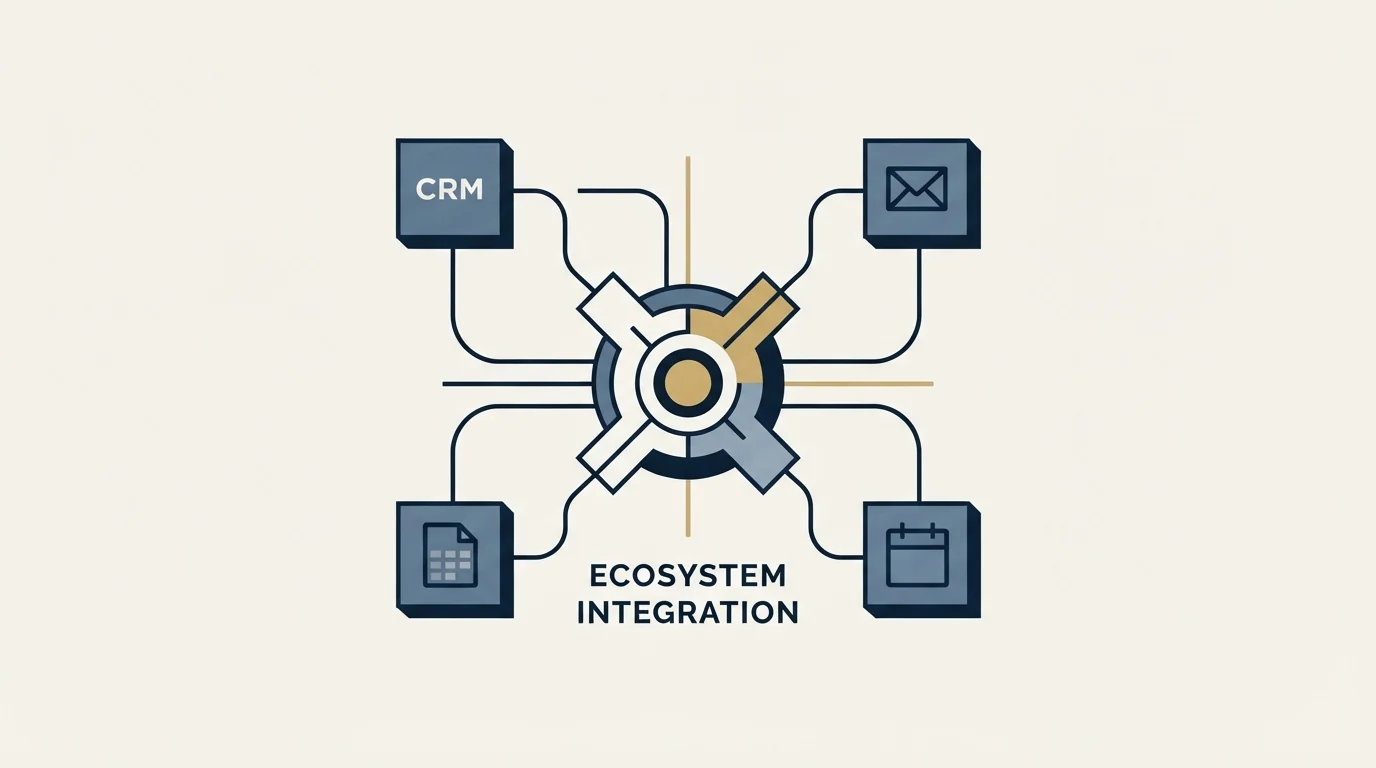
Lemlist's plan grid names Zapier, Make, n8n and Clay, CRM integrations with HubSpot, Salesforce and Pipedrive, and VoIP integrations with Aircall and Ringover.
Woodpecker's pricing page groups its integrations as an add-on and names Clay, its API and webhooks, an MCP server and CLI, two-way syncs with Pipedrive and HubSpot, and Persana, Calendly, Google Sheets, Zapier, Zoho, Hunter, Mailivery, Warmy and Mailreef.
Both reach HubSpot, Pipedrive, Clay and Zapier. Salesforce appears on lemlist's grid and not on Woodpecker's pricing page, so a Salesforce shop should confirm the route before buying Woodpecker. If your outbound is assembled by buying data, lemlist removes an invoice.
Who Should Pick Which
Pick lemlist if you would otherwise buy data separately. That is the whole argument, and on the unlimited-users Email plan a small email-only team gets both halves for $69 a month.
Pick Woodpecker if the list is small and precious. When the addressable market is a few thousand accounts, paying for reach rather than for a platform is the honest match: 500 prospects cost $35 a month, or $24 on annual billing.
Pick Woodpecker if you are an agency billing per client. The agency panel at $27 a month per active client, alongside unlimited team members, is purpose-built, and lemlist's shape is a team product rather than an agency one.
Pick lemlist if more than two people need multichannel. Just price the team at the $109 per user Multichannel rate first, because that is where the ladder stops being generous.
Where each one sits in a cold outbound stack
Lemlist tries to own sourcing and sending. Woodpecker owns sending and expects the rest of the stack to exist.
Our own doctrine keeps that slot deliberately thin: one message per campaign, no bumps and no thread replies, and volume spread across many low-volume mailboxes so no single address carries too much. LinkedIn runs as its own motion rather than as a step inside an email sequence, because a second LinkedIn message lands under the one that was ignored and reads as a bump whatever the campaign structure says.
That doctrine changes the Woodpecker arithmetic rather than merely colouring it. Its tooltip notes that a campaign has 16 steps, so someone can be contacted up to 16 times in a month and still count as one prospect. A single-message campaign collects none of that generosity and pays the same per-prospect price for one touch. It also discounts lemlist's multichannel half, leaving its data layer as the thing worth paying for.
Teams comparing either tool against other senders can start with Instantly vs Woodpecker or Instantly vs lemlist, and lemlist's full price list covers its credits and add-ons in more depth.
Switching between them
Both export prospects and campaigns to CSV, and neither carries sending reputation across.
Order of operations: suppression lists first, then domain authentication with SPF and DKIM confirmed on the new platform, then warm-up, then a two to three week ramp. Rebuild copy rather than pasting it, because merge-tag syntax differs.
The lemlist-specific note is data. If the finder was doing real work, leaving lemlist means adding a provider to the stack, and that belongs in the decision rather than in the aftermath.
Feature Comparison Summary
| Lemlist | Woodpecker | |
|---|---|---|
| Billing unit | Plan tier, then per user above it | Contacted prospects a month |
| Entry price | $69/mo, $55 on yearly | $35/mo for 500 prospects, $24 on annual |
| Users at entry tier | Unlimited | Unlimited team members |
| Users above entry tier | $109 per user/mo on Multichannel | Still unlimited |
| Lead database | 650M+ leads, built in | Lead Finder credits, 100 to 350 included |
| Repeat contact | Inside the email allowance | Counted once per campaign per month |
| Agency model | Not the core shape | $27/mo per active client |
| Best fit | Email-only team above 2,000 new people a month | Small precise lists, agencies |
Getting Started Checklist

- Count prospects contacted per month. That is Woodpecker's meter and the only number that moves its bill.
- Count the people who need access, and check which lemlist tier that puts you on.
- Write down what you pay for lead data today.
- If you run client work, compare Woodpecker's per-client price against the alternative.
- Send one real segment through each and read the replies.
- Confirm suppression list export from whichever you pick.
Final Thoughts
Lemlist is priced for a team that wants one vendor for data and sending. Woodpecker is priced for a team whose list is small enough that paying per person reached is cheap, and on today's calculator that means under about 2,000 new people a month.
Work out the monthly contacted-prospect number before reading either feature list. It decides this comparison more than anything either page says about itself.
Related Reading
- Best Lemlist alternatives
- Best Woodpecker alternatives
- Lemlist vs Smartlead
- Best Outreach alternatives
If you would rather have the sourcing and the sending run for you, RevenueFlow books qualified meetings on a pay-per-meeting basis and publishes client results.
Pricing and features are taken from the vendors' own pages. Verify current terms with the vendor before relying on them.
Frequently asked questions.
Frequently asked questions- Is Woodpecker or lemlist cheaper?
- It depends on how many new people you contact a month. Woodpecker's calculator shows $35 a month for 500 contacted prospects and $67 for 2,000, while lemlist's Email plan costs $69 a month for unlimited users. At 4,000 prospects Woodpecker reads $99, so an email-only team contacting more than 2,000 people a month pays less on lemlist.
- How much does Woodpecker cost?
- Woodpecker prices contacted prospects through a calculator. In US dollars it reads $35 a month for 500 prospects, $67 for 2,000, $99 for 4,000, $159 for 8,000 and $188 for 10,000, with annual billing marked save 33%. Team members and email accounts are unlimited, and add-ons include LinkedIn at $29 per account and the API bundle at $20.
- How much does lemlist cost?
- Lemlist's pricing page lists the Email plan at $69 a month, or $55 billed yearly, with unlimited users and 50,000 emails a month. Multichannel costs $109 per user a month, or $87 yearly, and adds LinkedIn, SMS and a call dialer. Enterprise is custom. Contact data costs credits on top, at one cent per credit.
- Does Woodpecker charge for repeat emails to the same prospect?
- Not within one campaign. Woodpecker's pricing tooltip says contacting someone multiple times a month in the same campaign counts only as one, and a campaign holds up to 16 steps. Contacting the same person in two separate campaigns counts as two, and its FAQ says the same prospect in five campaigns counts as five.
About the author.

Tim Carden is CMO / CTO at RevenueFlow, which builds and operates outbound revenue engines for B2B companies. Studied at McGill University.
Tim Carden · CMO / CTO
Connect on LinkedIn →Explore more.
Ready to scale your outreach?
We build GTM engines that book real meetings. See the receipts.
Related articles.
GetSales.io vs Yet Another Mail Merge: Sales Engagement Platform vs Cold Email Platform Comparison
Compare GetSales.io (sales engagement platform) and Yet Another Mail Merge (cold email platform) side by side. See pricing, features, and integrations to decide which one, or both, your stack needs.
Enginy vs Success.ai: Sales Engagement Platform vs Cold Email Platform Comparison
Compare Enginy (sales engagement platform) and Success.ai (cold email platform) side by side. See pricing, features, and integrations to decide which one, or both, your stack needs.
Artisan vs Yet Another Mail Merge: Sales Engagement Platform vs Cold Email Platform Comparison
Compare Artisan (sales engagement platform) and Yet Another Mail Merge (cold email platform) side by side. See pricing, features, and integrations to decide which one, or both, your stack needs.
Growbots vs MailHeat: Cold Email Platform vs Email Warmup Tool Comparison
Compare Growbots (cold email platform) and MailHeat (email warmup tool) side by side. See pricing, features, and integrations to decide which one, or both, your stack needs.
Hexospark vs JustCall: Cold Email Platform vs Sales Engagement Platform Comparison
Compare Hexospark (cold email platform) and JustCall (sales engagement platform). See pricing, features, and integrations to decide which one, or both, your stack needs.
EmailBison vs Emelia: Cold Email Platform Comparison
Compare EmailBison and Emelia side by side. See pricing, features, and integrations to choose the right cold email platform for your needs.