Lemwarm vs Saleshandy: Cross-Category Comparison
Compare Lemwarm (email warmup tool) and Saleshandy (cold email platform) side by side. Understand how these tools fit different stages of your sales workflow.
Lemwarm warms mailboxes at $29 per email account a month through a network of 20,000 or more domains. Saleshandy sends from $41 a month, or $34 annually, and advertises unlimited warm-up on unlimited connected mailboxes. Here the case for a separate warming line rests on method rather than price.
Key takeaways
- Saleshandy's pricing page advertises unlimited email warm-up with no metered credits and unlimited connected mailboxes on every tier.
- Saleshandy is $41 a month for 2,000 active prospects and 6,000 emails sent, falling to $34 on the annual column.
- Lemwarm charges $29 per email account a month, so ten mailboxes costs several times a Saleshandy subscription that already warms all of them.
- Saleshandy exposes ramp-up speed, volume and reply rates as settings, so the warming can be tuned and can also be tuned wrong.
Reviewed and updated August 29, 2026
Lemwarm vs Saleshandy: Cross-Category Comparison
Saleshandy's pricing page advertises unlimited email warm-up with no metered credits, unlimited connected mailboxes, and advanced warm-up settings exposing volume, ramp-up speed and reply rates. That is the deepest bundled warming in this family, and it makes the case for a separate warmup subscription harder here than anywhere else in it.
Lemwarm charges $29 per email account a month for warming and nothing else. When the platform beside it warms unlimited mailboxes at no extra charge, the argument for the dedicated vendor cannot rest on price and cannot rest on absence. It has to rest on method, and that is a narrower and more interesting claim.
Why These Two Get Compared
Saleshandy and Lemwarm both appear in a cold outbound budget, and they buy different things. A sending platform runs the campaign: the list, the sequencing, the sending schedule and the replies. A warmup tool works on the mailbox underneath it, generating the engagement history that decides whether the campaign reaches an inbox or a spam folder. Neither substitutes for the other.
The comparison worth making is between two warming networks rather than between a product and a gap. Lemwarm's page describes a pool of 20,000 or more healthy domains across 150 or more countries with industry-tailored clusters. Saleshandy exposes ramp-up speed, volume and reply rates as settings. Those are different philosophies about who should be tuning the warming.
Lemwarm is lemlist's own warmup product, so anyone weighing it is often also weighing the lemlist alternatives, several of which bundle warming on different terms.
Where Each Tool Fits In A Cold Outbound Run
A cold outbound run at RevenueFlow is built on one message per campaign, no thread replies and no bump sequences, spread across a fleet of mailboxes each sending a modest daily volume. That shape is what makes the warming question sharp: a fleet of low-volume mailboxes only works if every mailbox in it is trusted, and a mailbox with no history is not.
- Step 1Deliverability preparation
Lemwarm warms the mailbox and builds sender reputation, from $29 per email account.
- Step 2Campaign execution
Saleshandy sends the campaign from that mailbox, from $41/mo.
| Aspect | Lemwarm | Saleshandy |
|---|---|---|
| Category | Email Warmup Tool | Cold Email Platform |
| Workflow Stage | Deliverability preparation | Campaign execution |
| Primary Focus | Email domain warming and deliverability | Cold email outreach |
| Starting Price | $29/mo | $41/mo |
| Features Listed | 8 | 10 |
| Integrations | 9 | 10 |
Lemwarm warms through a network of other Lemwarm-connected domains rather than through seed mailboxes the vendor owns, and its own page describes that network as 20,000 or more healthy domains. The Smart plan adds personalised warm-up emails built from your real templates.
Pricing Comparison

Lemwarm Pricing
| Plan | Price | Contacts | Emails |
|---|---|---|---|
| Essential Plan | $29/mo | per email account | Warm-up network of 20k+ healthy domains |
| Smart Plan | $49/mo | per email account | Everything in Essential plan |
| Custom | Contact Sales | More than 10 users? | Everything in Smart plan |
Source: Lemwarm Pricing
Saleshandy Pricing
| Plan | Price | Contacts | Emails |
|---|---|---|---|
| Starter | $41/mo | 2,000 active prospects; unlimited storage | 6,000 emails sent / month |
| Pro | $99/mo | 30,000 active prospects; unlimited storage | 100,000 emails sent / month |
| Scale | $189/mo | Unlimited active prospects | 200,000 emails/month |
| Enterprise | Contact Sales | Volume & data on your terms | Contact Us |
Source: Saleshandy Pricing
How Each Side Actually Prices
Saleshandy meters active prospects and monthly sends while leaving mailboxes unlimited. Its pricing page lists Starter at $41 a month for 2,000 active prospects and 6,000 emails sent a month, Pro at $99 for 30,000 and 100,000, and Scale at $189 with unlimited prospects. The annual column on the same page runs $34, $76 and $149.
Lemwarm prices per email account. Its pricing page puts the Essential plan at $29 per email account a month, falling to $24 on the yearly option, and the Smart plan at $49 falling to $40. That per-account unit is the whole story for an outbound team: the price you care about is the entry price multiplied by your mailbox count.
Unlimited email accounts on every tier is what makes the annual figure worth modelling. The cost of adding the twentieth mailbox is zero here, so the platform line stays flat while a per-inbox warmup line does not.
What A Two-Tool Stack Costs
Here is illustrative arithmetic for a ten-mailbox setup, invented as a worked example rather than taken from any client. Both sides come from the vendors' own pricing pages.
On the Saleshandy side, Starter is $41 a month for 2,000 active prospects and 6,000 emails sent a month, or $34 on the annual column, and email accounts are unlimited on every tier, so the cost of adding the twentieth mailbox is zero. On the Lemwarm side, ten email accounts on Essential at $29 each is $290 a month, or $240 at the $24 yearly rate.
The illustrative warming line is therefore around seven times the illustrative sending line, for warming the platform already includes on unlimited mailboxes. That is the hardest arithmetic any pairing in this family produces, and it is why the honest recommendation here is to start with the bundled warming and let your own bounce composition decide whether a second vendor is needed at all.
Does Saleshandy Already Include Warmup?
Saleshandy's pricing page advertises unlimited email warm-up with no metered credits, unlimited connected mailboxes, and advanced warm-up settings that expose volume, ramp-up speed and reply rates. That is the deepest bundled warming in this family, and it raises the bar a dedicated vendor has to clear.
This is the question that decides whether you are closing a gap or buying an upgrade, and it is worth answering from the vendor's own current page rather than from a feature list that may predate a repackaging.
How To Tell The Warming Worked
Reply rate is the honest measure and it is the slowest one to arrive. Bounce composition moves sooner and says more: a rising share of soft bounces and policy rejections concentrated on one mailbox provider points at reputation, while a rising share of unknown-user bounces points at the list instead. Those are different problems and only the first one is what a warmup tool is for.
Lemwarm's deliverability score out of 100 is the vendor's own answer to the same question, and it is worth reading beside the campaign's numbers rather than instead of them. A vendor dashboard reports its own activity, so a score that improves while replies do not has told you the tool ran rather than that placement changed.
What Warming Will Not Fix
Warming raises the odds that a message is seen. It does nothing about whether the message deserved to be. A warmed mailbox sending a badly targeted list gets the same silence as a cold one, and the engagement ratio the warming was protecting falls anyway once real recipients start ignoring real emails at volume.
Three things sit upstream of both tools and neither vendor sells them. The list has to be right, because relevance is what produces the replies that hold a reputation up. The offer has to be worth answering. And the send pattern has to stay ordinary: one message per campaign, no thread replies, no bump sequences, and a day's volume spread across mailboxes rather than concentrated in one.
Unlimited mailboxes plus unlimited warm-up is the combination that makes a separate warmup subscription hardest to justify on price alone. The case for one has to rest on method.
Feature Highlights
Lemwarm Key Capabilities
- Automated email warmup with human-like interactions
- Warm-up network of 20,000+ healthy domains
- Industry-tailored warmup clusters for natural patterns
- Deliverability score out of 100
- Technical setup checker (SPF, DKIM, DMARC)
- Personalized warmup using your real email templates (Smart plan)
- Custom deliverability alerts and recommendations
- Free with any lemlist subscription
Saleshandy Key Capabilities
- Unlimited email accounts
- AI-powered email sequences
- Email warmup included
- Email verification credits
- 852M+ B2B contact database
- Unified inbox
- A/B testing (up to 26 variants)
- Spintax support
- Whitelabel for agencies (Scale+)
Where The Two Overlap
The overlap here is the largest in the family, since Saleshandy's page advertises unlimited warm-up on unlimited mailboxes with advanced settings, so almost everything Lemwarm sells has a counterpart on the platform side.
The overlap is small and it sits entirely on the deliverability side. Lemwarm does one job and does not send campaigns, so the two lists compete on almost nothing that matters to a buyer. Read the difference between them the way it is written: a feature that appears on one vendor's page and not on the other's is a difference in what each chose to publish, not proof that only one tool can do it. Both lists above are taken from the vendors' own pages.
Integration Ecosystem
Lemwarm connects with: Gmail, Google Workspace, Outlook, Microsoft 365, SMTP, lemlist (native), HubSpot (via lemlist), Salesforce (via lemlist), Pipedrive (via lemlist).
Saleshandy connects with: HubSpot, Salesforce, Pipedrive, Zoho CRM, Zapier, Make, n8n, Slack, Gmail, Outlook.
The shared ground is the mailbox. Both tools attach to the same Gmail, Google Workspace, Outlook or Microsoft 365 account, which is what lets one warm an address while the other sends from it, with no integration work between them.
When To Choose Lemwarm First

- Your mailboxes are new, or replies have fallen away on established ones
- You already have a way to send campaigns and the sending is not the gap
- Network warming priced per email account
- You want reputation evidence that does not come from the tool doing the sending
- You have no way to run a campaign at the volume the plan needs
- Your mailboxes are established and currently landing in the inbox
- Its pricing page starts at $41 and the platform already bundles warmup
- Your bottleneck is sequencing, sending and reply handling rather than reputation
Using Both Together
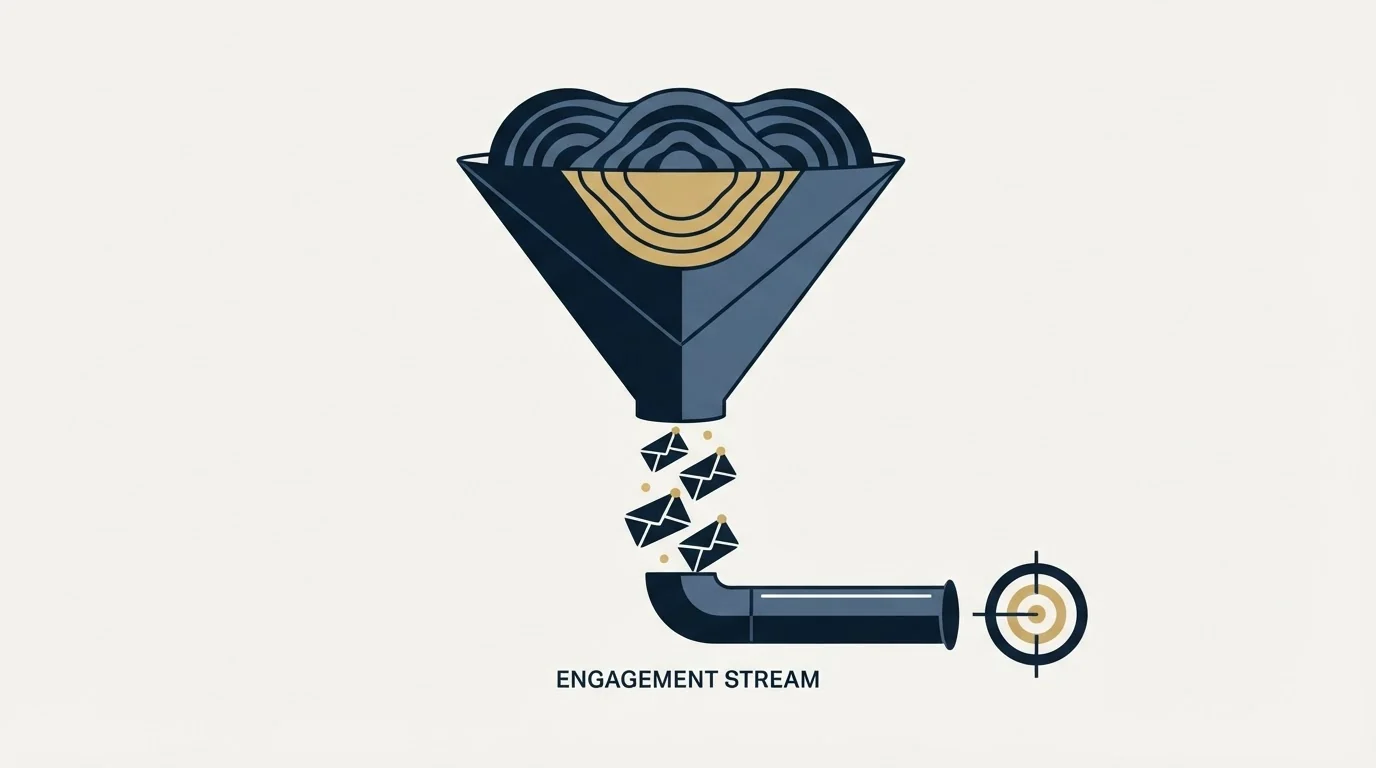
If you run both, run them on different mailboxes rather than on the same ones. Saleshandy's unlimited warm-up covers the fleet at no marginal cost, so the defensible use of a Lemwarm subscription is a small set of domains where you want a second network and a second opinion. Lemwarm connects to Gmail, Google Workspace, Outlook, Microsoft 365 and SMTP, so nothing stands between them.
Use the advanced warm-up settings rather than leaving them at their defaults. Saleshandy exposes volume, ramp-up speed and reply rates, and a ramp that is too aggressive on a new domain undoes the point of warming at all. A vendor that hands you those controls has also handed you the ability to get them wrong, which is worth an hour of attention before the first campaign.
Rolling It Out Without Losing The Reputation
- Yes: Authenticate first: SPF, DKIM and DMARC on every sending domain before warming starts
- Yes: Warm before you send: Let the ramp-up run its course rather than sending on day two
- Yes: One message per campaign: No thread replies and no bump sequences, whatever the platform allows
- Yes: Split the day across mailboxes: Low volume per inbox beats high volume from one
- Yes: Keep warming running: Leave it on once campaigns start, not off
- Depends: Tune the ramp, do not accept the default: An aggressive ramp on a new domain undoes the warming
The two house rules on that list are the ones most often broken by a new stack. One message per campaign means a prospect who does not reply is re-approached in a fresh campaign with a fresh angle rather than chased down the same thread, and it keeps each mailbox's send pattern closer to ordinary correspondence. Spreading a day's volume across mailboxes does the same thing for the fleet.
Decision Shortcut
If Saleshandy is the platform, start with its bundled warm-up and buy nothing else, because unlimited warming on unlimited mailboxes is genuinely hard to beat on price. If bounce composition later points at reputation on specific domains, put those on Lemwarm at $29 each and compare. If you are choosing a platform and warming matters to you, the unlimited-mailbox line on Saleshandy's page is worth more to a cold outbound run than most feature comparisons in this category.
Related Reading
- Best Lemwarm Alternatives in 2026
- Best Saleshandy Alternatives in 2026
- Lemwarm vs Warmbox
- Lemwarm vs Mailreach
- Instantly vs Saleshandy
If you would rather have this run for you, RevenueFlow books qualified meetings on a pay-per-meeting basis, against criteria agreed in writing before launch, and publishes client results.
Pricing and features are taken from the vendors' own pages. Verify current terms with the vendor before relying on them.
Frequently asked questions.
Frequently asked questions- Does Saleshandy include email warmup?
- Its pricing page advertises unlimited email warm-up with no metered credits, unlimited connected mailboxes, and advanced warm-up settings exposing volume, ramp-up speed and reply rates. That is the deepest bundled warming in this family, so a dedicated vendor beside it has to justify itself on method rather than on filling a gap.
- Is Lemwarm worth buying alongside Saleshandy?
- Not usually on price. Ten Lemwarm accounts at $29 each is several times a Saleshandy subscription that already warms unlimited mailboxes. The defensible case is a second warming network on a small set of domains, since Lemwarm's page describes a pool of 20,000 or more healthy domains, and a second opinion on reputation from a party that is not sending your campaigns.
- What does unlimited connected mailboxes actually change?
- It removes mailbox count from the platform bill. A cold outbound run spreads a day's volume across many low-volume addresses, so on most platforms the fleet is what drives the cost. On Saleshandy's page the meter is active prospects and sends instead, which means the platform line stays flat while a per-mailbox warming line does not.
- Should I change the advanced warm-up settings?
- Look at them rather than accepting defaults, particularly ramp-up speed on a new domain. Warming works by building an engagement history that looks ordinary, and a ramp that climbs too fast produces a pattern that does not. Saleshandy exposes volume, ramp-up and reply rates, so the control is there to be used carefully.
About the author.

Tim Carden is CMO / CTO at RevenueFlow, which builds and operates outbound revenue engines for B2B companies. Studied at McGill University.
Tim Carden · CMO / CTO
Connect on LinkedIn →Explore more.
Ready to scale your outreach?
We build GTM engines that book real meetings. See the receipts.
Related articles.
Growbots vs MailHeat: Cold Email Platform vs Email Warmup Tool Comparison
Compare Growbots (cold email platform) and MailHeat (email warmup tool) side by side. See pricing, features, and integrations to decide which one, or both, your stack needs.
GetSales.io vs Yet Another Mail Merge: Sales Engagement Platform vs Cold Email Platform Comparison
Compare GetSales.io (sales engagement platform) and Yet Another Mail Merge (cold email platform) side by side. See pricing, features, and integrations to decide which one, or both, your stack needs.
Enginy vs Success.ai: Sales Engagement Platform vs Cold Email Platform Comparison
Compare Enginy (sales engagement platform) and Success.ai (cold email platform) side by side. See pricing, features, and integrations to decide which one, or both, your stack needs.
Artisan vs Yet Another Mail Merge: Sales Engagement Platform vs Cold Email Platform Comparison
Compare Artisan (sales engagement platform) and Yet Another Mail Merge (cold email platform) side by side. See pricing, features, and integrations to decide which one, or both, your stack needs.
Hexospark vs JustCall: Cold Email Platform vs Sales Engagement Platform Comparison
Compare Hexospark (cold email platform) and JustCall (sales engagement platform). See pricing, features, and integrations to decide which one, or both, your stack needs.
EmailBison vs Emelia: Cold Email Platform Comparison
Compare EmailBison and Emelia side by side. See pricing, features, and integrations to choose the right cold email platform for your needs.