QuickMail vs Woodpecker: Cold Email Platform Comparison
Compare QuickMail and Woodpecker side by side. See pricing, features, and integrations to choose the right cold email platform for your needs.
QuickMail charges for the contacts you hold, from $49 a month for 1,000 up to $299 for 100,000, with unlimited senders and users. Woodpecker charges $7.00 per 100 prospects you actually contact and holds your list for nothing. The ratio between those two numbers decides this.
Key takeaways
- QuickMail meters uploaded contacts held; Woodpecker meters prospects contacted, which are different numbers for most teams.
- Both include unlimited connected email accounts and unlimited team members, so infrastructure is free on either side.
- Woodpecker counts a prospect once however many times you email them in a month, which prices sequence depth at zero.
- QuickMail includes unlimited LinkedIn accounts on every tier; Woodpecker sells LinkedIn automation as a $29 per account add-on.
Reviewed and updated August 29, 2026
QuickMail vs Woodpecker: Cold Email Platform Comparison
Both of these give away the sending infrastructure. QuickMail then charges for how many people are on your list, and Woodpecker for how many of them you actually write to. Those sound alike and produce very different invoices.
The Quick Answer
QuickMail ladders on uploaded contacts: 1,000 on Starter at $49, 25,000 on Growth at $99, 100,000 on Agency at $299, with unlimited email senders, unlimited LinkedIn accounts and unlimited users throughout.
Woodpecker's pricing page is a calculator on contacted prospects from $7.00 per 100, with a Save 25% volume tier, unlimited team members and unlimited connected email accounts.
A big list worked selectively goes to QuickMail. A small list worked hard goes to Woodpecker.
Understanding the Core Difference
QuickMail is a cold email platform built for agencies and high-volume senders, with unlimited email senders, unlimited LinkedIn accounts and unlimited users on every tier.
Woodpecker is a cold email platform priced on the people you actually contact rather than on seats or mailboxes, with warmup built in and unlimited team members and connected email accounts included at no extra cost.
QuickMail's meter is the list you hold. Uploading 25,000 contacts costs the Growth tier whether you write to all of them or to two hundred, and everything else on the plan is unlimited.
Woodpecker's meter is the people you reach. Holding a list costs nothing, contacting a prospect costs, and contacting them repeatedly in the same month costs the same as contacting them once.
That difference is exactly the gap between a stored contact and a contacted prospect, and it is the only thing worth modelling before choosing between them.
Pricing Comparison
Starter
Per 100 contacted prospects
QuickMail pricing
| Plan | Price | Uploaded contacts | Email sends |
|---|---|---|---|
| Starter | $49/mo | 1,000 contacts | 5,000 sends/month, 1 workspace |
| Growth | $99/mo | 25,000 contacts | 100,000 sends/month, 1 workspace |
| Agency | $299/mo | 100,000 contacts | 500,000 sends/month, 2 workspaces |
Unlimited email senders, unlimited LinkedIn accounts and unlimited users are listed on all three tiers, so the price ladder is bought with contact volume rather than with seats or mailboxes.
Source: QuickMail Pricing
Woodpecker pricing
Woodpecker does not publish named tiers on the page fetched for this comparison. That page is a calculator priced on contacted prospects, with add-ons switched on individually.
| Line item | Published price |
|---|---|
| Contacted prospects | $7.00 per 100, falling with volume (the page marks a Save 25% tier) |
| Extra mailboxes (Google or Microsoft) | $6 per month per address |
| Extra warm-ups | $5 per month per email account |
| LinkedIn connected accounts | $29 per month per account |
| Dedicated server (Infraforge) | $59 per month per server |
| Agency active clients | $27 per month per active client |
Unlimited team members and unlimited connected email accounts are included at no extra cost, which is the structural argument for the model: you are charged for people reached rather than for seats or mailboxes.
Source: Woodpecker Pricing
What the two cost at a realistic volume
Take an invented but ordinary case: a 20,000-contact list from which you contact 2,000 people a month. The arithmetic is illustrative and uses list prices only.
On QuickMail the 20,000 stored contacts put you on Growth at $99 a month, regardless of how few of them you write to, with unlimited senders and users.
On Woodpecker the 18,000 you do not contact cost nothing, and the 2,000 you do cost $140 at the published $7.00 per 100 before the volume discount.
Now reverse it: contact all 20,000 in a month. QuickMail stays at $99. Woodpecker rises to roughly $1,400 before discounts. The crossover sits at the point where contacted prospects approach stored contacts, and below that point Woodpecker is cheaper while above it QuickMail is dramatically so.
Reading the price ladders against each other
Model two numbers rather than one: contacts you will hold, and prospects you will contact each month. QuickMail prices the first and Woodpecker the second, and most teams have only ever counted one of them.
QuickMail's model is the more predictable, because only the stored-contact number moves the bill and a growing team never re-prices the platform.
Woodpecker's page no longer publishes the named Starter, Growth, Scale and Max tiers, and the $24 entry price that circulated widely is not on it. Its agency panel is billed at $27 a month per active client, which is the line to compare against QuickMail's $49 per extra workspace.
Features Breakdown
- Multichannel outreach (email, LinkedIn)
- Inbox rotation
- Auto email warmup
- Blacklist monitoring
- AI-driven follow-ups
- Google-approved sending API
- and 3 more listed below
- Unlimited team members
- Unlimited email accounts
- Email warmup included
- Catch-all email verification
- A/B testing
- Condition-based campaigns
- Adaptive sending
- and 3 more listed below
QuickMail key features
- Multichannel outreach (email, LinkedIn)
- Inbox rotation
- Auto email warmup
- Blacklist monitoring
- AI-driven follow-ups
- Google-approved sending API
- Advanced analytics
- Unlimited team members
- Reply handling
- 14-day free trial
Woodpecker key features
- Unlimited team members
- Unlimited email accounts
- Email warmup included
- Catch-all email verification
- A/B testing
- Condition-based campaigns
- Adaptive sending
- LinkedIn automation (add-on)
- API and integrations (add-on)
- Agency panel (add-on)
QuickMail's list is narrow and deep: unlimited senders, unlimited LinkedIn accounts, unlimited users, AutoWarmer with MailFlow, API and webhooks on the higher tiers, workspaces.
Woodpecker's is close in kind: adaptive sending, condition-based campaigns, catch-all verification, an agency panel, unlimited accounts and unlimited team members, with LinkedIn automation and API access sold separately.
This is one of the more evenly matched feature comparisons in the category, which is why the billing model rather than the capability list is the decision.
Integration Ecosystem

QuickMail connects with: HubSpot, Pipedrive, Zapier, Make, Slack, Gmail, Outlook, Google Sheets.
Woodpecker connects with: HubSpot, Salesforce, Pipedrive, Zapier, Make, n8n, Google Sheets, Calendly, Slack.
Both tools integrate with: HubSpot, Pipedrive, Zapier, Make, Slack, Google Sheets.
Woodpecker's list leans toward workflow: Make, n8n, Google Sheets, Calendly, Pipedrive, alongside the major CRMs. QuickMail covers the CRMs and puts API and webhook access on its higher tiers.
If the campaign is driven by an internal system rather than a person in a UI, check which tier carries the API on each side before pricing them.
Who Should Pick Which
Pick QuickMail if you contact most of your list every month. Its flat contact ladder is dramatically cheaper at high contact rates, and Woodpecker's meter runs on exactly the thing you are doing most of.
Pick Woodpecker if you hold a large list and work it selectively. Stored contacts cost nothing there, so a 50,000-row database from which you write to 500 people a month is close to free.
Pick either for an agency, and compare the two client lines directly. Woodpecker charges $27 a month per active client; QuickMail charges $49 per extra workspace above the two its Agency tier includes.
Pick QuickMail if LinkedIn accounts are part of the operation. Unlimited on every tier, against an add-on on Woodpecker's side.
Where each one sits in a cold outbound stack
Both fill the sender slot, and both are unusually well shaped for it because both give away the mailbox count.
Our own doctrine keeps that slot deliberately thin: one message per campaign, no bumps and no thread replies, and volume spread across many low-volume mailboxes so no single address carries too much. LinkedIn runs as its own motion rather than as a step inside an email sequence, because a second LinkedIn message lands under the one that was ignored and reads as a bump whatever the campaign structure says.
That doctrine tilts the arithmetic toward QuickMail, because Woodpecker's per-prospect model gives its best value to long sequences and a single-message campaign collects none of that benefit. On QuickMail's unlimited LinkedIn accounts, the same doctrine applies: worth having, and worth having for first-touch work.
Switching between them
Both export prospects and campaigns to CSV, and neither carries sending reputation across.
Order of operations: suppression lists first, then re-authenticate the sending domains with SPF and DKIM confirmed on the new platform, then warmup, then a two to three week ramp. Rebuild copy rather than pasting it.
Because both allow unlimited senders, this migration does not require new mailboxes, which makes it faster than most. The warmup restart is then the whole cost, so do not skip it on the grounds that the addresses are already warm elsewhere.
Feature Comparison Summary
| QuickMail | Woodpecker | |
|---|---|---|
| Metered on | Uploaded contacts held | Prospects contacted, per 100 |
| Entry price | $49/mo | $7.00 per 100 contacted prospects |
| Holding a large list | Moves you up a tier | Costs nothing |
| Contacting all of it | Costs nothing extra | Is the whole bill |
| Sending accounts | Unlimited on every tier | Unlimited |
| Users | Unlimited on every tier | Unlimited team members |
| LinkedIn accounts | Unlimited on every tier | Add-on at $29/mo per account |
| Agency model | Workspaces, extras at $49 each | $27/mo per active client |
| Best fit | High contact rates against a big list | Large list worked selectively |
Getting Started Checklist
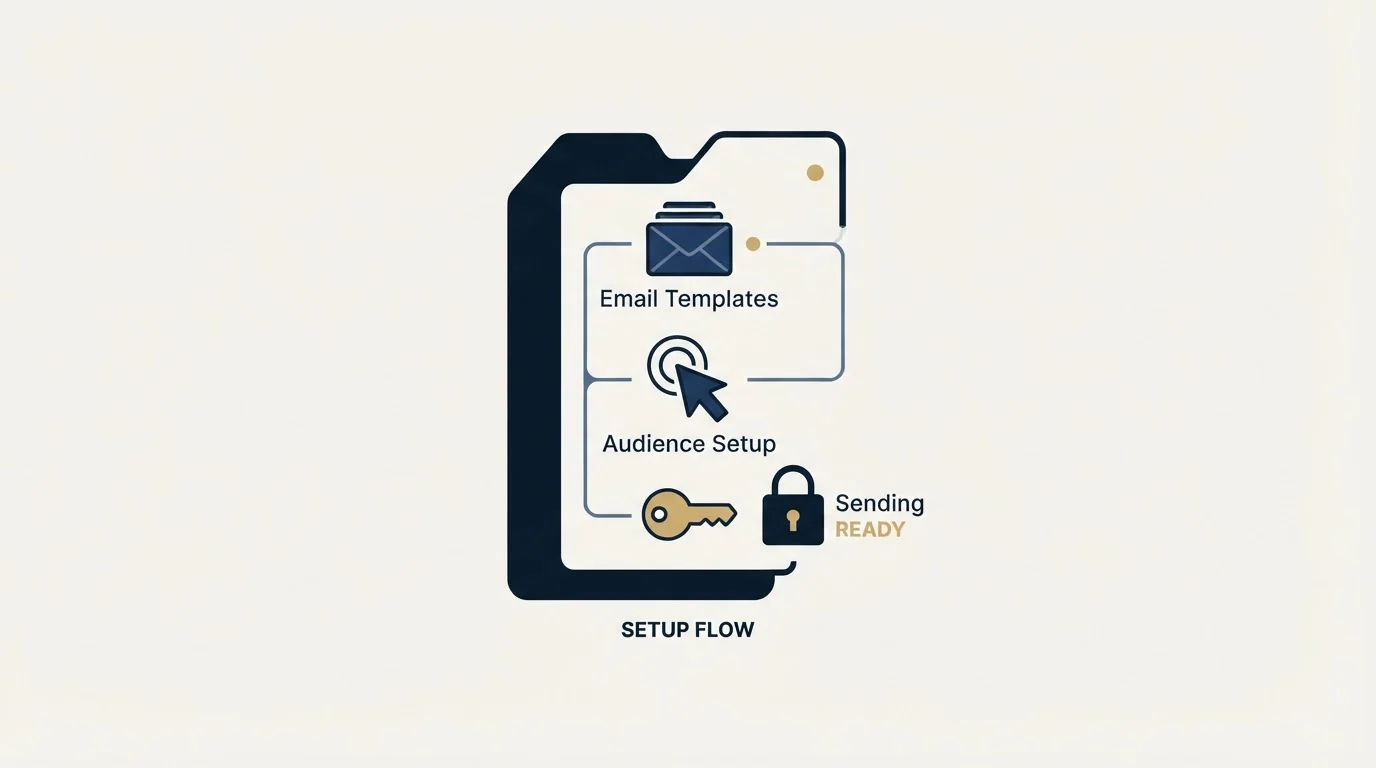
- Count two numbers: contacts held, and prospects contacted per month. Most teams have only counted the first.
- Divide the second by the first. A high ratio favours QuickMail, a low one favours Woodpecker.
- If you run client work, compare $27 per active client against $49 per extra workspace directly.
- Check which tier carries API access on each side if a system drives the campaign.
- Send one real segment through each and read the replies.
- Confirm suppression list export from whichever you pick.
Final Thoughts
QuickMail charges rent on the list. Woodpecker charges per person you actually write to. Work out what fraction of your list you contact in a month, because that single ratio decides this comparison and nothing on either pricing page asks you for it.
The list itself still outranks both.
Related Reading
- Best QuickMail alternatives
- Best Woodpecker alternatives
- Instantly vs QuickMail
- QuickMail vs Smartlead
- Instantly vs Woodpecker
- Best Outreach alternatives
If you would rather have the sending run for you, RevenueFlow books qualified meetings on a pay-per-meeting basis and publishes client results.
Pricing and features are taken from the vendors' own pages. Verify current terms with the vendor before relying on them.
Frequently asked questions.
Frequently asked questions- Which is cheaper, QuickMail or Woodpecker?
- It depends on what fraction of your list you contact each month. Holding 20,000 contacts and writing to 2,000 of them is $99 on QuickMail's Growth tier and around $140 on Woodpecker before its volume discount. Writing to all 20,000 is still $99 on QuickMail and roughly $1,400 on Woodpecker.
- Does either charge for mailboxes?
- Neither charges for connecting your own. QuickMail lists unlimited email senders on every tier and Woodpecker includes unlimited connected email accounts, selling managed ones at $6 a month each. That makes this one of the few comparisons in the category where mailbox cost does not decide it.
- Which suits an agency better?
- Compare the two client lines directly, because both price it. Woodpecker charges $27 a month per active client through its agency panel; QuickMail's Agency tier at $299 includes two workspaces with extras at $49 each. Which is cheaper depends on how many clients you run and how big their lists are.
- Does Woodpecker still publish named tiers?
- No. Its pricing page is now a calculator priced on contacted prospects starting at $7.00 per 100, with a volume discount marked at higher tiers. The named Starter, Growth, Scale and Max tiers and the $24 entry price that older comparisons quote are not on the page.
About the author.

Tim Carden is CMO / CTO at RevenueFlow, which builds and operates outbound revenue engines for B2B companies. Studied at McGill University.
Tim Carden · CMO / CTO
Connect on LinkedIn →Explore more.
Ready to scale your outreach?
We build GTM engines that book real meetings. See the receipts.
Related articles.
GetSales.io vs Yet Another Mail Merge: Sales Engagement Platform vs Cold Email Platform Comparison
Compare GetSales.io (sales engagement platform) and Yet Another Mail Merge (cold email platform) side by side. See pricing, features, and integrations to decide which one, or both, your stack needs.
Enginy vs Success.ai: Sales Engagement Platform vs Cold Email Platform Comparison
Compare Enginy (sales engagement platform) and Success.ai (cold email platform) side by side. See pricing, features, and integrations to decide which one, or both, your stack needs.
Artisan vs Yet Another Mail Merge: Sales Engagement Platform vs Cold Email Platform Comparison
Compare Artisan (sales engagement platform) and Yet Another Mail Merge (cold email platform) side by side. See pricing, features, and integrations to decide which one, or both, your stack needs.
Growbots vs MailHeat: Cold Email Platform vs Email Warmup Tool Comparison
Compare Growbots (cold email platform) and MailHeat (email warmup tool) side by side. See pricing, features, and integrations to decide which one, or both, your stack needs.
Hexospark vs JustCall: Cold Email Platform vs Sales Engagement Platform Comparison
Compare Hexospark (cold email platform) and JustCall (sales engagement platform). See pricing, features, and integrations to decide which one, or both, your stack needs.
EmailBison vs Emelia: Cold Email Platform Comparison
Compare EmailBison and Emelia side by side. See pricing, features, and integrations to choose the right cold email platform for your needs.