Reply.io vs Woodpecker: Cold Email Platform Comparison
Reply.io sells plans and Woodpecker sells a meter plus a menu that includes the mailboxes. Volume and client count decide which one is cheaper.
Reply.io vs Woodpecker is a plan against a prospect allowance. Reply.io Email Volume starts at $59 per user a month for 1,000 active contacts on monthly billing, or $49 billed annually. Woodpecker charges $35 for 500 contacted prospects, $67 for 2,000 and $99 for 4,000, and on annual billing it is cheaper in almost every volume band.
Key takeaways
- Reply.io lists Email Volume from $59, Multichannel at $99 per user and Agency Core from $210 a month on monthly billing; its pricing page opens on annual billing at $49 and $89.
- Woodpecker prices contacted prospects in steps: $35 for 500, $67 for 2,000, $99 for 4,000 and $188 for 10,000 a month, with the annual toggle labelled SAVE 33%.
- On monthly billing the two ladders trade places band by band; on annual billing Woodpecker is cheaper in every band except 4,001 to 5,000 contacts.
- Woodpecker charges $27 per active client and sells integrations as a $20 add-on, while Salesforce is not among the 26 tiles on its integrations page.
Reviewed and updated September 21, 2026
Reply.io vs Woodpecker comes down to what each one bills you for. Reply.io sells plans: its Email Volume card starts at $59 per user a month on monthly billing for 1,000 active contacts, and the pricing page opens on annual billing, where the same card reads $49. Woodpecker sells a monthly allowance of contacted prospects in steps, $35 for 500 on monthly billing, with the sending mailboxes, domains and client seats on a menu beside it. Comparing them means turning both into a monthly bill at your volume, and the answer changes as the volume does.
Reply.io vs Woodpecker: The Short Answer
On monthly billing the two price ladders sit within a few dollars of each other and trade places as volume grows, because their steps fall at different points. On annual billing Woodpecker is cheaper in every volume band except 4,001 to 5,000 contacts. Reply.io earns its price when LinkedIn, calls and SMS belong in one tool, when your CRM is Salesforce, or when an agency runs many client workspaces.
Reply.io is a plan. On monthly billing its pricing page lists Email Volume from $59 per user a month for 1,000 active contacts, Multichannel at $99 per user a month with 5 mailboxes, Agency Core from $210 a month with unlimited clients, users and mailboxes, and AI SDR Starter at $800 a month. The page opens on annual billing, where those cards read $49, $89 with 10 mailboxes, and $500 for AI SDR Starter.
Woodpecker is an allowance. Its calculator prices contacted prospects in steps: $35 a month for 500, $67 for 2,000, $99 for 4,000 and $188 for 10,000 on monthly billing. Every step includes unlimited team members, unlimited email accounts, unlimited catch-all verification and a set number of free warm-ups, and the annual toggle is labelled SAVE 33%.
Understanding the Core Difference
Reply.io is a multichannel engagement platform with live data attached. Its plan cards list email warm-up with every mailbox, 50 live data credits a month drawn from what the page calls 1 billion B2B contacts, and an anti-spam and deliverability suite. On Email Volume, LinkedIn automation is $69 a month per account and calls and SMS $29 per account; Multichannel sells email, LinkedIn, SMS and phones at one fixed price per user. Agency Core starts from $210 a month for unlimited clients and mailboxes, although the comparison table further down the same page heads its agency column "Starts from $166".
Woodpecker is cold email infrastructure sold as a utility with an unusually complete add-on menu. Beside the prospect allowance it sells sending addresses at $6 a month each through Google or Microsoft, or $4 through Maildoso, Mailforge, Infraforge or Azure, additional warm-ups at $5 per email account, new domains at about $1 a month billed annually, Azure domain hosting at $20 per domain and dedicated Infraforge servers at $59 per server. LinkedIn connected accounts are $29 a month each, and integrations, the API, webhooks, MCP and the CLI are one add-on at $20 a month.
That menu is the real difference. Reply.io's pricing page also sells new domains, from $6 per domain a year plus $5 per mailbox a month, but Woodpecker will put the whole sending pool on one invoice, which makes the total more visible and usually larger than the headline suggests.
For agency work both have an answer. Reply.io bundles clients into Agency Core. Woodpecker charges $27 a month per active client and $5 per client for white labelling, so the client fees alone pass Agency Core's $210 starting price at eight clients, where they reach $216, before any prospect volume is paid for.
Pricing Comparison

Reply.io Pricing
| Plan | Monthly billing | Billed annually | What the card lists |
|---|---|---|---|
| Email Volume | From $59 per user/mo | From $49 per user/mo | 1,000 active contacts; mailboxes under a fair usage policy |
| Multichannel | $99 per user/mo | $89 per user/mo | 5 mailboxes monthly, 10 annually; email, LinkedIn, SMS and phones |
| Agency Core | From $210/mo | One price, no toggle | Unlimited clients, users and mailboxes |
| AI SDR Starter | $800/mo | $500/mo | 1,000 active contacts; unlimited mailboxes and warm-ups |
The Email Volume card labels its first four steps, up to 5,000 active contacts, "per user /month", while its tagline promises no limits on users or mailboxes; from the 10,000 step the label reads "∞ users". Its steps on monthly billing are $59, $69, $79 and $99 for 1,000, 2,000, 3,000 and 5,000 active contacts, then $179 for 10,000.
Source: Reply.io Pricing
Woodpecker Pricing
| Contacted prospects a month | Per 100 | Monthly billing | Billed annually, per month | Free warm-ups |
|---|---|---|---|---|
| 500 | $7.00 | $35 | $24 | 2 |
| 2,000 | $3.35 | $67 | $45 | 6 |
| 4,000 | $2.48 | $99 | $66 | 10 |
| 8,000 | $1.99 | $159 | $106 | 16 |
| 10,000 | $1.88 | $188 | $126 | 20 |
The calculator runs on to 1,000,000 prospects and an unlimited step at $9,999 a month. Its FAQ says a plan is never upgraded automatically: once the allowance is used, campaigns stop sending to new prospects until you upgrade or the limit renews on your billing date. The calculator offers several currencies; the figures here are its US dollar setting.
Source: Woodpecker Pricing
Which Is Cheaper at Your Volume
Read the two ladders band by band on monthly billing, one Reply.io user. Up to 500 contacts Woodpecker is $35 against $59. From 501 to 1,000 Reply.io is cheaper, $59 against Woodpecker's $67 step. The two are $2 apart from 1,001 to 2,000, $67 against $69. Reply.io is cheaper from 2,001 to 3,000 ($79 against $99), the two tie at $99 from 3,001 to 4,000, Reply.io is cheaper again from 4,001 to 5,000 ($99 against $159), Woodpecker from 5,001 to 8,000 ($159 against $179), and Reply.io again from 8,001 to 10,000 ($179 against $188).
Annual billing tilts it. Woodpecker's toggle takes a third off, Reply.io's "up to 17%", so Woodpecker is cheaper in every band except 4,001 to 5,000, where Reply.io's $89 beats the $106 step. The two meters also count slightly differently: Reply.io counts unique contacts sent a first-step email in a month, and Woodpecker counts a prospect once per campaign, so the same person in two campaigns counts twice.
What That Costs Over a Year
The arithmetic below is illustrative, worked from the published figures rather than measured from any account.
A year at published monthly rates, one user: Reply.io Email Volume is $708, Multichannel $1,188 and Agency Core from $2,520. Billed annually, Email Volume is $588 and Multichannel $1,068.
Woodpecker at 2,000 contacted prospects a month is $67, or $804 a year before add-ons, and its calculator shows $536 for the same step billed annually. Give that programme ten Google or Microsoft sending addresses at $6 each, and it needs four warm-ups beyond the six the step includes, at $5 each. That adds $80 a month and takes the year to $1,764 on monthly billing. Those mailboxes are a genuine cost on both sides; with Reply.io they are bought elsewhere or through its own domain and mailbox add-on, so a fair comparison carries them either way.
For an agency the shapes diverge. Five active clients on Woodpecker is $135 a month in client fees, or $1,620 a year, on top of the prospect step, against Agency Core's starting price of $2,520 a year for unlimited clients. With the $67 step for 2,000 prospects, five clients come to $202 a month against $210, and a sixth takes it to $229. These are illustrative figures worked from published rates rather than measured invoices.
Features Breakdown
Both vendors publish long feature lists, and many lines appear on both. The rows below are the ones where the two pricing pages price or bundle something differently, taken line by line from each page. A capability missing from one column is missing from that vendor's pricing page, which is not proof the product lacks it.
| Line | Reply.io pricing page | Woodpecker pricing page |
|---|---|---|
| What you pay for | Users, or active contacts on Email Volume | Contacted prospects a month, in steps |
| Warm-up | Included with every mailbox | 2 free at 500 prospects, 6 at 2,000; more at $5 each |
| Contact data | 50 live data credits a month | 100 Lead Finder credits at 500; 500 more for $10 |
| $69 per account on Email Volume; on the Multichannel card | $29 per connected account | |
| Calls and SMS | $29 per account; on the Multichannel card | Manual tasks for calls, SMS and LinkedIn |
| Integrations | Salesforce, HubSpot, Pipedrive, Copper, Close | $20 a month add-on for integrations and API |
| Agencies | Agency Core from $210, unlimited clients | $27 per active client, $5 white label |
| Trial | 14 days | 14 days or 100 cold emails |
Integration Ecosystem
Integration Ecosystem

Reply.io Integrations
Reply.io's pricing page lists HubSpot, Salesforce, Pipedrive, Copper, Zendesk and Close.io, plus Zapier, Make, an n8n node, an MCP server and what it calls 100+ integrations. Its FAQ says the CRM sync covers contacts, accounts, calls, tasks, statuses and activities.
Woodpecker Integrations
Woodpecker's integrations page shows 26 tiles. Its CRMs are Pipedrive, HubSpot and Zoho, and the rest include Calendly, Google Sheets, Slack, Zapier, Clay, Hunter, Aircall and mailbox providers such as Maildoso and Infraforge. Salesforce and n8n are not among those tiles. On the pricing page, integrations, the API, webhooks, MCP and the CLI sit in one add-on at $20 a month.
A team whose CRM is Salesforce should treat that as the deciding line and check Woodpecker's current list before anything else. For HubSpot and Pipedrive teams both vendors list a native connection, so the question returns to price.
Who Should Pick Which
Pick Woodpecker if the programme is small or email-only. At 500 contacted prospects its calculator shows $35 a month, and on annual billing it is cheaper than Reply.io in every volume band but one. Unlimited team members and unlimited email accounts remove two lines that usually grow with a team.
Pick Woodpecker if you want the mailboxes, domains and warm-ups on the same invoice. Reply.io now sells domains and mailboxes too, but Woodpecker's menu also covers domain transfer, Azure hosting and dedicated servers, which makes the true cost of a sending pool visible in one place.
Pick Reply.io if the programme is multichannel. Multichannel puts email, LinkedIn, SMS and phones on one per-user price, where Woodpecker lists calls and SMS as manual tasks and sells LinkedIn at $29 per connected account.
Pick Reply.io if your CRM is Salesforce, or for a larger agency. Agency Core starts from $210 for unlimited clients, where Woodpecker charges $27 per active client on top of the prospect step.
Where These Sit in a Cold Outbound Stack
A sending tool is one layer of four. The list decides the reply rate, the infrastructure (authentication, warmed inboxes, a volume that ramps rather than spikes) decides whether the message arrives, and the offer decides whether the reply is worth having. The sending tool decides how much of that is automated and what it costs. Neither tool here can make a badly built list reply or an unauthenticated domain deliverable.
One consequence is worth naming, because it changes which features matter. RevenueFlow sends one message per campaign, with no bump sequences and no thread replies, on the view that a second message landing under the one somebody ignored reads as a bump whatever the campaign structure calls it. Re-contacting a non-replier happens later as a fresh single-message campaign.
Both meters count people, which matters under that rule. Reply.io defines an active contact as a unique contact you can send 1 first-step email and an unlimited number of follow-ups per month, and Woodpecker's pricing page notes that a campaign has 16 steps and a prospect still counts once. A team sending one message per campaign pays for the same unit on both and uses none of the follow-up allowance, so the comparison reduces to price per contacted person plus mailboxes.
Switching Between Them
A sending-tool migration usually fails quietly, with no error to warn you. Export sequence copy, custom fields and your reply and meeting history before you cancel, because that history is the baseline that tells you whether the move helped. Reconnect and re-authenticate every sending inbox on the new side before any volume moves. Sender reputation lives with the domain and the mailbox, so a warmed inbox stays warmed, and daily volume should resume where it was. Move one campaign first, run both platforms in parallel for a fortnight, and read the notice period before the renewal date arrives.
Feature Comparison Summary
| Reply.io | Woodpecker | |
|---|---|---|
| What you buy | Plans per user, or active contacts | A monthly allowance of contacted prospects |
| Entry price, monthly billing | $59 per user (Email Volume) | $35 for 500 contacted prospects |
| Entry price, billed annually | $49 per user | $24 a month for 500 |
| Agency pricing | Agency Core from $210 a month | $27 per active client, $5 white label |
| Free trial | 14 days | 14 days or 100 cold emails |
Getting Started Checklist
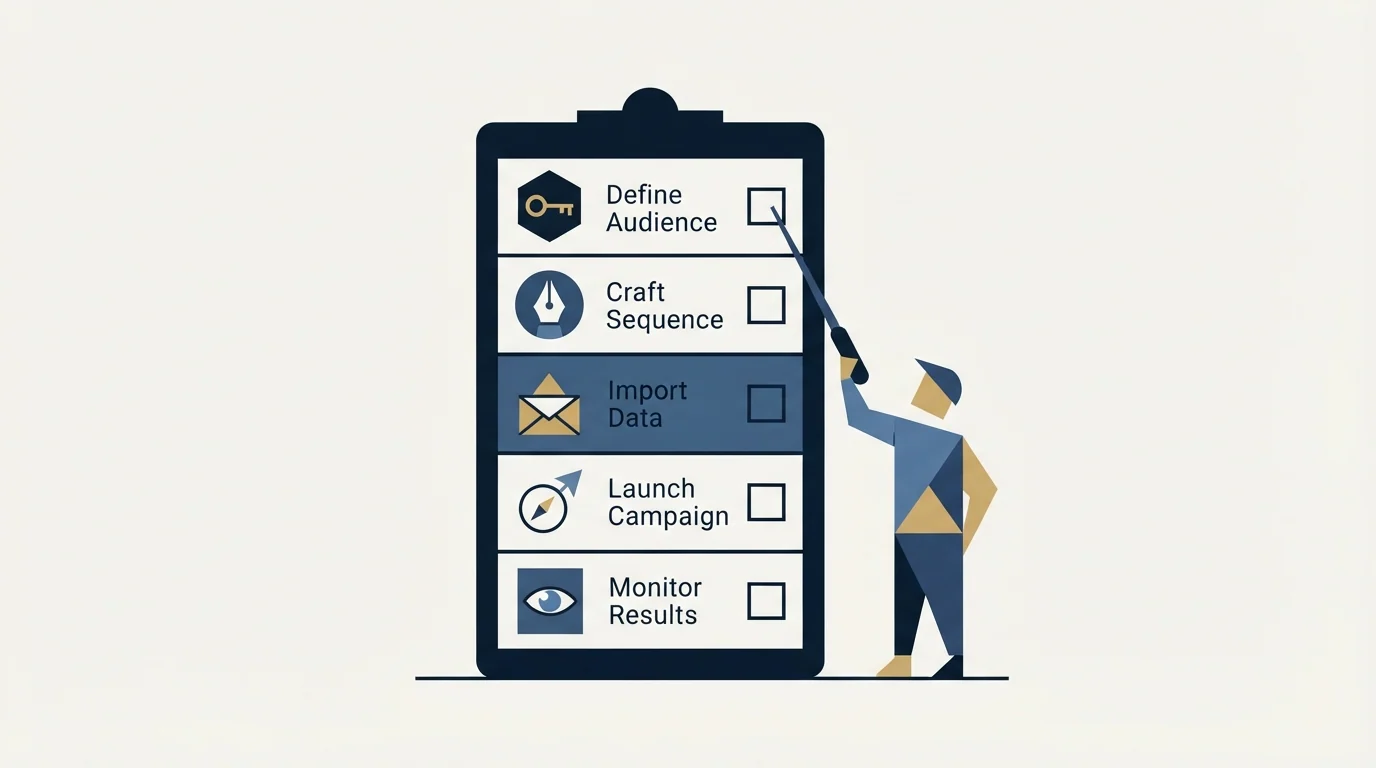
- Count the people you contact in a month, since both vendors bill on that unit
- Count the sending mailboxes and warm-ups you need, and price them on each side
- Check that your CRM is on the vendor's own integration list
- Decide whether LinkedIn, calls and SMS belong in the same tool
- Price the year on both billing settings before committing
- Use the trials: Reply.io gives 14 days, Woodpecker 14 days or 100 cold emails, whichever comes first
How This Comparison Was Put Together
Every price, plan name and tier detail here comes from the vendors' own pages, read on the day of writing and kept as a dated snapshot. Where a price only appears after a toggle or a slider moves, the page was driven in a browser and the displayed figure recorded. Nothing here is a test result: no campaign was run on either platform for this comparison, and neither tool is ranked by deliverability, reply rate or meetings booked. Read it as a map of what each vendor publishes and what its pricing does at your volume.
Final Thoughts
Woodpecker is the better buy for a small or email-only programme, especially on annual billing, and selling the mailboxes and domains alongside the platform puts the real cost of cold email on one invoice.
Reply.io is the better buy for a multichannel team, a Salesforce team, and an agency past a handful of clients, where Agency Core from $210 beats a per-client fee.
Both comparisons turn on numbers that are not on either pricing page: your monthly contacted prospects, your mailbox count and your client count. Work those out first and the arithmetic above answers the rest.
Related Reading
- Best Reply.io Alternatives in 2026
- Best Woodpecker Alternatives in 2026
- Instantly vs Reply.io: Cold Email Platform Comparison
- Instantly vs Woodpecker: Cold Email Platform Comparison
If you would rather have this run for you, RevenueFlow books qualified meetings on a pay-per-meeting basis and publishes client results.
Pricing and features are taken from the vendors' own pages. Verify current terms with the vendor before relying on them.
Frequently asked questions.
Frequently asked questions- Is Reply.io or Woodpecker cheaper?
- It depends on your volume band and billing setting. On monthly billing, for one Reply.io user, the two ladders trade places: across eight volume bands up to 10,000 contacts, Woodpecker is cheaper in three, Reply.io in four, and they tie at $99 in one. On annual billing Woodpecker takes a third off against Reply.io's up to 17%, so it is cheaper in seven of the eight.
- How does Woodpecker pricing work?
- Woodpecker sells a monthly allowance of contacted prospects in steps: $35 for 500, $67 for 2,000, $99 for 4,000 and $188 for 10,000 on monthly billing. Each step includes unlimited team members, unlimited email accounts, catch-all verification and a set number of warm-ups. A plan is never upgraded automatically; once the allowance is used, campaigns stop reaching new prospects.
- Does Woodpecker integrate with Salesforce?
- Salesforce is not among the 26 tiles on Woodpecker's integrations page, which lists Pipedrive, HubSpot and Zoho as its CRMs. Reply.io's pricing page lists Salesforce alongside HubSpot, Pipedrive, Copper and Close. On Woodpecker, integrations, the API, webhooks, MCP and the CLI are a $20 a month add-on, so check the current list before choosing.
- Which one is better for an agency?
- It turns on client count. Woodpecker charges $27 a month per active client and $5 per client for white labelling, on top of the prospect step. Reply.io Agency Core starts from $210 a month for unlimited clients, users and mailboxes. With Woodpecker's $67 step, five clients cost $202 a month and a sixth takes the total past $210.
About the author.

Tim Carden is CMO / CTO at RevenueFlow, which builds and operates outbound revenue engines for B2B companies. Studied at McGill University.
Tim Carden · CMO / CTO
Connect on LinkedIn →Explore more.
Ready to scale your outreach?
We build GTM engines that book real meetings. See the receipts.
Related articles.
GetSales.io vs Yet Another Mail Merge: Sales Engagement Platform vs Cold Email Platform Comparison
Compare GetSales.io (sales engagement platform) and Yet Another Mail Merge (cold email platform) side by side. See pricing, features, and integrations to decide which one, or both, your stack needs.
Enginy vs Success.ai: Sales Engagement Platform vs Cold Email Platform Comparison
Compare Enginy (sales engagement platform) and Success.ai (cold email platform) side by side. See pricing, features, and integrations to decide which one, or both, your stack needs.
Artisan vs Yet Another Mail Merge: Sales Engagement Platform vs Cold Email Platform Comparison
Compare Artisan (sales engagement platform) and Yet Another Mail Merge (cold email platform) side by side. See pricing, features, and integrations to decide which one, or both, your stack needs.
Growbots vs MailHeat: Cold Email Platform vs Email Warmup Tool Comparison
Compare Growbots (cold email platform) and MailHeat (email warmup tool) side by side. See pricing, features, and integrations to decide which one, or both, your stack needs.
Hexospark vs JustCall: Cold Email Platform vs Sales Engagement Platform Comparison
Compare Hexospark (cold email platform) and JustCall (sales engagement platform). See pricing, features, and integrations to decide which one, or both, your stack needs.
EmailBison vs Emelia: Cold Email Platform Comparison
Compare EmailBison and Emelia side by side. See pricing, features, and integrations to choose the right cold email platform for your needs.