Salesforce vs Seamless.AI: Cross-Category Comparison
Compare Salesforce (crm platform) and Seamless.AI (data enrichment tool) side by side. Understand how these tools fit different stages of your sales workflow.
Seamless.AI integrates with Salesforce, HubSpot and Outreach, and can populate Salesforce automatically: contacts import on FIND, mapped lists feed campaigns, and each field mapping sets whether Seamless overrides the CRM. It needs Salesforce API access, which Salesforce's pricing table lists from Pro Suite with a $25 add-on.
Key takeaways
- Seamless.AI's integrations overview lists Salesforce, HubSpot, Outreach, Microsoft Dynamics, Zoho, Pipedrive, Salesloft and more, with records moving from Seamless into the CRM.
- Its Salesforce article describes automatic import on FIND, Automated Lists mapped to campaigns or accounts, and a match score under which a deduplication screen appears.
- Salesforce's pricing table shows the Web Services API absent from Starter Suite, $25 extra per user on Pro Suite, and included from Core at $195.
- Seamless.AI's pricing page publishes one figure, a free plan with 50 credits, and its FAQ says Pro plans start at 10,000 annual credits, quoted through sales.
Reviewed and updated September 19, 2026
Seamless.AI integrates with Salesforce, HubSpot and Outreach, and its own help centre documents how far automated CRM data population goes: contacts found with the FIND button can import into Salesforce automatically, lists can feed Salesforce campaigns, and field mappings decide what gets overwritten. Salesforce is where those records land and what happens to them next. The two are separate purchases with separate price tags: Salesforce's pricing page lists Starter Suite at $25 per user per month, and Seamless.AI's lists one figure, a free plan of 50 credits, with every paid tier quoted through sales.
Does Seamless.AI integrate with Salesforce, HubSpot and Outreach for automated CRM data?
Yes. Seamless.AI's integrations overview lists Salesforce, HubSpot and Outreach among its connectors, alongside Microsoft Dynamics, Zoho, Salesloft and others. Records move from Seamless into the connected tool; the reads it describes the other way are duplicate checks and polling the CRM to fill its dropdowns. For Salesforce, its help article describes automatic import on FIND, automated lists mapped to Salesforce campaigns or accounts, and per-field overwrite settings.
Salesforce. An admin connects it from Settings, Integrations. Seamless's article says Salesforce API access is required and that not all Salesforce packages come with it. Salesforce's own pricing table shows the Web Services API absent from Free Suite and Starter Suite, as an additional $25 per user per month on Pro Suite, and included on Core, Advanced and Max. Seamless's article names the Enterprise, Unlimited, Developer and Performance editions as the ones with API access, while Salesforce's pricing page today sells Starter Suite, Pro Suite, Core, Advanced and Max, so confirm API access on the edition you are buying. Each import goes in as a Lead, or as a Contact with its Account, according to the Salesforce import type setting, through field mappings where each mapping says whether Seamless data will override what is in the CRM.
How much is automated. Turn on automatic import and contacts go into Salesforce the moment someone clicks FIND in Seamless or its Chrome extension, skipping manual selection. Automated Lists go further: map a Seamless list to a Salesforce campaign or account and every contact added to that list is sent there, though there are no default mappings, so each list is mapped individually. Seamless's own tip is to set a Total AI threshold on the business email before enabling auto-import, and its match-score setting decides whether a near-duplicate imports silently or stops at a deduplication screen; Seamless does not recommend less than 95%.
HubSpot and Outreach. Seamless's HubSpot page describes importing real-time verified emails and phone numbers into the HubSpot CRM, and its Outreach page describes finding emails and mobile phone numbers for any contact directly within Outreach. CRM alerts, when enabled, check whether a lead or contact already exists in the CRM before you use Seamless on it.
| Setting | What it does |
|---|---|
| Automatically import to Salesforce | Imports on FIND, skipping manual selection |
| Automated Lists | Sends a mapped list's contacts to a Salesforce campaign or account |
| Contact account creation | Yes creates the account, No needs an existing one, Prompt asks each time |
| Duplicates across leads and contacts | Checks both objects, not only the import type |
| Account deduplication method | Website as the identifier, or fuzzy matching on name |
| Import without a validated email | Yes allows contacts with no Valid or Accept All result |
The Short Answer
Buy the side that is losing you money this month. If conversations are dying because nobody can see what stage a deal reached or who owns it, Salesforce is the purchase, and the edition matters if Seamless.AI will feed it. If the list runs out, the addresses bounce, or the right person at the account was never found, Seamless.AI is the purchase, free for fifty credits, with both paid tiers quoted through sales.
Teams running outbound at volume end up with both, so the order matters more than the choice.
What Each Side Does in a Cold Outbound Run
Seamless.AI now lists built-in emailing in Connect, but in a run built the way RevenueFlow builds them neither tool sends the cold volume, which puts both upstream of the only part a prospect ever sees.
RevenueFlow sends one message per campaign. There are no bump messages and no thread replies, so the first email is the only email that campaign will send. Everything rides on the row: whether the person is the right person, whether the address is real, and whether the company was worth writing to. That is the work Seamless.AI is bought for.
A wrong address is not a wasted send. It is a hard bounce on shared sending inventory, and the sender reputation damage lands on every client mailing from those domains rather than on the campaign that caused it. That is why list hygiene is the lever worth paying for: a data tool earns its price in bounces avoided before it earns anything in replies.
Salesforce picks the run up at the other end. Somebody answers, and from there the question is what stage the conversation reached, who owns it and what was agreed. A meeting counts once it is held and meets the qualification criteria agreed in writing before launch, and that record is what a spreadsheet stops being able to hold once there are more live deals than one person can carry in their head.
Pricing Comparison
Salesforce Pricing
| Plan | Price | Web Services API |
|---|---|---|
| Free Suite | $0/mo | Not included |
| Starter Suite | $25/mo | Not included |
| Pro Suite | $100/mo | Additional $25/user/mo |
| Core | $195/mo | Included |
| Advanced | $395/mo | Included |
| Max | $550/mo | Included |
Prices are per user per month in US dollars. Starter Suite is billed monthly or annually at the same rate; Pro Suite and the editions above it are the per user per month price billed annually, which is how the page labels them. The API column is read from the same page's comparison table.
Source: Salesforce Sales Pricing
Seamless.AI Pricing
| Plan | Price | What the card lists |
|---|---|---|
| Free | Free | 1 user, 50 credits |
| Pro | Contact sales | Per user, unlimited exports, annual credit packages, 1 credit = phone + email |
| Enterprise | Contact sales | Unlimited users, unlimited exports, custom packages |
Seamless.AI's pricing page publishes no price for any paid tier, and its FAQ says Pro plans start off at 10,000 annual credits. A banner says all plans now include Connect, for emailing, phone calls and tasks inside Seamless.
Source: Seamless.AI Pricing
Pricing Context
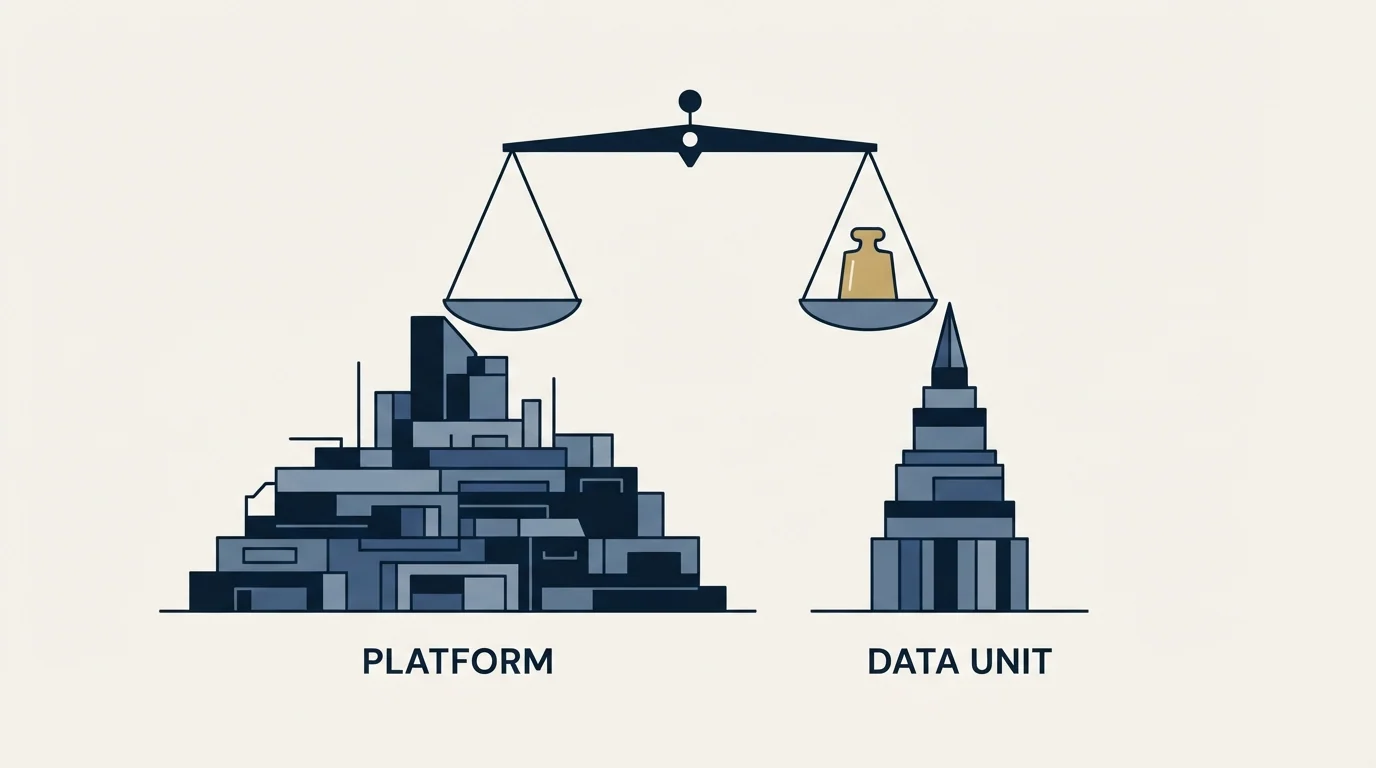
A straight price comparison between these two is close to meaningless, because they are billed on different axes. Salesforce opens at $25/mo per user on Starter Suite, and that line follows headcount. Seamless.AI publishes exactly one figure and it belongs to the free plan, so its paid floor is whatever a salesperson quotes. That line follows consumption instead. The next section works that through on an invented team, and the answer changes once API access is counted.
What the Pair Costs at a Realistic Team Size
The numbers below are invented: five people who want 500 verified contacts a month, which is 6,000 a year. The arithmetic is the point rather than the total.
Five Starter Suite seats at $25 a month come to $1,500 a year, but Starter Suite does not include the Web Services API that Seamless says its Salesforce integration requires. The cheapest listed route to the API is Pro Suite at $100 plus the additional $25, so five seats cost $7,500 a year billed annually; Core, with the API included, costs $11,700. Those totals are illustrative.
| Illustrative line item | Cost | Basis |
|---|---|---|
| Salesforce Pro Suite with API, five seats | $7,500/yr | $100 + $25 per seat per month, billed annually |
| Salesforce Core, five seats | $11,700/yr | $195 per seat per month, billed annually |
| Seamless.AI Pro | Contact sales | Per user, annual credit packages |
Seamless.AI's side cannot be priced. Its pricing page carries no currency figure in its visible text, and its Pro card reads "Per User Unlimited Exports Annual Credit Packages" and then "Contact sales". At 6,000 contacts a year, ask whether the 10,000 annual credits a Pro plan starts at are per user or per plan before comparing quotes.
The two lines scale on different axes. Doubling the team doubles the CRM line; doubling the sending volume moves the data line.
What Each One Lists
Seamless.AI's pricing page lists email addresses, cell phones, a real-time search engine, pitch intelligence, job changes, an API and Connect for emailing, phone calls and tasks, with the AI Assistant, data enrichment, Autopilot and buyer intent data as add-ons. With Connect on every plan, Seamless is no longer only a data tool.
Salesforce's pricing page sells Sales Cloud as suites: Starter Suite for lead, account, contact and opportunity management with built-in sales flows and lead routing, Pro Suite for greater customization and automation plus sales quoting and forecasting, and Core, Advanced and Max above them. The two meet at an integration rather than an overlap: Seamless.AI writes into Salesforce, which is CRM enrichment and the whole point of owning both.
Integration Ecosystem
Seamless.AI's integrations overview lists Salesforce, HubSpot, Microsoft Dynamics, Zoho, Keap, Pipedrive, Salesloft, Insightly, Greenhouse, Outreach, Mixmax and Zapier, with Zapier as a path for anything not listed. Salesforce's pricing table lists email integration with Gmail or Outlook, and its Web Services API is what a tool like Seamless connects through.
Do You Need Both, and in Which Order?
A team asking this usually owns one of them already, so it is an ordering question rather than a choice.
Buy Seamless.AI first when the pipeline is empty. A CRM with nothing in it is an expensive filing cabinet, and stage discipline cannot create a conversation nobody started. Buy Salesforce first when the pipeline is full and leaking: two people writing to the same account in a fortnight, or a live deal count that depends on who you ask.
The symptoms matter more than the features. On the data side they are reps running out of people to write to, hard bounces often enough that somebody has noticed, and a right contact at a target account nobody can find. On the pipeline side they are two reps writing to the same company inside a fortnight, a deal stage nobody can state without asking, an agreement that lives in one inbox, and a live deal count that depends on who you ask.
Points at Seamless.AI
- Reps run out of people to write to before they run out of hours
- Hard bounces often enough that somebody has noticed
- The right contact at a target account is missing
Points at Salesforce
- Two reps wrote to the same company inside a fortnight
- Nobody can state a named deal's stage without asking
- What was agreed on a call lives in one inbox
- The live deal count depends on who you ask
The first three point at the data side and the last four at the pipeline side. A team marking most of both should still buy one first and let the second be the purchase the first made unavoidable.
When to Choose Salesforce

Choose Salesforce when the bottleneck is what happens after somebody answers: stage visibility, ownership, and a record of what was agreed that survives one person being away.
When to Choose Seamless.AI
Choose Seamless.AI when the bottleneck is upstream of any of that: not enough of the right people to write to, or addresses that do not survive contact with a mail server.
Rolling the Second Tool In Without Breaking the First
The expensive version goes: buy Seamless.AI, switch on automatic import on day one, then spend a month working out which system owns a phone number when the two disagree. The cheap version takes a fortnight and starts in Seamless's CRM settings.
Decide field ownership first. Company name, job title and phone number are the three that go wrong, because both sides write all three happily. Seamless's field mappings let an admin set each mapping org-wide or lock it org-wide and choose whether Seamless data overrides the CRM; a field with two owners is a field with no owner, so leave override off wherever a person typed the value.
Then settle record matching. Seamless matches accounts by website as a unique identifier or by fuzzy matching on name, can check for duplicates across both Leads and Contacts rather than only the import type, and decides through contact account creation whether a missing account is created, chosen or prompted for. Leave automatic import off until fifty records have been pushed through and read by hand, which is enough to see the match rate and cheap enough to fix; the option to import contacts without a validated email is worth leaving off too.
Last, decide how often the data gets refreshed and who notices when it has not. Data decay is the quiet one: a list bought a year ago is materially worse than one bought last month, and Seamless sells job-change tracking and a data enrichment add-on for exactly that.
Using Both Together
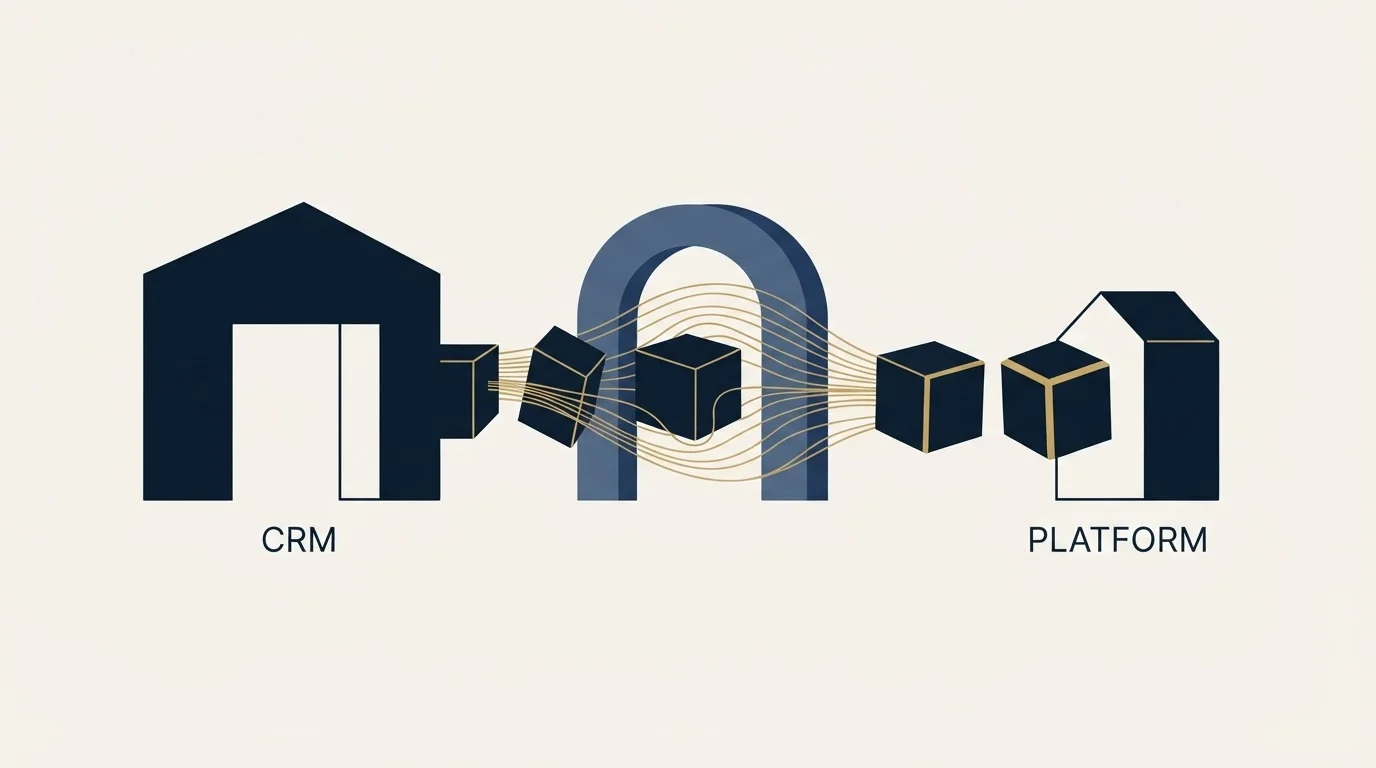
In practice the two meet at one seam, the import settings above. Get those right and Seamless.AI fills Salesforce with records a rep can use; get them wrong and it fills Salesforce with duplicates.
The Decision Shortcut
Count the last ten deals that went quiet and sort them into two piles: wrong person written to, or right person answered and nothing happened next.
If the first pile is bigger, Seamless.AI is the purchase and the CRM question can wait a quarter. If the second is bigger, Salesforce is the purchase and a bigger database will not touch the problem. If the ten split evenly, start with Salesforce and get the Seamless.AI quote while it runs, since Seamless.AI cannot be priced without a sales conversation. Ninety days of one tool argues for the second better than any comparison page can.
How These Figures Were Checked
Every figure here was searched for, character for character, in a dated copy of the vendor's own page. None of it came from a review site or a third-party summary.
Salesforce's figures, including the API row, were re-read against its own pricing page. Seamless.AI's pricing page was readable and carries no currency figure in its visible text, which is a confirmed absence rather than a failed fetch. The integration details come from Seamless's own help articles on Salesforce and on its integrations.
Related Reading
- Best Salesforce Alternatives in 2026
- Best Seamless.AI Alternatives in 2026
- HubSpot CRM vs Salesforce: CRM Platform Comparison
- Pipedrive vs Salesforce: CRM Platform Comparison
- Apollo.io vs Seamless.AI: Data Enrichment Tool Comparison
If you would rather have this run for you, RevenueFlow books qualified meetings on a pay-per-meeting basis and publishes client results.
Pricing and features are taken from the vendors' own pages. Verify current terms with the vendor before relying on them.
Frequently asked questions.
Frequently asked questions- Does Seamless.AI integrate with Salesforce, HubSpot and Outreach?
- Yes. Seamless.AI's integrations overview lists all three, among others. Its Salesforce article covers automatic import on FIND, Automated Lists mapped to Salesforce campaigns or accounts, field mappings with an override choice, and duplicate checks. Its HubSpot page describes importing verified emails and phone numbers, and its Outreach page describes finding them inside Outreach.
- Which Salesforce edition works with Seamless.AI?
- Seamless's help article says Salesforce API access is required. Salesforce's own pricing table shows the Web Services API missing from Free Suite and Starter Suite, available on Pro Suite for an additional $25 per user per month, and included on Core, Advanced and Max. Seamless's article names different editions, Enterprise and Unlimited among them, so confirm API access on yours before buying.
- Can Seamless.AI import into Salesforce automatically?
- Yes. With automatic import on, contacts go into Salesforce when someone clicks FIND in Seamless or its Chrome extension, and Automated Lists send every contact added to a mapped list to a Salesforce campaign or account. Seamless recommends setting a Total AI threshold first and keeping the match score at 95% or above.
- How much does Seamless.AI cost next to Salesforce?
- Seamless.AI's pricing page publishes only its free plan of 50 credits; Pro and Enterprise are quoted through sales. Salesforce lists Starter Suite at $25 per user per month, but a Seamless pairing needs API access, so five Pro Suite seats with the $25 API add-on come to $7,500 a year, illustratively.
About the author.

Tim Carden is CMO / CTO at RevenueFlow, which builds and operates outbound revenue engines for B2B companies. Studied at McGill University.
Tim Carden · CMO / CTO
Connect on LinkedIn →Explore more.
Ready to scale your outreach?
We build GTM engines that book real meetings. See the receipts.
Related articles.
AroundDeal vs Salesflare: Data Enrichment Tool vs CRM Platform Comparison
Compare AroundDeal (data enrichment tool) and Salesflare (CRM platform) side by side. See pricing, features, and integrations to decide which one, or both, your stack needs.
Evaboot vs Microsoft Dynamics 365 Sales: Data Enrichment Tool vs CRM Platform Comparison
Compare Evaboot (data enrichment tool) and Microsoft Dynamics 365 Sales (CRM platform) side by side. See pricing, features, and integrations to decide which one, or both, your stack needs.
Agile CRM vs LeadIQ: CRM Platform vs Data Enrichment Tool Comparison
Compare Agile CRM (CRM platform) and LeadIQ (data enrichment tool) side by side. See pricing, features, and integrations to decide which one, or both, your stack needs.
Anymail Finder vs Pipeline CRM: Data Enrichment Tool vs CRM Platform Comparison
Compare Anymail Finder (data enrichment tool) and Pipeline CRM (CRM platform) side by side. See pricing, features, and integrations to decide which one, or both, your stack needs.
AroundDeal vs Maximizer: Data Enrichment Tool vs CRM Platform Comparison
Compare AroundDeal (data enrichment tool) and Maximizer (CRM platform) side by side. See pricing, features, and integrations to decide which one, or both, your stack needs.
Breakcold vs Bulk Email Checker: CRM Platform vs Data Enrichment Tool Comparison
Compare Breakcold (CRM platform) and Bulk Email Checker (data enrichment tool) side by side. See pricing, features, and integrations to decide which one, or both, your stack needs.