SEM-FRESH: Why Every New Sending Domain Is Listed
SEM-FRESH lists domains on registration age and nothing else. Five days in, five days out, no request to file. The fix is a calendar change, not a remediation.
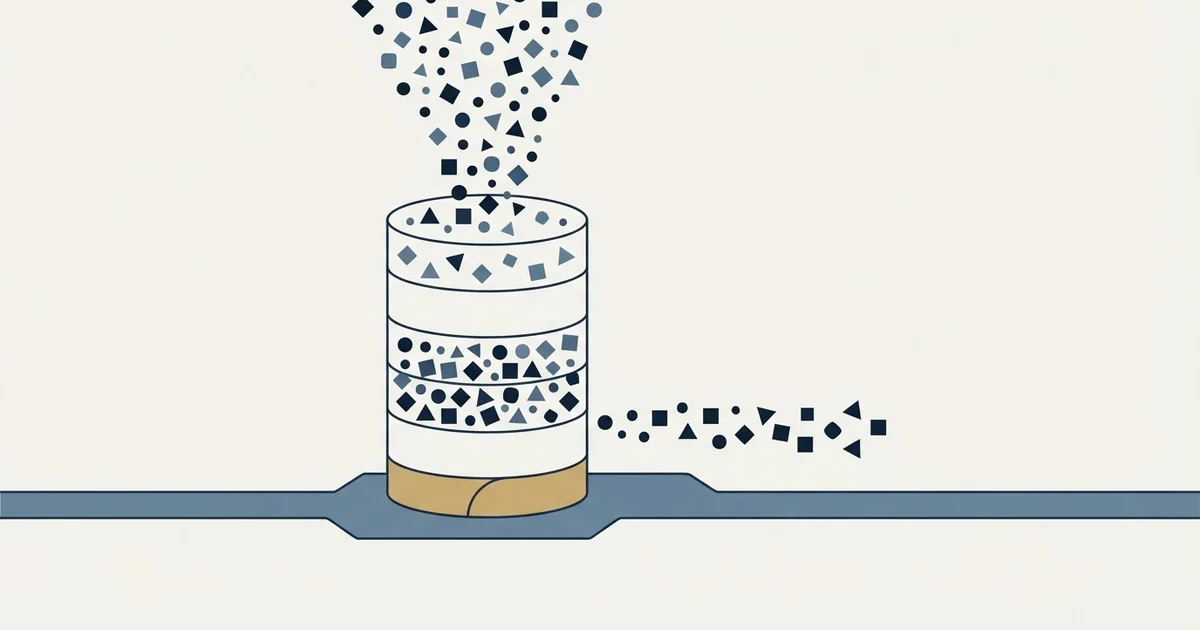
SEM-FRESH is a Spam Eating Monkey blocklist of domains first registered in the last 5 days, and the operator removes each one automatically after 5 days. Registration age is its only criterion, so a new cold email domain is listed by design, there is no removal request to file, and the fix is registering domains earlier.
Key takeaways
- Spam Eating Monkey's services page lists SEM-FRESH as a domain and URI list of domains first registered in the last 5 days, removed automatically after 5 days.
- The operator runs five age windows, FRESHZERO at 24 hours and FRESH, FRESH10, FRESH15 and FRESH30 at 5 to 30 days, and each receiver picks its zone.
- The operator's own sample configurations treat a hit lightly: SpamAssassin scores it 0.5, and the Postfix example checks the sender domain behind warn_if_reject.
- The useful response is a calendar change: register sending domains far enough ahead that the windows close before the first campaign.
Reviewed and updated September 19, 2026
A domain bought for cold outbound starts life on SEM-FRESH, the Spam Eating Monkey list that MXToolbox shows as SEM FRESH, and there is nothing wrong with it. The list has one criterion, and that criterion is age. A domain registered on Monday is on it, and a domain registered five days earlier is not, whatever either of them has sent.
The panic this causes is entirely avoidable, and so is the opposite mistake of ignoring what the listing is actually telling receivers about a brand new sending domain.
What is SEM-FRESH, and who runs it?
SEM-FRESH, also written SEM FRESH or semfresh, is a domain blocklist run by Spam Eating Monkey. Its specification on the operator's services page lists domains first registered in the last 5 days and removes them automatically after 5 days, with no request involved. Receivers query it at fresh.spameatingmonkey.net and decide for themselves what a listing is worth.
SEM-FRESH is one of a dozen or so reputation lists published by Spam Eating Monkey, an operator that runs a real-time IP and domain reputation service. Its services page publishes a specification for each list, and the entry for this one is short enough to quote in full. The description is "List includes domains first registered in the last 5 days". The expiration is "Domains are automatically removed after 5 days". The status is Active, the type is a URIBL covering domains and URIs only, and the query zone is fresh.spameatingmonkey.net. The same entry gives the answer a listed domain returns, 127.0.0.2, and two test points: _DNSBL_.test, which must always exist, and _DNSBLNEG_.test, which must never exist.
Two facts in that specification settle most of the confusion around the list.
It does not list IP addresses. The type is a domain and URI list. A page promising to remove your IP from SEM-FRESH is describing something the list cannot do. The operator publishes separate IP lists, SEM-BLACK and SEM-BACKSCATTER among them, and MXToolbox files SEM BLACK next to SEM FRESH under similar names, which is where much of the mixing up starts.
It can be checked against the sender as well as the links. The operator's own sample configurations show both uses. Its SpamAssassin example scores a SEM-FRESH domain found in the message body at 0.5. Its Postfix example applies the zone to the MAIL FROM domain and to the client hostname, through reject_rhsbl_sender and reject_rhsbl_client, and puts warn_if_reject in front of each, which the Postfix documentation calls "A safety net for testing" that logs a warning instead of rejecting a request. So a new sending domain can be looked up as the sender, and the operator's own examples treat a hit as a light signal.
It is one of a family. The operator publishes SEM-FRESHZERO for domains never seen before, typically registered in the last 24 hours and removed after 24 hours, then FRESH at five days, and FRESH10, FRESH15 and FRESH30 at the windows their names imply. A receiver chooses how much age caution to apply by choosing a zone. That is a design decision on the receiving side that no sender can influence.
All of the above comes from Spam Eating Monkey's own services page. One detail differs between publishers: MXToolbox's page for the list adds a set of top-level domains that it says the zone covers, and no equivalent scope statement appears on the operator's own page. Where the two disagree the operator's page is the one quoted here.
Blacklisted by SEM-FRESH: why cold email domains land on it
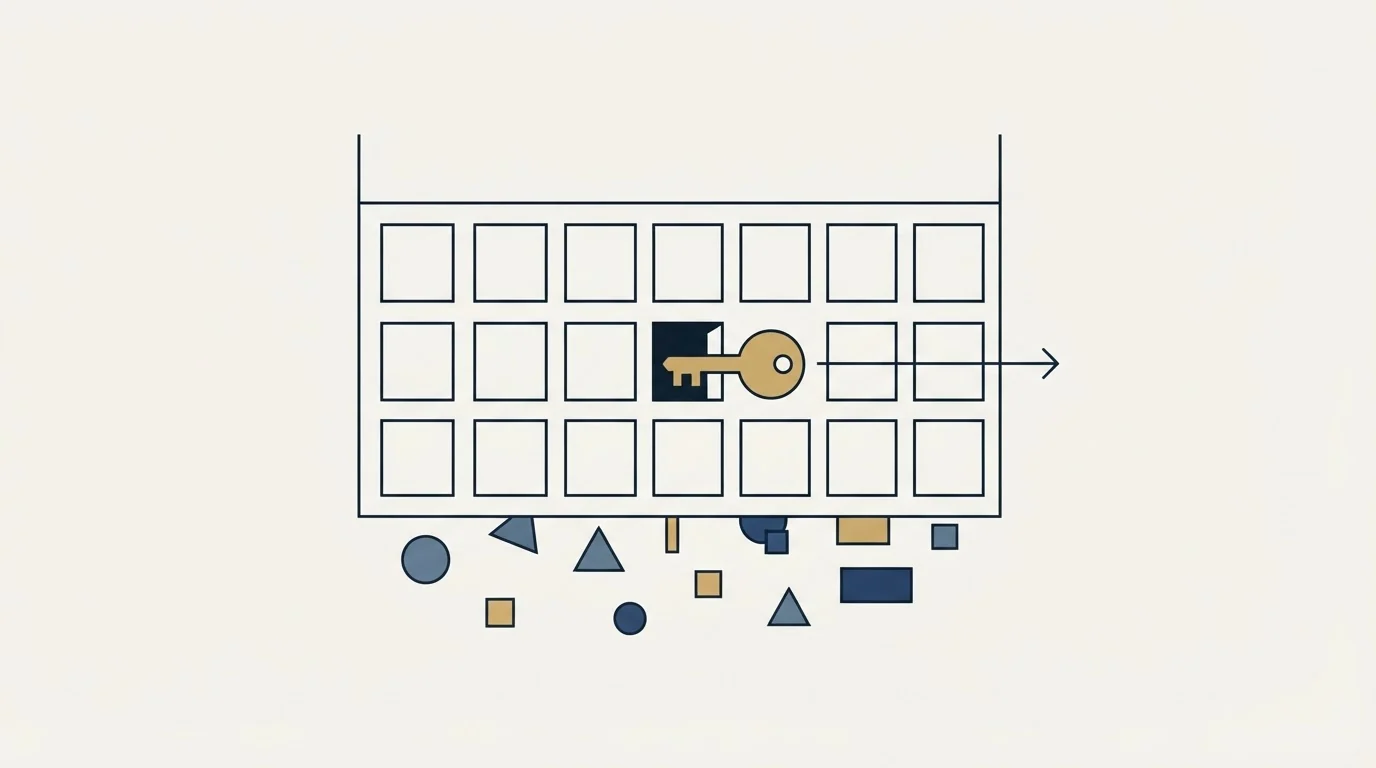
Being blacklisted by SEM-FRESH means only that the domain is young. Outbound runs on domains bought for the purpose. A programme that separates sending domains from the corporate domain, which is the right architecture for every other reason, buys new domains by definition, and every new domain enters the world on the wrong side of an age heuristic.
The operator is not alone in reading registration age as a signal. SURBL sells a comparable dataset, Fresh, as a private feed that its homepage says is not on its public DNS servers, and the reasoning it gives is the same correlation stated plainly: not every new domain is abusive, but a great many abusive domains are young. The corpus already works through that argument and what it means for a sending estate in which of your domains got listed.
What follows from it is a scheduling fact rather than a remedy. A domain registered on Friday and pointed at a campaign on Monday is inside the window. A domain registered, authenticated and warmed for three weeks before its first campaign has left every FRESH window except the thirty day one long before a prospect sees it. Which is the same conclusion warmup arrives at from a different direction, and one more reason the gap between buying a domain and sending from it is not dead time.
Finding out whether you are actually listed
The operator runs a query page on its own site, and it did not render for a scripted browser, so what it displays is not described here. The services page gives what any check needs: each zone's name, its positive answer and its test points, and its own example queries _DNSBL_.test.fresh.spameatingmonkey.net and gets 127.0.0.2. A domain is checked the same way, as yourdomain.com.fresh.spameatingmonkey.net. The FAQ asks anyone running more than 100,000 queries a day, or more than 5 a second for more than a few minutes, to tell the operator first. Aggregated checkers report the row without always saying which of the FRESH windows fired, and the distinction matters: a FRESHZERO row and a FRESH30 row on the same domain describe very different degrees of caution on the receiving side.
Two things about the operator's own site are worth knowing before you go looking. It is a single-page application, so a plain scripted fetch of any path returns the same small shell rather than the page. Anything automated that checks it needs to render the page rather than read the response. And the operator publishes its own zone-usage warning for anybody querying the lists under a .com hostname rather than the .net one: "Our services have never hosted the zones and lists under the .COM domain so this configuration has never worked." It adds that sample configurations in some third-party software carry the wrong domain.
SEM-FRESH · Spam Eating Monkey services page
Description: List includes domains first registered in the last 5 days 1
Expiration: Domains are automatically removed after 5 days 2
Type: URIBL (Domain/URI only). Query zone: fresh.spameatingmonkey.net 3
SpamAssassin example: score SEM_FRESH 0.5 4
Postfix example: warn_if_reject reject_rhsbl_sender 5
- 1Registration age is the only criterion. Nothing the domain has sent is evaluated.
- 2No request and no form: the entry expires on schedule.
- 3A domain and URI list, so it cannot list an IP address. The FAQ says the .COM version of the zones has never worked.
- 4A listed domain found in the message body adds 0.5 in the operator's SpamAssassin example.
- 5Applied to the MAIL FROM domain behind warn_if_reject, which the Postfix documentation calls a safety net for testing: it logs a warning instead of rejecting.
SEM-FRESH blacklist removal: there is nothing to file
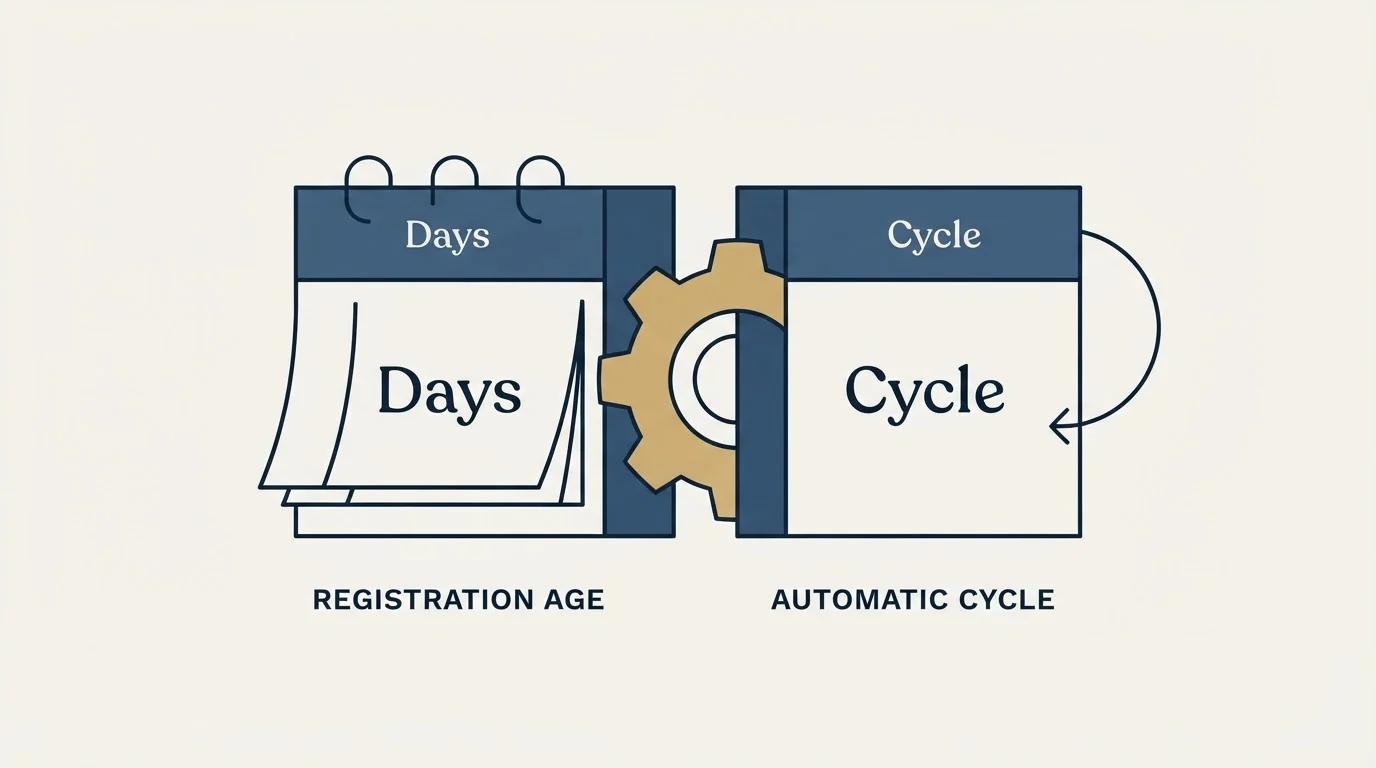
SEM-FRESH blacklist removal happens on its own. The operator's specification says domains "are automatically removed after 5 days", and the only criterion, registration age, stops being true without any action. There is no form to fill in and no request to make, because nothing changes a registration date. The wider windows expire the same way, at 10, 15 and 30 days.
The operator does run a removal processThe operator does run a removal process for its other lists, and its FAQ publishes the turnaround: requests are "reviewed and processed within 24 hours of submitting the request", with the operator noting that denying a request still counts as processing it. Its FAQ also documents a policy-based listing class, which covers addresses that should never send mail directly, senders known to be attached to established spam operations, senders failing to honour unsubscribe requests, and senders building lists by scraping. That class is a real reputational judgement and it is the one worth avoiding. It has nothing to do with the age list.
The same FAQ is blunt about who does the blocking: "We are not blocking your mail. The administrator of the recipient server is blocking your mail." A listing is information a receiver chose to consult.
| Zone | What it lists | Clears |
|---|---|---|
| SEM-FRESHZERO | Domains never seen before | After 24 hours |
| SEM-FRESH | Domains first registered in the last 5 days | After 5 days |
| SEM-FRESH10, 15, 30 | Registered in the last 10, 15 or 30 days | At the end of each window |
| SEM-URI | Domains and URIs in mail sent to a spamtrap | 30 days after a trap last sees it |
| SEM-BLACK | IPs mailing a spamtrap, or listed by policy | 15 days after the last trap hit |
| SEM-BACKSCATTER | IPs sending to a trap with a NULL sender | 15 days after the last backscatter |
What it means for a cold outbound programme
The listing is not the finding. What the listing tells you is that a portion of the receiving world applies extra scrutiny to a domain for its first days of life, and that scrutiny does not end when the FRESH window does. It thins out.
Three things follow.
Do not treat the row as an incident. A brand new sending domain listed on an age list is the expected state. Escalating it, filing anything, or changing infrastructure in response is work spent on a clock that was going to run out anyway.
Do treat the window as a calendar constraint. Buy sending domains far enough ahead that the age lists have expired before the first campaign, and use the interval for the work that has to happen anyway: authentication records published and aligned, mailboxes created, volume ramped rather than stepped. The interval is not overhead if it is filled.
Do keep the distinction between age and reputation clear. A domain leaves an age list on a schedule. A domain does not leave a reputation problem on a schedule, because that is a private score rather than a published list and it responds to sending behaviour over weeks. The difference, and what actually moves the second one, is in email domain reputation and in how to improve domain reputation.
The architectural version is the one that makes all of this unremarkable. Sending domains are bought ahead of need and warmed before use, one purpose per domain so outbound cannot contaminate the mail that matters, and spare capacity exists so that a domain with a genuine problem is replaced rather than rescued. On that footing an age listing is a line in a monitoring log, and so is a Backscatterer row on the same report.
The short version

SEM-FRESH lists domains on registration age and nothing else. The operator's own specification says the list covers domains first registered in the last five days and that they are automatically removed after five days. Its own sample configurations treat a hit lightly, 0.5 in SpamAssassin and a logged warning in Postfix.
It is a domain and URI list rather than an IP list, so a page offering to remove your IP from it is describing something the zone cannot do. It is also one of five age windows the operator publishes, running from a single day up to thirty.
There is no delisting request, no form and no case to make. The criterion expires on its own. Advice to fix authentication or clean a list in response to this specific row is answering a different question.
For a cold email programme the useful response is a calendar change rather than a remediation. Register sending domains far enough ahead that the age windows have closed before the first campaign, and spend the interval publishing records and warming mailboxes.
If you would rather have sending domains bought, authenticated and warmed before a campaign needs them, we plan the first campaign for free.
The list specification, the expiry, the list type, the zone name, the sample configurations, the FRESH family windows, the removal turnaround and the policy-listing class are taken from Spam Eating Monkey's own services and FAQ pages, rendered in a browser. The meaning of warn_if_reject and the two rhsbl restrictions is from the Postfix documentation. The top-level domain scope reported by MXToolbox is attributed to MXToolbox rather than to the operator. Verify current list behaviour with the operator before relying on it.
Sources: Spam Eating Monkey services, Spam Eating Monkey FAQ, MXToolbox on SEM FRESH, SURBL, Postfix configuration parameters
Frequently asked questions.
Frequently asked questions- How do I get my domain off the SEM-FRESH blacklist?
- You wait. The operator's specification says domains are automatically removed after 5 days, because the only thing the list evaluates is how recently the domain was first registered. There is no form and nothing to fix, since no authentication record or list cleaning changes a registration date. The removal requests its FAQ says are processed within 24 hours are for its other lists.
- Why was my domain blacklisted by SEM FRESH?
- Because it is new. SEM-FRESH lists domains first registered in the last 5 days and evaluates nothing else, so every domain bought for a cold email programme passes through it. It is not a judgement about anything you sent. Spam Eating Monkey publishes separate lists for that, including SEM-URI for domains and URIs detected in mail sent to its spamtraps.
- Does SEM-FRESH list IP addresses?
- No. The operator's services page gives the list type as a URIBL covering domains and URIs only. The confusion usually comes from SEM-BLACK, a separate Spam Eating Monkey list that does cover IP addresses and which aggregated checkers file under a similar name. Read which zone actually fired before deciding what the row means.
- How long should a sending domain age before its first campaign?
- Long enough that the age windows have closed and the mailboxes are warmed, which are the same interval. The operator's windows run from 24 hours through 30 days. A domain registered, authenticated and warmed for three weeks has left every window except FRESH30 before a prospect sees a message from it.
About the author.

Tim Carden is CMO / CTO at RevenueFlow, which builds and operates outbound revenue engines for B2B companies. Studied at McGill University.
Tim Carden · CMO / CTO
Connect on LinkedIn →Explore more.
Ready to scale your outreach?
We build GTM engines that book real meetings. See the receipts.
Related articles.
RATS-Dyna: The Listing Your Reverse DNS Caused
RATS-Dyna lists addresses whose reverse DNS looks residential. The operator says a sender who does not run their own mail server should never need to delist.
ivmSIP and ivmSIP/24: Which One Listed Your IP
invaluement publishes two IP lists and the search results merge them. One names your address, the other names the range around it, and only one is yours to fix.
Backscatterer Blacklist: Two Causes, One Four-Week Clock
Backscatterer lists addresses for misdirected bounces and for sender callouts, never for spam. The listing expires after four weeks, so the work is finding the system.
ZapBL: A List of Opinions, and How Yours Clears
ZapBL says it does not block email and is not calling anyone a spammer. What actually gets listed, why three neighbours can catch you, and the four-rung removal ladder.
UCEPROTECT Level 2: Listed for the Neighbours
Level 2 lists allocations rather than senders. The escalation thresholds, the provider grace windows, and why the free removal is automatic and the paid one optional.
Suomispam Reputation: Read the Code Before You File
Suomispam publishes four zones and four listing classes, and the response code names which one you have. Two pieces of common delisting advice will not move it.