Apollo.io Sales Engagement vs Monday CRM Compared
Compare Apollo.io (sales engagement platform) and Monday CRM (crm platform) side by side. Understand how these tools fit different stages of your sales workflow.
Apollo.io's sales engagement platform features are six connected products, Sequences, Dialer, Tasks, Book of Business, AI Messaging and Meeting Scheduler, with unlimited sequences from the $49 Basic tier. monday CRM is the record, rendered here at £10 to £24 a seat with email sequences only on Pro. Buy for the gap you can name; the pipeline goes first.
Key takeaways
- Apollo's own page lists six sales engagement products, and its pricing page caps Basic at one mailbox per user and 250 emails a day, lifted on Professional at $79.
- monday CRM renders in pounds here: Basic £10, Standard £14 and Pro £24 per seat per month on yearly billing, with "Set email sequences" and "Send mass emails" only on Pro.
- monday is not among the three CRMs Apollo's compare table names (Salesforce, HubSpot, Pipedrive), so the connector between the pair is a choice to test before any segment runs.
- If nobody can describe the pipeline, buy monday CRM; if the top of it is empty, buy Apollo.io; if both, the pipeline goes first, and if neither, fix the list this quarter.
Reviewed and updated September 19, 2026
The price on the front of Apollo.io's pricing page is not the price of the thing this comparison is about. Unlimited sequencing sits on Basic, at $49 a seat a month billed annually, which is not the tier at the top of the page. monday CRM has the same shape in the other direction: "Set email sequences" appears on its Pro card, two rungs up from the entry price. That gap is the first thing to check when a team is weighing Apollo.io's sales engagement platform features against monday CRM, because the entry figure in every comparison table on the internet is the one that does not include the capability being compared.
The Short Answer
Buy for the gap you can name. If deals are being worked and nobody can describe the pipeline, monday CRM is the purchase. If the pipeline is fine and the top of it is empty, Apollo.io is the purchase. If both are true, the pipeline goes first.
The two are not substitutes. monday CRM is the record, the board where a deal and its history live; Apollo is where the list is built, enriched and sequenced. Most teams that buy Apollo already run a CRM, and Apollo's compare table lists "CRM Integrations (Salesforce, HubSpot, Pipedrive)" from Basic upward, with monday not among the three it names, so the connection between this pair is a CSV, an API or a third-party connector rather than a listed integration. Both vendors publish a rate, so the pair can be costed on paper before anyone books a call, each half in the currency its page serves.
What Are Apollo.io's Sales Engagement Platform Features?
Apollo's own sales engagement page answers this in one sentence of its FAQ: "Apollo’s sales engagement brings six connected products into one workflow: Sequences for multi-channel outreach, Dialer for calling, Tasks for daily execution, Book of Business for account-based follow-up, AI Messaging for personalization, and Meeting Scheduler for booking." The pricing page's compare table puts limits on each of those by tier.
Sequences are "2 Sequences" per team on Free and "Unlimited Sequences" from Basic, with "A/Z Testing" from Professional. Sending is capped by mailbox: "1 mailbox per user" and "250 emails" a day on Free and Basic, "Unlimited Google and Microsoft mailboxes + 5 SMTP mailboxes per user" with unlimited daily sends on Professional, 15 SMTP on Organization. AI writing runs from 5,000 words a month on Free to 1,000,000 on Organization. The dialer is metered in credits, "US Dialer 2 credits per minute", and call recording with AI insights is listed from Professional. Automated workflows run from 2 per team on Free to 500 on Organization, and the page lists a "Meeting Scheduler", a "Task Execution Center", a "Unified Inbox" and an "Email Deliverability Suite" among the outbound rows.
The features people usually mean by "sales engagement" are therefore on Apollo from the first paid tier, with the mailbox row as the one published ceiling. Teams comparing Apollo's sequencer with a dedicated engagement platform can read the Apollo vs Salesloft pair, teams weighing it against a newer CRM can read Attio vs Apollo, and Apollo vs Pipedrive covers the one CRM of the three Apollo names that sells at monday's end of the market.
What Each Side Does in a Cold Outbound Run
Neither of these tools sends cold volume for you at scale. monday CRM is where a conversation gets recorded once it exists, and Apollo.io is where the touch is orchestrated and measured. Cold sending itself happens on separate, warmed sending inventory, which is a different purchase again, and on Apollo Basic it is held to one mailbox and 250 sends a day per seat.
Worth stating the sending doctrine plainly, because it changes what either tool is worth: one message per campaign, and no follow up under it. A sequence step that lands beneath an ignored email is a bump, so the sequencing engine matters less than the list feeding it. The cost of a bad list is the sender reputation rather than the wasted send. Cold outbound runs on shared inventory, so one campaign mailing stale records damages placement for every campaign beside it.
Meetings are the other place the two categories separate. A meeting counts when it matches criteria agreed in writing before launch, and neither tool decides that. monday CRM is where the agreed definition gets recorded against the account so the same standard survives a rep change.
Pricing Comparison

Apollo.io Pricing
| Plan | Price | Credits | Mailboxes and daily sends |
|---|---|---|---|
| Free | $0 | 900 credits per seat per year, granted monthly | 1 mailbox per user, 250 emails a day |
| Basic | $49 | 30,000 credits per seat per year, granted upfront | 1 mailbox per user, 250 emails a day |
| Professional | $79 | 48,000 credits per seat per year, granted upfront | Unlimited Google and Microsoft + 5 SMTP, unlimited sends |
| Organization | $119, min 3 seats | 72,000 credits per seat per year, granted upfront | Unlimited Google and Microsoft + 15 SMTP, unlimited sends |
Every paid card carries the line "Per seat per month, billed annually" against a toggle labelled "Annual billing Save 24%", and Organization reads "(min 3 seats)". The credit rates below the cards are "Email 1 credit" and "Phone number 8 credits", and the page's product menu describes Apollo Data as "240M contacts & 30M companies".
Source: Apollo.io Pricing
monday CRM Pricing
| Plan | Yearly rate, per seat per month | Paying monthly | Contacts and deals | Sequences |
|---|---|---|---|---|
| Basic | £10 | £13 | 1,000 active | none listed |
| Standard | £14 | £18 | 10,000 active | none listed |
| Pro | £24 | £31 | 100,000 active | "Set email sequences", "Send mass emails" |
| Ultimate | Custom price | Custom price | Unlimited | Everything in Pro |
monday's CRM pricing page geo-serves this connection in pounds, with a team-size selector defaulting to "10 Seats" and a "Yearly SAVE 18% | Monthly" toggle, so the ladder is given here exactly as rendered and no dollar figure is carried forward. A footnote on the page reads "Ultimate is a new name for our Enterprise tier". Sequences and mass email arrive on Pro, listed under "Includes Standard, plus:", and Standard is the first tier to list the AI agents, an "Outreach caller agent" that "Calls, qualifies, and engages leads around the clock using your custom playbook" and a "Lead sourcer agent" that "Proactively finds and enriches new leads that match your target profile".
Source: monday CRM Pricing
Pricing Context
Both halves of this pair publish a rate, which is unusual on this shelf, and the two pages serve different currencies from this connection. Apollo renders dollars; monday renders pounds. A comparison that converts one into the other produces a number no visitor of either site is shown, so the arithmetic below keeps each half in its own currency and never adds them.
What the Entry Price Does Not Buy
Take the number for the tier that carries the capability being compared, not the number at the top of the page, before either tool goes into a budget. On Apollo, the free card lists "2 Sequences" and the paid cards from Basic upward list "Unlimited Sequences", so the free tier is a place to look at the database rather than a place to run outbound from, and Basic adds a mailbox limit on top.
On monday, Basic and Standard list no sequence line at all. "Set email sequences" and "Send mass emails" are Pro card lines, so a team that wants the CRM to carry any sending of its own is buying at £24 a seat a month on yearly billing rather than £10.
What the Pair Costs at a Realistic Team Size
The team below is invented rather than a client: five sellers, all needing a seat in both systems, no add-ons. The rates are the list prices each page renders here, each kept in its own currency.
| Line, five seats, twelve months | Per seat per month | Per year |
|---|---|---|
| monday CRM Basic, yearly billing | £10 | £600 |
| monday CRM Pro, the first tier with sequences | £24 | £1,440 |
| Apollo.io Basic, billed annually | $49 | $2,940 |
| Apollo.io Professional, unlimited mailboxes | $79 | $4,740 |
Seat count is the variable that moves this most, and it moves it linearly, so the arithmetic scales cleanly in both directions. Five monday Basic seats at £10 a month come to £600 a year, and the Pro tier that carries sequences is £1,440. Five Apollo Basic seats at $49 are $2,940 a year, and Professional, the tier that lifts the one-mailbox limit, is $4,740. Read those as orders of magnitude in two currencies, and re-open both pages from the country the invoice will be paid from before either goes into a budget.
Feature Overlap
The two pages collide on two rows, so the tools sit closer together than a category label suggests. Outbound email: Apollo lists "Unlimited Sequences" from Basic, and monday lists "Set email sequences" and "Send mass emails" on Pro. Workflow automation: Apollo lists "Automated Workflows" by count per tier, and monday lists "250 custom automations /month" on Standard and "25K custom automations /month" on Pro.
Read that as a decision rather than a feature win. On a house that sends one message per campaign, two systems able to mail the same list is something to settle once, by picking which one owns the send and turning the other one off for that job. The caveat is the important half: this compares the exact wording of two vendor pages, so it says what each vendor chose to publish, not what either product can be made to do.
Do You Need Both, and in Which Order?
Both on day one is rarely the right shape, and the order matters more than the answer either way. Buy the side that closes the gap you can name, run it for a quarter, then decide whether the second one is still worth its seat cost.
The failure to avoid is buying the second tool to fix a problem the first one was never going to solve. A pipeline nobody updates does not get fixed by better sequencing, and a list that bounces does not get fixed by a tidier deal board.
When to Choose Apollo.io

- The top of the pipeline is empty and the list is the gap
- Research, enrichment, sequencing and calling should sit on one seat, at a published dollar rate
- Each rep sends from one mailbox, or the team is ready to pay for Professional to lift that
- The CRM already exists somewhere else, and Apollo lists Salesforce, HubSpot and Pipedrive as its integrations
When to Choose monday CRM
- Deals are being worked and nobody can say what is in the pipeline
- The team wants the board, the automations and the AI agents on one record, priced per seat in its own currency
- Sending from the CRM is wanted, which puts the purchase on Pro rather than Basic
- Ultimate's unlimited contacts, security and HIPAA lines are needed, which means a custom price
Rolling the Second Tool In Without Breaking the First
Write down which system owns each field before anything is connected. The common mess is two tools both claiming to own contact status, so a rep marks somebody as replied in one place and the other keeps mailing them. Pick a matching key and stick to it. Email address is the only key that survives a job change badly but joins reliably; company name does not join at all across two systems that normalise it differently.
Run one segment through the connected pair before the whole list goes near it. Fifty records is enough to read by hand, and reading them by hand is what catches a mapping that looks right in a settings screen and is wrong in the data. Because monday is not among the CRMs Apollo's compare table names, the connector is a choice to make before the segment runs, and it is the first thing to test.
Set a refresh cadence for whichever side holds the contact data, and put a date on it. Records decay whether or not anybody is looking.
Using Both Together
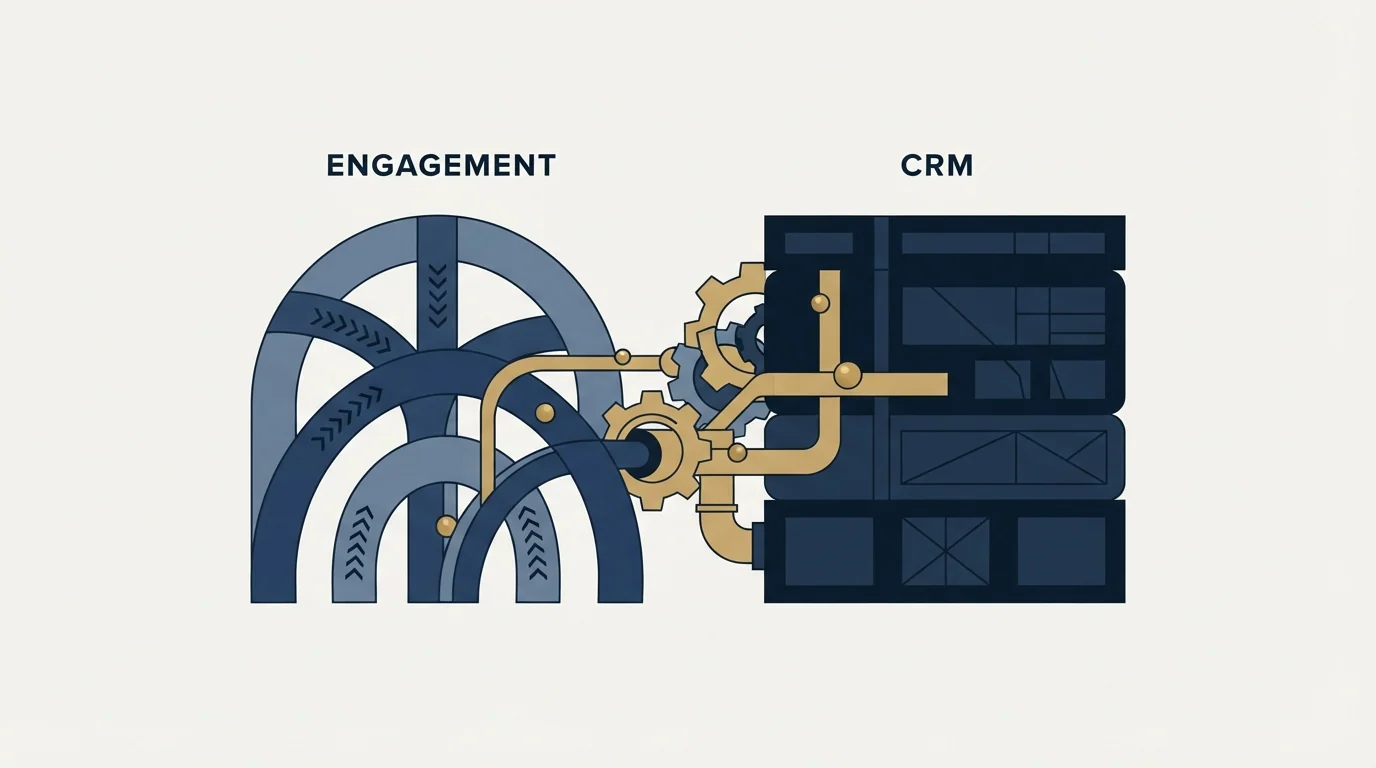
Many sales teams use both a sales engagement platform and a CRM platform as part of their complete workflow. Apollo.io handles outreach orchestration while monday CRM covers pipeline and deal tracking. The part worth deciding before they are connected is which system owns contact status. Two tools both convinced they own it is how somebody who replied keeps getting mailed.
The Decision Shortcut
If the pipeline is the thing nobody can describe, buy monday CRM. If the top of the pipeline is empty, buy Apollo.io. If both are true, the pipeline goes first, because an outbound push into a system nobody maintains produces conversations that get lost rather than deals that close.
If neither is clearly true, buy neither this quarter and fix the list instead. That is the cheapest of the three options and it is the one most likely to move the number.
Related Reading
- Best Apollo.io Alternatives in 2026
- Best Monday CRM Alternatives in 2026
- Apollo.io vs Outreach: Sales Engagement Platform Comparison
- Apollo.io vs Salesloft: Sales Engagement Platform Comparison
- Monday CRM vs Salesforce: CRM Platform Comparison
If you would rather have this run for you, RevenueFlow books qualified meetings on a pay-per-meeting basis and publishes client results.
Pricing and features are taken from the vendors' own pages. Verify current terms with the vendor before relying on them.
Frequently asked questions.
Frequently asked questions- What are Apollo.io's sales engagement platform features?
- Apollo's sales engagement page names six connected products: Sequences for multi-channel outreach, Dialer for calling, Tasks for daily execution, Book of Business for account-based follow-up, AI Messaging for personalization, and Meeting Scheduler for booking. The pricing page adds the limits: unlimited sequences from Basic, one mailbox per user and 250 emails a day until Professional, and a dialer metered at two credits a minute.
- Is Apollo a CRM like monday?
- No. Apollo is a contact database with a sequencer, dialer and deal boards attached, and its compare table lists CRM integrations with Salesforce, HubSpot and Pipedrive rather than positioning itself as the record. monday CRM is a CRM built on monday.com boards, with contacts, deals, automations and AI agents priced per seat. Teams that run both keep the deal history in monday and the outreach in Apollo.
- How much does monday CRM cost compared with Apollo?
- monday's CRM pricing page geo-serves this connection in pounds: Basic £10, Standard £14 and Pro £24 per seat per month on yearly billing, or £13, £18 and £31 paying monthly, with Ultimate at a custom price. Apollo renders dollars: Basic $49, Professional $79 and Organization $119 per seat per month billed annually. The two are in different currencies as served, so they are not added on this page.
- Which should a team buy first, Apollo or monday CRM?
- Buy for the gap you can name. If deals are being worked and nobody can describe the pipeline, monday CRM comes first, because an outbound push into a system nobody maintains produces conversations that get lost. If the pipeline is fine and the top of it is empty, Apollo comes first. If neither is clearly true, buy neither this quarter and fix the list instead.
About the author.

Tim Carden is CMO / CTO at RevenueFlow, which builds and operates outbound revenue engines for B2B companies. Studied at McGill University.
Tim Carden · CMO / CTO
Connect on LinkedIn →Explore more.
Ready to scale your outreach?
We build GTM engines that book real meetings. See the receipts.
Related articles.
Kommo vs Luru: CRM Platform vs Sales Engagement Platform Comparison
Compare Kommo (CRM platform) and Luru (sales engagement platform) side by side. See pricing, features, and integrations to decide which one, or both, your stack needs.
Dripify vs Membrain: Sales Engagement Platform vs CRM Platform Comparison
Compare Dripify (sales engagement platform) and Membrain (CRM platform). See pricing, features, and integrations to decide which one, or both, your stack needs.
AiSDR vs Apollo.io: Sales Engagement Platform Comparison
Compare AiSDR and Apollo.io side by side. See pricing, features, and integrations to choose the right sales engagement platform for your needs.
Best Kixie Alternatives in 2026
Looking for alternatives to Kixie? Compare the top sales engagement platforms by pricing, features, and integrations.
AroundDeal vs Leadspicker: Data Enrichment Tool vs Sales Engagement Platform Comparison
Compare AroundDeal (data enrichment tool) and Leadspicker (sales engagement platform) side by side. See pricing, features, and integrations to decide which one, or both, your stack needs.
AroundDeal vs Salesflare: Data Enrichment Tool vs CRM Platform Comparison
Compare AroundDeal (data enrichment tool) and Salesflare (CRM platform) side by side. See pricing, features, and integrations to decide which one, or both, your stack needs.