Clay vs LeadIQ: Data Enrichment Tool Comparison
Compare Clay and LeadIQ side by side. See pricing, features, and integrations to choose the right data enrichment tool for your needs.
Clay is an orchestration layer metered in actions, free at 500 a month and $167 for Launch from 15,000, with unlimited seats on every tier and no contact database of its own. LeadIQ is a first-party prospecting tool metered per contact, at 1 credit an email and 10 a phone number, from $200 a month.
Key takeaways
- A Clay action is one step against one row, so the same 2,000 prospects can cost 6,000 or 20,000 actions depending on how long the pipeline is.
- Clay charges data credits separately from actions, and both are separate from what the providers it calls charge, so a Clay budget is at least two lines.
- Clay lists unlimited seats on every tier including the free one; LeadIQ Pro caps at five users.
- Clay integration list names Apollo.io, Clearbit and ZoomInfo as sources it can call, which is why the two tools compose rather than compete.
Reviewed and updated August 28, 2026
Clay vs LeadIQ: Data Enrichment Tool Comparison
Clay owns no contact database. It is a table that calls other people's databases in a waterfall and charges you for each step it takes. LeadIQ owns its data and charges you for each contact you reveal. Comparing them on price per contact is comparing a taxi meter to a train ticket.
Teams end up buying both more often than they end up choosing between them, and the useful question is which one to buy first.
The Short Answer
Clay charges for steps, not people: $167 a month for Launch from 15,000 actions, with unlimited seats on every tier including the free one. LeadIQ charges for people: 1 credit an email, 10 a phone number, 3 an account enrichment, from $200 a month.
Clay wins when the list needs several providers tried in sequence. LeadIQ wins when one rep needs one contact and a draft in ten seconds. Most teams that can afford both buy both.
What Each Tool Actually Is
Clay is an orchestration layer: 150+ data provider integrations, AI research through Claygent, and workflow automation metered in actions rather than contacts.
LeadIQ is a first-party prospecting tool: its own verified emails and mobiles, capture from Sales Navigator, and AI drafting, metered in credits per contact.
An action in Clay is one step against one row. Finding a person is an action, enriching their company is another, running a Claygent research pass over the result is another. Data credits are metered on top of actions. So a Clay bill is a function of how long your pipeline is, not how many people are in it, and two teams with the same list size can pay very different amounts.
LeadIQ's meter is flat by comparison and its unit is a person: one credit for an email, ten for a phone number, three for an account enrichment. That predictability is worth something. What you give up is the ability to run six providers in sequence and keep whichever one answers, which is the reason Clay exists.
Pricing Comparison
Launch, from 15,000 actions a month
Pro, slider opening at 200 credits
Clay Pricing
| Plan | Price | Included volume | Seats |
|---|---|---|---|
| Free | Free | 500 actions/mo, 100 data credits/mo, 200 rows per table | Unlimited |
| Launch | $167/mo | Starts at 15,000 actions/mo | Unlimited |
| Growth | $446/mo | Starts at 40,000 actions/mo | Unlimited |
| Enterprise | Contact Sales | Custom actions | Unlimited |
Clay's pricing page meters ACTIONS rather than contacts, and the ladder it publishes starts at $167 a month for Launch from 15,000 actions a month and $446 for Growth from 40,000. Both are expandable from inside the tier: the page lists Launch action packs climbing to 200,000 a month at $540, and Growth to 200,000 at $850. Annual billing is priced at 10 percent off on the same page.
An action is a step in a table, not a person. Finding somebody, enriching their company and running an AI research pass over the result is three actions against one row, so the same 2,000 prospects can cost 6,000 actions or 20,000 depending on how long the pipeline is. Clay also charges data credits separately from actions, and it puts unlimited seats on every tier including the free one.
Source: Clay Pricing
LeadIQ Pricing
| Plan | Price | Credits | Users |
|---|---|---|---|
| Free | $0 | 50 credits | 1 user |
| Pro | $200/mo | Slider from 200 to 6,750 credits/month | Up to 5 users |
| Enterprise | Contact us | Custom | Custom, annual plan only |
LeadIQ's pricing page carries a slider rather than a ladder. Pro shows $200 a month against the slider's opening position of 200 credits a month, and the positions run 200, 500, 1,000, 1,500, 2,000, 2,500, 3,000, 3,500, 4,000, 4,500, 5,500 and 6,750 before handing over to Enterprise. Annual billing is priced at 25 percent off, Enterprise is annual only, and every plan carries a 30-day trial.
The credit table is where the real pricing lives. LeadIQ's page prices an email at 1 credit, a phone number at 10, an email and phone together at 11, and an account enrichment at 3. A phone number therefore costs ten times an email address on the same meter, so a team that dials is spending its allowance an order of magnitude faster than a team that only emails.
Source: LeadIQ Pricing
What a 2,000-row list costs on each
The example below is invented. It uses each vendor's published units and a made-up pipeline shape to show how the two meters diverge.
Two thousand rows through a short Clay pipeline, say find email, enrich company, verify, is roughly three actions a row or 6,000 actions, which sits inside Launch's 15,000 a month at $167. Lengthen the same pipeline to ten steps a row, which is normal once Claygent research and conditional branches are in it, and the same 2,000 rows is 20,000 actions and no longer fits Launch at all.
The identical job on LeadIQ is 2,000 email credits, full stop, and the pipeline length is irrelevant because there is no pipeline. What LeadIQ cannot do is try a second source when the first misses, so the same 2,000 rows come back with a lower fill rate and no way to improve it from inside the tool.
That is the real trade and it is why the tools compose. Clay's data credits are also separate from its actions, and both are separate from whatever you pay the providers Clay calls, so a Clay budget is at least two lines and often three.
Who Should Pick Which
Pick Clay if your list-building problem is shaped like a workflow: multiple sources, conditional logic, enrichment that changes depending on what came back. Unlimited seats on every tier including the free one means the whole team can look at the table, which matters more than it sounds when the table is the argument.
Pick LeadIQ if your problem is shaped like a person: this account, this buyer, this week. A rep who lives in Sales Navigator gets more out of a capture extension than out of a spreadsheet with 150 integrations, and champion tracking has no equivalent in Clay at all.
The honest third answer is both, in that order. Clay first if you are still learning what your enrichment pipeline should look like, because its free tier lets you find out. LeadIQ once the shape is settled and the constraint has moved to how fast a rep can act on a name. A grounded read on the pattern is in our note on waterfall enrichment.
- Yes: You need several providers tried in sequence per row
- No: One rep needs a contact and a draft in ten seconds
- Yes: The whole team should be able to open the list
- No: Budget predictability matters more than fill rate
- Yes: You want AI research written into each row
- No: Nobody on the team enjoys building spreadsheets
Feature Breakdown
- 150+ data provider integrations
- AI-powered enrichment (Claygent)
- Unlimited users on all plans
- Credit rollover
- Workflow automation
- Data waterfall enrichment
- Scribe AI email personalization
- Champion tracking for job changes
- One-click CRM capture
- Verified work emails and mobile numbers
- Account and contact discovery
- LinkedIn Sales Navigator integration
Clay Key Features
- 150+ data provider integrations
- AI-powered enrichment (Claygent)
- Unlimited users on all plans
- Credit rollover
- Workflow automation
- Data waterfall enrichment
- Custom API key support
- HTTP API integration
- Webhooks
LeadIQ Key Features
- Scribe AI email personalization
- Champion tracking for job changes
- One-click CRM capture
- Verified work emails and mobile numbers
- Account and contact discovery
- LinkedIn Sales Navigator integration
- AI-powered account prioritization
- Salesforce and HubSpot data sync
- Sequence integration (Outreach, SalesLoft)
- 30-day free trial
Clay's list is infrastructure: providers, waterfalls, webhooks, an HTTP API step and bring-your-own API keys. LeadIQ's is a workflow: capture, draft, sync, track. Clay lists credit rollover; the LeadIQ list on this page does not, which matters for a team whose volume is lumpy.
Integration Ecosystem
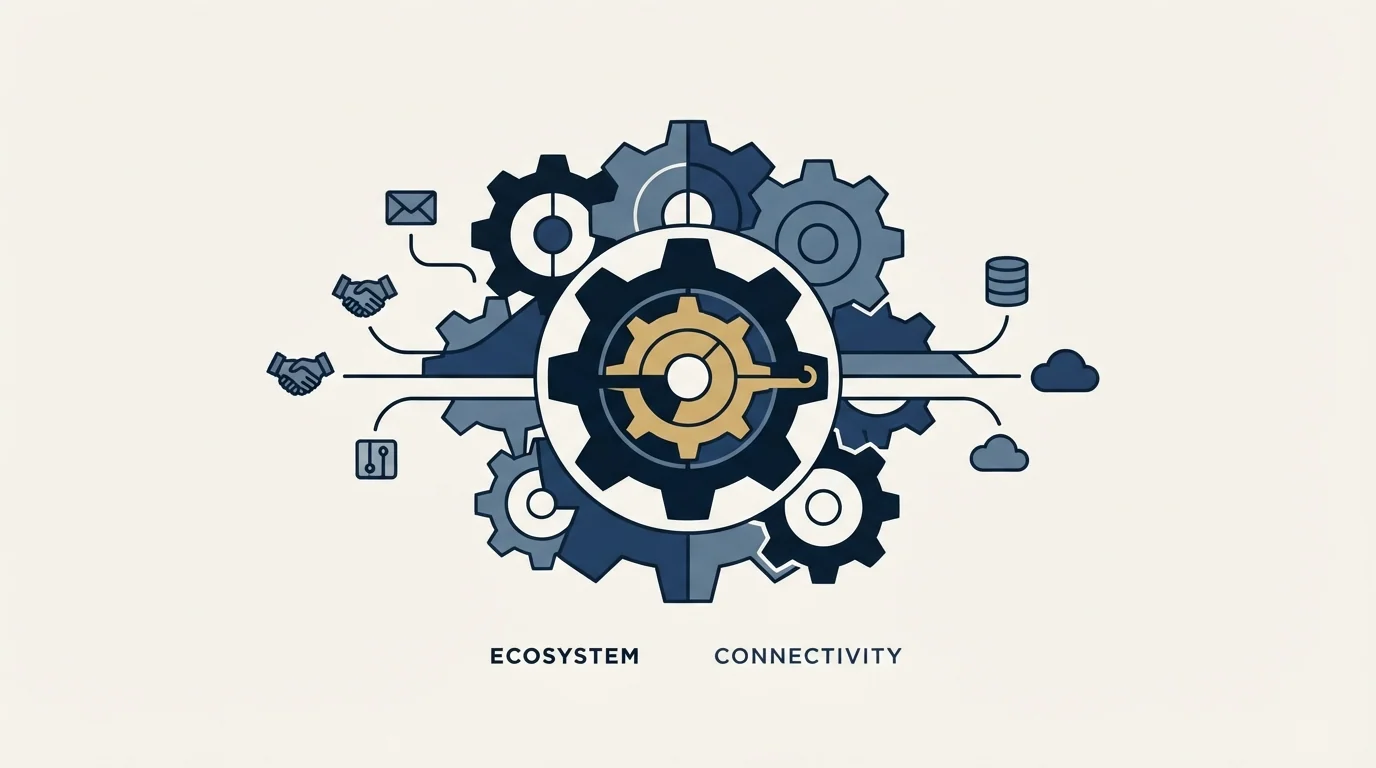
Clay connects with: Salesforce, HubSpot, Pipedrive, Close, Apollo.io, Clearbit, ZoomInfo, Lemlist, Instantly, Smartlead, OpenAI, Google Sheets, Airtable, Notion.
LeadIQ connects with: Salesforce, HubSpot, Outreach, SalesLoft, Gong, LinkedIn Sales Navigator, Gmail, Zapier.
Clay's integration list contains other data vendors, including Apollo.io, Clearbit and ZoomInfo, which is the clearest evidence that it is a layer above this market rather than a competitor inside it. LeadIQ's list is CRMs, sequencers and Gong. If you are wondering whether the two overlap, that difference is the answer.
Where Each One Sits In A Cold Outbound Stack
Clay is the orchestration layer: it owns no contact database of its own and calls other providers in a waterfall. LeadIQ is a capture-and-personalise layer that sits between Sales Navigator and whatever sequencer you already run.
Clay sits above this whole market rather than inside it. Its own integration list names Apollo.io, Clearbit and ZoomInfo as sources it can call, so a Clay bill and a data bill are separate lines and a team that budgets only for Clay has budgeted for half the cost.
LeadIQ sits between Sales Navigator and a sequencer, and neither tool sends anything. Since we send one message per campaign with no bumps, every address has to be right the first time, and that is the argument for Clay's waterfall on hard segments even when LeadIQ is the daily driver.
Switching Between Them
There is no meaningful migration between these two because they hold different things. Clay holds tables and enrichment logic; LeadIQ holds a capture history and a CRM sync configuration. Moving means rebuilding, not exporting.
What does transfer is the list itself. Export from either as CSV and re-verify before sending, because a contact that was accurate when it was captured is not necessarily accurate now, and a stale list is the fastest route to the bounce rates covered in our bounce rate benchmarks.
Getting Started
- Write down the actual steps your enrichment needs per row. That number, not your list size, is what Clay bills.
- Build one 200-row table on Clay's free tier and count the actions it consumed.
- Capture 25 contacts through LeadIQ's free tier and time the path from name to sequence.
- Compare fill rate on the same 200 companies, since Clay's waterfall exists to beat a single source.
- Decide which bottleneck is real for you this quarter, and buy only that one first.
Final Thoughts
Clay is the better answer when the question is how to build a list nobody else can build. LeadIQ is the better answer when the question is how to get today's twenty accounts into a sequence before lunch.
If you can only fund one this quarter, start with whichever end of that sentence describes your actual bottleneck, and use both free tiers to find out which it is.
Related Reading
- Best Clay Alternatives in 2026
- Best LeadIQ Alternatives in 2026
- Clay vs Cognism: Data Enrichment Tool Comparison
- Waterfall Enrichment: The Provider Order That Follows From the Unit Costs
- Cold Email Bounce Rate Benchmarks: 2026 Performance Data
- Clay Enrichment: Building a Waterfall That Doesn't Waste Credits
If you would rather have this run for you, RevenueFlow books qualified meetings on a pay-per-meeting basis and publishes client results.
Pricing and features are taken from the vendors' own pages. Verify current terms with the vendor before relying on them.
Frequently asked questions.
Frequently asked questions- Are these two really competitors?
- Less than most comparison pages suggest. Clay owns no contact database and orchestrates other providers in a waterfall, so a data vendor can sit underneath a Clay table as one of the sources it calls. Teams that can fund both usually buy both, and the practical question is which one to buy first.
- What actually drives a Clay bill?
- Steps per row rather than rows. Finding a person is an action, enriching their company is another, an AI research pass is another. Two thousand prospects at three steps each is 6,000 actions and fits Launch 15,000 floor. The same 2,000 at ten steps each is 20,000 and does not, at the same list size.
- Which one should a small team buy first?
- Clay if you are still learning what your enrichment pipeline should look like, because its free tier at 500 actions a month lets you find out cheaply. LeadIQ once the shape is settled and the bottleneck has moved to how fast a rep can act on a name rather than how the list gets built.
- Can Clay replace a contact database?
- No, and it does not claim to. Clay supplies the logic and calls providers for the data, so cancelling your data vendors and keeping Clay leaves you with an empty table. Budget for Clay plus the providers underneath it, which is the most common surprise on a first invoice.
About the author.

Tim Carden is CMO / CTO at RevenueFlow, which builds and operates outbound revenue engines for B2B companies. Studied at McGill University.
Tim Carden · CMO / CTO
Connect on LinkedIn →Explore more.
Ready to scale your outreach?
We build GTM engines that book real meetings. See the receipts.
Related articles.
Agile CRM vs LeadIQ: CRM Platform vs Data Enrichment Tool Comparison
Compare Agile CRM (CRM platform) and LeadIQ (data enrichment tool) side by side. See pricing, features, and integrations to decide which one, or both, your stack needs.
Apollo.io vs Proofy: Data Enrichment Tool Comparison
Compare Apollo.io and Proofy side by side. See pricing, features, and integrations to choose the right data enrichment tool for your needs.
AroundDeal vs Leadspicker: Data Enrichment Tool vs Sales Engagement Platform Comparison
Compare AroundDeal (data enrichment tool) and Leadspicker (sales engagement platform) side by side. See pricing, features, and integrations to decide which one, or both, your stack needs.
AroundDeal vs Salesflare: Data Enrichment Tool vs CRM Platform Comparison
Compare AroundDeal (data enrichment tool) and Salesflare (CRM platform) side by side. See pricing, features, and integrations to decide which one, or both, your stack needs.
Gong vs NeverBounce: Sales Engagement Platform vs Data Enrichment Tool Comparison
Gong vs NeverBounce: what Gong's own pages say about enrichment, what NeverBounce's API returns about an address, and how each vendor prices.
ContactOut vs Luru: Data Enrichment Tool vs Sales Engagement Platform Comparison
Compare ContactOut (data enrichment tool) and Luru (sales engagement platform) side by side. See pricing, features, and integrations to decide which one, or both, your stack needs.