Gong vs UpLead: Cross-Category Comparison
Compare Gong (sales engagement platform) and UpLead (data enrichment tool) side by side. Understand how these tools fit different stages of your sales workflow.
Close the data gap first when the list runs out. UpLead covers sourcing and verified contacts from $74 a month billed annually, while Gong covers sending and follow-through and names no price on its own page. Buy the sending side first only when meetings are already being booked and lost after the reply.
Key takeaways
- UpLead publishes its top-up rate, at $0.60 and $0.50 a credit, which is the figure that decides which tier is genuinely cheaper once a month overruns its allowance.
- Gong publishes its model rather than its price: per user licenses plus a platform fee based on the number of users supported.
- Half of this stack can be budgeted from public pages and half cannot, so treat any Gong figure in a plan as a placeholder until a quote lands.
- Data first, sending second, because a sending platform bought onto a thin list delivers the same thin list faster and hides the cause in its own reporting.
Reviewed and updated August 29, 2026
Gong vs UpLead: Cross-Category Comparison
UpLead publishes the number that makes tiers comparable and most vendors leave out: extra credits at $0.60 and $0.50 each. With UpLead Essentials at $99 a month for 170 credits and Plus at $199 for 400, the overflow rate is what decides which tier is actually cheaper for a given month. Gong sits on the other side of that line and names no price on its pricing page, though it does set out its pricing model there: per user licenses plus a platform fee. Reading those two shapes together is what this comparison is for.
Why Compare These Two Tools?
Data enrichment tools provide the contact data that sales engagement platforms use for outreach sequences. The question for buyers is often whether an all-in-one platform that includes data can replace a dedicated enrichment tool.
Gong is a sales engagement platform focused on multi-channel sales outreach. Gong is a revenue AI platform that captures and analyzes customer interactions across calls, emails, and meetings to deliver deal intelligence, forecasting, and sales coaching insights.
UpLead is a data enrichment tool focused on B2B lead data and contact enrichment. UpLead is a B2B prospecting platform with a 95%+ data accuracy guarantee, real-time email verification, and 200M+ leads.
That framing is right and it stops short of the decision, which is whether a team needs both at once or one of them first.
Where Each Tool Fits in Your Workflow
- Step 1Lead sourcing and data
UpLead covers B2B lead data and contact enrichment, on a free entry plan.
- Step 2Outreach orchestration
Gong covers multi-channel sales outreach.
| Aspect | Gong | UpLead |
|---|---|---|
| Category | Sales Engagement Platform | Data Enrichment Tool |
| Workflow Stage | Outreach orchestration | Lead sourcing and data |
| Primary Focus | Multi-channel sales outreach | B2B lead data and contact enrichment |
| Starting Price | Contact Sales | Free |
| Features Listed | 10 | 10 |
| Integrations | 12 | 8 |
What Each Side Actually Does in a Cold Outbound Run
A cold outbound run has a fixed shape, and these two categories sit in different parts of it. Targeting comes first, and that is a decision about who is worth writing to rather than a piece of software. Then the list gets built and a mailbox gets resolved for every person on it. That half belongs to UpLead: search filters, an extension over a profile, a spreadsheet pushed back through enrichment, and a verification pass that discards anything the provider could not confirm.
Sending is Gong's half. Sender accounts, sending windows, the daily cap on each mailbox, reply detection and the record of who answered all live there. RevenueFlow runs one message per campaign, so nothing on that side is a bump step or a thread reply waiting to fire. A prospect who stays quiet gets re-approached later through a new campaign with a different angle, never with a second message stacked under the one they ignored, and on LinkedIn that second message does not get sent at all.
The last stage belongs to neither product. Somebody reads the reply and somebody books the meeting, and the meeting counts only against qualification criteria written down before launch.
Pricing Comparison
Gong Pricing
| Plan | Price |
|---|---|
| Gong (platform) | Contact Sales |
Gong publishes a pricing model instead of a rate: per user licenses plus a platform fee based on the number of users supported, with existing tech stack integrations free.
Source: Gong Pricing
UpLead Pricing
| Plan | Price | Contacts | Emails |
|---|---|---|---|
| Free Trial | Free | 5 credits over 7 days | N/A |
| Essentials | $99/mo | 170 credits/month | N/A |
| Plus | $199/mo | 400 credits/month | N/A |
| Professional | Contact Sales | Custom | N/A |
Billed annually the same UpLead tiers run $74/mo for 2,040 credits a year and $149/mo for 4,800, with extra UpLead credits listed at $0.60 and $0.50 each. That top-up rate is the figure that makes the two tiers comparable, because it prices the overflow a busy month produces.
Source: UpLead Pricing
Reading the Two Price Shapes Together
UpLead publishes both billing bases and the per credit price of a top-up, so its whole shelf can be costed before any call. UpLead Essentials is $99 a month for 170 credits, or $74 a month billed annually for 2,040 credits a year; UpLead Plus is $199 for 400 credits, or $149 billed annually for 4,800. UpLead lists extra credits at $0.60 and $0.50 each, which is the number that makes the tiers comparable, and the same page puts its data accuracy rate at 95% and its technographic search at over 16,000 technologies. The UpLead trial is 5 credits over 7 days.
Gong names no price on its pricing page and does set out its pricing model there, which is the more useful half. The page states it in three lines: "Licenses are priced per user", "There is a platform fee based on the number of users supported", and "You can integrate your existing tech stack for free." A platform fee sitting on top of per-seat licensing is what catches small teams out, because cost per rep is not linear at the bottom of the range and a five person team cannot halve a ten person quote. The form asks for team size in bands starting at 1 - 50.
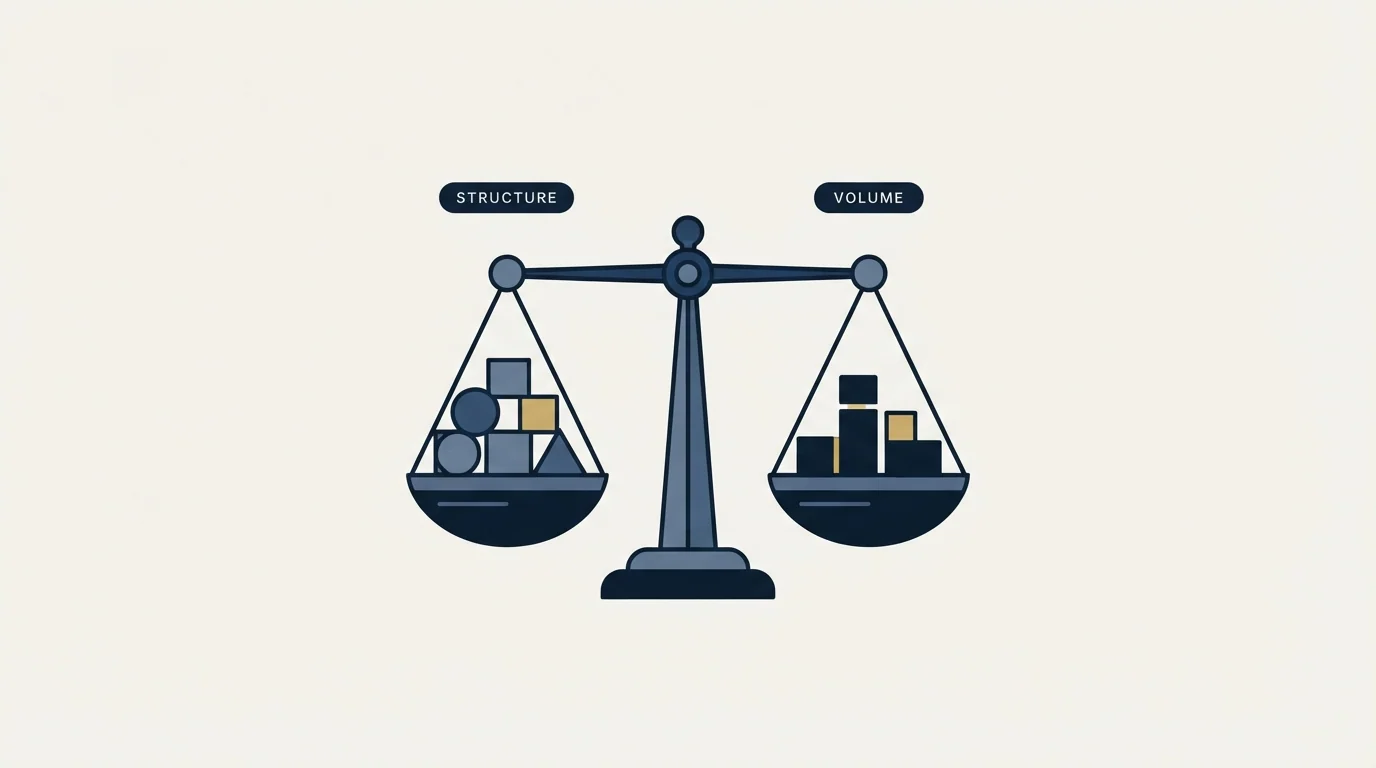
Those are two different kinds of number and they do not compare directly. UpLead publishes a rate a team can multiply out before speaking to anybody; Gong publishes a shape and produces the rate on a call. Half of this stack can be budgeted today and half cannot, so a plan treating the Gong line as an estimate is guessing at the larger of the two numbers.
What One Year of This Stack Actually Costs
Take an invented but ordinary case: one seat needing around 300 verified contacts a month. The rates below are UpLead's own published figures; the seat and the volume are invented to make the arithmetic concrete.
UpLead Essentials billed annually is $74 a month, or $888 for the year, and grants 2,040 credits, which is 170 a month. The invented volume overruns that by 130 a month, and at the published top-up rate of $0.60 a credit that overflow costs $936 a year, taking the real total past $1,800. UpLead Plus billed annually is $149 a month, or $1,788 a year, for 4,800 credits.
So the tier decision here is settled by the top-up rate rather than by the headline: Plus is the cheaper plan at that volume even though it looks twice the price.
The Gong side of that year cannot be added, which is the finding rather than a gap in the research. Gong's pricing page sets out per user licenses plus a platform fee based on the number of users supported, which means cost per rep is not linear and a small team cannot estimate it by scaling somebody else's quote down.
Feature Highlights
Gong Key Capabilities (Sales Engagement Platform)
- AI-powered call recording and transcription
- Deal intelligence and risk alerts
- Revenue forecasting with pipeline analytics
- Sales engagement sequences (Gong Engage)
- Coaching insights and talk-track analysis
- Email and web conferencing capture
- Smart trackers for competitive mentions
- Team and rep performance dashboards
- Data Cloud for revenue data warehouse
- Ask Anything AI-generated insights
UpLead Key Capabilities (Data Enrichment Tool)
- 200M+ B2B leads
- 95%+ data accuracy guarantee
- Real-time email verification
- 50+ search filters
- Technographics for 16,000+ technologies
- Buyer intent data (Professional)
- Data enrichment
- Chrome extension
- Bulk lookup
- Company news and alerts
Where the Two Actually Overlap
UpLead stays on the data side. Its listed capabilities are search, verification, technographics, enrichment and bulk lookup, with no sending surface named anywhere on the pricing page. Gong lists no database either, and its centre of gravity sits further from prospecting than the other platforms here: call capture, deal intelligence and coaching, with sequences as one module rather than the product.
Both lists are the vendors' own wording, so the honest reading is that UpLead lists these capabilities and Gong lists those. A feature named on a plan card is a claim about scope rather than a measure of quality, and the overlap that matters in practice sits at Salesforce, HubSpot, Microsoft Dynamics 365, Outreach and Salesloft.
Integration Ecosystem
Gong Integrations
Gong connects with: Salesforce, HubSpot, Microsoft Dynamics 365, Zoom, Microsoft Teams, Google Meet, Webex, Gmail, Microsoft Outlook, Slack, Outreach, Salesloft.
UpLead Integrations
UpLead connects with: Salesforce, HubSpot, Zoho CRM, Pipedrive, Microsoft Dynamics 365, Outreach, SalesLoft, Zapier.
Shared Integrations
Both tools integrate with: Salesforce, HubSpot, Microsoft Dynamics 365, Outreach, Salesloft. This shared ecosystem means they can work together in your tech stack.
When to Choose Which

- Your biggest gap is in outreach orchestration
- You already have a solid data enrichment tool and need specialized multi-channel sales outreach capabilities
- You need enterprise-grade multi-channel sales outreach features
- Your team's primary bottleneck is multi-channel sales outreach
- Your biggest gap is in lead sourcing and data
- You already have a sales engagement platform and need better B2B lead data and contact enrichment
- You want an affordable entry point ($0/mo)
- Your team's primary bottleneck is B2B lead data and contact enrichment
Read that split as a question about which gap is open rather than about which product is better. A team that names the wrong gap buys a capable tool that changes nothing.
Do You Need Both, and in Which Order?
These two genuinely do different jobs, so the question is order rather than either. UpLead decides who receives the message and Gong decides how the team works once messages are going out, and a team with neither has a list problem before it has a workflow problem.
The order that works is data first, sending second, for reasons of measurement rather than preference. A sending platform bought onto a thin list delivers that list faster and its reporting will blame the quiet quarter on copy.
One case honestly reverses it. A team already booking meetings and losing them to disorganised follow-through has a workflow gap rather than a data gap. Gong is the clearest case of all, because it is bought to understand conversations that are already happening and cannot manufacture the conversations themselves.
Whichever way round, the two connect through Salesforce, HubSpot, Microsoft Dynamics 365, Outreach and Salesloft, and that is the surface to test during a trial rather than after one. A handoff needing a CSV in the middle is one somebody stops doing in week three.
Using Both Together
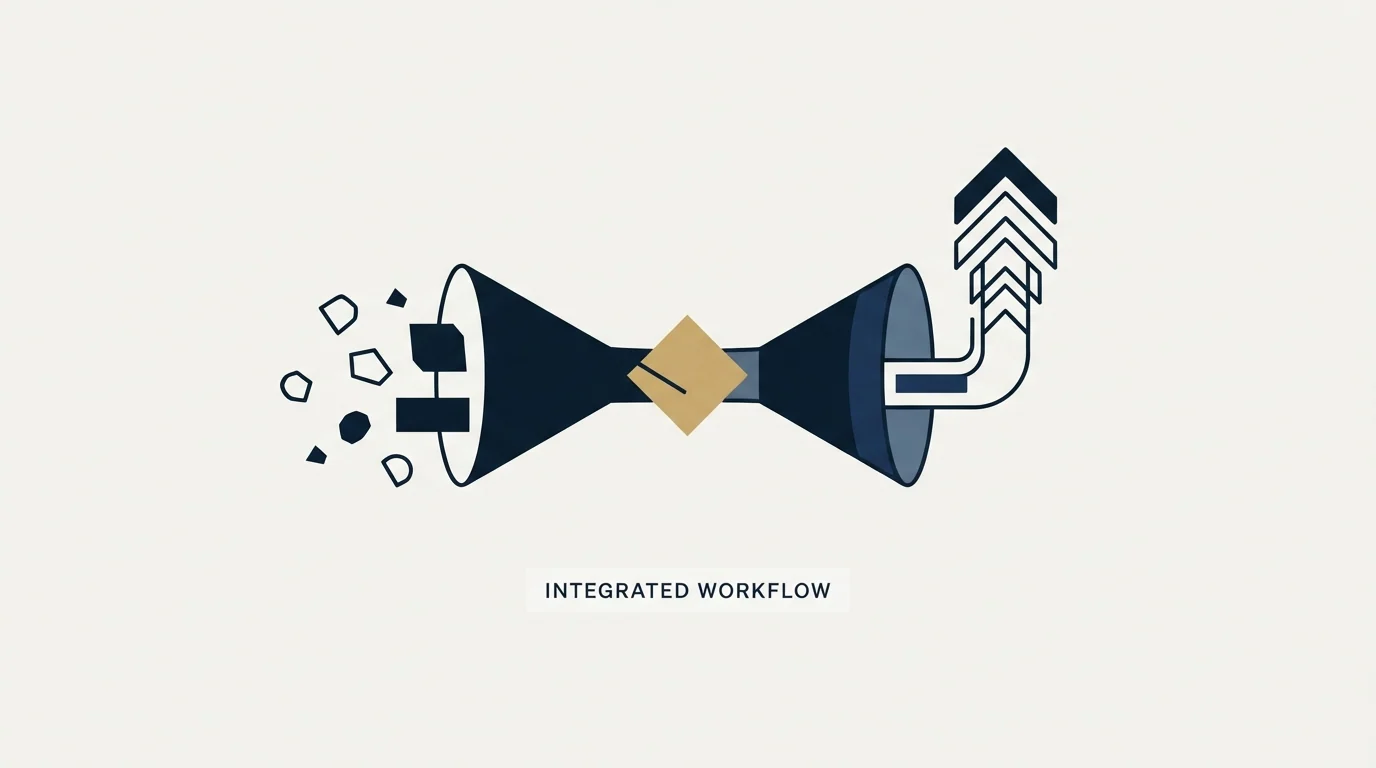
Many sales teams use both a sales engagement platform and a data enrichment tool as part of their complete workflow. Gong handles outreach orchestration while UpLead covers lead sourcing and data.
Since both tools integrate with Salesforce, HubSpot, Microsoft Dynamics 365, connecting them in your workflow is straightforward.
Rolling It Out Without Breaking the Run
Start with UpLead's trial, 5 credits over 7 days, then size the tier from the top-up rate rather than the headline. Estimate a real month's volume, price the overflow at $0.60 a credit, and compare that total against the next tier up. That arithmetic often chooses the more expensive plan, correctly. Gong lands second, and often much later, because per user licensing plus a platform fee is priced for a team that already has conversations happening. Buying it to create those conversations is the wrong way round.
Whichever order the two arrive in, keep the sending inventory out of it. Sender domains, mailbox warmup and daily caps are their own project, and a stack change made in the same week as a sending change leaves nothing to attribute a bounce rate to. Change one layer, let a full wave run, then change the next.
One habit saves real money: trial on accounts already worked rather than on a fresh list, because the only coverage question that matters is coverage on the segment being sold to.
Decision Framework
- Name the gap before naming a tool. Write down which stage is costing meetings: a list that runs out, addresses that bounce, or messages that never go out on time. A decision made without that sentence is a preference.
- Check what the existing stack already covers. Overlapping spend is the normal failure here, and it is invisible because the two products sit under different budget lines.
- Price the whole year, not the entry tier. Seat minimums, billing basis and per-credit top-ups move the real number more than the headline does.
- Trial on the accounts being sold to. Coverage is a property of a segment rather than of a database.
- Measure at the pipeline, not per tool. Both products feed one funnel, so the honest measure is meetings booked against criteria fixed in advance.
The Short Version
- UpLead can be priced from its own page today, starting at $99 a month on the terms in the table above.
- Gong names no price on its own pricing page, so the Gong line in any budget is a quote until a call happens.
- Neither product replaces the other, so the choice is which gap gets closed first rather than which vendor wins.
- Buy the data side first when the list runs out, and the sending side first when meetings are being booked and then lost after the reply.
- Measure the change in meetings booked against criteria fixed before launch, because that is the only number both products are trying to move.
Related Reading
- Best Gong Alternatives in 2026
- Best UpLead Alternatives in 2026
- Gong vs Outreach: Sales Engagement Platform Comparison
- Gong vs Salesloft: Sales Engagement Platform Comparison
- Apollo.io vs UpLead: Data Enrichment Tool Comparison
If you would rather have this run for you, RevenueFlow books qualified meetings on a pay-per-meeting basis and publishes client results.
Pricing and features are taken from the vendors' own pages. Verify current terms with the vendor before relying on them.
Frequently asked questions.
Frequently asked questions- Do I need both UpLead and Gong, or will one do?
- Most teams start with one. UpLead answers a sourcing question and Gong answers a sending and follow-through question, so the honest test is which one is currently costing meetings. A list that runs out mid-wave is a data problem. Meetings booked and then lost to disorganised follow-up is a workflow problem, and only that second case justifies buying sending first.
- How much does UpLead actually cost for a year?
- UpLead publishes $99 and $199 a month, or $74 and $149 billed annually, so the yearly number is arithmetic rather than a guess. Multiply the published rate by twelve and by the seats or the volume the plan is metered on, then check the billing basis, because the monthly and annual figures on that page describe the same plan and differ by a meaningful amount.
- Why does Gong not publish a price?
- Gong publishes its model rather than its price: per user licenses plus a platform fee based on the number of users supported. Enterprise sales engagement is sold on seats, usage and contract length together, so a public rate would be wrong for most buyers. The practical consequence for a budget is that this line is a quote, and the way to make two quotes comparable is to give each vendor the same seat count and the same volume assumption.
- What happens to the prospects who never reply?
- RevenueFlow runs one message per campaign and sends no bumps or thread replies, whichever of these products is doing the sending. A prospect who stays quiet is re-approached later in a new campaign with a different angle, and on LinkedIn that second message is not sent at all, because it lands under the one they already ignored.
About the author.

Tim Carden is CMO / CTO at RevenueFlow, which builds and operates outbound revenue engines for B2B companies. Studied at McGill University.
Tim Carden · CMO / CTO
Connect on LinkedIn →Explore more.
Ready to scale your outreach?
We build GTM engines that book real meetings. See the receipts.
Related articles.
Gong vs NeverBounce: Sales Engagement Platform vs Data Enrichment Tool Comparison
Gong vs NeverBounce: what Gong's own pages say about enrichment, what NeverBounce's API returns about an address, and how each vendor prices.
AroundDeal vs Leadspicker: Data Enrichment Tool vs Sales Engagement Platform Comparison
Compare AroundDeal (data enrichment tool) and Leadspicker (sales engagement platform) side by side. See pricing, features, and integrations to decide which one, or both, your stack needs.
ContactOut vs Luru: Data Enrichment Tool vs Sales Engagement Platform Comparison
Compare ContactOut (data enrichment tool) and Luru (sales engagement platform) side by side. See pricing, features, and integrations to decide which one, or both, your stack needs.
Enrich Layer vs La Growth Machine: Data Enrichment Tool vs Sales Engagement Platform Comparison
Compare Enrich Layer (data enrichment tool) and La Growth Machine (sales engagement platform) side by side. See pricing, features, and integrations to decide which one, or both, your stack needs.
Leadspicker vs NeverBounce: Sales Engagement Platform vs Data Enrichment Tool Comparison
Compare Leadspicker (sales engagement platform) and NeverBounce (data enrichment tool) side by side. See pricing, features, and integrations to decide which one, or both, your stack needs.
11x vs Adapt.io: Sales Engagement Platform vs Data Enrichment Tool Comparison
Compare 11x (sales engagement platform) and Adapt.io (data enrichment tool). See pricing, features, and integrations to decide which one, or both, your stack needs.