MailerLite Pricing: What Each Plan Costs
MailerLite's plan ladder priced from its own page on 30 August 2026, and the four published thresholds that decide whether a cold list can use it.

MailerLite's Comfort plan starts at $12 a month and Power at $25 a month, as published on its pricing page on 30 August 2026, with a free tier at 250 subscribers. Its anti-spam policy prohibits bought, rented and scraped addresses outright and sets a 0.2 percent spam-complaint ceiling, so a cold prospect list cannot run there whatever the plan costs.
Key takeaways
- MailerLite published Comfort from $12 a month and Power from $25 a month on 30 August 2026, with a free tier capped at 250 subscribers and 2,500 monthly emails.
- Price is set by active subscriber count rather than by plan, so Comfort at 50,000 subscribers was $319 a month billed monthly on the same page.
- The anti-spam policy names a 0.2 percent spam-complaint ceiling, a 5 percent bounce ceiling, a 1 percent unsubscribe ceiling and a 3 percent open-rate floor.
- Bought, loaned, rented and scraped addresses are prohibited by name, and permission older than two years is treated as expired.
Reviewed and updated September 1, 2026
MailerLite's Comfort plan starts at $12 a month and its Power plan at $25 a month, as published on mailerlite.com's pricing page on 30 August 2026, where the upper tier is described as follows: "The Power plan (starting $25/month) is for busy marketers with several revenue streams and sales funnels". Those are genuinely low numbers for a platform that ships automations, a website builder and landing pages alongside the sending. The number that decides whether you can spend them sits on a different page entirely, and it is not a price: MailerLite's anti-spam policy sets a spam-complaint ceiling of 0.2 percent and reserves the right to close an account that crosses it without notice.
For a marketing team mailing people who subscribed, that ceiling is invisible. For anyone weighing MailerLite as a cheap way to run cold outbound, it is the whole answer, and the price ladder below is the second question rather than the first.
What MailerLite is, and who its plans are drawn for
MailerLite is an email marketing platform for sending campaigns and automations to a list of subscribers who opted in, and the audiences its own pricing page is built around are solopreneurs, small businesses, e-commerce sellers, creators, agencies and authors. Its own description of the mid tier puts the target beyond doubt: the pricing page says "The Comfort plan (starting $12/month) is the full toolset at the right size for solopreneurs and small teams".
The product surface follows from that. Alongside the sending it publishes a website builder, landing pages, signup forms, an iPad subscribe app for collecting addresses offline, paid newsletter subscriptions and appointment booking. The subscribe app, the signup forms, the landing pages and the website builder are all machinery for acquiring a subscriber and proving they asked to hear from you. None of them help with contacting a person who has never heard of you, which is what a cold email is by definition.
That shape matters more than any individual feature, because it explains the policy the rest of this article turns on. The platform is engineered around a retrievable record of consent, so the rules protecting that model are not a footnote to the product. They are the product.
What the plans cost, as published on 30 August 2026
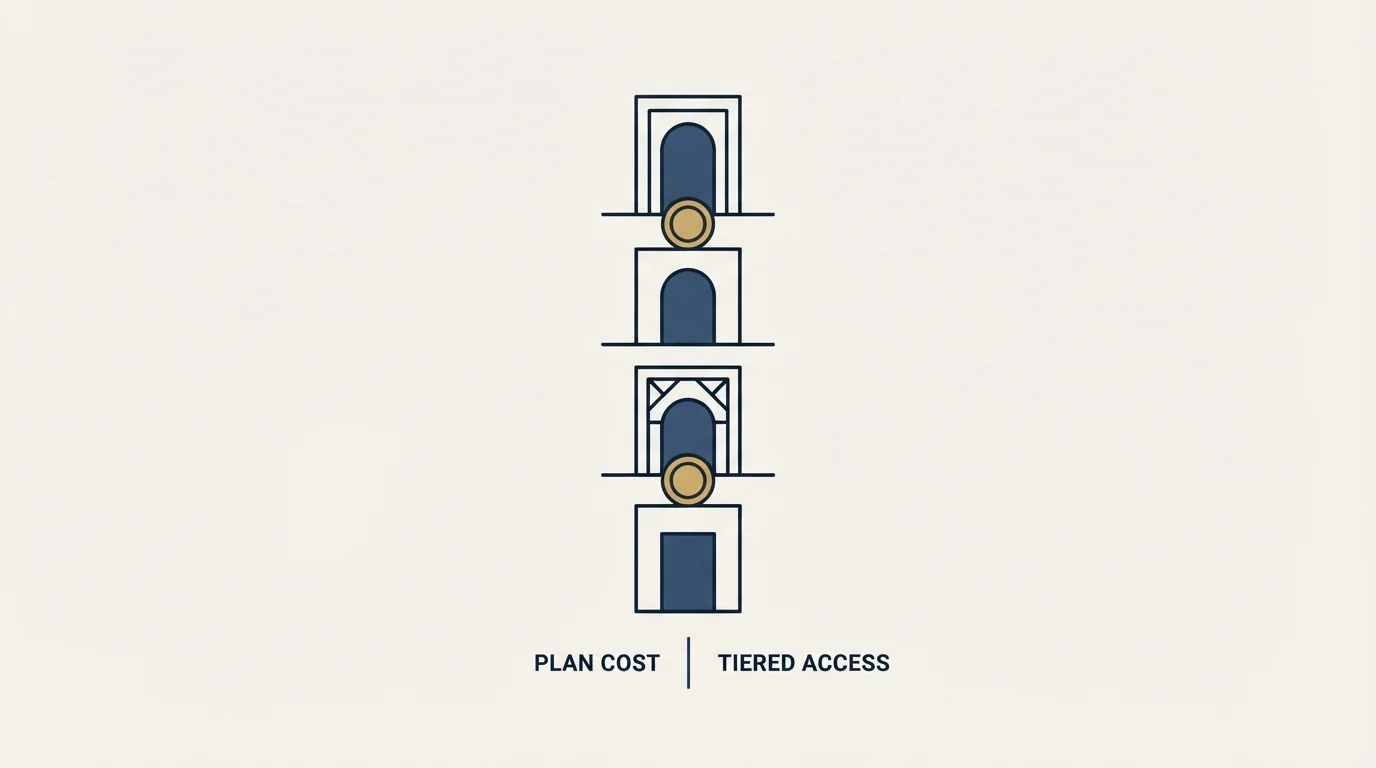
MailerLite prices on active subscriber count, and every figure below is quoted from its own pricing page as rendered on 30 August 2026. Two controls change the numbers on that page: a monthly against yearly billing toggle advertising a ten percent reduction on the yearly state, and a currency selector offering USD and EUR. The figures here are the USD state, and each names its billing basis, because both states ship inside the same document and a figure lifted without its basis is the commonest way this category gets misquoted. The page also notes that "All prices may be subject to applicable taxes".
| Plan | Entry price | Subscribers | Monthly emails | User seats |
|---|---|---|---|---|
| Free | $0 a month | Up to 250 | 2,500 | 2 |
| Comfort | From $12 a month | From 500 | 5,000 at the 500 tier | 3 |
| Power | From $25 a month | From 500 | Unlimited | Unlimited |
| Enterprise | Custom, quoted | 200K and above | Custom volume | Unlimited |
Of the free tier the page says "You get up to 250 subscribers, 2 user seats, and 2,500 monthly emails". At the 500 subscriber tier, Comfort is $12 a month billed monthly or $10.80 a month billed yearly, which the page also states as $129.60 a year. Power at the same tier is $25 a month billed monthly or $22.50 a month billed yearly, published as $270.00 a year. The ladder climbs with the subscriber count rather than with the feature set, so Comfort at 50,000 subscribers is $319 a month billed monthly, $287.10 a month billed yearly, or $3,445.20 a year on the same page.
Enterprise is not priced on that page. MailerLite says "Pricing depends on your active subscriber count and any add-ons", and describes the tier as including "a dedicated success manager, dedicated IP (as an add-on), account audits and performance improvements, and deliverability support". Every new account also gets 14 days of the premium features to try.
The promise behind a query like this one is usually what the tiers cost once volume is added, and the honest answer is a shape rather than a single number. The plan sets the feature ceiling and the subscriber count sets the bill, so a team mailing a large list occasionally can pay more than a team mailing a small list constantly, because the meter is the list rather than the send.
- Whether monthly email sends are capped or unlimited
- How many user seats the workspace carries
- Access to multivariate testing and the preference centre
- Whether the AI writing assistant and smart sending are included
- The same subscriber ladder sits underneath either choice
- The actual monthly figure, at every tier
- Whether the yearly ten percent reduction is worth committing to
- When the account crosses into Enterprise quoting at 200K
- Nothing at all about which features are available
- The reason two teams on one plan pay very different bills
The four numbers that decide whether the price is available to you
MailerLite's anti-spam policy publishes thresholds most platforms in this category keep to themselves. It defines spam as "any email you send to someone who hasn't given you their direct permission to contact them on the topic of the email", and it attaches numbers to the consequences.
| Threshold published on the anti-spam policy | Stated limit |
|---|---|
| Spam complaints | More than 0.2 percent |
| Bounces | More than 5 percent |
| Unsubscribes | More than 1 percent |
| Open rate | Less than 3 percent |
The policy's own wording on what follows is worth reading rather than paraphrasing. MailerLite reserves the right to suspend an account immediately and begin investigating where campaigns show "high percentage of spam complaints (more than 0.2%), bounces (more than 5%), unsubscribes (more than 1%) or a very low open rate (less than 3%)". MailerLite adds that where those thresholds are breached it may ask the account holder to "request evidence of the recipients' email marketing consent", and that "we reserve the right to terminate your account without notice or investigation" regardless.
Two things there are unusual. The first is the open-rate floor, which is a quality gate rather than an abuse gate: a list nobody opens is treated as evidence about how it was built. The second is the consent-evidence clause, which tells you what the platform expects to exist for every address on the list. A purchased or scraped list has nothing to produce.
What the policy prohibits, in its own words
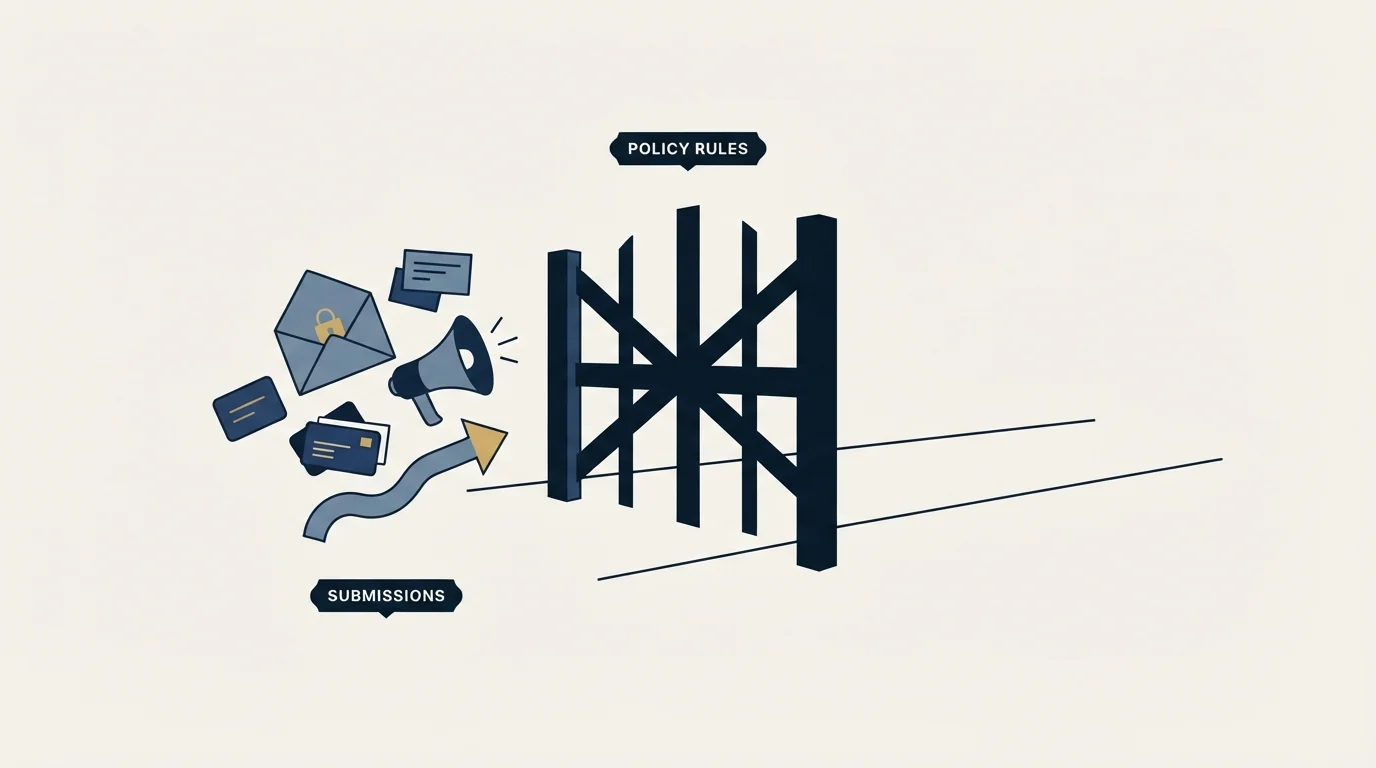
The permitted sources are narrow and concrete: a subscribe form on your site, an opt-in checkbox that is not pre-ticked, an offline form where the person was told they would be emailed and ticked a box, and customers who bought from you within the last two years.
The excluded ones describe cold outbound exactly. An address cannot be imported or sent to where you have no explicit, provable permission for the topic being sent. It is excluded where, in the policy's own phrasing, "You bought, loaned, rented or in any way acquired from a third party, no matter what they claim about quality or permission". It is excluded where "You scraped or copy and pasted from the web", with the policy adding that "Just because people publish their email address doesn't mean they want to hear from you". A fourth clause catches lists that were once legitimate, treating an address as stale where it has not been emailed for two years on the reasoning that permission does not age well.
No reading of those two lists admits a bought or built prospect list. That is not a gap in the product and not a rule waiting to be negotiated. The same boundary appears in Brevo's own anti-spam policy, and the consistency across vendors is the tell that it is structural.
Why every bulk platform lands in the same place
A shared sending platform routes many customers through shared infrastructure, so one customer's complaint rate becomes partly everyone else's placement problem. That is why the prohibition is enforced on metrics rather than on inspection, and why the thresholds are published as numbers. Nobody reads your list. The rates report you.
The same mechanism runs one level down on your own domain, whichever platform you use. A domain carries a single reputation, and marketing mail to subscribers and cold mail to strangers generate very different complaint, bounce and engagement profiles. Pointing both at one domain merges those signals into a single score that settles near the worse of the two behaviours, which is the argument enterprise email marketing and outbound share one reputation sets out at length, and the reason a sending subdomain inherits more from its parent than teams expect.
The failure has a recognisable order. Early sends land, because nothing has gone wrong yet and no system has reason to look. That success reads as evidence the policy is not enforced, so volume goes up. Bounce and complaint rates climb, because guessed and purchased addresses behave differently from typed ones. The account is flagged on the numbers. And the part that outlives the account is the sending domain's own reputation, which is held by mailbox providers rather than by the vendor and survives a move to a different one.
- Step 1Keep the primary domain for people who know you
Marketing, transactional and replies, on a list with a retrievable opt-in record
- Step 2Register separate domains for outbound
Distinct registrations rather than subdomains, so reputation cannot bleed back
- Step 3Authenticate each sending domain independently
SPF, DKIM and DMARC per domain, aligned and verified before any volume
- Step 4Warm the outbound domains before use
New domains sending cold volume immediately is the fastest route to a blocklist
- Step 5Keep the platforms apart as well
A platform whose policy excludes cold lists is a platform whose terms you would be breaking
Where MailerLite is the right purchase

None of this is a criticism of the product, and the ladder is competitive for what it includes. If the job is a newsletter, a customer lifecycle programme, an e-commerce flow or a paid subscription, MailerLite is priced for it, and metering on subscribers rather than seats suits a small team with a large list.
The buying question worth answering first is which meter matches your own shape. A platform charging per subscriber rewards pruning the list; one charging per email sent rewards mailing more people less often. Work out your subscriber count and your annual send volume, then price the models against those two numbers rather than the other way round, because a comparison run backwards tends to reward whichever vendor laid its page out more attractively. Teams weighing a per-contact model against a sync that upgrades the plan for them should read how Zoho Campaigns handles that first.
If the job is outbound to people who have not met you, the tool category is different and so is the evaluation. Cold email software is judged on mailbox rotation, whether suppression is global or per campaign, and what the platform does when a merge variable comes back empty, none of which appears on an ESP pricing page because an ESP has no reason to build it. Running a cold programme on infrastructure meant for subscribers is not a saving. It is a deferred cost against the one domain that is hardest to replace, and that separation is the posture behind how we run campaigns.
Pricing and features verified as of August 2026. Verify current terms with the vendor before relying on them.
Frequently asked questions.
Frequently asked questions- How much does MailerLite cost?
- As published on mailerlite.com's pricing page on 30 August 2026, the Comfort plan starts at $12 a month and the Power plan at $25 a month, both quoted at the 500 subscriber tier in the USD state of the page's currency selector. A free tier covers up to 250 subscribers. Prices climb with active subscriber count, and a yearly billing toggle advertises a ten percent reduction.
- Can I use MailerLite for cold email outreach?
- No, not under its own anti-spam policy. That policy prohibits sending to addresses bought, loaned, rented or otherwise acquired from a third party, and to addresses scraped or copied from the web, whatever the seller claims about permission. It also requires explicit, provable permission for the topic being sent, which a cold prospect list has no way to produce.
- What happens if a campaign goes over the published thresholds?
- MailerLite's anti-spam policy reserves the right to suspend the account immediately and investigate where campaigns show more than 0.2 percent spam complaints, more than 5 percent bounces, more than 1 percent unsubscribes or an open rate under 3 percent. It may request evidence of recipients' consent, and states it may terminate without notice or investigation regardless.
- What is the difference between the Comfort and Power plans?
- At the same subscriber count the split is capacity rather than price band. Comfort at the 500 subscriber tier carried 5,000 monthly emails and 3 user seats; Power carried unlimited monthly emails and unlimited user seats. Both sit on the same subscriber ladder, so the tier decides the feature ceiling while the list size decides the invoice.
About the author.

Ben Carden is CRO at RevenueFlow, which builds and operates outbound revenue engines for B2B companies. Previously at Gartner Enterprise. Studied at London School of Economics.
Ben Carden · CRO
Connect on LinkedIn →Explore more.
Ready to scale your outreach?
We build GTM engines that book real meetings. See the receipts.
Related articles.
SMTP Reply Codes: What Each Class Instructs
The digits are a verdict and the text is the reason. Separating an address failure from a policy refusal before reacting is what decides whether the fix works.
Email Tracking Software: Six Tools, Priced and Capped
Streak, Mailsuite, Right Inbox, Mixmax, Yesware and HubSpot compared on free-tier caps and published prices, plus what an open event still proves.
No-Reply Email Address: What It Costs a Sender
A no-reply address is defensible on a receipt and indefensible on a cold message, because the reply is the entire product of a first contact.
Transactional Email: The Class That Needs Its Own Domain
A transactional email is triggered by the recipient's own action and expected by them. The reason it needs separating from marketing and cold mail is reputation.
SURBL Blacklist: What It Lists and How to Get Removed
SURBL tests the domains inside your message rather than your sending IP. Which of its six lists fired, what the bitmask means, and the fix that works.
SPF Flattening: The Definition, and What It Trades Away
SPF flattening swaps include statements for the addresses they resolve to, to stay under the ten-lookup ceiling. What it fixes, and what it quietly costs.