Brevo and Cold Email: What the Policy Prohibits
Brevo's policy bans bought and scraped lists outright, on transactional and marketing sends alike. Why that boundary exists, and what it implies for your domains.
Brevo's anti-spam policy prohibits contact lists that were scraped, acquired or purchased from a third party, for transactional and marketing messages alike, with account suspension as the stated consequence. It requires active, explicit opt-in and retrievable proof of it, which a cold list cannot supply by construction.
Key takeaways
- Brevo's published policy prohibits bought and scraped lists outright and applies that to transactional as well as marketing sends, with suspension or restriction of the account as the stated consequence.
- The consent standard behind it requires an unticked checkbox, an explicit statement of what will be sent, and the ability to produce proof of opt-in for any contact at any time.
- A shared bulk platform means a shared reputation, which is why the prohibition is enforced. The same logic applies to your own domain: marketing and cold outbound merged onto one domain converge on the worse behaviour.
- Brevo meters on emails sent rather than contacts stored, which suits large lists mailed infrequently. Its pricing figures render client-side, so no rate is quoted here.
Reviewed and updated September 1, 2026
Brevo's anti-spam policy answers the question most people arrive with, and it answers it in one sentence. Under a heading titled bought and scraped lists, the policy states that contact lists scraped from the internet, acquired or purchased from a third party are strictly prohibited on its software, and it applies that prohibition to transactional and marketing messages alike.
So the honest answer to whether you can run cold outbound on Brevo is no, by the vendor's own acceptable use policy. That is not a gap in the product. It is a deliberate boundary, and understanding why it exists is more useful than looking for a way around it, because the same logic explains why marketing sending and outbound sending should not share a domain even when they are on different platforms.
Everything below is verified against brevo.com's own legal and product pages, fetched 15 August 2026.
Brevo was called Sendinblue until its 2023 rename, so email marketing guidance published under the Sendinblue name describes the same platform and the same anti-spam policy discussed here.
Brevo lists a HubSpot data-sync connector in the HubSpot marketplace, so a team running HubSpot as its CRM can keep contact records in step without moving its sending.
Two adjacent Brevo surfaces come up constantly: Brevo CRM, the free sales pipeline bundled beside the marketing product, and Brevo's SMTP relay, which is a separate transactional service with its own limits.
What the policy actually requires
The anti-spam policy is specific in a way terms-of-service documents usually are not, and three requirements are worth quoting in substance.
Consent must be active. The policy states that the contact has to tick a checkbox to subscribe and that the checkbox cannot be pre-ticked. Consent must also be explicit, meaning the contact knows which kind of messages they will receive and for what purpose. And you must be able to provide proof of opt-in for every contact at any time.
Partner opt-in and co-registration are permitted but constrained: the policy requires every partner's name to be displayed and easily available, and caps the number at ten.
Read those together and the shape is clear. Brevo is built for a list that people joined, and its compliance model assumes a retrievable record of each person joining. A cold list has no such record by construction, which is why the prohibition on purchased and scraped lists is not a separate rule so much as a restatement of the consent requirement.
The stated consequence is immediate suspension or restriction of the account, either in whole or for particular services, and the policy is explicit that this exists to protect Brevo's own reputation as much as yours. That framing is worth taking seriously rather than reading as boilerplate.
Why a shared platform is a shared reputation
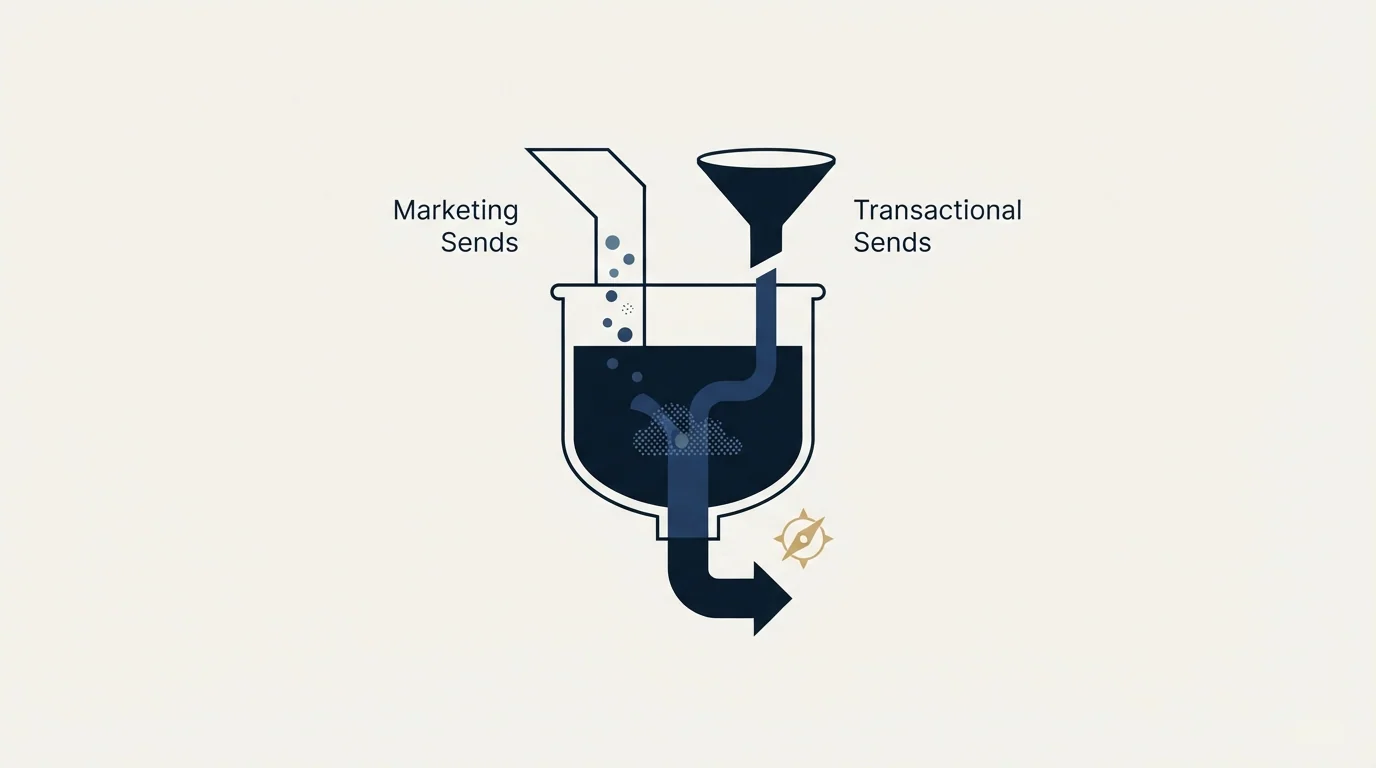
The mechanism behind the policy is the same mechanism that should shape your own architecture, and it is worth spelling out because it is the actual content of this article.
A bulk sending platform routes many customers' mail through shared infrastructure. When one customer sends to a purchased list, the resulting complaints and spam-trap hits attach to that shared infrastructure, and every other customer's placement degrades slightly. Providers police this aggressively because they have to. That is why the prohibition covers transactional messages too: a customer who cannot be trusted with a marketing list is a risk on any queue.
The same logic operates one level down, on your own domain, regardless of which platforms you use. A domain has one reputation. Marketing mail to a subscriber list and cold outbound to prospects generate very different complaint rates, very different engagement profiles and very different bounce patterns. Pointing both at the same domain merges those signals into one score, and the score converges on the worse of the two behaviours. Domain reputation covers how that score is formed and why it is slow to recover.
- Recipients opted in and can be proven to have done so
- Complaint rates are low and engagement is measurable
- Volume is bursty, tied to campaigns and product events
- Deliverability failure costs revenue from existing contacts
- Belongs on the primary domain or a close subdomain
- Recipients have no prior relationship and no opt-in record
- Complaint and bounce rates are structurally higher
- Volume is steady and spread across many mailboxes
- Deliverability failure costs pipeline, not existing revenue
- Belongs on separate domains that cannot damage the primary
What Brevo does publish about its plans
The product side is worth reading accurately, because the platform is genuinely good at the job it is built for.
Brevo's pricing page renders its plan structure server-side while the prices themselves load in the browser, so a plain fetch of that page returns the tiers and the feature lists without the figures. The plan names published are Free, Starter, Standard and Professional, with an enterprise tier above them, and a monthly against yearly toggle that advertises a ten percent reduction on the yearly state.
The feature boundaries that are published are the useful part. Starter is described as single-user, beginning from 5,000 emails a month, and carries the drag-and-drop editor, templates, an AI content generator, advanced segmentation, forms and basic reporting, with removal of the Brevo logo listed at that level. Standard adds marketing automation with unlimited multi-step workflows, A/B testing, advanced reporting including click heatmaps and geography and device breakdowns, AI send-time optimisation, web and event tracking, and one landing page. Professional is described as starting from 150,000 emails a month and adds WhatsApp, popups, mobile and web push, ten included seats, contact scoring covering RFM and CLV, and the advanced ecommerce features.
One structural detail matters more than the tier list. Brevo meters on emails sent rather than on contacts stored, which is unusual in marketing email and is the reason it suits senders with large lists they mail infrequently. SMS credits are sold separately from the sending plans.
Because the figures render client-side, no price is quoted here. A number read from a page that did not serve it is not verified, and the vendor's own pricing page is the place to read the current rate.
That metering choice has one practical consequence worth carrying into a comparison. Platforms that charge per contact stored reward pruning a list; platforms that charge per email sent reward sending less often to more people. Neither is better in the abstract, and the right one depends entirely on the shape of your own list and cadence. Work out your annual send volume and your contact count first, then price both models against those two numbers, because a comparison run the other way around tends to reward whichever vendor structured its page more attractively.
Teams that lean toward per-contact pricing instead should see how contact-based plan upgrades work before assuming that model avoids surprise costs.
What happens if you do it anyway
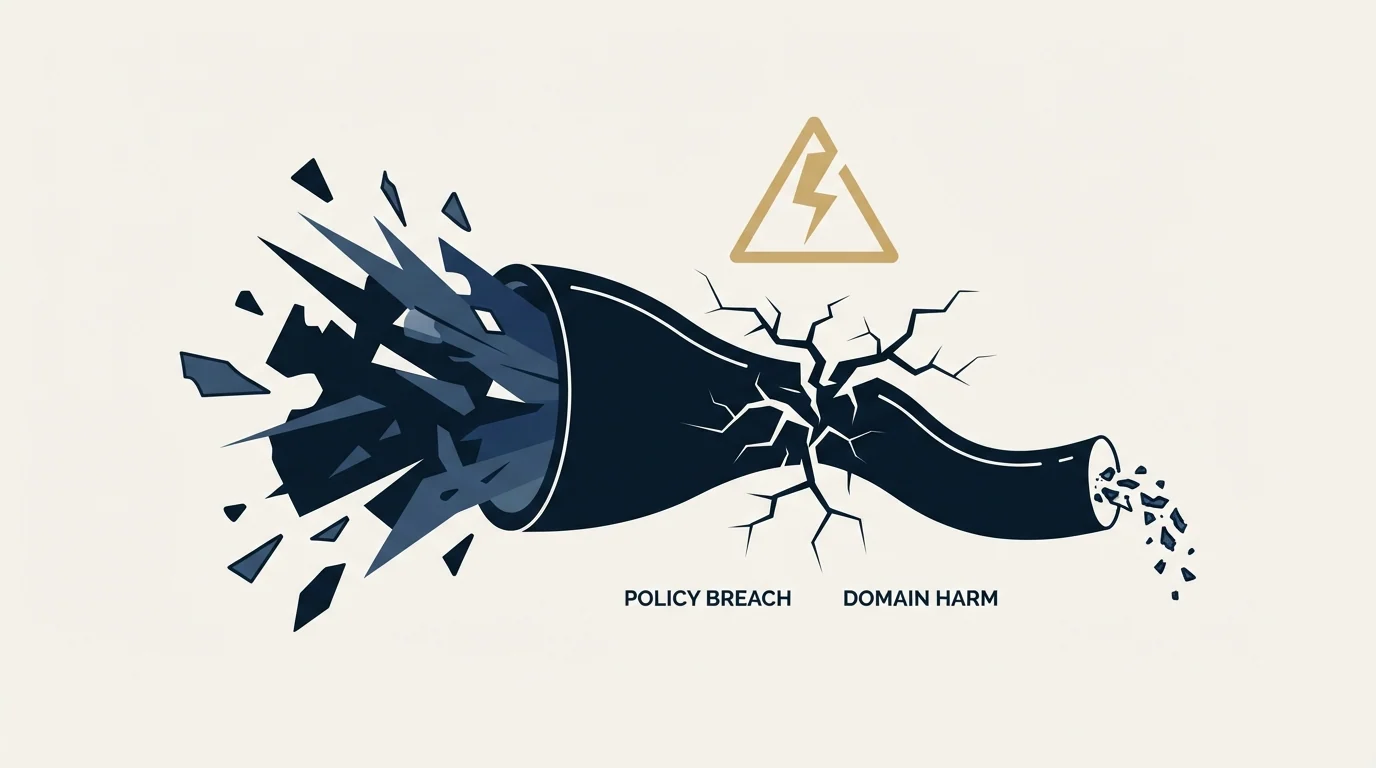
Teams do try, and the failure has a recognisable shape worth describing so nobody has to learn it live.
The first sends usually work. A new account sending a modest volume to a cold list will get most of it delivered, because nothing bad has happened yet and the platform has no reason to look closely. That early success is the trap: it reads as evidence the policy is not enforced, and it encourages scaling up.
What follows is driven by complaint rate and bounce rate rather than by anyone reading your list. Cold lists bounce harder, because addresses were guessed or bought rather than typed in by their owners, and they generate complaints at rates a subscriber list never approaches. Both are visible to the platform automatically, and both are exactly what its abuse systems are tuned to find. The account gets flagged on metrics rather than on inspection.
Suspension is the stated consequence and the policy allows it to be immediate, covering either the whole account or particular services. That is worse than it sounds for one reason people rarely think about beforehand: transactional mail usually lives on the same account. Password resets, receipts, booking confirmations and delivery notices stop with the marketing sends, and the outage hits existing paying customers rather than prospects. A cold-list experiment taking down transactional mail is a genuinely bad afternoon.
The last piece is the part that outlives the account. The sending domain accumulates a reputation of its own, held by mailbox providers rather than by the platform, and it survives moving to a different vendor. Recovering a domain that spent a month sending to a purchased list takes far longer than acquiring the list did, and for a company's primary domain there is no clean substitute for it. Domain reputation covers why that recovery is slow.
The architecture this actually implies
Put the policy and the product together and the design falls out cleanly.
Marketing email belongs on a platform like Brevo, sending from your primary domain or a subdomain of it, to a list that opted in and can be proven to have opted in. Outbound belongs on separate sending domains, on infrastructure built for rotation, with no connection to the domain your customers and subscribers already recognise. The separation protects the asset that is hardest to replace: a primary domain with years of good sending history behind it.
Once outbound work turns into a formal buying process, the shortlist-focused proposal guide explains how to answer an issuer's questions in order rather than pitching generic collateral.
- Step 1Keep the primary domain for people who know you
Marketing, transactional and replies, on a list with a retrievable opt-in record
- Step 2Buy separate domains for outbound
Distinct registrations, never subdomains of the primary, so reputation cannot bleed across
- Step 3Authenticate both independently
SPF, DKIM and DMARC per sending domain, aligned and verified before any volume
- Step 4Warm the outbound domains before use
A new domain sending cold volume immediately is the fastest route to a blocklist
- Step 5Keep the platforms separate too
A platform that prohibits cold lists is a platform whose terms you would be breaking
The practical steps behind those middle two are covered in cold email infrastructure, and the warm-up half in email warmup services. For the wider question of which platform suits which motion, cold email software is the category comparison, and enterprise email marketing covers the same separation from the large-organisation side.
The house position

We run Email Bison for sending and HeyReach for LinkedIn, on separate sending domains that are never the client's primary. Every campaign carries exactly one message: no bumps, no thread replies, and a second contact is a fresh campaign with a genuinely different angle rather than another step under the first. That practice keeps complaint rates low for reasons that hold whichever platform is underneath, and it is one of the reasons the outbound domains stay usable.
Nothing above is a measurement of our own campaigns. It is the vendor's published policy, the vendor's published product structure, and the architectural conclusion those two support.
If the question underneath all of this is what compliant outbound actually looks like when it is set up properly, see what a first campaign looks like.
Policy and features verified as of mid-2026. Verify current terms with the vendor before relying on them.
Frequently asked questions.
Frequently asked questions- Can you send cold email with Brevo?
- Not within its terms. Brevo's anti-spam policy states that lists scraped from the internet or acquired or purchased from a third party are strictly prohibited on its software, covering transactional and marketing messages alike, and names immediate suspension or restriction of the account as the consequence.
- What consent does Brevo require?
- Active and explicit consent. Its policy requires the contact to tick an unticked subscription checkbox, requires them to know what kind of messages they will receive and why, and requires you to be able to supply proof of opt-in for any contact at any time. Partner opt-in must name every partner and is capped at ten.
- Why do outbound and marketing email need separate domains?
- A domain carries one reputation. Marketing mail to an opted-in list and cold outbound to prospects produce very different complaint, bounce and engagement patterns, and merging them onto one domain merges those signals into a single score that converges toward the worse behaviour. Separate domains protect the primary.
- What do Brevo's plans include?
- Its published tiers are Free, Starter, Standard and Professional plus an enterprise level. Starter begins from 5,000 emails a month with the editor, templates, segmentation and forms. Standard adds automation, A/B testing and advanced reporting. Professional begins from 150,000 emails a month and adds WhatsApp, push, ten seats and contact scoring.
About the author.

B2B cold email experts helping companies generate qualified leads through done-for-you outreach campaigns.
RevenueFlow Team
Explore more.
Ready to scale your outreach?
We build GTM engines that book real meetings. See the receipts.
Related articles.
9 Bump Email Templates and When to Send Each
Nine bump email templates for threads where the other side owes you something, the three checks that make a bump correspondence, and what never to send.
Roundtable Invitation Email Templates: Eight Invitations
Eight roundtable invitation templates by seat: the cold first invite, the invite via a member, the seat confirmation, the waitlist reply and the guest expert.
Multi-Threading Email Templates: Ten Second-Person Emails
Ten multi-threading email templates for the second and third people in a live deal: the user, the blocker, the economic buyer, the sceptic and more.
8 Meeting Reschedule Email Templates and When to Send Each
Eight meeting reschedule email templates for moving a booked sales meeting before it happens, from either side, each with the reasoning line by line.
Inbound Lead Reply Email Templates: Eleven First Replies
Eleven first-reply templates for an inbound lead, one per trigger: demo, pricing, form, download, trial, referral, event, chat, non-fit, out of hours, handover.
Customer Check-In Email Templates: Nine Check-Ins by Moment
Nine customer check-in templates for the account owner, one per moment: a closed escalation, a usage drop, a new leader, a release, pre-renewal, news and bad news.