Medical Device Lead Generation: The Clinician Cannot Buy It
Clinical enthusiasm is roughly a third of a device purchase. The other two thirds sit with value analysis and operations, who were never in the room.

Medical device lead generation reaches clinicians easily and stalls because clinicians rarely hold purchasing authority. Three parties decide: clinical, economic through value analysis, and operational. Each can stop a purchase alone. Your published evidence position should decide which institutions you approach, and lists should be built from dated events rather than bed counts.
Key takeaways
- A device purchase needs clinical, economic and operational approval, and the champion who wants it can sponsor the process but cannot conclude it.
- Value analysis committees evaluate a submission rather than a relationship, so the quality of what you hand your champion is a conversion variable you control.
- Your evidence position should select the institutions you target, because academic centres and community hospitals weigh published data and cost arguments very differently.
- A specialist hired from an institution that already uses your category is the strongest publicly observable buying signal in this vertical and the least used.
Reviewed and updated September 1, 2026
Medical Device Lead Generation: The Clinician Wants It and Cannot Buy It
A device company runs a quarter of outreach into a health system, and it goes well. Three surgeons reply, two of them enthusiastically. One asks for an evaluation. The rep books the demos, the clinical data lands well, and everybody involved leaves the room wanting the product. Fourteen months later nothing has been purchased, and the internal read is that the outreach worked and procurement is slow.
The outreach did work. What it reached was the person who wants the device, in a market where wanting the device is roughly a third of the decision. The other two thirds sit with people who were never in those rooms and who evaluate on axes the clinical conversation never touched.
Medical device lead generation is unusual among B2B verticals in that the enthusiasm of your best prospect carries almost no purchasing authority, and a programme built to generate clinical enthusiasm will generate exactly that and stall.
Three buyers, one purchase
The generic version of this advice is that healthcare has a buying committee, which is true of most enterprise sales. The device-specific version is more useful, because the three parties want genuinely incompatible things and each one can stop the purchase alone.
- Does it work in my hands
- Is the evidence credible to my peers
- What is the learning curve
- Who else in my specialty uses it
- Will it change my outcomes or my time
- What does it cost against the incumbent
- Is it on our GPO contract
- What is the total cost including disposables and training
- Does it displace a contracted product
- What is the reimbursement position
- Can we reprocess it with what we own
- Does it need new capital equipment
- Does it integrate with our systems
- Who trains the staff and when
- What happens on the night shift
The programme failure above is that all the outreach pointed at column one. The clinical champion is genuinely necessary, and the mistake is treating necessary as sufficient. The purchase is decided when the economic column has an answer it can defend and the operational column has no objection left, and the champion's role is to sponsor that process rather than to conclude it.
The wider anatomy of who signs and who blocks inside a provider organisation is worked through in healthcare lead generation; this piece is about what the device layer adds on top, which is mostly evidence and contracting.
The value analysis committee is the actual gate
Most health systems route new clinical products through a value analysis process, and for device outreach this is the single most consequential structure to understand, because it is where enthusiasm converts into a decision or dies.
What matters practically is that the committee evaluates a submission, not a relationship, and somebody internal has to build that submission. Your champion is usually that person, and they are doing it in addition to a clinical job. So the quality of what you hand them is a real variable in your conversion rate, and it is one of the few in this vertical you fully control.
That is also why appointment setting for medical device companies is a narrow purchase: a setter can reach the supply chain and value analysis contacts who work at a desk, and no booked meeting substitutes for the submission the committee will actually judge.
Deciding how much of that submission-building work to outsource raises a related question addressed in which lead generation tasks stay in house.
That reframes what a good first meeting produces. Not a next meeting: a named champion who knows what the submission requires and has the material to build it without doing research on your behalf.
Evidence is the qualifying asset, and it gates your list

In most B2B verticals your material is marketing. Here a meaningful part of it is clinical evidence, and its absence or presence changes who you can credibly approach at all.
Peer-reviewed publication, prospective data, and comparative outcomes against the incumbent are the currency at the top of the market. Academic medical centres and large integrated delivery networks generally will not move without them. Community hospitals and ambulatory surgery centres weigh cost, throughput and staffing more heavily, and a strong economic argument can carry a purchase there with less published evidence behind it.
This has a direct consequence for list building that is easy to miss: your evidence position should decide your target list, not the other way round. A device with early clinical data and a strong cost argument has a real market and it is not the academic centres, and pointing a programme at institutions your evidence cannot satisfy produces the enthusiastic stall this article opened with.
Signals that mean something in medtech
Firmographic filters are unusually weak here. Bed count tells you the size of an institution and nothing about whether it is in a position to adopt anything.
Teams that still build outreach lists from static firmographic filters will find switching window based list building a useful parallel from a market where almost every prospect already has a provider.
The events that actually predict a purchase window:
- Yes: A new service line announced, or a new surgical programme launching
- Yes: A specialist hired from an institution that already uses your category
- Yes: A GPO contract for the incumbent product approaching expiry
- Yes: Capital equipment funded, where your device is the consumable
- Yes: A recall or supply interruption affecting the incumbent
- Depends: A published quality metric the department is under pressure to improve
- No: Bed count and geography with nothing else attached
The hired-specialist signal deserves a note, because it is the strongest one on the list and the most under-used. A clinician who used your device somewhere else arrives at a new institution already convinced, already able to describe the outcome in their own words, and usually with some political capital to spend on early requests. That is a champion who requires no persuasion at all, and the signal is publicly observable.
The technique for building lists from dated events rather than static attributes generalises well beyond this vertical, and the filter versus signal distinction is the general form.
What to say, given that the message reaches one column at a time
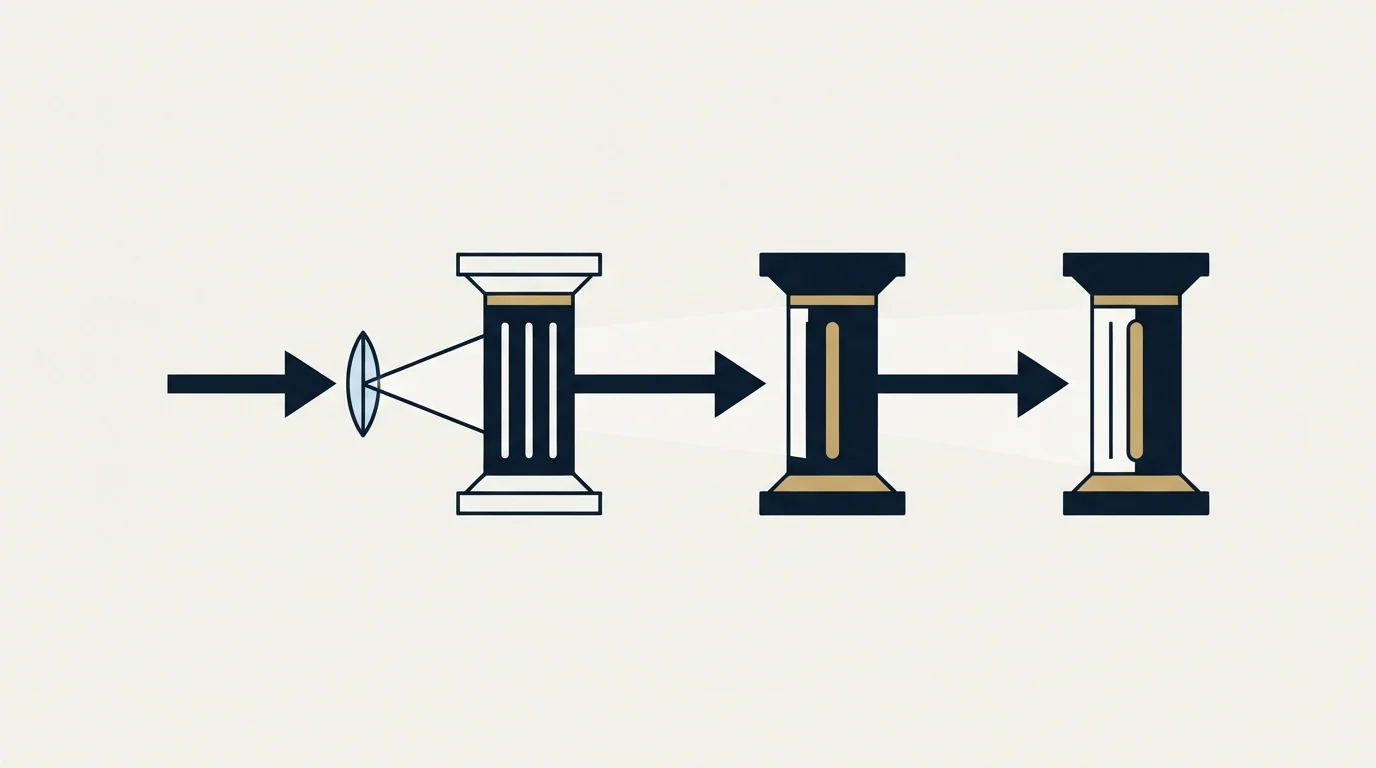
You cannot write one message that satisfies all three columns, and attempting it produces a message that reads as a brochure. Write to one column, and choose which one by where the purchase is likely to be stuck.
To the clinical audience, the credible opening is a specific outcome or workflow claim you can substantiate, with the evidence available rather than promised. To the economic audience it is a cost or contract position stated plainly, including how it interacts with their existing agreements. To the operational audience it is almost always a reassurance rather than a pitch, because their default position is that a new device is work.
One constraint we hold that matters more here than in most verticals: a campaign carries one message, built on one premise, and it is sent once. In a market where the same institution contains three audiences with different concerns, that discipline is what stops a single account receiving three variations of the same pitch from the same company inside a month, which reads as pressure to a group of people who talk to each other. A different column is a different campaign with a different premise, run deliberately, rather than a series of attempts at one person.
If you are selling into medical device manufacturers rather than out of one, the buyers and the regulatory calendar are entirely different, and cold email for medical device companies covers that direction.
The evaluation is a stage, and most pipelines do not model it
Devices carry a step that software pipelines have no equivalent for: the product physically goes into the institution and gets used on patients before anyone buys it. Trial, evaluation, in-service, whatever the local term, it is a real stage with its own entry and exit conditions and its own ways of failing.
It is worth modelling explicitly because it distorts forecasting badly when it is not. An evaluation feels like late-stage progress, and a rep will report it as such, but an evaluation that begins without the economic column already engaged is frequently a way of deferring the purchasing conversation rather than approaching it. The device performs well, everyone is pleased, and the submission still has not been written.
Two things make an evaluation convert. Agreement in advance on what the evaluation is meant to demonstrate, stated in terms the value analysis committee will recognise rather than in terms the clinician finds interesting. And agreement on what happens if it demonstrates that: a named next step with a named owner and an approximate date. An evaluation without both is an unpaid pilot, and unpaid pilots are how device pipelines fill with opportunities that never close and never quite die.
The operational column decides more of this than people expect. Staff have to be trained on the device before it can be evaluated, and that training is unpaid work for a department already short-staffed. An evaluation scheduled without the operational column bought in tends to run badly for reasons that have nothing to do with the product, and a bad evaluation is much harder to recover from than no evaluation.
Cycle length, and planning around it honestly
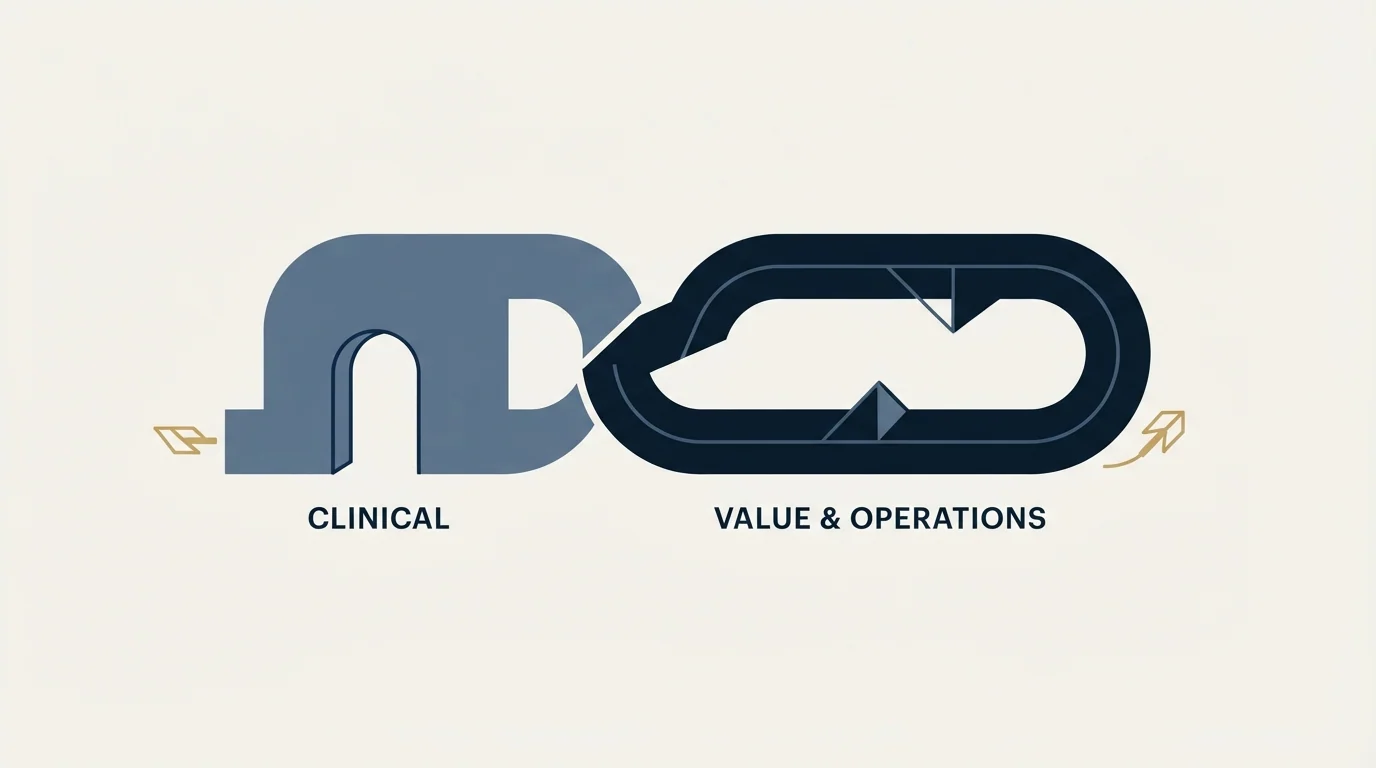
The thing to be realistic about is that a device purchase involving committee review and contracting is measured in quarters, sometimes in years for capital items, and that this is a property of the market rather than a sign your programme is underperforming.
Two practical consequences. First, the metric that tells you the programme is working in month two is not revenue and not closed opportunities; it is qualified clinical conversations and evidence requests, because those are the leading indicators that exist that early. Second, a programme judged on a quarterly revenue cycle will be cancelled before its first purchase completes, which is a planning error rather than a performance one, and it is avoided by agreeing the leading indicator before the programme starts rather than after the first slow quarter.
The short version
The clinician who wants your device usually cannot buy it, so a programme that only produces clinical enthusiasm produces stalls. Three parties decide: clinical, economic and operational, and each can stop it alone. Let your evidence position choose the institutions you approach, build lists from dated events rather than bed counts, write to one audience per campaign, and agree in advance that early success is measured in qualified conversations rather than in closed revenue.
If you want a signal-built list and one clear message put in front of it, we can run the first campaign for you.
Frequently asked questions.
Frequently asked questions- Why do medical device deals stall after a positive clinical meeting?
- Because clinical enthusiasm is one of three approvals and the only one that outreach naturally produces. The economic reviewers need a defensible cost and contract position, and operations need to know who reprocesses, integrates and trains. Neither was in the clinical meeting, so nothing about their objections has been addressed when the champion takes it forward.
- Who should we target first at a hospital or health system?
- Start with the clinical champion, because nothing moves without one, but plan the economic conversation from the beginning rather than treating it as a later step. The practical goal of a first meeting is a named champion who understands what the value analysis submission requires and has material to build it without researching your product themselves.
- Do we need published clinical evidence to sell a device?
- It depends on which institutions you approach, which is why evidence should choose your list. Academic medical centres and large integrated networks generally require peer-reviewed and comparative data. Community hospitals and ambulatory surgery centres weigh cost, throughput and staffing more heavily, so a strong economic argument can carry a purchase there with less published evidence behind it.
- How long does a medical device sales cycle take?
- Committee review and contracting put most device purchases in quarters, and capital items can run longer. The planning consequence matters more than the number: agree before launch that early success is measured in qualified clinical conversations and evidence requests, because a programme judged on quarterly revenue will be cancelled before its first purchase completes.
About the author.

Ben Carden is CRO at RevenueFlow, which builds and operates outbound revenue engines for B2B companies. Previously at Gartner Enterprise. Studied at London School of Economics.
Ben Carden · CRO
Connect on LinkedIn →Explore more.
Ready to scale your outreach?
We build GTM engines that book real meetings. See the receipts.
Related articles.
Two Agencies, One Target List: Who Owns Which Accounts
Two outbound suppliers on one market will contact the same companies unless the buyer splits it first. How to cut the list, run the exclusion feed and check the overlap.
HR Lead Generation: The Renewal Clock and Who Signs
An HR buyer who agrees with every word still cannot act outside their own renewal window. Which triggers are observable, and who signs.
IT Lead Generation: The Buyer Runs Your Playbook
Technology buyers evaluate outbound for a living, and their purchases carry a security review nobody in your meeting owns. Which triggers are real.
5 ABM Campaign Examples and How Each One Is Built
Five worked account-based campaign examples, each built on the same five fields: account set, tier, plays in order, owner and handoff, and the exit condition.
Last Outbound Agency Did Not Deliver: Locating the Failure
The leads were bad names a symptom and no stage. Four places an outbound engagement fails, the counts that separate them, and what to change in the next purchase.
When Outbound Stops Scaling: What Breaks First
Doubling the budget rarely doubles the meetings. The five constraints that bind in order, the signature each one leaves in the numbers, and what actually buys more.