12 Pricing Discussion Email Templates for B2B Sales
Ready-to-use email templates for every pricing conversation, from initial quotes to discount negotiations and price increase announcements.
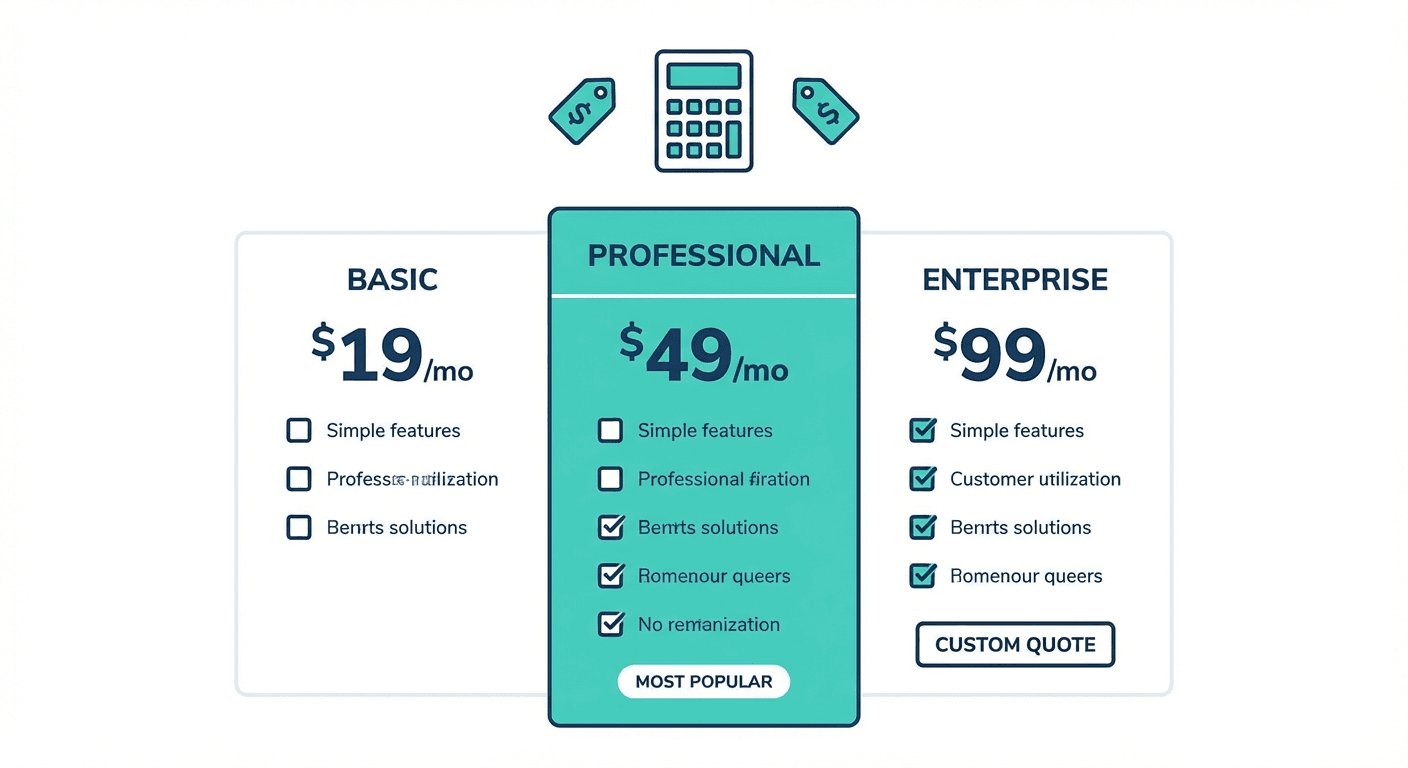
Effective B2B pricing emails lead with value before stating costs, include transparent breakdowns with specific features, and create a clear next step. They should anchor prospects in outcomes rather than expense, anticipate common objections proactively, and match tone to relationship stage. The twelve templates address scenarios from initial pricing introduction through discount negotiations to price increase announcements, with each designed to advance deals while protecting margins.
Key takeaways
- Leading with value before numbers anchors prospects in outcomes rather than expense, making them more receptive to investment discussions.
- Transparent pricing that includes clear breakdowns and addresses obvious questions proactively builds trust and reduces friction in the sales process.
- Offering tiered options shifts the conversation from "should we buy" to "which option fits best," putting prospects in control while maintaining deal momentum.
- Every pricing email must include a specific next step, whether scheduling a call or confirming receipt, to prevent deals from stalling.
- Custom quotes require validity dates to create appropriate urgency and should highlight implementation timelines and dedicated support resources.
Reviewed and updated September 15, 2026
12 Pricing Discussion Email Templates for B2B Sales
Your prospect just asked, "So, what does this cost?" and suddenly the entire deal hangs on your next response. Pricing conversations are where B2B deals either accelerate toward close or stall indefinitely. The difference often comes down to how you frame the investment, address concerns, and maintain value perception throughout the discussion.
These 12 templates cover every pricing scenario you'll encounter, from that first pricing introduction to handling discount requests and announcing price increases. Each one is designed to keep deals moving forward while protecting your margins.
What Makes a Great Pricing Discussion Email
Before diving into the templates, here's the framework that separates effective pricing emails from ones that kill deals:
- Yes: Lead with value, not numbers
- Yes: Be transparent and specific
- Yes: Create a clear path forward
- Yes: Anticipate objections
- Yes: Match tone to relationship stage
Lead with value, not numbers. Every pricing email should remind prospects why they're considering your solution before revealing costs. This anchors their thinking in outcomes rather than expense.
Be transparent and specific. Vague pricing creates friction and erodes trust. Include clear breakdowns, explain what's included, and address the obvious questions before they're asked.
Create a clear path forward. Every pricing email needs a next step. Whether it's scheduling a call to discuss options or confirming they've received a quote, always include a specific action.
Anticipate objections. Good pricing emails address common concerns proactively. If prospects typically worry about implementation costs, mention what's included. If ROI is a concern, include relevant metrics.
Match tone to relationship stage. A first pricing conversation with a new prospect requires more context than a renewal discussion with a three-year customer.
Initial Pricing Introduction Templates
Template 1: Value-First Pricing Introduction
Best for: First-time pricing discussions with qualified prospects who've completed discovery
Subject line: Investment details for [Company Name]
Email:
Hi [Name],
Thanks for the conversation yesterday. Based on what you shared about [specific challenge discussed], I've put together pricing that aligns with your goals for [specific outcome].
Here's what the investment looks like:
[Plan/Package Name]: $[X]/month
- [Key feature 1]
- [Key feature 2]
- [Key feature 3]
- Implementation and onboarding included
For context, companies similar to [Company Name] typically see [specific metric, e.g., "30% reduction in manual processing time"] within the first 90 days.
I've attached a detailed breakdown, but the quick summary: this gives you everything we discussed for hitting [their stated goal] by [their timeline].
What questions can I answer about the investment?
Best, [Your name]
Why it works: This template connects pricing directly to their stated goals and challenges. By referencing the discovery conversation and including a relevant success metric, you're framing the cost as an investment with measurable returns rather than an expense.
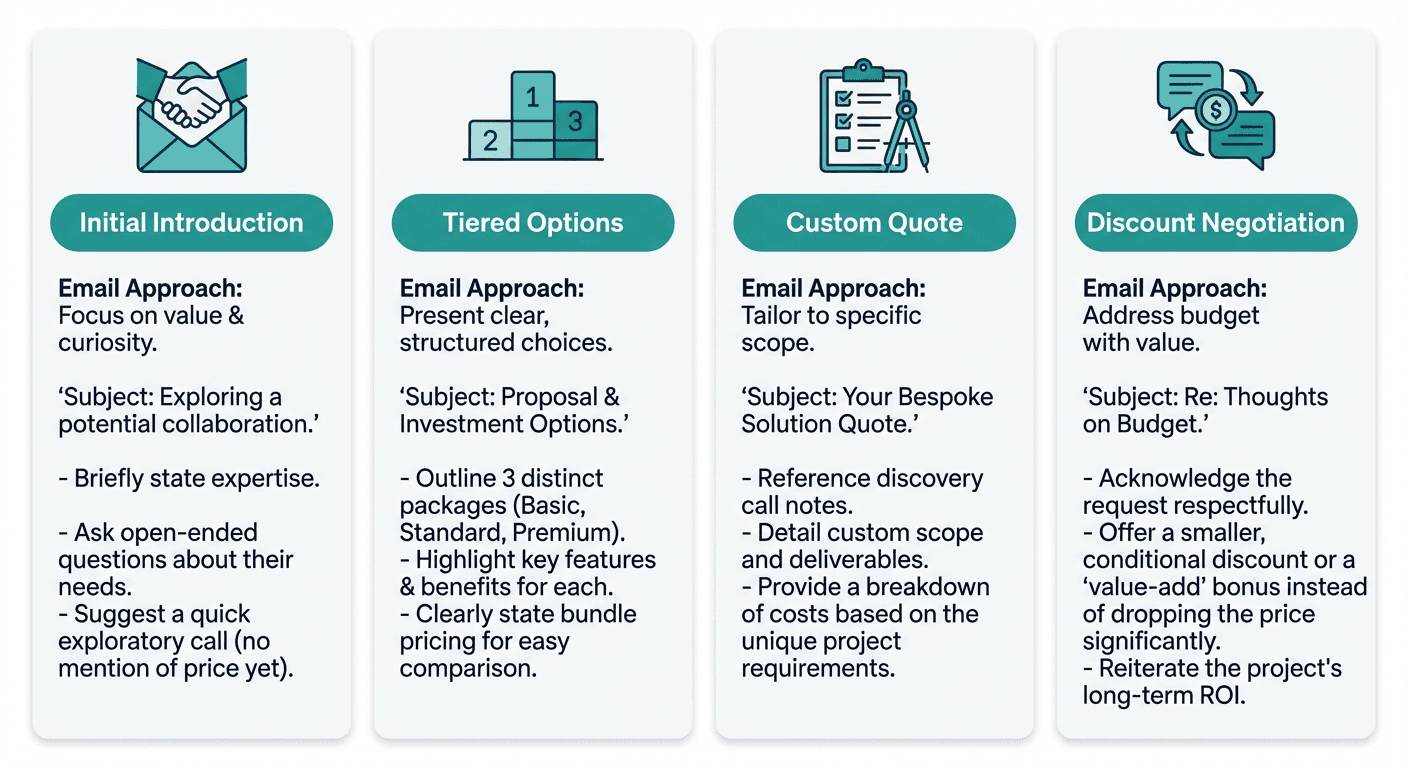
Template 2: Tiered Options Introduction
Best for: Prospects who need flexibility or haven't fully defined their requirements
Subject line: Three options for [solving X problem]
Email:
Hi [Name],
Following our discussion about [challenge], I wanted to give you options rather than a one-size-fits-all quote. Here's what makes sense based on where [Company Name] is today:
Option 1: Essentials ($[X]/month) Best if you want to start with [core capability] and expand later. Includes: [brief feature list]
Option 2: Professional ($[X]/month) Best for teams ready to [broader capability]. Includes: Everything in Essentials plus [additional features]
Option 3: Enterprise ($[X]/month) Best for organizations needing [advanced capability]. Includes: Full platform access plus [premium features]
Most companies at your stage start with Professional, but I'd recommend we hop on a quick call to confirm which option fits your specific situation.
Does Thursday at 2pm work to walk through these together?
Best, [Your name]
Why it works: Giving options puts prospects in control and shifts the conversation from "should we buy?" to "which option fits best?" The recommendation at the end provides guidance without being pushy.
Custom Quote Delivery Templates
Template 3: Detailed Custom Quote
Best for: Complex deals requiring tailored pricing or enterprise prospects
Subject line: Custom proposal for [Company Name]
Email:
Hi [Name],
I've put together a custom proposal based on our conversations and your team's specific requirements. Here's the summary:
Annual Investment: $[X]
This includes:
- [Specific solution component 1]
- [Specific solution component 2]
- [Specific solution component 3]
- [Number] user licenses
- Dedicated implementation support
- [X hours] of training for your team
Payment structure:
- Annual payment: $[X] (includes 10% discount)
- Quarterly payments: $[X]/quarter
I've attached the full proposal with detailed scope, timeline, and terms. A few things worth highlighting:
- Implementation begins within [X days] of signing
- Your dedicated success manager will be [Name/Role]
- This pricing is valid through [date]
I'd love to walk through this together and answer any questions. Are you available for a 20-minute call this week?
Best, [Your name]
Why it works: Custom quotes require more detail to justify the investment. This template provides transparency while creating urgency with a validity date and making the next step clear.
Template 4: Quick Quote Follow-Up
Best for: Transactional deals or prospects who requested "just the numbers"
Subject line: Your quote for [solution/product]
Email:
Hi [Name],
Here's the pricing you requested:
[Product/Solution]: $[X]/month
- [Number] users included
- [Key feature 1]
- [Key feature 2]
- Annual billing: $[X]/year (saves $[Y])
Setup fee: $[X] (waived if you start before [date])
This covers everything we discussed for [their primary use case]. If your needs change or you want to add [common add-on], I can adjust the quote accordingly.
Ready to move forward? I can send over the agreement today.
Best, [Your name]
Why it works: Some prospects have done their research and just want clear numbers. This template respects their time while still creating a small incentive (waived setup fee) to move quickly.
Budget Constraint Response Templates
Template 5: Flexible Payment Options
Best for: Prospects who like the solution but have cash flow concerns
Subject line: A few options to work with your budget
Email:
Hi [Name],
Thanks for being upfront about budget constraints. I want to find a way to make this work because [solution] is clearly the right fit for what you're trying to accomplish with [their goal].
Here are some options:
Option 1: Quarterly payments Instead of $[X] annually, we can structure this as $[X]/quarter. Same features, easier on cash flow.
Option 2: Phased implementation Start with [core module] at $[X]/month, then add [additional capability] in Q2 when budget opens up.
Option 3: Extended payment terms We can spread the annual investment across 6 monthly payments with no additional fees.
Which of these would work best for [Company Name]? Happy to jump on a call to figure out the right approach.
Best, [Your name]
Why it works: This template acknowledges their concern without immediately discounting. By offering payment flexibility rather than price cuts, you maintain value while solving their actual problem (cash flow timing).
Template 6: Scaled-Down Starting Point
Best for: Prospects with hard budget limits who need a smaller entry point
Subject line: Starting smaller with [Company Name]
Email:
Hi [Name],
I understand the $[original price] investment doesn't fit current budget realities. Rather than lose momentum, here's an alternative:
Starter Package: $[X]/month
This gives you:
- [Core feature 1]
- [Core feature 2]
- [Limited number] user seats
- Email support
You'd be able to [primary benefit] immediately, and we can expand to the full platform when budget allows (typically at renewal).
The trade-off is [what they won't get], but based on our conversation, [core features] addresses your most pressing need around [specific challenge].
Would this work as a starting point?
Best, [Your name]
Why it works: This template offers a genuine solution rather than just a discount. By being explicit about trade-offs, you maintain trust and set expectations for future expansion.
Discount Request Response Templates
A discount request is where a pricing conversation becomes a price negotiation, and the two templates below are the fork in it: hold the price and add value, or trade a concession for something that is worth the discount to you. Deciding which one you are willing to run, before the request arrives, is what keeps the answer from being improvised under pressure.
Template 7: Value-Based Discount Decline
Best for: Responding to discount requests when you want to hold price
Subject line: Re: Pricing question
Email:
Hi [Name],
I appreciate you asking. Here's my honest perspective on the pricing:
We've structured [solution] at $[X] because it includes [specific value elements]. Companies using the full platform typically see [specific outcome], which represents a [X]x return on the investment.
What I can do is make sure you're getting maximum value from day one:
- Priority implementation (usually a $[X] add-on)
- Extended onboarding support
- Direct access to our senior success team
This way you're getting more value without us compromising on the product investment.
Does that work for [Company Name]?
Best, [Your name]
Why it works: This template holds the line on price while offering additional value. It reframes the conversation around ROI and demonstrates confidence in your pricing.
Template 8: Conditional Discount Offer
Best for: Situations where a discount makes strategic sense
Subject line: Making the numbers work
Email:
Hi [Name],
I've talked with our team about your request, and here's what we can do:
15% discount ($[X] instead of $[Y]) if we can:
- Finalize the agreement by [date]
- Move to annual billing (instead of monthly)
- Start implementation in [specific timeframe]
This works for us because [honest reason, e.g., "we're building out our presence in your industry" or "it helps us hit our quarterly goals"].
If the timeline doesn't work, I understand. The standard pricing will still be here when you're ready.
Let me know if this makes sense for your team.
Best, [Your name]
Why it works: Conditional discounts maintain your pricing integrity while giving prospects a path to savings. Being transparent about why you're offering the discount builds trust.
Multi-Year and Volume Discussion Templates
Template 9: Multi-Year Proposal
Best for: Encouraging longer commitments with existing relationships or serious prospects
Subject line: Multi-year options for [Company Name]
Email:
Hi [Name],
Since you mentioned wanting pricing stability and a long-term partnership, I've put together multi-year options:
1-Year Agreement: $[X]/year Standard pricing with annual renewal.
2-Year Agreement: $[X]/year (10% savings) Locked pricing for 24 months, saving $[Y] total.
3-Year Agreement: $[X]/year (20% savings) Best value option, saving $[Z] total. Includes:
- Price protection (no increases for 3 years)
- Dedicated success manager
- Priority feature access
Most companies choosing a multi-year path go with the 2-year option. It balances commitment with flexibility while still providing meaningful savings.
Want to discuss which timeline makes sense for [Company Name]?
Best, [Your name]
Why it works: Multi-year discounts are easier to justify internally than arbitrary price cuts. This template clearly shows the value of commitment while providing a recommendation.
Template 10: Volume Pricing Discussion
Best for: Prospects expanding seats or usage significantly
Subject line: Volume pricing for expanded rollout
Email:
Hi [Name],
Great news that the pilot went well and you're ready to expand to [X] users. Here's how pricing scales:
Current (10 users): $[X]/user/month At 50 users: $[X]/user/month (15% reduction) At 100+ users: $[X]/user/month (25% reduction)
For your planned rollout to [X] users, the investment would be:
- Monthly: $[X]
- Annual (paid upfront): $[X] (additional 10% savings)
I'd also recommend we discuss enterprise features like SSO and advanced admin controls, which become more valuable at this scale. No additional cost with annual billing.
Can we schedule 30 minutes to plan the rollout?
Best, [Your name]
Why it works: Volume pricing discussions should feel like a natural progression, not a negotiation. This template positions expansion as a win for both parties.
Price Increase Announcement Templates
Template 11: Advance Notice Price Increase
Best for: Existing customers before a price change takes effect
Subject line: Upcoming changes to your [Product] subscription
Email:
Hi [Name],
I wanted to give you advance notice about upcoming changes to our pricing.
Starting [date], [Product] pricing will increase from $[X] to $[Y] per month. This represents a [X]% adjustment, our first in [timeframe].
Why the change: Over the past [timeframe], we've added significant capabilities including [feature 1], [feature 2], and [feature 3]. We've also expanded our support team and infrastructure to maintain reliability as we've grown.
What this means for [Company Name]: Your current rate of $[X]/month will remain in effect until your renewal on [date]. At that point, the new pricing applies.
Option to lock in current pricing: If you'd like to extend your agreement at today's rates, we can offer a 12-month renewal at $[X]/month. This offer is available until [date].
I'm happy to discuss this further or answer any questions about the changes.
Best, [Your name]
Why it works: Price increases require transparency and advance notice. This template explains the reasoning, gives customers time to plan, and offers an option to lock in current rates.
Template 12: Price Increase with Added Value
Best for: Softening price increases by highlighting new features or benefits
Subject line: Changes coming to your [Product] plan
Email:
Hi [Name],
I'm reaching out about some changes to your [Product] subscription that take effect on [date].
The change: Your monthly investment will increase from $[X] to $[Y].
What's new: Along with this adjustment, you'll automatically get access to:
- [New feature 1] (previously a $[X]/month add-on)
- [New feature 2]
- [Expanded capability, e.g., "Increased API limits" or "Additional storage"]
The math: While the base price increases by $[X], the added features represent $[Y] in value. Customers using [new feature 1] report [specific benefit].
Your current pricing stays in effect through [date]. If you have questions or want to discuss your account, I'm here to help.
Best, [Your name]
Why it works: When price increases come with genuine additional value, lead with what customers are gaining. This template reframes the increase as an upgrade rather than just a cost change.
Tips for Customizing These Templates
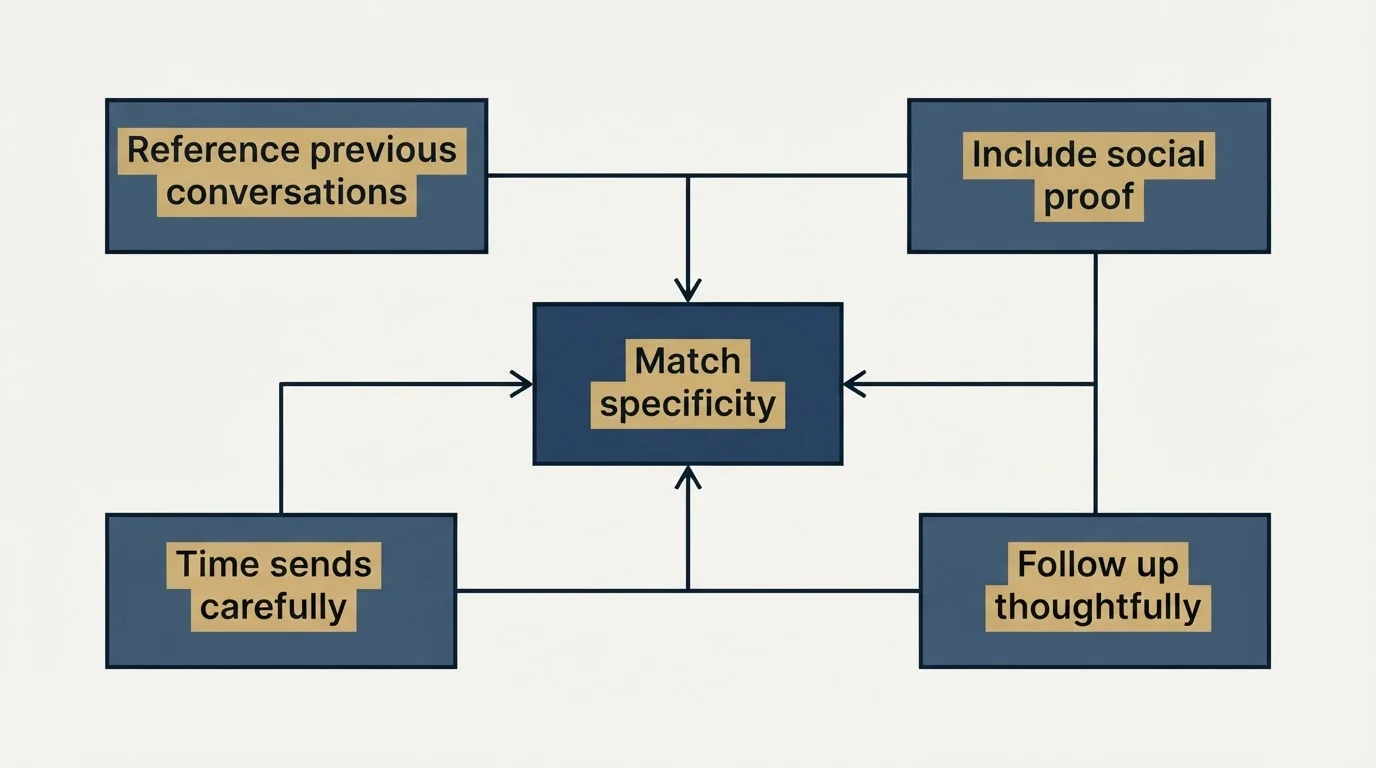
Match specificity to deal size. Enterprise deals need more detail and customization. SMB deals often benefit from cleaner, simpler communication.
Reference previous conversations. The more you can tie pricing to specific challenges and goals discussed earlier, the more the investment feels tailored rather than generic.
Include social proof strategically. Mentioning that "companies like yours" or "teams in [industry]" have achieved specific results adds credibility without feeling salesy.
Time your sends carefully. Pricing emails sent Friday afternoon often sit unread over the weekend, losing momentum. Tuesday through Thursday mornings tend to get faster responses.
Follow up thoughtfully. If you don't hear back within 3-4 days, follow up with additional value (a relevant case study, ROI calculator, or implementation timeline) rather than just asking if they received your email.
Common Mistakes to Avoid
- No: Apologizing for your pricing
- No: Burying the numbers
- No: Failing to explain what's included
- No: Ignoring the competition
- No: Not creating urgency
- No: Sending quotes without a conversation
Apologizing for your pricing. Language like "I know this is expensive" or "I wish I could offer more" undermines value perception. If you believe in your pricing, communicate it confidently.
Burying the numbers. Some salespeople hide pricing at the bottom of long emails, hoping prospects won't notice. This creates distrust. Lead with transparency.
Failing to explain what's included. Pricing without context invites comparison shopping. Always clarify what's included, especially implementation, support, and training.
Ignoring the competition. If you know prospects are comparing you to alternatives, address it. "Unlike [competitor], our pricing includes..." is more effective than pretending competition doesn't exist.
Not creating urgency. Every pricing email should have a reason to act. Validity dates, implementation timelines, or upcoming price changes all create natural urgency without artificial pressure.
Sending quotes without a conversation. Whenever possible, present pricing on a call where you can address concerns in real-time. Email quotes work best as a follow-up to verbal discussions.
Put These Templates to Work
Pricing conversations don't have to be awkward or deal-killing. With the right framing, transparency, and follow-through, they become a natural step toward closing.
Looking for help with your outbound sales strategy? RevenueFlow runs done-for-you cold email campaigns that book qualified meetings on your calendar. See how it works with a free test campaign.
Related Reading
Frequently asked questions.
Frequently asked questions- What should I include in a first pricing email to a B2B prospect?
- Start by connecting pricing directly to challenges and goals discussed during discovery, then present the investment with key features included. Reference specific outcomes similar companies achieved, such as "30% reduction in manual processing time within 90 days." Always remind prospects why they're considering your solution before revealing costs, and end with a clear question inviting them to discuss the investment further.
- How do I respond when a prospect says our pricing is too high?
- Address budget constraints by offering flexible payment options or a scaled-down starting point rather than immediately discounting. Present alternative payment structures like quarterly billing, or propose a reduced scope that addresses their most critical need first with room to expand later. This approach maintains value perception while demonstrating willingness to work within their constraints without eroding margins.
- Should I offer tiered pricing options or a single recommendation?
- Offer tiered options when prospects haven't fully defined requirements or need flexibility, typically presenting three tiers from essentials to enterprise. This shifts conversation from "should we buy" to "which fits best" and puts prospects in control. Include a recommendation for their stage to provide guidance, and suggest a call to walk through options together rather than forcing an immediate decision.
- What's the best way to handle a prospect requesting a discount?
- Respond by reinforcing value rather than immediately conceding, or offer conditional discounts tied to specific commitments like multi-year contracts or expanded scope. Reference the outcomes and ROI the solution delivers, and if offering a discount, frame it as contingent on something that benefits both parties, such as annual payment, increased user count, or extended contract length.
About the author.

Ben Carden is CRO at RevenueFlow, which builds and operates outbound revenue engines for B2B companies. Previously at Gartner Enterprise. Studied at London School of Economics.
Ben Carden · CRO
Connect on LinkedIn →Explore more.
Ready to scale your outreach?
We build GTM engines that book real meetings. See the receipts.
Related articles.
10 B2B Cold Email Templates for One-Message Sends
Ten B2B cold email templates written for a single send, with the four slot structure underneath them and the test that separates a good example from a bad one.
Cold Email Templates for Customer Success Managers
Eleven cold email templates for customer success managers, covering champion change, expansion, renewal rescue, and win-back, with subject lines and timing.
14 Renewal Email Templates That Retain Customers
Master subscription and contract renewals with 14 proven email templates. Reduce churn, lock in renewals early, and maintain customer relationships.
13 Case Study Request Email Templates That Get Results
Get proven email templates for requesting case studies, video testimonials, and written reviews from your happiest customers. Includes templates for every stage from initial ask to final approval.
Email Subject Line Capitalization: What the Guides Say
What the style authorities actually rule on subject line case, what the published tests measured, and the default for a one to one sales email.
Follow-Up Call Scripts: Nine Calls Into a Live Conversation
Nine follow-up call scripts, each tied to the event that earns the call, from a demo to a renewal, plus the four moves they share and how each call should end.