What Salesloft Is Used For, and What It Leaves to Your CRM
Salesloft's own pricing page calls it a sales engagement platform in the browser title and a revenue orchestration platform in the copy. Both descriptions are useful.
Salesloft organises and executes the outbound and deal-progression work of a segmented revenue team. It holds each rep's daily queue, runs email and dialler steps in one window, records and transcribes calls, and prioritises actions. It sits on top of a CRM and needs a data source in front and sending infrastructure underneath.
Key takeaways
- Salesloft's pricing page carries the title 'Pricing (Sales Engagement Platform)' while its copy describes a 'Revenue Orchestration Platform'. The older category describes what most teams use it for.
- The named capabilities are Cadence, Rhythm, Conversation Intelligence, Deals, Analytics, Forecast and Chat Agents, with an Enterprise Data Platform alongside and an AI layer the vendor calls Conductor AI.
- It is not a data source, not a deliverability system and not a CRM replacement. The pricing page lists bi-directional CRM sync as a capability, which assumes a CRM is already in place.
- Salesloft publishes no price. The pricing page fetched for this article contains no currency figure in its served bytes and routes to a form requesting a fifteen-minute intro call.
Reviewed and updated August 28, 2026
Salesloft's pricing page carries the browser title "Pricing (Sales Engagement Platform)" while the copy on the same page describes an "industry-leading Revenue Orchestration Platform". Both descriptions are live in one document, fetched on 16 August 2026, and the gap between them is the most useful thing on the page. The older category is what most teams actually use the product for. The newer one is what the company is selling now.
Anyone asking what Salesloft is used for is usually asking one of two questions underneath: what does it change about a working day, and what does it leave to the CRM. Both have concrete answers.
Salesloft templates are the object most of this runs through: a saved email body, personal or shared with the team, applied from the cadence step or from inside the mailbox, and the vendor's own knowledge base is where the mechanics live, because the interesting question is not how to save one but whether a library of them survives contact with a list that deserves different messages. Searches for Salesloft insights land in two different places, the vendor's analytics surface where Command Center and its AI insights sit, and the review aggregators that use the same word for their own summaries, and the two answer different questions: one tells you what the product will show your managers, the other tells you what other buyers made of it.
What the vendor says it is
Salesloft's company page describes the product as "an AI powered revenue orchestration platform that facilitates collaboration between your sellers and buyers, from first touch to upsell to renewal by consolidating all first and third party buyer signals from your entire tech stack".
The platform overview page breaks that into named capabilities, each with a one-line purpose written by the vendor:
- Cadence, for building and nurturing sales pipeline
- Rhythm, for taking the right actions
- Conversation Intelligence, for insights about buyers and sellers
- Deals, for managing and closing opportunities
- Analytics, for turning data into action
- Forecast, for calling the sales number
- Chat Agents, for turning website visitors into pipeline
An Enterprise Data Platform sits alongside those, described as unifying revenue data, and an AI layer the vendor calls Conductor AI runs across the set. The same page's footer lists a longer set of surfaces including AI Email Agents, Automations, Coaching, Command Center, Conversation Agents, Focus Zones, Plays and a Pipeline Dashboard.
That is the map. It is worth translating.
What it actually does to a seller's day
Strip the naming and the product does four things that a CRM alone does not.
It holds the queue. The core of Cadence is a structured set of steps, each with a channel and a due date, that produces a daily task list per rep. The value is that the list exists and is the same shape for everybody, so a manager can see what forty reps are meant to do today rather than reconstructing it from activity logs.
It puts the channels in one window. Email, dialler and social steps are executed inside the tool, which is what makes the activity capture automatic rather than a discipline problem. The pricing page names bi-directional CRM sync as a platform capability, and that sync is the point: activity that happens in the tool arrives in the CRM without anyone typing it.
It records the conversation. Conversation Intelligence captures calls and meetings, transcribes them, and makes them searchable and reviewable. For a manager this is the coaching surface; for a revenue leader it is the only unfiltered record of what the market said.
It scores and orders the work. Rhythm, and the AI layer around it, exists to answer which of the two hundred available actions a rep should take next, using signals pulled from the rest of the stack.
- Accounts, contacts, opportunities and their history
- Stage definitions and the reporting built on them
- Forecast of record and territory ownership
- Integrations with finance, support and product
- Answers what is true about this account
- The queue of what each rep does today
- Email, dialler and social execution in one window
- Call and meeting recording, transcription and review
- Prioritisation across the available actions
- Answers what happens next and whether it happened
The division matters because most disappointment with this category comes from expecting one to do the other's job. Salesloft's own FAQ addresses the question directly, and its people-also-ask cluster is dominated by variations on whether it differs from Salesforce, which suggests a lot of buyers arrive unsure.
What it is not used for
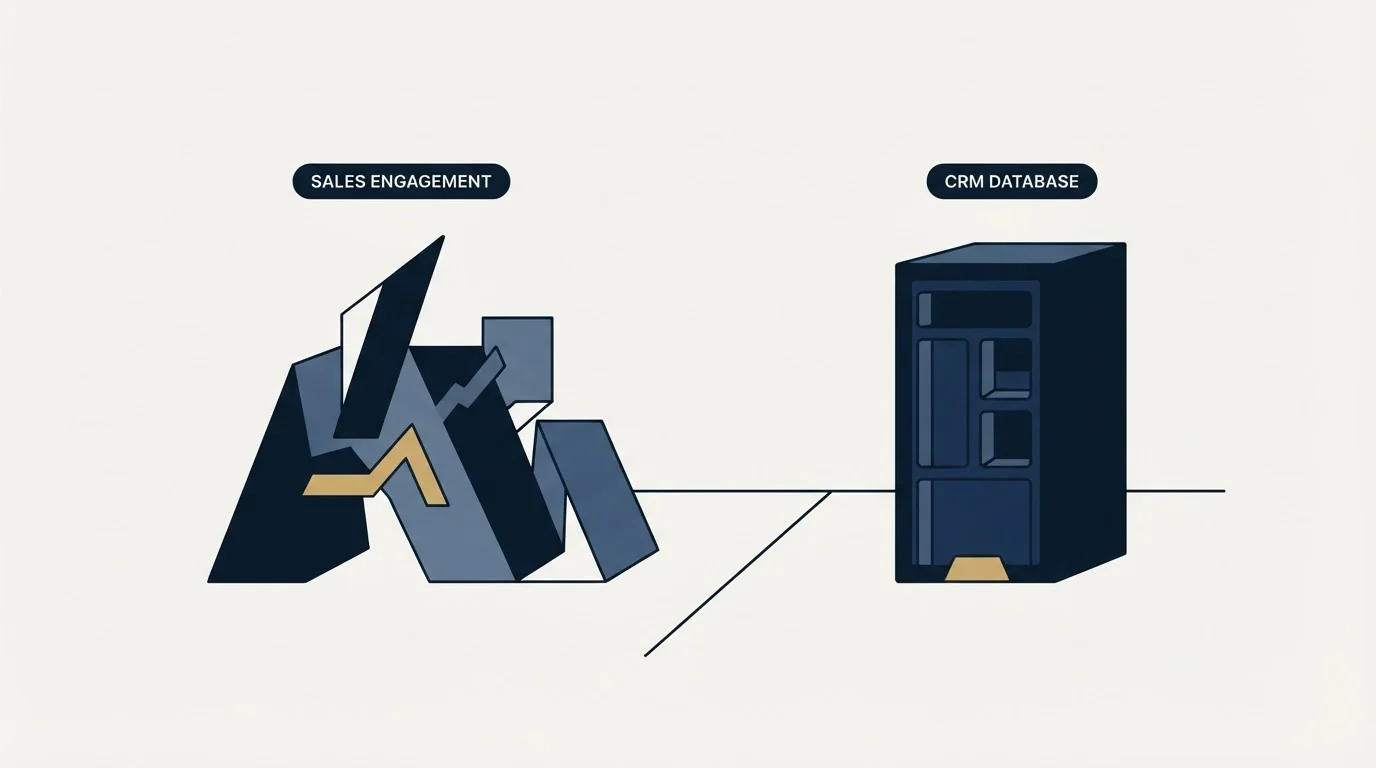
Three exclusions save more time than any feature list.
It is not a data source. Salesloft executes against contacts you already have; finding them and verifying them is a different purchase, and a team without a working list-building motion will not fix that by buying an engagement platform.
Teams still missing that list-building motion can see how the gap gets filled in Salesloft compared with a cold email finder, which contrasts outreach orchestration with contact discovery and verification.
It is not a deliverability system. Sending volume through a platform does not change domain reputation, authentication or inbox placement, which are decided by infrastructure the tool sits on top of. Teams that scale sending inside an engagement layer without addressing the infrastructure underneath tend to discover that in month three.
Teams weighing data sourcing against outreach orchestration can see the split laid out in Apollo.io compared with Salesloft, which treats the two as complementary rather than rival tools.
It is not a CRM replacement. The pricing page lists bi-directional CRM sync as a capability, which is a clear statement that a CRM is expected to be there.
Who it is built for, visible from its own navigation
A product's own solution menu is an honest read on who it expects to buy. Salesloft's names Revenue Operations, Sales Leaders, Sales Development, Account Executives, Customer Success and Marketing as teams, and Professional Services, Manufacturing, Medical Software and Devices, and Logistics as industries.
That set describes a company with a segmented revenue organisation: separate prospecting and closing functions, a revenue operations owner, and enough managers that coaching is a distinct job. The platform overview page states the target directly, saying the platform is "built to handle enterprise-level complexity and scale".
A two-person founder-led sales team is not that company. The queue, the coaching surface and the prioritisation layer are all solving problems that appear with headcount, and below a certain size they add administration without removing any. The best sales engagement tools for SDR teams roundup covers where the threshold usually sits, and sales engagement platforms covers the category shape.
The claims on the page, and how to read them
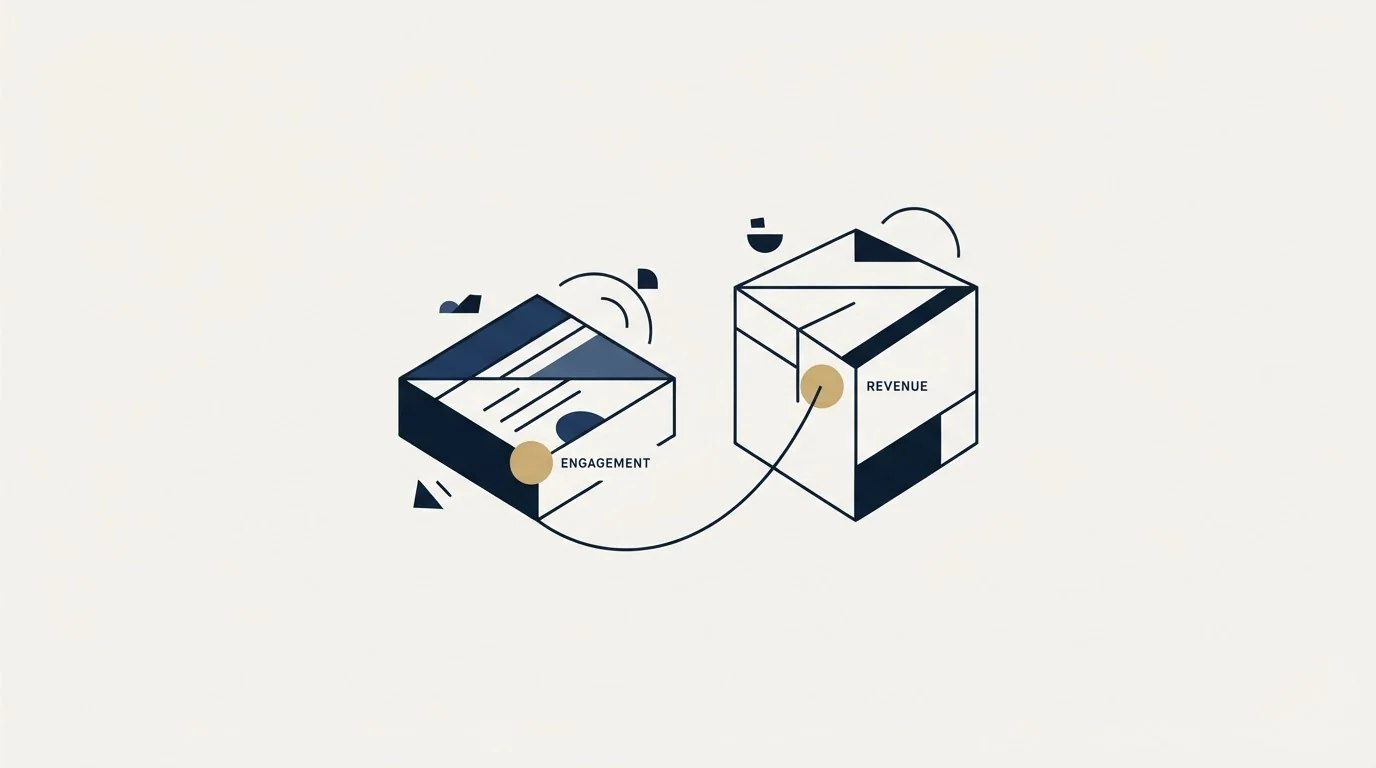
Salesloft publishes several performance figures, and the footnotes are the part worth reading.
The company page states "12% higher closed/won rate" and "236% Return on investment over 3 years", both footnoted to "A commissioned Forrester Total Economic Impact study conducted by Forrester Consulting on behalf of Salesloft in April 2025". Commissioned is doing real work in that sentence: the study was paid for by the vendor, which does not make it false and does mean it is marketing rather than independent research.
The pricing page carries "322% more pipeline", "advance and win more deals, 75% faster" and "win 28% more deals", asterisked to "Real success metrics reported from Salesloft customers within the first year of implementation". Self-reported customer figures with no denominator, no methodology and no sample described are not a basis for a business case.
The same page also states "4,000+ sales teams", and the company page states "100M+ Emails and calls reps make using our platform every month". Those are scale claims about the vendor rather than outcome claims about you, and they are the more useful pair of the four.
Stated on the pricing page, no date or methodology given
Footnoted to a Forrester study commissioned by Salesloft, April 2025
Asterisked as self-reported by customers in their first year
Stated on the platform overview page alongside Salesforce, Highspot, 6sense and DocuSign
What it costs
Salesloft publishes no price. The pricing page fetched for this article contains no currency figure anywhere in its served bytes; it presents a capability list, customer quotes and a form requesting a fifteen-minute intro call. Packaging is described only as "Pick your winning plan", with the plans themselves unnamed on that page.
That is a deliberate and internally consistent choice for a product sold on seat count, module mix and term length, and it means any figure quoted in a third-party roundup came from somewhere other than the vendor. Budgeting therefore starts with a conversation rather than a page, and the sensible preparation is knowing your seat count by role and which modules you would actually turn on.
Where it sits against the alternatives
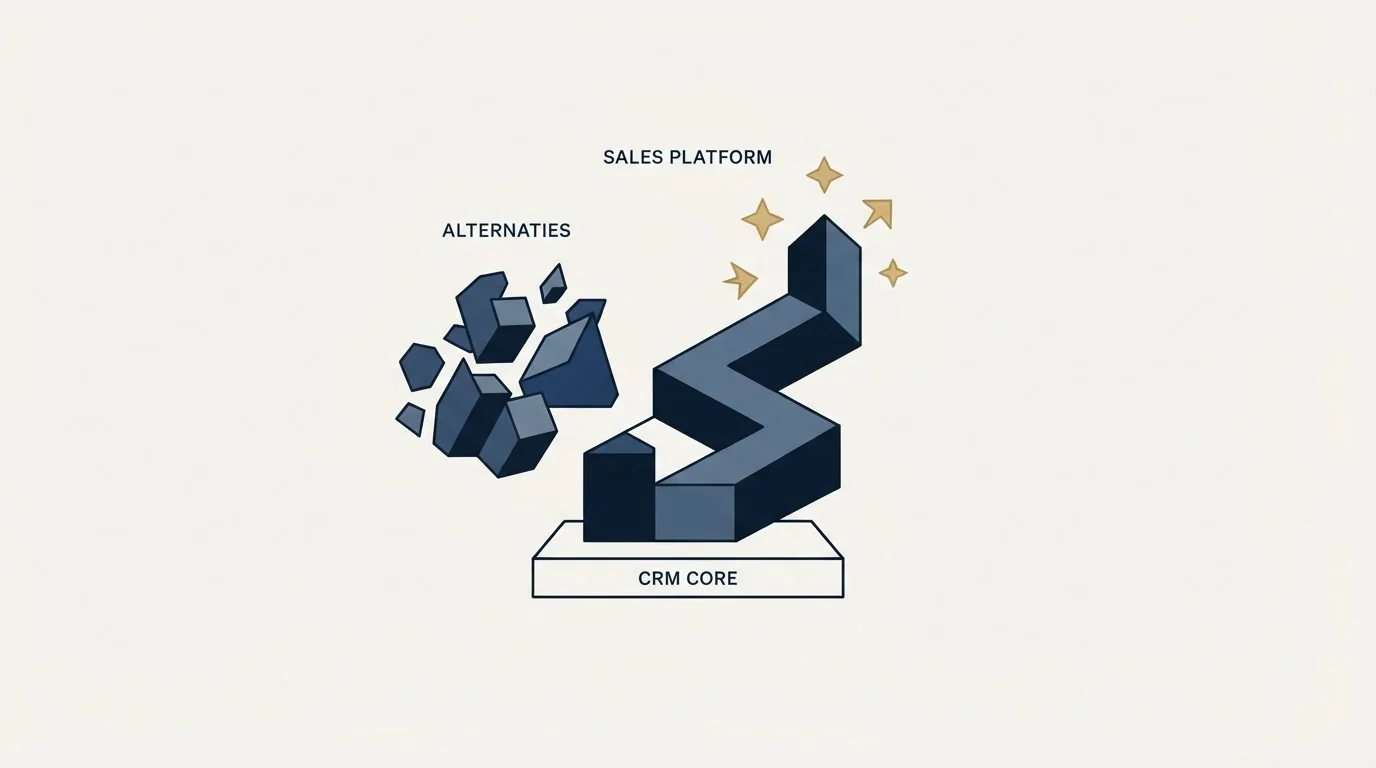
The category has consolidated around a small number of platforms with overlapping capability, and the choice between them is usually decided by which adjacent problem you most want solved. Conversation intelligence buyers and cadence buyers frequently end up comparing the same two products for different reasons, which is what Gong vs Salesloft works through. Teams already committed to a CRM vendor's own engagement tooling face a different comparison, covered in HubSpot CRM vs Salesloft. The wider option set, including the lighter tools that suit smaller teams, is in best Salesloft alternatives.
One practice note, since this is a product that makes step-based outreach easy to scale. Our own documented policy is one message per campaign, with no bumps and no thread replies. Industry practice in this category runs the other way and the tooling is built for it, so the platform will happily execute a pattern we do not use. Whichever way a team decides that, the decision belongs to the team rather than to the default configuration, and it is worth making explicitly before a hundred reps inherit it. If you would rather see what a single-message programme looks like against your own market, look at what a first campaign would target.
The short version
Salesloft is used to organise and execute the outbound and deal-progression work of a segmented revenue team, and to record what happened so it can be coached and reported on. It sits on top of a CRM, needs a data source in front of it and sending infrastructure underneath it, and is priced by conversation rather than by page.
Vendor pages and figures verified against raw fetches of salesloft.com/platform-overview, salesloft.com/company and salesloft.com/pricing on 16 August 2026. Verify current terms with the vendor before relying on them.
Frequently asked questions.
Frequently asked questions- What is Salesloft actually used for day to day?
- Four things a CRM alone does not do. It holds each rep's queue of steps with channels and due dates, executes email, dialler and social steps in one window so activity capture is automatic, records and transcribes calls for coaching and review, and prioritises which of the available actions to take next using signals from the rest of the stack.
- How is Salesloft different from a CRM like Salesforce?
- The CRM is the system of record: accounts, opportunities, stage definitions, the forecast of record and the reporting built on them. Salesloft is the system of action: what each rep does today, executed in one window and synced back. Its own pricing page lists bi-directional CRM sync as a platform capability, which is a clear statement that a CRM is expected to be there.
- How much does Salesloft cost?
- The vendor publishes no figure. The pricing page fetched on 16 August 2026 contains no currency amount anywhere in its served bytes, names no plan tiers, and presents a capability list, customer quotes and a form for a fifteen-minute intro call. Any price in a third-party roundup came from somewhere other than the vendor's own page.
- What size of team does Salesloft suit?
- Its own solution menu names Revenue Operations, Sales Leaders, Sales Development, Account Executives, Customer Success and Marketing as separate teams, and the platform overview says it is built for enterprise-level complexity. That describes a segmented revenue organisation with managers coaching. Below that, the queue and coaching layers add administration without removing much.
About the author.

B2B cold email experts helping companies generate qualified leads through done-for-you outreach campaigns.
RevenueFlow Team
Explore more.
Ready to scale your outreach?
We build GTM engines that book real meetings. See the receipts.
Related articles.
Gong Engage vs Salesloft Cadence: How They Differ
Gong Engage and Salesloft Cadence compared from each vendor's own pages: where each starts, six jobs side by side, and what the pricing pages disclose.
Lavender Pricing: Two Products, No Pricing Page
Lavender has no pricing page. The Email Coach ladder per seat at both billing states, the free routes, and the separate per-agent price for Ora.
Twain Pricing: Credits per Lead, Three Research Modes
Twain sells credits, not seats, and a lead costs 1 to 14 of them depending on the research mode. The two ladders, the four expiry clocks and the cap.
Zeliq Pricing: One Seat Rate and a Credit Meter
Zeliq prices one self-serve seat in dollars with a credit meter that never expires. Both billing states, the three credit rates, the top-up ladder and the Custom floor.
PersistIQ Pricing: A Demo Form Where the Ladder Was
PersistIQ's pricing address serves a demo form and no platform price. What the site does publish, the Luka add-on ladder at both billing states, and how to read a quote.
Salesgear Pricing: Two Ladders Under One Plan Title
Salesgear's page is titled as one plan and carries a Data ladder and an Outreach ladder. Both at both billing states, what each meters, and the two vendor-side conflicts.