Salesloft Pricing: What the Page Publishes
Salesloft's pricing page carries no price, no range and no plan names. What it does publish, who fills the gap, and how to reach a comparable quote.
Salesloft publishes no standard pricing. Its pricing page carries a capability list, a customer count of over 4,000 sales teams, three asterisked customer-reported performance figures and a form requesting a fifteen-minute intro call, with no currency figure and no plan names anywhere in the served page or its data payload.
Key takeaways
- Salesloft's pricing page published no currency figure and no plan names when fetched on 15 August 2026, in both the rendered page and the data payload behind it.
- The page does publish a platform capability list, a customer count of more than 4,000 sales teams, and three customer-reported performance figures carrying an asterisk.
- Because the vendor publishes nothing, procurement marketplaces, directories and competitors own the pricing query, and their figures disagree with each other.
- Decide seat count, dialer inclusion, first-year modules and the renewal uplift before the call, because every variable you leave open is one the vendor sets for you.
Reviewed and updated September 10, 2026
Salesloft no longer serves a pricing page at all. Re-checked on 10 September 2026, salesloft.com/pricing answers with a redirect (HTTP 307) to salesloft.com/see-it-live, a demo-request page with a form and no currency figure anywhere in its served HTML. When the pricing page was last fetched, on 15 August 2026, it carried no prices either. Not a starting figure, not a per-seat range, not a plan name: searched for every currency symbol in the served HTML, the page returned nothing, and the same was true of the data payload it shipped to its own front end. Its heading read "Packages designed for results". The action underneath it read "For other pricing questions, please contact us."
That is unusual enough to be worth reading carefully rather than complaining about, because a vendor that publishes no number is still telling you a great deal about how it sells.
A disclosure before going further. RevenueFlow runs cold outbound as a service and is paid on attended qualified meetings, so we compete for the same budget as a sales engagement platform, though not in the same shape. Everything below comes from Salesloft's own pages as they rendered on 15 August 2026, with the pricing URL re-checked on 10 September 2026, by which point it had become a redirect to the demo-request page.
Salesloft publishes its master service agreement on its own legal pages, and that document is what a quote-only price actually sits inside, so the term, renewal and seat mechanics live there rather than on the pricing page.
Anyone searching for a Salesloft trial is trying to skip this conversation, and the honest answer is that the evaluation path runs through the sales process rather than around it, so the questions below are the ones to arrive with rather than a credit card.
What the page does publish
Strip the navigation and the page has four things on it.
A capability list, which is the closest thing to a plan comparison anywhere on the surface: bi-directional CRM sync, coaching, reporting and analytics, security, governance, and AI powered workflows. No tier is attached to any of them, so the list describes the platform rather than a package.
Adapt.io versus Salesloft compared explains why one handles contact sourcing and the other orchestrates outreach, making the capability list clearer as two workflow stages rather than one platform.
A customer count: "4,000+ sales teams".
Three performance figures, each carrying an asterisk that resolves to "Real success metrics reported from Salesloft customers within the first year of implementation": 322 percent more pipeline, deals advanced and won 75 percent faster, and 28 percent more deals won with conversation intelligence. Those are customer-reported figures published by the vendor, which is a different class of evidence from a price and should be read as marketing rather than as a benchmark.
And a form. "Talk to Sales. Fill out the form to request a 15-minute intro call."
- Depends: A platform capability list with no tier attached to any item
- Depends: A customer count of 4,000+ sales teams
- Depends: Three customer-reported performance figures, each asterisked
- Yes: A form requesting a 15-minute intro call
- No: A price, a range, a starting figure or a per-seat rate
- No: Plan or package names you could ask for by name on the call
The last row matters more than it looks. Plenty of quote-only vendors still publish tier names, which lets a buyer walk into the first call already positioned on one. Salesloft's pricing page names none, so the segmentation happens in the conversation, informed by what the vendor learns about you before any figure is said out loud.
Deciding whether Salesloft's seat cost even applies to your workflow gets easier once you see how it fits alongside data tools, as laid out in the cross-category look at Cognism and Salesloft.
Who fills the vacuum
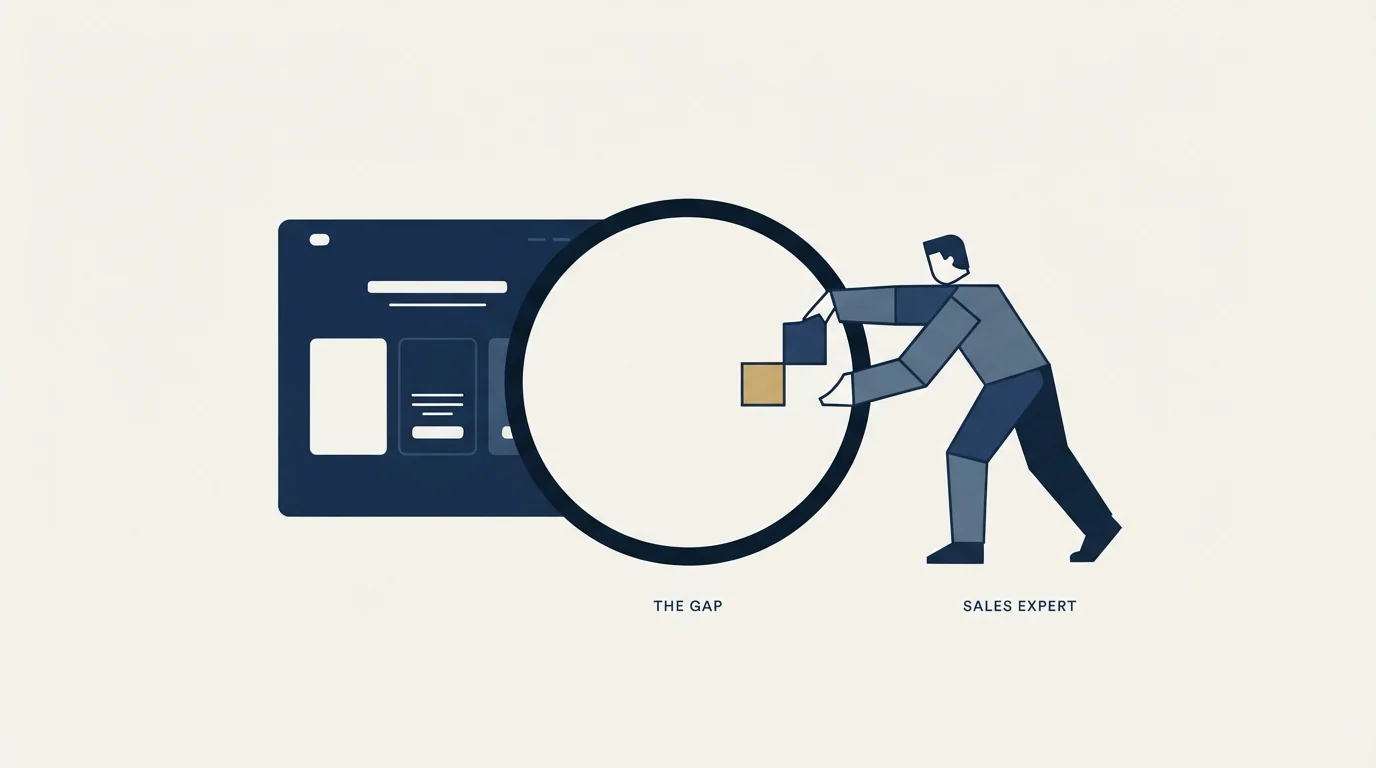
Search for how much Salesloft costs, or how much Salesloft is, and every result on the first page belongs to somebody else. Procurement marketplaces and negotiation services rank hardest, which is a rational response to a market where the only way to learn a price is to ask for one, and where the answers differ enough that a service can be built on knowing them. Software directories, a rival cold-email vendor's blog, and a data vendor's content hub fill the rest.
Those pages do publish numbers. They also disagree with each other, and none of them is the vendor. Our standing rule for writing about vendor money is that a figure belongs to a URL rather than to a company, and a figure that exists only on third-party blogs does not get stated as fact. So this page will not repeat theirs.
What is worth taking from that first page of results is the shape rather than the figures. Every serious source describes the same commercial structure: a per-seat annual subscription, quoted rather than listed, with modules and a dialer priced separately from whatever the base includes. That structure is consistent across sources that disagree about the amounts, which makes it the more reliable finding.
- A buyer can build a business case before speaking to anyone
- Comparison against rivals is arithmetic rather than a project
- The vendor loses room to price by account size
- Discounting becomes visible as a departure from a stated number
- Suits products with a narrow configuration range
- The vendor learns your size and urgency before naming a number
- Modules, seats and term are all live variables in one negotiation
- A buyer cannot get an internal approval before the first call
- Third parties rank for the pricing query instead of the vendor
- Suits products sold as a platform with many configurations
Why quote-only is coherent here, and where it costs you
A sales engagement platform is sold to a team rather than to a person. The variables that move a real quote are seat count, contract term, which modules are included, and whether the dialer is in the deal. Those combine into enough permutations that a published rate would be either meaningless or a ceiling nobody pays.
Because the seat-based structure shapes so much of Salesloft's cost, it helps to see that structure set against a cheaper, campaign-focused rival in the comparison of Klenty and Salesloft.
The cost lands on a specific buyer, and it is worth naming because it is the one this page is written for. If you are a small team evaluating whether an enterprise platform is even in the right order of magnitude, you cannot answer that question without booking a call with a company whose sales process is designed to qualify you. Some teams will spend two weeks on a process that a single published figure would have ended in ten seconds.
There is a second, less obvious cost. When a vendor publishes nothing, the reference price in the buyer's head gets set by whichever third-party page they read first. Those pages are not neutral: several of them are published by competitors, and negotiation marketplaces have a commercial interest in the number looking high. The vacuum does not stay empty.
The practical consequence for research is that the usual verification move stops working. Normally you settle a disagreement between two blogs by going to the vendor's own page and reading the figure yourself. Here there is no figure to read, so a contradiction between two sources cannot be resolved from the outside at all. The only surface that can settle it is a quote addressed to you, which is exactly the outcome the page is designed to produce.
Getting to a real number
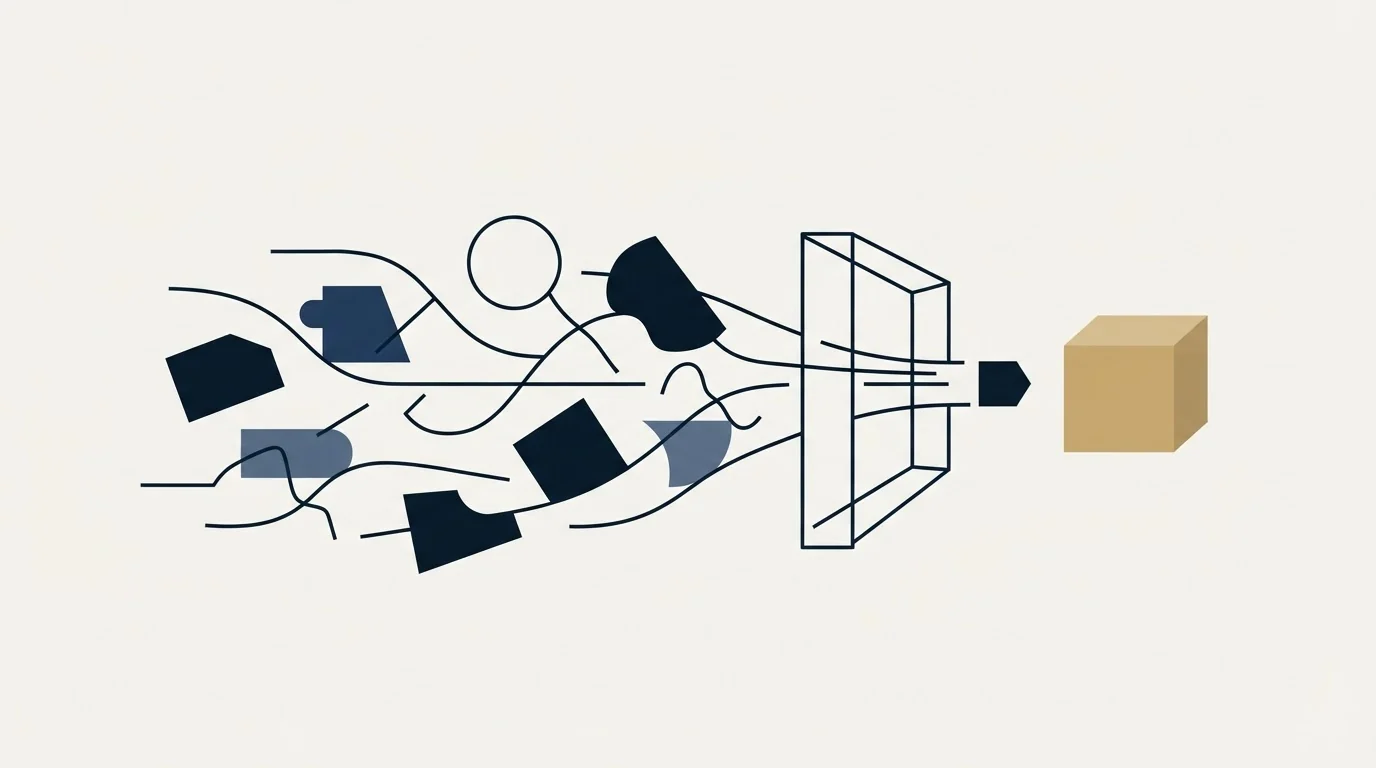
The useful preparation is not finding somebody else's figure. It is arriving at the call with the variables already decided, so the quote you get describes your deployment rather than an average one.
- Step 1Count the logins, not the contacts
Per-seat pricing charges for humans. Write down how many people will genuinely log in daily, separating them from people who will look at a dashboard monthly.
- Step 2Decide the dialer question first
Telephony is consistently described as separate from the base subscription. Whether calling is in your motion changes the shape of the quote, not just its size.
- Step 3List the modules you will use in year one
Conversation intelligence, forecasting and deal management carry a large share of a platform's value. A team that will not use them is buying the wrong half of the product.
- Step 4Ask for the renewal, not just year one
Ask what the quoted rate becomes at renewal and whether an annual uplift is written into the agreement. A first-year figure with an unstated escalator is not a price.
- Step 5Get the whole thing in writing
Seats, modules, term, overage behaviour and the uplift. A number said on a call is not a commercial term.
Two further questions are worth putting in writing, and both come from the platform's own description of itself rather than from anything a competitor says. The first is what happens to the CRM sync during a contract change, because bidirectional sync is the layer that is genuinely hard to replace and the one that makes the rest of a platform defensible. The second is which entity you are contracting with and what its support commitments are, because the corporate structure behind this product changed recently and a support level is easier to confirm before signature than after.
Drift pricing is a question with no answer left on the vendor's own surfaces: Salesloft's page at salesloft.com/platform/drift states under the heading A new era in conversational AI that it has transitioned from Drift to 1mind, drift.com/pricing redirected on 2 September 2026 to a Salesloft page that returned HTTP 404, and the only surviving Drift pricing surface is a Salesloft help centre article last modified 12 March 2025 that names Free, Premium, Advanced and Enterprise plans with one included seat each and publishes no rate.
Where this fits against how we run outbound
The reason a platform quote is hard to compare against our own work is that the two things are priced against different units, and the mismatch is structural rather than a matter of one being expensive.
A sales engagement platform charges per rep, because the rep is the unit of the product. Cold outbound at volume needs the opposite ratio: many dedicated sending mailboxes and very few humans. Provider ceilings force that shape, and the full set of them is in email sending limits by provider. A per-seat price applied to a sending programme charges you for the resource you have least of and gives you nothing for the resource you need most of.
That is not an argument against buying one. It is an argument for knowing which motion you are buying for, which is the question sales engagement platforms works through in detail, and which decides the answer more reliably than any price does. Teams that run both motions usually end up buying both, and that is a legitimate answer rather than a failure to choose.
Deciding which motion you are buying often means weighing Salesloft against a focused execution tool, a contrast laid out in Salesloft compared with Snov.io.
We also differ from these products on something the feature list makes look like a settled question. A cadence is built to send a prospect several messages over several weeks, and every message after the first reaches only the people who saw the previous one and chose not to answer. We run one message per campaign, with no thread replies and no bumps, and a non-responding audience becomes a new campaign with a genuinely different premise rather than a reminder. The full argument, including what the position costs us, is in email sequence software. Any platform you buy will let you run it either way. The default is the one that will happen unless somebody decides otherwise.
The short version

Salesloft's pricing page published no price, no range and no plan names, in the rendered page and in the data behind it. What it published, as of 15 August 2026, was a capability list, a customer count, three asterisked customer-reported performance figures, and a form for a 15-minute intro call. Since September 2026 the pricing URL itself redirects to a demo-request page, so the sales conversation is now the whole of the published answer.
So the honest answer to how much Salesloft costs is that nobody outside the company can tell you, and the only figure that will ever describe your deployment is a quote addressed to you. That is a coherent choice for a platform sold on seats, term and modules, and it has a predictable consequence: the pricing query belongs to procurement marketplaces, directories and competitors, whose figures disagree with each other and none of whom is the vendor.
The preparation that pays is deciding your own variables before the call. Count the people who will log in daily. Settle whether the dialer is in the deal. Name the modules you will use in the first year. Ask for the renewal rate and the annual uplift, and get all of it in writing.
If your programme is cold outbound at volume rather than a rep team working a CRM, the per-seat unit is charging you for the wrong thing before any figure is quoted. You can see what a campaign would look like for your market instead.
Pricing and features verified against Salesloft's own pages as of mid-2026. Salesloft publishes no standard rates; verify current terms with the vendor before relying on them.
Sources: Salesloft pricing
Frequently asked questions.
Frequently asked questions- How much does Salesloft cost?
- Salesloft does not publish a price, so there is no honest public answer. Its pricing page carries no currency figure, no range and no plan names. Every number circulating online comes from third parties who disagree with each other, and the only figure that describes your deployment is a quote addressed to you after seats, term and modules are settled.
- Why does Salesloft not publish its pricing?
- The variables that move a real quote are seat count, contract term, which modules are included and whether telephony is in the deal. Those combine into enough permutations that a single published rate would either be meaningless or act as a ceiling nobody pays. It is a coherent choice for a platform sold to teams rather than individuals.
- Are the third-party Salesloft pricing figures reliable?
- Treat them as a shape rather than a number. The sources agree that the structure is a quoted per-seat annual subscription with modules and a dialer priced separately, and that consistency is the reliable part. The amounts differ between sources, several of those sources are competitors, and none of them is the vendor.
- What should I settle before a Salesloft pricing call?
- Count the people who will genuinely log in daily rather than the contacts you hold. Decide whether calling is in your motion, because telephony is described as separate from the base subscription. List the modules you will use in year one. Then ask for the renewal rate and any annual uplift, and get all of it in writing.
About the author.

B2B cold email experts helping companies generate qualified leads through done-for-you outreach campaigns.
RevenueFlow Team
Explore more.
Ready to scale your outreach?
We build GTM engines that book real meetings. See the receipts.
Related articles.
Lavender Pricing: Two Products, No Pricing Page
Lavender has no pricing page. The Email Coach ladder per seat at both billing states, the free routes, and the separate per-agent price for Ora.
Gong Engage vs Salesloft Cadence: How They Differ
Gong Engage and Salesloft Cadence compared from each vendor's own pages: where each starts, six jobs side by side, and what the pricing pages disclose.
Twain Pricing: Credits per Lead, Three Research Modes
Twain sells credits, not seats, and a lead costs 1 to 14 of them depending on the research mode. The two ladders, the four expiry clocks and the cap.
Salesgear Pricing: Two Ladders Under One Plan Title
Salesgear's page is titled as one plan and carries a Data ladder and an Outreach ladder. Both at both billing states, what each meters, and the two vendor-side conflicts.
PersistIQ Pricing: A Demo Form Where the Ladder Was
PersistIQ's pricing address serves a demo form and no platform price. What the site does publish, the Luka add-on ladder at both billing states, and how to read a quote.
Overloop Pricing: Two Seat Rates and No Annual Toggle
Overloop publishes Starter and Growth per user with a credit allowance and no annual rate on the page. What each seat carries, and what the page leaves out.