Email Sequence Software: Why We Run One-Message Campaigns
Sequence tools exist to send follow-ups. We do not send them. The structural case against bumping, and where sequences genuinely are the right tool.
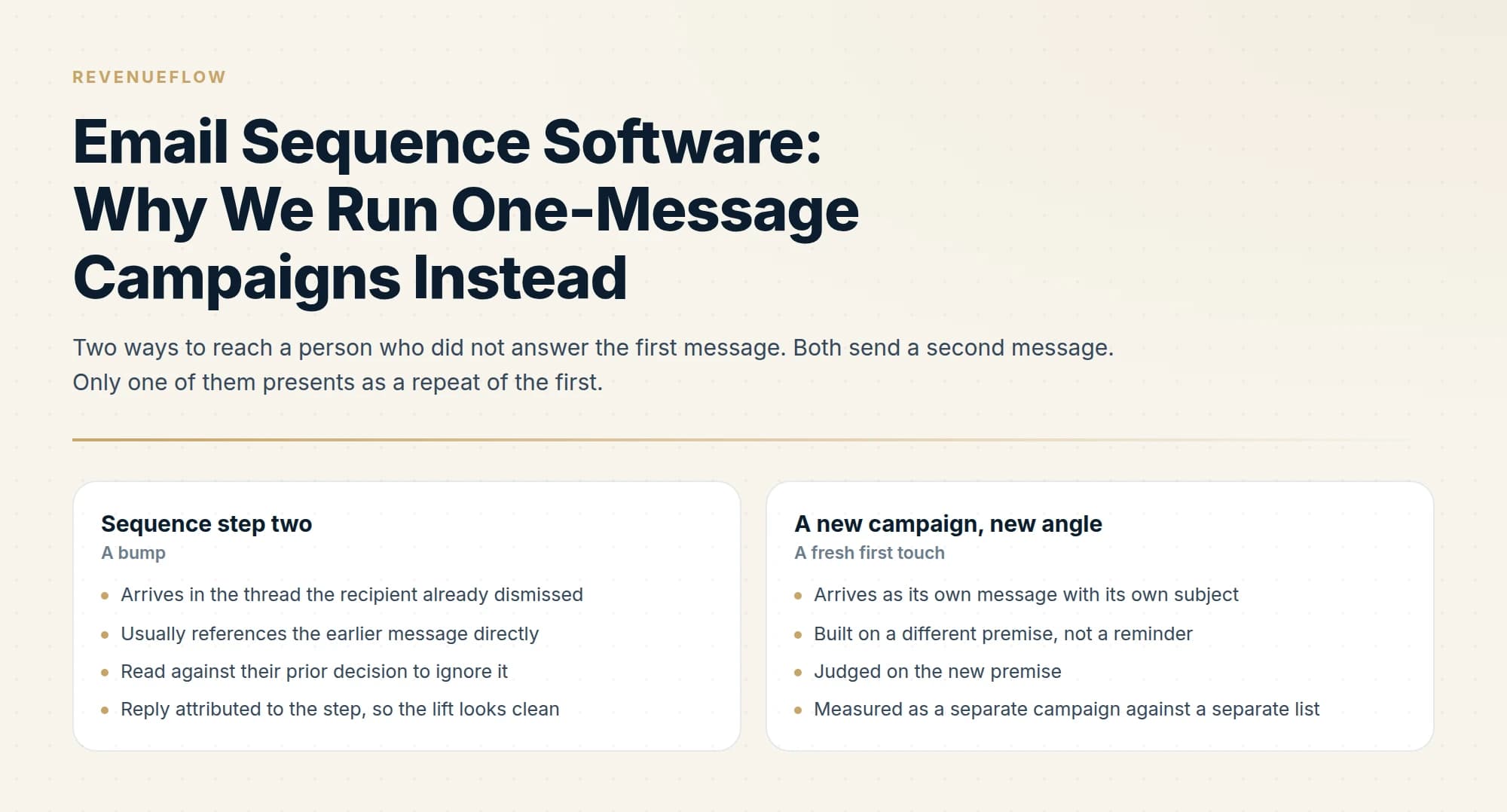
Email sequence software automates follow-up messages after an initial send. RevenueFlow runs one message per campaign and no follow-ups, because each additional message to someone who ignored the first is another opportunity to be marked as spam, paid for across the whole sending domain.
Key takeaways
- Sequence tools measure lift per sequence, which hides the deliverability cost paid across every campaign on the same domain.
- A person who ignored the first message has given you information, and the second message argues with it.
- A fresh angle in a new campaign reaches the same person without the thread reading as a nudge.
- Sequences are genuinely right for warm inbound follow-up, existing customers and opted-in nurture, where the recipient has already engaged.
Reviewed and updated September 2, 2026
Every email sequence tool works on the same stop condition: keep sending until the person replies or the steps run out. Read that from the other direction and it says something uncomfortable. Every message after the first goes exclusively to people who received the previous one and chose not to answer. Step four of a five-step sequence has a perfectly filtered audience of people who have now ignored you three times.
We run one message per campaign. No thread replies, no bumps, ever. That is a published position and an unusual one, so this piece explains what sequence software does, why we decline to use the part of it that most buyers consider the point, and where sequences are genuinely the correct tool.
What sequence software actually does
The category is well built and the feature set is stable across vendors. A sequence is an ordered list of steps with delays between them, attached to a list of contacts, with rules for when a contact exits.
The same machinery now ships inside data tools rather than only inside sending platforms, and Clay Sequencer is the version of it there, which changes where the steps are configured and leaves the audience arithmetic above exactly as it is.
Sequence platforms increasingly expose their campaign data to outside tools, and the Smartlead MCP server shows how an AI agent can query status and lead information directly.
The core mechanics are these. Steps and delays, usually measured in business days. A stop condition, almost always a reply, sometimes extended to a booking or a click. Thread control, meaning whether step two arrives as a reply inside step one's thread or as a fresh message with its own subject line. Conditional branching, so contacts who opened but did not reply take a different path from contacts who did neither. Per-step reporting, which attributes replies to the step that produced them. And multichannel steps in the larger platforms, mixing email with LinkedIn or a call task.
All of that is useful machinery. The disagreement is narrower than it looks: it is about the specific act of sending a second cold message to a stranger who did not answer the first.
Most platforms also ship libraries of sequence templates, which are those same steps and delays written out in advance, so a template is only ever as defensible as the permission behind the list it runs against.
The published email sequence examples are the same shape wherever they are collected, a welcome run, a nurture run, a re-engagement run and a cold run of four or five steps, and every message in them after the first is addressed to people who received the previous one and chose not to answer.
- Step 1Step one goes to everyone
The full list receives the first message, which is the only one sent to a genuinely mixed audience.
- Step 2Repliers exit
The stop condition removes everyone who responded, positively or negatively.
- Step 3Step two goes to the remainder
By construction, this is the set of people who read or ignored the first message and did not answer it.
- Step 4Each further step repeats the filter
By step four the audience is people who have declined to engage three times, and it is the group most likely to complain.
The three reasons we do not follow up
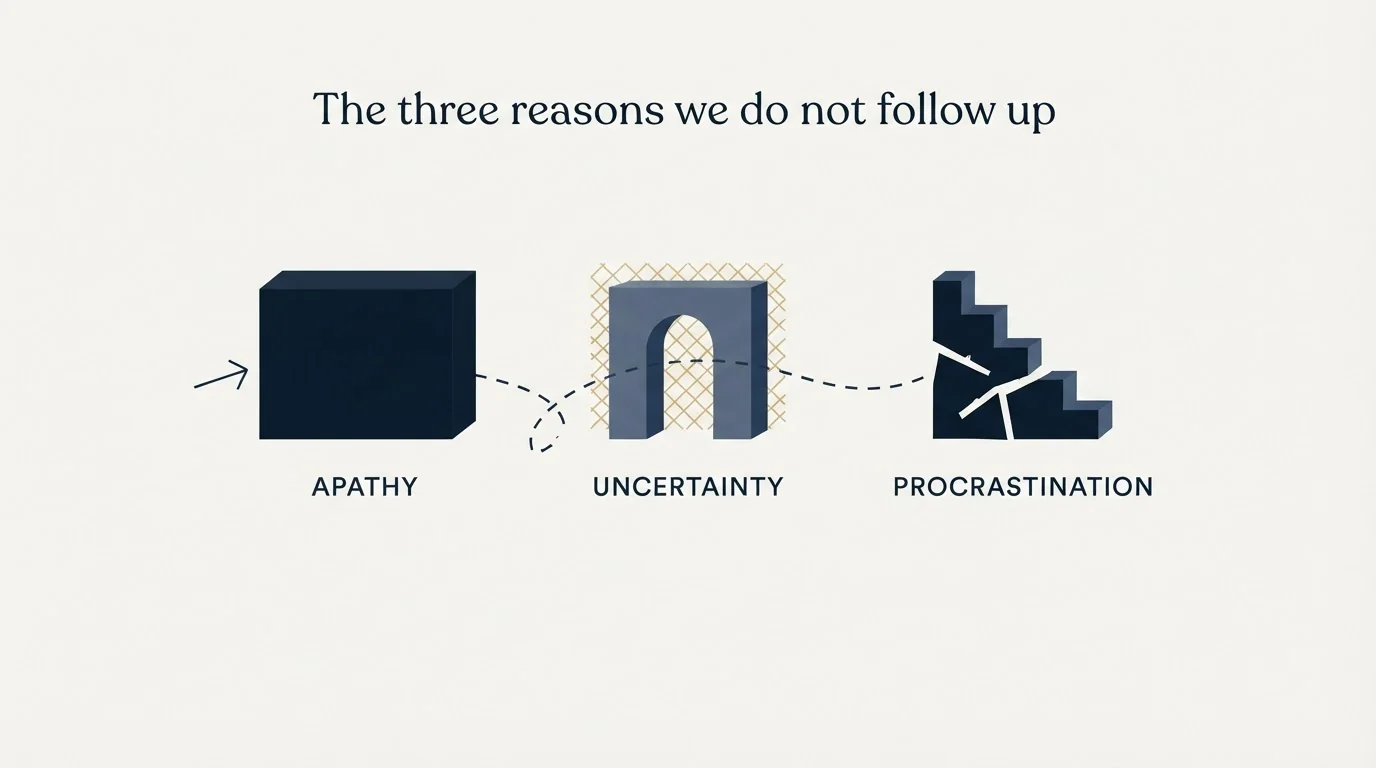
None of this rests on a claim that follow-ups do not generate replies. They do. Our objection is structural, and it has three parts.
Every additional message spends complaint risk on your least receptive audience. A spam complaint is the most expensive signal a recipient can send, and the people most likely to file one are the people who already decided the first message was unwanted. Google's bulk sender guidelines put the tolerance in numbers: senders of 5,000 or more messages a day to Gmail must keep the Postmaster Tools spam rate below 0.30%. That is three complaints per thousand messages. A sequence multiplies message volume against exactly the slice of your list most inclined to spend that budget.
Since Google's bulk sending caps intersect with vendor pricing tiers, those curious about current rates can review the current GMass pricing tiers.
The lift is measured per sequence and the cost is paid per domain. This is the measurement problem, and it is the argument I find most persuasive. Sequence reporting is honest about what it can see: it attributes step three's replies to step three and shows you a lift. What no per-sequence view can show is the mail that stopped reaching the inbox across every other campaign on the same sending domain, because reputation is a property of the domain and the mailbox rather than of the campaign. The unit of measurement and the unit of damage are different objects. A dashboard showing a 40% reply lift from follow-ups and a first-touch campaign quietly losing placement on the same domain are entirely compatible readings of the same infrastructure.
A new campaign reaches the same person without reading as a nudge. This is the part that makes the position workable rather than merely principled. A bump lands directly beneath the message that was ignored, so the recipient evaluates it in the context of their earlier decision. A new campaign built on a genuinely different angle arrives as a new message and is judged on its own merits. The person is reachable either way. The difference is what the framing does to their read of it.
We apply the same reasoning more strictly on LinkedIn, where a second message physically lands in the same thread whatever the campaign structure is called, so we do not run no-reply retargets there at all.
What marketing teams call email fatigue is this same arithmetic seen from the recipient's side, and in cold outbound almost all of it is produced by messages sent to people who already had the chance to answer one.
- Arrives in the thread the recipient already dismissed
- Usually references the earlier message directly
- Read against their prior decision to ignore it
- Reply attributed to the step, so the lift looks clean
- Complaint risk concentrated on non-responders
- Arrives as its own message with its own subject
- Built on a different premise, not a reminder
- Judged on the new premise
- Measured as a separate campaign against a separate list
- Requires suppression discipline to avoid overlap
Where sequences are the right tool
The argument above depends entirely on one condition: the recipient never asked to hear from you. Change that and it stops applying, because silence stops being an answer and becomes ambiguous.
Three situations qualify cleanly.
Warm inbound follow-up. Someone filled in a form, requested a demo, started a trial or downloaded something. They initiated contact, so non-response is far more likely to be a busy week than a rejection. Following up two or three times is what the person implicitly asked for, and failing to do it is the actual error.
Existing customers. Renewals, onboarding milestones, product changes, usage prompts, support follow-through. There is a relationship, a contract, and usually an expectation of contact. Sequence software is well suited to this and it is what a large part of the category was originally built for.
Automated mail triggered by a customer's own action is a third class again, and keeping transactional sending on its own domain is what protects each reputation separately.
Opted-in nurture. Someone subscribed. They can unsubscribe. The permission is explicit and the tooling for honouring it is mature.
Recruiting conversations, event follow-up with people who attended, and re-engagement of past customers all sit near the same line. The useful test is a single question asked honestly.
- Yes: They initiated the contact, through a form, trial, download or reply
- Yes: There is an existing commercial relationship
- Yes: They opted in and can opt out
- Yes: You have a scheduled commitment with them to confirm or reschedule
- No: They are a stranger who received one cold message and did not answer
- No: The follow-up's content is a reminder that the first message exists
- Depends: They engaged once months ago and the new message has a genuinely different premise
If your programme is mostly warm, buy sequence software and use it properly. If it is cold outbound to strangers, the follow-up engine is a feature you are paying for and should consider leaving switched off. What else you are buying alongside it is broken down in the cold email tool stack.
What we run instead, and what it costs us
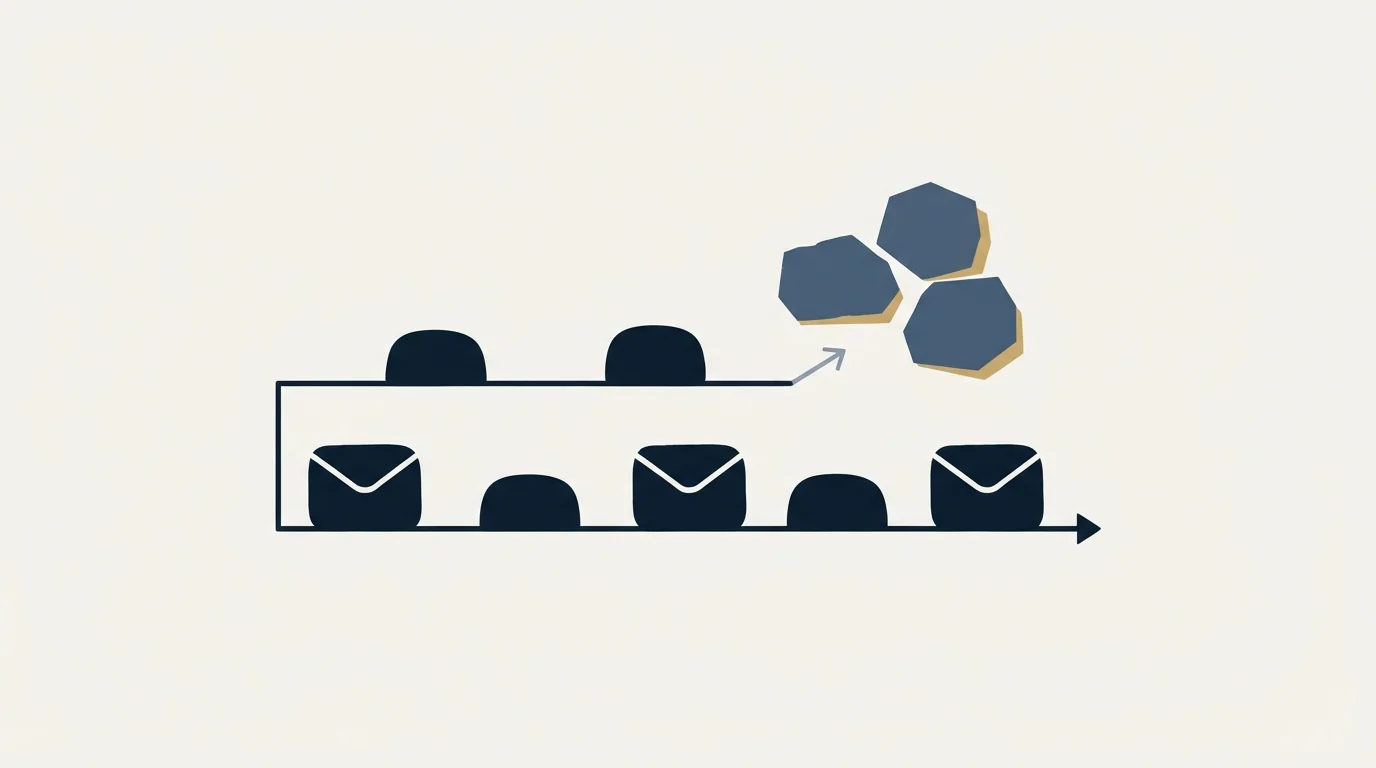
The operating model is simple to describe and more work to run than a sequence is.
One message per campaign. Non-repliers stay in the addressable pool and become candidates for a later campaign built on a different angle, which is a new campaign with its own list, its own copy and its own subject line rather than an extra step bolted to the old one. Anyone who replied, bounced, unsubscribed or landed on a blocklist is excluded permanently, and a lead pending in one active campaign is not enrolled in another, so nobody receives two of our messages in the same window from different lists. A negative reply suppresses that person across the whole workspace rather than only the campaign they answered.
That constraint reshapes the copy as much as the calendar, and what a single send does to each arrangement applies that rule to AIDA, PAS and Before-After-Bridge.
That last piece is the part sequence tools handle automatically and a one-message model makes you build. It is the honest cost of the position, and there are two more.
We give up the easy lift. A bump is the cheapest available increase to a single campaign's reply count, and declining it means the first message has to carry the entire campaign. That raises the bar on copy and on list quality, which is a fine outcome and still a cost.
We cannot report a per-sequence reply curve. Clients occasionally ask why step two is missing from a report, and the answer is that there is no step two. What we report instead is campaign against campaign, which is a coarser instrument for measuring an angle.
Reasonable operators disagree with us on this. Plenty of good programmes run three-step sequences and keep their spam rates well inside the thresholds. Our position is that the measurement that would settle it is not available inside sequence reporting, because the cost lands on domain reputation across campaigns rather than inside the sequence that caused it, and in the absence of that measurement we would rather not spend the budget. The infrastructure side of that reasoning is in the cold email deliverability guide, and the placement signal itself is visible in Google Postmaster Tools. How platforms handle suppression scope, which is what makes a one-message model workable, is in cold email platforms compared.
The short version

Sequence software sends ordered steps with delays until a stop condition fires, which is almost always a reply. Because the stop condition removes responders, every step after the first is delivered only to people who already declined to answer, and that is the audience most likely to file a spam complaint. Google requires senders of 5,000 or more daily messages to Gmail to hold their Postmaster spam rate under 0.30%, which is three complaints per thousand.
We run one message per campaign and never bump, for three structural reasons: follow-ups concentrate complaint risk on non-responders, the reply lift is measured per sequence while the reputation cost is paid across the whole sending domain, and a new campaign with a genuinely different angle reaches the same person without arriving under the message they ignored. We enforce that with permanent exclusions for repliers, bounces and unsubscribes, one active campaign per lead, and workspace-wide suppression of negative replies.
Sequences remain the right tool wherever the recipient initiated contact, has an existing relationship with you, or opted in. Warm inbound follow-up, customer lifecycle mail and opted-in nurture all justify multiple touches, because silence there is ambiguous rather than an answer.
We run cold outbound this way for every client, one message per campaign, with the angle carrying the work. You can see what a campaign would look like for your market.
Google sender requirements verified as of mid-2026. Verify current guidelines before relying on them.
Sources: Email sender guidelines, Google
Frequently asked questions.
Frequently asked questions- What is email sequence software?
- Software that automates a series of messages to the same recipient over time, typically an initial email followed by scheduled follow-ups that stop when the person replies. It is standard in outbound tooling, and most cold email platforms include sequencing as a core feature.
- Do follow-up emails actually work?
- They raise reply rate within a given sequence, which is the number tools report. What that number omits is the cost paid across the sending domain, because every additional message to an unresponsive recipient is another chance to be marked as spam, and reputation is shared across all your campaigns.
- Why does RevenueFlow only send one message?
- Because the reply-rate gain from follow-ups is measured per sequence while the deliverability cost is paid domain-wide. Someone who ignored the first message has told you something, and a second message in the same thread argues with it. A new campaign with a genuinely different angle reaches them cleanly.
- When are email sequences the right tool?
- When the recipient has already engaged. Warm inbound follow-up after a demo request, onboarding and lifecycle messaging to existing customers, and opted-in nurture are all cases where a series is expected and welcome. The argument against sequences is specific to cold outbound.
About the author.

Ben Carden is CRO at RevenueFlow, which builds and operates outbound revenue engines for B2B companies. Previously at Gartner Enterprise. Studied at London School of Economics.
Ben Carden · CRO
Connect on LinkedIn →Explore more.
Ready to scale your outreach?
We build GTM engines that book real meetings. See the receipts.
Related articles.
Email Tracking Software: Six Tools, Priced and Capped
Streak, Mailsuite, Right Inbox, Mixmax, Yesware and HubSpot compared on free-tier caps and published prices, plus what an open event still proves.
SMTP Reply Codes: What Each Class Instructs
The digits are a verdict and the text is the reason. Separating an address failure from a policy refusal before reacting is what decides whether the fix works.
No-Reply Email Address: What It Costs a Sender
A no-reply address is defensible on a receipt and indefensible on a cold message, because the reply is the entire product of a first contact.
SURBL Blacklist: What It Lists and How to Get Removed
SURBL tests the domains inside your message rather than your sending IP. Which of its six lists fired, what the bitmask means, and the fix that works.
Transactional Email: The Class That Needs Its Own Domain
A transactional email is triggered by the recipient's own action and expected by them. The reason it needs separating from marketing and cold mail is reputation.
SPF Flattening: The Definition, and What It Trades Away
SPF flattening swaps include statements for the addresses they resolve to, to stay under the ten-lookup ceiling. What it fixes, and what it quietly costs.