Reseller: What the Word Covers, and What It Commits You To
A reseller is a business that buys a product or service to sell it on to its own customers, and profits on the margin between what it paid and what it charges. In B2B the word means a channel partner: a company carrying a vendor's product into a customer relationship it already owns, usually inside a partner program with discounts.
Key takeaways
- A reseller buys to sell on and earns the margin, which in general use covers any shop and in B2B means a channel partner that already owns the customer relationship.
- A distributor sells to the channel, a reseller sells to end customers and a dealer sells to consumers, and in a two-tier channel the distributor holds the commercial terms.
- TechTarget's definition names four reseller types: value-added resellers, direct market resellers, web hosting and infrastructure resellers, and virtual internet service providers.
- Vendors set reseller margin through tiered discounts that TechTarget puts at 10% to 50% or more, and that margin has to survive the reseller's own cost of sale.
A reseller is a company that buys a product or service in order to sell it on to its own customers, rather than to consume it, and makes its money on the difference between what it paid and what it charges. The definition is that short, and it is the reason the word is used for two quite different businesses without anybody noticing the switch.
Impartner's glossary entry on the term gives the general version and then illustrates it in a way that shows the problem. Its examples run from electronics retailers and online app stores through telecom resellers offering VoIP to small businesses and industrial resellers supplying machinery to construction firms, and on to grocery stores, independent bookstores and clothing boutiques. Every one of those is a reseller by the definition. Only some of them are what a software vendor means when it says it is recruiting resellers.
What is a reseller?
A reseller is a business that buys a product or service to sell it on to its own customers, and earns the difference between what it paid and what it charges. In everyday use that covers any shop. In B2B it means something narrower: a company that carries a vendor's product into a customer relationship it already owns, which is what makes resellers a sales channel.
The narrower sense, which is the one that matters commercially
TechTarget's Search IT Channel definition, published 14 October 2025 by Katie Terrell Hanna and John Moore, gives the channel-specific reading: in the IT ecosystem a reseller is a company that purchases products or services from manufacturers, vendors or distributors and then sells them to customers, in transactions that can be business to business or business to consumer, and it names the reseller as a key part of the indirect sales channel.
The page lists what resellers are actually for, and the list is more useful than the definition because it explains why a customer would buy through one rather than direct. Resellers simplify procurement, letting a business source hardware, software and cloud services from one supplier instead of managing several vendor relationships. They handle sourcing, order processing, billing and delivery. And through vendor partnerships and bulk purchasing they can offer bundled deals or better prices than buying direct from the original manufacturers. It notes that small and midsize businesses in particular prefer resellers for convenience, consultative selling and local presence.
That is the sense in which a reseller is a channel partner rather than a shop, and the distinguishing feature is not size. It is that the reseller is carrying a vendor's product into a customer relationship it already owns.
Reseller, distributor, dealer
The three words get used interchangeably and the same TechTarget page separates them cleanly. A reseller buys from vendors or distributors and sells to end customers, possibly adding services. A distributor buys in large quantities from manufacturers and sells to resellers or dealers rather than to end customers. A dealer is often a small retail-oriented entity selling directly to consumers. Resellers frequently work with distributors to reach a broader inventory and better pricing, which is why the page describes resellers and value-added resellers as operating within either one-tier or two-tier distribution channels.
The practical consequence for a vendor is that the tier decides who you actually have a relationship with. In a two-tier arrangement the distributor holds the commercial terms and the reseller holds the customer, so a programme designed as though the reseller were the counterparty will keep discovering that the paperwork disagrees.
The types worth telling apart

TechTarget's page names four reseller types and they behave differently enough that a vendor should know which one it is signing.
A value-added reseller, or VAR, adds services such as installation, configuration, training, support or consulting to the core product. The page gives the examples of an IT VAR bundling networking equipment with on-site setup and integration, and a software VAR including licensing, implementation and asset management services, and notes VARs are common where custom solutions are needed, in enterprise IT, cybersecurity and healthcare technology.
A direct market reseller, or DMR, sells IT products online or by telephone without operating physical stores, competing on price, product range and delivery speed. The page names CDW and Newegg as examples and describes the model as popular for high-volume, low-margin technology.
Web hosting and infrastructure resellers buy server space or services from a provider and resell to smaller clients, often rebranding services from a larger hosting firm or data centre operator. Virtual internet service providers do the same thing for connectivity, offering internet services under their own brand on a larger provider's infrastructure, which the page notes is common in underserved or niche markets.
VAR
Value-added reseller
Adds installation, configuration, training, support or consulting. Common where custom solutions are needed.
DMR
Direct market reseller
Sells online or by telephone with no physical stores, competing on price, range and delivery speed.
Infrastructure
Web hosting reseller
Buys server space from a provider and resells it to smaller clients, often under its own brand.
Connectivity
Virtual internet service provider
Offers internet services under its own brand on a larger provider's infrastructure.
The last two are where the word shades into white labelling, because the provider is deliberately invisible to the end customer. Our note on the four shapes a partner programme takes draws that boundary on the axis that predicts everything else, which is who owns the customer relationship, and software licensing, support tiering and the exit problem covers what changes when the brand on the login page is the reseller's own.
How a reseller actually makes money
Buyers asking about channel management service commission costs are asking about this gap, and the answer has two halves: the discount band itself, and whether it survives the partner own cost of sale once their seller is paid out of it.
The margin is the gap between the discounted price the reseller pays and the price it charges, and TechTarget's page describes the machinery vendors use to set it. Resellers usually work within partner programmes that provide discounted pricing, with vendors offering tiered discounts the page puts at ten to fifty percent or more depending on the reseller's purchase volume, specialisation or partnership level. Those programmes also provide deal registration, letting resellers protect sales opportunities and earn rebates or performance-based incentives, plus co-branded marketing materials, training and sales support.
Each of those three is a decision the vendor has to make properly rather than a benefit to advertise. The discount has to survive the reseller's own cost of sale, because a reseller pays its own seller out of your margin and a number that reads generously against your gross margin can be uneconomic against their fully loaded cost. The protection is only worth what the vendor's willingness to enforce it against its own direct team is worth, which is the subject of the registration policy. And the marketing support is a budget with a claims process attached, covered in what the money buys and why so much of it goes unspent.
The model the word describes is moving

The same TechTarget page sets out where the reseller model is going, and the direction changes what a vendor is actually signing. On the trend side it names a shift to recurring revenue, with resellers increasingly selling subscriptions rather than one-time purchases; vertical specialisation, with resellers focusing on industries such as healthcare and education to provide tailored solutions; and partner ecosystems, with resellers forming alliances with other service providers to create bundled offerings.
On the challenge side it names margin pressure, with cloud and direct-to-consumer channels eroding traditional hardware resale margins; vendor competition, where vendors selling directly to customers bypass resellers and increase channel conflict; and technical complexity, with clients expecting strategic guidance and resellers having to invest in certifications, engineering talent and managed services to supply it. Its conclusion is that many resellers are transforming into managed service providers or consultative solution providers in response.
| Where resellers are heading | What is pushing them |
|---|---|
| Recurring revenue, selling subscriptions | Margin pressure on traditional hardware resale |
| Vertical specialisation, such as healthcare and education | Technical complexity: clients expect strategic guidance |
| Partner ecosystems and bundled offerings | Vendor competition, with vendors selling direct |
| The result: many resellers are becoming managed service providers | |
Those two lists are one argument seen from both ends, and the argument matters to the vendor rather than only to the partner. A reseller whose margin on resale is compressing and whose customers want advice is a business whose economics now depend on services, and a partner programme built purely on product discount is offering that partner the half of the deal that is getting worse. The second challenge on the list is the one to read carefully before recruiting anybody, because a vendor that also sells direct is describing a channel conflict its own registration policy will be tested on.
What signing a reseller commits you to
The word describes an independent business with its own customers and its own priorities, and that is the fact every design decision in a reseller programme follows from. Our partner enablement page works through what the archetype requires: margin that survives their cost of sale, the ability to demonstrate the product without your team present, and a named human who answers a question inside a working day, because the fastest way to stop a partner mentioning you is to make them wait in front of their own customer.
Two commitments are worth naming here because they are the ones vendors discover late. The reseller's customers are the reseller's customers, and treating that list as a prospecting pool is the quickest way to end the relationship. And a reseller who is asked to generate demand rather than to respond to it will mostly do what an unbriefed seller with an unqualified list does anywhere, which is very little.
Recruiting resellers is itself an outbound problem, and it is a different message from a customer message because the offer is economics and access rather than a product. Our reseller-partnership approach covers that, and RevenueFlow's own doctrine is one message per campaign with no bumps and no thread replies, which applies to a partner list exactly as it applies to a customer list. If the channel is a year from producing anything and the quarter needs pipeline now, see what a first outbound campaign produces while the programme is being built.
The short version
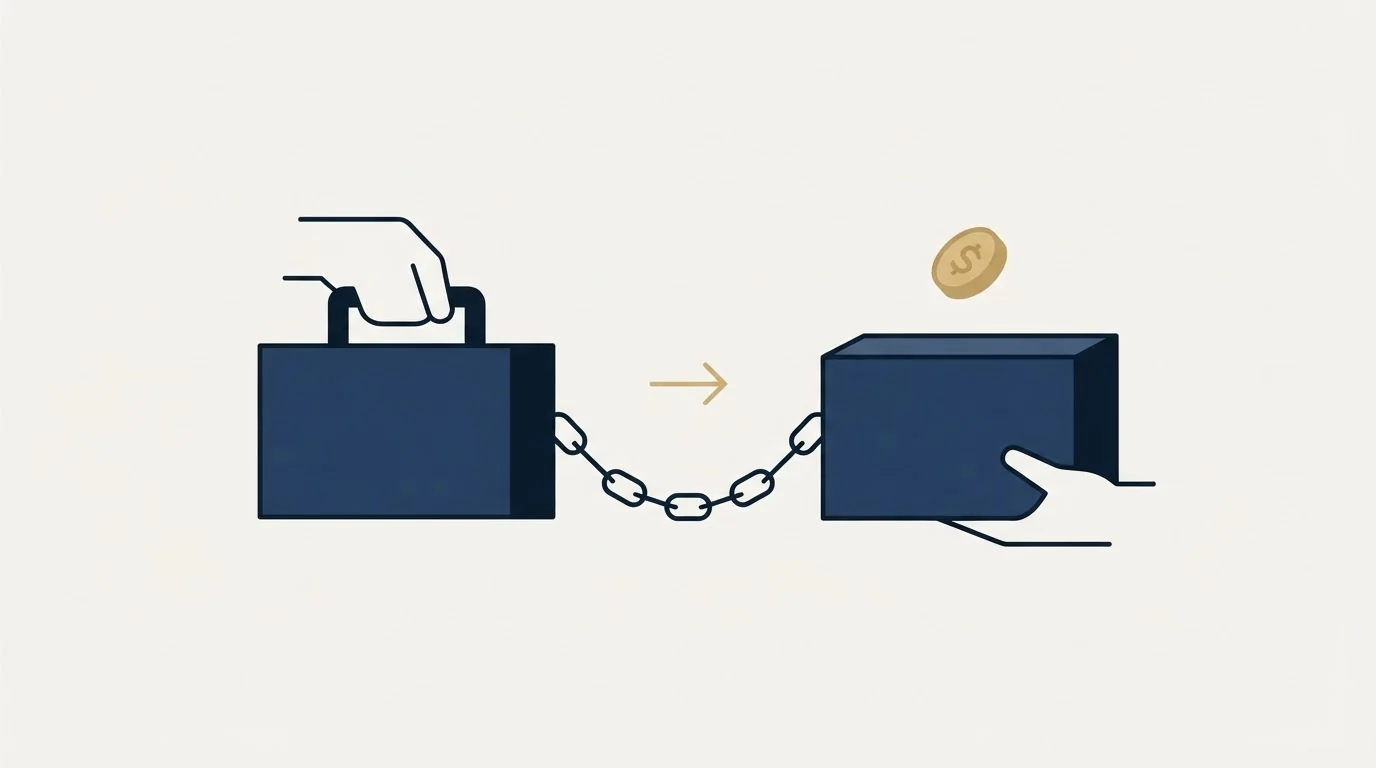
A reseller buys to sell on, and profits on the margin. The general-language sense covers any shop; the commercial sense means a company carrying your product into a customer relationship it already owns, which is what makes it a channel partner rather than a retailer.
Separate it from a distributor, which sells to the channel, and from a dealer, which sells to consumers, and know which tier your paperwork actually sits in. Expect the type to decide what the partner needs from you, since a value-added reseller wrapping services around the product wants different support from a direct market reseller competing on price. Then design the margin against their cost of sale rather than against yours, and write down the registration rule before the first contested deal rather than after it.
Frequently asked questions.
Frequently asked questions- What is a reseller?
- A reseller is a company that buys a product or service in order to sell it on to its own customers, and makes its money on the difference between what it paid and what it charges. In the IT channel, TechTarget describes resellers as buying from manufacturers, vendors or distributors and as a key part of the indirect sales channel.
- What is the difference between a reseller and a distributor?
- A distributor buys in large quantities from manufacturers and sells to resellers or dealers, never to end customers. A reseller buys from vendors or distributors and sells to end customers, often adding services. In a two-tier channel the distributor holds the commercial terms while the reseller holds the customer, so know which tier your paperwork sits in.
- How do resellers make money?
- On the gap between a discounted buy price and the price they charge. Vendors set that gap through partner programs with tiered discounts, which TechTarget's page puts at 10% to 50% or more depending on volume, specialisation or partner level. Value-added resellers also earn from installation, support and consulting, which is revenue the vendor never sees.
- What is a value-added reseller?
- A value-added reseller, or VAR, adds services such as installation, configuration, training, support or consulting to the core product it resells. TechTarget gives the examples of an IT VAR bundling networking equipment with on-site setup, and a software VAR including licensing and implementation. VARs are common where customers need a custom solution.