Revenue Acceleration: Three Problems, One Label
Revenue acceleration is the cross-functional effort to shorten the time from a buyer's first contact to payment, and from payment to renewal or expansion. The phrase covers three problems: too little pipeline, slow deals, and time lost in handovers between marketing, sales and customer success. Only the last is what the term adds.
Key takeaways
- Revenue acceleration names three different problems, an entry problem, a velocity problem and a seam problem, with different owners and different fixes.
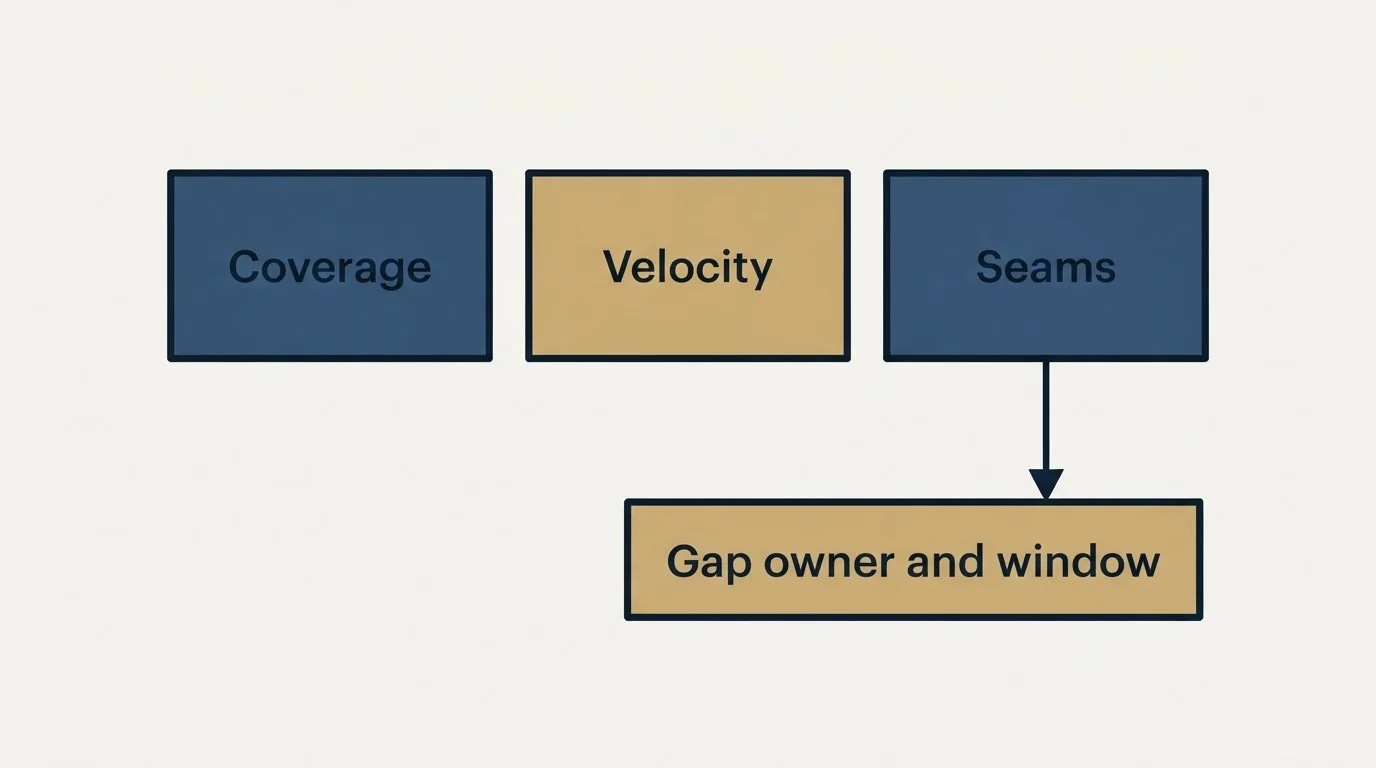
- Coverage cannot be fixed inside the period, velocity is fixed by removing a named blockage, and a seam is fixed by giving the gap an owner and a stated window.
- Four seams carry the recoverable time: reply to first human contact, meeting held to opportunity created, closed to started, and renewal read to renewal conversation.
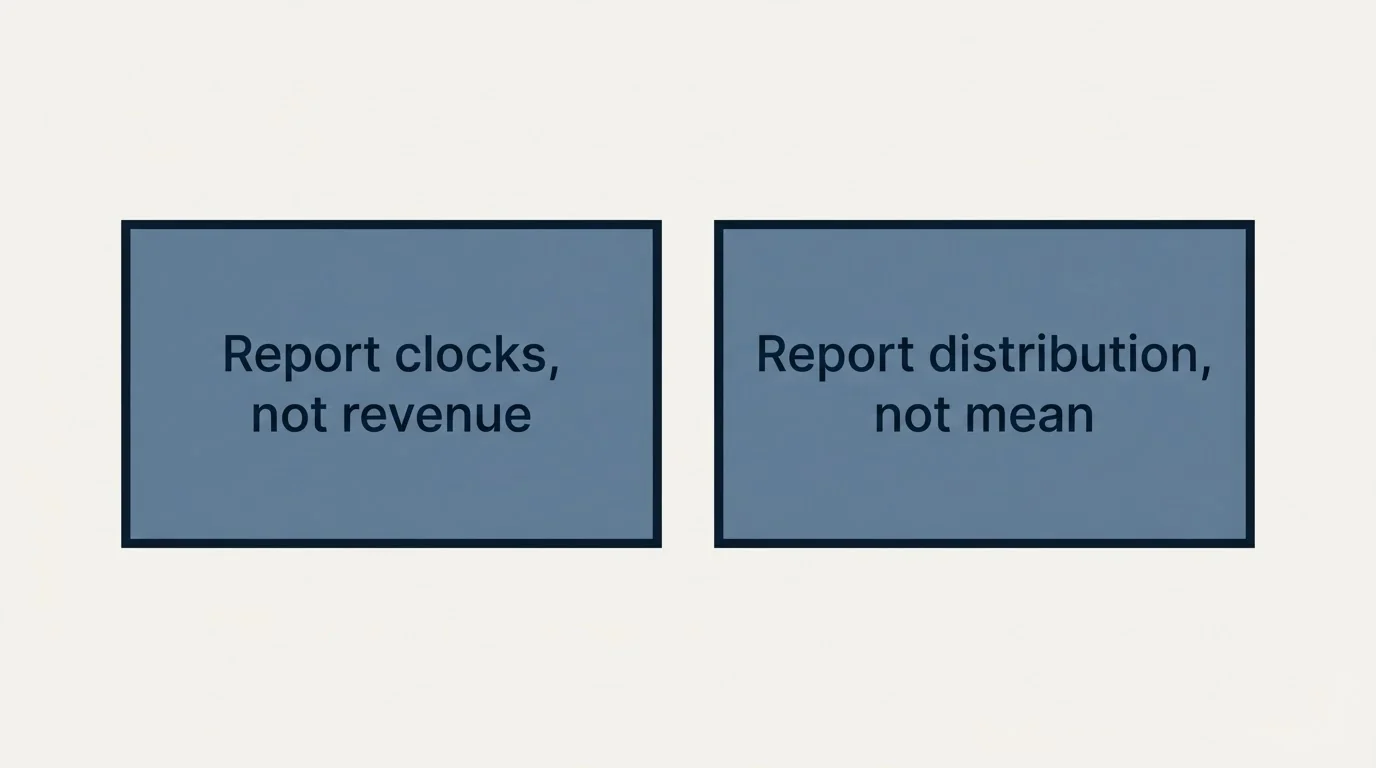
- Report the seam clocks instead of revenue, and the distribution instead of the mean, because a long tail is unowned records and not a slow process.
Revenue acceleration is the coordinated effort to shorten the time between a buyer first encountering a company and that company being paid, and then between the first payment and the next one. It is a cross-functional framing rather than a technique: the work is owned jointly by marketing, sales and customer success, and its defining claim is that the delays worth attacking sit in the seams between those three rather than inside any one of them.
The framing is useful and the label is loose, which is the problem with it. Three genuinely different problems get the same name, they have different owners and different fixes, and the first job when somebody says the phrase is to work out which one they mean.
What is revenue acceleration?
Revenue acceleration is the work of getting paid sooner by the same buyers: shortening the time from a buyer's first contact to the first payment, and from that payment to the renewal or expansion after it. It is owned jointly by marketing, sales and customer success. In practice the phrase gets used for three different problems, too little pipeline, slow deals and slow handovers between teams, and only the third is what the term adds.
The three problems under one label
Every acceleration programme is aimed at one of these. Naming which decides whether the work can produce a result this quarter.
Not enough is entering. The company is short of qualified conversations, so the revenue arriving in six months is already capped. This shows up as pipeline value against target, it is fixed upstream by generation, and no amount of speed applied to the deals already in flight reaches it. A team calling this acceleration is describing an intent rather than a mechanism.
What entered is moving too slowly. Deals exist and take too long. This shows up as time in stage, it is fixed by removing a specific blockage, and it is the only one of the three that is genuinely addressable inside a quarter. This is the problem pipeline acceleration is about, and it is the narrowest and most tractable reading of the phrase.
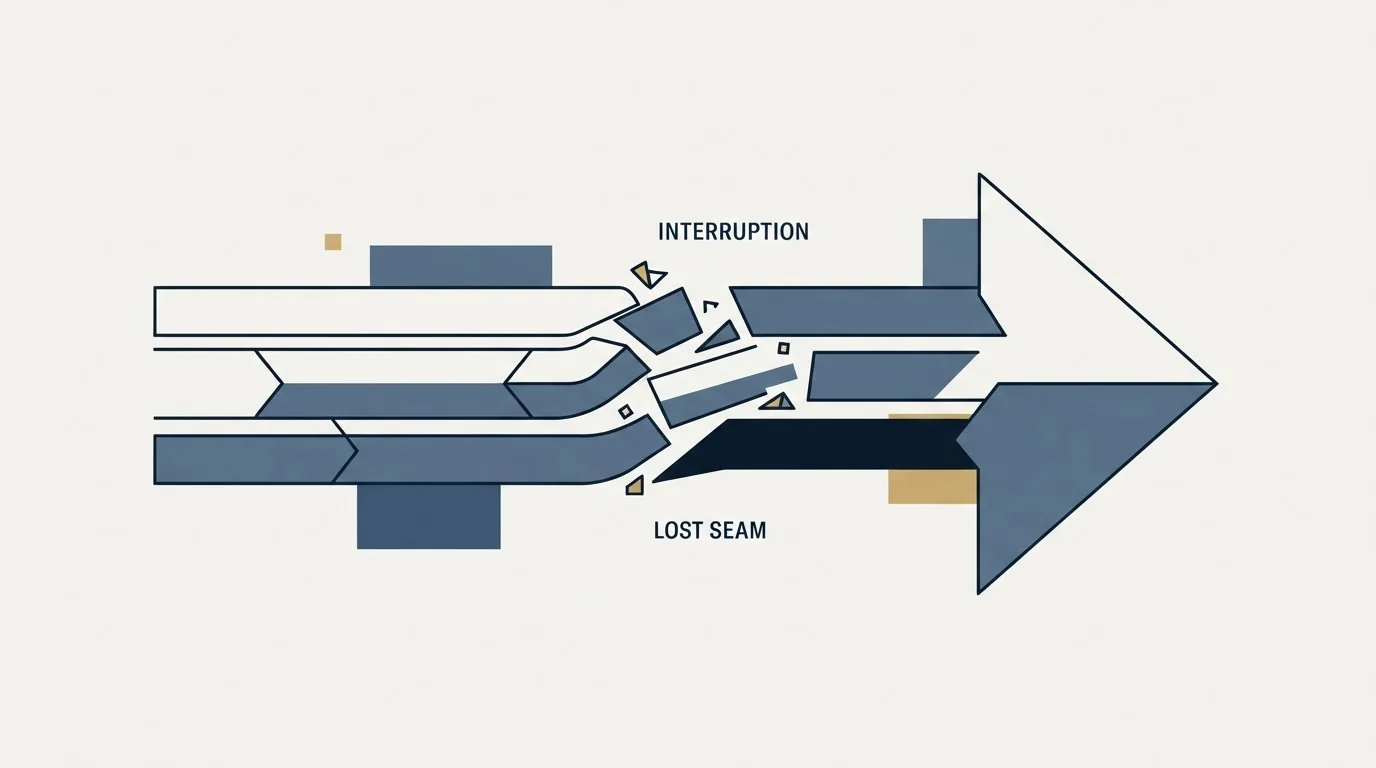
The seams are where the time goes. A reply waits nine hours for a human. A closed deal waits three weeks for implementation to start. A renewal conversation opens two weeks before the date with nobody having read the account's usage. None of these is inside a stage, so none of them appears in a cycle-time report, and each one is somebody's queue rather than somebody's deal. This is the problem the cross-functional framing is genuinely about, and it is the one the phrase adds something to.
| The problem | Shows up as, and who owns it | Fixable this quarter? |
|---|---|---|
| Entry Too little arriving | Coverage against target. Owned by demand generation and outbound | No. Speed work here just moves deals earlier once |
| Velocity Deals move slowly | Time in stage, by stage. Owned by sales and the stage definitions | Yes, by removing a named blockage, not by more contact |
| Seam Time lost between owners | No stage report at all. Owned jointly, which usually means nobody | Yes, and the cheapest of the three. The one the framing is for |
Why the seams are the part worth the name
The reason the third row is under-attacked is structural rather than a failure of attention.
A handover has two owners and no clock. The team that passes the record has finished its work and the team that receives it has not started, so the time in between belongs to neither report. Both dashboards can be green while a buyer waits a week. Nobody is late, because being late requires an owner and a deadline, and a seam has neither by construction.
Four seams carry the recoverable time in a B2B motion, and all four are measurable without new tooling.
Reply to first human contact. How long a positive reply waits before a person answers it. This is almost never instrumented and it is usually the cheapest thing on the list to fix. The mechanics of the queue underneath it are in lead routing.
Meeting held to opportunity created. The gap between a conversation happening and a record existing that anyone can work. A long gap here is usually a definition argument that was never had rather than an administrative delay.
Closed to started. Signature to the first implementation session. Every day here is a day of the subscription consumed with no value delivered, and it is the seam that most reliably damages the first renewal.
Renewal read to renewal conversation. How long before the date somebody looks at what the account actually does with the product. Opening that conversation on the account's own usage rather than on the calendar is the difference between a renewal and a negotiation.
Measuring it without flattering it
The measurement problem is that every number a revenue-acceleration programme wants to claim is also claimed by three other functions, so a total tells you nothing about whether the work did anything.
Two rules make the reporting honest, and both are unpopular for the same reason.
Report the clocks, not the revenue. A seam clock has one interpretation. Revenue has four owners and a market underneath it, and a quarter where the market turned looks identical to a quarter where the programme worked. Where a seam clock moved and revenue did not, that is information rather than a failure, and it usually says the constraint is elsewhere.
Report the distribution, not the mean. A seam with a median of two hours and a tail at four days is not a slow seam, it is a fast seam with a handful of records nobody owns, and the fix is a fallback rule rather than a process redesign. Averaging the two produces a number that recommends the wrong work, and it does it consistently, because the tail is where the unowned records sit and the mean hides them by construction.
Where the term misleads
It is used as a synonym for going faster. A phrase that names an ambition rather than a mechanism absorbs whatever the person saying it wants, and the mechanisms above are what the ambition has to resolve into before anyone can act on it.
A shorter average cycle gets called acceleration when it is a different denominator. Disqualifying slow deals shortens the average immediately. Raising the entry standard does the same. Both are real improvements in how time is allocated and neither closes a single deal sooner, and calling them the same thing is how acceleration programmes get declared successful in a quarter where nothing actually moved. Sales velocity has the compact version of the same warning, since three of its four inputs are averages over a population that has to be homogeneous before the number means anything.
It is sold as a tooling category. Software can measure the seams and can remove the manual step inside one of them. It cannot decide who owns the gap between two teams, and that decision is the whole of the fix. A team that buys the category before naming the seam has bought a measurement of a problem it has not agreed on.
It is aimed at a coverage problem. The most common error and the most expensive one. Where the shortage is qualified conversations, everything in an acceleration programme addresses the wrong end of the funnel, and the result arrives one quarter later as a surprise. Demand generation and outbound are the instruments for that half.
How it is used in outbound
An outbound programme is a generation instrument, and treating it as an acceleration one produces the worst version of both. There are two genuine overlaps and they are worth separating from the rest.
Entry quality is where outbound touches cycle time. A programme that contacts companies chosen against written criteria produces opportunities less likely to stall for fit reasons, because the fit half was settled before the first message rather than discovered in the third call. Timing is still unknown, which is why some share of any outbound-sourced pipeline will always run slower than the average, and expecting otherwise turns a normal distribution into a performance problem.
Speed to the reply is the seam outbound owns. The first seam above sits entirely inside the outbound motion, and it is the one place where a day genuinely costs a meeting. The person who wrote the reply was thinking about the subject when they wrote it and has moved on by the following morning. A programme that sends well and answers slowly has spent the money and thrown away the result.
Our own practice makes the second point sharper than it is elsewhere. We run one message per campaign, with no bumps and no thread replies. The full trade is in why we stopped using follow-ups. The consequence for acceleration is that there is no second touch to recover a reply that went unanswered, so the answer window is not a nicety, it is the whole conversion mechanism.
The re-entry motion is the other thing worth naming here, because it is routinely confused with following up. Accounts that went quiet six months ago are untimed rather than dead, and when something changes at one of them it becomes a new opportunity to open rather than an old one to chase. That is a fresh campaign on a fresh signal, and it is the honest version of the thing acceleration programmes usually try to do with reminders. The one-page-per-play discipline that makes it repeatable is in the go-to-market playbook framework, and the stage definitions that make any of this readable are in sales pipeline stages.
The short version
Revenue acceleration is the cross-functional effort to shorten the path from first encounter to payment and from payment to expansion. Its useful content is the third of the three problems it gets used for: the time lost in the seams between marketing, sales and customer success, which appears in no stage report because a handover has two owners and no clock.
Name which problem you have before choosing a lever. Coverage cannot be fixed inside the period, velocity can be fixed by removing a specific blockage, and a seam is fixed by giving the gap an owner and a stated window, which is the cheapest of the three.
Measure the four seam clocks separately: reply to first human contact, meeting held to opportunity created, closed to started, and renewal read to renewal conversation. Refuse to report a shorter average cycle achieved by disqualifying slow deals as acceleration, because nothing closed sooner.
If the honest diagnosis is coverage rather than speed, that is the half we build. See what one campaign against your criteria produces. The neighbouring definitions are sales cycle for the clock itself and pipeline coverage for whether there is enough in front of it to accelerate.
Frequently asked questions.
Frequently asked questions- What is revenue acceleration?
- Revenue acceleration is the coordinated effort to shorten the time between a buyer first encountering a company and that company being paid, and then between the first payment and the next one. It is a cross-functional framing owned jointly by marketing, sales and customer success, focused on delays in the handovers between them.
- How is revenue acceleration different from pipeline acceleration?
- Pipeline acceleration is the narrowest reading: deals already exist and move too slowly, which shows up as time in stage and is fixed by removing a specific blockage. Revenue acceleration is wider. It also covers the time lost between teams, such as a reply waiting for a human or a signed deal waiting for implementation.
- How do you measure revenue acceleration?
- Measure four seam clocks separately: reply to first human contact, meeting held to opportunity created, closed to started, and renewal read to renewal conversation. Report the clocks and not revenue, because revenue has four owners and a market underneath it. Report median and tail apart, because a mean hides the unowned records.
- Why does a shorter sales cycle not always mean revenue accelerated?
- Because the average can fall without any deal closing sooner. Disqualifying slow deals shortens the average immediately, and so does raising the entry standard. Both are real improvements in how time is allocated, and neither closes a single deal earlier. It is a different denominator, and reporting it as acceleration flatters the programme.